Muhammad ﷺ: A Life
The life of the Prophet Muhammad ﷺ from the sources: his family, the Meccan and Medinan years, every major event, the people around him and the hard questions, with an interactive timeline, a family tree and a full bibliography.
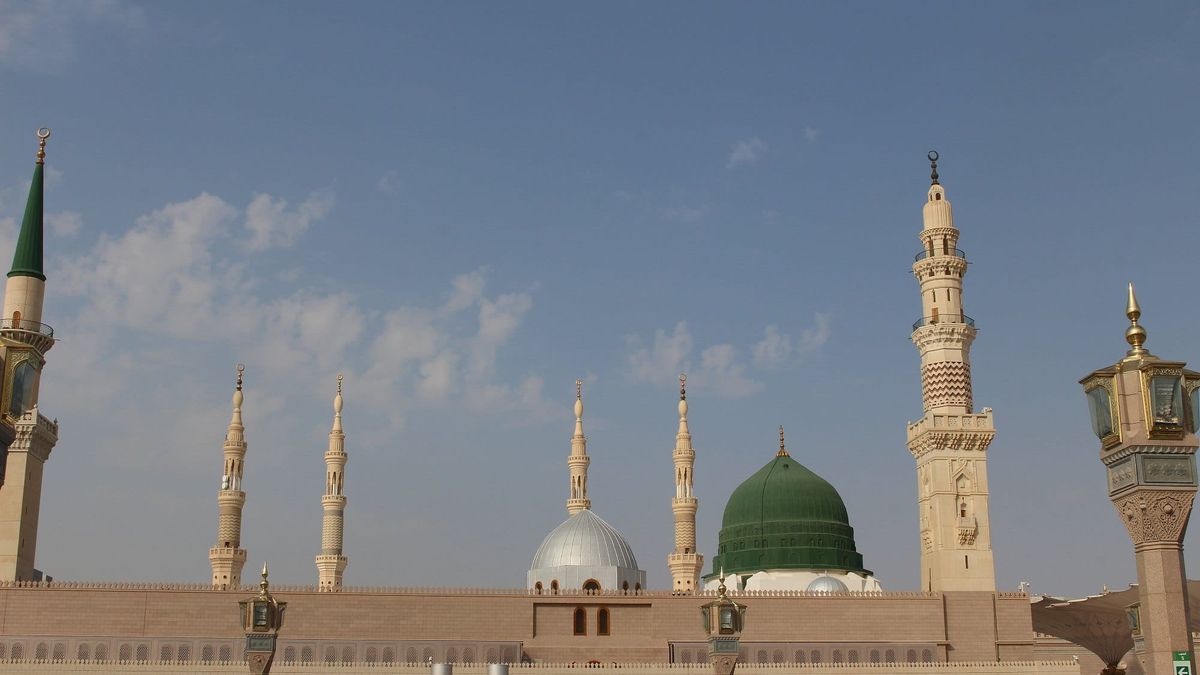
Deen · The Prophet
He was born in a dry valley town with no king and no river, lost both parents before he was old enough to remember them well, and spent his first forty years as a trader known mainly for being honest. He died aged about sixty-three as the leader of most of Arabia, leaving a book, a community and a way of life that Muslims everywhere still try to follow. This page tells that life as the sources tell it, and says plainly where they agree, where they differ and where they are hard.
It is written both for Muslims who grew up with the stories and want the evidence alongside, and for readers who know little about Muhammad ﷺ beyond a name. Arabic terms are explained as they appear and gathered in a glossary. Hadith are linked to sunnah.com with their grades and verses to quran.com. After the story come an annotated bibliography and the numbered sources.
The short version
- Muhammad ibn ʿAbd Allāh ﷺ was born in Mecca around 570, in the clan of Hāshim of the tribe of Quraysh. Orphaned young, he was raised by his grandfather and then his uncle Abū Ṭālib.
- At about twenty-five he married Khadīja, a widowed merchant older than him. For some twenty-five years she was his only wife, and she bore all his children but one.
- Around 610, at forty, he received the first words of the Qur'an in a cave on Mount Ḥirāʾ. He preached in Mecca for about thirteen years and met growing persecution.
- In 622 he and his followers emigrated to Yathrib, soon called Medina. This Hijra begins the Muslim calendar. In Medina he built a mosque, a community and, gradually, a state.
- Eight years of war and diplomacy with Mecca followed, from Badr to the truce of al-Ḥudaybiya, ending in 630 with the almost bloodless conquest of Mecca and a general amnesty.
- He made his one pilgrimage in 632, gave the sermon remembered as the Farewell Sermon, and died in Medina a few months later in the room of his wife ʿĀʾisha, where he is buried.
- Sunni and Shia Muslims share almost all of this story. They part on some dates, some members of his household and, above all, on what he intended for the leadership after him.
- Most of what we know comes from the Qur'an, from hadith and from biographies written down 100 to 200 years after his death. How far the later books can be trusted is a real scholarly question, set out below.
Contents
- Names, dates and the ﷺ
- How we know
- The life at a glance
- Arabia before him
- His lineage
- Birth, childhood and youth
- Khadīja, trade and the Kaʿba
- Revelation and the Meccan years
- The Hijra and Medina
- War, treaties and the return to Mecca
- His household
- His family and the people around him
- His character and daily life
- The final years
- What he taught
- Jews, Christians and the People of the Book
- Signs and miracles
- Difficult questions
- His legacy
- Glossary
- Bibliography
- Sources
Names, dates and the ﷺ
His name is Muhammad, "the praised one", son of ʿAbd Allāh, son of ʿAbd al-Muṭṭalib. Muslims call him al-Nabī, the Prophet, or Rasūl Allāh, the Messenger of God. His kunya, the respectful name taken from a child, was Abū al-Qāsim, after his first son, and in Mecca people called him al-Amīn, the trustworthy. The Qur'an names him Muhammad four times and Aḥmad once, and calls him "the Seal of the Prophets".12
He listed some of his names himself. In a report from Jubayr ibn Muṭʿim he says he has five: Muhammad and Aḥmad; al-Māḥī, through whom God wipes out unbelief; al-Ḥāshir, the first to be raised, behind whom the people will be gathered; and al-ʿĀqib, the one after whom no prophet comes.3 Abū Mūsā al-Ashʿarī adds al-Muqaffī, "the one who follows on", the prophet of repentance and the prophet of mercy.4 The Qur'an also calls him al-nabī al-ummī, "the unlettered prophet",5 which the commentators generally took to mean that he could not read or write when the revelation began. Of all these titles the one with the most doctrinal weight is Khātam al-Nabiyyīn, the Seal of the Prophets. Sunni and Shia Muslims alike read it as meaning that no prophet comes after him, and he explained it with the picture of a fine house complete except for one brick: "I am that brick."6
After his name Muslims say or write ṣallā Allāhu ʿalayhi wa-sallam, "may God bless him and grant him peace", often printed as the single sign ﷺ. I use it after his name on its first mention in each section. The Qur'an tells believers to invoke blessings on him,7 and a hadith in Ṣaḥīḥ Muslim promises that whoever does so once is blessed ten times by God.8 Companions are named plainly, without honorifics, for readability; no disrespect is meant.
Two calendars, and why dates disagree
Dates are given in both calendars, the Hijri year first (AH) and then the Common Era (CE). The Hijri calendar is lunar, so its year is about eleven days shorter than the solar year. It was set up under the caliph ʿUmar and counts from the Prophet's emigration to Medina; its first day, 1 Muḥarram of year 1, fell on 16 July 622.9 Events before the Hijra are dated in other ways: "the Year of the Elephant", "the tenth year of the mission", or simply the Prophet's age.
Many dates are disputed, for three reasons. Meccans kept no fixed era, and nobody registered the birth of an orphan. The pre-Islamic Arabs sometimes inserted an extra month to keep the lunar year in step with the seasons, a practice the Qur'an condemned,10 so converting early dates involves guesswork. And the biographies were compiled generations later from many narrators; when good narrators disagreed, the compilers usually kept both views.
His birth is the classic example. That he was born on a Monday comes from his own words: asked about fasting on Mondays, he said, "That is the day on which I was born, and on which revelation came to me."11 The month is almost universally Rabīʿ al-Awwal, the third month, and the year the Year of the Elephant, around 570 or 571. The day is where the reports scatter. Ibn Isḥāq gave the 12th, which Ibn Kathīr called the best-known view; others reported the 2nd, 8th or 10th; and the Egyptian astronomer Maḥmūd Pāshā, calculating which Monday fits, arrived at 9 Rabīʿ al-Awwal, 20 April 571.12 Most Twelver Shia scholars place the birth on Friday 17 Rabīʿ al-Awwal, although al-Kulaynī, compiler of the great Shia collection al-Kāfī, gave the 12th.1314
The pattern repeats. Ibn ʿAbbās said he received revelation at forty, stayed thirteen years in Mecca and ten in Medina, and died at sixty-three;15 Anas ibn Mālik, in the same collection, says ten years in Mecca.16 ʿĀʾisha put his age at death at sixty-three.17 This article follows the majority (forty, thirteen, ten, sixty-three) and flags disagreement where it matters.
How we know: the sources for his life
There is no diary, no contemporary Meccan chronicle and no portrait. What exists is the Qur'an, a large body of Arabic writing mostly compiled in the second and third centuries of Islam, and a handful of references by outsiders. Muslim and non-Muslim historians agree on this much. They disagree, sometimes sharply, about how much of the later material goes back to what actually happened.
The Qur'an
The Qur'an is the earliest source and, for Muslims, the word of God rather than a biography. It rarely names people or places and never tells his life in order, yet it is full of him. It speaks to him directly, comforts him ("Did He not find you as an orphan then sheltered you?"),18 rebukes him when he turned from a blind man to court the powerful,19 reports what his opponents said, and comments on Badr, Uḥud, the Trench and al-Ḥudaybiya. Most historians now accept that its text was stable within a few decades of his death, which makes it a document of his own time; the companion post The Qur'an explains how it was gathered.
Hadith
A hadith is a report of what the Prophet said, did or approved, carried by a chain of named narrators (the isnād). The great collections were made in the ninth century CE. For Sunni Muslims the most trusted are the Ṣaḥīḥs of al-Bukhārī (d. 256/870) and Muslim (d. 261/875), both with chapters on his campaigns and on the virtues of his Companions. Twelver Shia Muslims rely mainly on their own collections, above all al-Kulaynī's al-Kāfī (d. 329/941), transmitted through the Imams of the Prophet's family. Scholars graded each report by its narrators and chain; How a Hadith Is Judged explains the grades used below.
Sīra and maghāzī
The connected story comes from a separate genre: sīra (biography) and maghāzī ("campaigns", in practice the whole Medinan period).
- ʿUrwa ibn al-Zubayr (d. c. 94/713), a nephew of ʿĀʾisha, answered questions about the Prophet's life in letters and teaching. His work survives only in quotations, from which a large "ʿUrwa corpus" can be reconstructed.20
- Ibn Shihāb al-Zuhrī (d. 124/742), ʿUrwa's student, gathered the material systematically. His pupil Maʿmar ibn Rāshid's Expeditions survives and is available in English.21
- Ibn Isḥāq (d. c. 150/767) wrote the first full biography. It survives mainly in the edited version of Ibn Hishām (d. 218/833), who cut what he judged irrelevant or offensive; A. Guillaume's translation of 1955 is still the standard.22
- Al-Wāqidī (d. 207/823) wrote a detailed, carefully dated book of the campaigns.23 His secretary Ibn Saʿd (d. 230/845) arranged the material by persons in his Ṭabaqāt, whose first volume is a life of the Prophet and whose eighth covers the women of early Islam.24
- Al-Ṭabarī (d. 310/923) folded all this into his History, keeping variant accounts side by side with their chains.2526
Shia historians wrote too. Abān ibn ʿUthmān al-Aḥmar, a Kufan companion of the Imams Jaʿfar al-Ṣādiq and Mūsā al-Kāẓim, wrote a book on the mission, campaigns, death and succession that survives in quotations.27 Al-Yaʿqūbī's history, al-Kulaynī's chapter on the Prophet's birth and death,14 al-Mufīd's al-Irshād and later works such as al-Majlisī's Ḥayāt al-qulūb give the Shia telling.28 The main line of events is the same; the emphasis and some details differ.
What outsiders wrote
A few non-Muslim writers mention him within living memory. The Doctrina Jacobi, a Greek Christian dialogue from Palestine written around 634, refers to a prophet who "has appeared with the Saracens", and has one character scoff that prophets do not come armed with a sword.29 A Syriac chronicle by Thomas the Presbyter, compiled around 640, records a battle near Gaza on 4 February 634 between the Romans and "the Arabs of Muḥmd".30 An Armenian history attributed to Bishop Sebeos, from the 660s, describes an Ishmaelite named Mahmet, a merchant, who taught his people the God of Abraham.31 Hostile or confused on many points, these texts still fix him firmly in the history of the 630s. Robert Hoyland's survey and Stephen Shoemaker's sourcebook collect them.3233
How scholars judge the sīra
Ibn Isḥāq wrote about 120 years after the Prophet's death, Ibn Saʿd about 200. Muslim scholars knew this. They treated the sīra as a less exacting genre than legal hadith: maghāzī writers often gave stories without full chains, which hadith critics tolerated for narrative but not for law.34 Much of what is popularly known about his life, especially the miraculous detail, comes from reports that hadith scholars themselves graded weak.
Western scholarship has swung between confidence and doubt. W. Montgomery Watt worked with the sīra largely as it stood; from the 1970s a sceptical school argued that the reports reflect the arguments of the eighth and ninth centuries more than the events of the seventh. Since the 1990s Harald Motzki, Gregor Schoeler and Andreas Görke have dated individual traditions by comparing every chain and every wording of a report (the isnād-cum-matn method). Their conclusion is cautious but significant: a core of material goes back to ʿUrwa and al-Zuhrī, within about sixty years of the Prophet, from people who knew eyewitnesses, including accounts of the first revelation, the Hijra, the slander against ʿĀʾisha and al-Ḥudaybiya.353637 Sean Anthony, reading these alongside the non-Muslim evidence, reaches a similar middle position.38 Jonathan Brown's short introduction covers the same ground from a Muslim scholar's side.39 The approach here follows: the broad outline is told with confidence, disputed details are marked, and weak reports are named as weak.
The life at a glance
The timeline below sets out the whole life, from the Year of the Elephant to the burial in Medina, with each event dated in both calendars. Search for a name or place, filter by period (Mecca, Medina, the final years) or by kind of event (revelation, family, campaigns, treaties), and tap any entry to open it: you will see where dates are disputed, which sources give which view, and a link to the part of this article that tells the story.
Before his birth
5th century CE (traditional reckoning, several generations before the Prophet)
Quṣayy, the Prophet's ancestor five generations back, is remembered as the man who brought the scattered clans of Quraysh together in Mecca and took charge of the Kaʿba. The sources credit him with the council house (Dār al-Nadwa) and with the duties of watering and feeding pilgrims, offices his descendants later shared out between them.
People:
c. 500 CE
Hāshim ibn ʿAbd Manāf, the Prophet's great-grandfather and the man who gave the clan of Banū Hāshim its name, is credited with organising Quraysh's winter caravan to Yemen and summer caravan to Syria. Sūrat Quraysh refers to these two journeys. He married Salmā bint ʿAmr of the Banū al-Najjār in Yathrib and, by the traditional account, died on a trading trip at Gaza.
People:
Texts: Qur'an 106:1-4
early 6th century CE
Hāshim's son Shayba grew up with his mother's people in Yathrib. His uncle al-Muṭṭalib brought him to Mecca, and people who saw him riding behind his uncle took him for a servant, hence the name ʿAbd al-Muṭṭalib. The episode matters because it ties the Prophet's family to Yathrib by blood two generations before the Hijra.
Where the sources differThe tradition gives no firm date. ʿAbd al-Muṭṭalib is usually said to have lived to about eighty or beyond, which would put his birth around the end of the 5th century.
People:
mid 6th century CE (undated in the sources)
According to Ibn Isḥāq, ʿAbd al-Muṭṭalib was told in a series of dreams where to dig, and uncovered the long-buried well of Zamzam near the Kaʿba. Other Qurashī clans disputed his claim to it before conceding. The well gave his family the prestigious duty of providing water to pilgrims.
People:
shortly before the Prophet's birth (undated)
Ibn Isḥāq reports that ʿAbd al-Muṭṭalib vowed to sacrifice one of his sons if he were given ten who reached manhood. When the lot fell on his youngest, ʿAbd Allāh, the Quraysh persuaded him to ransom the boy instead, and the lots were cast repeatedly until one hundred camels were accepted in his place.
Where the sources differThe story is preserved in the sīra literature (Ibn Isḥāq, al-Ṭabarī) rather than in the canonical ḥadīth collections. Some modern historians read it as a didactic tale; Muslim biographers generally treat it as family history.
People:
c. 569–570 CE
ʿAbd Allāh ibn ʿAbd al-Muṭṭalib married Āmina, daughter of Wahb ibn ʿAbd Manāf of the Qurashī clan of Banū Zuhra. The marriage lasted only a short time before ʿAbd Allāh left on a trading journey from which he did not return.
People:
Year of the Elephant, c. 570 CE (traditional)
Abraha, the Christian Aksumite ruler of Yemen, is said to have marched on Mecca with an elephant to destroy the Kaʿba, and his army was turned back before it could enter. Muslim tradition sees Sūrat al-Fīl as describing this deliverance, and later dated events by it, including the Prophet's birth. ʿAbd al-Muṭṭalib's reported reply to Abraha, that he owned the camels and the House had its own Lord, became proverbial.
Where the sources differBritannica keeps the traditional dating of about 570. South Arabian inscriptions show Abraha campaigning in central Arabia around 552 (Ry 506, Murayghān), and some specialists such as George Hatke treat the historicity and date of a Meccan expedition as open questions. Some scholars therefore think 'born in the Year of the Elephant' may be a symbolic synchronism rather than an exact date.
People: Abraha
Texts: Qur'an 105:1-5
c. 570 CE, before or shortly after the birth
Returning from a trading journey to Syria, ʿAbd Allāh fell ill and died among his mother's relatives, the Banū al-Najjār, in Yathrib, where he was buried. He was about twenty-five. The Prophet was therefore born, or very soon became, an orphan, a fact the Qurʾān recalls in Sūrat al-Ḍuḥā.
Where the sources differThe majority report says ʿAbd Allāh died while Āmina was pregnant. Other reports, recorded by Ibn Saʿd and later historians, place his death some months after the birth.
People:
Texts: Qur'an 93:6
Early life in Mecca
Monday, Rabīʿ al-Awwal, Year of the Elephant (c. 570 or 571 CE); 12 Rabīʿ I is the popular Sunni date, 17 Rabīʿ I the Twelver Shia date
Muḥammad was born to Āmina in Mecca and named by his grandfather ʿAbd al-Muṭṭalib. When asked about fasting on Mondays, he himself said it was the day on which he was born and the day on which revelation first came to him. Almost everything else about the date is disputed.
Where the sources differMonday is well attested (Muslim 1162b). The day of the month is not: 2, 8, 9, 10, 12 and 17 Rabīʿ al-Awwal are all reported, and some reports give Ramaḍān. 12 Rabīʿ I (via Ibn Isḥāq) is the popular Sunni date; most Twelver scholars give 17 Rabīʿ I, although al-Kulaynī's al-Kāfī gives the 12th, and Shia communities celebrate the week between the two as a 'week of unity'. The year is usually given as 570 or 571, with some modern estimates a few years either side.
People:
Texts: Muslim 1162B
first days after birth
Before he was sent to the desert, the infant was briefly nursed by Thuwayba, a freedwoman of his uncle Abū Lahab. She also nursed Ḥamza and Abū Salama, which made them his milk-brothers, a relationship that later carried legal weight.
People:
Texts: Bukhari 5101
infancy to about age four or five (c. 570–575)
Following the Meccan custom of sending infants to Bedouin wet-nurses, he was given to Ḥalīma bint Abī Dhuʾayb of the Banū Saʿd. Her account, preserved by Ibn Isḥāq, describes the blessings that came to her poor household with the child. He spent his early years in the desert, learning its pure Arabic.
People:
c. age four, while with Ḥalīma
Muslim records from Anas that Gabriel came to the boy while he was playing, opened his chest, removed a clot described as Satan's portion, washed his heart with Zamzam water and closed it again. Ḥalīma, alarmed, returned him to his mother soon afterwards, according to Ibn Isḥāq.
Where the sources differSunni scholarship generally accepts the report as literal. A second opening of the chest is linked to the Night Journey, and some later writers read the episode symbolically.
People:
Texts: Muslim 162C
c. 576 CE, when he was about six
Āmina took her son to Yathrib to visit his father's grave and her Najjārī relatives, travelling with the servant Umm Ayman. On the way home she died at al-Abwāʾ and was buried there. Umm Ayman brought the boy back to his grandfather. Decades later he visited her grave and wept, a scene recorded in Ṣaḥīḥ Muslim.
People:
Texts: Muslim 976A
c. 578 CE, when he was about eight
His grandfather, who had kept him close and let him sit on his own rug by the Kaʿba, died when the boy was about eight. Guardianship passed to his uncle Abū Ṭālib, full brother of his father, who protected him for the next four decades despite being a man of modest means.
People:
c. 579–583 CE, age nine or twelve
Travelling with Abū Ṭālib's caravan, the boy was noticed by a Christian monk named Baḥīrā near Buṣrā, who is said to have recognised signs of prophethood in him and urged his uncle to take him home and guard him. The story became a favourite of both Muslim and, in polemical form, Christian writers.
Where the sources differAl-Tirmidhī calls his version ḥasan gharīb; Darussalam's edition grades it ḍaʿīf (weak), while al-Ḥākim and al-Albānī graded it ṣaḥīḥ. Classical critics pointed out that it mentions Abū Bakr and Bilāl, who could not have been there. Ibn Isḥāq gives a version without that detail. Ages given for the Prophet vary between nine and twelve.
People:
Texts: Tirmidhi 3620
youth, c. 580s CE
He later said that every prophet had herded sheep and that he himself had grazed the flocks of Meccans for a few qīrāṭs. The detail is often cited as evidence of the modest circumstances of his youth under Abū Ṭālib's care.
People:
Texts: Bukhari 2262
c. 585–590 CE, in his teens
A series of clashes broke out between Quraysh and their Kināna allies on one side and the Qays ʿAylān on the other. It was called 'sacrilegious' because fighting took place in the sacred months. The sources say he was present as a young man and handed arrows to his uncles.
Where the sources differHis age is given variously as fourteen, fifteen or twenty. Some later scholars stress that he did not himself fight.
People:
c. 590 CE, Dhū al-Qaʿda, in his early twenties
After a merchant from Zabīd was cheated by the Meccan notable al-ʿĀṣ ibn Wāʾil, several Qurashī clans met in the house of ʿAbd Allāh ibn Judʿān and swore to stand with anyone wronged in Mecca until justice was done. The young Muḥammad took part. Ibn Isḥāq reports that he later said he would answer such a call even in Islam.
People:
c. 595 CE, age about twenty-five
Khadīja bint Khuwaylid, a respected and wealthy merchant, hired him to lead one of her caravans to Syria, sending her servant Maysara with him. The venture made a good profit, and Maysara's reports of his honesty and conduct impressed her. By this time he was widely known in Mecca as al-Amīn, the trustworthy.
People: Maysara
c. 595 CE, when he was about twenty-five
Khadīja proposed marriage through an intermediary, and the match was agreed with Abū Ṭālib and her family. For about twenty-five years she was his only wife. All his children except Ibrāhīm were born to her, and she became the first person to believe in his message.
Where the sources differMost sources say Khadīja was forty, though Britannica notes she may have been younger, and some reports (via Ibn ʿAbbās, cited by later historians) give twenty-eight. Sunni sources say she had been married twice before; some Shia scholars hold that she had not been married before.
People:
c. 596–598 CE
Their first child, al-Qāsim, gave the Prophet his kunya (honorific), Abū al-Qāsim. He died in early childhood, most sources say before the call to prophethood.
Where the sources differReports differ on whether he died aged two or so, or whether he lived long enough to ride an animal.
People:
c. 600–605 CE, before the call
Zayd, a boy of the Kalb tribe captured in a raid and sold in Mecca, was given to Muḥammad by Khadīja. When his father and uncle found him and offered a ransom, Zayd chose to stay. Muḥammad freed him and declared him his son at the Kaʿba, and he was known as Zayd ibn Muḥammad until the Qurʾān later ended adoptive naming.
People:
Texts: Qur'an 33:5Qur'an 33:40
c. 598–600 CE, when he was about thirty
Zaynab is usually counted as the eldest daughter. Before the call she married her maternal cousin Abū al-ʿĀṣ ibn al-Rabīʿ, who stayed with her even when Quraysh later pressed him to divorce her.
Where the sources differSunni sources, and many Shia ones such as al-Majlisī's Ḥayāt al-qulūb, treat Zaynab, Ruqayya and Umm Kulthūm as daughters of the Prophet and Khadīja. Some Shia scholars, notably Jaʿfar Murtaḍā al-ʿĀmilī (d. 2019), argue they were stepdaughters, children of Khadīja's sister Hāla or of Khadīja's earlier marriages. Britannica notes the Shia view that recognises only Fāṭima.
People:
late 6th century CE
Before the call, a few Meccans known as ḥanīfs rejected idol worship and sought the religion of Abraham. Al-Bukhārī records that Zayd ibn ʿAmr ibn Nufayl refused to eat meat sacrificed to idols. Khadīja's cousin Waraqa ibn Nawfal, who had become a Christian, belonged to the same milieu.
People: Zayd b. ʿAmr b. Nufayl
Texts: Bukhari 3826
c. 601–603 CE
Ruqayya was betrothed, or married, before the call to ʿUtba, son of Abū Lahab. After Sūrat al-Masad condemned Abū Lahab, he made his son separate from her, and she later married ʿUthmān ibn ʿAffān.
Where the sources differSee the note on Zaynab: some Shia scholars regard Ruqayya as a stepdaughter or as the daughter of Hāla, Khadīja's sister.
People:
c. 603 CE
Umm Kulthūm was likewise attached to a son of Abū Lahab, ʿUtayba, who separated from her under his father's pressure. She stayed in Mecca until the Hijra.
Where the sources differHer parentage is subject to the same Shia debate as her sisters'.
People:
c. 605 CE, when he was about thirty-five
After floods weakened the Kaʿba, Quraysh pulled it down and rebuilt it, and he carried stones with his uncle al-ʿAbbās. When the clans quarrelled over who should set the Black Stone in place, they agreed to be judged by the next man through the gate. It was him: he placed the stone on a cloak, had a leader of each clan lift it, and set it in the wall himself.
People:
Texts: Bukhari 1582
c. 605 CE (Sunni: five years before the call); 20 Jumādā II, fifth year after the call (c. 615) in Twelver Shia tradition
Fāṭima, the youngest daughter and the only child whose line continued, was born in Mecca. She became the wife of ʿAlī, the mother of al-Ḥasan and al-Ḥusayn, and the figure through whom all of the Prophet's descendants trace their descent.
Where the sources differBritannica gives about 605, matching the Sunni report that she was born while Quraysh were rebuilding the Kaʿba. Twelver sources (al-Kulaynī, al-Mufīd) place her birth five years after the start of the mission, around 615, which would make her considerably younger at marriage.
People:
c. 605–610 CE
Ibn Isḥāq reports that during a year of hardship Muḥammad offered to lighten Abū Ṭālib's burden by raising one of his sons, and took the young ʿAlī into his home, while al-ʿAbbās took Jaʿfar. ʿAlī therefore grew up in the Prophet's household.
People:
c. 605–610 CE, especially in Ramaḍān
In the years before the call he took to spending nights of devotion alone in a cave on Mount Ḥirāʾ, taking provisions with him. ʿĀʾisha's account says this period began with true dreams that came 'like the break of dawn'.
People:
Texts: Bukhari 3
The first years of the call
Ramaḍān, c. 610 CE, age forty (Laylat al-Qadr); 27 Rajab in Twelver Shia tradition for the start of the mission
In the cave, the angel Gabriel came to him and commanded 'Read', and the first verses of Sūrat al-ʿAlaq were revealed. He returned shaken to Khadīja, who comforted him and took him to her cousin Waraqa ibn Nawfal, who told him this was the same messenger that had come to Moses.
Where the sources differThe Qurʾān places the start of revelation in Ramaḍān (2:185, 97:1); Sunni reports give the 17th, 21st or 24th of the month. Twelver Shia tradition dates the Mabʿath (the commissioning) to 27 Rajab and distinguishes it from the descent of the Qurʾān in Ramaḍān. He was forty (Bukhārī 3902).
People:
Texts: Qur'an 96:1-5Qur'an 97:1Qur'an 2:185Bukhari 3Bukhari 3902
c. 610 CE, soon after the first revelation
Khadīja was the first to believe. She was followed by ʿAlī, then about ten, the freedman Zayd ibn Ḥāritha, and Abū Bakr. ʿAmmār later recalled a time when the Prophet's followers were five slaves, two women and Abū Bakr.
Where the sources differWho was the first male believer is an old debate. Many reports, and Shia tradition generally, name ʿAlī; others name Abū Bakr. A common Sunni harmonisation says Abū Bakr was the first free adult man, ʿAlī the first child and Zayd the first freedman.
People:
Texts: Bukhari 3660
c. 610–612 CE, length disputed
After the first verses, revelation paused for a time. Then, while walking, he saw the angel again between sky and earth, hurried home asking to be wrapped up, and the opening of Sūrat al-Muddaththir came: 'Arise and warn'. After that, he said, revelation came regularly.
Where the sources differEstimates of the pause range from a few days to three years. Some commentators connect Sūrat al-Ḍuḥā (93) with it.
People:
c. 610–613 CE, roughly the first three years
For about three years the message was shared quietly. Abū Bakr brought in ʿUthmān, al-Zubayr, ʿAbd al-Raḥmān ibn ʿAwf, Saʿd ibn Abī Waqqāṣ and Ṭalḥa, and the small group met and prayed in the house of al-Arqam ibn Abī al-Arqam near al-Ṣafā.
People: al-Arqam b. Abī l-Arqam
early Meccan period (after the call, per most reports)
A second son, ʿAbd Allāh, known by the epithets al-Ṭayyib and al-Ṭāhir, was born to Khadīja and died in infancy. Qurʾānic commentators link the taunt that the Prophet was 'cut off' (abtar), without male heirs, to the loss of his sons, and read Sūrat al-Kawthar as the reply.
Where the sources differSome genealogists count al-Ṭayyib and al-Ṭāhir as separate sons. Al-Majlisī says ʿAbd Allāh was born after the start of the mission; some Sunni reports place him before it.
People:
Texts: Qur'an 108:1-3
c. 613 CE, after 'And warn ˹all, starting with˺ your closest relatives' (26:214)
When the command to warn his nearest kin came, he invited the men of the Banū ʿAbd al-Muṭṭalib to a meal and put his message to them. Al-Ṭabarī's report says that only the young ʿAlī responded, and that the Prophet then called him his brother and successor. Abū Lahab broke up the first gathering.
Where the sources differShia scholars treat the fuller wording as an early designation of ʿAlī. Sunni ḥadīth critics have questioned the chain of that fuller version, and some Sunni versions omit the words about succession.
People:
Texts: Qur'an 26:214
c. 613 CE
He climbed al-Ṣafā and called the clans of Quraysh, asking whether they would believe him if he warned of an army behind the hill, and then warned them of a coming punishment. Abū Lahab cursed him, and Sūrat al-Masad was revealed condemning Abū Lahab and his wife. This is usually taken as the start of the public call.
People:
early Meccan period
Abū Dharr of the Ghifār tribe came to Mecca to find the man he had heard about, was guided by ʿAlī, accepted Islam and then declared it aloud at the Kaʿba, where he was beaten until al-ʿAbbās intervened by reminding Quraysh that Ghifār lay on their trade route. He went home to his tribe and later became one of the best-known ascetics among the Companions.
People:
Texts: Bukhari 3861
c. 614–615 CE
Quraysh leaders went to Abū Ṭālib several times asking him to silence or disown his nephew, and later sent ʿUtba ibn Rabīʿa to offer wealth, leadership or healing. Ibn Isḥāq reports the Prophet's answer that he would not give up even if they put the sun in his right hand and the moon in his left. Abū Ṭālib kept up his clan's protection.
People:
c. 614–616 CE
Believers without clan protection bore the worst of it. Bilāl was tortured by his master Umayya ibn Khalaf until Abū Bakr bought and freed him; Ibn Māja preserves a report that Bilāl alone refused to yield, repeating 'One, One'. ʿAmmār, his parents and others were beaten and exposed to the heat.
People:
Texts: Ibnmajah 150
Meccan period, before the Hijra
While he prostrated at the Kaʿba, ʿUqba ibn Abī Muʿayṭ, urged on by Abū Jahl and others, dropped the entrails of a slaughtered camel on his back. His daughter Fāṭima, described by Ibn Masʿūd as 'a young girl' (juwayriya) at the time, came and removed them. He named the men responsible in a prayer against them, and Ibn Masʿūd reports that they were later killed at Badr.
People:
Texts: Bukhari 240Bukhari 520
c. 615 CE
Sumayya bint Khayyāṭ, mother of ʿAmmār, was killed by Abū Jahl for refusing to renounce Islam, and is remembered as the first martyr. Her husband Yāsir also died under persecution. Commentators link Qurʾān 16:106, which excuses a believer forced to deny faith with the tongue, to ʿAmmār's forced recantation.
People:
Texts: Qur'an 16:106Ibnmajah 150
Rajab, fifth year of the mission (c. 615 CE)
With persecution mounting, he advised a group of believers to go to Abyssinia, whose Christian king was known for justice. About eleven men and four women left, among them ʿUthmān and Ruqayya. A rumour that Quraysh had accepted Islam brought some back within months.
People:
c. 615 CE (as the reports tell it)
Reports in al-Ṭabarī, Ibn Saʿd and some early exegetes say that while reciting Sūrat al-Najm he uttered words praising the goddesses al-Lāt, al-ʿUzzā and Manāt, which Satan had cast on his tongue; Quraysh prostrated with him, and the words were then withdrawn (22:52). Al-Bukhārī records only that believers and polytheists alike prostrated at the end of al-Najm.
Where the sources differShahab Ahmed's study (Before Orthodoxy, 2017) shows that many early transmitters and exegetes accepted the story, while from about the 10th century most Sunni scholars (e.g. al-Bayhaqī, Qāḍī ʿIyāḍ, Fakhr al-Dīn al-Rāzī) rejected it as incompatible with prophetic protection and weak in its chains; Shia scholars reject it outright (Subḥānī calls it a fiction). Some Western historians (e.g. Watt) accepted it on the 'criterion of embarrassment'. It is not in the six canonical collections.
People:
c. 615–616 CE, sixth year of the mission
Returning from hunting, Ḥamza learned that Abū Jahl had insulted his nephew. He struck Abū Jahl with his bow in front of his clan and declared that he followed Muḥammad's religion. The conversion of a strong and respected uncle gave the believers new security.
People:
The last Meccan years
c. 616 CE
A larger group, over eighty men with women and children, went to Abyssinia under Jaʿfar ibn Abī Ṭālib. Quraysh sent ʿAmr ibn al-ʿĀṣ and ʿAbd Allāh ibn Abī Rabīʿa with gifts to have them returned. According to Umm Salama's account, Jaʿfar described the new faith and recited from Sūrat Maryam, and the Negus refused to hand the refugees over.
People:
Texts: Qur'an 19:16-33
Dhū al-Ḥijja, sixth year of the mission (c. 616 CE)
ʿUmar, one of Islam's fiercest opponents, became a Muslim. The best-known account, from Ibn Isḥāq, has him set out to kill the Prophet, find that his sister Fāṭima and her husband had converted, read verses of Sūrat Ṭā Hā and go to Dār al-Arqam to embrace Islam. Ibn Masʿūd said the Muslims had been strong ever since.
Where the sources differThere are several conversion stories; the Ṭā Hā version comes through Ibn Isḥāq and is not in the canonical collections.
People:
Texts: Qur'an 20:1-8Bukhari 3863
Muḥarram, seventh year of the mission (c. 616–617 CE)
Quraysh agreed a written pact, hung in the Kaʿba, not to marry or trade with the Banū Hāshim and Banū al-Muṭṭalib until they gave him up. The clans, Muslim and non-Muslim alike, withdrew to the valley of Abū Ṭālib and endured about three years of hunger. Al-Bukhārī refers to the spot where Quraysh swore the pact.
People:
Texts: Bukhari 1590
Meccan period, c. 5 years before the Hijra
Several Companions report that when the Meccans asked for a sign, the moon was seen split in two, with Mount Ḥirāʾ between the halves. Muslim exegetes connect this with the opening of Sūrat al-Qamar.
Where the sources differThe majority of classical scholars treat it as a historical miracle. A minority, in early and modern times, read 54:1 as referring to the end of time. The exact date is not known.
People:
Texts: Qur'an 54:1-2Bukhari 3868
c. 619 CE, tenth year of the mission
A handful of Qurashī men with family ties to the besieged, among them Hishām ibn ʿAmr, Zuhayr ibn Abī Umayya and al-Muṭʿim ibn ʿAdī, campaigned to annul the pact. Ibn Isḥāq reports that when the document was taken down, it had been eaten by worms except for the words 'In Your name, O God'.
People: al-Muṭʿim b. ʿAdī
Shawwāl or Dhū al-Qaʿda, tenth year of the mission (c. 619 CE)
Abū Ṭālib died soon after the boycott ended, and with him the Prophet lost the clan protection that had shielded him for forty years. Leadership of Banū Hāshim passed to Abū Lahab, who withdrew it. This year and Khadīja's death became known as ʿĀm al-Ḥuzn, the Year of Sorrow.
Where the sources differAl-Bukhārī (3884) reports that he died without pronouncing the testimony of faith, and this is the majority Sunni position. Twelver Shia scholars (e.g. al-Mufīd, and Subḥānī) hold that Abū Ṭālib was a believer who concealed his faith to keep his protection effective, citing his poetry and conduct; some Sunni scholars have also inclined to this view, among them the Shāfiʿī mufti of Mecca Aḥmad Zaynī Daḥlān (d. 1886), who wrote Asnā al-maṭālib fī najāt Abī Ṭālib on the question.
People:
Texts: Bukhari 3884
Ramaḍān, tenth year of the mission (c. 619 CE), three years before the Hijra
Khadīja died at about sixty-five and was buried at al-Ḥajūn in Mecca. He grieved deeply and spoke of her for the rest of his life, to the point that ʿĀʾisha said she was jealous of no woman as she was of Khadīja, whom she never met. He told of a greeting of peace sent to her from God.
Where the sources differSources differ on whether Khadīja died before or after Abū Ṭālib; the gap is given as a few days to about a month.
People:
Shawwāl, tenth year of the mission (c. 619 CE)
Seeking a new protector, he walked to al-Ṭāʾif with Zayd ibn Ḥāritha and asked the leaders of Thaqīf for support. They refused and set the town's youths on him, who stoned him until his feet bled. He later called this his hardest day and said that when offered the destruction of the town, he had chosen instead to hope that its descendants would worship God.
People:
Texts: Bukhari 3231
c. 619 CE
Ibn Isḥāq places on the return from al-Ṭāʾif the night at Nakhla when a company of jinn heard him reciting the Qurʾān at prayer and believed, as Sūrat al-Aḥqāf and Sūrat al-Jinn describe. For the Prophet, turned away at al-Ṭāʾif, the episode came as a consolation.
Where the sources differIbn Isḥāq connects the episode with the return from al-Ṭāʾif; other reports place the jinn's listening at a different time and do not link it to that journey.
People:
Texts: Qur'an 46:29-32Qur'an 72:1-2
c. 619 CE
Unable to re-enter Mecca safely, he sought the formal protection (jiwār) of a non-Muslim chief, al-Muṭʿim ibn ʿAdī, whose sons escorted him in armed. After Badr, the Prophet remarked that had al-Muṭʿim been alive and asked for the prisoners, he would have freed them for his sake.
People: al-Muṭʿim b. ʿAdī
Texts: Bukhari 3139
Shawwāl, tenth year of the mission (c. 619–620 CE)
Sawda was an early Muslim who had emigrated to Abyssinia with her husband al-Sakrān ibn ʿAmr, who died after their return. The marriage, arranged through Khawla bint Ḥakīm, gave the Prophet's household a mother for his daughters after Khadīja's death.
People:
Shawwāl, tenth year of the mission (c. 620 CE)
Around the same time the marriage contract with ʿĀʾisha, daughter of Abū Bakr, was concluded in Mecca, again through Khawla bint Ḥakīm. She remained in her parents' home until after the Hijra.
Where the sources differSee the entry for her move to the Prophet's house in Medina for the debate on her age.
People:
Texts: Bukhari 3896
c. 620–621 CE; 27 Rajab is the popular date, but the month and year are disputed
In one night he was carried from Mecca to Jerusalem (al-Isrāʾ) and then raised through the heavens (al-Miʿrāj), meeting earlier prophets and reaching the Lote Tree of the Utmost Boundary. The five daily prayers were prescribed on this night, reduced from fifty at Moses' urging. Abū Bakr's immediate acceptance of the account earned him the title al-Ṣiddīq.
Where the sources differDates proposed range from one to five years before the Hijra, and months include Rabīʿ I, Rajab and Ramaḍān. Most scholars hold the journey was bodily and waking; reports attributed to ʿĀʾisha and Muʿāwiya describe it as a vision, and some Sufi and modern writers read it spiritually.
People:
c. 619–620 CE, pilgrimage seasons
Without clan protection in Mecca, he approached visiting tribes at the fairs and during the pilgrimage, asking for a people who would shelter him. Ibn Isḥāq reports Abū Lahab following behind him telling the tribes not to listen. Most declined.
People:
pilgrimage season, eleventh year of the mission (c. 620 CE)
At al-ʿAqaba he met six men of the Khazraj tribe of Yathrib, who had heard from their Jewish neighbours of an awaited prophet. They accepted Islam and promised to carry the message home, hoping it might end the feuding between Aws and Khazraj.
People:
pilgrimage season, twelfth year of the mission (c. 621 CE)
Twelve men from Yathrib, from both Aws and Khazraj, gave a pledge to worship God alone and to avoid theft, adultery, infanticide and slander, and to obey him in what is right. ʿUbāda ibn al-Ṣāmit, one of them, narrates the terms. It was later called the 'pledge of women' because it involved no promise to fight.
People: ʿUbāda b. al-Ṣāmit
Texts: Bukhari 18
c. 621–622 CE
He sent Muṣʿab ibn ʿUmayr back with the Yathribīs to teach the Qurʾān and lead prayer. Through Muṣʿab's work the Aws chiefs Saʿd ibn Muʿādh and Usayd ibn Ḥuḍayr accepted Islam, and with them much of their clan.
People: Usayd b. Ḥuḍayr
Dhū al-Ḥijja, thirteenth year of the mission (c. June 622 CE)
At night during the pilgrimage, about seventy-three men and two women from Yathrib met him secretly and pledged to protect him as they protected their own families. He named twelve representatives (nuqabāʾ) from among them. His uncle al-ʿAbbās, not yet a Muslim, attended to make sure the Yathribīs were serious. The pledge opened the way to the Hijra.
People:
Muḥarram to Rabīʿ I, 622 CE
Over the following months most of the Meccan Muslims left for Yathrib in small groups, often secretly and at the cost of property and family. Abū Salama is named as one of the first. Umm Salama was held back by her clan and separated from her husband and child for about a year before being allowed to follow.
People:
late Ṣafar or early Rabīʿ I, fourteenth year of the mission (September 622 CE)
Meeting in Dār al-Nadwa, Quraysh resolved to kill him with a young man from each clan so that the blame would be shared. That night ʿAlī lay in his bed under his green cloak while the Prophet slipped away, and ʿAlī stayed behind to return the goods Meccans had left with him in trust. The Qurʾān alludes to the plot.
Where the sources differSeveral exegetes, and Shia tradition generally, connect 2:207 ('there are those who would dedicate their lives to Allah’s pleasure') with ʿAlī's act that night; others give different occasions for it.
People:
Texts: Qur'an 8:30Qur'an 2:207
Early Medina
Rabīʿ al-Awwal 1 AH (September 622)
He left Mecca with Abū Bakr and hid for three nights in the cave on Mount Thawr, south of the city, while Quraysh searched. Abū Bakr's son ʿAbd Allāh brought news, his freedman ʿĀmir ibn Fuhayra brought milk, and his daughter Asmāʾ brought food. When Abū Bakr feared discovery, the Prophet asked what he thought of two whose third was God.
People: Asmāʾ bint Abī Bakr
Rabīʿ al-Awwal 1 AH (September 622)
Quraysh offered a hundred camels for the fugitives. Surāqa ibn Mālik caught up with them, but his horse's legs sank into the ground more than once. He asked for a written guarantee of safety and turned back, keeping others away from the trail.
People: Surāqa b. Mālik
Texts: Bukhari 3906
Monday, 8 or 12 Rabīʿ al-Awwal 1 AH (c. 20–24 September 622)
He reached Qubāʾ, a village of the Banū ʿAmr ibn ʿAwf, where he stayed several days and founded the mosque of Qubāʾ, often identified with the mosque 'founded on piety' in the Qurʾān. ʿAlī, having returned the trusts in Mecca, joined him there. The emigration (Hijra) later became year one of the Islamic calendar.
Where the sources differArrival dates of 2, 8 and 12 Rabīʿ I are reported; the length of the stay at Qubāʾ is given as three to fourteen nights.
People:
Texts: Qur'an 9:108Bukhari 3906
Friday, Rabīʿ al-Awwal 1 AH (September 622)
Riding from Qubāʾ into the town, he stopped in the lands of the Banū Sālim ibn ʿAwf and led the Friday congregational prayer with a sermon, the first he is recorded as leading. Al-Ṭabarī preserves a version of its text.
People:
Texts: Qur'an 62:9
Rabīʿ al-Awwal 1 AH (September 622)
Tribes competed to host him, and he let his camel choose. It knelt on a date-drying yard belonging to two orphans of the Banū al-Najjār, his great-grandmother's clan, and he lodged nearby with Abū Ayyūb al-Anṣārī until his own rooms were built. Yathrib came to be called Madīnat al-Nabī, the city of the Prophet.
People:
Texts: Bukhari 428Bukhari 3906
1 AH (622–623)
The land, a date-drying yard of the Banū al-Najjār, was cleared, and the Muslims built a simple mosque of mud brick with palm-trunk pillars and a roof of fronds, the Prophet carrying bricks himself. Rooms for his household were built along its side, and a shaded area (al-ṣuffa) sheltered poor Companions. It served as prayer hall, court, school and seat of government.
Where the sources differIn al-Bukhārī's reports the owners refused payment: the Banū al-Najjār said they sought its price only from God (Bukhārī 428), and the two orphan boys who owned the yard offered it as a gift (Bukhārī 3906). Other sīra reports say the orphans were compensated for it.
People:
Texts: Bukhari 428Bukhari 3906
1 AH (622–623), about five months after the Hijra per some reports
To settle the emigrants, who had arrived with little, he paired each Meccan emigrant (Muhājir) with a Medinan helper (Anṣārī) as a brother. The Anṣārī Saʿd ibn al-Rabīʿ famously offered ʿAbd al-Raḥmān ibn ʿAwf half his wealth, and ʿAbd al-Raḥmān asked only to be shown the market. For a time the pairs even inherited from each other.
Where the sources differIbn Isḥāq and Shia sources report that he took ʿAlī as his own brother; some Sunni critics, notably Ibn Taymiyya, questioned that report, while others accepted it. The inheritance rule was later superseded (8:75).
People: Saʿd b. al-Rabīʿ
1 AH (622–623); dating of its parts is disputed
A written covenant preserved by Ibn Isḥāq set out the relations of the emigrants, the Medinan clans and their Jewish allies as one community (umma) for defence, with disputes referred to God and Muḥammad. It regulated blood-money and ransom and recognised the Jews' own religion. It is one of the earliest political documents of Islam.
Where the sources differMost historians, including sceptical ones, accept the text as early and authentic in substance. R. B. Serjeant and Michael Lecker argue that it combines several documents from different moments, some possibly after Badr.
People:
1 AH (622–623)
The Muslims discussed how to gather people for prayer, considering a bell or horn. According to Abū Dāwūd, ʿAbd Allāh ibn Zayd saw the words of the adhān in a dream; the Prophet confirmed it as a true vision and had Bilāl call it from a high roof, and ʿUmar reported a similar dream.
Where the sources differAbū Dāwūd 499 is graded ḥasan ṣaḥīḥ. Twelver Shia tradition holds that the adhān was taught by revelation through Gabriel rather than originating in a Companion's dream, and adds the phrase 'Come to the best of works'.
People: ʿAbd Allāh b. Zayd
Texts: Abudawud 499
Ramaḍān 1 AH (March 623)
Seven months after the Hijra, the Prophet sent Ḥamza with about thirty emigrants to intercept a Qurashī caravan led by Abū Jahl on the coastal route. A local chief, Majdī ibn ʿAmr, stood between them and no fighting took place. Ibn Isḥāq counts it among the first expeditions.
People:
Shawwāl 1 AH (April 623) per most reports; some say 2 AH
ʿĀʾisha moved to the Prophet's house beside the mosque. She became one of the most important transmitters of ḥadīth and of his private practice, and a leading teacher and jurist after his death. Her age at marriage is the most discussed question about her life.
Where the sources differAl-Bukhārī (3894, 5133) and Muslim (1422) record ʿĀʾisha herself saying she was six at the contract and nine when the marriage began, and ʿUrwa gives the same figures (Bukhārī 3896); this is the traditional Sunni position, also widely repeated in Shia works, and the classical sources did not treat it as unusual for the time and place. Some modern Muslim writers argue for an older age (commonly 14–19), pointing to her sister Asmāʾ's reported age, the chronology of her early memories and the Iraqi transmission via Hishām ibn ʿUrwa. Defenders of the traditional reading reply that the report has several other chains and that marriage at puberty was widely accepted across the ancient and medieval world. Joshua Little's Oxford thesis (2022), the most detailed source-critical study, argues that every version derives from one report spread by Hishām ibn ʿUrwa in Iraq late in his life; traditional scholars reject his method and conclusion.
People:
Texts: Bukhari 3894Bukhari 5133
Ṣafar 2 AH (August 623)
The first expedition he led in person set out against a Qurashī caravan but met none. Instead he concluded a non-aggression agreement with the Banū Ḍamra, the first of several alliances with tribes along the coastal route.
People:
late Rajab 2 AH (January 624)
ʿAbd Allāh ibn Jaḥsh, sent with sealed orders to watch Quraysh, attacked a small caravan, killing ʿAmr ibn al-Ḥaḍramī and taking two captives, on what may have been the last day of the sacred month of Rajab. The Prophet initially disowned the action. Qurʾān 2:217 answered the controversy, saying fighting in the sacred month is grave but persecution is worse.
People:
Texts: Qur'an 2:217
Rajab or Shaʿbān 2 AH (January–February 624), 16 or 17 months after the Hijra
For about sixteen or seventeen months the Muslims in Medina prayed facing Jerusalem. Revelation then turned the direction of prayer (qibla) to the Kaʿba in Mecca, and al-Bukhārī records a group who switched direction in the middle of a prayer on hearing the news. The change marked Islam's distinct identity and its Abrahamic centre.
People:
Texts: Qur'an 2:142-150Bukhari 40
Shaʿbān 2 AH (February 624)
The fast of Ramaḍān was made obligatory by the verses of Sūrat al-Baqara, shortly before the first Ramaḍān in which it was kept. The charity at the end of the fast (zakāt al-fiṭr) and the festival prayer of ʿĪd al-Fiṭr date from this year.
People:
Texts: Qur'an 2:183-185
17 Ramaḍān 2 AH (c. 13 March 624)
Setting out to intercept Abū Sufyān's caravan, the Muslims, roughly 313 men, instead met a Meccan relief force of about 1,000. The Meccans were routed: around seventy were killed, including Abū Jahl, and about seventy captured, for the loss of fourteen Muslims. The Qurʾān presents the victory as divine help, and it transformed the standing of the Medinan community.
Where the sources differThe Muslim numbers are given as 305 to 319 (Bukhārī 3957: 'over 310'; Muslim 1763: 319). The date is usually 17 Ramaḍān, sometimes 19. The treatment of the prisoners (ransom, as Abū Bakr advised, versus execution, as ʿUmar urged) is discussed in Muslim 1763 and Qurʾān 8:67–69.
People:
Texts: Qur'an 8:9Qur'an 8:17Qur'an 3:123Bukhari 3952Bukhari 3957Muslim 1763
Ramaḍān 2 AH (March 624), during the Badr campaign
Ruqayya fell ill as the army left for Badr, and her husband ʿUthmān stayed behind at the Prophet's instruction to nurse her. She died before the army returned; news of the victory reached Medina as she was being buried. The Prophet counted ʿUthmān among the people of Badr for reward and spoils.
People:
Texts: Bukhari 3130
Shawwāl 2 AH (April 624), after Badr
Zaynab's husband Abū al-ʿĀṣ, still a polytheist, was among the captives of Badr. She sent a necklace from Mecca as his ransom, one that had been Khadīja's wedding gift to her. Moved on seeing it, the Prophet asked the Companions to release him without ransom, and Abū al-ʿĀṣ agreed to let Zaynab come to Medina.
People:
Texts: Abudawud 2692
2 AH (624), after Badr; 1 Dhū al-Ḥijja 2 AH in some Shia reckonings
Fāṭima married her father's cousin ʿAlī ibn Abī Ṭālib. ʿAlī is reported to have sold or pledged his coat of mail for the dower, and the couple set up a very simple home near the Prophet. Their children were al-Ḥasan, al-Ḥusayn, Zaynab and Umm Kulthūm.
Where the sources differDates given range from shortly after the Hijra (Britannica) to after Badr in 2 AH, which most Sunni and Shia historians favour.
People:
Shawwāl 2 AH (April 624)
After a market quarrel escalated into killings, the Jewish tribe of Qaynuqāʿ, craftsmen and goldsmiths allied to the Khazraj, was besieged for about fifteen days and surrendered. At the intercession of their ally ʿAbd Allāh ibn Ubayy they were allowed to leave Medina with their families, and settled at Adhriʿāt in Syria.
Where the sources differMuslim sources present the expulsion as a response to a breach of the covenant; some modern historians see a broader political consolidation after Badr. The date is sometimes given as after the Sawīq raid, in Dhū al-Qaʿda 2 AH.
People: ʿUbāda b. al-Ṣāmit
Texts: Bukhari 4028
Rabīʿ al-Awwal 3 AH (c. September 624)
After Ruqayya's death the Prophet married her sister Umm Kulthūm to ʿUthmān. Because he had married two of the Prophet's daughters, ʿUthmān became known as Dhū al-Nūrayn, 'the possessor of the two lights'.
People:
Rabīʿ al-Awwal 3 AH (c. September 624)
Kaʿb ibn al-Ashraf, a wealthy poet whose mother was of the Banū al-Naḍīr, went to Mecca after Badr to mourn its dead and urge revenge, and composed verses against the Muslims. The Prophet asked who would deal with him, and Muḥammad ibn Maslama and others lured him out at night by a ruse and killed him. Al-Bukhārī records the episode in detail.
Where the sources differClassical jurists treat it as the lawful punishment of a treaty partner who incited war and slandered; many modern writers, Muslim and non-Muslim, discuss it as a political killing in wartime and debate what it permits. The sources agree on the basic facts.
People: Kaʿb b. al-AshrafMuḥammad b. Maslama
Texts: Bukhari 4037
Shaʿbān 3 AH (c. January 625)
Ḥafṣa was widowed when her husband Khunays ibn Ḥudhāfa, a veteran of Badr, died in Medina. ʿUmar offered her in marriage to ʿUthmān and Abū Bakr, who both declined, and then the Prophet asked for her hand. The marriage bound him more closely to ʿUmar; Ḥafṣa later kept the first written compilation of the Qurʾān.
Where the sources differMost Sunni historians date the marriage to 3 AH; Rizvi's Shia biography gives 4 AH.
People:
Texts: Bukhari 4005
15 Ramaḍān 3 AH (c. March 625) in most reports
Fāṭima and ʿAlī's first son was named al-Ḥasan by the Prophet, who was deeply attached to him and his brother. Al-Ḥasan is the second Imam of the Shia and briefly held the caliphate in 661 before abdicating to Muʿāwiya.
Where the sources differBritannica gives 624; the most common date in the Arabic sources is Ramaḍān 3 AH, with some reports placing it in 2 AH.
People:
3 or 4 AH (625)
Zaynab bint Khuzayma, known even before Islam as Umm al-Masākīn, 'mother of the poor', for her charity, was widowed in battle and then married the Prophet. She died a few months later, one of only two of his wives to die in his lifetime.
Where the sources differReports differ on her previous husband: ʿAbd Allāh ibn Jaḥsh (killed at Uḥud, as Rizvi says) or ʿUbayda ibn al-Ḥārith (killed at Badr) or al-Ṭufayl ibn al-Ḥārith. How long she lived after the marriage is given as two to eight months.
People:
Saturday, 7 or 15 Shawwāl 3 AH (c. 23 March 625)
About 3,000 Meccans under Abū Sufyān came to avenge Badr. ʿAbd Allāh ibn Ubayy withdrew with about a third of the Muslim army, leaving some 700. The Muslims had the upper hand until most of the archers left their post to gather spoils, letting Khālid ibn al-Walīd's cavalry strike from the rear. About seventy Muslims were killed and the Prophet was wounded, but the Meccans withdrew without taking Medina.
People: ʿAbd Allāh b. Jubayr
Shawwāl 3 AH (March 625), at Uḥud
Ḥamza was killed at Uḥud by Waḥshī, an Abyssinian slave promised his freedom by Jubayr ibn Muṭʿim for avenging his uncle killed at Badr. Waḥshī's own account, in al-Bukhārī, tells how he later became a Muslim and killed the false prophet Musaylima. Ibn Isḥāq reports that Hind bint ʿUtba mutilated Ḥamza's body, and the Prophet's grief was deep. Ḥamza was honoured as 'master of the martyrs'.
People:
Texts: Bukhari 4072
Shawwāl 3 AH (March 625), the day after Uḥud
The day after Uḥud, he led the wounded survivors out in pursuit of the Meccan army to show that Medina was not broken. The Meccans, who had considered returning, went home. The Qurʾān praises 'those who responded to the call of Allah and His Messenger after their injury'.
People:
Texts: Qur'an 3:172-174Bukhari 4077
Ṣafar 4 AH (c. July 625)
A small party of Companions under ʿĀṣim ibn Thābit was ambushed by the Banū Liḥyān. Most were killed; Khubayb ibn ʿAdī and another were sold in Mecca and put to death. Khubayb asked to pray two rakʿas before his execution, which became a practice.
Where the sources differSome reports say the party was sent to teach at the request of the tribes of ʿAḍal and al-Qāra; al-Bukhārī describes it as a reconnaissance mission.
People: Khubayb b. ʿAdī
Texts: Bukhari 3045
Ṣafar 4 AH (c. July 625)
About seventy Companions known for their knowledge of the Qurʾān, sent to teach in Najd, were attacked and killed by clans of the Banū Sulaym (Riʿl, Dhakwān and ʿUṣayya). The Prophet prayed against the killers for a month in the dawn prayer, the origin of the qunūt of calamity.
People:
Texts: Bukhari 4088
Rabīʿ al-Awwal 4 AH (c. August 625)
According to Ibn Isḥāq, when the Prophet visited the Banū al-Naḍīr to discuss blood-money, some of them plotted to drop a stone on him. After a siege of about two weeks the tribe surrendered and left with whatever their camels could carry, many settling at Khaybar. Sūrat al-Ḥashr addresses the episode.
Where the sources differAl-Zuhrī, quoted by al-Bukhārī, places the expulsion six months after Badr and before Uḥud; Ibn Isḥāq places it after Uḥud and Biʾr Maʿūna, which most biographers follow.
People:
Texts: Qur'an 59:2-6Bukhari 4028
Medina: the middle years
Shawwāl 4 AH (c. March 626)
Umm Salama, Hind bint Abī Umayya, had emigrated to Abyssinia and to Medina with her husband Abū Salama, who died of a wound from Uḥud. She later recalled praying the supplication he had taught for times of loss, and wondering who could be better than Abū Salama, before the Prophet proposed. She was known for sound judgement, notably at al-Ḥudaybiya.
People:
Texts: Muslim 918A
3 or 5 Shaʿbān 4 AH (c. January 626)
Fāṭima and ʿAlī's second son al-Ḥusayn was born about a year after his brother. He is the third Imam of the Shia, and his death at Karbalāʾ in 680 became central to Shia devotion and to Muslim memory more widely.
People:
disputed: 4, 5 or 7 AH
An expedition into Najd against Ghaṭafān clans ended without a pitched battle. It is remembered for the first performance of the prayer of fear (ṣalāt al-khawf), in which the army prayed in shifts, and for the name, said to come from rags wrapped round the Companions' blistered feet.
Where the sources differIbn Isḥāq places it in 4 AH; al-Bukhārī argues from the presence of Abū Mūsā al-Ashʿarī, who arrived with the Abyssinian emigrants, that it came after Khaybar.
People:
Texts: Qur'an 4:102Bukhari 4125
5 AH (626–627); some reports say 3 or 4 AH
Zaynab, the Prophet's cousin, had been married at his urging to his adopted son Zayd ibn Ḥāritha; the marriage was unhappy and ended in divorce. The Qurʾān then commanded the Prophet to marry her, to show that the wives of adopted sons are not forbidden as those of real sons are, and declared that Muḥammad is not the father of any of their men.
Where the sources differSome later reports, repeated by al-Ṭabarī, say the Prophet saw Zaynab and was struck by her; many exegetes, including Ibn Kathīr, set these reports aside as unsound, and they became a staple of medieval and modern polemic. Most Muslim scholars read the episode as a deliberate legal reform ending adoptive kinship.
People:
Shaʿbān 5 AH (c. December 626); some say 6 AH
Hearing that the Banū al-Muṣṭaliq were gathering against Medina, the Prophet marched on them at the well of al-Muraysīʿ; al-Bukhārī's report describes a surprise attack while their herds were at water. Many captives were taken. On the return, ʿAbd Allāh ibn Ubayy's remark that 'the honourable will definitely expel the inferior' prompted Sūrat al-Munāfiqūn.
People:
Texts: Qur'an 63:8Bukhari 2541
Shaʿbān 5 AH (c. December 626)
Juwayriya, daughter of the chief of the Banū al-Muṣṭaliq, was among the captives and came to the Prophet seeking help to buy her freedom. He offered to pay it and marry her. When the Companions heard, they freed their captives from her tribe as the Prophet's in-laws, about a hundred families by ʿĀʾisha's account.
People:
Texts: Abudawud 3931
Shaʿbān–Shawwāl 5 AH (c. December 626 – January 627)
Left behind at a halt while searching for a lost necklace, ʿĀʾisha was brought back by the Companion Ṣafwān ibn al-Muʿaṭṭal, and rumours spread, fanned by ʿAbd Allāh ibn Ubayy. For a month the matter hung over the household until verses of Sūrat al-Nūr declared her innocent and laid down the law on accusing chaste women.
People: Ṣafwān b. al-Muʿaṭṭal
Shawwāl–Dhū al-Qaʿda 5 AH (c. March–April 627)
A confederation of Quraysh, Ghaṭafān and other tribes, perhaps 10,000 strong, marched on Medina. On the advice attributed to Salmān al-Fārisī, the Muslims dug a trench across the open northern side. After a siege of two to four weeks, marked by hunger, cold and a duel in which ʿAlī killed ʿAmr ibn ʿAbd Wadd, a storm and disunity broke up the coalition.
Where the sources differSources give 10,000 for the confederates and about 3,000 for the Muslims; modern historians consider the confederate figure possibly inflated. The siege is given as anything from about two weeks to a month.
People: ʿAmr b. ʿAbd Wadd
Texts: Qur'an 33:9-27Bukhari 4101
Dhū al-Qaʿda 5 AH (c. April 627)
During the siege the Jewish tribe of Qurayẓa, bound by covenant to Medina, were held to have negotiated with the confederates. Immediately afterwards the Muslims besieged them for about twenty-five days. They surrendered and accepted the judgement of Saʿd ibn Muʿādh of their former allies the Aws, who ruled that the fighting men be killed and the women and children taken captive, and this was carried out.
Where the sources differIbn Isḥāq gives 600–700 men killed (some reports 800–900); al-Bukhārī gives no number. W. N. Arafat (JRAS, 1976) argued that Ibn Isḥāq's account drew on later descendants' stories and was inflated, and that far fewer, only those directly responsible, were executed; M. J. Kister (1986) called Arafat's arguments unfounded, defended the core of the traditional account, and showed that early jurists did cite the episode. Muslim scholars also discuss the basis of Saʿd's judgement (the Deuteronomic law of siege is sometimes cited) and Rayḥāna, a captive who is said to have become the Prophet's wife or concubine. Many modern historians, Muslim and not, treat the episode as the hardest in the sīra to assess.
People:
Texts: Qur'an 33:26-27Bukhari 4121
Dhū al-Qaʿda 5 AH (c. April 627)
Saʿd, chief of the Aws and one of the earliest Medinan Muslims, died of an arrow wound received during the siege of the Trench, shortly after the Qurayẓa verdict. The Prophet said the Throne of the Merciful shook at his death.
People:
Texts: Bukhari 3803
Dhū al-Qaʿda 6 AH (c. March 628)
About 1,400 Muslims set out unarmed for the lesser pilgrimage and were stopped by Quraysh at al-Ḥudaybiya. The Prophet agreed a ten-year truce with Suhayl ibn ʿAmr: the Muslims would turn back that year and come the next, Meccans who joined him without their guardians' consent would be returned while Muslims who went over to Quraysh would not (Bukhārī 2700), and tribes could ally with either side. Many Companions, ʿUmar among them, found the terms humiliating, but the Qurʾān called it a clear victory.
People: Suhayl b. ʿAmr
Texts: Qur'an 48:1Qur'an 48:18-27Qur'an 60:10Bukhari 2731Bukhari 4150
Dhū al-Qaʿda 6 AH (c. March 628)
When a rumour spread that ʿUthmān, sent as envoy into Mecca, had been killed, the Companions pledged under a tree to stand with the Prophet to the end. The Qurʾān records God's pleasure with those who pledged. The rumour proved false and negotiations continued.
People:
late 6 AH to 7 AH (628)
After al-Ḥudaybiya the Prophet sent sealed letters inviting rulers to Islam: Heraclius of Byzantium (carried by Diḥya al-Kalbī), Khusraw II of Persia, the Negus of Abyssinia, al-Muqawqis of Egypt, and chiefs in Syria, Yamāma, Bahrayn and ʿUmān. Al-Bukhārī records Heraclius questioning Abū Sufyān about the Prophet in Syria, and Khusraw tearing up his letter.
Where the sources differThe fact of the letters is widely accepted. The authenticity of physical 'original' letters that surfaced in the 19th and 20th centuries (for example the Muqawqis parchment) is debated; Muhammad Hamidullah defended several, and other scholars doubt them.
People: Diḥya al-Kalbī
The final years
Muḥarram–Ṣafar 7 AH (c. May–June 628)
The fortified oasis of Khaybar, home to Jewish tribes including exiles from the Banū al-Naḍīr, was besieged fort by fort. After earlier attempts failed, the Prophet gave the banner to ʿAlī, whose inflamed eyes he had treated, and the main fortress fell. The people of Khaybar were allowed to remain and farm the land in return for half the harvest.
People:
Texts: Qur'an 48:18-20Bukhari 4210
7 AH (628)
Frightened by the fall of Khaybar, the people of Fadak surrendered half their lands without a fight. Because no army had been used, the property became the Prophet's own under the rules of fayʾ, and he used its income for his family and for the needy. Its later status became one of the first disputes after his death.
Where the sources differShia sources hold that after 17:26 ('Give to close relatives their due') the Prophet gave Fadak to Fāṭima as a gift during his lifetime. Sunni sources generally treat it as property he administered, which passed to the public treasury.
People:
Texts: Qur'an 59:6-7Qur'an 17:26
Ṣafar 7 AH (c. June 628)
Ṣafiyya, daughter of the Naḍīr chief Ḥuyayy ibn Akhṭab, whose husband was killed at Khaybar, was among the captives. The Prophet freed her and married her, making her freedom her dower. Reports describe him defending her dignity when other wives mocked her Jewish descent.
People:
Texts: Bukhari 371
7 AH (628), at Khaybar
A Jewish woman of Khaybar, whom Ibn Isḥāq names as Zaynab bint al-Ḥārith, served the Prophet a poisoned roast. He took a mouthful; his Companion Bishr ibn al-Barāʾ, who ate more, died. He declined to have her killed at the time, and in his last illness said he still felt the effect of the food he had eaten at Khaybar.
Where the sources differReports differ on whether the woman was later executed in retaliation after Bishr's death or pardoned.
People:
Texts: Bukhari 2617Bukhari 4428
7 AH (628), at the fall of Khaybar
The last emigrants in Abyssinia, led by Jaʿfar ibn Abī Ṭālib, reached the Prophet as Khaybar fell, about fifteen years after the first emigration. Ibn Isḥāq reports his saying that he did not know which pleased him more, the conquest of Khaybar or Jaʿfar's return.
People:
Texts: Bukhari 4230
6 or 7 AH (628), contracted in Abyssinia
Umm Ḥabība, daughter of the Meccan leader Abū Sufyān, had emigrated to Abyssinia with her husband ʿUbayd Allāh ibn Jaḥsh, who is reported to have become a Christian there and died. The Negus conducted her marriage to the Prophet by proxy and paid a dower of 4,000 on his behalf, according to Abū Dāwūd (graded ṣaḥīḥ by al-Albānī). She joined him in Medina.
People:
Texts: Abudawud 2107
7 AH (628)
Al-Muqawqis, the ruler of Egypt, answered the Prophet's letter courteously and sent gifts including two Coptic sisters, Māriya and Sīrīn. Māriya remained with the Prophet and later bore his son Ibrāhīm; Sīrīn married the poet Ḥassān ibn Thābit.
Where the sources differMost classical sources describe Māriya as a concubine who became an umm walad (mother of his child), and do not count her among the Mothers of the Believers; some writers, early and modern, argue she was a wife.
People:
Dhū al-Qaʿda 7 AH (c. March 629)
As agreed at al-Ḥudaybiya, the Prophet and about 2,000 Muslims entered Mecca for three days to perform the lesser pilgrimage while Quraysh withdrew to the hills. The Qurʾān had promised that they would enter the Sacred Mosque in safety.
People:
Texts: Qur'an 48:27Bukhari 4252
Dhū al-Qaʿda 7 AH (c. March 629)
During the fulfilled pilgrimage he married Maymūna, a widow and the maternal aunt of both Ibn ʿAbbās and Khālid ibn al-Walīd. The marriage was consummated at Sarif on the way home. She is usually counted as the last woman he married.
Where the sources differIbn ʿAbbās reports the contract was made while the Prophet was in iḥrām (Bukhārī 1837); Maymūna's own report, via Yazīd ibn al-Aṣamm, says he was not (Muslim 1411). Jurists' rulings on marrying in iḥrām divide along this line.
People:
Texts: Bukhari 1837Muslim 1411
Ṣafar 8 AH (c. June 629)
Two of Quraysh's ablest men, the cavalry commander Khālid ibn al-Walīd and ʿAmr ibn al-ʿĀṣ, came to Medina together with ʿUthmān ibn Ṭalḥa, keeper of the Kaʿba's keys, and accepted Islam. ʿAmr later recalled on his deathbed asking that his past be forgiven, and being told that Islam wipes out what came before it.
People:
Texts: Muslim 121
early 8 AH (629)
Zaynab died in Medina, her health said to have suffered since a Meccan knocked her from her camel during her emigration. Her husband Abū al-ʿĀṣ had by then accepted Islam and been reunited with her. Her daughter Umāma is the girl the Prophet carried during prayer.
Where the sources differMost sources give 8 AH; al-Majlisī gives 7 or 8 AH.
People:
Jumādā al-Ūlā 8 AH (c. September 629)
A force of about 3,000 sent north after the killing of a Muslim envoy met a much larger Byzantine and Arab-Christian army. The three commanders the Prophet had named in turn, Zayd ibn Ḥāritha, Jaʿfar ibn Abī Ṭālib and ʿAbd Allāh ibn Rawāḥa, were all killed. Khālid ibn al-Walīd took command and brought the army home, earning the title Sword of God.
Where the sources differThe sources give the enemy at 100,000 or even 200,000, figures modern historians regard as greatly exaggerated.
People: ʿAbd Allāh b. Rawāḥa
Texts: Bukhari 4261
Jumādā al-Ākhira 8 AH (c. October 629)
ʿAmr ibn al-ʿĀṣ, a recent convert, led an expedition against tribes gathering on the northern frontier, with reinforcements under Abū ʿUbayda that included Abū Bakr and ʿUmar. The enemy dispersed. On his return ʿAmr asked the Prophet whom he loved most.
People:
Texts: Bukhari 3662
Shaʿbān 8 AH (c. November–December 629)
The Banū Bakr, allies of Quraysh, attacked the Khuzāʿa, allies of the Prophet, at al-Watīr, with help from some Qurashīs. Khuzāʿa appealed to Medina. Abū Sufyān came to renew the truce but left without an agreement.
People:
c. 20 Ramaḍān 8 AH (c. January 630)
The Prophet marched on Mecca with about 10,000 men. Abū Sufyān, meeting the army outside the city, accepted Islam, and the Prophet declared that whoever entered Abū Sufyān's house, his own house or the Sacred Mosque was safe. The city was taken with very little fighting; he cleared the 360 idols around the Kaʿba reciting 'The truth has come and falsehood has vanished', and granted a general amnesty, excepting a small number of named individuals.
Where the sources differSources give different lists of those excepted from the amnesty (about ten to fifteen names); several were later pardoned. Khālid's column met resistance at al-Khandama, where a few were killed.
People:
Shawwāl 8 AH (c. late January 630)
Two weeks after the conquest, the Hawāzin and Thaqīf under Mālik ibn ʿAwf ambushed the Muslim army, now about 12,000 strong, in a narrow valley, and many fled. The Prophet stood his ground on his mule, calling 'I am the Prophet, no lie', and the army rallied and won. The Qurʾān reproaches the Muslims' earlier pride in their numbers.
People: Mālik b. ʿAwf
Texts: Qur'an 9:25-26Bukhari 4315
Shawwāl 8 AH (c. February 630)
The Thaqīf withdrew into their walled town. The Muslims besieged it, using catapults, but could not take it, and the Prophet lifted the siege. Thaqīf submitted peacefully the following year.
Where the sources differThe length of the siege is given variously as about two weeks, eighteen to twenty days, or up to forty days.
People:
Texts: Bukhari 4325
Dhū al-Qaʿda 8 AH (c. February–March 630)
Distributing the large spoils of Ḥunayn, the Prophet gave generously to newly converted Meccan leaders, 'those whose hearts are to be reconciled'. Some of the Anṣār felt passed over. He gathered them and reminded them of what they had shared, asking whether they were not content that others should go home with sheep and camels while they went home with the Messenger of God. They wept.
People:
Texts: Qur'an 9:60Bukhari 4330
Dhū al-Ḥijja 8 AH (c. March–April 630)
Māriya bore the Prophet a son, whom he named Ibrāhīm after his forefather Abraham. The boy was given to a wet-nurse in the Medinan uplands, where the Prophet often visited him.
People:
Texts: Muslim 2315
Rajab 9 AH (c. October 630)
When news came of the death of the Negus Aṣḥama, who had sheltered the emigrants, the Prophet led the Muslims of Medina in a funeral prayer for him in absentia. The episode is the basis of the ruling on funeral prayer for someone absent.
Where the sources differMuslim 1774a notes that the Negus who later received a letter was not the one for whom he prayed. Whether Aṣḥama became a Muslim is accepted in the Sunni sources; some historians are more cautious.
People:
Texts: Bukhari 1245
Rajab 9 AH (c. October 630)
In the summer heat and a time of hardship, the Prophet led a large army, perhaps 30,000, north towards the Byzantine frontier. No battle took place; he stayed some ten to twenty days and made treaties with the towns of Ayla, Adhruḥ and Jarbāʾ. He left ʿAlī in charge in Medina, telling him he stood to him as Aaron to Moses. Kaʿb ibn Mālik's candid account of staying behind is one of the best-known narratives in al-Bukhārī.
People: Kaʿb b. Mālik
Texts: Qur'an 9:38-42Qur'an 9:117-118Bukhari 4418Bukhari 4416
Ramaḍān 9 AH (c. December 630), on return from Tabūk
A group of hypocrites built a mosque near Qubāʾ and asked the Prophet to pray in it. On his return from Tabūk, revelation described it as built to cause harm and division, and he ordered it destroyed.
People:
Texts: Qur'an 9:107-110
Shaʿbān 9 AH (c. November 630)
Umm Kulthūm, ʿUthmān's second wife from the Prophet's family, died childless. Al-Bukhārī records the Prophet sitting by a daughter's grave with tears in his eyes and asking Abū Ṭalḥa to go down into it, a scene usually identified with her burial.
Where the sources differMost sources give 9 AH; al-Majlisī's Ḥayāt al-qulūb gives 7 AH.
People:
Texts: Bukhari 1285
Ramaḍān 9 AH (c. December 630)
The Thaqīf of al-Ṭāʾif, isolated after Ḥunayn, sent a delegation to Medina and accepted Islam. Their requests to keep their idol al-Lāt for a time and to be excused prayer were refused, and al-Mughīra ibn Shuʿba and Abū Sufyān were sent to destroy the shrine.
People:
9–10 AH (630–631)
After Mecca fell, delegations came to Medina from across Arabia to accept Islam or make terms: among them Tamīm, ʿAbd al-Qays from Bahrayn, Ḥanīfa from Yamāma, Ṭayyiʾ, and many Yemeni tribes. Sūrat al-Naṣr is associated with people entering the religion in crowds. The Prophet taught the ʿAbd al-Qays delegation the essentials of faith and practice.
People:
Texts: Qur'an 110:1-3Bukhari 4368
Dhū al-Ḥijja 9 AH (c. March 631)
The Prophet appointed Abū Bakr to lead the pilgrimage of 9 AH. The opening verses of Sūrat al-Tawba (Barāʾa) were proclaimed at Minā: no polytheist would make the pilgrimage after that year, no one would circle the Kaʿba naked, and treaties would be honoured to their term or ended after four months. ʿAlī was sent to announce the verses.
Where the sources differShia sources stress that the Prophet recalled the task of proclamation from Abū Bakr and gave it to ʿAlī, saying only a man of his own family could convey it on his behalf; Sunni sources accept that ʿAlī proclaimed Barāʾa while Abū Bakr remained leader of the pilgrimage.
People:
9 or 10 AH (631); 24 Dhū al-Ḥijja in Shia commemoration
A Christian delegation from Najrān debated the nature of Jesus with the Prophet. When no agreement was reached, the verse of mutual invocation (mubāhala) was revealed, and he came out with ʿAlī, Fāṭima, al-Ḥasan and al-Ḥusayn, calling them his family. The Najrānīs declined the invocation and agreed a treaty keeping their religion and churches in return for tribute, and asked for a trustworthy man to go back with them; he sent Abū ʿUbayda ibn al-Jarrāḥ.
Where the sources differShia scholars see the episode as a Qurʾānic proof of the rank of the Ahl al-Bayt, reading 'ourselves' in the verse as ʿAlī. Sunni scholars also cite it among ʿAlī's and the family's virtues. The treaty text in Abū Dāwūd 3041 ('no church of theirs will be demolished') has a chain graded weak by al-Albānī.
People:
10 AH (c. January 632), aged sixteen to eighteen months in the reports (eighteen in ʿĀʾisha's, Abū Dāwūd 3187)
Ibrāhīm died in infancy with his father at his side. The Prophet wept and said that the eyes shed tears and the heart grieves, but we say only what pleases our Lord. A solar eclipse on the same day led people to connect it with the boy's death, and he corrected them: eclipses are signs of God, not for anyone's death or life.
Where the sources differThe annular eclipse of 27 January 632 has been used by modern writers to date Ibrāhīm's death; the Arabic sources give Rabīʿ I or Shawwāl 10 AH. Al-Majlisī gives 8 AH, which is not consistent with a birth in late 8 AH. If the eclipse identification and the birth month are both right, he was about twenty-two lunar months old, so one of the two, or the age in the reports, is out.
People:
left Medina 25 Dhū al-Qaʿda; ʿArafa on Friday 9 Dhū al-Ḥijja 10 AH (c. 6–7 March 632)
The Prophet performed his only ḥajj after the Hijra with a very large crowd. Jābir remembered riders and people on foot as far as he could see; later writers collected estimates from forty thousand to more than a hundred and fourteen thousand. Jābir ibn ʿAbd Allāh's long account in Ṣaḥīḥ Muslim became the model for the rites of the pilgrimage in every school of law.
Where the sources differNo contemporary count exists. Nūr al-Dīn al-Ḥalabī's sīra (17th century) lists reported figures of 40,000, 70,000, 90,000 and 114,000 or more.
People:
Texts: Muslim 1218A
9 and 10 Dhū al-Ḥijja 10 AH (c. 6–8 March 632)
At ʿArafa and again at Minā he addressed the pilgrims: their blood, property and honour were as sacred as that day and place; blood feuds and usury of the Jāhiliyya were cancelled; husbands and wives had rights over one another; and he asked the crowd to bear witness that he had conveyed the message. The verse 'Today I have perfected your faith for you' is reported by ʿUmar to have been revealed at ʿArafa.
Where the sources differThe sermon survives in several partial versions. Some widely circulated modern texts combine phrases from different reports, and a few lines in them, such as the wording on Arabs and non-Arabs, come from separate narrations (e.g. in Musnad Aḥmad) rather than the ʿArafa accounts in the Ṣaḥīḥs. Shia exegetes date 5:3 to Ghadīr Khumm rather than ʿArafa.
People:
18 Dhū al-Ḥijja 10 AH (c. 16 March 632)
On the way home the Prophet halted the caravan at the pool of Khumm and addressed the pilgrims. Muslim records that he urged them to hold to the Book of God and reminded them of his household (Ahl al-Bayt). Other reports, including al-Tirmidhī's, add that he took ʿAlī's hand and said, 'Whoever I am his mawlā, ʿAlī is his mawlā.'
Where the sources differThe event and the 'mawlā' saying are accepted by Sunni and Shia scholars; al-Tirmidhī calls his version ḥasan gharīb and Darussalam's edition grades it ṣaḥīḥ. Shia Muslims understand it as the explicit appointment of ʿAlī as leader and successor, connect 5:67 and 5:3 with it, and celebrate ʿĪd al-Ghadīr. Sunni scholars read mawlā as friend and ally, see the statement as answering complaints about ʿAlī from troops returning from Yemen, and do not regard it as a political appointment (Encyclopaedia Iranica).
People: Zayd b. Arqam
Ṣafar 11 AH (c. May 632)
In his last weeks the Prophet appointed Usāma ibn Zayd, then about eighteen or twenty, to command an expedition to the Syrian frontier where Usāma's father had fallen at Muʾta, with senior Companions under him. Some objected to his youth, and the Prophet insisted that Usāma, like his father, was worthy of command. The army was still camped outside Medina when he died.
Where the sources differShia sources emphasise that he repeatedly urged the army to depart and read the presence of leading Companions in it as significant; Sunni sources stress Abū Bakr's later insistence on sending it.
People:
Texts: Bukhari 4469
late Ṣafar to early Rabīʿ al-Awwal 11 AH (c. late May – June 632)
After a night visit to the graveyard of al-Baqīʿ, the Prophet fell ill with fever and headache. With his wives' consent he was nursed in ʿĀʾisha's room. He said he still felt the effect of the poisoned food of Khaybar.
People:
Texts: Bukhari 4428
Rabīʿ al-Awwal 11 AH (June 632), the last days
When he could no longer lead the congregational prayers, he instructed that Abū Bakr should lead them, despite ʿĀʾisha's suggestion that her father was too tender-hearted. Sunni scholars later cited this as an indication of Abū Bakr's precedence.
Where the sources differShia sources question whether the instruction came from the Prophet and report that he came out, supported, and led the prayer himself.
People:
Texts: Bukhari 664
Thursday, four days before his death (June 632)
Severely ill, the Prophet asked for writing materials so that he could write something after which they would never go astray. Some present, ʿUmar among them, said he was overcome by pain and the Book of God was enough; others wanted to bring the materials, and in the dispute he told them to leave. Ibn ʿAbbās called it a calamity.
Where the sources differSunni scholars understand ʿUmar as sparing the Prophet in his pain and note that the Prophet did not insist later. Shia scholars see the episode as preventing a written confirmation of ʿAlī's succession, and give it great weight.
People:
Texts: Bukhari 4432
Monday, 12 Rabīʿ al-Awwal 11 AH (8 June 632) in the main Sunni view; 28 Ṣafar 11 AH in Twelver Shia tradition
The Prophet died late in the morning of a Monday, aged sixty-three by the most widely accepted reckoning. ʿĀʾisha reports that his last words, as he lay resting against her chest, were a prayer for 'the highest companion'. The news threw Medina into shock.
Where the sources differSunni sources also give 1 or 2 Rabīʿ I; Twelver Shia sources give 28 Ṣafar. Monday is agreed. His age is usually 63 (Bukhārī 3902), with minority reports of 60 or 65. Shia reports describe him dying with his head in ʿAlī's arms.
People:
After his death
the day of his death (June 632)
ʿUmar at first refused to accept the Prophet had died. Abū Bakr came from his home at al-Sunḥ, kissed the Prophet's face, and told the people that whoever worshipped Muḥammad should know he had died, and whoever worshipped God should know that God lives and does not die. He recited 3:144, and people said it was as if they had never heard the verse before.
People:
Texts: Qur'an 3:144Bukhari 3668
the day of his death or the next (June 632)
The Anṣār gathered at the portico of the Banū Sāʿida to choose a leader, proposing Saʿd ibn ʿUbāda. Abū Bakr, ʿUmar and Abū ʿUbayda hurried there, and after a heated debate over a Muhājir or Anṣārī leader, ʿUmar pledged to Abū Bakr and most present followed. A general pledge in the mosque followed. ʿUmar later called it a hasty affair (falta) whose harm God had averted.
Where the sources differʿAlī, al-ʿAbbās and the Banū Hāshim were preparing the burial and were not at the Saqīfa. Sunni tradition sees the outcome as the consensus of the community; Shia tradition sees it as setting aside ʿAlī's designation at Ghadīr. ʿAlī's own pledge is reported to have come about six months later, after Fāṭima's death (Bukhārī 4240). S. H. M. Jafri's study traces Shia origins to this moment.
People:
Texts: Bukhari 6830Bukhari 3668
Tuesday night or Wednesday, 13–14 Rabīʿ al-Awwal 11 AH (June 632) in most Sunni reports
His family washed his body: ʿAlī, al-ʿAbbās and his sons al-Faḍl and Quthām, Usāma and the freedman Shuqrān. People prayed over him in groups without an imam. Recalling his saying that prophets are buried where they die, Abū Bakr settled a disagreement about the place, and he was buried beneath the spot where he died.
Where the sources differShia reports stress that ʿAlī alone washed him and lowered him into the grave. The burial is dated to Tuesday or the night of Wednesday; a few reports give a later day.
People:
Texts: Tirmidhi 1018
11 AH (632)
Fāṭima asked Abū Bakr for her share of the Prophet's estate, including Fadak and his portion of Khaybar. Abū Bakr cited the Prophet's saying 'We are not inherited; what we leave is charity' and kept the property for the uses the Prophet had made of it. Al-Bukhārī records that Fāṭima was displeased and did not speak to him again before she died.
Where the sources differSunni scholars accept the ḥadīth 'We are not inherited' as authentic. Shia scholars reject its application, argue that Fadak was a gift, and cite Fāṭima's sermon (the Fadakiyya) against the decision.
People:
Texts: Bukhari 4240
11 AH (632): about six months after the Prophet in Sunni reports; 75 or 95 days after in Twelver Shia reports
Fāṭima, the last of the Prophet's children, died a few months after her father, still young. ʿAlī buried her at night, as she had asked, and the exact place of her grave is unknown. Al-Bukhārī reports that ʿAlī then gave his pledge to Abū Bakr.
Where the sources differSunni reports give about six months (early Ramaḍān 11 AH); Twelver Shia dates are 13 Jumādā I or 3 Jumādā II 11 AH. Britannica notes reports that she died of illness or of injury; Shia sources attribute her death to injuries suffered when her house was forced during the demand for ʿAlī's pledge, which Sunni sources do not accept.
People:
Texts: Bukhari 4240
Dates before the Hijra are approximate and are given in the Common Era; after it, the Islamic (AH) date comes first where the sources give one. Ages are counted from 570 and are approximate. Where the early authorities disagree about a date, a number or what happened, the entry says so under "Where the sources differ".
Arabia before him
Arabia in the late sixth century had no single ruler. Christian Byzantium and Zoroastrian Persia pressed on its edges and spent much of the Prophet's lifetime at war with each other; the Qur'an mentions a Byzantine defeat "in a nearby land" and predicts their recovery.40 Yemen had been ruled by a Christian Abyssinian general, Abraha, and later passed under Persian control. Christians lived in Najrān and among the northern tribes, and Jewish tribes farmed the oases of the Ḥijāz, including Khaybar and Yathrib.
Mecca sat in a barren valley of the Ḥijāz, the western mountain strip, on the caravan routes between Yemen and Syria. The Qur'an describes Abraham praying for his descendants settled "in a barren valley, near Your Sacred House",41 and tells how Abraham and Ishmael raised the foundations of that House, the Kaʿba.42 By the sixth century the Kaʿba was the chief shrine of a polytheist cult, and a hadith in Bukhārī says there were 360 idols around it on the day Mecca was taken in 630.43 The tribe of Quraysh controlled the town, the pilgrimage and the trade; the short sūra named after them speaks of "their winter and summer journeys".44
This was a tribal society, in which a man's safety depended on his clan's willingness to avenge him. Girls were sometimes buried alive at birth, a practice the Qur'an condemns45 and which one Meccan, Zayd ibn ʿAmr ibn Nufayl, is remembered for resisting: he would take in unwanted daughters and raise them himself, and he stood at the Kaʿba declaring that no one there followed the religion of Abraham but him.46 Such seekers of Abraham's faith, the ḥanīfs, were few, but they show that some Meccans were already uneasy with the idols.
One event dated the Prophet's birth for later writers. Abraha marched on Mecca, the tradition says, with at least one war elephant, meaning to destroy the Kaʿba, and failed. The Qur'an alludes to it in sūrat al-Fīl, "The Elephant",47 and the Arabs called that year the Year of the Elephant. Muslim tradition consistently puts the Prophet's birth in that year, conventionally reckoned as around 570.1248
His lineage
The genealogists traced the Prophet ﷺ back through a line of ancestors that Muslim children once learned by heart. In the form recorded by Ibn Isḥāq it runs as below, ʿAbd al-Muṭṭalib's own name being Shayba, and Fihr being the ancestor known as Quraysh.22
Muhammad · ʿAbd Allāh · ʿAbd al-Muṭṭalib · Hāshim · ʿAbd Manāf · Quṣayy · Kilāb · Murra · Kaʿb · Luʾayy · Ghālib · Fihr (Quraysh) · Mālik · al-Naḍr · Kināna · Khuzayma · Mudrika · Ilyās · Muḍar · Nizār · Maʿadd · ʿAdnān · … · Ismāʿīl · Ibrāhīm
Up to ʿAdnān the line is broadly agreed. Beyond him the genealogists gave different lists, and many early scholars preferred not to go further;49 but all held that ʿAdnān descended from Ishmael, the son of Abraham, which makes the Prophet an Ishmaelite Arab, as even the Armenian chronicler of the 660s knew.31 A hadith in Ṣaḥīḥ Muslim gives the Prophet's own summary: God chose Kināna from the children of Ishmael, Quraysh from Kināna, Banū Hāshim from Quraysh, "and chose me from Banū Hāshim".50
Three of those names matter for the story. Quṣayy gathered the clans of Quraysh into Mecca and took control of the Kaʿba. Hāshim, his grandson, gave his name to the Prophet's clan, respected but by then not rich; the Umayyads, descended from Hāshim's brother ʿAbd Shams, were wealthier and would lead the Meccan opposition. ʿAbd al-Muṭṭalib, the Prophet's grandfather, held the right of watering the pilgrims and is remembered for rediscovering the well of Zamzam.22 Among ʿAbd al-Muṭṭalib's sons were ʿAbd Allāh, the Prophet's father; Abū Ṭālib, who raised him and protected him; Ḥamza and al-ʿAbbās, who became Muslims; and Abū Lahab, who became his fiercest enemy within the family.
His mother, Āmina, was the daughter of Wahb ibn ʿAbd Manāf of the Quraysh clan of Zuhra. Through the family of ʿAbd al-Muṭṭalib's mother, Salmā, the Prophet also had kin among the Banū al-Najjār of Yathrib, a tie that would matter when he arrived there as an emigrant.22
Birth, childhood and youth
Muhammad ﷺ was born in Mecca in the Year of the Elephant, on a Monday in Rabīʿ al-Awwal, around 570.1148 A report from the Companion al-ʿIrbāḍ ibn Sāriya in Aḥmad's Musnad has him say that his mother, when she gave birth to him, saw a light come out of her that lit up the palaces of Syria; Shuʿayb al-Arnaʾūṭ graded it ṣaḥīḥ li-ghayrihi, sound through its supporting reports rather than on its own chain.316317 His father ʿAbd Allāh had died on a trading journey, at Yathrib. Ibn Isḥāq places the death before the birth; al-Kulaynī's report in al-Kāfī says the child was two months old.2214 Either way he grew up without a father, and the Qur'an would later remind him of it: "Did He not find you as an orphan then sheltered you? Did He not find you unguided then guided you? And did He not find you needy then satisfied your needs?"18
Later retellings, and many Mawlid poems, add wonders to the night of his birth: the Persian king's palace shaking, the sacred fire of the Persians going out, a lake running dry. These come from reports gathered by al-Ṭabarī, al-Bayhaqī and others, and their chains do not hold up. Al-Mubārakpūrī, author of the most widely read traditional Sunni biography, says they are not established by sound chains, and adds that the histories of the peoples concerned do not record such events either.309
The desert and the foster family
Meccan families of standing sent their infants to Bedouin nurses, to grow strong in the desert and learn a pure Arabic. The Prophet was given to Ḥalīma of the Banū Saʿd ibn Bakr and stayed with her family for about four years. Ibn Isḥāq preserves her account of the blessings the child brought her household.2224 Such stories belong to the devotional layer of the sīra, but one incident from these years is in Ṣaḥīḥ Muslim. Anas ibn Mālik reports that Gabriel came while the boy was playing, laid him down, opened his chest, removed a clot from his heart ("this was Satan's share of you"), washed it with Zamzam water in a golden basin and restored it. The other children ran to his nurse crying that Muhammad had been killed.51
Orphaned twice over
When he was about six (al-Kulaynī says four), his mother Āmina took him to visit relatives in Yathrib and died on the way home at al-Abwāʾ. Umm Ayman, the family's Abyssinian servant, brought him back to his grandfather.222414 ʿAbd al-Muṭṭalib died when the boy was about eight, and guardianship passed to Abū Ṭālib, ʿAbd Allāh's full brother, respected but poor, who raised him among his own children, ʿAqīl, Jaʿfar and later ʿAlī.
Syria and the monk
The best-known story of his boyhood is the caravan journey to Syria with Abū Ṭālib, at about nine or twelve (the reports differ). At Buṣrā a Christian monk named Baḥīrā is said to have recognised signs of prophethood in him and warned Abū Ṭālib to take him home and guard him. Ibn Isḥāq tells it;22 al-Tirmidhī records a version with its own chain, which he called ḥasan gharīb (sound but from a single line), and which the Darussalam editors grade weak.52 Others judged it more kindly: al-Ḥākim and, in modern times, al-Albānī graded it ṣaḥīḥ, and Ibn Ḥajar called its chain strong, with every narrator trustworthy.320 What the critics single out is the line about Abū Bakr sending Bilāl back with the boy, which most take to be a transmitter's error, since Bilāl was then unborn or an infant.320 So the core of the story has defenders among the hadith critics, while that detail does not stand.
Shepherd, witness, trader
More ordinary facts come through better. He worked as a shepherd: "God sent no prophet who did not herd sheep," he said, and when asked about himself, "Yes, I used to herd the sheep of the people of Mecca for a few qīrāṭs."53 As a young man he was present at the Ḥarb al-Fijār, a war fought in the sacred months between Quraysh and Hawāzin, and afterwards joined the Ḥilf al-Fuḍūl, a pact of Meccan clans to defend anyone wronged in Mecca, native or stranger. Ibn Isḥāq reports that he said of it much later, "If I were called to such a pact in Islam, I would answer."2254
By his twenties he had a reputation. People called him al-Amīn, the trustworthy one, and left valuables with him.22 Years later, when he first preached publicly, Quraysh would tell him, "We have never known you to tell anything but the truth."55
Khadīja, trade and the Kaʿba
Khadīja bint Khuwaylid, of the Quraysh clan of Asad, was a widow who ran her own trading business. She engaged the young Muhammad ﷺ to lead a caravan to Syria with her servant Maysara, and he came back with a good profit and a reputation for fair dealing. Khadīja then proposed marriage herself, through a friend named Nafīsa.2224
The usual figures, from Ibn Saʿd, make him twenty-five and her forty. Britannica notes that she may well have been younger, since she bore him several children.56 The marriage was the centre of his life for about twenty-five years, and he married no one else while she lived. Long after her death he spoke of her so often, and sent gifts to her old friends so regularly, that ʿĀʾisha admitted to being jealous of a woman she had never met.57 In a hadith in Bukhārī, Gabriel asks the Prophet to convey God's greeting to Khadīja and give her news of a house in Paradise "where there will be no noise and no fatigue".58
Their children, two sons who died young and four daughters, are listed under His household.14 The household also included Zayd ibn Ḥāritha, a boy captured in a raid and sold in Mecca, whom Khadīja gave to her husband; when Zayd's father came to ransom him, Zayd chose to stay, and the Prophet freed him and adopted him as his son. When famine struck Abū Ṭālib's large family, the Prophet took his young cousin ʿAlī into his home to raise.22
The Black Stone
When he was about thirty-five, Quraysh decided to rebuild the Kaʿba, which had been damaged by a flood. Jābir ibn ʿAbd Allāh reports that the Prophet and his uncle al-ʿAbbās carried stones for it.59 When the time came to put back the Black Stone, set in the Kaʿba's eastern corner, the clans quarrelled over the honour almost to bloodshed. They agreed to accept the judgement of the first man to enter the sanctuary, and it was Muhammad. "Here is al-Amīn," they are reported to have said, "we accept him." He asked for a cloak, laid the stone on it, had a leader of each clan take hold of the edge and lift it together, and then set it in place with his own hands.2225 Every clan had a hand in the lifting, and the quarrel ended there.
Revelation and the Meccan years
As he approached forty, Muhammad ﷺ took to spending days and nights alone in a cave on Mount Ḥirāʾ, a steep hill near Mecca, a devotion the sources call taḥannuth. ʿĀʾisha says it began with dreams that "came true like the light of dawn".60
"Read!"
What happened next is told by ʿĀʾisha in the third hadith of Ṣaḥīḥ al-Bukhārī. An angel came to him in the cave and said, "Read" (or "Recite", iqraʾ). He answered, "I am not a reader." The angel seized him and pressed him until he could bear no more, then released him and repeated the command, three times. Then came the first verses of what became sūra 96:60
اقْرَأْ بِاسْمِ رَبِّكَ الَّذِي خَلَقَ خَلَقَ الْإِنسَانَ مِنْ عَلَقٍ اقْرَأْ وَرَبُّكَ الْأَكْرَمُ
Read, ˹O Prophet,˺ in the Name of your Lord Who created, created humans from a clinging clot. Read! And your Lord is the Most Generous.
Qur'an 96:1–361
He went home trembling and said to Khadīja, "Cover me, cover me," and told her he was afraid for himself. Her answer is the first recorded act of faith in Islam: "Never. By God, God will never disgrace you. You keep the ties of kinship, you carry the burdens of the weak, you give to the destitute, you honour your guests and you help those struck by misfortune." She took him to her cousin Waraqa ibn Nawfal, an old, blind Christian who knew the scriptures. Waraqa told him that this was the same messenger (al-nāmūs) who had come to Moses, and that his people would drive him out: "No man has ever brought what you have brought without being treated with hostility."60
The year was about 610.48 The month, by the Qur'an's own statement, was Ramaḍān, and the night is remembered as the Night of Decree, Laylat al-Qadr;6263 the exact day was disputed from early on. A pause in revelation followed, the fatra, until he saw the angel again, seated between sky and earth, and received the opening of sūra 74: "O you covered up ˹in your clothes˺! Arise and warn ˹all˺."6465
The first believers
For about three years the message spread quietly. Khadīja was the first to believe. Among the very first after her were ʿAlī, then about ten and living in the Prophet's house; Zayd ibn Ḥāritha; and Abū Bakr, a merchant friend who brought in others, among them ʿUthmān ibn ʿAffān, al-Zubayr, ʿAbd al-Raḥmān ibn ʿAwf, Saʿd ibn Abī Waqqāṣ and Ṭalḥa.22 Shia tradition stresses that ʿAlī was the first male to accept Islam; many Sunni writers say Abū Bakr was the first adult man, ʿAlī the first boy and Zayd the first freedman.
The early sūras explain both the attraction and the hostility. They speak of one God, creator and judge; of a day of reckoning for every soul; and, again and again, of the orphan, the poor and the slave. The person who denies the Judgement is "the one who repulses the orphan, and does not encourage the feeding of the poor".66 The steep road to God is "to free a slave, or to give food in times of famine to an orphaned relative or to a poor person in distress".67 In a town whose wealth rested on trade and on a shrine full of idols, preaching of this kind touched money and standing as well as belief.
The public call
The instruction to go public came with the verses "warn ˹all, starting with˺ your closest relatives" and "proclaim what you have been commanded".6869 Ibn ʿAbbās describes the Prophet climbing al-Ṣafā, a small hill beside the Kaʿba, calling the clans of Quraysh by name, and asking whether they would believe him if he told them cavalry were in the valley ready to attack. They said they had never known him to lie. "Then I am a warner to you, before a severe punishment." His uncle Abū Lahab answered, "May you perish! Is this what you gathered us for?", and sūra 111 was revealed in reply.5570
Al-Ṭabarī records a second scene from the same period, the "gathering of the kinsfolk" (daʿwat dhī al-ʿashīra), in which the Prophet fed the men of the family of ʿAbd al-Muṭṭalib and asked which of them would support him. Only the young ʿAlī stood up, and in al-Ṭabarī's version the Prophet declared him "my brother, my executor and my successor among you". This report is important in Shia tradition as an early designation of ʿAlī. It is not in Ibn Hishām's edition of Ibn Isḥāq, and its wording about succession is not found in the Sunni canonical hadith collections.252271
Opposition and persecution
At first the leaders of Quraysh mocked; then they bargained, pressing Abū Ṭālib to silence his nephew and offering the Prophet wealth and leadership if he would stop. His reply, as Ibn Isḥāq gives it, was that if they put the sun in his right hand and the moon in his left he would not abandon the matter.22 Pressure then turned into violence, graded by status. The Prophet was protected by his clan, but he could be humiliated: ʿAbd Allāh ibn Masʿūd saw men put the entrails of a slaughtered camel on his back while he was prostrating at the Kaʿba, and it was his daughter Fāṭima, whom Ibn Masʿūd describes as "a young girl" (juwayriya) at the time, who came and pulled them off.7273 On another occasion ʿUqba ibn Abī Muʿayṭ twisted a cloth round his neck and choked him until Abū Bakr pushed him away, crying, "Would you kill a man for saying, My Lord is God?"74
The weak had no such protection. Ibn Masʿūd lists the first seven who declared their Islam openly: the Prophet, Abū Bakr, ʿAmmār ibn Yāsir, his mother Sumayya, Ṣuhayb, Bilāl and al-Miqdād. The first two were shielded by their families; the rest were tortured. Bilāl, an Abyssinian slave, was handed to boys who dragged him through the streets while he repeated "One, One";75 Abū Bakr bought and freed him. Sumayya, ʿAmmār's mother, is remembered as the first person killed for Islam, stabbed by Abū Jahl.2224
Abyssinia
In the fifth year of the mission, about 615, the Prophet advised those without protection to cross the Red Sea to Abyssinia, whose Christian king, the Negus (al-Najāshī), had a name for justice. A first small party of about a dozen men and a few women went, among them ʿUthmān and his wife Ruqayya, the Prophet's daughter. A larger emigration of more than eighty men, many with families, followed, with the Prophet's cousin Jaʿfar ibn Abī Ṭālib among them.22 When Quraysh sent envoys to have them returned, the Negus called the Muslims in. Umm Salama, who was there, recalled Jaʿfar telling him that they had worshipped idols and let the strong devour the weak until God sent them a messenger they knew to be truthful. Asked to recite some of the revelation, Jaʿfar read the opening of sūrat Maryam, on the birth of John and of Jesus, and the Negus wept and refused to surrender them.2276 Years later, when news came of the Negus's death, the Prophet led the funeral prayer for him in Medina.77
In Mecca two conversions changed the balance: the Prophet's uncle Ḥamza, a formidable fighter, and ʿUmar ibn al-Khaṭṭāb, until then one of the fiercest opponents. "We have been strong ever since ʿUmar became Muslim," said Ibn Masʿūd.78 It was also in Mecca, according to Anas, that the people asked for a sign and saw the moon split, an event Muslims connect with the opening of sūrat al-Qamar.7980
The boycott
Around the seventh year Quraysh swore a pact, hung in the Kaʿba, that no one would marry into, trade with or sell food to Banū Hāshim and Banū al-Muṭṭalib until they gave up Muhammad; the Prophet later pointed out the place where the oath was sworn.81 The whole clan, believers and unbelievers alike (Abū Lahab excepted), withdrew into the ravine known as the Shiʿb of Abū Ṭālib and for about three years lived on what could be smuggled in, until a few Meccans of conscience campaigned to end the boycott.22
The Year of Sorrow
Around 619, in the tenth year of the mission, Khadīja died,56 and so did Abū Ṭālib, who had protected him for four decades: the Year of Sorrow (ʿām al-ḥuzn). The Sunni and Shia traditions differ on Abū Ṭālib's final state. A hadith in Bukhārī says that on his deathbed the Prophet begged him to say "There is no god but God", but others pressed him to keep the religion of ʿAbd al-Muṭṭalib, and he died on it; the verses "You surely cannot guide whoever you like" and the prohibition on seeking forgiveness for idolaters are linked to this.828384 Shia scholars reject this reading and hold that Abū Ṭālib died a believer who concealed his faith in order to go on protecting his nephew, pointing to his poetry in the Prophet's defence and to reports from the Imams.85
After Khadīja's death he married Sawda bint Zamʿa, a widow who had been among the emigrants to Abyssinia, and was betrothed to ʿĀʾisha, the young daughter of Abū Bakr.24
Ṭāʾif
With Abū Ṭālib gone and Abū Lahab at the head of the clan, the Prophet went with Zayd to Ṭāʾif, the hill town of Thaqīf, hoping for support. Its leaders refused him and set the town's boys and slaves on him with stones.22 Years later ʿĀʾisha asked whether he had known a day worse than Uḥud, and he named this one. He walked away in such distress that he came to himself only at Qarn al-Thaʿālib, where Gabriel called to him and the angel of the mountains offered to bring the two mountains of Mecca down on its people. He refused: "I hope that God will bring forth from their descendants people who will worship God alone."86 Ibn Isḥāq adds that he re-entered Mecca only under the protection of a pagan chief, al-Muṭʿim ibn ʿAdī.22
The Night Journey and the Ascension
The Qur'an opens sūra 17 with a single verse: "Glory be to the One Who took His servant ˹Muḥammad˺ by night from the Sacred Mosque to the Farthest Mosque whose surroundings We have blessed …"87 Muslims call this the Isrāʾ, the Night Journey from Mecca to Jerusalem, and connect it with the Miʿrāj, the Ascension through the heavens that sūrat al-Najm appears to describe.88 The fullest account, in Bukhārī, has the Prophet carried on al-Burāq, a white mount "smaller than a mule and larger than a donkey", meeting earlier prophets in each heaven, and receiving the command of prayer: fifty daily prayers at first, reduced at Moses' urging to five.89
When he told Quraysh the next morning, most of them laughed. He later recalled standing in the Ḥijr beside the Kaʿba as they questioned him, and Jerusalem being shown to him so that he could describe it while he looked.90 Ibn Isḥāq says that some who had believed now fell away, and that when the story was put to Abū Bakr he said that if the Prophet had said it, it was true; the name he is known by, al-Ṣiddīq, "the one who affirms the truth", is traced to that day.22
Most scholars, Sunni and Shia, hold that the journey was bodily; Ibn Isḥāq preserves a minority view, attributed to ʿĀʾisha and Muʿāwiya, that it was a vision.22 The date is uncertain. Ibn Ḥajar counted more than ten views on when it happened; the most widely held place it about a year before the Hijra, and 27 Rajab, the date on which many Muslims commemorate it, is popular rather than established.91
The pledges of ʿAqaba
Meanwhile the Prophet had been asking the tribes who came to Mecca for the pilgrimage and fairs for protection. Most refused. The breakthrough came from Yathrib, an oasis about 350 kilometres to the north, shared by several Jewish tribes and two Arab tribes, al-Aws and al-Khazraj, who had exhausted themselves in feuding.22
Around 620 six men of Khazraj accepted Islam at ʿAqaba, a pass near Minā. The next year twelve came back and made the first pledge with him. ʿUbāda ibn al-Ṣāmit, one of them, recorded its terms: not to associate anything with God, not to steal, not to commit adultery, not to kill their children, not to slander, and not to disobey him in what is right.92 The Prophet sent Muṣʿab ibn ʿUmayr back with them to teach the Qur'an. In the pilgrimage season of 622 some seventy-three men and two women from Yathrib met him secretly at ʿAqaba by night and swore the second pledge: to protect him as they would protect their own wives and children.22 The way to Medina was open.
The Hijra and Medina
Over the summer of 622 the Muslims of Mecca slipped away to Yathrib in small groups, leaving houses and property behind. The Prophet ﷺ stayed, with Abū Bakr and ʿAlī. According to Ibn Isḥāq, the leaders of Quraysh agreed that a young man from each clan would strike him together, so that the blood-guilt would be spread across the whole tribe and Banū Hāshim could not avenge him. The Qur'an refers to the plot: "when the disbelievers conspired to capture, kill, or exile you".9322
That night, Ibn Isḥāq says, ʿAlī lay in the Prophet's bed, and stayed behind to return the goods Meccans had left with al-Amīn.22 The Prophet and Abū Bakr made instead for Mount Thawr, south of Mecca and away from the road to Yathrib, and hid there in a cave for three nights; then a hired guide, still a pagan, led them north by the coastal route.9422 When searchers stood at the mouth of the cave, Abū Bakr whispered that if one of them looked down he would see them. The Prophet answered: "What do you think of two, when God is the third?"9596 The spider that spun its web across the mouth of the cave, and the pair of doves that nested there, are not in these reports. The spider comes from a report of Ibn ʿAbbās in Aḥmad's Musnad, whose chain Ibn Kathīr and Ibn Ḥajar judged ḥasan and al-Albānī weak; the doves come from a report Ibn Kathīr cites from Ibn ʿAsākir with a chain described as gharīb jiddan, very odd. Al-Albānī's verdict was that nothing sound exists about either.310
They reached Qubāʾ, on the southern edge of Yathrib, on a Monday in Rabīʿ al-Awwal of year 1, in September 622.2248 Anas says he stayed there fourteen nights,97 and Ibn Isḥāq says the mosque of Qubāʾ was founded during this stay.22 Then he rode into the town and let his camel choose where to stop; it knelt on a date-drying ground of Banū al-Najjār, his great-grandmother's clan.22 Yathrib came to be called Madīnat al-Nabī, the City of the Prophet, or simply al-Madīna.
Building a community
The first work was the mosque. The owners of the land refused payment ("we ask its price only from God"), the palms were cut down and laid as columns, and the Prophet worked alongside the men carrying the stones, joining in their verses.97 It was a plain enclosure of mud brick and palm trunks, with small rooms for his household and a shaded area, the ṣuffa, where poor emigrants slept; it served as prayer hall, school, court and seat of government. The call to prayer, the adhān, was introduced in this first year, with the Abyssinian Bilāl as its voice.22
The emigrants (al-Muhājirūn) had arrived with almost nothing, while their hosts, the Muslims of Medina (al-Anṣār, "the Helpers"), had land and palms. The Prophet paired them off as brothers. When Saʿd ibn al-Rabīʿ offered ʿAbd al-Raḥmān ibn ʿAwf half his wealth, ʿAbd al-Raḥmān thanked him and asked the way to the market.98
The Medina document
Ibn Isḥāq preserves the text of an agreement often called the Constitution of Medina. It declares the believers "one community (umma) apart from other people", states that the Jews of the named Anṣār clans are "a community with the believers", each keeping its own religion, binds all parties to mutual defence, declares Yathrib a sanctuary, and refers disputes "to God and to Muhammad".22 Even sceptical historians have generally accepted it as authentic, since its archaic language does not fit a later forgery. R. B. Serjeant argued it is really eight agreements made at different times;99 Michael Lecker, in a line-by-line study, dates it to the first year of the Hijra, before Badr.100
The Jewish tribes, the qibla and the hypocrites
The three main Jewish tribes of Yathrib, the Qaynuqāʿ, the Naḍīr and the Qurayẓa, had their own alliances with the Aws and the Khazraj. A few Jews accepted Islam, most notably the scholar ʿAbd Allāh ibn Salām, whose people's opinion of him, a hadith in Bukhārī says, changed overnight from "the most learned of us" to "the worst of us".101 Most rejected the Prophet's claim, and relations cooled. In the second year, after praying toward Jerusalem for sixteen or seventeen months, the Muslims were commanded to face the Kaʿba instead,102103 and the fast of Ramaḍān was made obligatory.22
Not everyone in Medina who professed Islam believed it. The Qur'an calls them al-munāfiqūn, the hypocrites; their leader was ʿAbd Allāh ibn Ubayy, a Khazrajī chief who had expected to lead the town. On one campaign, after a quarrel between an emigrant and a Helper, he said that when they returned to Medina "the honourable will definitely expel the inferior". ʿUmar asked permission to kill him. The Prophet refused: "Leave him, so that people do not say Muhammad kills his companions."104105 When Ibn Ubayy died, the Prophet gave his own shirt for the shroud and prayed over him, over ʿUmar's objection; a verse forbidding such prayers for the hypocrites came afterwards.106
War, treaties and the return to Mecca
In Medina the Muslims were given permission to fight: "Permission ˹to fight back˺ is ˹hereby˺ granted to those being fought, for they have been wronged. … ˹They are˺ those who have been expelled from their homes for no reason other than proclaiming: ‘Our Lord is Allah.’"107 The limits came with it: "Fight in the cause of Allah ˹only˺ against those who wage war against you, but do not exceed the limits."108 The table sets out the main events of the next eight years.
| Year | Event | Outcome |
|---|---|---|
| 2 AH / 624 | Badr (17 Ramaḍān) | About 313 Muslims defeat a Meccan army about three times their size |
| 2 AH / 624 | Banū Qaynuqāʿ | Besieged and expelled from Medina |
| 3 AH / 625 | Uḥud (Shawwāl) | Meccan victory on the field; some seventy Muslims killed, including Ḥamza |
| 4 AH / 625 | Biʾr Maʿūna and al-Rajīʿ | Two parties of Muslim teachers killed |
| 4 AH / 625 | Banū al-Naḍīr | Besieged and expelled; most go to Khaybar |
| 5 or 6 AH | Banū al-Muṣṭaliq | Victory; the slander against ʿĀʾisha; marriage to Juwayriya |
| 5 AH / 627 | The Trench (al-Khandaq) | Confederate siege of Medina fails |
| 5 AH / 627 | Banū Qurayẓa | Siege; surrender to the judgement of Saʿd ibn Muʿādh |
| 6 AH / 628 | Al-Ḥudaybiya | Ten-year truce with Quraysh |
| 6–7 AH / 628 | Letters to rulers | Invitations to Heraclius, Chosroes, the Negus, the Muqawqis and others |
| 7 AH / 628 | Khaybar | Oasis taken; its Jewish farmers remain as sharecroppers |
| 7 AH / 629 | The fulfilled ʿumra | Three days' pilgrimage in Mecca under the truce |
| 8 AH / 629 | Muʾta | Zayd, Jaʿfar and ʿAbd Allāh ibn Rawāḥa killed; Khālid withdraws the army |
| 8 AH / 630 | Conquest of Mecca (Ramaḍān) | Almost bloodless; general amnesty; idols destroyed |
| 8 AH / 630 | Ḥunayn and Ṭāʾif | Hawāzin defeated; Ṭāʾif besieged, later submits |
| 9 AH / 630 | Tabūk (Rajab) | Large expedition to the Byzantine frontier; no battle |
Badr
In Ramaḍān of year 2 the Prophet ﷺ set out to intercept a Meccan caravan returning from Syria. The caravan escaped, but Quraysh had sent an army to protect it, and on 17 Ramaḍān (March 624) the two forces met at the wells of Badr. Al-Barāʾ ibn ʿĀzib puts the Muslims at "three hundred and ten or so";109 the Meccans outnumbered them about three to one.110 The Muslims won decisively. Seventy Meccans were killed and seventy captured, among the dead Abū Jahl and several of the men who had tormented the Prophet in Mecca.11172 "Indeed, Allah made you victorious at Badr when you were ˹vastly˺ outnumbered."112 Most captives were ransomed; Ibn Saʿd reports that some who could not pay were freed in return for teaching the children of Medina to write.24
Badr made the Muslims a power. Soon afterwards a quarrel in the market of the Qaynuqāʿ escalated into killing; the Prophet besieged them, and at Ibn Ubayy's intercession they were allowed to leave Medina with their families.22
Uḥud
In Shawwāl of year 3 (625) Quraysh came for revenge with some three thousand men. The Prophet met them at the foot of Mount Uḥud, after Ibn Ubayy had turned back with about a third of the army.22 Fifty archers were ordered not to leave their hillock "even if you see birds snatching us", but when the Meccans broke most of them left to collect spoils, and Khālid ibn al-Walīd's cavalry rode into the gap. Seventy Muslims were killed.111113114 Among them was the Prophet's uncle Ḥamza, speared by Waḥshī, an Abyssinian slave promised his freedom for it.115 The Prophet himself was wounded in the head and had a tooth broken.116 A rumour spread that he had been killed, and the Qur'an answered it: "Muḥammad is no more than a messenger; other messengers have gone before him. If he were to die or to be killed, would you regress into disbelief?"117
The Naḍīr, the Trench and Qurayẓa
In year 4, after two groups of Muslim teachers were ambushed and killed, at al-Rajīʿ and Biʾr Maʿūna, the Prophet went to the Jewish tribe of al-Naḍīr to discuss blood-money they were bound by treaty to share and, according to the sīra, learned of a plan to drop a stone on him from a roof. He besieged them, and they left on terms, taking what their camels could carry; most went to Khaybar. Sūra 59 is devoted to the episode.22118119
On the return from a campaign against the Banū al-Muṣṭaliq (the sources place it in year 5 or 6), ʿĀʾisha was left behind at a halt while searching for a lost necklace and was brought back by a young Companion, Ṣafwān ibn al-Muʿaṭṭal. Ibn Ubayy and others spread a slander about her. For a month no revelation came, until ten verses of sūrat al-Nūr declared her innocent and laid down the law of evidence for such accusations.120121
Some of the Naḍīr leaders now helped Quraysh build an alliance of Arab tribes, the Confederates (al-Aḥzāb), and in year 5 (627) about ten thousand men marched on Medina.122 On the advice, tradition says, of Salmān the Persian, the Muslims dug a trench across the open northern approach. Jābir remembers the Prophet digging with them, a stone tied to his stomach against hunger.123 The siege lasted weeks; sūrat al-Aḥzāb describes eyes rolling and hearts rising to the throat.124 It ended when wind and dissension broke up the alliance.
During the siege the last Jewish tribe in Medina, the Qurayẓa, whose quarter lay behind the Muslim lines, had negotiated with the besiegers in breach of their agreement. As soon as the Confederates left, the Prophet besieged them. After about twenty-five days22 they surrendered and accepted the judgement of Saʿd ibn Muʿādh, a chief of their old allies, the Aws. Saʿd, dying of a wound from the Trench, judged that their fighting men should be killed and their women and children taken captive, and the Prophet said he had judged by the judgement of God.125119126 The episode, the evidence and the scholarly debate about it are examined in Difficult questions below.
Al-Ḥudaybiya
In Dhū al-Qaʿda of year 6 (March 628) the Prophet set out for Mecca with about fourteen hundred followers,127 not to fight but to perform the lesser pilgrimage, the ʿumra. Quraysh blocked the road, and the Muslims camped at al-Ḥudaybiya on the edge of the sacred territory. When ʿUthmān, sent to negotiate, was rumoured killed, the Prophet took a pledge from his followers under a tree to stand firm, the Pledge of Good Pleasure praised in the Qur'an.12822
ʿUthmān was alive, and Quraysh sent Suhayl ibn ʿAmr to make terms. The account in Bukhārī preserves the negotiation. Suhayl objected to "In the name of God, the Merciful, the Compassionate" and to "Muhammad, Messenger of God"; the Prophet agreed to "In Your name, O God" and "Muhammad son of ʿAbd Allāh". The Muslims would go home and return the next year for three days. Anyone who came to the Muslims from Quraysh without his guardian's permission would be sent back, but not the reverse.318 As the ink dried, Suhayl's own son Abū Jandal staggered into the camp in chains, and under the new terms he had to be returned. ʿUmar could not contain himself: "Are we not in the right and they in the wrong? Then why should we accept humiliation in our religion?"129 The truce was to last ten years.130131
On the road home sūrat al-Fatḥ was revealed: "Indeed, We have granted you a clear triumph", with the promise that they would yet enter the Sacred Mosque in safety.132133 The truce allowed free movement, and conversions rose sharply; among those who came to Medina in this period were Khālid ibn al-Walīd and ʿAmr ibn al-ʿĀṣ.
Letters, Khaybar and Muʾta
The Prophet now sent letters "inviting them to God" to Chosroes of Persia, the Byzantine emperor Heraclius, the Negus and others.134 The letter to Heraclius, quoted in the hadith of Abū Sufyān's audience with the emperor, reads in part, "Accept Islam and you will be safe (aslim taslam)."135 According to the sīra Chosroes tore his letter up, while the Muqawqis, governor of Egypt, replied politely and sent gifts, including the Coptic woman Māriya.24
In year 7 (628) the Prophet marched on Khaybar, the fortified Jewish oasis north of Medina where the Naḍīr had settled. On the day of the decisive assault he said he would give the banner to "a man who loves God and His Messenger, and whom God and His Messenger love", and gave it to ʿAlī.136 The people of Khaybar stayed on their land as sharecroppers, paying half the harvest.22 Among the captives was Ṣafiyya bint Ḥuyayy, daughter of the Naḍīr chief, whom the Prophet freed and married.137 At Khaybar a woman served him poisoned mutton. Anas says that he ate some of it, and Ibn Isḥāq that he spat out the mouthful;31922 in his final illness he said he still felt its effects.138 In Dhū al-Qaʿda the Muslims made the ʿumra promised at al-Ḥudaybiya.22
In year 8 (629) an army of about three thousand went north toward Byzantine Syria after one of the Prophet's envoys had been killed there.23 He had named its commanders in order: Zayd ibn Ḥāritha, then Jaʿfar, then ʿAbd Allāh ibn Rawāḥa. All three fell at Muʾta, east of the Dead Sea, and Khālid brought the army home.139
The conquest of Mecca
Later that year allies of Quraysh attacked allies of the Prophet, and the truce was broken. In Ramaḍān of year 8 (January 630) the Prophet left Medina with ten thousand men.140 Abū Sufyān came out and accepted Islam, and the Prophet announced that whoever entered Abū Sufyān's house, stayed indoors or entered the Sacred Mosque would be safe.14122
The army entered almost unopposed. The Prophet rode in with his head bowed so low, Ibn Isḥāq says, that his beard almost touched the saddle. He circled the Kaʿba and struck down the idols around it one by one, reciting, "The truth has come and falsehood has vanished."43142141 Then, according to Ibn Isḥāq, he stood at the door of the Kaʿba and asked Quraysh, who had driven him out and fought him for eight years, what they expected. "Good," they said, "you are a generous brother, son of a generous brother." He answered, "Go; you are free."22
The amnesty was general but not total, and the sources say so. Ibn Isḥāq names about ten people who were to be killed even if found clinging to the Kaʿba's curtains, mostly for specific crimes such as murder or apostasy combined with hostility. Several were pardoned when someone interceded, among them ʿAbd Allāh ibn Saʿd ibn Abī Sarḥ and ʿIkrima, the son of Abū Jahl; a few were killed. Hind, the wife of Abū Sufyān, who had mutilated Ḥamza's body at Uḥud, came to pledge allegiance and was forgiven.2223 So, later, was Waḥshī.115
Ḥunayn and Tabūk
Two weeks later the Hawāzin confederacy gathered at Ḥunayn. The Muslim army, now about twelve thousand, was ambushed at dawn in a narrow valley and scattered; the Prophet held his ground with a few men, and the army rallied and won, a morning the Qur'an recalls "when you took pride in your great numbers, but they proved of no advantage to you".143 Ṭāʾif, which had stoned him ten years before, withstood a siege and accepted Islam the next year.22
The last campaign he led came in Rajab of year 9 (October 630), a march in heat and drought to Tabūk near the Byzantine frontier, after reports of a Byzantine army gathering.23 The Qur'an calls it "the time of hardship".144 No enemy appeared, and the Prophet made treaties with the towns of the region, among them the Christian port of Ayla.22 He had left ʿAlī in charge of Medina, and told him: "Are you not content to be to me as Aaron was to Moses, except that there is no prophet after me?"145 Kaʿb ibn Mālik, who stayed behind without excuse and refused to invent one, left a long and candid account of the boycott that followed.146
His household: marriages and children
For about twenty-five years, from his mid-twenties to about fifty, the Prophet ﷺ had one wife, Khadīja. Every other marriage came in the last thirteen or so years of his life, nearly all of them in Medina during the years of war. Anas ibn Mālik is recorded as saying he had eleven wives in all, and another transmitter says nine, the number married to him when he died.147 The difference is one of counting: Khadīja and Zaynab bint Khuzayma died before him, and the sources differ over marriages dissolved before they were consummated and over the status of Māriya and Rayḥāna.24
The Qur'an treats his household as a special case. It limits other men to four wives,148 but addresses the Prophet's marriages separately, later forbidding him any more;149 it says that "his wives are their mothers", the source of their title, Mothers of the Believers, and forbids anyone to marry them after him;150151 and it has him offer them a choice between divorce with generous provision and a life of shared hardship. All chose to stay.152
| Wife | Married | Background, as the sources give it |
|---|---|---|
| Khadīja bint Khuwaylid | c. 595, Mecca | Widowed merchant of Quraysh; mother of six of his children; died 61956 |
| Sawda bint Zamʿa | c. 619–620, Mecca | Widow of an emigrant to Abyssinia; later gave her turn to ʿĀʾisha153 |
| ʿĀʾisha bint Abī Bakr | Betrothed in Mecca; married in Medina, 1 or 2 AH | Daughter of Abū Bakr; his only previously unmarried wife; a leading transmitter of hadith154 |
| Ḥafṣa bint ʿUmar | 3 AH | Daughter of ʿUmar, widowed when her husband Khunays died in Medina155 |
| Zaynab bint Khuzayma | 3 or 4 AH | Widow, known as "mother of the poor"; died a few months later24 |
| Umm Salama (Hind bint Abī Umayya) | 4 AH | Widow of Abū Salama, with young children156 |
| Zaynab bint Jaḥsh | 5 AH | His cousin; formerly married to his adopted son Zayd157 |
| Juwayriya bint al-Ḥārith | 5 or 6 AH | Daughter of the chief of Banū al-Muṣṭaliq, captured in battle158 |
| Umm Ḥabība (Ramla bint Abī Sufyān) | 6 or 7 AH | Daughter of Abū Sufyān; widowed in Abyssinia; married by proxy through the Negus159 |
| Ṣafiyya bint Ḥuyayy | 7 AH | Daughter of the chief of the Naḍīr, captured at Khaybar and freed137 |
| Maymūna bint al-Ḥārith | 7 AH | Widow; sister-in-law of al-ʿAbbās; married at the time of the fulfilled ʿumra24 |
Two further women belong to the household. Māriya the Copt, sent by the Muqawqis of Egypt, bore the Prophet a son, Ibrāhīm; most Sunni sources describe her as a concubine whose child was free and who was freed on his death, while some say he freed and married her. Rayḥāna, a captive of Qurayẓa, is variously described as a wife and a concubine.24
Why so many marriages?
The classical biographers record reasons that are specific rather than general. Several wives were widows of Muslims, often with children, in a society where a woman without husband or clan could be destitute: Sawda, Ḥafṣa, Zaynab bint Khuzayma, Umm Salama. Umm Salama recalled praying after Abū Salama's death for something better in exchange, and not imagining who could be better than him until the Prophet proposed.156 Two were daughters of his closest Companions, Abū Bakr and ʿUmar.155 Three were daughters of chiefs of enemy peoples. When the Muslims heard he had married Juwayriya, they freed their captives from her tribe, now the Prophet's in-laws; ʿĀʾisha said she knew no woman who brought greater blessing to her people.158 The marriage to Zaynab bint Jaḥsh is presented by the Qur'an itself as a deliberate break with the custom that treated an adopted son as a blood son.157
Muslim biographers such as Martin Lings, al-Mubārakpūrī and Tariq Ramadan stress compassion, alliance and teaching; his wives transmitted much of what Muslims know of his private life.54160161 Western historians from Watt onwards have emphasised political alliance, while medieval European polemic made the marriages a charge against him; Kecia Ali traces how biographers of every kind have shaped the story to their own times.162 The same sources describe a household often short of food, with its quarrels, its older widows and its stepchildren; ʿĀʾisha recalled two months passing without a cooking fire in the Prophet's houses.163 ʿĀʾisha's age is discussed under Difficult questions.
His children
Six children were born to Khadīja: al-Qāsim, who died as a small child; Zaynab; Ruqayya; Umm Kulthūm; Fāṭima; and ʿAbd Allāh, also called al-Ṭayyib and al-Ṭāhir, who died in infancy.1422 Some early lists, al-Kulaynī's among them, name al-Ṭayyib and al-Ṭāhir as separate sons, which raises the count; Ibn Saʿd gives them as names of ʿAbd Allāh.24 A seventh, Ibrāhīm, was born to Māriya in year 8 and died as an infant. The Prophet held the dying child and wept. When ʿAbd al-Raḥmān ibn ʿAwf asked, "You too, Messenger of God?", he said: "It is mercy. The eyes shed tears and the heart grieves, but we say only what pleases our Lord. We are grieved by your parting, Ibrāhīm."164 The sun was eclipsed that day, and when people said it was for Ibrāhīm's death he corrected them: the sun and moon are not eclipsed for anyone's death or life.165
Zaynab, married to her cousin Abū al-ʿĀṣ, died in year 8. Ruqayya and then Umm Kulthūm were married to ʿUthmān, who was called "possessor of the two lights"; Ruqayya died in year 2 and Umm Kulthūm in year 9.22166 Only Fāṭima survived her father, and only through her sons, al-Ḥasan and al-Ḥusayn, did his line continue. "Fāṭima is a part of me," he said; "whoever angers her angers me."167 She died about six months after him.168
Sunni and Shia sources differ here in two ways. Sunni sīra places Fāṭima's birth about five years before the first revelation; Shia sources place it five years after.166 And while Sunni sources and the main Shia collections count Zaynab, Ruqayya and Umm Kulthūm as daughters of the Prophet and Khadīja (al-Kulaynī's al-Kāfī names them among her children),14 some Shia scholars, from Abū al-Qāsim al-Kūfī in the tenth century to Jaʿfar Murtaḍā al-ʿĀmilī today, have argued that they were Khadīja's daughters by an earlier marriage, or her sister Hāla's, raised in his house. Al-ʿĀmilī's book on the question is titled Banāt al-nabī am rabāʾibuh?, "The Prophet's daughters or his step-daughters?"166 It is a minority view even among Shia scholars, although some reference works, Britannica among them, describe Fāṭima as the couple's only daughter "according to Shiʿi tradition".56
The people of the House
Muslims of every school honour the Ahl al-Bayt, the people of the Prophet's house. Two passages anchor the idea. ʿĀʾisha describes the Prophet gathering al-Ḥasan, al-Ḥusayn, Fāṭima and ʿAlī under his striped cloak and reciting: "Allah only intends to keep ˹the causes of˺ evil away from you and purify you completely, O members of the ˹Prophet’s˺ family [ahl al-bayt]!"169170 And when Christians from Najrān disputed with him about Jesus, the verse of mubāhala (mutual invocation of God's curse on the liars) told him to call "our children [abnāʾanā, literally our sons] and your children, our women and your women, ourselves and yourselves"; he called ʿAlī, Fāṭima, al-Ḥasan and al-Ḥusayn and said, "O God, these are my family."136171 Shia Islam reads these texts as defining a specific, purified household from which the Imams descend. Many Sunni scholars read the verse, which sits among verses addressed to his wives, as including them. In Muslim, Zayd ibn Arqam says that the wives are of his family but that the household meant at Khumm is his kin who may not receive charity: the families of ʿAlī, ʿAqīl, Jaʿfar and al-ʿAbbās.172
His family and the people around him
The explorer below brings together the people of his life: parents and grandparents, uncles and aunts, wives, children and grandchildren, foster family, the Companions closest to him, and the enemies who shaped his story, with a family tree you can expand from ʿAbd al-Muṭṭalib downwards. Search by name, filter by relationship (family, wives, children, Companions, opponents), and tap anyone to open a short card with their dates, their place in his life, where Sunni and Shia sources differ, and the sources for each claim. For fuller profiles of the wives, children, family and Companions, with the sources behind each, see The People Around Muhammad ﷺ: Companions, Wives and Family; each card below that has a profile there links straight to it.
Tap any name to open their entry below. Māriya and Rayḥāna are placed last because the sources differ on whether they were wives or concubines; some Twelver Shia scholars hold that Zaynab, Ruqayya and Umm Kulthūm were Khadīja's daughters from an earlier marriage. Both points are explained in the entries.
Born: c. 545 · Died: c. 570, before or shortly after the Prophet's birth
The Prophet's father, a young Qurashī merchant who died in Yathrib on the way back from a trading journey to Syria. He was buried there in the house of al-Nābigha.
- Most reports say he died before his son was born; a minority say a few months after.
- His age at death is usually given as about 25.
- He married Āmina bint Wahb shortly before his final journey; the story of his ransom from his father's vow is in Ibn Isḥāq.
Parents:
Spouses:
Children:
In the timeline:
Died: c. 576–577, when the Prophet was six
The Prophet's mother, of Banū Zuhra. She sent him to the desert with Ḥalīma as was the Meccan custom, and died at al-Abwāʾ between Medina and Mecca while returning from a visit to her husband's kin in Yathrib.
- He was about six at her death; Umm Ayman brought him back to Mecca.
- Her grave is placed at al-Abwāʾ.
- Muslim scholars differ over the final status of the Prophet's parents; the question is discussed in both Sunni and Shia literature.
Parents:
Spouses:
Children:
In the timeline:
Born: c. 570/571, Rabīʿ al-Awwal (Year of the Elephant) · Died: 11 AH, 8 June 632 (Rabīʿ al-Awwal; Shia: 28 Ṣafar)
The Prophet of Islam, born in Mecca into Banū Hāshim of Quraysh and orphaned young. At about forty he began to receive the revelations collected in the Qurʾān, preached in Mecca for some thirteen years, emigrated to Medina in 622 and died there ten years later.
- Birth year: c. 570 or 571, the 'Year of the Elephant'. Day: 12 Rabīʿ al-Awwal is the popular Sunni date; 2, 8, 9, 10 and 17 are also reported, and 17 Rabīʿ al-Awwal is the Twelver Shia date.
- Died in Medina in 11 AH (June 632). Most Sunni sources give Monday 12 Rabīʿ al-Awwal; Twelver Shia sources give 28 Ṣafar.
- Ibn ʿAbbās put his life at forty years before revelation, thirteen in Mecca and ten in Medina (Bukhārī 3851).
- The usual Sunni count is eleven wives who lived with him; lists grow to thirteen or more depending on whether Māriya and Rayḥāna are counted as wives and whether marriages contracted but not consummated are included.
Parents:
Spouses:
Children:
In the timeline: and 100 more
Born: c. 555 (if 40 at marriage; later if 28) · Died: 619, tenth year of the mission, three years before the Hijra
A widowed Qurashī merchant who hired the young Muḥammad to trade for her in Syria and then proposed marriage. She was the first to believe in his message, supported him with her wealth and counsel, and remained his only wife for about twenty-five years. All his children except Ibrāhīm are reported to be hers.
- Married c. 595 CE, fifteen years before the mission; he was 25.
- Her age at marriage: 40 in the majority report (Ibn Saʿd); 28 in a report attributed to Ibn ʿAbbās; other figures are also given.
- Prior marriages: Abū Hāla al-Tamīmī and ʿAtīq b. ʿĀʾidh al-Makhzūmī (the order is disputed), with children by each. Some Shia writers argue she had not married before.
- Sources differ over whether her father or her uncle ʿAmr b. Asad gave her in marriage.
- Died in Ramaḍān, tenth year of the mission (619), about three years before the Hijra, and was buried at al-Ḥajūn in Mecca. Bukhārī 3432 records her as the best of the women of this community.
Parents:
Spouses:
Children:
In the timeline: and 2 more
Died: 23 AH (644) or 54 AH (674); reports differ
An early Muslim of the ʿĀmir b. Luʾayy clan who emigrated to Abyssinia with her husband al-Sakrān b. ʿAmr. After his death she was left a widow, and the Prophet married her in Mecca shortly after Khadīja died, when his household needed someone to run it.
- Married c. 620, tenth year of the mission, the first wife after Khadīja (some reports put the contract with ʿĀʾisha slightly earlier).
- Her age at marriage is not firmly recorded; she is described as older than his later wives.
- In later life she gave her turn to ʿĀʾisha (Bukhārī 5212).
- Death: at the end of ʿUmar's caliphate (23 AH/644) in one report; 54 AH (674) in al-Wāqidī's.
Spouses:
In the timeline:
Born: c. 613–614 on the traditional reckoning (Britannica: 614) · Died: 58 AH (July 678), Medina
Daughter of Abū Bakr, contracted to the Prophet in Mecca and brought into his household in Medina; the only one of his wives not previously married. She outlived him by nearly fifty years, became one of the most important transmitters of hadith and legal opinions, and took part in the Battle of the Camel in 656.
- Marriage contract c. 620 (tenth year of the mission) in Mecca; the marriage began in Medina in Shawwāl 1 or 2 AH (623 or 624).
- Reported ages: 'six years old' at the contract and 'nine' at consummation, in her own words (Bukhārī 5133, 5134, 3894; Muslim 1422a–b). Muslim 1422c gives seven at the contract. The same report says she was eighteen when he died.
- The traditional view, held by classical Sunni scholars and repeated in many Shia works, accepts these figures. They point out that marriage around puberty was normal in late antique Arabia and the wider Near East, and that no contemporary opponent objected to it.
- Some modern Muslim writers argue she was older (often mid-to-late teens), using chronological comparisons with her sister Asmāʾ, the timing of her conversion and her presence at Badr and Uḥud. Traditional scholars reply that those arguments rest on weaker or later data.
- Joshua Little's Oxford doctoral thesis (2022) studies the transmission of the age report and argues that all versions derive from one report spread by Hishām b. ʿUrwa after he moved to Iraq; traditional scholars reject his method and conclusion.
- Died 17 Ramaḍān 58 AH (July 678) in Medina (some say 57 AH); Abū Hurayra led her funeral prayer.
Parents:
Spouses:
In the timeline:
Born: c. 605 · Died: 41 or 45 AH (661 or 665)
Daughter of ʿUmar b. al-Khaṭṭāb, widowed when her husband Khunays b. Ḥudhāfa died in Medina after fighting at Badr. ʿUmar offered her in marriage to ʿUthmān and then to Abū Bakr before the Prophet married her, which also bound ʿUmar more closely to him.
- Married Shaʿbān 3 AH (625); she was about twenty.
- Bukhārī 4005 records ʿUmar's offers of her hand.
- She kept the written sheets of the Qurʾān compiled under Abū Bakr, later used for ʿUthmān's copies (Bukhārī 4986).
- Died 41 or 45 AH (661 or 665) in Medina.
Parents:
Spouses:
In the timeline:
Died: 3 or 4 AH (625–626), Medina
A woman of Banū ʿĀmir b. Ṣaʿṣaʿa known before Islam as Umm al-Masākīn, 'mother of the poor', for her charity. She was widowed in the early battles and married the Prophet in 3 or 4 AH, but died within months.
- Her previous husband is given as ʿAbd Allāh b. Jaḥsh (killed at Uḥud), or ʿUbayda b. al-Ḥārith (killed at Badr), or al-Ṭufayl b. al-Ḥārith; the sources disagree.
- Reported to be about thirty at marriage.
- She lived with him two, three or eight months by different reports; she and Khadīja are the only wives who died before him.
Spouses:
In the timeline:
Died: 59–62 AH (679–682), Medina
A Makhzūmī woman who was among the first emigrants to Abyssinia and to Medina with her husband Abū Salama. When he died of a wound from Uḥud she was left with four young children, and the Prophet married her in 4 AH. She was known for her sound judgement, notably her advice at al-Ḥudaybiya.
- Married Shawwāl 4 AH (626).
- Her previous husband Abū Salama was the Prophet's cousin and milk-brother.
- Died 59–62 AH (679–682), the last of his wives to die in most accounts; some reports say she heard of Karbalāʾ before her death.
- One version of the Ḥadīth al-Kisāʾ is set in her house.
Spouses:
In the timeline:
Born: c. 590 · Died: 20 AH (640–641), Medina
The Prophet's first cousin through his aunt Umayma. She had been married to his adopted son Zayd b. Ḥāritha; after their divorce the Qurʾān (33:37) directed the marriage, which ended the rule that an adopted son counted as a real son. The verse of the veil (33:53) came down at her wedding feast.
- Married in 5 AH (626–627) according to most; 3 or 4 AH in other reports.
- Reported to be about 35 at the marriage.
- Renowned for her charity; she was the first of his wives to die after him, in 20 AH.
Parents:
Spouses:
In the timeline:
Born: c. 607 · Died: 50 or 56 AH (670 or 676)
Daughter of the chief of Banū l-Muṣṭaliq, captured after the campaign against her tribe. When she sought help with her freedom contract, the Prophet offered to pay it and marry her; the Companions then freed their captives from her tribe as his in-laws (Abū Dāwūd 3931, graded ḥasan by al-Albānī).
- Married 5 or 6 AH (626–627), aged about 20.
- Her original name was Barra; the Prophet renamed her.
- Her previous husband, Musāfiʿ b. Ṣafwān, was killed in the campaign.
- Died 50 or 56 AH (670 or 676).
Parents:
Spouses:
In the timeline:
Died: 44 AH (664–665), Medina
Daughter of Abū Sufyān, the Meccan leader, who became Muslim early and emigrated to Abyssinia with her husband ʿUbayd Allāh b. Jaḥsh. He is reported to have become a Christian there and died; the Prophet married her by proxy, with the Najāshī paying her dower, and she joined him in Medina in 7 AH.
- Married 6 or 7 AH (627–628).
- Sister of Muʿāwiya.
- Died 44 AH (664–665) in Medina.
Parents:
Spouses:
In the timeline:
Born: c. 610 · Died: 50 or 52 AH (670 or 672)
Daughter of Ḥuyayy b. Akhṭab, chief of the Jewish Banū l-Naḍīr. She was captured when Khaybar fell in 7 AH; her husband Kināna b. al-Rabīʿ was killed there. The Prophet freed her and married her, with her freedom as her dower (Bukhārī 371).
- Married 7 AH (628), aged about 17.
- Earlier married to Sallām b. Mishkam.
- Reports say the Prophet defended her against taunts about her Jewish descent.
- Died 50 or 52 AH (670 or 672).
Parents:
Spouses:
In the timeline:
Died: 51 AH (671) in most reports
A widow of Banū Hilāl and the sister of Umm al-Faḍl, wife of al-ʿAbbās, who arranged the match. The Prophet married her at Sarif near Mecca during the 'Umrat al-Qaḍāʾ in 7 AH. She was the last woman he married.
- Married Dhū l-Qaʿda 7 AH (629).
- Earlier husbands: Masʿūd b. ʿAmr al-Thaqafī and Abū Ruhm b. ʿAbd al-ʿUzzā.
- Ibn ʿAbbās reports the marriage took place while the Prophet was in iḥrām (Bukhārī 1837); Maymūna herself says it did not (Muslim 1411). Jurists still discuss the difference.
- Her original name was Barra. Died at Sarif, most often dated 51 AH (671).
Spouses:
In the timeline:
Died: Muḥarram 16 AH (637), Medina
A Coptic woman sent to the Prophet with her sister Sīrīn by al-Muqawqis, ruler of Egypt, in reply to his letter. She bore his son Ibrāhīm in 8 AH.
- Arrived in 7 AH (628).
- Most Sunni sources treat her as a concubine (umm walad) freed by bearing his child; others count her among the Mothers of the Believers. WikiShia lists her among the wives.
- Some Shia exegetes connect the Ifk episode (Q 24:11–26) to her rather than ʿĀʾisha.
- Died Muḥarram 16 AH (637), during ʿUmar's caliphate.
Spouses:
Children:
In the timeline:
Died: c. 10 AH (632), before the Prophet
A woman of Banū l-Naḍīr married into Banū Qurayẓa, taken captive in 5 AH. The early sources disagree on her status: Ibn Isḥāq has her remain the Prophet's concubine at her own choice, while reports in al-Wāqidī and Ibn Saʿd say he freed and married her.
- Another report says he freed her and she returned to her family.
- She is said to have died in 10 AH, before him.
- Because of this dispute she is left out of many lists of the wives.
Spouses:
Born: c. 598, before the mission · Died: in infancy, Mecca
The Prophet's first son by Khadīja, from whom he took the kunya Abū l-Qāsim. He died in Mecca in early childhood.
- Reports give his age at death as between walking age and about two; almost all place it before the mission.
Parents:
In the timeline:
Born: uncertain; often placed after 610 · Died: in infancy, Mecca
A son of the Prophet and Khadīja who died as a small child in Mecca. Many sources say he was born after the mission began and was called al-Ṭayyib and al-Ṭāhir.
- Some genealogists treat al-Ṭayyib and al-Ṭāhir as separate sons, giving a larger count.
- Commentators link Sūrat al-Kawthar (Q 108) to Meccan taunts that the Prophet was 'cut off' after his sons' deaths.
Parents:
In the timeline:
Born: c. 600 · Died: 8 AH (629), Medina
Eldest daughter, married before Islam to her cousin Abū l-ʿĀṣ b. al-Rabīʿ. She stayed in Mecca after the Hijra; after Badr she sent her mother's necklace to ransom her captive husband, and the Prophet asked for it to be returned. She then emigrated to Medina and was rejoined by Abū l-ʿĀṣ when he became Muslim.
- Born c. 600, when the Prophet was thirty.
- Reports say she was attacked on her emigration and miscarried, and that her death was linked to that injury.
- Children: ʿAlī and Umāma.
- Died 8 AH (629).
- Some Twelver Shia scholars, notably Abū l-Qāsim al-Kūfī (4th/10th century) and Jaʿfar Murtaḍā al-ʿĀmilī, argue that Zaynab, Ruqayya and Umm Kulthūm were Khadīja's step-daughters or wards rather than the Prophet's own daughters; most Sunni and many Shia scholars hold they were his daughters.
Parents:
Spouses:
Children:
In the timeline:
Born: c. 601–603 · Died: Ramaḍān 2 AH (624), Medina
Daughter who was first contracted to ʿUtba, son of Abū Lahab, and was released when Abū Lahab turned against the Prophet. She married ʿUthmān b. ʿAffān, emigrated with him to Abyssinia, and died in Medina while the Muslims were at Badr, which is why ʿUthmān stayed behind.
- Some genealogies reverse which of Abū Lahab's sons was matched with her and which with Umm Kulthūm.
- Her son ʿAbd Allāh b. ʿUthmān died young.
- Died Ramaḍān 2 AH (624).
- Some Twelver Shia scholars, notably Abū l-Qāsim al-Kūfī (4th/10th century) and Jaʿfar Murtaḍā al-ʿĀmilī, argue that Zaynab, Ruqayya and Umm Kulthūm were Khadīja's step-daughters or wards rather than the Prophet's own daughters; most Sunni and many Shia scholars hold they were his daughters.
Parents:
Spouses:
Children:
In the timeline:
Born: c. 603 · Died: Shaʿbān 9 AH (630), Medina
Daughter who, like Ruqayya, was released from a match with a son of Abū Lahab. After Ruqayya's death she married ʿUthmān in 3 AH, which is why he is called Dhū l-Nūrayn, 'possessor of the two lights'. She had no children and died in 9 AH.
- Died Shaʿbān 9 AH (630).
- Some Twelver Shia scholars, notably Abū l-Qāsim al-Kūfī (4th/10th century) and Jaʿfar Murtaḍā al-ʿĀmilī, argue that Zaynab, Ruqayya and Umm Kulthūm were Khadīja's step-daughters or wards rather than the Prophet's own daughters; most Sunni and many Shia scholars hold they were his daughters.
Parents:
Spouses:
In the timeline:
Born: c. 605 (Sunni) or c. 615 (Twelver Shia) · Died: 11 AH (632), Medina
The Prophet's youngest daughter by Khadīja and the only one whose line continued, through her sons al-Ḥasan and al-Ḥusayn. She married ʿAlī in Medina. After her father's death she claimed Fadak and her inheritance from Abū Bakr and was refused; she died months later and was buried by ʿAlī at night.
- Birth: about five years before the mission (c. 605) in Ibn Isḥāq and most Sunni sources; five years after it (c. 615) in Twelver Shia sources such as al-Kulaynī.
- Married ʿAlī in 1 or 2 AH.
- Children: al-Ḥasan, al-Ḥusayn, Zaynab, Umm Kulthūm, and al-Muḥsin (see his entry).
- Lived six months after her father in Bukhārī 4240; 75 or 95 days in Shia reports. Her grave's location is unknown.
Parents:
Spouses:
Children:
In the timeline:
Born: Dhū l-Ḥijja 8 AH (630) · Died: 10 AH (January 632)
The Prophet's son by Māriya, born in Medina in 8 AH. The reports give his age at death as sixteen to eighteen months; ʿĀʾisha's, in Abū Dāwūd, says eighteen (Abū Dāwūd 3187, its chain graded ḥasan by al-Albānī). A solar eclipse on the day of his death led people to connect the two, and the Prophet told them eclipses happen for no one's death or life (Bukhārī 1043).
- Born Dhū l-Ḥijja 8 AH (630).
- Died 10 AH; the eclipse is usually identified with that of 27 January 632. If that identification and the birth month are both right, he was about twenty-two lunar months old, so one of the two, or the age in the reports, is out.
- Buried in al-Baqīʿ.
Parents:
In the timeline:
Born: Ramaḍān 3 AH (625) · Died: 49 or 50 AH (669–670), Medina
Elder son of ʿAlī and Fāṭima, whom the Prophet loved and carried. After ʿAlī's death he was acknowledged as caliph in Iraq but made peace with Muʿāwiya in 41 AH. He is the second Imam of the Shia.
- Born mid-Ramaḍān 3 AH (625).
- Tirmidhī 3768 (graded ṣaḥīḥ by Darussalam): al-Ḥasan and al-Ḥusayn are the leaders of the youth of Paradise.
- Died in Medina in 49 or 50 AH (669–670); many reports, and Shia sources firmly, say he was poisoned.
Parents:
In the timeline:
Born: Shaʿbān 4 AH (626) · Died: 10 Muḥarram 61 AH (10 October 680), Karbalāʾ
Younger son of ʿAlī and Fāṭima. He refused allegiance to Yazīd b. Muʿāwiya and was killed with members of his family and companions at Karbalāʾ on 10 Muḥarram 61 AH, an event central to Shia devotion and mourned by Muslims generally. He is the third Shia Imam.
- Born Shaʿbān 4 AH (626).
- Killed 10 Muḥarram 61 AH (10 October 680).
Parents:
In the timeline:
Born: 5 or 6 AH (626–627) · Died: c. 62 AH (682)
Daughter of ʿAlī and Fāṭima, married to her cousin ʿAbd Allāh b. Jaʿfar. She was at Karbalāʾ and was taken captive to Kufa and Damascus, where the speeches attributed to her before Ibn Ziyād and Yazīd made her a central figure of Shia memory.
- Born 5 or 6 AH (626–627).
- Died c. 62 AH (682). Her burial place is disputed between Damascus (the Sayyida Zaynab shrine), Cairo and Medina.
Parents:
Younger daughter of ʿAlī and Fāṭima. Sunni sources and some Shia reports say she married ʿUmar b. al-Khaṭṭāb during his caliphate and bore him Zayd and Ruqayya.
- The marriage to ʿUmar is widely reported in Sunni works; many Shia scholars deny it, say it was coerced, or identify the bride as a different Umm Kulthūm.
- Her date of death is uncertain.
Parents:
Died: 11 AH (632), unborn or in infancy
A third son of ʿAlī and Fāṭima whose fate is disputed. Shia sources say he was miscarried after Fāṭima was injured at her door during the dispute over allegiance to Abū Bakr; some Sunni genealogists list him as a son who died in infancy.
- The episode is one of the most sensitive points between Sunni and Shia historiography.
Parents:
Daughter of Zaynab and Abū l-ʿĀṣ. Bukhārī 516 describes the Prophet praying while carrying her, putting her down to prostrate. After Fāṭima's death ʿAlī married her, reportedly at Fāṭima's request.
- After ʿAlī's death she married al-Mughīra b. Nawfal. Her dates are not firmly recorded.
Parents:
Spouses:
Son of Zaynab and Abū l-ʿĀṣ, raised partly in the Prophet's household. Reports say he rode behind the Prophet on his camel when Mecca was entered in 8 AH.
- He died young; some reports say before reaching adulthood, others place his death at Yarmūk.
Parents:
Died: 4 AH (625), per Ibn Saʿd
Son of Ruqayya and ʿUthmān, born in Abyssinia. Ibn Saʿd reports he died aged six in 4 AH after an eye injury from a rooster's peck, and the Prophet prayed over him.
Parents:
Born: pre-Islamic, date unknown · Died: pre-Islamic, date unknown
The furthest ancestor on whom the genealogists broadly agree. Tradition traces him back to the prophet Ismāʿīl, son of Ibrāhīm, but the names between ʿAdnān and Ismāʿīl vary so much from list to list that many early scholars refused to go beyond him.
- Ibn Isḥāq gives a line above ʿAdnān, but Muslim genealogists themselves recorded conflicting versions of it.
- The northern Arabs as a whole were called the ʿAdnānī Arabs, in contrast with the southern Qaḥṭānī tribes.
Children:
Born: pre-Islamic, date unknown · Died: pre-Islamic, date unknown
Son of ʿAdnān and the namesake of the Maʿaddī tribes of central and western Arabia. Little beyond his name and place in the chain is reported.
Parents:
Children:
Born: pre-Islamic, date unknown · Died: pre-Islamic, date unknown
Ancestor of the two great northern Arab groupings, Muḍar and Rabīʿa, through his sons of those names.
Parents:
Children:
Born: pre-Islamic, date unknown · Died: pre-Islamic, date unknown
Forefather of the Muḍar confederation to which Quraysh and many Ḥijāzī tribes belong. His brother Rabīʿa gave his name to the other northern branch.
Parents:
Children:
Born: pre-Islamic, date unknown · Died: pre-Islamic, date unknown
Ancestor of Khindif, the line that includes Kināna and Quraysh; his wife Khindif's name came to stand for the whole branch.
Parents:
Children:
Born: pre-Islamic, date unknown · Died: pre-Islamic, date unknown
Son of Ilyās and the Khindif matriarch. His personal name is reported as ʿAmr; Mudrika is a nickname.
Parents:
Children:
Born: pre-Islamic, date unknown · Died: pre-Islamic, date unknown
Link in the agreed chain between Mudrika and Kināna.
Parents:
Children:
Born: pre-Islamic, date unknown · Died: pre-Islamic, date unknown
Ancestor of the Kināna tribes of the Mecca region, of which Quraysh is one branch.
Parents:
Children:
Born: pre-Islamic, date unknown · Died: pre-Islamic, date unknown
One of two ancestors named as the founder of Quraysh. Some genealogists hold that all descendants of al-Naḍr count as Quraysh.
- Whether 'Quraysh' begins with al-Naḍr or with his grandson Fihr is an old disagreement; the majority view favours Fihr.
Parents:
Children:
Born: pre-Islamic, date unknown · Died: pre-Islamic, date unknown
Link in the chain between al-Naḍr and Fihr.
Parents:
Children:
Born: pre-Islamic, date unknown · Died: pre-Islamic, date unknown
Held by most genealogists to be the one called Quraysh, so that every Qurashī clan descends from him.
Parents:
Children:
Born: pre-Islamic, date unknown · Died: pre-Islamic, date unknown
Link in the chain between Fihr and Luʾayy.
Parents:
Children:
Born: pre-Islamic, date unknown · Died: pre-Islamic, date unknown
Ancestor of most of the Meccan Quraysh clans; the clan of ʿĀmir b. Luʾayy, from which Sawda's family came, branches off here.
Parents:
Children:
Born: pre-Islamic, date unknown · Died: pre-Islamic, date unknown
Remembered in tradition as a speaker who gathered his people on the day then called ʿArūba (later Friday). ʿUmar b. al-Khaṭṭāb's lineage meets the Prophet's at Kaʿb.
Parents:
Children:
Born: pre-Islamic, date unknown · Died: pre-Islamic, date unknown
Ancestor through whom the clans of Taym (Abū Bakr's) and Makhzūm split off from the Prophet's line.
- Abū Bakr's lineage joins the Prophet's at Murra.
Parents:
Children:
Born: pre-Islamic, date unknown · Died: pre-Islamic, date unknown
Father of Quṣayy and of Zuhra. Through Zuhra he is also an ancestor of the Prophet's mother Āmina, so both parents descend from him.
Parents:
Children:
Born: pre-Islamic, date unknown · Died: pre-Islamic, date unknown
The figure the sources credit with gathering the scattered Quraysh into Mecca and taking charge of the Kaʿba from Khuzāʿa, probably in the fifth century CE. He is said to have founded the Dār al-Nadwa council house and held the offices of guarding the Kaʿba, water and food for pilgrims, and the war banner.
- His personal name is reported as Zayd; 'Quṣayy' is a nickname.
- The offices he held were later divided among his descendants, with Hāshim holding the provisioning of pilgrims.
Parents:
Children:
In the timeline:
Born: pre-Islamic, date unknown · Died: pre-Islamic, date unknown
Son of Quṣayy whose four sons, Hāshim, ʿAbd Shams, al-Muṭṭalib and Nawfal, founded clans that shaped Meccan politics. The rivalry between the houses of Hāshim and ʿAbd Shams (through Umayya) runs through later history.
- His personal name is given as al-Mughīra.
Parents:
Children:
Born: pre-Islamic, late 5th century (approx.) · Died: died at Gaza, date unknown
Great-grandfather of the Prophet and eponym of Banū Hāshim. His name, 'the crumbler', is explained by the story that he broke bread into broth to feed Mecca in a famine. Tradition credits him with the winter and summer caravan journeys the Qurʾān alludes to in Sūrat Quraysh.
- Personal name ʿAmr.
- Married Salmā bint ʿAmr of Banū l-Najjār in Yathrib, which gave the Prophet kin in Medina.
- Reported to have died at Gaza on a trading journey.
Parents:
Spouses:
Children:
In the timeline:
A woman of Banū ʿAdī b. al-Najjār of Yathrib who married Hāshim and bore ʿAbd al-Muṭṭalib. She raised the boy in Yathrib until his uncle al-Muṭṭalib brought him to Mecca.
- Her Najjār family is why the Prophet had maternal-side kin among the Anṣār; he stayed near them on arrival in Medina.
Spouses:
Children:
Born: c. late 5th century · Died: c. 578, when the Prophet was about eight
Leader of Banū Hāshim and the Prophet's guardian from the age of six until his own death about two years later. The sources credit him with re-digging the well of Zamzam and with negotiating with Abraha in the Year of the Elephant.
- Personal name Shayba; called 'ʿAbd al-Muṭṭalib' because Meccans took the boy his uncle al-Muṭṭalib brought from Yathrib for a servant.
- The story of his vow to sacrifice a son, and ʿAbd Allāh's ransom with a hundred camels, is in Ibn Isḥāq.
- His age at death is given variously, from about 80 to over 100.
Parents:
Spouses:
Children:
In the timeline:
Wife of ʿAbd al-Muṭṭalib from the Makhzūm clan and mother of the Prophet's father ʿAbd Allāh, of Abū Ṭālib and al-Zubayr, and (in Ibn Hishām's list) of the daughters other than Ṣafiyya.
- Because she was mother of both ʿAbd Allāh and Abū Ṭālib, Abū Ṭālib was the Prophet's full paternal uncle.
Spouses:
Children:
Chief of Banū Zuhra and father of Āmina. His father ʿAbd Manāf b. Zuhra descends from Kilāb, so the Prophet's two parents shared a common ancestor.
- Reported to have died before the Prophet's birth; Āmina was in the care of her uncle Wuhayb when she married.
Spouses:
Children:
Mother of Āmina, from the ʿAbd al-Dār branch of Quraysh. The sources say little about her beyond her name and descent.
Spouses:
Children:
A cousin of Āmina from Banū Zuhra whom ʿAbd al-Muṭṭalib married at about the same time as his son married Āmina. She was the mother of Ḥamza and Ṣafiyya.
- This is why Ḥamza was close to the Prophet in age and also related to him through his mother's family.
Spouses:
Children:
Wife of ʿAbd al-Muṭṭalib from the Namir b. Qāsiṭ, and mother of al-ʿAbbās and Ḍirār.
- A report credits her with first draping the Kaʿba in silk after a vow, when the young al-ʿAbbās was lost and found.
Spouses:
Children:
Died: before the Prophet's mission
The eldest son of ʿAbd al-Muṭṭalib, from whom his father took the kunya Abū l-Ḥārith. He helped his father dig Zamzam and died before Islam.
- His mother was Ṣafiyya (or Samrāʾ) bint Jundub.
- His sons included Abū Sufyān b. al-Ḥārith and Rabīʿa, who became Muslims.
Parents:
Children:
Died: before the Prophet's mission
Full brother of the Prophet's father and of Abū Ṭālib. A poet and a party to the Ḥilf al-Fuḍūl, the Meccan pact to protect the wronged, he died before the mission.
- Not to be confused with al-Zubayr b. al-ʿAwwām, the Prophet's cousin through Ṣafiyya.
Parents:
Born: c. 535 · Died: c. 619–620, tenth year of the mission
Took the Prophet into his home at eight and protected him for the rest of his life, including through the boycott of Banū Hāshim in the Shiʿb. His death, close to Khadīja's, left the Prophet without clan protection in Mecca and is remembered as part of the 'Year of Sorrow'.
- Personal name ʿAbd Manāf (some say ʿImrān).
- Sunni hadith (Bukhārī 3884) report that he died without pronouncing the testimony of faith; Twelver Shia scholars hold that he was a believer who concealed his faith to keep protecting the Prophet. Both views have long histories.
- Took the boy on the Syrian trading journey on which the monk Baḥīrā is said to have recognised him.
Parents:
Spouses:
Children:
In the timeline:
Born: c. 568, a few years before the Prophet · Died: Shawwāl 3 AH (March 625), Uḥud
An uncle close to the Prophet in age, also his milk-brother through Thuwayba. His conversion in Mecca strengthened the early Muslims. He fought at Badr and was killed at Uḥud by Waḥshī, and is honoured as sayyid al-shuhadāʾ, 'chief of the martyrs'.
- His conversion is dated to the second or sixth year of the mission.
- Ibn Isḥāq reports that Hind bint ʿUtba mutilated his body after Uḥud.
Parents:
In the timeline:
Born: c. 567 · Died: 32 AH (c. 653), Medina
A wealthy merchant uncle, about two or three years older than the Prophet, who was present at the second ʿAqaba pledge, was captured fighting on the Meccan side at Badr, and later became Muslim. The ʿAbbāsid caliphs descended from him.
- When he became Muslim is disputed: some reports say secretly before Badr, others after his capture, others just before the conquest of Mecca in 8 AH.
- He stood by the Prophet at Ḥunayn and is said to have called back the scattering army.
Parents:
Spouses:
Children:
In the timeline:
Died: 2 AH (624), shortly after Badr
The one uncle who opposed the Prophet openly. Sūrat al-Masad (Q 111) names him and his wife. He took leadership of Banū Hāshim after Abū Ṭālib and withdrew the clan's protection. He did not fight at Badr and died in Mecca soon after it.
- His sons ʿUtba and ʿUtayba were married or betrothed to Ruqayya and Umm Kulthūm and divorced them at his insistence.
- Bukhārī 5101 connects him with the freeing of Thuwayba.
Parents:
Spouses:
Children:
In the timeline:
Died: before the Prophet's mission
Full brother of al-ʿAbbās by their mother Nutayla. He is said to have died young, before Islam.
- The sources count ʿAbd al-Muṭṭalib's sons as ten, eleven or twelve, and some names may be doublets.
Parents:
Died: before the Prophet's mission
A son of ʿAbd al-Muṭṭalib listed by Ibn Hishām; he died before Islam. Some genealogists identify him with ʿAbd al-Kaʿba.
- The sources count ʿAbd al-Muṭṭalib's sons as ten, eleven or twelve, and some names may be doublets.
Parents:
Died: before the Prophet's mission
A son of ʿAbd al-Muṭṭalib whose name is given as al-Mughīra, with Ḥajl as a nickname; he died before Islam.
- The sources count ʿAbd al-Muṭṭalib's sons as ten, eleven or twelve, and some names may be doublets.
Parents:
Died: before the Prophet's mission
Reported to have died as a child. Al-ʿAbbās later named a son Qutham after him.
- The sources count ʿAbd al-Muṭṭalib's sons as ten, eleven or twelve, and some names may be doublets.
Parents:
Died: before the Prophet's mission
A son of ʿAbd al-Muṭṭalib, nicknamed for his generosity; his personal name is given as Nawfal or Muṣʿab. He died before Islam.
- The sources count ʿAbd al-Muṭṭalib's sons as ten, eleven or twelve, and some names may be doublets.
Parents:
Died: 20 AH (c. 640–641), Medina
Full sister of Ḥamza and the one aunt whose Islam all the sources accept. She was the mother of al-Zubayr b. al-ʿAwwām, emigrated to Medina and is reported to have killed an intruder near the women's fort during the siege of the Trench.
- Died in 20 AH during ʿUmar's caliphate and was buried in al-Baqīʿ.
Parents:
Children:
Paternal aunt remembered for a dream of disaster for Quraysh shortly before Badr, which Ibn Isḥāq recounts.
- Whether she became Muslim is disputed among the biographers.
Parents:
Paternal aunt reported by several sources to have accepted Islam and encouraged her son Ṭulayb b. ʿUmayr to support the Prophet.
- Ibn Saʿd includes her among the women who became Muslim; other writers doubt it.
Parents:
Paternal aunt, wife of Jaḥsh b. Riʾāb and mother of Zaynab bint Jaḥsh, ʿAbd Allāh b. Jaḥsh and ʿUbayd Allāh b. Jaḥsh.
- Her conversion is disputed; Ibn Saʿd lists her among those who emigrated.
Parents:
Children:
Paternal aunt, married to ʿAbd al-Asad of Makhzūm and mother of Abū Salama, the first husband of Umm Salama.
- Her own conversion is not clearly reported.
Parents:
Children:
Paternal aunt, reported to be the twin of the Prophet's father. Through her daughter Arwā bint Kurayz she was the grandmother of ʿUthmān b. ʿAffān.
- This makes ʿUthmān the son of the Prophet's first cousin, besides his son-in-law.
Parents:
Died: Jumādā II 4 AH (625)
Son of the Prophet's aunt Barra and his milk-brother through Thuwayba. An early Muslim who emigrated to Abyssinia and, by Ibn Isḥāq's account, was among the first to emigrate to Medina. He died of a reopened Uḥud wound, and the Prophet married his widow.
- Bukhārī 5101 names him as nursed by Thuwayba with the Prophet.
Parents:
Spouses:
In the timeline:
Son of Abū Lahab who was contracted to Ruqayya and parted from her on his father's order when Sūrat al-Masad was revealed. Reports say the marriage was never consummated.
- Reports say he became Muslim at the conquest of Mecca and was at Ḥunayn.
- Some genealogies name his brother ʿUtayba as Ruqayya's partner instead.
Parents:
Spouses:
Son of Abū Lahab who was contracted to Umm Kulthūm and separated from her at his father's order.
- Later sīra works tell of the Prophet praying against him and of his death by a lion in Syria; the story is carried in collections of 'proofs of prophethood' rather than the ṣaḥīḥ books.
Parents:
Spouses:
Born: c. 599–600, Mecca · Died: 21 Ramaḍān 40 AH (January 661), Kufa
The Prophet's cousin, raised in his household from childhood and among the very first to accept Islam. He married Fāṭima and was the father of the Prophet's only surviving line. He was the fourth caliph (656–661) and, for Shia Muslims, the first Imam and the Prophet's designated successor.
- Born c. 600; Shia and some Sunni reports place his birth inside the Kaʿba on 13 Rajab.
- Bukhārī 3706: 'You are to me as Hārūn was to Mūsā.' Tirmidhī 3713 (graded ṣaḥīḥ by Darussalam): 'Whoever I am his mawlā, ʿAlī is his mawlā', said at Ghadīr Khumm. Sunni scholars read it as a statement of love and support; Shia scholars read it as appointment to leadership.
- Struck by Ibn Muljam in the mosque of Kufa on 19 Ramaḍān 40 AH and died on the 21st (January 661).
Parents:
Spouses:
Children:
In the timeline: and 14 more
Born: c. 590 · Died: Jumādā I 8 AH (629), Muʾta
Elder brother of ʿAlī who led the Muslim emigrants in Abyssinia and spoke for them before the Najāshī, reciting from Sūrat Maryam. He returned when Khaybar fell and was killed commanding at Muʾta in 8 AH. He is remembered as al-Ṭayyār and Dhū l-Janāḥayn, 'the one with two wings' (Bukhārī 3709).
- Reported to have resembled the Prophet in appearance and character.
Parents:
Spouses:
In the timeline:
Born: c. 580 · Died: c. 50–60 AH (670–680)
Brother of ʿAlī and Jaʿfar who fought for Quraysh at Badr, was captured and ransomed by al-ʿAbbās, and became Muslim later. He was known as an expert on Arab genealogy.
- His conversion is dated variously from after Badr to 8 AH.
- His son Muslim b. ʿAqīl was al-Ḥusayn's envoy to Kufa.
- Died in the reign of Muʿāwiya or early in Yazīd's, around 50–60 AH.
Parents:
Daughter of Abū Ṭālib. Some reports say the Prophet proposed to her and she declined because of her children. The Night Journey is said in some accounts to have begun from her house, and at the conquest of Mecca he bathed and prayed there and upheld her grant of protection (Bukhārī 357).
- She became Muslim at the conquest of Mecca; she is reported to have outlived ʿAlī.
Parents:
Born: c. 619 · Died: 68 AH (687–688), al-Ṭāʾif
Son of al-ʿAbbās and Umm al-Faḍl, a boy of about thirteen when the Prophet died. The Prophet prayed that he be given knowledge of the Book (Bukhārī 75), and he became the most celebrated early interpreter of the Qurʾān.
- Born about three years before the Hijra.
- Supported ʿAlī in the civil war; died at al-Ṭāʾif in 68 AH (687–688).
Parents:
In the timeline:
Died: c. 13–18 AH (634–639); reports differ
Eldest son of al-ʿAbbās, who rode behind the Prophet on the Farewell Pilgrimage (Bukhārī 1513) and helped wash his body after his death.
- His death is placed variously at Ajnadayn, Yarmūk or in the plague of ʿAmwās (18 AH).
Parents:
Born: c. 594 · Died: 36 AH (656)
Son of the Prophet's aunt Ṣafiyya and nephew of Khadīja, an early convert as a youth. The Prophet called him his ḥawārī, his disciple (Bukhārī 2846). He married Asmāʾ bint Abī Bakr and was one of the ten promised Paradise.
- Joined ʿĀʾisha and Ṭalḥa against ʿAlī at the Battle of the Camel, left the field and was killed at Wādī l-Sibāʿ by ʿAmr b. Jurmūz in 36 AH (656).
Parents:
Died: c. 20 AH (641)
Son of the Prophet's eldest uncle and nursed by Ḥalīma, he spent some twenty years satirising the Prophet in verse. He became Muslim just before the conquest of Mecca and held the Prophet's mount at Ḥunayn when the army wavered (Muslim 1775).
- Not to be confused with Abū Sufyān b. Ḥarb.
- Died c. 20 AH (641) in Medina.
Parents:
Died: 3 AH (625), Uḥud
Brother of Zaynab bint Jaḥsh, an early Muslim and emigrant who led the Nakhla raid of Rajab 2 AH that the Qurʾān addresses at 2:217. He was killed at Uḥud and buried with Ḥamza.
Parents:
In the timeline:
A woman of Banū Saʿd b. Bakr (Hawāzin) who took the infant Muḥammad into the desert to nurse him, as Meccan families did. He stayed with her for about four years; the story of the opening of his chest is placed in this period.
- Her husband was al-Ḥārith b. ʿAbd al-ʿUzzā; their children, including al-Shaymāʾ, were his foster siblings.
- Reports say she visited him after his marriage to Khadīja and that he honoured her; whether she became Muslim is discussed, with several scholars listing her among the Companions.
- Her date of death is not recorded; a grave in al-Baqīʿ is attributed to her.
Spouses:
Children:
In the timeline:
Ḥalīma's husband, of Banū Saʿd, in whose tents the Prophet spent his early childhood. He is known in some reports by the kunya Abū Kabsha.
- Some genealogists say Quraysh mocked the Prophet as 'Ibn Abī Kabsha' after him; others connect that name to another figure.
Spouses:
Children:
Daughter of Ḥalīma who helped care for the infant Muḥammad. Captured with the Hawāzin after Ḥunayn in 8 AH, she identified herself by a scar from a childhood bite; he spread his cloak for her and let her choose to stay or return honoured to her people.
- Her personal name is given as Ḥudhāfa or Judhāma.
Parents:
Died: 7 AH (628), per Ibn Saʿd
A freedwoman of Abū Lahab who nursed the Prophet for a short time before Ḥalīma. She also nursed Ḥamza and Abū Salama, making them his milk-brothers.
- Bukhārī 5101 says Abū Lahab had freed her and she then suckled the Prophet; Ibn Saʿd has a report that he freed her only after the Hijra.
- The Prophet is reported to have sent her gifts in Medina; Ibn Saʿd places her death in 7 AH.
In the timeline:
An Abyssinian woman inherited by the Prophet from his father, who brought him back to Mecca after Āmina's death and cared for him through childhood. He freed her; she married first ʿUbayd b. Zayd, then Zayd b. Ḥāritha, and was the mother of Usāma.
- The Prophet is reported to have called her 'my mother after my mother'.
- She was present at Uḥud and Khaybar tending the wounded.
- Reports differ on her death: some place it five or six months after the Prophet, others in the caliphate of ʿUthmān.
- In Shia sources she is a witness, with ʿAlī, to the Prophet's gift of Fadak to Fāṭima.
Spouses:
Children:
In the timeline:
Died: c. 4 AH (625–626), Medina
Wife of Abū Ṭālib and mother of ʿAlī, Jaʿfar and ʿAqīl, who looked after the Prophet as a boy in Abū Ṭālib's house. She became Muslim and emigrated to Medina.
- Reports say the Prophet shrouded her in his own shirt and lay in her grave before burial.
- Most sources date her death to about 4 AH in Medina; a minority place it before the Hijra.
Spouses:
Children:
Died: 8 AH (629), Muʾta
A boy of the Kalb tribe taken in a raid and sold in Mecca, given to the Prophet by Khadīja. When his father found him he chose to stay, and the Prophet adopted him, so he was known as Zayd b. Muḥammad until Q 33:5 ended adoptive naming. He is the only Companion named in the Qurʾān (33:37).
- Among the first to accept Islam.
- Married Umm Ayman (mother of Usāma) and later Zaynab bint Jaḥsh.
- Killed commanding the army at Muʾta, 8 AH (629).
Spouses:
Children:
In the timeline:
Born: c. 612 · Died: c. 54 AH (673–674)
Son of Zayd and Umm Ayman, raised in the Prophet's house. In his last illness the Prophet appointed the young Usāma to command an army bound for Syria and defended the choice against critics (Bukhārī 4469).
- About eighteen to twenty when the Prophet died.
- Died c. 54 AH (673–674).
Parents:
In the timeline:
Born: c. 612 · Died: c. 91–93 AH (709–712), Basra
A Khazrajī boy whose mother gave him to serve the Prophet on his arrival in Medina. He served him for ten years and later said the Prophet never once rebuked him (Bukhārī 6038). He became a major transmitter of hadith.
- Died in Basra c. 91–93 AH (709–712), among the last Companions.
Wife of al-ʿAbbās and mother of al-Faḍl and ʿAbd Allāh b. ʿAbbās. Some reports make her the second woman, after Khadīja, to accept Islam. She was the sister of Maymūna, who became the Prophet's wife.
- Ibn Isḥāq has her striking Abū Lahab in Mecca when he abused a Muslim after Badr.
- Half-sister of Asmāʾ bint ʿUmays through their mother Hind bint ʿAwf.
Spouses:
Children:
Chief in the Asad clan of Quraysh and father of Khadīja and of Hāla, mother of Abū l-ʿĀṣ.
- Many reports say he died in the Fijār war before Khadīja's marriage; another says he gave her away himself.
Spouses:
Children:
Khadīja's mother, of the ʿĀmir b. Luʾayy clan of Quraysh. The sources record little else about her.
Spouses:
Children:
Died: 6 AH in Ibn Saʿd; later by other reckonings
Wife of Abū Bakr from the Kināna and mother of ʿĀʾisha and ʿAbd al-Raḥmān b. Abī Bakr. She appears in the account of ʿĀʾisha's wedding (Muslim 1422a) and in the Ifk story.
- Ibn Saʿd dates her death to 6 AH and says the Prophet went down into her grave; al-Bukhārī and others held she lived longer, because a later Successor narrates from her.
Spouses:
Children:
Chief of Banū l-Muṣṭaliq of Khuzāʿa. The sources say he gathered forces against Medina, prompting the campaign of al-Muraysīʿ in which his daughter was captured.
- Later reports say he came to ransom her and became Muslim.
Children:
Born: c. 573 · Died: 13 AH (23 August 634), Medina
A Taymī merchant and the Prophet's closest friend, among the first adult men to accept Islam. He freed persecuted slaves, accompanied the Prophet on the Hijra, and was chosen as the first caliph in 632, ruling until his death in 634.
- Born c. 573.
- Father of ʿĀʾisha, and of Asmāʾ, wife of al-Zubayr.
- Died 22 Jumādā II 13 AH (23 August 634); buried beside the Prophet.
- Sunni tradition reveres him as the first rightly guided caliph; Twelver Shia sources reject the legitimacy of his succession.
Spouses:
Children:
In the timeline: and 9 more
Born: c. 586 · Died: 23 AH (3 November 644), Medina
A forceful Qurashī of Banū ʿAdī who opposed Islam and then converted around the sixth year of the mission, which let Muslims pray openly. Father of Ḥafṣa and the second caliph (634–644), under whom the conquests of Syria, Iraq, Egypt and much of Iran took place.
- Born c. 586 (Britannica).
- Stabbed in the mosque by Abū Luʾluʾa and died in November 644 (Dhū l-Ḥijja 23 AH).
- The reported marriage to Umm Kulthūm bint ʿAlī is disputed (see her entry).
Children:
In the timeline:
Born: c. 576 · Died: 35 AH (17 June 656), Medina
A wealthy Umayyad merchant and early convert who married two of the Prophet's daughters in turn, Ruqayya and then Umm Kulthūm. He was the third caliph (644–656), under whom the standard copy of the Qurʾān was issued, and was killed in Medina by rebels.
- His mother Arwā bint Kurayz was the daughter of the Prophet's aunt Umm Ḥakīm al-Bayḍāʾ.
- Killed 18 Dhū l-Ḥijja 35 AH (17 June 656).
Spouses:
Children:
In the timeline:
Died: 12 AH (634)
Nephew of Khadīja through her sister Hāla, and husband of the Prophet's eldest daughter Zaynab. He stayed a pagan after the mission began, was captured at Badr and freed on condition that Zaynab could go to Medina, and became Muslim around 7 AH, after which the couple were reunited.
- His personal name is given as Laqīṭ, Miqsam or Hushaym.
- Whether the reunion used the original contract or a new one is reported both ways in hadith.
- Died Dhū l-Ḥijja 12 AH (634).
Spouses:
Children:
In the timeline:
Died: c. 40 AH (660)
An early Muslim who emigrated to Abyssinia with Jaʿfar b. Abī Ṭālib and bore him three sons. After Jaʿfar's death she married Abū Bakr (mother of Muḥammad b. Abī Bakr) and then ʿAlī. She is also reported to have helped prepare Fāṭima's body for burial.
- Half-sister of Maymūna and of Umm al-Faḍl through their mother.
- Died c. 40 AH (660).
Spouses:
Died: 36 AH (656), Basra
An early Taymī convert brought to Islam through Abū Bakr. At Uḥud he shielded the Prophet and his hand was left paralysed (Bukhārī 3724).
- Named among the ten promised Paradise in Tirmidhī 3747 (graded ṣaḥīḥ by Darussalam).
- Killed at the Battle of the Camel, 36 AH (656).
Died: 32 AH (652–653), Medina
An early Zuhrī convert who arrived in Medina with nothing, declined his Anṣārī brother's offer of half his wealth, and built a fortune in the market (Bukhārī 2049). He sat on the council that chose ʿUthmān.
- Named among the ten promised Paradise in Tirmidhī 3747 (graded ṣaḥīḥ by Darussalam).
- Died 32 AH (652–653).
In the timeline:
Died: c. 55 AH (674–675)
An early convert of Banū Zuhra, the Prophet's mother's clan, and a famous archer. He later commanded at al-Qādisiyya and founded Kufa.
- Named among the ten promised Paradise in Tirmidhī 3747 (graded ṣaḥīḥ by Darussalam).
- Tirmidhī 3752 has the Prophet call him 'my maternal uncle', though Darussalam grades that report ḍaʿīf.
- Died c. 55 AH (674–675) at al-ʿAqīq near Medina.
Died: 50 or 51 AH (670–671)
Son of the ḥanīf Zayd b. ʿAmr b. Nufayl and husband of ʿUmar's sister Fāṭima; ʿUmar's conversion story is set in their house.
- Named among the ten promised Paradise in Tirmidhī 3747 (graded ṣaḥīḥ by Darussalam).
- Died 50 or 51 AH (670–671).
Died: 18 AH (639), plague of ʿAmwās
An early convert of Banū l-Ḥārith b. Fihr whom the Prophet called the 'trustworthy one' of this community (Bukhārī 3744). He led the Muslim armies in Syria.
- Named among the ten promised Paradise in Tirmidhī 3747 (graded ṣaḥīḥ by Darussalam).
- Died in the plague of ʿAmwās, 18 AH (639).
In the timeline:
Died: c. 17–21 AH (638–642), Syria
An enslaved man of Abyssinian parentage in Mecca who was tortured by his master Umayya b. Khalaf for his faith and freed by Abū Bakr. He became the first to give the call to prayer. Bukhārī 1149 relates that the Prophet heard his footsteps in Paradise.
- Killed Umayya at Badr, by Ibn Isḥāq's account.
- Died in Syria c. 20 AH (640–641); other dates are given.
In the timeline:
Died: c. 33–36 AH (654–656), al-Madāʾin
A Persian who left Zoroastrianism for Christianity, travelled in search of the promised prophet, was sold into slavery and reached Medina. He became Muslim on meeting the Prophet and was freed by contract with the Muslims' help. Tradition credits him with the idea of the trench in 5 AH.
- Later governor of al-Madāʾin.
- Death placed between 33 and 36 AH (c. 654–656).
In the timeline:
Died: 37 AH (657), Ṣiffīn
Son of Yāsir and Sumayya, among the earliest Muslims, tortured with his parents in Mecca. The Prophet said a rebellious faction would kill him (Bukhārī 447). He fell fighting for ʿAlī at Ṣiffīn, which many at the time read as fulfilling that saying.
- Died at Ṣiffīn, 37 AH (657), aged over ninety in several reports.
Parents:
In the timeline:
Died: early Meccan period, before the Hijra
A former slave woman of Makhzūm and mother of ʿAmmār. The sīra says Abū Jahl killed her for refusing to renounce Islam, making her the first Muslim martyr.
- The Prophet's words 'Patience, family of Yāsir: your meeting place is Paradise' are reported in the sīra literature.
Spouses:
Children:
In the timeline:
Died: early Meccan period
A man of Madhḥij who settled in Mecca under Makhzūmī protection, married Sumayya and was father of ʿAmmār. He died under persecution in the early Meccan years.
Spouses:
Children:
In the timeline:
Died: 32 AH (652–653), al-Rabadha
An early convert from the Ghifār tribe who came to Mecca, was guided to the Prophet by ʿAlī and declared his faith publicly (Bukhārī 3861). Known for his asceticism and outspokenness, he was sent to al-Rabadha under ʿUthmān and died there.
- Died 32 AH (652–653).
In the timeline:
Died: 3 AH (625), Uḥud
A well-to-do young Qurashī who gave up comfort for Islam and was sent to teach the new Muslims of Yathrib after the first ʿAqaba pledge, preparing the ground for the Hijra. He carried the standard at Uḥud and was killed; his cloak was too short to shroud him (Bukhārī 1276).
In the timeline:
Died: 5 AH (627), Medina
Chief of the Aws in Medina, converted through Muṣʿab, whose conversion brought his clan into Islam. Wounded at the Trench, he gave the judgement on Banū Qurayẓa and died of the wound soon after. The Prophet said the Throne shook at his death (Bukhārī 3803).
In the timeline:
Died: 21 AH (642)
A Makhzūmī cavalry commander whose charge turned the Battle of Uḥud against the Muslims. He became Muslim in 8 AH, saved the army at Muʾta, where the Prophet called him 'a sword of the swords of Allah' (Bukhārī 4262), and led the early conquests in Iraq and Syria.
- Died 21 AH (642) in Ḥimṣ or Medina.
In the timeline:
Died: 43 AH (663), al-Fusṭāṭ
A Qurashī of Sahm, once Quraysh's envoy to the Najāshī to demand the return of the Muslim emigrants. He became Muslim in 8 AH, led the conquest of Egypt (640–642) and founded al-Fusṭāṭ. He sided with Muʿāwiya against ʿAlī.
- Died 43 AH (663) in Egypt.
In the timeline:
Died: 18 AH (639)
A young Khazrajī present at the second ʿAqaba pledge and known for his knowledge of what is lawful and unlawful. The Prophet sent him to Yemen as a teacher and judge (Bukhārī 1395), and named him among four from whom to learn the Qurʾān (Bukhārī 3808).
- Died in the plague of ʿAmwās, 18 AH (639).
Died: between 19 and 32 AH (640–653)
A Khazrajī who had been literate before Islam and served as a scribe of revelation. The Prophet told him God had commanded him to recite Sūrat al-Bayyina to him by name (Bukhārī 4959).
- One of the four recommended teachers of the Qurʾān (Bukhārī 3808).
- Death date disputed, from 19 to 32 AH.
Died: c. 45 AH (665)
A young Anṣārī who learned the Jewish script at the Prophet's direction (Tirmidhī 2715, graded ḥasan) and became his chief scribe. Abū Bakr charged him with collecting the Qurʾān into one copy (Bukhārī 4986), and he led ʿUthmān's committee.
- Died c. 45 AH (665); other dates to 56 AH are given.
Died: 57–59 AH (676–679), Medina
A man of Daws from Yemen who came to Medina in 7 AH and stayed close to the Prophet, explaining that others were busy with trade and farming while he kept to him (Bukhārī 118). He narrated more hadith than any other Companion.
- His personal name is uncertain; ʿAbd al-Raḥmān b. Ṣakhr is most often given.
- Sunni scholars count him fully reliable; some Shia and modern critics have questioned how much he transmitted.
- Died 57–59 AH (676–679).
Died: c. 40–54 AH (660–674)
A Khazrajī poet already famous before Islam who answered Quraysh's satire in verse on the Prophet's behalf; the Prophet prayed that he be aided by the Holy Spirit (Bukhārī 453). His wife was Sīrīn, Māriya's sister.
- Tradition says he lived about 120 years; his death is placed before 40 AH or as late as 54 AH (674).
Spouses:
In the timeline:
Died: 33 AH (653–654)
One of the earliest Muslims, also called al-Miqdād b. al-Aswad after his patron. Before Badr he promised the Prophet that the Muslims would not say, as Moses' people did, 'go and fight, you and your Lord'.
- In Shia tradition he is one of the four closest supporters of ʿAlī.
- Died 33 AH (653–654) at al-Jurf.
Died: c. 32 AH (652–653), Medina
A young shepherd of the Hudhayl tribe, allied to Quraysh, who became Muslim in the first years in Mecca and is remembered as the first to recite the Qurʾān aloud at the Kaʿba. He saw the camel's entrails put on the Prophet's back (Bukhārī 520), emigrated to Abyssinia and to Medina, and at Badr found the dying Abū Jahl (Bukhārī 3962). The Prophet named him first among four from whom to learn the Qurʾān (Bukhārī 3808).
- His reports are a main source for the Meccan years, among them the list of the first seven to declare Islam (Ibn Mājah 150) and 'We have been strong since ʿUmar became Muslim' (Bukhārī 3863).
- ʿUmar sent him to al-Kūfa as teacher and treasurer; the Kufan school of law and Qurʾān reading traced much back to him.
- Died c. 32 AH (652–653) in Medina, by the usual account.
In the timeline:
Died: c. 15 AH (636–637), Ḥawrān
Chief of the Khazraj clan of Sāʿida and one of the twelve leaders (nuqabāʾ) chosen at the second ʿAqaba pledge. A generous host of the Prophet in Medina, he carried the Anṣār's banner on campaigns. On the day of the Prophet's death the Anṣār gathered in his clan's portico, the Saqīfa of Banū Sāʿida, to propose him as leader before Abū Bakr was chosen (Bukhārī 6830).
- He is reported never to have given his pledge to Abū Bakr or ʿUmar, and left Medina for Syria.
- Died in Ḥawrān, Syria, usually dated c. 15 AH (636–637); 11 and 14 AH are also given. Shia and Sunni reports differ on how he died.
In the timeline:
Died: c. 50–52 AH (670–672), near Constantinople
The Khazrajī in whose house the Prophet stayed on arrival in Medina, after his camel knelt nearby, until his own rooms by the mosque were built.
- Died during a siege of Constantinople around 50–52 AH (670–672); his tomb is at Eyüp in Istanbul.
In the timeline:
Died: 5 AH (627)
Chief of the Jewish tribe Banū l-Naḍīr. After his tribe was expelled from Medina in 4 AH he worked to build the confederacy that besieged Medina at the Trench, and persuaded Banū Qurayẓa to break with the Prophet. He was executed with Qurayẓa's men in 5 AH.
- The Banū Qurayẓa episode, and the modern debate about the scale of the executions (for example W. N. Arafat, 1976), is covered in the events timeline.
Children:
In the timeline:
Died: Ramaḍān 2 AH (624), Badr
A Makhzūmī leader, known to his own people as Abū l-Ḥakam, who led the persecution of the early Muslims and pushed Quraysh to fight at Badr. He was cut down there by two young Anṣārīs and finished by Ibn Masʿūd (Bukhārī 3962).
- Named among those the Prophet prayed against at the Kaʿba (Bukhārī 240).
- The sīra holds him responsible for Sumayya's death.
In the timeline:
Died: 2 AH (624), Badr
Chief of Banū Jumaḥ and master of Bilāl, whom he tortured on the hot sand. He was killed at Badr despite ʿAbd al-Raḥmān b. ʿAwf's attempt to protect him (Bukhārī 2301).
Died: 2 AH (624), Badr
An elder of ʿAbd Shams who, in Ibn Isḥāq's account, came to the Prophet with offers of wealth and power, heard him recite and urged Quraysh to leave him alone. He nonetheless fought at Badr and was killed in the single combats that opened the battle.
- Father of Hind (wife of Abū Sufyān) and of the Muslim Abū Ḥudhayfa.
Children:
Died: 2 AH (624)
A Qurashī of ʿAbd Shams who threw a camel's entrails onto the praying Prophet's back (Bukhārī 240). Captured at Badr, he was executed on the return march.
In the timeline:
Sister of Abū Sufyān and wife of Abū Lahab, called 'the carrier of firewood' in Sūrat al-Masad. Commentators say she strewed thorns in the Prophet's path.
Spouses:
Children:
Born: c. 565 · Died: c. 31–34 AH (651–654)
Leader of the Umayyads of ʿAbd Shams, who led Quraysh at Uḥud and the Trench. He was questioned by Heraclius about the Prophet (Bukhārī 7). He became Muslim when Mecca was taken in 8 AH and fought at Ḥunayn and al-Ṭāʾif.
- Father of Umm Ḥabība and Muʿāwiya.
- Died c. 31–34 AH (651–654) in Medina, in old age.
Spouses:
Children:
In the timeline:
Wife of Abū Sufyān, who lost her father, uncle and brother at Badr and urged Quraysh on at Uḥud; Ibn Isḥāq reports she mutilated Ḥamza's body. She became Muslim at the conquest of Mecca and told the Prophet no household had become dearer to her than his (Bukhārī 3825).
- Mother of Muʿāwiya.
- Her date of death is uncertain; some place it in ʿUmar's caliphate.
Parents:
Spouses:
Children:
In the timeline:
Died: 9 AH (631), Medina
A Khazrajī leader who was about to be made chief of Yathrib when the Prophet arrived. He professed Islam but opposed him from within, withdrawing a third of the army before Uḥud and spreading talk in the Ifk affair. When he died in 9 AH the Prophet prayed over him, and Q 9:84 then forbade such prayers (Bukhārī 1269).
- His son, also ʿAbd Allāh, was a devout Muslim.
In the timeline:
Died: c. 9 AH (630)
The Christian king of Aksum who gave refuge to the Muslim emigrants from about 615, refused Quraysh's request to hand them over after hearing Jaʿfar, and is reported to have accepted Islam. When he died the Prophet announced it and led a funeral prayer in his absence (Bukhārī 1245), naming him Aṣḥama (Bukhārī 3877).
- Muslim 1774 says the Najāshī who received the Prophet's later letter of invitation was not the one he prayed for, implying a successor.
- He is also reported to have acted as proxy for the marriage to Umm Ḥabība.
- His death is usually dated to 9 AH (630).
In the timeline:
Born: c. 575 · Died: 641
Byzantine emperor 610–641, who defeated Sasanian Persia and restored the True Cross to Jerusalem in 630. Bukhārī 7 tells of the Prophet's letter reaching him, carried by Diḥya al-Kalbī, and of his questioning Abū Sufyān in Syria.
- Modern historians debate the historicity of the letters to the rulers; Muslim sources place them after al-Ḥudaybiya (6–7 AH).
- Died 11 February 641.
In the timeline:
Died: February 628
Sasanian king (590–628) under whom Persia reached its greatest extent before defeat by Heraclius. The Prophet's letter, sent through ʿAbd Allāh b. Ḥudhāfa, was torn up by him according to Bukhārī 64. He was deposed and killed by his son Kavadh II in 628.
In the timeline:
The Arabic sources' name for the ruler of Egypt who received the Prophet's letter through Ḥāṭib b. Abī Baltaʿa. He did not accept Islam but replied courteously and sent gifts, including Māriya and her sister Sīrīn.
- His identity is uncertain; many modern historians identify him with Cyrus, the patriarch and prefect of Alexandria, though the dates do not fit easily.
- The gifts are also said to have included the mule Duldul.
In the timeline:
Died: c. 610, soon after the first revelation
Khadīja's cousin, a Qurashī who had become a Christian and knew the earlier scriptures. When Khadīja brought the Prophet to him after the first revelation, he said this was the same angelic messenger who came to Moses, and wished he could live to support him (Bukhārī 3).
- The same hadith says he died soon afterwards.
In the timeline:
A monk at Buṣrā in Syria who, in Ibn Isḥāq's account, recognised signs of prophethood in the boy Muḥammad travelling with Abū Ṭālib and advised his uncle to protect him.
- A version in Tirmidhī 3620 is graded ḍaʿīf by Darussalam; al-Tirmidhī called it ḥasan gharīb, al-Ḥākim and al-Albānī ṣaḥīḥ, and critics note details in it that do not fit.
- Later Christian polemic turned Baḥīrā into a teacher of the Prophet, a claim with no early support.
In the timeline:
Born: c. 602 · Died: 60 AH (680), Damascus
Son of Abū Sufyān and Hind, who became Muslim around the conquest of Mecca and served as one of the Prophet's scribes. Governor of Syria under ʿUmar and ʿUthmān, he fought ʿAlī at Ṣiffīn and founded the Umayyad caliphate in 661.
- Sunni and Shia assessments of him differ sharply.
- Died Rajab 60 AH (680).
Parents:
An Abyssinian slave in Mecca promised his freedom for killing Ḥamza, which he did with a javelin at Uḥud. He later became Muslim, and by his own account killed the false prophet Musaylima at al-Yamāma (Bukhārī 4072).
- Died in Ḥimṣ; the date is not firmly recorded.
In the timeline:
Māriya's sister, sent with her from Egypt by al-Muqawqis. The Prophet gave her to the poet Ḥassān b. Thābit, and she bore him ʿAbd al-Raḥmān.
Spouses:
His character and daily life
The Qur'an says of the Prophet ﷺ:
وَإِنَّكَ لَعَلَى خُلُقٍ عَظِيمٍ
And you are truly ˹a man˺ of outstanding character.
Qur'an 68:4173
Elsewhere it calls him "an excellent example for whoever has hope in Allah and the Last Day",174 sent "only as a mercy for the whole world",175 grieved by what burdens his people and "gracious and merciful to the believers",176 and credits his gentleness with holding the community together: "Had you been cruel or hard-hearted, they would have certainly abandoned you".177 Reports of his appearance and manners form a genre of their own, the shamāʾil; the classic collection is al-Tirmidhī's, graded on sunnah.com by Zubair ʿAlī Zaʾī. Since the popular portrait mixes strong reports with weak, I mark the difference.
Appearance
Anas ibn Mālik and al-Barāʾ ibn ʿĀzib, both in Bukhārī, describe a man of middle height, neither very pale nor dark, with hair neither tightly curled nor straight, "the most handsome of people". When he died there were fewer than twenty white hairs in his head and beard.16178 Al-Tirmidhī adds, with sound chains, broad shoulders, hair reaching his earlobes, and a red striped cloak.179180 The long, much-loved description attributed to ʿAlī, with its black eyes, long lashes and a walk "as if descending a slope", has a chain graded weak.181 Between his shoulders was the mark the Companions called the seal of prophethood (khātam al-nubuwwa). Al-Sāʾib ibn Yazīd, taken to him as a sick boy, saw it and compared it to the button of a small canopy or, in another wording, a partridge's egg.182
Manners
ʿAbd Allāh ibn ʿAmr said he never used foul language, and quotes him: "The best of you are those best in character."183 ʿĀʾisha said that given a choice between two things he chose the easier, so long as it was not a sin, and that he never took revenge for a wrong done to himself.184 Anas, who served him as a boy for ten years, said he never once said "uff" to him, nor asked why he had done something or not done it.185 He was, said Abū Saʿīd al-Khudrī, "shyer than a virgin behind her curtain".186 Asked to curse the pagans, he refused: "I was not sent to curse. I was sent as a mercy."187
The Qur'an also records a moment he fell short, when he frowned and turned away from a blind man, Ibn Umm Maktūm, while trying to win over some Quraysh leaders. Sūra 80, "He frowned", opens with the rebuke,19 and it is recited in prayer like any other passage of the Qur'an.
At home
Asked what he did at home, ʿĀʾisha said: "He used to be in the service of his family, and when the time for prayer came, he went out to pray."188 He slept on a leather mattress stuffed with palm fibre.189 He never criticised food: if he liked it he ate, and if not he left it.190 He loved sweet things and honey.191 There were weeks when the household lived on dates and water, with milk sent by Anṣārī neighbours.163 When he died, his armour was in pawn to a Jewish man for thirty measures of barley.192
He was openly tender with children. When he kissed his grandson al-Ḥasan, a chief said he had ten children and had never kissed one. The Prophet said, "Whoever shows no mercy is shown none."193 He teased Anas's little brother about his pet bird: "O Abū ʿUmayr, what happened to the little sparrow?"194195
Humour and worship
His Companions were surprised that he joked. "Yes," he said, "but I say nothing except the truth."196 Al-Tirmidhī tells how he came up behind Zāhir, a plain-looking Bedouin friend, in the market, held him so he could not see who it was, and called out, "Who will buy this slave?" Zāhir said, "You will find me poor merchandise, Messenger of God." "But with God you are not poor merchandise."197 The better-known story of the old woman told that no old women enter Paradise (because all enter it young) is graded weak.198
He prayed at night until his feet swelled, and when asked why, since God had forgiven him, said, "Should I not be a grateful servant?"199 He fasted on Mondays, the day of his birth and of the first revelation,11 spent the last ten nights of Ramaḍān in retreat in the mosque until the year he died,200 and reviewed the Qur'an with Gabriel every night of Ramaḍān.201 Asked how he prayed at night, ʿĀʾisha said that in Ramaḍān and out of it he never went beyond eleven units (rakʿas): four, then four, then three, and she told her questioner not to ask how beautiful and how long they were. When she asked whether he slept before the last of them, he said, "My eyes sleep, but my heart does not."202
Women, children, orphans and animals
Much of what he taught about family life was kept by the people who lived with him. "The best of you is the best to his family, and I am the best of you to my family," runs a report from ʿĀʾisha that al-Tirmidhī graded sound; the word used, ahl, is often translated "wives".203 At ʿArafa he told the men to fear God in the way they treated women.204 The Qur'an tells husbands, "Treat them fairly [wa-ʿāshirūhunna bi-l-maʿrūf]", and gave women shares of inheritance in their own right.205206 Asked who most deserved a person's good companionship, he answered "your mother" three times before he said "your father".207 In a society that sometimes buried newborn girls,45 he said that whoever raised two daughters until they were grown would be with him on the Day of Resurrection as close as two fingers held together.208
Children were not kept out of his way. He led the prayer carrying his granddaughter Umāma, Zaynab's daughter, putting her down when he bowed and prostrated and lifting her again when he stood.209 He had been an orphan himself, and the Qur'an reminded him, "So do not oppress the orphan".210 Holding up two fingers, he said, "I and the one who looks after an orphan will be like this in Paradise."211
The same concern reached animals. He told of a man who climbed down a well to fill his shoe with water for a dog dying of thirst, and whom God forgave for it; asked whether there was reward even in animals, he said there was reward in serving every living thing.212 A camel in an Anṣārī's garden wept at the sight of him; he stroked it and asked its owner, "Do you not fear God concerning this beast?", telling him it had complained of being kept hungry and overworked.213 And when some Companions took the chicks of a bird and burned an ants' nest, he told them to return the chicks and said that no one may punish with fire except the Lord of fire.214 What the sources say about his treatment of slaves is set out under Difficult questions.
The final years
The Year of Delegations
In year 9 (630–631) so many tribes sent delegations to Medina, to accept Islam or make treaties, that the sīra calls it the Year of Delegations (ʿām al-wufūd). Sūrat al-Naṣr belongs to this mood: "When Allah’s ˹ultimate˺ help comes and the victory ˹over Mecca is achieved˺, and you ˹O Prophet˺ see the people embracing Allah’s Way in crowds".21522 The Christians of Najrān came too, and made a treaty after declining the mubāhala.13622 That year's pilgrimage was led by Abū Bakr, and ʿAlī was sent after him with the opening verses of sūra 9, proclaiming that after this year no polytheist would perform the pilgrimage and no one would circle the Kaʿba naked.216
The Farewell Pilgrimage
In Dhū al-Qaʿda of year 10 (February 632) the Prophet ﷺ left Medina for the only full pilgrimage (ḥajj) he made after the Hijra. Jābir ibn ʿAbd Allāh's long account in Ṣaḥīḥ Muslim, the main source for how he performed the rites, has shaped the ḥajj ever since. Jābir remembered riders and people on foot as far as he could see in every direction.204 Nobody counted them. Later writers collected estimates of forty, seventy and ninety thousand, and of a hundred and fourteen thousand or more; the large round figures quoted today come from these late reckonings, not from any eyewitness.217 On the Day of ʿArafa he addressed the pilgrims in the valley below the plain. In Jābir's version he declared their lives and property sacred, abolished the blood feuds and usury of the time before Islam, beginning with his own family's, told them to fear God in their treatment of women, and said, "I have left among you something which, if you hold fast to it, you will never go astray: the Book of God." Then he raised his finger to the sky: "O God, be witness."204 The verse "Today I have perfected your faith for you" is reported to have been revealed at ʿArafa that day.218219
What circulates as "the Farewell Sermon" is a composite. Jābir's text is the core. Ibn ʿAbbās in Bukhārī reports a sermon on the Day of Sacrifice repeating the sanctity of life, property and honour.220 The famous line "There is no superiority of an Arab over a non-Arab, nor of a non-Arab over an Arab, nor of a red man over a black man, nor of a black man over a red man, except in taqwā (God-consciousness)" ("red" here meaning fair-skinned) comes from a report in the Musnad of Aḥmad ibn Ḥanbal of a sermon during the days of tashrīq, graded authentic by al-Albānī; the thought is the Qur'an's own.221222 On the final bequest the reports differ in a way that matters. Jābir has "the Book of God"; a chainless report in Mālik's Muwaṭṭaʾ has "the Book of God and the Sunna of His Prophet";223 and Zayd ibn Arqam's report in Muslim, set not at ʿArafa but at Khumm on the way home, has "the Book of God… and the people of my house".172
Ghadīr Khumm
On the return journey, on 18 Dhū al-Ḥijja (16 March 632), the caravan stopped at Ghadīr Khumm, a pool near al-Juḥfa where the routes divided.224 There the Prophet addressed the people. Zayd ibn Arqam's report gives the words about the two weighty things (al-thaqalayn), the Book of God and his household: "I remind you of God concerning the people of my house."172 A report in al-Tirmidhī, graded ṣaḥīḥ by the Darussalam editors, gives the sentence at the centre of the Sunni–Shia argument: "For whomever I am his mawlā, ʿAlī is his mawlā."225
Both communities accept that he said something like this about ʿAlī at Ghadīr. They read it differently. For Shia Muslims mawlā here means master and guardian, and Ghadīr is the formal appointment of ʿAlī as successor, the completion of the religion to which 5:3 refers; many Shia commentators also connect it with the command in 5:67 to "Convey everything revealed to you from your Lord".226224 For Sunni Muslims mawlā here means friend, ally or one to be loved. Ibn Kathīr explains the speech as the Prophet making clear ʿAlī's merit and clearing his name, after men who had served under him in Yemen complained of his strictness over the spoils, which Ibn Kathīr calls fair dealing that some of them took for injustice. Burayda's complaint and the Prophet's reply, "Do you hate ʿAlī? Do not hate him", are in Bukhārī.227228224 How these readings grew into two traditions is told in How Sunni and Shia Came to Be.
Illness
Toward the end of Ṣafar in year 11, while an army under the young Usāma, son of Zayd, was preparing to go north, he fell ill with fever and headache.22 He kept going round his wives, asking each day, "Where am I tomorrow?", until they understood that he wanted to be in ʿĀʾisha's room and agreed he should be nursed there.229 When he could no longer lead the prayers he said, "Tell Abū Bakr to lead the people in prayer," and insisted when ʿĀʾisha objected that her father was too tender-hearted.230
Ibn ʿAbbās reports an episode from these days that has been argued over ever since. The Prophet asked for writing materials so that he could write something after which they would never go astray. ʿUmar said he was overcome by pain and that they had the Book of God, which was enough. Those present disagreed and raised their voices, and the Prophet told them to leave. Ibn ʿAbbās used to call it a calamity that the writing was prevented.231 Sunni commentators such as al-Nawawī and Ibn Ḥajar explained ʿUmar's words as concern for the Prophet's pain, and noted that he lived several more days without asking again;232 Shia scholars, among them ʿAbd al-Ḥusayn Sharaf al-Dīn in the twentieth century, see in it a written designation of ʿAlī that was prevented.233
Death and burial
He died on a Monday,234 with his head resting on ʿĀʾisha's chest. Her brother came in holding a tooth-stick; she saw the Prophet look at it, softened it for him, and he cleaned his teeth. He dipped his hands in water and wiped his face, saying, "There is no god but God; death has its agonies." Then he raised his hand and repeated, "With the highest companion," until he died.235 He was sixty-three.17
The date most Sunni sources give, and the one generally used, is 12 Rabīʿ al-Awwal 11 AH, corresponding to 8 June 632; some early authorities gave the 1st or 2nd of the month.1248 Al-Mufīd and al-Ṭūsī, whom most Twelver Shia follow, give 28 Ṣafar, about two weeks earlier; al-Kulaynī, like the Sunnis, gives 12 Rabīʿ al-Awwal.23614
ʿUmar at first refused to believe the news. Abū Bakr came from his house at al-Sunḥ, uncovered the Prophet's face and kissed him, then went out to the people: "Whoever worshipped Muhammad, Muhammad is dead. Whoever worships God, God is alive and does not die." He recited the verse revealed after Uḥud, "Muḥammad is no more than a messenger", and Ibn ʿAbbās said it was as if people had never known it until then.237238117 That afternoon, at a meeting in the portico of Banū Sāʿida, Abū Bakr was acknowledged as the first caliph, while ʿAlī and the family were occupied with the body.23722
His family washed him and wrapped him in three white cotton sheets.22234 There was disagreement about where to bury him until Abū Bakr recalled hearing that a prophet is buried where he dies.239 The grave was dug in ʿĀʾisha's room, where his bed had been, and people came in groups to pray over him without an imam.22 ʿĀʾisha later said that, but for the fear it would be taken as a place of worship, his grave would have been made prominent.240 Abū Bakr and ʿUmar were in time buried beside him, and the room now lies within the Prophet's Mosque in Medina, beneath the green dome.
What he left
He left little. ʿAmr ibn al-Ḥārith, the brother of his wife Juwayriya, said that he left no dirham or dinar, no slave man or woman, nothing but his white mule, his weapons and a piece of land he had already given in charity.241 Whether he left instructions about who should lead after him is the question on which Sunni and Shia Muslims part, as the accounts of Ghadīr and of the request for writing materials above show. When Fāṭima asked Abū Bakr for her inheritance from the lands of Fadak and Khaybar, Abū Bakr cited the Prophet's words, "We are not inherited from; what we leave is charity." Bukhārī's own report says that Fāṭima was angry and did not speak to him again before she died, and that ʿAlī gave his pledge to Abū Bakr only after her death.168 Sunni scholars accept the saying and Abū Bakr's application of it; Shia scholars hold that Fadak had been a gift to Fāṭima in her father's lifetime and that she was wronged. It became another marker between Sunni and Shia memory.242
What he taught
The Prophet ﷺ did not describe himself as founding a new religion. The Qur'an calls what he brought the religion of Abraham, and puts at its centre the oneness of God (tawḥīd), stated most briefly in sūra 112: "Say, ˹O Prophet,˺ ‘He is Allah, One ˹and Indivisible˺; Allah, the Sustainer ˹needed by all˺. He has never had offspring, nor was He born. And there is none comparable to Him.’"243
For the rest, Muslims often begin with the hadith of Gabriel. ʿUmar describes a stranger in very white clothes, with no sign of travel on him, who sat knee to knee with the Prophet and asked him three questions. Islām, the answer went, is to testify that there is no god but God and that Muhammad is His messenger, to pray, to give the alms (zakāt), to fast in Ramaḍān and to make the pilgrimage if one can. Īmān, faith, is to believe in God, His angels, His books, His messengers and the Last Day, and in His decree, the good of it and the bad. Iḥsān, excellence, is "that you worship God as though you see Him; and though you do not see Him, He sees you." When the man had gone, the Prophet told ʿUmar that it had been Gabriel, come to teach them their religion.244 Sunni teaching calls the five practices the pillars of Islam and the six beliefs the articles of faith. Twelver Shia teaching arranges the essentials as five roots of religion (uṣūl al-dīn): divine unity, God's justice, prophethood, the imamate and the resurrection, and shares the same acts of worship.245
His moral teaching is spread across thousands of reports, but a handful are quoted everywhere. Bukhārī opens his collection with "Actions are only by intentions."246 "None of you truly believes until he wishes for his brother what he wishes for himself."247 "The best of you are those best in character."183 The Qur'an's own definition of righteousness joins belief to giving charity "out of their cherished wealth" to relatives, orphans, the poor, the traveller, those who ask and the freeing of slaves, to prayer and alms, keeping one's promises, and patience in hardship.248 Almost everything else in Islamic law and ethics grew from the effort to apply his example, the sunna, to new situations; How a Hadith Is Judged explains how that material was sifted.
Jews, Christians and the People of the Book
The Qur'an calls Jews and Christians ahl al-kitāb, the People of the Book, and speaks to them often: sometimes in argument, sometimes inviting them to "come to common terms": that none but God be worshipped.249 It tells the believers not to argue with them "unless gracefully"250 and says, "Let there be no compulsion in religion".251 The dealings of the Prophet ﷺ with them were shaped by the politics of each moment as well as by these principles, and the record the sources keep is mixed.
Christians appear at important moments. Waraqa, a Christian, was the first to recognise what had happened in Ḥirāʾ, and a Christian king, the Negus, sheltered the emigrants to Abyssinia; when he died, the Prophet prayed for him in Medina.6077 In his last years a delegation from the Christians of Najrān, in the south, came to Medina and argued with him about Jesus. When the verse of mutual invocation came down he brought out ʿAlī, Fāṭima, al-Ḥasan and al-Ḥusayn, as described above; Ḥudhayfa reports that the Najrān leaders decided against the invocation and asked instead for terms and for a trustworthy man to go back with them, and he sent Abū ʿUbayda ibn al-Jarrāḥ.171136252 A text of the treaty in Abū Dāwūd has them pay in garments and lend armour in wartime, and promises that "no church of theirs will be demolished and no clergyman of theirs will be turned out" so long as they did not take usury; its chain is graded weak, and longer versions are preserved by Ibn Saʿd.25324 On the Tabūk campaign he made similar agreements with the Christian town of Ayla and its neighbours.22 A document often shared today, the "Covenant with the monks of Mount Sinai" or Ashtiname kept at St Catherine's Monastery, is a different matter: it survives only in later copies, has no chain of transmission and is not mentioned in the early sources, and while some writers defend it, many historians have long doubted it.254
With the Jews of Medina the story is harder. The Medina document made the Jews of the Anṣār clans "a community with the believers", each with its own religion.22 Within five years the three main Jewish tribes had been expelled or, in the case of Qurayẓa, destroyed, after conflicts described in War, treaties and the return to Mecca and weighed in Difficult questions. Yet the everyday reports show ordinary neighbourliness too. He stood up when a funeral passed, and when told it was a Jew's he said, "Is it not a soul?"255 He visited a sick Jewish boy who used to serve him.256 The Jews of Khaybar stayed on their land as sharecroppers after its conquest,22 and on the day he died his armour was pledged to a Jewish man for barley.192
Signs and miracles
Muslims speak of the signs (āyāt) or proofs (dalāʾil) of his prophethood; later theologians used the word muʿjiza, "that which leaves others powerless". The first of them, in Muslim belief, is the Qur'an itself, which challenges anyone who doubts it to produce a single sūra like it.257 When the Meccans demanded a spring from the ground, a house of gold or a ladder into the sky, the Qur'an gave him the reply "Glory be to my Lord! Am I not only a human messenger?"258 and asked, "Is it not enough for them that We have sent down to you the Book?"259
The hadith nevertheless report wonders, and Bukhārī gathers many in a chapter on "the signs of prophethood". Among the best attested are the splitting of the moon in Mecca, told above;7980 water flowing from between his fingers at al-Ḥudaybiya, when about fifteen hundred men had none, so that all of them drank and made their ablutions;260 food that fed the diggers of the Trench from one small meal;123 and the palm trunk he used to lean on to preach, which cried out when he moved to a new pulpit until he came down and laid his hand on it.261 Hadith scholars kept these apart from a far larger body of miracle stories in popular sīra and later devotional books, many of which they graded weak, as How we know explains. For believers the sound reports are part of the record; historians who do not share the faith read them as evidence of what the first generations believed about him. The Qur'an itself keeps the emphasis on the book, and on him as a human being.
Difficult questions, answered from the sources
Some episodes in the life of the Prophet ﷺ trouble modern readers, Muslim and non-Muslim alike, and they are the ones most often quoted against him. For each, what follows sets out what the sources say, who said it, and how scholars have weighed it, without pretending to settle arguments that serious scholars still have.
ʿĀʾisha's age at marriage
What the sources say. In reports in both Ṣaḥīḥ al-Bukhārī and Ṣaḥīḥ Muslim, ʿĀʾisha herself says that the Prophet married her when she was six and that the marriage was consummated when she was nine, after the Hijra, and that she was with him for nine years.154262263 Classical Sunni scholars treated it as settled; Ibn ʿAbd al-Barr said he knew of no disagreement about it.264
The historical argument. Defenders of the traditional age argue from context: marriage in the late antique world was often contracted young and consummated at or after puberty, whose age varied greatly; Islamic law separated the contract from consummation, which had to wait until the girl was physically ready; and none of the Prophet's enemies raised this marriage as a scandal. Jonathan Brown and Asadullah Ali al-Andalusi set out this case and warn against judging a seventh-century society by twenty-first-century standards.265
The revisionist argument. Since the twentieth century some Muslim writers, especially in South Asia, have argued that she was in her teens. Their points are indirect: reports that her sister Asmāʾ was ten years older and died in 73 AH aged a hundred; reports implying she was already betrothed before the mission; and the association of the age report with ʿUrwa's son Hishām, who narrated it late in life in Iraq. Traditional scholars reply that the Asmāʾ figures are round and vague, that ʿĀʾisha's own statement is direct, and that other narrators report the same ages.264
The academic study. The most thorough source-critical study so far is Joshua Little's Oxford thesis of 2022, which traced every version of the report. He concluded that all of them probably derive from a single original, created and spread by Hishām ibn ʿUrwa (d. 146/763 or 147/764) after he moved to Iraq late in his life, most likely as a reaction to proto-Shīʿī polemic against his great-aunt, and that the early Sunni hadith critics accepted some versions without systematically checking where they came from.266 Traditional scholars reject that conclusion and the method behind it. Denise Spellberg and Kecia Ali have noted that early biographers' interest in her age served to underline her virginity and purity.162
There are, then, three positions: the traditional age, the mainstream Sunni view, defended on historical grounds; a revisionist older age, argued by some Muslims from other reports; and the academic view that the specific figures are a later memory.
The Banū Qurayẓa
What the sources say. The Qur'an says that God brought down from their strongholds "those from the People of the Book who supported the enemy alliance": "You ˹believers˺ killed some, and took others captive", and gave the Muslims their land, homes and property.126 Bukhārī records that the Qurayẓa accepted the judgement of Saʿd ibn Muʿādh, that Saʿd ruled that their fighting men be killed and their women and children taken captive, and that the Prophet approved the ruling.125119 The numbers come from Ibn Isḥāq, who says the men executed numbered 600 or 700, with some putting it as high as 800 or 900, and gives a detailed, harrowing account of the executions in the market of Medina.22267
Context the sources give. The Qurayẓa were bound by agreement not to aid the Prophet's enemies, and negotiated with the besiegers while Medina was surrounded; the Muslim sources treat this as treason in wartime. They accepted as arbiter Saʿd, chief of their former allies. None of this makes the story comfortable, and Muslim scholars have long treated it as one of the hard cases of the sīra.
The scholarly debate. In 1976 the scholar W. N. Arafat argued in the Journal of the Royal Asiatic Society that the scale of the massacre was a later invention and that only the leaders held responsible were executed. Ibn Isḥāq, he noted, wrote over a century later and drew partly on descendants of the Qurayẓa, for which Mālik condemned him; the Qur'an speaks only of some being killed; the story echoes Josephus on Masada; and later jurists did not cite it as a precedent for treating prisoners.267 Barakat Ahmad made a similar case in 1979, adding that Jewish sources are silent about such an event.268 M. J. Kister answered in 1986 with a long re-examination of the reports. He called Arafat's arguments unfounded, collected the figures given in the sources (from 400 to 900 men), and showed that jurists such as al-Shāfiʿī, al-Shaybānī and Abū ʿUbayd did draw on the episode in their rulings on prisoners and treaties.269 Many historians of early Islam accept that the men of Qurayẓa were killed in large numbers; the exact figure remains uncertain. The sources also show Jewish communities remaining at Khaybar and elsewhere in the Ḥijāz during his lifetime, and when he died his armour was in pawn to a Jewish man.192
The "Satanic verses"
The report. Several early works, among them al-Ṭabarī's history and commentary, Ibn Saʿd and al-Wāqidī, tell a story set in Mecca. While reciting sūrat al-Najm, which names the goddesses al-Lāt, al-ʿUzzā and Manāt,270 the Prophet, longing for reconciliation with his people, is said to have spoken two further lines praising them as "exalted cranes (gharānīq) whose intercession is hoped for", placed on his tongue by Satan. Quraysh were delighted and prostrated with the Muslims at the end of the sūra. Gabriel then rebuked him, the lines were withdrawn, and 22:52 was revealed to console him: every prophet before him had had Satan interfere with his recitation, and God then cancels what Satan casts. Another passage, 17:73–75, which speaks of the unbelievers nearly tempting him away from what was revealed, is also linked with the story in some commentaries.27127225 Ibn Hishām's edition of Ibn Isḥāq does not contain the story; Guillaume restored it to his translation from al-Ṭabarī.22
Bukhārī records only that when the Prophet finished reciting al-Najm he prostrated, "and the Muslims, the pagans, the jinn and the humans prostrated with him", with no mention of added verses.273
How scholars judged it. Many classical scholars rejected the story outright. Ibn Khuzayma called it an invention of heretics, al-Bayhaqī judged its chains unsound, Qāḍī ʿIyāḍ gave the fullest refutation in al-Shifāʾ, Ibn Kathīr said its chains were all mursal (missing a link) and none sound, and al-Albānī wrote a treatise against it in the twentieth century.274275 Ibn Ḥajar took a middle view in Fatḥ al-Bārī. He judged most of the chains weak or broken, but found three whose narrators met the standard of the Ṣaḥīḥ, one of them to Saʿīd ibn Jubayr, although all three were mursal; and he concluded that the number of separate routes "indicates that the story has a basis".276 In his study Before Orthodoxy Shahab Ahmed examined some fifty reports and showed that the story was widely accepted by early sīra writers and Qur'an commentators, and was rejected later as hadith criticism and the doctrine of prophetic protection from error (ʿiṣma) took hold.277278 His book is a history of what Muslims believed about the incident, not a ruling on whether it happened. Among Western scholars, Watt accepted the story on the ground that no Muslim would have invented it;279 others have been more cautious. Muslims today, Sunni and Shia, overwhelmingly reject it.
The number of marriages
The facts and reasons are set out in His household. Two points bear repeating: he was married to one woman until he was about fifty, and most of his later wives were widows; and the Qur'an treats his marriages as a special case, with rules both more permissive and more restrictive than those for other Muslims.149151
War and violence
The Prophet fought, and led men who killed and were killed. The question is what kind of war it was, in an Arabia where raiding was normal and vengeance the only law. The Qur'an frames the first permission to fight as defence of people driven from their homes,107 forbids transgression,108 commands accepting peace when the enemy inclines to it,280 and permits kindness to non-Muslims who do not fight.281 The Prophet forbade the killing of women and children,282 and instructed his commanders not to mutilate, not to betray agreements and not to kill children.283 He kept the terms of al-Ḥudaybiya even when they cost him Abū Jandal,129 and took Mecca with an amnesty.
The sources also record harder things. After Badr the Jewish poet Kaʿb ibn al-Ashraf, who had gone to Mecca to rouse Quraysh against the Muslims, was killed at the Prophet's request by Muḥammad ibn Maslama and his companions, who lured him out of his fortress at night by a ruse.28422 A few people were excluded from the amnesty at Mecca. Classical scholars treated such cases as wartime measures against active enemies; critics read them as political killings.
Slavery
Slavery existed everywhere in the Prophet's world, and he did not abolish it. The sources show an effort to restrict and soften it. The Qur'an names freeing a slave as the "steep road" of righteousness, makes it the expiation for several sins, directs part of the obligatory alms toward it, and tells owners to grant slaves who ask a contract to buy their freedom.67285286287 The Prophet said of slaves, "They are your brothers, whom God has placed under your authority; feed them from what you eat and clothe them from what you wear",288 and that the expiation for striking one is to set him free.289 His freed slave Zayd led his armies, and the Abyssinian Bilāl was the voice of the call to prayer. At the same time, captives taken in war were enslaved under his authority, as at Qurayẓa, Banū al-Muṣṭaliq and Ḥunayn (the Hawāzin captives were later returned when the tribe came to him as Muslims)22, and the law that grew from his practice allowed concubinage. Jonathan Brown's Slavery and Islam is the most careful recent discussion of how Muslim scholars have reasoned about this, then and now.290
His legacy
When the Prophet ﷺ died, Arabia had for the first time a single religious and political community. For Muslims his legacy is also personal. He is the final prophet, the last brick in a house that the prophets before him built: "Muḥammad is not the father of any of your men, but is the Messenger of Allah and the seal of the prophets."16 He is also someone to be loved. "None of you believes," he said, "until I am dearer to him than his father, his child and all people."291
إِنَّ اللَّهَ وَمَلَائِكَتَهُ يُصَلُّونَ عَلَى النَّبِيِّ ۚ يَا أَيُّهَا الَّذِينَ آمَنُوا صَلُّوا عَلَيْهِ وَسَلِّمُوا تَسْلِيمًا
Indeed, Allah showers His blessings upon the Prophet, and His angels pray for him. O believers! Invoke Allah’s blessings upon him, and salute him with worthy greetings of peace.
Qur'an 33:567
That love takes several forms. There are the ṣalawāt, the blessings Muslims invoke on him in every prayer and whenever his name is spoken.8 When his Companions asked how they should send them, he taught them the form still recited in the sitting of every prayer, asking God to bless Muhammad and the family of Muhammad as He blessed Abraham and the family of Abraham.292 There is the sunna, his example, which the Qur'an tells believers to follow ("If you ˹sincerely˺ love Allah, then follow me; Allah will love you") and which, through the hadith, shaped Islamic law, worship and manners down to how people eat and greet one another.293294 There is poetry in every Muslim language, from al-Būṣīrī's Burda to Urdu naʿt. For Shia Muslims, love of the Prophet is inseparable from love of his household, the Ahl al-Bayt, and his birth on 17 Rabīʿ al-Awwal and death on 28 Ṣafar are marked every year.
How to mark his birthday is itself a debated question, and it helps to be clear about what the sources contain. The sound texts show him honouring the day of his birth by fasting on Mondays;11 they record no celebration of the birthday by him or his Companions, and historians trace public Mawlid festivals to Fatimid Egypt and their wide spread to the thirteenth century.311 Many Muslims, Sunni and Shia, now celebrate it with gatherings, recitation of his biography and poetry, and charity. Scholars who allow it, al-Suyūṭī among them, call it a praiseworthy innovation, judging new practices by whether they agree with the Sharīʿa, and point to ʿUmar's description of the congregational tarāwīḥ he organised as "an excellent innovation".315312 Others hold that it is an innovation to be avoided, citing the Prophet's sermon that "every innovation is error" and his warning that whatever is introduced into the religion that is not part of it is rejected.313314 Either way it is a later practice, not something he instituted. The evidence on both sides is laid out in The Mawlid, Session by Session and The Mawlid Sourcebook.
His grave and the Green Dome
His grave lies in what was ʿĀʾisha's room, with Abū Bakr and ʿUmar beside him, and the room has long been enclosed within the enlarged Prophet's Mosque. For more than six centuries there was no dome over it. The Mamluk sultan Qalāwūn built the first in 678/1279; it was rebuilt under Sultan Qāytbāy in the 1470s and 1480s, the second time after a fire, and first painted green in 1253/1837, under the Ottomans, which is how it came to be called the Green Dome.295 Not everyone welcomes it: Saudi scholars of the Standing Committee, recalling ʿĀʾisha's report that his grave was kept plain so that it would not become a place of worship, have called the building of the dome an innovation, though it has been left in place.295240
Visiting him is part of almost every pilgrim's journey, and how to frame it is an old argument. Shia scholars, and leading Sunni jurists across the schools, have held that visiting his grave and greeting him there is recommended.296 Ibn Taymiyya taught that one should not set out on a journey for a grave, reading the hadith "Do not set out on a journey except to three mosques" as covering it, and was imprisoned in 1326 for teaching against such journeys.297298 Scholars who follow him today advise travelling with the intention of visiting the Prophet's Mosque, after which greeting him at the grave is a sunna.299
His descendants
His line continued only through Fāṭima and ʿAlī and their sons al-Ḥasan and al-Ḥusayn. Their descendants are called sharīf (plural ashrāf) or sayyid, titles of respect; in the Ḥijāz sharīf came to mean above all a descendant of al-Ḥasan.300301 The sharifs of Mecca were Ḥasanids, and one of them, Ḥusayn ibn ʿAlī, founded the modern Hashemite dynasty: his sons became kings of Iraq and Jordan, and the kings of Jordan descend from him.302 Morocco's ʿAlawī dynasty, which has ruled since the seventeenth century, is also a sharifian family.303 For Twelver Shia Muslims the line also carries doctrine, since the Imams, whom they regard as the rightful holders of authority, are ʿAlī, then his and Fāṭima's sons al-Ḥasan and al-Ḥusayn, then nine of al-Ḥusayn's descendants in succession.301
How others have seen him
Outside Islam, writing about him began in hostility. John Tolan's history of Western images of the Prophet traces medieval Europe's picture of him as an impostor who staged false miracles, and even the belief that Muslims worshipped an idol called "Mahomet".304 The picture changed slowly. Voltaire moved from calling him an ambitious impostor to seeing him as an enthusiast who renewed an old religion, and Gibbon called him an extraordinary man.304 In a public lecture on 8 May 1840 Thomas Carlyle told a London audience, "The lies, which well-meaning zeal has heaped round this man, are disgraceful to ourselves only."305 The French poet and statesman Alphonse de Lamartine, in his history of Turkey of 1854, wrote that if greatness of purpose, smallness of means and immensity of result are the three measures of human genius, no great man of modern history could be compared with him, and asked, "by every standard by which human greatness is measured, what man was greater?"306 In 1978 the American writer Michael Hart put him first in a ranking of the hundred most influential people in history, on the ground that he was supremely successful in both religious and worldly affairs.307 These are admirers; the critics never went away, and modern academic historians try to be neither. Muslims quote the admirers often, and it is worth knowing that Carlyle and Lamartine were writing as outsiders who were impressed, not as believers.
The Qur'an insists on one thing about him that is easy to lose among the superlatives: "Say, ˹O Prophet,˺ ‘I am only a man like you, ˹but˺ it has been revealed to me that your God is only One God.’"308 Much of what the hadith collections keep about him, from the housework to his tears over Ibrāhīm, is of that ordinary human kind.
Where to start reading
For someone new to his life, three short books make a good beginning: Jonathan Brown's Muhammad: A Very Short Introduction, a scholar's overview of the life and the sources; Martin Lings's Muhammad, which tells the story from the early sources in plain English; and Tariq Ramadan's In the Footsteps of the Prophet, which draws out its lessons. Al-Mubārakpūrī's The Sealed Nectar is the most widely read traditional Sunni biography, and Jaʿfar Subḥānī's The Message tells the life from a Twelver Shia perspective. Read the Qur'an alongside them, in a translation such as M. A. S. Abdel Haleem's. When you want the sources themselves, Guillaume's translation of Ibn Isḥāq and the Bukhārī and Muslim chapters on the campaigns are the place to go. All of these are listed, with others, in the bibliography.
Glossary
- AH
- Anno Hegirae: years counted from the Hijra of 622. The Hijri year is lunar and about eleven days shorter than the solar year.
- Ahl al-Bayt
- "The people of the House": the Prophet's family. Shia Islam identifies it with ʿAlī, Fāṭima, al-Ḥasan, al-Ḥusayn and the Imams; many Sunni scholars also include his wives and wider kin.
- Ahl al-kitāb
- "The People of the Book": the Qur'an's name for Jews and Christians.
- al-Amīn
- "The trustworthy": the name Meccans gave him before his mission.
- Anṣār
- "The Helpers": the Muslims of Medina who took in the emigrants.
- ʿAqaba
- A pass near Minā where the people of Yathrib pledged themselves to the Prophet in 621 and 622.
- Dalāʾil al-nubuwwa
- "The proofs of prophethood": the signs and miracles reported of him, and the books that collect them.
- Fatra
- The pause in revelation after the first verses.
- Ghadīr Khumm
- The pool on the road from Mecca to Medina where the Prophet spoke about ʿAlī on 18 Dhū al-Ḥijja 10 AH.
- Ḥadīth (hadith)
- A report of what the Prophet said, did or approved, with its chain of narrators.
- Ḥajj
- The annual pilgrimage to Mecca in Dhū al-Ḥijja.
- Ḥanīf
- A pre-Islamic seeker of the monotheism of Abraham.
- Hijra
- The emigration from Mecca to Medina in 622, the start of the Muslim calendar.
- Isnād
- The chain of narrators attached to a report.
- Isrāʾ and Miʿrāj
- The Night Journey from Mecca to Jerusalem and the Ascension through the heavens.
- ʿIṣma
- The protection of prophets from sin and error, a doctrine held in different forms by Sunni and Shia theologians.
- Iḥsān
- "Excellence": to worship God as though one sees Him, in the hadith of Gabriel.
- Kaʿba
- The cube-shaped sanctuary in Mecca toward which Muslims pray.
- Khātam al-Nabiyyīn
- "The Seal of the Prophets": the Qur'an's title for him (33:40), understood as meaning the last prophet.
- Kunya
- A name of the form "father of…" or "mother of…"; his was Abū al-Qāsim.
- Maghāzī
- "Campaigns": the genre of writing on the Prophet's Medinan period.
- Mawlā
- An Arabic word with many meanings, including master, patron, friend, ally and client; the key word of the Ghadīr report.
- Mawlid
- The celebration of the Prophet's birth.
- Mubāhala
- A mutual invocation of God's curse on whichever party is lying; the challenge offered to the Christians of Najrān.
- Muhājirūn
- "The Emigrants": the Muslims who left Mecca for Medina.
- Munāfiqūn
- "The hypocrites": people in Medina who professed Islam without believing it.
- Qibla
- The direction of prayer: first Jerusalem, then the Kaʿba.
- Quraysh
- The tribe that ruled Mecca; the Prophet's own tribe.
- Sayyid, sharīf
- Titles given to descendants of the Prophet through al-Ḥasan and al-Ḥusayn.
- Ṣalawāt
- Invocations of blessing on the Prophet, abbreviated in writing as ﷺ.
- Shamāʾil
- Collections of reports on the Prophet's appearance, habits and character.
- Sīra
- Biography, especially the biography of the Prophet.
- Sunna
- The Prophet's example, preserved in hadith and practice.
- Sūra
- A chapter of the Qur'an.
- Ṭabaqāt
- "Generations" or "classes": biographical dictionaries arranged by generation, such as Ibn Saʿd's.
- Taḥannuth
- The devotional retreats he made in the cave of Ḥirāʾ before the first revelation.
- Thaqalayn
- "The two weighty things": the Book of God and the Prophet's household, in the report of Zayd ibn Arqam.
- Tawḥīd
- The oneness of God, the centre of his teaching.
- ʿUmra
- The lesser pilgrimage, which can be made at any time of year.
- Umma
- The community of believers.
- Ziyāra
- A visit to a grave or holy place, especially to the Prophet's grave in Medina.
Bibliography: where to read further
This is a reading list, separate from the numbered sources that support particular sentences. It is arranged by kind of work, and each entry has a line on what it is and how it is regarded. Links go only to publishers, libraries, open-access copies or long-established public sites. Many of these books circulate as unauthorised PDFs; please use a library or buy them instead.
1. The Qur'an and its commentaries
- The Qur'an, Arabic text in the reading of Ḥafṣ from ʿĀṣim, with translations and commentaries. quran.comThe primary source for his life and the only one Muslims regard as the word of God. Quran.com offers the Arabic with several English translations.
- M. A. S. Abdel Haleem (trans.), The Qur'an, Oxford World's Classics (Oxford: Oxford University Press, 2004). OUPA clear, accurate modern English translation by a Muslim scholar at SOAS; a good first choice.
- Seyyed Hossein Nasr (ed.), Caner K. Dagli, Maria Massi Dakake, Joseph E. B. Lumbard and Mohammed Rustom, The Study Quran (New York: HarperOne, 2015).Translation with a running commentary that summarises the classical Sunni and Shia tafsīrs, including the occasions of revelation for events in the sīra.
- Al-Ṭabarī, Jāmiʿ al-bayān ʿan taʾwīl āy al-Qurʾān. Arabic text online at quran.comThe great early commentary (d. 310/923), which preserves hundreds of reports about the circumstances of revelation with their chains, sound and weak alike.
- Ibn Kathīr, Tafsīr al-Qurʾān al-ʿaẓīm; abridged English translation at quran.comThe most widely read Sunni commentary (d. 774/1373), valued for linking verses to hadith and for its critical comments on weak reports.
- Al-Wāḥidī, Asbāb al-nuzūl, trans. Mokrane Guezzou (Amman: Royal Aal al-Bayt Institute, 2008). altafsir.comThe classic collection of reports on the occasions of revelation (d. 468/1076), free in English on the Aal al-Bayt Institute's site.
- Al-Ṭabrisī, Majmaʿ al-bayān fī tafsīr al-Qurʾān; and Muḥammad Ḥusayn al-Ṭabāṭabāʾī, al-Mīzān fī tafsīr al-Qurʾān.The standard classical (twelfth century) and modern Twelver Shia commentaries; both discuss the verses Shia exegesis links to Ghadīr and the Ahl al-Bayt.
2. Hadith collections
- Al-Bukhārī, al-Jāmiʿ al-ṣaḥīḥ, trans. Muhammad Muhsin Khan (Riyadh: Darussalam, 1997). sunnah.com/bukhariThe most trusted Sunni collection (d. 256/870); its books on the Prophet's virtues (61), the Companions (62), the Anṣār (63) and the campaigns (64) amount to a sīra in hadith form.
- Muslim ibn al-Ḥajjāj, al-Ṣaḥīḥ. sunnah.com/muslimThe second of the two Ṣaḥīḥs (d. 261/875); the Book of Jihad and Expeditions and the Book of Virtues are the relevant sections, and Jābir's account of the Farewell Pilgrimage is here.
- Al-Tirmidhī, al-Shamāʾil al-Muḥammadiyya. sunnah.com/shamailThe classic collection on his appearance, habits and character (d. 279/892), with modern gradings by Zubair ʿAlī Zaʾī on sunnah.com.
- Al-Tirmidhī, al-Jāmiʿ; Abū Dāwūd, al-Sunan; al-Nasāʾī, al-Sunan; Ibn Mājah, al-Sunan. sunnah.comThe other four of the six canonical Sunni books; their reports vary in strength and are graded individually.
- Mālik ibn Anas, al-Muwaṭṭaʾ, trans. Aisha Bewley. sunnah.com/malikThe earliest surviving Sunni law book (d. 179/795), mixing hadith with Medinan practice.
- Aḥmad ibn Ḥanbal, al-Musnad, ed. Shuʿayb al-Arnaʾūṭ et al. (Beirut: Muʾassasat al-Risāla, 1993–2001).The largest early Sunni collection (d. 241/855), arranged by Companion; the al-Risāla edition grades each report. Contains many sīra reports, including the Ghadīr hadith and a Farewell Sermon text.
- ʿAbd al-Razzāq al-Ṣanʿānī, al-Muṣannaf, ed. Ḥabīb al-Raḥmān al-Aʿẓamī.A mid-eighth-century collection (d. 211/827) which preserves Maʿmar ibn Rāshid's book of campaigns (see section 3).
- Al-Bayhaqī, Dalāʾil al-nubuwwa.A large eleventh-century collection (d. 458/1066) of reports on the signs of prophethood, arranged chronologically; useful but uneven, and the author notes weaknesses.
3. The early sīra and maghāzī
- Andreas Görke and Gregor Schoeler, Die ältesten Berichte über das Leben Muḥammads: Das Korpus ʿUrwa ibn az-Zubair (Princeton: Darwin Press, 2008); English version, The Earliest Writings on the Life of Muḥammad: The ʿUrwa Corpus and the Non-Muslim Sources (Berlin: Gerlach Press, 2024).A reconstruction of what can be traced to ʿUrwa ibn al-Zubayr (d. c. 94/713), the earliest layer of the sīra.
- Maʿmar ibn Rāshid, The Expeditions: An Early Biography of Muḥammad, ed. and trans. Sean W. Anthony, Library of Arabic Literature (New York: NYU Press, 2014). Project MUSEThe earliest surviving book on his campaigns (Maʿmar d. 153/770), from the school of al-Zuhrī; Arabic and English facing.
- Ibn Hishām, al-Sīra al-nabawiyya, ed. F. Wüstenfeld, Das Leben Muhammed's nach Muhammed Ibn Ishâk (Göttingen, 1858–60). archive.org (public domain). Also ed. Muṣṭafā al-Saqqā, Ibrāhīm al-Abyārī and ʿAbd al-Ḥafīẓ Shalabī (Cairo: Muṣṭafā al-Bābī al-Ḥalabī, 1936).Ibn Isḥāq's biography (d. c. 150/767) in the edited form of Ibn Hishām (d. 218/833): the foundation of every later sīra.
- A. Guillaume (trans.), The Life of Muhammad: A Translation of Ibn Isḥāq's Sīrat Rasūl Allāh (London: Oxford University Press, 1955; many reprints from OUP Karachi).The standard English translation, with passages from al-Ṭabarī restored where Ibn Hishām cut them; the page numbers of the Arabic are in the margin.
- Al-Wāqidī, Kitāb al-Maghāzī, ed. Marsden Jones, 3 vols (London: Oxford University Press, 1966); trans. Rizwi Faizer et al., The Life of Muhammad: Al-Wāqidī's Kitāb al-Maghāzī (London: Routledge, 2011). RoutledgeThe most detailed and precisely dated account of the Medinan campaigns (d. 207/823). Hadith critics considered al-Wāqidī weak as a narrator; historians value his detail.
- Ibn Saʿd, Kitāb al-Ṭabaqāt al-kabīr, ed. Eduard Sachau et al., 9 vols (Leiden: Brill, 1904–40). archive.org (public domain). English: S. Moinul Haq, Ibn Saʿd's Kitāb al-Ṭabaqāt al-Kabīr, vols 1–2 (Karachi: Pakistan Historical Society, 1967–72); Aisha Bewley, The Women of Madina (London: Ta-Ha, 1995).The great biographical dictionary (d. 230/845); volume 1 is a life of the Prophet and volume 8 covers his wives and the women Companions.
- Al-Balādhurī, Ansāb al-ashrāf, vol. 1, ed. Muhammad Hamidullah (Cairo: Dār al-Maʿārif, 1959).A genealogical history (d. 279/892) whose first volume treats the Prophet and his family, often preserving variants not found elsewhere.
- Al-Ṭabarī, Tārīkh al-rusul wa-l-mulūk, ed. M. J. de Goeje et al. (Leiden: Brill, 1879–1901); English: The History of al-Ṭabarī (Albany: SUNY Press), vol. 6, Muḥammad at Mecca, trans. W. M. Watt and M. V. McDonald (1988); vol. 7, The Foundation of the Community, trans. M. V. McDonald (1987); vol. 8, The Victory of Islam, trans. Michael Fishbein (1997); vol. 9, The Last Years of the Prophet, trans. Ismail K. Poonawala (1990). vol. 6 on JSTORThe universal history (d. 310/923) that keeps rival versions side by side with their chains; the SUNY volumes are fully annotated.
- Matthew S. Gordon, Chase F. Robinson, Everett K. Rowson and Michael Fishbein (eds), The Works of Ibn Wāḍiḥ al-Yaʿqūbī: An English Translation, 3 vols (Leiden: Brill, 2018). BrillAl-Yaʿqūbī's late ninth-century history, which gives the Prophet's life from a perspective sympathetic to the family of ʿAlī.
4. Shia sources
- Abān ibn ʿUthmān al-Aḥmar, al-Mabʿath wa-l-maghāzī wa-l-wafāt wa-l-saqīfa wa-l-ridda, reconstructed by Rasūl Jaʿfariyān (Qom, 1996–97).The lost sīra of a second-century Kufan companion of the Imams, rebuilt from quotations. WikiShia
- Al-Kulaynī, al-Kāfī, Kitāb al-ḥujja, "Mawlid al-nabī wa-wafātuh"; English at thaqalayn.comThe foundational Twelver Shia hadith collection (d. 329/941). This chapter gives al-Kulaynī's dates and reports on the Prophet's birth, family and death. Shia scholars grade its reports individually.
- Al-Shaykh al-Mufīd, Kitāb al-Irshād, trans. I. K. A. Howard, The Book of Guidance into the Lives of the Twelve Imams (London: Balagha and Muhammadi Trust, 1981).A classic of Twelver Shia history (d. 413/1022); its account of ʿAlī includes the Prophet's final years, Ghadīr and his death on 28 Ṣafar.
- Al-Sharīf al-Raḍī (comp.), Nahj al-balāgha.Sermons and letters attributed to ʿAlī, compiled around 400/1010; several describe the Prophet and ʿAlī's upbringing in his house.
- Al-Faḍl ibn al-Ḥasan al-Ṭabrisī, Iʿlām al-warā bi-aʿlām al-hudā; Ibn Shahrāshūb, Manāqib Āl Abī Ṭālib.Twelfth-century Shia compilations on the lives of the Prophet and the Imams.
- Muḥammad Bāqir al-Majlisī, Biḥār al-anwār, vols 15–22 (the Prophet); and Ḥayāt al-qulūb, vol. 2, trans. Sayyid Athar Husain S. H. Rizvi. Al-Islam.orgThe great Safavid-era encyclopaedia (d. 1110/1699) and its Persian biography of the Prophet; comprehensive rather than critical.
- ʿAbd al-Ḥusayn al-Amīnī, al-Ghadīr fī al-kitāb wa-l-sunna wa-l-adab, 11 vols.A twentieth-century compilation of the chains and poetry concerning Ghadīr Khumm from Sunni and Shia sources.
- Jaʿfar Murtaḍā al-ʿĀmilī, al-Ṣaḥīḥ min sīrat al-nabī al-aʿẓam.A very large modern critical Shia sīra that re-examines the Sunni narratives; the author also wrote the study on the Prophet's daughters cited above.
- Jaʿfar Subḥānī, The Message. Al-Islam.orgA readable one-volume Twelver Shia biography, widely used in English.
5. Classical later biographies
- Ibn Ḥazm, Jawāmiʿ al-sīra; Ibn ʿAbd al-Barr, al-Durar fī ikhtiṣār al-maghāzī wa-l-siyar.Two concise eleventh-century Andalusian summaries by major hadith and legal scholars.
- Al-Suhaylī, al-Rawḍ al-unuf.A twelfth-century commentary (d. 581/1185) on Ibn Hishām, explaining words, names and difficulties.
- Qāḍī ʿIyāḍ, al-Shifā bi-taʿrīf ḥuqūq al-Muṣṭafā, trans. Aisha Abdarrahman Bewley, Muhammad, Messenger of Allah: Ash-Shifa of Qadi ʿIyad (Granada: Madinah Press, 1991).The classic Mālikī work (d. 544/1149) on the Prophet's qualities, rights and protection from error, including the fullest classical refutation of the "Satanic verses" story.
- Ibn Sayyid al-Nās, ʿUyūn al-athar fī funūn al-maghāzī wa-l-shamāʾil wa-l-siyar.A careful Mamluk-era sīra (d. 734/1334) that gives its sources.
- Ibn Qayyim al-Jawziyya, Zād al-maʿād fī hady khayr al-ʿibād, ed. Shuʿayb and ʿAbd al-Qādir al-Arnaʾūṭ (Beirut: Muʾassasat al-Risāla, 1979).A fourteenth-century account (d. 751/1350) of the Prophet's practice in worship, medicine, war and daily life, drawing legal lessons from each campaign.
- Ibn Kathīr, al-Sīra al-nabawiyya (from al-Bidāya wa-l-nihāya), trans. Trevor Le Gassick, The Life of the Prophet Muhammad, 4 vols (Reading: Garnet, 1998–2000). GarnetA comprehensive Sunni sīra (d. 774/1373) that quotes the reports and often comments on their strength.
- Al-Maqrīzī, Imtāʿ al-asmāʿ; al-Ṣāliḥī al-Shāmī, Subul al-hudā wa-l-rashād; al-Qasṭallānī, al-Mawāhib al-laduniyya; ʿAlī ibn Burhān al-Dīn al-Ḥalabī, Insān al-ʿuyūn (al-Sīra al-Ḥalabiyya).Large late-medieval and early modern compilations, rich in devotional material of every grade.
- Al-Būṣīrī, al-Kawākib al-durriyya fī madḥ khayr al-bariyya (al-Burda).The thirteenth-century "Poem of the Mantle", the most famous poem in praise of the Prophet.
6. Modern biographies by Muslim authors
- Muḥammad Ḥusayn Haykal, Ḥayāt Muḥammad (Cairo, 1935), trans. Ismaʿil Ragi al-Faruqi, The Life of Muhammad (1976).An influential Egyptian biography written to answer European critics in a modern, rationalist style.
- Shiblī Nuʿmānī and Sayyid Sulaymān Nadwī, Sīrat al-Nabī (Azamgarh: Dār al-Muṣannifīn, from 1918).A monumental Urdu sīra in several volumes, begun by Shiblī and completed by his student; a landmark of South Asian scholarship.
- Muhammad Hamidullah, Le Prophète de l'Islam, 2 vols (Paris: Vrin, 1959).A detailed French biography by the Hyderabadi scholar who edited al-Balādhurī and studied the Medina document and the Prophet's letters.
- Ṣafī al-Raḥmān al-Mubārakpūrī, al-Raḥīq al-makhtūm, trans. The Sealed Nectar (Riyadh: Darussalam). DarussalamWinner of the Muslim World League's sīra competition; the most widely read sīra in English-speaking mosques, concise and traditional.
- Martin Lings (Abū Bakr Sirāj al-Dīn), Muhammad: His Life Based on the Earliest Sources (London: Allen & Unwin, 1983; rev. edn Cambridge: Islamic Texts Society, 1991; Rochester, VT: Inner Traditions, 2006). Inner TraditionsA beautifully written narrative drawn from Ibn Isḥāq, al-Wāqidī and Ibn Saʿd; honoured in Pakistan and Egypt. It tells the tradition as story rather than weighing it.
- Adil Salahi, Muhammad: Man and Prophet (Shaftesbury: Element, 1995; Leicester: Islamic Foundation, 2002).A full, balanced life by a journalist and translator, organised around the events.
- Tariq Ramadan, In the Footsteps of the Prophet: Lessons from the Life of Muhammad (New York: Oxford University Press, 2007).A reflective biography that draws spiritual and ethical lessons from each stage.
- Omid Safi, Memories of Muhammad: Why the Prophet Matters (New York: HarperOne, 2009).On how Muslims have remembered and loved the Prophet, as much as on the life itself.
7. Modern academic studies
- W. Montgomery Watt, Muhammad at Mecca (Oxford: Clarendon Press, 1953) and Muhammad at Medina (Oxford: Clarendon Press, 1956).The classic mid-century Western study, sympathetic and socially focused; still widely cited, though its trust in the sīra is now debated.
- Maxime Rodinson, Mahomet (1961), trans. Anne Carter, Mohammed (London: Allen Lane, 1971).A Marxist historian's secular biography, vivid and psychological.
- F. E. Peters, Muhammad and the Origins of Islam (Albany: SUNY Press, 1994).A clear historian's account of the problems of the sources and of the life.
- Karen Armstrong, Muhammad: A Biography of the Prophet (London: Gollancz, 1991); Muhammad: A Prophet for Our Time (New York: HarperOne, 2006).Popular, sympathetic biographies for Western readers, written partly in response to the Rushdie affair.
- Jonathan A. C. Brown, Muhammad: A Very Short Introduction (Oxford: Oxford University Press, 2011). OUPThe best short introduction, covering both the life and how Muslims and Western scholars have read the sources.
- Jonathan E. Brockopp (ed.), The Cambridge Companion to Muhammad (Cambridge: Cambridge University Press, 2010). CUPEssays by leading scholars on the life, the sources and his place in Muslim devotion and law.
- Harald Motzki (ed.), The Biography of Muḥammad: The Issue of the Sources (Leiden: Brill, 2000).Case studies in dating sīra traditions by comparing chains and texts.
- Gregor Schoeler, The Biography of Muḥammad: Nature and Authenticity, trans. Uwe Vagelpohl, ed. James E. Montgomery (London: Routledge, 2011). RoutledgeTraces the first revelation and the slander against ʿĀʾisha back to ʿUrwa; central to the case that a first-century core exists.
- Andreas Görke, Harald Motzki and Gregor Schoeler, "First Century Sources for the Life of Muḥammad? A Debate", Der Islam 89 (2012). doiA reply to sceptics, setting out what the isnād-cum-matn method can and cannot show.
- Uri Rubin, The Eye of the Beholder: The Life of Muḥammad as Viewed by the Early Muslims (Princeton: Darwin Press, 1995).A textual study of how early Muslims shaped the story to fit scriptural models.
- Robert G. Hoyland, Seeing Islam as Others Saw It (Princeton: Darwin Press, 1997).The standard survey of seventh- and eighth-century Christian, Jewish and Zoroastrian references to Muhammad and the conquests.
- Stephen J. Shoemaker, The Death of a Prophet (Philadelphia: University of Pennsylvania Press, 2012) and A Prophet Has Appeared (Oakland: University of California Press, 2021). UC PressA sceptical reading of the end of his life using non-Muslim sources, and a sourcebook of those sources in translation.
- Fred M. Donner, Muhammad and the Believers: At the Origins of Islam (Cambridge, MA: Harvard University Press, 2010). HarvardArgues that the early movement was an ecumenical community of "Believers" before it became a distinct religion.
- Patricia Crone and Michael Cook, Hagarism (Cambridge: Cambridge University Press, 1977); Patricia Crone, Meccan Trade and the Rise of Islam (Princeton: Princeton University Press, 1987); John Wansbrough, The Sectarian Milieu (Oxford: Oxford University Press, 1978).The founding works of the sceptical school; important for the historiography, though few historians now accept their central hypotheses.
- Sean W. Anthony, Muhammad and the Empires of Faith (Oakland: University of California Press, 2020). UC PressA recent, balanced study of the earliest Muslim and non-Muslim evidence for his life.
- Michael Lecker, The "Constitution of Medina": Muḥammad's First Legal Document (Princeton: Darwin Press, 2004); R. B. Serjeant, "The Sunnah Jāmiʿah…", BSOAS 41 (1978).The two most detailed studies of the Medina document.
- W. N. Arafat, "New Light on the Story of Banū Qurayẓa and the Jews of Medina", JRAS (1976); M. J. Kister, "The Massacre of the Banū Qurayẓa", JSAI 8 (1986); Barakat Ahmad, Muhammad and the Jews (New Delhi: Vikas, 1979).The central exchange on the Qurayẓa reports.
- Shahab Ahmed, Before Orthodoxy: The Satanic Verses in Early Islam (Cambridge, MA: Harvard University Press, 2017).A study of every early report of the incident and of why later scholarship rejected it.
- Denise A. Spellberg, Politics, Gender, and the Islamic Past: The Legacy of ʿAʾisha bint Abi Bakr (New York: Columbia University Press, 1994); Kecia Ali, The Lives of Muhammad (Cambridge, MA: Harvard University Press, 2014). HarvardHow ʿĀʾisha, and the Prophet's life as a whole, have been remembered and argued over by Muslims and non-Muslims.
- Joshua J. Little, "The Hadith of ʿĀʾišah's Marital Age" (DPhil thesis, University of Oxford, 2022). Oxford Research ArchiveA full isnād-cum-matn analysis of the age report; open access.
- Jonathan A. C. Brown, Misquoting Muhammad (London: Oneworld, 2014) and Slavery and Islam (London: Oneworld Academic, 2019).On how the Prophet's legacy has been interpreted, including the hard cases.
8. Reference works
- F. Buhl, A. T. Welch, Annemarie Schimmel, A. Noth and Trude Ehlert, "Muḥammad", Encyclopaedia of Islam, 2nd edn, vol. 7 (Leiden: Brill, 1993).The standard scholarly encyclopaedia article, covering the life, the Prophet in devotion and in literature.
- Jane Dammen McAuliffe (ed.), Encyclopaedia of the Qurʾān, 6 vols (Leiden: Brill, 2001–06).Articles on every person and event of the sīra that the Qur'an touches, including Uri Rubin on "Sīra and the Qurʾān".
- Encyclopaedia Iranica, "Ḡadīr Ḵomm" and "ʿAlī b. Abī Ṭāleb". IranicaFree, scholarly articles strong on Shia perspectives.
- Nicolai Sinai, "Muhammad", Encyclopaedia Britannica. BritannicaA current, reliable overview by an Oxford specialist.
- WikiShia. en.wikishia.netAn online encyclopaedia of Shia Islam with footnoted articles on the Prophet's family, dates and events from Shia sources.
9. Online resources
- Quran.com: the Arabic Qur'an with translations and classical commentaries.
- Sunnah.com: the Sunni hadith collections in Arabic and English, with gradings.
- Thaqalayn: the main Twelver Shia hadith collections in Arabic and English.
- Al-Islam.org: a large library of Shia books in English, including Subḥānī's The Message and al-Majlisī.
- al-Maktaba al-Shāmila: searchable Arabic texts of the classical sīra, hadith and tafsīr works listed above.
- Internet Archive: public-domain scans of nineteenth- and early twentieth-century editions, such as Wüstenfeld's Ibn Hishām and Sachau's Ibn Saʿd.
- Altafsir.com: classical commentaries and some English translations, from the Royal Aal al-Bayt Institute.
- Yaqeen Institute: research papers by Muslim scholars on questions such as ʿĀʾisha's age and the Prophet's wars.
Sources
These are the sources behind the numbered notes in the text, in the order they are first cited. Qur'an references link to quran.com, and Qur'an quotations are Mustafa Khattab's, from The Clear Quran as published there: the half-brackets ˹ ˺ are his own additions, Arabic in square brackets is mine, and "…" marks a shortened verse. Hadith references link to sunnah.com: reports from Ṣaḥīḥ al-Bukhārī and Ṣaḥīḥ Muslim are accepted as ṣaḥīḥ (authentic) by Sunni scholarship and sunnah.com shows no separate grade for them; for other collections I give the grade shown on sunnah.com and who made it. The annotated bibliography above is a separate reading list.
- Qur'an 33:40 (the Seal of the Prophets): quran.com/33/40
- Qur'an 61:6 ("a messenger to come after me whose name is Aḥmad"): quran.com/61/6
- Ṣaḥīḥ al-Bukhārī 3532: Jubayr ibn Muṭʿim: "I have five names". sunnah.com/bukhari:3532. In Ṣaḥīḥ al-Bukhārī (see note above).
- Ṣaḥīḥ Muslim 2355: Abū Mūsā: al-Muqaffī, the prophet of repentance and the prophet of mercy. sunnah.com/muslim:2355. In Ṣaḥīḥ Muslim (see note above).
- Qur'an 7:157 ("the unlettered prophet"): quran.com/7/157
- Ṣaḥīḥ al-Bukhārī 3535: the parable of the house and the missing brick. sunnah.com/bukhari:3535. In Ṣaḥīḥ al-Bukhārī (see note above).
- Qur'an 33:56: quran.com/33/56
- Ṣaḥīḥ Muslim 408: "Whoever sends blessings on me once, God blesses him ten times". sunnah.com/muslim:408. In Ṣaḥīḥ Muslim (see note above).
- Encyclopaedia Britannica, "Hijrah" (the era set by ʿUmar I from 1 Muḥarram, 16 July 622): britannica.com/topic/Hijrah-Islam
- Qur'an 9:37 (the postponement of sacred months (al-nasīʾ)): quran.com/9/37
- Ṣaḥīḥ Muslim 1162b: fasting on Monday: "the day on which I was born, and on which revelation came to me". sunnah.com/muslim:1162b. In Ṣaḥīḥ Muslim (see note above).
- IslamQA, answer 147601, "What is the date of Prophet Muhammad's birth and death?" (views on 2, 8, 9, 10, 12 and 17 Rabīʿ al-Awwal, citing Ibn ʿAbd al-Barr, Ibn Kathīr, Ibn Diḥya and the astronomer Maḥmūd Pāshā's calculation of 9 Rabīʿ al-Awwal, 20 April 571; death on Monday in Rabīʿ al-Awwal 11 AH): islamqa.info/en/answers/147601
- S. Ahmad Rahnamaei, "Life of the Prophet Muhammad before Starting the Mission", Message of Thaqalayn 10.1 (2009), on the Shia view of 17 Rabīʿ al-Awwal and al-Kulaynī's 12th: al-islam.org
- Al-Kulaynī (d. 329/941), al-Kāfī, Kitāb al-ḥujja, "The birth of the Prophet and his death" (bāb mawlid al-nabī), opening statement: born 12 Rabīʿ al-Awwal in the Year of the Elephant on a Friday; died on Monday 12 Rabīʿ al-Awwal aged 63; children with Khadīja listed: thaqalayn.com/chapter/1/4/111
- Ṣaḥīḥ al-Bukhārī 3902: Ibn ʿAbbās: revelation at forty, thirteen years in Mecca, ten in Medina, died at sixty-three. sunnah.com/bukhari:3902. In Ṣaḥīḥ al-Bukhārī (see note above).
- Ṣaḥīḥ al-Bukhārī 3547: Anas on his appearance, with ten years in Mecca and ten in Medina. sunnah.com/bukhari:3547. In Ṣaḥīḥ al-Bukhārī (see note above).
- Ṣaḥīḥ al-Bukhārī 3536: ʿĀʾisha: he died aged sixty-three. sunnah.com/bukhari:3536. In Ṣaḥīḥ al-Bukhārī (see note above).
- Qur'an 93:6–8 ("Did He not find you as an orphan…"): quran.com/93/6-8
- Qur'an 80:1–10 (the blind man): quran.com/80/1-10
- Andreas Görke and Gregor Schoeler, The Earliest Writings on the Life of Muḥammad: The ʿUrwa Corpus and the Non-Muslim Sources (Berlin: Gerlach Press, 2024): cambridge.org (ch. 12)
- Maʿmar ibn Rāshid (d. 153/770), The Expeditions: An Early Biography of Muḥammad, ed. and trans. Sean W. Anthony (New York: NYU Press, Library of Arabic Literature, 2014): muse.jhu.edu
- Ibn Isḥāq (d. c. 150/767), Sīrat Rasūl Allāh, in the recension of Ibn Hishām (d. 218/833), trans. A. Guillaume, The Life of Muhammad (London: Oxford University Press, 1955; many later reprints from Oxford University Press, Karachi). Arabic text: ed. F. Wüstenfeld (Göttingen, 1858–60), public-domain scan at archive.org
- Al-Wāqidī (d. 207/823), Kitāb al-Maghāzī, ed. Marsden Jones (1966), trans. Rizwi Faizer, Amal Ismail and AbdulKader Tayob, The Life of Muhammad: Al-Wāqidī's Kitāb al-Maghāzī (London: Routledge, 2011): routledge.com
- Ibn Saʿd (d. 230/845), Kitāb al-Ṭabaqāt al-kabīr, vol. 1 (the Prophet) and vol. 8 (the women), ed. E. Sachau et al. (Leiden: Brill, 1904–40); public-domain scan of a volume at archive.org
- Al-Ṭabarī (d. 310/923), The History of al-Ṭabarī, vol. 6, Muḥammad at Mecca, trans. W. Montgomery Watt and M. V. McDonald (Albany: SUNY Press, 1988): jstor.org
- Al-Ṭabarī, The History of al-Ṭabarī, vol. 9, The Last Years of the Prophet, trans. Ismail K. Poonawala (Albany: SUNY Press, 1990): jstor.org
- WikiShia, "Aban b. Uthman" (his al-Mabʿath wa-l-maghāzī wa-l-wafāt wa-l-saqīfa wa-l-ridda, surviving in quotations and reconstructed by Rasūl Jaʿfariyān, Qom, 1996–97): en.wikishia.net/view/Aban_b._Uthman
- Muḥammad Bāqir al-Majlisī (d. 1110/1699), Ḥayāt al-qulūb, vol. 2, "Death of the Prophet and the incidents after his demise", Al-Islam.org: al-islam.org
- Doctrina Jacobi nuper baptizati (Palestine, c. 634), ed. and French trans. G. Dagron and V. Déroche, "Juifs et chrétiens dans l'Orient du VIIe siècle", Travaux et Mémoires 11 (1991), 17–248; English translation of the passage on "the prophet who has appeared with the Saracens" in Shoemaker (2021), and discussion in Hoyland (1997): ucpress.edu
- Thomas the Presbyter, Syriac Chronicle (compiled c. 640): "a battle between the Romans and the Ṭayyāyē of Muḥmd" east of Gaza, 4 February 634; translated in Hoyland (1997) and in Shoemaker (2021): ucpress.edu
- The Armenian History attributed to Sebeos (660s), trans. R. W. Thomson, historical commentary by James Howard-Johnston with Tim Greenwood, 2 parts, Translated Texts for Historians 31 (Liverpool: Liverpool University Press, 1999), on "a man from among those same sons of Ismael whose name was Mahmet, a merchant"; review in Review of Middle East Studies: cambridge.org
- Robert G. Hoyland, Seeing Islam as Others Saw It: A Survey and Evaluation of Christian, Jewish and Zoroastrian Writings on Early Islam (Princeton: Darwin Press, 1997); review in IJMES: cambridge.org
- Stephen J. Shoemaker, A Prophet Has Appeared: The Rise of Islam through Christian and Jewish Eyes. A Sourcebook (Oakland: University of California Press, 2021): ucpress.edu
- Andreas Görke, "The relationship between maghāzī and ḥadīth in early Islamic scholarship", Bulletin of the School of Oriental and African Studies 74.2 (2011), 171–185; open copy: University of Edinburgh
- Gregor Schoeler, The Biography of Muḥammad: Nature and Authenticity, trans. Uwe Vagelpohl, ed. James E. Montgomery (London: Routledge, 2011): routledge.com
- Harald Motzki (ed.), The Biography of Muḥammad: The Issue of the Sources (Leiden: Brill, 2000); review in Journal of Law and Religion: cambridge.org
- Andreas Görke, Harald Motzki and Gregor Schoeler, "First Century Sources for the Life of Muḥammad? A Debate", Der Islam 89 (2012): doi.org/10.1515/islam-2012-0002
- Sean W. Anthony, Muhammad and the Empires of Faith: The Making of the Prophet of Islam (Oakland: University of California Press, 2020): ucpress.edu
- Jonathan A. C. Brown, Muhammad: A Very Short Introduction (Oxford: Oxford University Press, 2011): global.oup.com
- Qur'an 30:2–4 (the Byzantines defeated): quran.com/30/2-4
- Qur'an 14:37 (Abraham settles his offspring in an uncultivated valley): quran.com/14/37
- Qur'an 2:127–129 (Abraham and Ishmael raise the foundations of the House): quran.com/2/127-129
- Ṣaḥīḥ al-Bukhārī 4287: the 360 idols around the Kaʿba on the day of the conquest. sunnah.com/bukhari:4287. In Ṣaḥīḥ al-Bukhārī (see note above).
- Qur'an 106:1–4 (the winter and summer journeys of Quraysh): quran.com/106
- Qur'an 81:8–9 (the buried infant girl): quran.com/81/8-9
- Ṣaḥīḥ al-Bukhārī 3828: Asmāʾ on Zayd ibn ʿAmr ibn Nufayl. sunnah.com/bukhari:3828. In Ṣaḥīḥ al-Bukhārī (see note above).
- Qur'an 105:1–5 (the Army of the Elephant): quran.com/105
- Nicolai Sinai, "Muhammad", Encyclopaedia Britannica (c. 570–8 June 632; first revelation c. 610; Hijra 622; conquest of Mecca 630): britannica.com/biography/Muhammad
- Ibn Kathīr (d. 774/1373), al-Sīra al-nabawiyya, trans. Trevor Le Gassick, The Life of the Prophet Muhammad, 4 vols (Reading: Garnet, 1998–2000): garnetpublishing.co.uk
- Ṣaḥīḥ Muslim 2276: Kināna, Quraysh and Hāshim chosen. sunnah.com/muslim:2276. In Ṣaḥīḥ Muslim (see note above).
- Ṣaḥīḥ Muslim 162c: Anas on the opening of his chest as a boy. sunnah.com/muslim:162c. In Ṣaḥīḥ Muslim (see note above).
- Jāmiʿ al-Tirmidhī 3620: the monk on the road to Syria. sunnah.com/tirmidhi:3620. Al-Tirmidhī: ḥasan gharīb. Graded ḍaʿīf by Darussalam.
- Ṣaḥīḥ al-Bukhārī 2262: "God sent no prophet who did not herd sheep". sunnah.com/bukhari:2262. In Ṣaḥīḥ al-Bukhārī (see note above).
- Martin Lings, Muhammad: His Life Based on the Earliest Sources (London: Allen & Unwin, 1983; rev. edn Islamic Texts Society, 1991; Inner Traditions, 2006): innertraditions.com
- Ṣaḥīḥ al-Bukhārī 4770: the call from al-Ṣafā and Abū Lahab's reply. sunnah.com/bukhari:4770. In Ṣaḥīḥ al-Bukhārī (see note above).
- Encyclopaedia Britannica, "Khadījah" (about forty at marriage, the Prophet about twenty-five, though she may have been younger since she bore him several children; died 619; Fāṭima described as their only daughter "according to Shiʿi tradition"): britannica.com/biography/Khadijah
- Ṣaḥīḥ al-Bukhārī 3818: ʿĀʾisha on the Prophet's remembrance of Khadīja. sunnah.com/bukhari:3818. In Ṣaḥīḥ al-Bukhārī (see note above).
- Ṣaḥīḥ al-Bukhārī 3820: Gabriel's greeting to Khadīja. sunnah.com/bukhari:3820. In Ṣaḥīḥ al-Bukhārī (see note above).
- Ṣaḥīḥ al-Bukhārī 3829: Jābir on the rebuilding of the Kaʿba. sunnah.com/bukhari:3829. In Ṣaḥīḥ al-Bukhārī (see note above).
- Ṣaḥīḥ al-Bukhārī 3: ʿĀʾisha on the first revelation in Ḥirāʾ, Khadīja's reassurance and Waraqa ibn Nawfal. sunnah.com/bukhari:3. In Ṣaḥīḥ al-Bukhārī (see note above).
- Qur'an 96:1–5 (the first revealed verses): quran.com/96/1-5
- Qur'an 2:185 (the Qur'an sent down in Ramaḍān): quran.com/2/185
- Qur'an 97:1–5 (the Night of Decree): quran.com/97
- Ṣaḥīḥ al-Bukhārī 4: the pause in revelation and sūra 74. sunnah.com/bukhari:4. In Ṣaḥīḥ al-Bukhārī (see note above).
- Qur'an 74:1–5: quran.com/74/1-5
- Qur'an 107:1–3 (the one who repulses the orphan): quran.com/107/1-3
- Qur'an 90:11–16 (the "steep road": freeing a slave, feeding the hungry): quran.com/90/11-16
- Qur'an 26:214 ("warn ˹all, starting with˺ your closest relatives"): quran.com/26/214
- Qur'an 15:94 ("proclaim what you have been commanded"): quran.com/15/94
- Qur'an 111:1–5 (Abū Lahab): quran.com/111
- WikiShia, "Hadith Yawm al-Dar" (the feast for the kinsfolk after 26:214 as reported by al-Ṭabarī and others, and its use in Shia argument): en.wikishia.net/view/Hadith_Yawm_al-Dar
- Ṣaḥīḥ al-Bukhārī 240: camel entrails placed on his back while he prostrated; Fāṭima removes them. sunnah.com/bukhari:240. In Ṣaḥīḥ al-Bukhārī (see note above).
- Ṣaḥīḥ al-Bukhārī 520: Ibn Masʿūd: the camel's entrails; Fāṭima "who was a young girl (juwayriya)" removes them. sunnah.com/bukhari:520. In Ṣaḥīḥ al-Bukhārī (see note above).
- Ṣaḥīḥ al-Bukhārī 3856: ʿUqba ibn Abī Muʿayṭ tries to strangle him; Abū Bakr intervenes. sunnah.com/bukhari:3856. In Ṣaḥīḥ al-Bukhārī (see note above).
- Sunan Ibn Mājah 150: Ibn Masʿūd on the first seven to declare Islam, including Sumayya and Bilāl. sunnah.com/ibnmajah:150. Graded ḥasan by Darussalam.
- Ibn Kathīr, Tafsīr (abridged English), introduction to sūra 19, on Jaʿfar ibn Abī Ṭālib reciting it before the Negus: quran.com/19:1/tafsirs/en-tafisr-ibn-kathir
- Ṣaḥīḥ al-Bukhārī 1245: the funeral prayer for the Negus. sunnah.com/bukhari:1245. In Ṣaḥīḥ al-Bukhārī (see note above).
- Ṣaḥīḥ al-Bukhārī 3863: Ibn Masʿūd: "We have been strong since ʿUmar became Muslim". sunnah.com/bukhari:3863. In Ṣaḥīḥ al-Bukhārī (see note above).
- Ṣaḥīḥ al-Bukhārī 3868: Anas on the splitting of the moon. sunnah.com/bukhari:3868. In Ṣaḥīḥ al-Bukhārī (see note above).
- Qur'an 54:1–2 (the splitting of the moon): quran.com/54/1-2
- Ṣaḥīḥ al-Bukhārī 1590: the Khayf of Banū Kināna, where Quraysh swore the boycott. sunnah.com/bukhari:1590. In Ṣaḥīḥ al-Bukhārī (see note above).
- Ṣaḥīḥ al-Bukhārī 3884: the death of Abū Ṭālib. sunnah.com/bukhari:3884. In Ṣaḥīḥ al-Bukhārī (see note above).
- Qur'an 28:56: quran.com/28/56
- Qur'an 9:113: quran.com/9/113
- Jaʿfar Subḥānī, The Message (a Twelver Shia biography of the Prophet), English trans., Al-Islam.org: al-islam.org/message-jafar-subhani
- Ṣaḥīḥ al-Bukhārī 3231: ʿĀʾisha asks about his hardest day: Ṭāʾif and the angel of the mountains. sunnah.com/bukhari:3231. In Ṣaḥīḥ al-Bukhārī (see note above).
- Qur'an 17:1 (the Night Journey): quran.com/17/1
- Qur'an 53:1–18 (the visions of sūrat al-Najm and the Lote Tree of the furthest boundary): quran.com/53/1-18
- Ṣaḥīḥ al-Bukhārī 3887: Mālik ibn Ṣaʿṣaʿa on the Miʿrāj and the five prayers. sunnah.com/bukhari:3887. In Ṣaḥīḥ al-Bukhārī (see note above).
- Ṣaḥīḥ al-Bukhārī 3886: Jābir: when Quraysh disbelieved the Night Journey, Jerusalem was displayed to him and he described it. sunnah.com/bukhari:3886. In Ṣaḥīḥ al-Bukhārī (see note above).
- Hadith Answers (Mawlānā Muhammad Abasoomar), "The date of Miʿrāj", summarising Ibn Ḥajar's more than ten views in Fatḥ al-Bārī: hadithanswers.com/the-date-of-meraj
- Ṣaḥīḥ al-Bukhārī 18: ʿUbāda ibn al-Ṣāmit on the terms of the pledge. sunnah.com/bukhari:18. In Ṣaḥīḥ al-Bukhārī (see note above).
- Qur'an 8:30 (the plot on the eve of the Hijra): quran.com/8/30
- Ṣaḥīḥ al-Bukhārī 3905: ʿĀʾisha's account of the Hijra: three nights in Thawr, the hired guide, Asmāʾ's belt. sunnah.com/bukhari:3905. In Ṣaḥīḥ al-Bukhārī (see note above).
- Ṣaḥīḥ al-Bukhārī 3653: "What do you think of two whose third is God?". sunnah.com/bukhari:3653. In Ṣaḥīḥ al-Bukhārī (see note above).
- Qur'an 9:40 ("the second of two, when they were in the cave"): quran.com/9/40
- Ṣaḥīḥ al-Bukhārī 428: Anas: fourteen nights among Banū ʿAmr ibn ʿAwf, then the building of the mosque on land of Banū al-Najjār. sunnah.com/bukhari:428. In Ṣaḥīḥ al-Bukhārī (see note above).
- Ṣaḥīḥ al-Bukhārī 3780: the brotherhood of ʿAbd al-Raḥmān ibn ʿAwf and Saʿd ibn al-Rabīʿ. sunnah.com/bukhari:3780. In Ṣaḥīḥ al-Bukhārī (see note above).
- R. B. Serjeant, "The Sunnah Jāmiʿah, Pacts with the Yathrib Jews, and the Taḥrīm of Yathrib: Analysis and Translation of the Documents Comprised in the So-called 'Constitution of Medina'", Bulletin of the School of Oriental and African Studies 41.1 (1978), 1–42: doi.org/10.1017/S0041977X00057761
- Michael Lecker, The "Constitution of Medina": Muḥammad's First Legal Document (Princeton: Darwin Press, 2004); review in Journal of Islamic Studies: academic.oup.com
- Ṣaḥīḥ al-Bukhārī 3329: the conversion of ʿAbd Allāh ibn Salām. sunnah.com/bukhari:3329. In Ṣaḥīḥ al-Bukhārī (see note above).
- Ṣaḥīḥ al-Bukhārī 40: al-Barāʾ: prayer toward Jerusalem for sixteen or seventeen months. sunnah.com/bukhari:40. In Ṣaḥīḥ al-Bukhārī (see note above).
- Qur'an 2:144 (the change of qibla): quran.com/2/144
- Ṣaḥīḥ al-Bukhārī 4905: ʿAbd Allāh ibn Ubayy; "lest people say Muhammad kills his companions". sunnah.com/bukhari:4905. In Ṣaḥīḥ al-Bukhārī (see note above).
- Qur'an 63:8 (the hypocrites' threat to expel "the weaker"): quran.com/63/8
- Ṣaḥīḥ al-Bukhārī 1269: the funeral of ʿAbd Allāh ibn Ubayy and the shirt. sunnah.com/bukhari:1269. In Ṣaḥīḥ al-Bukhārī (see note above).
- Qur'an 22:39–40 (the first permission to fight): quran.com/22/39-40
- Qur'an 2:190 ("do not transgress"): quran.com/2/190
- Ṣaḥīḥ al-Bukhārī 3957: al-Barāʾ: the men of Badr were as many as Saul's companions, three hundred and ten or so. sunnah.com/bukhari:3957. In Ṣaḥīḥ al-Bukhārī (see note above).
- Encyclopaedia Britannica, "Battle of Badr" (March 624): britannica.com/event/Battle-of-Badr
- Ṣaḥīḥ al-Bukhārī 3039: al-Barāʾ on the fifty archers at Uḥud; seventy killed; Badr's seventy killed and seventy captured. sunnah.com/bukhari:3039. In Ṣaḥīḥ al-Bukhārī (see note above).
- Qur'an 3:123 (Badr): quran.com/3/123
- Qur'an 3:152 (Uḥud: "you disobeyed after He had shown you what you love"): quran.com/3/152
- Encyclopaedia Britannica, "Battle of Uḥud" (625): britannica.com/event/Battle-of-Uhud
- Ṣaḥīḥ al-Bukhārī 4072: Waḥshī's account of killing Ḥamza. sunnah.com/bukhari:4072. In Ṣaḥīḥ al-Bukhārī (see note above).
- Ṣaḥīḥ Muslim 1791: Anas: at Uḥud his tooth was broken and his head wounded. sunnah.com/muslim:1791. In Ṣaḥīḥ Muslim (see note above).
- Qur'an 3:144 ("Muḥammad is no more than a messenger"): quran.com/3/144
- Qur'an 59:2 (the expulsion of the Naḍīr): quran.com/59/2
- Ṣaḥīḥ al-Bukhārī 4028: Ibn ʿUmar on the Naḍīr and Qurayẓa. sunnah.com/bukhari:4028. In Ṣaḥīḥ al-Bukhārī (see note above).
- Ṣaḥīḥ al-Bukhārī 4141: ʿĀʾisha's account of the slander (al-ifk). sunnah.com/bukhari:4141. In Ṣaḥīḥ al-Bukhārī (see note above).
- Qur'an 24:11–20 (the slander against ʿĀʾisha): quran.com/24/11-20
- Encyclopaedia Britannica, "Battle of the Ditch" (627; a Meccan force of about 10,000; the trench suggested, by tradition, by Salmān): britannica.com/event/Battle-of-the-Ditch
- Ṣaḥīḥ al-Bukhārī 4101: Jābir on the digging of the trench. sunnah.com/bukhari:4101. In Ṣaḥīḥ al-Bukhārī (see note above).
- Qur'an 33:9–25 (the Confederates): quran.com/33/9-25
- Ṣaḥīḥ al-Bukhārī 3043: Abū Saʿīd al-Khudrī on Saʿd ibn Muʿādh's judgement over Qurayẓa. sunnah.com/bukhari:3043. In Ṣaḥīḥ al-Bukhārī (see note above).
- Qur'an 33:26–27 (Qurayẓa): quran.com/33/26-27
- Ṣaḥīḥ al-Bukhārī 4154: Jābir: fourteen hundred at al-Ḥudaybiya. sunnah.com/bukhari:4154. In Ṣaḥīḥ al-Bukhārī (see note above).
- Qur'an 48:18 (the pledge under the tree): quran.com/48/18
- Ṣaḥīḥ al-Bukhārī 2731–2732: al-Miswar and Marwān on al-Ḥudaybiya. sunnah.com/bukhari:2731. In Ṣaḥīḥ al-Bukhārī (see note above).
- Sunan Abī Dāwūd 2766: the Ḥudaybiya truce "to lay down war for ten years". sunnah.com/abudawud:2766. Graded ḥasan by al-Albānī.
- Encyclopaedia Britannica, "Pact of al-Ḥudaybiyah" (628): britannica.com/event/Pact-of-al-Hudaybiyah
- Qur'an 48:1 ("a clear triumph"): quran.com/48/1
- Qur'an 48:27: quran.com/48/27
- Ṣaḥīḥ Muslim 1774a: letters to Chosroes, Caesar and the Negus. sunnah.com/muslim:1774a. In Ṣaḥīḥ Muslim (see note above).
- Ṣaḥīḥ al-Bukhārī 7: Abū Sufyān before Heraclius; the letter "Aslim taslam". sunnah.com/bukhari:7. In Ṣaḥīḥ al-Bukhārī (see note above).
- Ṣaḥīḥ Muslim 2404d: Saʿd ibn Abī Waqqāṣ on ʿAlī: Aaron and Moses, the banner at Khaybar, the mubāhala. sunnah.com/muslim:2404d. In Ṣaḥīḥ Muslim (see note above).
- Ṣaḥīḥ al-Bukhārī 5086: Ṣafiyya's manumission as her dower. sunnah.com/bukhari:5086. In Ṣaḥīḥ al-Bukhārī (see note above).
- Ṣaḥīḥ al-Bukhārī 4428: the lingering effect of the poisoned food at Khaybar. sunnah.com/bukhari:4428. In Ṣaḥīḥ al-Bukhārī (see note above).
- Ṣaḥīḥ al-Bukhārī 4261: Muʾta: Zayd, then Jaʿfar, then ʿAbd Allāh ibn Rawāḥa. sunnah.com/bukhari:4261. In Ṣaḥīḥ al-Bukhārī (see note above).
- Ṣaḥīḥ al-Bukhārī 4276: the march on Mecca in Ramaḍān with ten thousand. sunnah.com/bukhari:4276. In Ṣaḥīḥ al-Bukhārī (see note above).
- Ṣaḥīḥ Muslim 1780a: the conquest of Mecca: "whoever enters the house of Abū Sufyān is safe". sunnah.com/muslim:1780a. In Ṣaḥīḥ Muslim (see note above).
- Qur'an 17:81 ("The truth has come and falsehood has vanished"): quran.com/17/81
- Qur'an 9:25–26 (Ḥunayn): quran.com/9/25-26
- Qur'an 9:117–118 (the "time of hardship" and the three who stayed behind): quran.com/9/117-118
- Ṣaḥīḥ al-Bukhārī 4416: "You are to me as Aaron was to Moses". sunnah.com/bukhari:4416. In Ṣaḥīḥ al-Bukhārī (see note above).
- Ṣaḥīḥ al-Bukhārī 4418: Kaʿb ibn Mālik on Tabūk. sunnah.com/bukhari:4418. In Ṣaḥīḥ al-Bukhārī (see note above).
- Ṣaḥīḥ al-Bukhārī 268: Anas: eleven wives (another transmitter: nine). sunnah.com/bukhari:268. In Ṣaḥīḥ al-Bukhārī (see note above).
- Qur'an 4:3 (the limit of four wives): quran.com/4/3
- Qur'an 33:50–52 (the rulings particular to the Prophet's marriages): quran.com/33/50-52
- Qur'an 33:6 (his wives as mothers of the believers): quran.com/33/6
- Qur'an 33:53: quran.com/33/53
- Qur'an 33:28–29 (the choice given to his wives): quran.com/33/28-29
- Ṣaḥīḥ al-Bukhārī 5212: Sawda gives her day to ʿĀʾisha. sunnah.com/bukhari:5212. In Ṣaḥīḥ al-Bukhārī (see note above).
- Ṣaḥīḥ al-Bukhārī 5133: ʿĀʾisha: married at six, consummated at nine. sunnah.com/bukhari:5133. In Ṣaḥīḥ al-Bukhārī (see note above).
- Ṣaḥīḥ al-Bukhārī 5122: ʿUmar offers Ḥafṣa in marriage. sunnah.com/bukhari:5122. In Ṣaḥīḥ al-Bukhārī (see note above).
- Ṣaḥīḥ Muslim 918a: Umm Salama's prayer after the death of Abū Salama. sunnah.com/muslim:918a. In Ṣaḥīḥ Muslim (see note above).
- Qur'an 33:37 (Zayd and Zaynab): quran.com/33/37
- Sunan Abī Dāwūd 3931: Juwayriya's marriage and the release of a hundred households of Banū al-Muṣṭaliq. sunnah.com/abudawud:3931. Graded ḥasan by al-Albānī.
- Sunan Abī Dāwūd 2107: Umm Ḥabība's marriage arranged in Abyssinia by the Negus. sunnah.com/abudawud:2107. Graded ṣaḥīḥ by al-Albānī.
- Ṣafī al-Raḥmān al-Mubārakpūrī, al-Raḥīq al-makhtūm (completed 1396/1976; first prize in the Muslim World League's sīra competition), trans. The Sealed Nectar (Riyadh: Darussalam): dar-us-salam.com
- Tariq Ramadan, In the Footsteps of the Prophet: Lessons from the Life of Muhammad (New York: Oxford University Press, 2007)
- Kecia Ali, The Lives of Muhammad (Cambridge, MA: Harvard University Press, 2014): hup.harvard.edu
- Ṣaḥīḥ al-Bukhārī 6459: months without a cooking fire; "the two black things". sunnah.com/bukhari:6459. In Ṣaḥīḥ al-Bukhārī (see note above).
- Ṣaḥīḥ al-Bukhārī 1303: "The eyes shed tears and the heart grieves": the death of Ibrāhīm. sunnah.com/bukhari:1303. In Ṣaḥīḥ al-Bukhārī (see note above).
- Ṣaḥīḥ al-Bukhārī 1043: the eclipse on the day Ibrāhīm died. sunnah.com/bukhari:1043. In Ṣaḥīḥ al-Bukhārī (see note above).
- WikiShia, "Children of Prophet Muhammad (s)" (on Abū al-Qāsim al-Kūfī and Jaʿfar Murtaḍā al-ʿĀmilī, Banāt al-nabī am rabāʾibuh?): en.wikishia.net
- Ṣaḥīḥ al-Bukhārī 3714: "Fāṭima is a part of me". sunnah.com/bukhari:3714. In Ṣaḥīḥ al-Bukhārī (see note above).
- Ṣaḥīḥ al-Bukhārī 4240–4241: Fāṭima, Abū Bakr and the inheritance; her death six months later. sunnah.com/bukhari:4240. In Ṣaḥīḥ al-Bukhārī (see note above).
- Ṣaḥīḥ Muslim 2424: the cloak (al-kisāʾ) and 33:33. sunnah.com/muslim:2424. In Ṣaḥīḥ Muslim (see note above).
- Qur'an 33:33 (the people of the House): quran.com/33/33
- Qur'an 3:61 (the mubāhala verse): quran.com/3/61
- Ṣaḥīḥ Muslim 2408a: Zayd ibn Arqam on the sermon at Khumm: "the Book of God… and the people of my house". sunnah.com/muslim:2408a. In Ṣaḥīḥ Muslim (see note above).
- Qur'an 68:4: quran.com/68/4
- Qur'an 33:21: quran.com/33/21
- Qur'an 21:107: quran.com/21/107
- Qur'an 9:128: quran.com/9/128
- Qur'an 3:159: quran.com/3/159
- Ṣaḥīḥ al-Bukhārī 3549: al-Barāʾ: "the most handsome of people… neither very tall nor short". sunnah.com/bukhari:3549. In Ṣaḥīḥ al-Bukhārī (see note above).
- al-Tirmidhī, al-Shamāʾil al-Muḥammadiyya 1: Anas on his height, colour and hair. sunnah.com/shamail:1. Graded by Zubair ʿAlī Zaʾī as shown on sunnah.com: ṣaḥīḥ isnād.
- al-Tirmidhī, al-Shamāʾil al-Muḥammadiyya 3: al-Barāʾ: broad-shouldered, hair to the earlobes, a red garment. sunnah.com/shamail:3. Graded by Zubair ʿAlī Zaʾī as shown on sunnah.com: ṣaḥīḥ isnād.
- al-Tirmidhī, al-Shamāʾil al-Muḥammadiyya 7: ʿAlī's description of him. sunnah.com/shamail:7. Graded by Zubair ʿAlī Zaʾī as shown on sunnah.com: ḍaʿīf isnād.
- Ṣaḥīḥ al-Bukhārī 190: al-Sāʾib ibn Yazīd sees the seal of prophethood between his shoulders. sunnah.com/bukhari:190. In Ṣaḥīḥ al-Bukhārī (see note above).
- Ṣaḥīḥ al-Bukhārī 3559: "The best of you are the best in character". sunnah.com/bukhari:3559. In Ṣaḥīḥ al-Bukhārī (see note above).
- Ṣaḥīḥ al-Bukhārī 3560: ʿĀʾisha: he chose the easier of two things and never took revenge for himself. sunnah.com/bukhari:3560. In Ṣaḥīḥ al-Bukhārī (see note above).
- Ṣaḥīḥ al-Bukhārī 6038: Anas: ten years of service and never a word of reproach. sunnah.com/bukhari:6038. In Ṣaḥīḥ al-Bukhārī (see note above).
- Ṣaḥīḥ al-Bukhārī 3562: Abū Saʿīd: shyer than a veiled virgin. sunnah.com/bukhari:3562. In Ṣaḥīḥ al-Bukhārī (see note above).
- Ṣaḥīḥ Muslim 2599: "I was not sent to curse; I was sent as a mercy". sunnah.com/muslim:2599. In Ṣaḥīḥ Muslim (see note above).
- Ṣaḥīḥ al-Bukhārī 676: ʿĀʾisha: he was busy serving his family. sunnah.com/bukhari:676. In Ṣaḥīḥ al-Bukhārī (see note above).
- Ṣaḥīḥ al-Bukhārī 6456: his mattress of leather stuffed with palm fibre. sunnah.com/bukhari:6456. In Ṣaḥīḥ al-Bukhārī (see note above).
- Ṣaḥīḥ al-Bukhārī 5409: he never criticised food. sunnah.com/bukhari:5409. In Ṣaḥīḥ al-Bukhārī (see note above).
- Ṣaḥīḥ al-Bukhārī 5431: he loved sweet things and honey. sunnah.com/bukhari:5431. In Ṣaḥīḥ al-Bukhārī (see note above).
- Ṣaḥīḥ al-Bukhārī 2916: his armour pledged to a Jewish man for thirty ṣāʿ of barley at his death. sunnah.com/bukhari:2916. In Ṣaḥīḥ al-Bukhārī (see note above).
- Ṣaḥīḥ al-Bukhārī 5997: kissing al-Ḥasan: "whoever shows no mercy is shown none". sunnah.com/bukhari:5997. In Ṣaḥīḥ al-Bukhārī (see note above).
- Ṣaḥīḥ al-Bukhārī 6203: "O Abū ʿUmayr, what happened to the little bird?". sunnah.com/bukhari:6203. In Ṣaḥīḥ al-Bukhārī (see note above).
- al-Tirmidhī, al-Shamāʾil al-Muḥammadiyya 235: Abū ʿUmayr and his sparrow. sunnah.com/shamail:235. Graded by Zubair ʿAlī Zaʾī as shown on sunnah.com: ṣaḥīḥ isnād.
- Jāmiʿ al-Tirmidhī 1990: "I say nothing but the truth" (on joking). sunnah.com/tirmidhi:1990. Al-Tirmidhī: ḥasan ṣaḥīḥ. Shown as ḥasan on sunnah.com.
- al-Tirmidhī, al-Shamāʾil al-Muḥammadiyya 238: Zāhir the Bedouin: "Who will buy this slave?". sunnah.com/shamail:238. Graded by Zubair ʿAlī Zaʾī as shown on sunnah.com: ṣaḥīḥ isnād.
- al-Tirmidhī, al-Shamāʾil al-Muḥammadiyya 239: the old woman and Paradise. sunnah.com/shamail:239. Graded by Zubair ʿAlī Zaʾī as shown on sunnah.com: ḍaʿīf isnād.
- Ṣaḥīḥ al-Bukhārī 4836: "Should I not be a grateful servant?". sunnah.com/bukhari:4836. In Ṣaḥīḥ al-Bukhārī (see note above).
- Ṣaḥīḥ al-Bukhārī 2026: retreat (iʿtikāf) in the last ten days of Ramaḍān until he died. sunnah.com/bukhari:2026. In Ṣaḥīḥ al-Bukhārī (see note above).
- Ṣaḥīḥ al-Bukhārī 6: Ibn ʿAbbās: Gabriel met him every night of Ramaḍān to study the Qur'an with him. sunnah.com/bukhari:6. In Ṣaḥīḥ al-Bukhārī (see note above).
- Ṣaḥīḥ al-Bukhārī 1147: ʿĀʾisha: his night prayer never exceeded eleven rakʿas; "my eyes sleep but my heart does not". sunnah.com/bukhari:1147. In Ṣaḥīḥ al-Bukhārī (see note above).
- Jāmiʿ al-Tirmidhī 3895: "The best of you is the best to his family (ahl), and I am the best of you to my family". sunnah.com/tirmidhi:3895. Al-Tirmidhī: ḥasan gharīb ṣaḥīḥ. Graded ṣaḥīḥ by Darussalam.
- Ṣaḥīḥ Muslim 1218a: Jābir ibn ʿAbd Allāh's account of the Farewell Pilgrimage and the sermon at ʿArafa. sunnah.com/muslim:1218a. In Ṣaḥīḥ Muslim (see note above).
- Qur'an 4:19 ("Treat them fairly"): quran.com/4/19
- Qur'an 4:7 (women's share of inheritance): quran.com/4/7
- Ṣaḥīḥ al-Bukhārī 5971: "Your mother", three times, then "your father". sunnah.com/bukhari:5971. In Ṣaḥīḥ al-Bukhārī (see note above).
- Ṣaḥīḥ Muslim 2631: Anas: whoever raises two girls until they come of age will be with him on the Day of Resurrection. sunnah.com/muslim:2631. In Ṣaḥīḥ Muslim (see note above).
- Ṣaḥīḥ al-Bukhārī 516: Abū Qatāda: he prayed carrying his granddaughter Umāma. sunnah.com/bukhari:516. In Ṣaḥīḥ al-Bukhārī (see note above).
- Qur'an 93:9 ("So do not oppress the orphan"): quran.com/93/9
- Ṣaḥīḥ al-Bukhārī 5304: "I and the one who looks after an orphan will be like this in Paradise". sunnah.com/bukhari:5304. In Ṣaḥīḥ al-Bukhārī (see note above).
- Ṣaḥīḥ al-Bukhārī 2363: the man forgiven for giving water to a thirsty dog: "there is a reward for serving any living being". sunnah.com/bukhari:2363. In Ṣaḥīḥ al-Bukhārī (see note above).
- Sunan Abī Dāwūd 2549: the camel that wept: "Do you not fear God concerning this beast?". sunnah.com/abudawud:2549. On this Abū Dāwūd text sunnah.com shows al-Albānī's grade as ṣaḥīḥ only for the opening sentence, which is also in Muslim; for the camel passage itself, al-Albānī graded the chain ṣaḥīḥ on Muslim's conditions, from Aḥmad 1745, in al-Silsila al-ṣaḥīḥa 20: dorar.net/h/F6VyoPys.
- Sunan Abī Dāwūd 2675: the bird whose chicks were taken, and the ant colony burned: none may punish with fire but the Lord of fire. sunnah.com/abudawud:2675. Graded ṣaḥīḥ by al-Albānī.
- Qur'an 110:1–3 (al-Naṣr): quran.com/110
- Ṣaḥīḥ al-Bukhārī 369: the proclamation at the pilgrimage of year 9, and ʿAlī sent with sūrat Barāʾa. sunnah.com/bukhari:369. In Ṣaḥīḥ al-Bukhārī (see note above).
- Nūr al-Dīn al-Ḥalabī (d. 1044/1635), al-Sīra al-Ḥalabiyya, chapter "Ḥajjat al-wadāʿ": "it is said they were forty thousand, and it is said seventy thousand, and it is said ninety thousand, and it is said a hundred and fourteen thousand… and it is said more than that"; Arabic text on Wikisource: ar.wikisource.org
- Ṣaḥīḥ al-Bukhārī 45: ʿUmar: 5:3 was revealed at ʿArafa on a Friday. sunnah.com/bukhari:45. In Ṣaḥīḥ al-Bukhārī (see note above).
- Qur'an 5:3 ("Today I have perfected your faith for you"): quran.com/5/3
- Ṣaḥīḥ al-Bukhārī 1739: Ibn ʿAbbās on the sermon of the Day of Sacrifice. sunnah.com/bukhari:1739. In Ṣaḥīḥ al-Bukhārī (see note above).
- Musnad Aḥmad 22978 (Abū Naḍra, from one who heard the sermon on the second of the days of tashrīq): "no superiority of an Arab over a non-Arab… except in taqwā"; graded ṣaḥīḥ by al-Albānī, al-Silsila al-ṣaḥīḥa 6/199; as quoted in IslamQA, answer 182686: islamqa.info/en/answers/182686
- Qur'an 49:13: quran.com/49/13
- Muwaṭṭaʾ Mālik book 46, hadith 3: "the Book of God and the Sunna of His Prophet". sunnah.com/malik/46/3. Mālik reports it as something that reached him (balāgh), with no chain; sunnah.com shows no grade.
- Encyclopaedia Iranica, "Ḡadīr Ḵomm" (18 Ḏu'l-ḥejja 10/16 March 632; the Shia and Sunni readings): iranicaonline.org/articles/gadir-komm
- Jāmiʿ al-Tirmidhī 3713: "For whomever I am his mawlā, ʿAlī is his mawlā". sunnah.com/tirmidhi:3713. Al-Tirmidhī: ḥasan gharīb. Graded ṣaḥīḥ by Darussalam.
- Qur'an 5:67 ("Convey everything revealed to you from your Lord"): quran.com/5/67
- Ṣaḥīḥ al-Bukhārī 4350: Burayda's complaint about ʿAlī in Yemen. sunnah.com/bukhari:4350. In Ṣaḥīḥ al-Bukhārī (see note above).
- Ibn Kathīr, al-Bidāya wa-l-nihāya 7/666 (in the edition quoted): at Ghadīr Khumm the Prophet "made clear the merit of ʿAlī ibn Abī Ṭālib and his innocence of what some of those who had been with him in Yemen had said about him, because of his fair dealing (al-maʿdala), which some of them thought was injustice and harshness"; Arabic text quoted in Rawaa Magazine, "Hal awṣā al-rasūl li-ʿAlī bi-l-khilāfa yawm Ghadīr Khumm?": rawaamagazine.com
- Ṣaḥīḥ al-Bukhārī 4450: "Where am I tomorrow?". sunnah.com/bukhari:4450. In Ṣaḥīḥ al-Bukhārī (see note above).
- Ṣaḥīḥ al-Bukhārī 664: "Tell Abū Bakr to lead the people in prayer". sunnah.com/bukhari:664. In Ṣaḥīḥ al-Bukhārī (see note above).
- Ṣaḥīḥ al-Bukhārī 114: Ibn ʿAbbās on the request for writing materials during the final illness. sunnah.com/bukhari:114. In Ṣaḥīḥ al-Bukhārī (see note above).
- IslamQA, answer 134757, "The refusal of ʿUmar and those who were with him to bring writing materials to the Prophet during his illness" (quoting al-Nawawī, Ibn Ḥajar, al-Qurṭubī and Ibn Taymiyya): islamqa.info/en/answers/134757
- Muḥammad al-Tījānī al-Samāwī, Black Thursday, preface (the Shia reading of the episode, drawing on ʿAbd al-Ḥusayn Sharaf al-Dīn's al-Naṣṣ wa-l-ijtihād and al-Murājaʿāt), Al-Islam.org: al-islam.org
- Ṣaḥīḥ al-Bukhārī 1387: the Prophet died on a Monday; his shroud. sunnah.com/bukhari:1387. In Ṣaḥīḥ al-Bukhārī (see note above).
- Ṣaḥīḥ al-Bukhārī 4449: ʿĀʾisha on his last moments: "with the highest companion". sunnah.com/bukhari:4449. In Ṣaḥīḥ al-Bukhārī (see note above).
- WikiShia, "Demise of the Prophet (s)" (al-Mufīd in al-Irshād and al-Ṭūsī in Tahdhīb al-aḥkām: 28 Ṣafar; al-Kulaynī: 12 Rabīʿ al-Awwal): en.wikishia.net
- Ṣaḥīḥ al-Bukhārī 3667–3668: ʿĀʾisha on Abū Bakr's words after the death and on the Saqīfa. sunnah.com/bukhari:3667. In Ṣaḥīḥ al-Bukhārī (see note above).
- Ṣaḥīḥ al-Bukhārī 1241–1242: Abū Bakr recites 3:144 after the death. sunnah.com/bukhari:1242. In Ṣaḥīḥ al-Bukhārī (see note above).
- Jāmiʿ al-Tirmidhī 1018: Abū Bakr: a prophet is buried where he dies. sunnah.com/tirmidhi:1018. Al-Tirmidhī: gharīb, noting weakness in one narrator's memory and another route from Ibn ʿAbbās. Graded ṣaḥīḥ by Darussalam.
- Ṣaḥīḥ al-Bukhārī 1330: ʿĀʾisha on why his grave was not made prominent. sunnah.com/bukhari:1330. In Ṣaḥīḥ al-Bukhārī (see note above).
- Ṣaḥīḥ al-Bukhārī 2739: ʿAmr ibn al-Ḥārith: he left no dirham or dinar, no slave, only his white mule, his weapons and land given in charity. sunnah.com/bukhari:2739. In Ṣaḥīḥ al-Bukhārī (see note above).
- WikiShia, "Fadak" (the Shia account: Fadak given to Fāṭima after 17:26 and taken from her after the Prophet's death): en.wikishia.net/view/Fadak
- Qur'an 112:1–4 (al-Ikhlāṣ): quran.com/112
- Ṣaḥīḥ Muslim 8a: ʿUmar on the hadith of Gabriel: islām, īmān and iḥsān. sunnah.com/muslim:8a. In Ṣaḥīḥ Muslim (see note above).
- Sayyid Saeed Akhtar Rizvi, What a Muslim Should Know and Believe, "Usul al-Deen" (the five roots: tawḥīd, justice, prophethood, imamate and the Day of Judgement), Al-Islam.org: al-islam.org
- Ṣaḥīḥ al-Bukhārī 1: ʿUmar: "Actions are only by intentions"; also Ṣaḥīḥ Muslim 1907. sunnah.com/bukhari:1. In Ṣaḥīḥ al-Bukhārī (see note above).
- Ṣaḥīḥ al-Bukhārī 13: Anas: "None of you believes until he wishes for his brother what he wishes for himself". sunnah.com/bukhari:13. In Ṣaḥīḥ al-Bukhārī (see note above).
- Qur'an 2:177 (the definition of righteousness): quran.com/2/177
- Qur'an 3:64 ("Let us come to common terms"): quran.com/3/64
- Qur'an 29:46 ("Do not argue with the People of the Book unless gracefully"): quran.com/29/46
- Qur'an 2:256 ("Let there be no compulsion in religion"): quran.com/2/256
- Ṣaḥīḥ al-Bukhārī 4380: Ḥudhayfa: the leaders of Najrān decline the mutual invocation and ask for a trustworthy man; Abū ʿUbayda is sent. sunnah.com/bukhari:4380. In Ṣaḥīḥ al-Bukhārī (see note above).
- Sunan Abī Dāwūd 3041: Ibn ʿAbbās on the peace terms with Najrān: "no church of theirs will be demolished and no clergyman of theirs will be turned out". sunnah.com/abudawud:3041. Graded ḍaʿīf al-isnād (weak chain) by al-Albānī.
- John Andrew Morrow, "The Covenants of the Prophet Muhammad Continue to Cause Controversy", The Maydan, 16 October 2019 (Morrow's defence of the covenants, including the Sinai covenant, set against a reviewer's objections: no chain of transmission, no mention in the early hadith and sīra, the original lost): themaydan.com
- Ṣaḥīḥ al-Bukhārī 1312–1313: he stood for a Jewish man's funeral: "Is it not a soul?". sunnah.com/bukhari:1312. In Ṣaḥīḥ al-Bukhārī (see note above).
- Ṣaḥīḥ al-Bukhārī 1356: Anas: he visited a sick Jewish boy who used to serve him. sunnah.com/bukhari:1356. In Ṣaḥīḥ al-Bukhārī (see note above).
- Qur'an 2:23 (the challenge to produce a sūra like it): quran.com/2/23
- Qur'an 17:90–93 (the demands for miracles: "Am I not only a human messenger?"): quran.com/17/90-93
- Qur'an 29:50–51 ("Is it not enough for them that We have sent down to you the Book?"): quran.com/29/50-51
- Ṣaḥīḥ al-Bukhārī 3576: Jābir: water flows from between his fingers at al-Ḥudaybiya for about fifteen hundred men. sunnah.com/bukhari:3576. In Ṣaḥīḥ al-Bukhārī (see note above).
- Ṣaḥīḥ al-Bukhārī 3583: Ibn ʿUmar: the palm trunk that cried when he moved to the pulpit. sunnah.com/bukhari:3583. In Ṣaḥīḥ al-Bukhārī (see note above).
- Ṣaḥīḥ al-Bukhārī 3894: ʿĀʾisha on her marriage. sunnah.com/bukhari:3894. In Ṣaḥīḥ al-Bukhārī (see note above).
- Ṣaḥīḥ Muslim 1422a: ʿĀʾisha on her marriage. sunnah.com/muslim:1422a. In Ṣaḥīḥ Muslim (see note above).
- Waqar Akbar Cheema, "The Age of Aisha: An Appraisal of the Traditional and Revisionist Perspectives", ICRAA, 23 January 2024: icraa.org
- Asadullah Ali al-Andalusi and Jonathan A. C. Brown, "Understanding Aisha's Age: An Interdisciplinary Approach", Yaqeen Institute, 2 October 2018 (updated 2026): yaqeeninstitute.org
- Joshua J. Little, "The Hadith of ʿĀʾišah's Marital Age: A Study in the Evolution of Early Islamic Historical Memory" (DPhil thesis, University of Oxford, 2022), abstract: ora.ox.ac.uk
- W. N. Arafat, "New Light on the Story of Banū Qurayẓa and the Jews of Medina", Journal of the Royal Asiatic Society 108.2 (1976), 100–107: cambridge.org
- Barakat Ahmad, Muhammad and the Jews: A Re-examination (New Delhi: Vikas, 1979); review in Review of Middle East Studies: cambridge.org
- M. J. Kister, "The Massacre of the Banū Qurayẓa: A Re-examination of a Tradition", Jerusalem Studies in Arabic and Islam 8 (1986), 61–96 ("Arafat's arguments are however unfounded"; figures from 400 to 900; use of the episode by al-Shāfiʿī, al-Shaybānī, Abū ʿUbayd and al-Māwardī); full text in the Kister archive, Hebrew University: kister.huji.ac.il
- Qur'an 53:19–23 (al-Lāt, al-ʿUzzā and Manāt): quran.com/53/19-23
- Qur'an 22:52: quran.com/22/52
- Qur'an 17:73–75: quran.com/17/73-75
- Ṣaḥīḥ al-Bukhārī 4862: the prostration at the end of sūrat al-Najm. sunnah.com/bukhari:4862. In Ṣaḥīḥ al-Bukhārī (see note above).
- Islamweb, fatwa 307792, "Refuting the story of Gharaaneeq" (quoting Ibn Khuzayma, al-Bayhaqī, Qāḍī ʿIyāḍ, Ibn Kathīr, al-Shawkānī and al-Albānī): islamweb.net
- Ibn Kathīr, Tafsīr (abridged English) on 22:52: "these reports all come through mursal chains of narration and I do not think that any of them may be regarded as ṣaḥīḥ": quran.com/22:52/tafsirs/en-tafisr-ibn-kathir
- IslamQA (Arabic), answer 103304, "Qiṣṣat al-gharānīq", quoting Ibn Ḥajar, Fatḥ al-Bārī 8/439: the multiplicity of chains "indicates that the story has a basis" (kathrat al-ṭuruq tadullu ʿalā anna li-l-qiṣṣa aṣlan), with three chains meeting the standard of the ṣaḥīḥ, all of them mursal; and noting al-Albānī's Naṣb al-majānīq: islamqa.info/ar/answers/103304
- Shahab Ahmed, Before Orthodoxy: The Satanic Verses in Early Islam (Cambridge, MA: Harvard University Press, 2017); review by Bruce B. Lawrence, Reading Religion, 7 August 2018: readingreligion.org
- Elias Saba, "Truth-Making in Early Islam" (review of Shahab Ahmed, Before Orthodoxy), Books & Ideas, 7 December 2017: booksandideas.net
- W. Montgomery Watt, Muhammad at Mecca (Oxford: Clarendon Press, 1953), chapter V, "The Growth of Opposition", section 1, "The Beginning of Opposition; the 'Satanic Verses'", from p. 100 (contents page); full text at archive.org
- Qur'an 8:61 ("if they incline to peace"): quran.com/8/61
- Qur'an 60:8: quran.com/60/8
- Ṣaḥīḥ al-Bukhārī 3015: the prohibition of killing women and children. sunnah.com/bukhari:3015. In Ṣaḥīḥ al-Bukhārī (see note above).
- Ṣaḥīḥ Muslim 1731a: instructions to commanders: no mutilation, no killing of children. sunnah.com/muslim:1731a. In Ṣaḥīḥ Muslim (see note above).
- Ṣaḥīḥ al-Bukhārī 4037: the killing of Kaʿb ibn al-Ashraf. sunnah.com/bukhari:4037. In Ṣaḥīḥ al-Bukhārī (see note above).
- Qur'an 4:92 (freeing a believing slave as expiation): quran.com/4/92
- Qur'an 9:60 (alms spent on freeing slaves): quran.com/9/60
- Qur'an 24:33 (contracts of manumission): quran.com/24/33
- Ṣaḥīḥ al-Bukhārī 30: "Your slaves are your brothers… feed them from what you eat". sunnah.com/bukhari:30. In Ṣaḥīḥ al-Bukhārī (see note above).
- Ṣaḥīḥ Muslim 1657a: the expiation for striking a slave is to free him. sunnah.com/muslim:1657a. In Ṣaḥīḥ Muslim (see note above).
- Jonathan A. C. Brown, Slavery and Islam (London: Oneworld Academic, 2019); review in IJMES: cambridge.org
- Ṣaḥīḥ al-Bukhārī 15: "None of you believes until I am dearer to him than his father, his child and all people". sunnah.com/bukhari:15. In Ṣaḥīḥ al-Bukhārī (see note above).
- Ṣaḥīḥ al-Bukhārī 3370: Kaʿb ibn ʿUjra: how to send blessings on him and his family "as You blessed Abraham". sunnah.com/bukhari:3370. In Ṣaḥīḥ al-Bukhārī (see note above).
- Qur'an 3:31: quran.com/3/31
- Qur'an 59:7: quran.com/59/7
- IslamQA, answer 110061, "History of the Green Dome in Madinah" (first dome built by Sultan Qalāwūn in 678 AH; rebuilt under Qāytbāy in 881 and 887 AH after a fire; first coloured green in 1253 AH; with the view of the Saudi Standing Committee that building it was an innovation), drawing on ʿAlī Ḥāfiẓ, Fuṣūl min tārīkh al-Madīna al-munawwara: islamqa.info/en/answers/110061
- WikiShia, "Visiting Graves" (the Shia position; Sunni jurists of the four schools who held visiting the Prophet's grave to be recommended; Ibn Taymiyya's objection to travelling for it and the replies to him): en.wikishia.net/view/Visiting_Graves
- Ṣaḥīḥ al-Bukhārī 1189: "Do not set out on a journey except to three mosques". sunnah.com/bukhari:1189. In Ṣaḥīḥ al-Bukhārī (see note above).
- Jon Hoover, "Ibn Taymiyya", Stanford Encyclopedia of Philosophy ("He suffered further imprisonment in 1326 for teaching against undertaking travel to graves to seek intercession through the dead"): plato.stanford.edu/entries/ibn-taymiyya
- IslamQA, answer 10011, "Is it permissible to travel to visit the Prophet's grave?" (travel should be intended for the mosque; visiting the grave is then permissible): islamqa.info/en/answers/10011
- Encyclopaedia Britannica, "Sharif" (a title restricted after Islam to members of the Prophet's clan of Hāshim; in the Hejaz further restricted to the descendants of al-Ḥasan): britannica.com/topic/sharif
- Encyclopaedia Britannica, "Ahl al-Bayt" (sharifs and sayyids "hold privileged status by descent from the holy family"): britannica.com/topic/Ahl-al-Bayt
- Encyclopaedia Britannica, "Hashemite" (descendants of the Prophet; "the most revered line of Hashemites passed through Ḥasan"; Ḥusayn ibn ʿAlī's sons Fayṣal and ʿAbdullāh became kings of Iraq and Jordan): britannica.com/topic/Hashimite
- Encyclopaedia Britannica, "ʿAlawī dynasty" (a sharifian family claiming descent from the Prophet, ruling Morocco since the seventeenth century "to this day"): britannica.com/topic/Alawi-dynasty
- John V. Tolan, Faces of Muhammad: Western Perceptions of the Prophet of Islam from the Middle Ages to Today (Princeton: Princeton University Press, 2019): press.princeton.edu; review in The Medieval Review 21.03.24: scholarworks.iu.edu
- Thomas Carlyle, On Heroes, Hero-Worship, and the Heroic in History, Lecture II, "The Hero as Prophet. Mahomet: Islam", delivered 8 May 1840 (published 1841), Project Gutenberg: gutenberg.org
- Alphonse de Lamartine, Histoire de la Turquie, vol. 1 (Paris, 1854–55), quoted in "Le génie de Mahomet", Le 1 hebdo no. 74: le1hebdo.fr
- Michael H. Hart, The 100: A Ranking of the Most Influential Persons in History (New York: Hart Publishing, 1978), entry no. 1, "Muhammad"; library copy: archive.org
- Qur'an 18:110: quran.com/18/110
- Islamweb, fatwa 321229, "Location of lake Saawah that dried up at birth of Prophet", quoting Ṣafī al-Raḥmān al-Mubārakpūrī (al-Raḥīq al-makhtūm) on the reports of the palace, the fire and the lake: islamweb.net
- IslamQA, answer 27224, "Overnight stay of the Prophet and Abu Bakr in the cave of Thawr" (Aḥmad 3241 on the spider; Ibn Ḥajar and Ibn Kathīr: ḥasan; al-Albānī: ḍaʿīf; the doves report via Ibn ʿAsākir in Ibn Kathīr, al-Bidāya 3/223): islamqa.info/en/answers/27224
- Encyclopaedia Britannica, "Mawlid": britannica.com/topic/mawlid
- Ṣaḥīḥ al-Bukhārī 2010: ʿUmar on the congregational night prayer in Ramaḍān: "What an excellent innovation this is". sunnah.com/bukhari:2010. In Ṣaḥīḥ al-Bukhārī (see note above).
- Ṣaḥīḥ Muslim 867a: Jābir on the Prophet's sermon: "every innovation is error". sunnah.com/muslim:867a. In Ṣaḥīḥ Muslim (see note above).
- Ṣaḥīḥ al-Bukhārī 2697: "Whoever introduces into this matter of ours what is not from it, it is rejected". sunnah.com/bukhari:2697. In Ṣaḥīḥ al-Bukhārī (see note above).
- Jalāl al-Dīn al-Suyūṭī, Ḥusn al-maqṣid fī ʿamal al-mawlid, trans. Abu Hasan as Sublime Aspiration (Ridawi Press): ridawipress.org/sublime
- Musnad Aḥmad 17163 (al-ʿIrbāḍ ibn Sāriya): graded ṣaḥīḥ li-ghayrihi by Shuʿayb al-Arnaʾūṭ in his edition of the Musnad, excluding the added clause "and so the mothers of the prophets see"; al-Albānī drew the same line, grading the wording with that clause weak and the hadith without it ṣaḥīḥ (al-Silsila al-ḍaʿīfa 2085: dorar.net/h/RljfDJeT), and graded the shorter Mishkāt wording ṣaḥīḥ in Hidāyat al-ruwāt 5691; al-Dhahabī called the chain of the version at Aḥmad 17150 ḥasan in Tārīkh al-Islām 1/42. Gradings as collected in the Dorar hadith encyclopedia (Arabic): dorar.net
- Mishkāt al-Maṣābīḥ 5759 (al-ʿIrbāḍ ibn Sāriya), English: "a light issued to her from which the castles of Syria shone for her"; sunnah.com shows no grade. sunnah.com/mishkat:5759
- Ṣaḥīḥ al-Bukhārī 2700: al-Barāʾ on the three conditions at al-Ḥudaybiya, including that Quraysh would not return Muslims who went over to them. sunnah.com/bukhari:2700. In Ṣaḥīḥ al-Bukhārī (see note above).
- Ṣaḥīḥ al-Bukhārī 2617: Anas: a Jewish woman brought him a poisoned sheep and he ate from it; he refused to have her killed. sunnah.com/bukhari:2617. In Ṣaḥīḥ al-Bukhārī (see note above).
- Islamic Portal (a Ḥanafī question-and-answer site), "Is the story of Bahira the monk authentic?" (al-Tirmidhī: ḥasan; al-Ḥākim and al-Albānī: ṣaḥīḥ; Ibn Ḥajar: strong chain; the mention of Abū Bakr and Bilāl treated as a transmitter's error): islamicportal.co.uk
This is a research article, not a fatwa. Where it reports rulings, gradings or disputed questions, it reports what scholars have said and where they said it. For guidance on belief or practice, please ask a qualified scholar you trust.