The People Around Muhammad ﷺ: Companions, Wives and Family
Who the Companions were and how they are remembered, with 131 detailed profiles of his wives, children, family and Companions: their families, work, lives, what they did and how they related to the Prophet ﷺ.
Deen · The Prophet · The people around him
Nobody meets the Prophet ﷺ alone in the sources. He is always with someone: a wife who reassures him, an uncle who shelters him, a friend who shares his hiding place, a boy who serves him for ten years, a woman who stands between him and the swords at Uḥud. Muslims call these people the Companions, the ṣaḥāba. Almost everything later generations know about him reached them through their eyes and memories. This page is about them.
It is the companion piece to Muhammad ﷺ: A Life. The first half is an introduction: who counts as a Companion, how many there were, how Sunni and Shia Muslims rank and remember them, who the Emigrants and Helpers were, what the women around him did, how people earned a living, who wrote down the revelation and who passed on the most hadith, where they went after his death and where they lie buried, and which books preserve their lives. The second half is an explorer of 131 individual biographies that you can search and filter. Hadith are linked to sunnah.com with their gradings and Qur'an verses to quran.com.
The short version
- In the definition most Sunni hadith scholars use, a Companion is anyone who met the Prophet ﷺ as a believer and died a Muslim. Some legal theorists wanted more: long company and learning at his side.
- Abū Zurʿa al-Rāzī was reported as saying that more than 100,000 people saw him, and in one version 114,000. The great dictionaries name far fewer: about 3,500 in Ibn ʿAbd al-Barr's al-Istīʿāb, some 7,500 in Ibn al-Athīr's Usd al-ghāba, and around 12,000 entries in Ibn Ḥajar's al-Iṣāba, many of them doubtful and flagged as such.
- Sunni tradition ranks them, beginning with the four caliphs and the ten promised Paradise, then the people of Badr and of the pledge under the tree, and treats all of them as trustworthy transmitters (the doctrine of ʿadāla).
- Twelver Shia scholars judge Companions one by one by their conduct, above all their loyalty to ʿAlī after the Prophet's death, and honour a small circle led by Salmān, Abū Dharr, al-Miqdād and ʿAmmār. Zaydī and Ibāḍī positions sit between and beside these.
- They were traders, date farmers, smiths, shepherds, scribes and very poor men who slept in the mosque. Women among them traded, taught, nursed the wounded, fought and passed on a large share of what we know.
- After 632 they scattered across Syria, Iraq, Egypt, Yemen and beyond. Their graves run from al-Baqīʿ in Medina to Constantinople, Cyprus and Samarqand. The civil wars that divided some of them are remembered very differently by Sunni and Shia Muslims.
Contents
- Who counts as a Companion
- How many were there?
- How they are ranked and judged
- The Emigrants and the Helpers
- The women around the Prophet
- Work and livelihoods
- Scribes and the great narrators
- After him: travels, graves and the fitna
- The books that remember them
- Meet them one by one
- How to use this page
- Glossary
- Sources
Who counts as a Companion
The Arabic word ṣāḥib means a companion or associate, and in ordinary speech it can be used of someone you spent an afternoon with as easily as of a lifelong friend. Linguistically, then, even brief company could qualify, and the classical definitions all start from that fact.1 The question for Muslim scholars was how much contact with the Prophet ﷺ was needed before a person's reports about him could be treated as first-hand, and before the praise the Qur'an and hadith give his followers could be applied to them.
Al-Bukhārī (d. 256/870) gave his answer in a chapter heading rather than a hadith. At the start of the book on the virtues of the Companions in his Ṣaḥīḥ he writes that any Muslim who kept company with the Prophet ﷺ, or merely saw him, is one of his Companions.2 The first report he places under that heading, from Abū Saʿīd al-Khudrī, imagines armies of the future asking whether anyone among them had accompanied the Prophet, then whether anyone had accompanied someone who had.2 Modern reference works use the same broad sense: any Muslim alive in the Prophet's lifetime who saw him, however briefly.3 Six centuries after al-Bukhārī, Ibn Ḥajar al-ʿAsqalānī (d. 852/1449) set out what he called the soundest definition he had found: a Companion is one who met the Prophet ﷺ while believing in him and died a Muslim.4 "Met" is chosen deliberately. He explains that it covers someone who saw the Prophet ﷺ without ever sitting with him, and someone who could not see him because of an impediment such as blindness, which is how the blind muezzin Ibn Umm Maktūm is counted.4
Not everyone accepted so wide a net. Ibn al-Ṣalāḥ (d. 643/1245), whose handbook shaped the later science of hadith, sets the hadith scholars' definition beside that of the legal theorists (uṣūliyyūn), who reserved the name for those whose company was long and who sat with him often, as a student sits with a teacher. He also reports that Saʿīd b. al-Musayyab counted as Companions only those who had stayed with the Prophet ﷺ a year or two, or gone on one or two campaigns with him, and he notes the obvious objection: that rule would exclude people nobody doubts, such as Jarīr b. ʿAbd Allāh al-Bajalī.1 In practice the broad definition won in the hadith literature, while the narrower sense survives in how people speak: when Muslims say "the Companions" they usually picture the Emigrants and Helpers who lived through Badr, Uḥud and the Trench, not a Bedouin who saw him once at the Farewell Pilgrimage.
Ibn Ḥajar also explains how a person's status as a Companion is established: by mass transmission, by wide reputation, by the testimony of another Companion or a reliable Successor, or by the person's own statement if he is known to be upright and lived at the right time.5 That last condition matters, because in later centuries a few people claimed to have met the Prophet ﷺ when they plainly could not have.
The Successors and the generations after
The next layer is the Tābiʿūn, the "Followers" or Successors: people who met Companions but not the Prophet ﷺ, and who became the next generation of teachers.6 After them come the Followers of the Followers (atbāʿ al-tābiʿīn). Muslims give these three generations special weight because of a well-known hadith. ʿAbd Allāh b. Masʿūd reports the Prophet ﷺ as saying: "The best of people are my generation, then those who follow them, then those who follow them." It comes with a warning that later people's testimony would run ahead of their oaths.72 Sunni scholars read the hadith as praise of each generation as a whole. Shia scholars accept that the early generations were blessed with nearness to the Prophet ﷺ but do not take the hadith to guarantee the character of every individual in them, a difference that runs through the rest of this page.8
How many were there?
Nobody kept a register. The figure most often quoted comes from the Rayy hadith critic Abū Zurʿa al-Rāzī (d. 264/878). Ibn Ḥajar quotes him as saying that when the Prophet ﷺ died, more than a hundred thousand men and women had seen him and heard from him.9 Ibn al-Ṣalāḥ gives a more precise version: 114,000 Companions who had heard from him or seen him.110 Ibn al-Ṣalāḥ links the size of the figure to two great gatherings of the last years, citing reports that forty thousand were with the Prophet ﷺ on the Farewell Pilgrimage and seventy thousand on the expedition to Tabūk.1 Treat the number as an old scholar's estimate, not a count.
The dictionaries show how far short of that the written record falls. Ibn Ḥajar himself admits that all the compilers together had not recovered the names of even a tenth of Abū Zurʿa's number.9
| Dictionary | Compiler | Entries |
|---|---|---|
| al-Istīʿāb fī maʿrifat al-aṣḥāb | Ibn ʿAbd al-Barr of Cordoba (d. 463/1071) | About 3,500 as he wrote it; the printed editions, with later additions, run to about 4,22511 |
| Usd al-ghāba fī maʿrifat al-ṣaḥāba | ʿIzz al-Dīn Ibn al-Athīr (d. 630/1233) | About 7,554, merging the lists of Ibn Manda, Abū Nuʿaym and Ibn ʿAbd al-Barr12 |
| al-Iṣāba fī tamyīz al-ṣaḥāba | Ibn Ḥajar al-ʿAsqalānī (d. 852/1449) | Around 12,000 entries, each letter divided into four sections, three of which hold people who were not Companions or whose companionship is unproven1314 |
That last point is often missed. Ibn Ḥajar's first section in each letter holds those whose companionship is established. The second holds children born in the Prophet's lifetime who are listed in earlier books but for whom no meeting is proven. The third holds the mukhaḍramūn, people who lived in both the pre-Islamic and Islamic eras and became Muslim but never met him. The fourth holds those included in earlier books by mistake.13 So "twelve thousand Companions" is not what al-Iṣāba claims.
Far fewer of them passed on anything. Al-Dhahabī estimated that perhaps 1,500 Companions narrated hadith, and that the figure would never reach 2,000.10 A few hundred of those account for almost all the reports, and seven of them for a very large share, as the section on the narrators below shows.
How they are ranked and judged
This is where Muslims part company, and it is worth going slowly. Both Sunni and Shia Muslims honour the Companions as a group. Both read the same verses praising "the foremost, the first of the Emigrants and the Helpers" with whom God is pleased.15 Both also read the next verse, which says that among the Bedouin around Medina and among the people of Medina itself there were hypocrites whom the Prophet ﷺ did not know, though God did.16 The difference lies in which of these two facts each tradition treats as the rule and which as the exception. The Sunni and Shia series covers the wider history; what follows is only the part that touches the Companions.
The Sunni ordering
Sunni writers arrange the Companions in ranks of merit, and Ibn al-Ṣalāḥ gives the classic order. First the four caliphs in the order they ruled; then the rest of the ten to whom Paradise was promised; then the people of Badr; then those at Uḥud; then those who took the pledge at al-Ḥudaybiya.1 Each step has a text behind it.
- The four. Ibn ʿUmar reports that even in the Prophet's lifetime "we used to regard Abū Bakr as the best, then ʿUmar, then ʿUthmān".17 Al-Ṭaḥāwī's creed, one of the most widely taught Sunni statements of belief, affirms the caliphate of Abū Bakr, ʿUmar, ʿUthmān and ʿAlī in that order.18
- The ten. In a report from ʿAbd al-Raḥmān b. ʿAwf, the Prophet ﷺ names ten people in Paradise: the four caliphs with Ṭalḥa, al-Zubayr, ʿAbd al-Raḥmān himself, Saʿd b. Abī Waqqāṣ, Saʿīd b. Zayd and Abū ʿUbayda b. al-Jarrāḥ. Al-Tirmidhī records it and Darussalam grades it ṣaḥīḥ.19
- The people of Badr. Al-Barāʾ put their number at a little over three hundred and ten.20 When Ḥāṭib b. Abī Baltaʿa was caught sending word of the Prophet's plans to Mecca and ʿUmar wanted him executed, the Prophet ﷺ answered that Ḥāṭib had fought at Badr: "Perhaps God looked at the people of Badr and said, 'Do what you like, for I have forgiven you.'"21
- The pledge under the tree. At al-Ḥudaybiya in 6/628 about 1,400 men pledged themselves to him, and he told them, "You are the best people on earth."22 The Qur'an says that God was pleased with the believers "when they pledged allegiance to you ˹O Prophet˺ under the tree".23 This is the Pledge of Riḍwān, "good pleasure".
- Before and after the conquest. The Qur'an itself separates those who spent and fought before the "victory" from those who did so after, while promising good to both.24 Khattab's translation glosses it as victory "˹over Mecca˺", which Ibn Kathīr says is the view of most exegetes; al-Shaʿbī and others took it to be the truce of al-Ḥudaybiya, and al-Ṭabarī, who reports both readings, preferred al-Ḥudaybiya.113114
The verse most often quoted for the Companions as a body closes the same sūra: "Muḥammad is the Messenger of Allah. And those with him are firm with the disbelievers and compassionate with one another." It goes on to picture them bowing and prostrating, and ends: "To those of them who believe and do good, Allah has promised forgiveness and a great reward."111 Ibn Kathīr reads the passage as praise of the Companions as a whole. He also reports that Imam Mālik took its words about enraging the disbelievers through them (li-yaghīẓa bihim al-kuffār) to mean that those who hate the Companions, the Rāfiḍa of his day, are themselves disbelievers, and that several scholars agreed with him.112 That is quoted here as Ibn Kathīr gives it; the Shia reading of verses like these is set out below.
Alongside the ranks sits the doctrine that matters most for hadith: ʿadāla, the uprightness of the Companions as transmitters. Ibn Ḥajar opens his chapter on it bluntly: "The people of the Sunna agree that all of them are upright (ʿudūl), and none disagree except a deviant few."25 Ibn al-Ṣalāḥ states the consequence: a Companion's reliability is not investigated, and this holds even for those caught up in the civil wars, out of good opinion of them and because of the praise in the Qur'an and hadith.1 Two further texts are often cited. "Do not revile my Companions," the Prophet ﷺ says in a report from Abū Saʿīd; if one of you spent gold the size of Uḥud, it would not match a handful of what one of them spent, or even half of it.26 And al-Ṭaḥāwī's creed says: "We love the Companions of the Messenger of God, but we do not go to excess in our love for any one of them, nor do we disown any one of them."18
ʿAdāla is often misunderstood. It is not a claim that Companions never sinned; Ḥāṭib's letter to Mecca, above, is a case the sources themselves record. It is a claim that none of them would lie about him, so that an unnamed Companion in a chain does no harm. Not every non-Shia writer accepted it in full: the Muʿtazilī Ibn Abī al-Ḥadīd, for one, was sharply critical of Companions who fought ʿAlī, which shows the doctrine was argued for rather than simply assumed.8
The Twelver Shia view
Twelver Shia scholars reject collective ʿadāla. For them the Companions "are like all other people": companionship with the Prophet ﷺ was a great blessing, but it does not by itself establish that a given person was just or truthful, and each has to be judged by what he or she did.8 The verses on hypocrites in Medina,1627 and the Qur'an's own criticisms of some believers, are read as proof that the community around the Prophet was mixed. So is a hadith that Sunni collections also carry. Abū Hurayra reports that on the Day of Resurrection some of the Prophet's companions will be driven back from his Pool, and when he protests, "My Lord, my companions!", he will be told: "You have no knowledge as to what they innovated after you left; they turned apostate as renegades."28 Sunni commentators usually apply this to Bedouin who apostatised in the Ridda wars, or to hypocrites, and not to the well-known Companions;29 Shia readers see it as a plain warning that companionship guaranteed nothing.
The decisive test in Shia writing is what people did after the Prophet's death, above all whether they stood by ʿAlī b. Abī Ṭālib, whom Shia Muslims believe the Prophet ﷺ had designated as his successor. A report in al-Kulaynī's al-Kāfī (vol. 8, no. 341), also in al-Kashshī's Rijāl, says that people "turned back" after the Prophet except three: al-Miqdād b. al-Aswad, Abū Dharr al-Ghifārī and Salmān al-Fārisī.30 Shia scholars themselves discuss how to read it. A common reading is that "turning back" here means abandoning ʿAlī's cause, not leaving Islam.30 ʿAmmār b. Yāsir is usually added to make "the four pillars" (al-arkān al-arbaʿa), the Companions most honoured in Shia tradition after the Prophet's family.31 Companions who took up arms against ʿAlī, or who are held to have taken rights that were not theirs, are judged severely.8
In practice this means Shia hadith books rely mainly on the Imams of the Prophet's family for his Sunna, and use Companions' reports selectively. A classic example is ʿAbd al-Ḥusayn Sharaf al-Dīn's book on Abū Hurayra, a sustained critique of the most prolific Sunni narrator.32 It is also fair to note the range within Shia scholarship. Etan Kohlberg's study of Imāmī attitudes to the Companions found real variation between periods and regions, and concluded that Companions who supported ʿAlī kept a measure of authority even in Imāmī thought.33
Zaydī and Ibāḍī positions
The Zaydīs, whose main community today is in Yemen, stand between. Most historic Zaydī scholars held that ʿAlī was the most excellent person after the Prophet ﷺ and should have succeeded him, yet did not condemn Abū Bakr and ʿUmar; a minority judged them harshly. Kohlberg's survey of Zaydī texts shows both strands, and a common Zaydī line that the Companions are the best of the community after the Prophet's family, except those who opposed ʿAlī and did not repent.34
The Ibāḍīs of Oman, North Africa and East Africa arrive at a different map. They regard Abū Bakr and ʿUmar as rightly guided, accept the first half of ʿUthmān's rule and the first part of ʿAlī's, but consider ʿUthmān's later years corrupt and ʿAlī's acceptance of arbitration at Ṣiffīn to have disqualified him. This follows from their doctrine of association (walāya) with the righteous and dissociation (barāʾa) from wrongdoers.35
These positions are old and sincerely held. None of the four traditions thinks the Companions were ordinary people who happened to be nearby; all of them think the Qur'an praised the early believers. They disagree over whether that praise covers each named individual, and over how to read a handful of events after 632.
The Emigrants and the Helpers
Two words organise most of the Medinan story. The Muhājirūn, the Emigrants, are the believers who left Mecca for Medina around the Hijra of 622, leaving houses, trade and often family behind.36 The Anṣār, the Helpers, are the people of Medina who took them in: members of the two great Arab tribes of the oasis, al-Aws and al-Khazraj, who had been feuding for years and whom the Prophet ﷺ had been invited to reconcile.37 Together they became the first Muslim community, and the agreement known as the Constitution of Medina set them side by side.37
The Qur'an describes both groups in a single passage. The Emigrants are "poor emigrants who were driven out of their homes and wealth, seeking Allah's bounty and pleasure". The Helpers are those who settled in the city and embraced the faith before them, who "love whoever immigrates to them" and "give ˹the emigrants˺ preference over themselves even though they may be in need".38 The next verse speaks for everyone who came later, who pray for forgiveness for themselves and for the believers who went before them in faith.38
The brotherhood
Within months of arriving the Prophet ﷺ paired Emigrants with Helpers as brothers, the muʾākhāt. Anas b. Mālik remembered it being done in his family's house.39 Ibn Hishām's biography lists the pairs; Shia and Sunni sources give roughly the same names.4041
| Emigrant | Helper | Note |
|---|---|---|
| Abū Bakr | Khārija b. Zayd | 40 |
| ʿUmar b. al-Khaṭṭāb | ʿItbān b. Mālik | 40 |
| Abū ʿUbayda b. al-Jarrāḥ | Saʿd b. Muʿādh | 40 |
| ʿAbd al-Raḥmān b. ʿAwf | Saʿd b. al-Rabīʿ | the offer of half his wealth42 |
| Ṭalḥa b. ʿUbayd Allāh | Kaʿb b. Mālik | 40 |
| Salmān al-Fārisī | Abū al-Dardāʾ | the famous advice on balance43 |
Two of these pairings survive in al-Bukhārī's Ṣaḥīḥ as stories. Saʿd b. al-Rabīʿ offered ʿAbd al-Raḥmān b. ʿAwf half his property and one of his two wives. ʿAbd al-Raḥmān thanked him and asked to be shown the market; he was soon trading in the market of Qaynuqāʿ, and before long came back married.42 Salmān, visiting his brother Abū al-Dardāʾ, found him fasting all day and praying all night while his wife went neglected, and told him: "Your Lord has a right on you, your soul has a right on you, and your family has a right on you." The Prophet ﷺ said, "Salmān has spoken the truth."43
For a time the brotherhood even carried inheritance: an Emigrant inherited from his Helper brother instead of the Helper's own kin. Ibn ʿAbbās explains that this ended when the Qur'an set out heirs by kinship (4:33), while the duty of help and good counsel between brothers remained.4445 There was also an economic arrangement. When the Helpers asked the Prophet ﷺ to divide their date palms between them and their Emigrant brothers he declined, and instead the Emigrants worked the palms and the two shared the fruit.46
Shia sources, and some Sunni ones, add that the Prophet ﷺ took ʿAlī as his own brother. The version in al-Tirmidhī, "You are my brother in this world and the next", is graded ḥasan gharīb by al-Tirmidhī and weak by Darussalam.47 Ibn Hishām reports the pairing too.41 It carries great weight in Shia writing about ʿAlī's rank.40
The Emigrant and Helper distinction lasted long after the Hijra. It surfaced at the meeting in the Saqīfa of Banū Sāʿida after the Prophet's death, where the Helpers first proposed a leader of their own, a story told in How Sunni and Shia Came to Be. Britannica notes that a large body of Helpers later watched the caliphs closely for their faithfulness to the Qur'an and Sunna.37
The women around the Prophet
Women are not a footnote in these sources. They were among the first believers, they were present at the great events of Medina, and a large share of what Muslims know about the Prophet's home life, worship and law comes through them. Mohammad Akram Nadwi, who spent years collecting the evidence, has documented some ten thousand women who transmitted hadith over fourteen centuries, starting with the female Companions.48 A few examples show the range.
Trade. Khadīja bint Khuwaylid was a Meccan merchant who employed the young Muhammad to take a caravan to Syria and then proposed marriage to him; most sources put her at about forty and him at about twenty-five.49 She was the first person to believe in his mission, and in a hadith Gabriel asks the Prophet ﷺ to greet her from her Lord.50 Women's economic life did not stop with her. Jābir b. ʿAbd Allāh's aunt, divorced and in her waiting period, was told off for going out to harvest her dates; the Prophet ﷺ told her to go ahead, "for perhaps you may give charity or do an act of kindness".51
Scholarship. ʿĀʾisha bint Abī Bakr became one of the great teachers of Medina. Abū Mūsā al-Ashʿarī said that whenever the Companions were unsure about a hadith and asked her, they found she knew something about it; al-Tirmidhī records this, graded ḥasan by Darussalam.52 She is fourth among the most prolific narrators in the list from Baqī b. Makhlad.53 Umm Salama is remembered for judgement as well as learning. At al-Ḥudaybiya, when the men were too dismayed by the treaty terms to obey the order to sacrifice and shave, she advised the Prophet ﷺ to go out, say nothing, and slaughter his own animal and have his head shaved. He did, and they followed.54 Al-Shifāʾ bint ʿAbd Allāh taught Ḥafṣa to write, according to a report in Abū Dāwūd graded ṣaḥīḥ by al-Albānī.55 Ibn ʿAbd al-Barr reports that ʿUmar valued her opinion and sometimes gave her charge of some market business. The report is famous as the first public office held by a woman, but its chain is weak, and Ibn al-ʿArabī rejected it outright, a verdict al-Qurṭubī repeated in his commentary, so it is best treated with caution.5657
Nursing and water. Al-Rubayyiʿ bint Muʿawwidh said: "We were with the Prophet ﷺ, giving water to the wounded, treating them and bringing the dead back to Medina."58 Anas describes Umm Sulaym and other women of the Helpers going on campaign to give water and treat the wounded,59 and Ibn ʿAbbās wrote that women went on expeditions and nursed the wounded, receiving a gift from the spoils rather than a fighter's share.60 When Saʿd b. Muʿādh was wounded at the Trench, the Prophet ﷺ had a tent put up for him in the mosque so he could visit him easily.61 A report in al-Bukhārī's al-Adab al-mufrad says Saʿd was placed in the tent of a woman called Rufayda, "who used to treat the wounded".62 She is often called the first nurse in Islam.
Battle. Nusayba bint Kaʿb, Umm ʿUmāra, fought at Uḥud. Ibn Saʿd preserves the Prophet's words about her: "I did not turn right or left but I saw her fighting to defend me."56 At Ḥunayn, Umm Sulaym carried a dagger. Asked why, she said it was for any polytheist who came near her, and the Prophet ﷺ smiled.63 Umm Ḥarām bint Milḥān asked to be included among the believers he saw in a dream "sailing on this green sea like kings on thrones"; years later she sailed with the first naval expedition and died after a fall from her mount.64
Household and hard work. Asmāʾ bint Abī Bakr earned the name "she of the two belts" (dhāt al-niṭāqayn) by tearing her waistband in two to tie up the food for the Hijra.65 Married to al-Zubayr, who at first owned almost nothing beyond a water camel and a horse, she fed the horse, drew water, mended the bucket, kneaded dough and carried date stones on her head from land two miles away.66 Her account is one of the most candid in the collections about how physically hard ordinary life was.
The wives of the Prophet ﷺ, his daughters and many of these women have their own entries in the explorer below, and the historian Asma Sayeed's study of women and the transmission of religious knowledge is the best place to follow the story forward.67
Work and livelihoods
It is easy to picture the Companions only at prayer or in battle. The hadith collections are more down to earth. Al-Bukhārī has a whole book on buying and selling, with chapters on earning a living by one's own hands and on smiths, and a chapter on herding sheep for pay in his book on hiring. ʿĀʾisha put it simply: "The Companions of the Messenger of God used to do manual work, so their sweat smelt, and they were told to bathe."68 Al-Miqdām b. Maʿdīkarib reports the Prophet ﷺ saying that nobody has eaten better food than what he earned with his own hands, and that the prophet David ate from the work of his hands.69 The Prophet ﷺ himself had herded sheep for the people of Mecca for a few qīrāṭs, and said that every prophet had been a shepherd.70
Meccan merchants. Quraysh lived by trade, and many early Muslims were traders. Ibn Isḥāq describes Abū Bakr as a merchant, well liked and easy to deal with, which helped him bring others to Islam.41 Khadīja's caravans have already appeared. ʿAbd al-Raḥmān b. ʿAwf, offered half his Helper brother's wealth, asked instead to be shown the market.42 Abū Hurayra explained that his Emigrant brothers were "busy in the markets" while he stayed with the Prophet ﷺ.71
Medinan farmers. Medina was an oasis of palm groves, wells and small fields, and the Helpers were cultivators. In the same report Abū Hurayra says the Helpers were busy with their property, meaning their land and trees.71 The sharecropping deal between Emigrants and Helpers over the palms, mentioned above, shows how the two economies were joined.46
Craftsmen and labourers. Khabbāb b. al-Aratt, one of the earliest converts, said: "I was a blacksmith in the time of ignorance." When he went to collect a debt from al-ʿĀṣ b. Wāʾil, the man refused to pay unless Khabbāb renounced Muhammad.72 ʿAbd Allāh b. Masʿūd, later one of the great Qur'an teachers of Kufa, was a boy herding the goats of ʿUqba b. Abī Muʿayṭ when he first met the Prophet ﷺ, in a report in the Musnad of Aḥmad whose chain its Darussalam editors grade ḥasan.73 Salmān al-Fārisī, who had been enslaved on his way to Arabia and was freed with the Prophet's help, even as governor of al-Madāʾin under ʿUmar is said to have lived by weaving baskets and giving his stipend away.7475
Scribes and clerks. A handful could write, and they became the Prophet's secretaries: for the revelation, for letters to rulers and for treaties. They are the subject of the next section.
The People of the Ṣuffa. At the back of the Prophet's mosque in Medina was a covered platform, the ṣuffa, where poor Companions with no home lived. ʿAbd al-Raḥmān b. Abī Bakr describes them as poor people, and the Prophet ﷺ told anyone who had food for two to take a third from among them.76 Abū Hurayra, who was one of them, called them "the guests of Islam, who had no family, no money and nobody to depend on", and told the story of a single bowl of milk that the Prophet ﷺ had him pass round all of them before drinking himself.77 Abū Hurayra's own case shows how a poor man with nothing but time could become a great transmitter.71
Later, under ʿUmar, the state began to pay regular stipends. The first dīwān was a pensions list of free Arab warriors entitled to a share of the spoils of war.78
Scribes and the great narrators
The scribes of revelation
The best known is Zayd b. Thābit of the Helpers, a young man when the Prophet ﷺ died. When Abū Bakr asked him to collect the Qur'an into one volume after the battle of al-Yamāma, he told him: "You are a wise young man and we do not suspect you, and you used to write the revelation for the Messenger of God." Zayd gathered it "from palm stalks, thin white stones and the memories of men".79 The Prophet ﷺ also had him learn the writing used in the Jews' letters (some reports say Syriac) so that he could handle that correspondence himself, which Zayd says took him about half a month; al-Tirmidhī's report is graded ḥasan on sunnah.com.80
Others wrote too. Muslim records that Abū Sufyān, after he became Muslim, asked that his son Muʿāwiya be made one of the Prophet's scribes, and the Prophet ﷺ agreed.81 The ninth-century historian al-Yaʿqūbī lists about thirteen men who wrote revelation, letters and agreements, including ʿAlī, ʿUthmān, ʿAmr b. al-ʿĀṣ and Muʿāwiya; al-Masʿūdī adds that Zayd also wrote to kings and served as translator. The Shia scholar Murtaḍā Muṭahharī collected these reports in a short chapter that is a good way in.82 Later lists grew longer, and not every name on them is secure.
The Companions who narrated the most
Hadith scholars call the Companions with the largest number of reports the mukthirūn, "those who narrated much". The usual figures go back to the Musnad of the Andalusian scholar Baqī b. Makhlad (d. 276/889), whose book is lost; Ibn Ḥazm (d. 456/1064) preserved its count of reports per Companion, and later writers such as al-Suyūṭī repeated it.538384
| Companion | Reports in Baqī's Musnad | Why so many |
|---|---|---|
| Abū Hurayra (d. c. 57–59/676–679) | 5,374 (some copies 5,364) | One of the Ṣuffa; stayed at the Prophet's side while others worked71 |
| ʿAbd Allāh b. ʿUmar | 2,630 | Son of ʿUmar; lived until the 70s AH |
| Anas b. Mālik | 2,286 | Served the Prophet ﷺ in his house for ten years as a boy85 |
| ʿĀʾisha bint Abī Bakr | 2,210 | His wife; lived and taught in Medina for almost half a century after him86 |
| ʿAbd Allāh b. ʿAbbās | 1,660 | The great exegete, who gathered reports from older Companions87 |
| Jābir b. ʿAbd Allāh | 1,540 | A Helper, son of a martyr of Uḥud |
| Abū Saʿīd al-Khudrī | 1,170 | A Helper of Banū Khudra |
Two cautions. First, these totals are generally understood to count reports as they reached Baqī, with repetitions through different chains, so the number of distinct sayings is smaller. Second, "most reports" is not the same as "most important". Abū Bakr and ʿUmar, who died within a few years of the Prophet ﷺ and spent those years governing, narrate comparatively little. The figures are given here as Baqī's list reports them.8410
Abū Hurayra's place at the top has long been argued over. Sunni scholars defend his accuracy and point to his own explanation of how he came to hear so much: the others were in the market or in their fields while he stayed with the Prophet ﷺ "content with what filled my stomach".71 Shia critics, most fully Sharaf al-Dīn, question how so much could come from a man who was with the Prophet ﷺ for a few years.32 The article on the people behind the hadith takes this further, and How a Hadith Is Judged explains the gradings used on this page.
After him: travels, graves and the fitna
When the Prophet ﷺ died in Medina in 11/632, most of the Companions were in Arabia. Within twenty years many were a thousand miles away. The armies that took Syria, Iraq, Egypt and Iran were led by Companions and full of them, and when the fighting stopped they settled in the new garrison cities: Kufa and Basra in Iraq, al-Fusṭāṭ in Egypt, and the old cities of Damascus and Ḥimṣ in Syria. Each city later traced its learning back to the Companions who had lived there, which is why the biographical dictionaries so often note where a person "settled" (nazala).
A few journeys stand out.
- Egypt. ʿAmr b. al-ʿĀṣ took Egypt from the Byzantines between 640 and 642, founded al-Fusṭāṭ with the mosque that still bears his name, and died there in 663.88
- Iraq and Iran. Salmān al-Fārisī returned to the Persian heartland as governor of al-Madāʾin, the old Sasanian capital, and is buried there at the place now called Salmān Pāk.74
- The sea and Cyprus. Umm Ḥarām bint Milḥān sailed with the first naval expedition in the time of Muʿāwiya and died after a fall from her mount.64 Her tomb near Larnaca, the Hala Sultan Tekke, is still a place of visitation.89
- Constantinople. Abū Ayyūb al-Anṣārī, in whose house the Prophet ﷺ lodged when he first reached Medina,41 joined the Muslim campaign against Constantinople. A report in Abū Dāwūd, graded ṣaḥīḥ by al-Albānī, ends: "Abū Ayyūb continued to strive in the path of God until he was buried in Constantinople."90
- Central Asia. Qutham b. al-ʿAbbās, the Prophet's cousin, is said to have died in the conquest of Transoxania; the Shāh-i Zinda complex in Samarqand grew up around the shrine attributed to him.91
- Arabia. Many stayed in Arabia. ʿAbd Allāh b. ʿAbbās died in al-Ṭāʾif,87 and Abū Dharr died in 32/653 at al-Rabadha, the desert stop where ʿUthmān had sent him after their quarrel.31
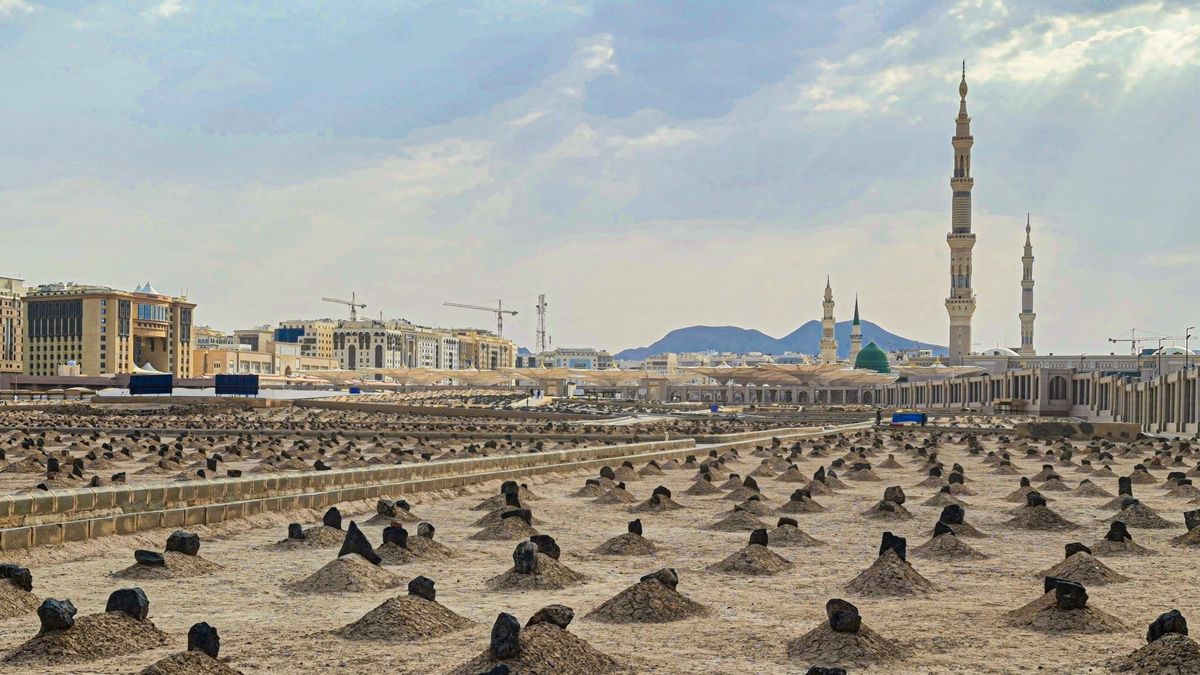
In Medina the great burial ground is al-Baqīʿ, near the Prophet's mosque. Among those buried there are his infant son Ibrāhīm, his aunt Ṣafiyya, ʿAlī's mother Fāṭima bint Asad, his uncle al-ʿAbbās, the caliph ʿUthmān and, in Shia and Sunni memory alike, a great many Companions, along with later figures such as Imam al-Ḥasan and Mālik b. Anas.92 The martyrs of Uḥud, the Prophet's uncle Ḥamza among them, were buried on the battlefield, two to a cloth, without washing.9394 Abū Bakr lies beside the Prophet ﷺ in ʿĀʾisha's room, and ʿUmar, dying of his wounds, sent to ask her leave to be buried "with my two companions". She said she had wanted the place for herself, "but today I prefer him to myself".95
The fitna
The hardest chapter in the Companions' story began with the killing of the caliph ʿUthmān in his house in Medina on 17 June 656.96 ʿAlī became caliph. In December 656 he fought the Battle of the Camel near Basra against an army led by ʿĀʾisha, Ṭalḥa and al-Zubayr; Ṭalḥa and al-Zubayr were killed and ʿĀʾisha was escorted back to Medina.97 In 657 he fought Muʿāwiya, governor of Syria, at Ṣiffīn; the battle ended in an arbitration that split ʿAlī's own camp.98 ʿAmmār b. Yāsir, one of the first seven to declare Islam in Mecca,99 was killed at Ṣiffīn fighting for ʿAlī. Many Muslims have taken that death as the fulfilment of the Prophet's words to ʿAmmār as he carried bricks for the mosque in Medina: "the rebellious group will kill him".100 ʿAlī was assassinated in Kufa in 661, and the civil war ended with Muʿāwiya as caliph.98
Later Muslims speak of this period in two very different registers. Mainstream Sunni scholarship treats the Companions on both sides as having acted on their own judgement (ijtihād). Ibn Taymiyya, for example, read the ʿAmmār hadith as showing that ʿAlī's side was "closer to the truth", while Ibn Ḥajar held that those who fought him erred in good faith and are not to be blamed.101 The dominant instinct is restraint. The Umayyad caliph ʿUmar b. ʿAbd al-ʿAzīz is quoted as saying of the Companions' wars: "That is blood that God kept my hand out of, and I do not want to dip my tongue in it."10218 Shia scholarship sees ʿAlī as the rightful Imam from the start and judges those who fought him accordingly, while also honouring the Companions who stood with him to the end.8 The two series on this site, Sunni and Shia and How Sunni and Shia Came to Be, tell the political story in detail, including Karbalāʾ. Wilferd Madelung's The Succession to Muhammad is the most detailed modern study of these years.103
The books that remember them
Knowledge of the Companions as individuals comes from a genre of its own: biographical dictionaries built to answer one practical question, whether a person in a chain of hadith could be trusted. The earliest large one is Ibn Saʿd's Ṭabaqāt, arranged by generation, with a whole volume on women.104 Al-Bukhārī's al-Tārīkh al-kabīr covers narrators of every generation.105 From the eleventh century come the dedicated Companion dictionaries of Ibn ʿAbd al-Barr, Ibn al-Athīr and Ibn Ḥajar, described in the table above, and al-Dhahabī's Siyar aʿlām al-nubalāʾ, whose opening volumes are a readable gallery of the leading Companions.106 Al-Ṭabarī added a supplement of Companion and Successor biographies to his great history, now in English.107
Shia scholarship built its own tools. Al-Kashshī's Rijāl, which survives in al-Ṭūsī's abridgement Ikhtiyār maʿrifat al-rijāl, arranges transmitters chronologically from the Prophet's time and gathers reports about their loyalty and reliability.108 Al-Ṭūsī's own Rijāl groups 6,429 narrators by the Imam, or the Prophet ﷺ, from whom they transmitted, and its chapter on the Prophet's Companions includes people as different as Salmān, Abū Dharr, Abū Bakr, ʿUmar and Muʿāwiya.109 In the twentieth century Muḥsin al-Amīn's Aʿyān al-Shīʿa gathered some twelve thousand biographies, Companions among them.110
These are the works behind almost every entry in the explorer. Below is a short reading list, with a line on each. Links go only to publishers, libraries, digital libraries of classical texts and long-established reference sites.
1. Classical Sunni dictionaries and histories
- Ibn Saʿd (d. 230/845), Kitāb al-Ṭabaqāt al-kabīr. Arabic: al-Maktaba al-Shāmila; Leiden edition scan: archive.orgThe oldest large collection, arranged by generation and by precedence in Islam: Badr veterans first, then later converts, then the Companions who settled in each province, then the women. Partly translated by Aisha Bewley as The Men of Madina and The Women of Madina (Ta-Ha).
- Al-Bukhārī (d. 256/870), al-Tārīkh al-kabīr. al-Maktaba al-ShāmilaShort entries on thousands of narrators, often with one sample report. Valuable for how early it is.
- Ibn ʿAbd al-Barr (d. 463/1071), al-Istīʿāb fī maʿrifat al-aṣḥāb. al-Maktaba al-ShāmilaThe Andalusian classic: about 3,500 Companions, with full accounts of the famous ones.
- ʿIzz al-Dīn Ibn al-Athīr (d. 630/1233), Usd al-ghāba fī maʿrifat al-ṣaḥāba. al-Maktaba al-ShāmilaCombines four earlier works, marking which one each entry comes from, with his own corrections.
- Al-Dhahabī (d. 748/1348), Siyar aʿlām al-nubalāʾ. al-Maktaba al-ShāmilaLively and opinionated; the most readable classical source on the leading Companions.
- Ibn Ḥajar al-ʿAsqalānī (d. 852/1449), al-Iṣāba fī tamyīz al-ṣaḥāba. al-Maktaba al-ShāmilaThe fullest and most critical; its introduction on definitions, methods and ʿadāla is quoted throughout this page.
- Ibn al-Ṣalāḥ (d. 643/1245), Muqaddima, chapter 39 on knowing the Companions. Wikisource (Arabic)Eight pages that set out nearly every classical Sunni position: definitions, ʿadāla, the ranks, the counts, the last Companion to die.
- Al-Ṭabarī (d. 310/923), The History of al-Ṭabarī, vol. 39, Biographies of the Prophet's Companions and Their Successors, trans. Ella Landau-Tasseron (Albany: SUNY Press, 1998).A scholarly English translation with rich notes.
2. Shia rijāl works
- Al-Kashshī (d. c. 340/951), Rijāl, in al-Ṭūsī's abridgement Ikhtiyār maʿrifat al-rijāl. WikiShia overviewReports about narrators from the Prophet's Companions to the companions of the later Imams; the main early Shia source on individual Companions.
- Al-Shaykh al-Ṭūsī (d. 460/1067), al-Rijāl. WikiShia overviewA list arranged by the Imam each narrator transmitted from, beginning with the Prophet's Companions.
- Muḥsin al-Amīn (d. 1371/1952), Aʿyān al-Shīʿa. WikiShia overviewA modern encyclopaedia of Shia figures, with long entries on ʿAlī's supporters among the Companions.
- ʿAbd al-Ḥusayn Sharaf al-Dīn, Abū Hurayra, English trans. at Al-Islam.orgA well-known Shia critique of the most prolific narrator; read it with a Sunni defence alongside.
3. Modern works in English
- Khalid Muhammad Khalid, Men Around the Messenger (Kuala Lumpur: Islamic Book Trust). ibtbooks.comSixty-four warm, devotional portraits by an Egyptian writer; popular and moving, not a critical study.
- Mohammad Akram Nadwi, al-Muḥaddithāt: The Women Scholars in Islam (Oxford: Interface Publications, 2007); review: Ulum IslamiyyahThe introduction to his multi-volume dictionary of women hadith scholars, al-Wafāʾ bi-asmāʾ al-nisāʾ (Al-Salam Institute).
- Asma Sayeed, Women and the Transmission of Religious Knowledge in Islam (Cambridge: Cambridge University Press, 2013). UCLAAn academic history that starts with the female Companions and asks why women's transmission rose and fell.
- Asma Afsaruddin, The First Muslims: History and Memory (Oxford: Oneworld, 2008).A short, balanced account of the first generations and of how later Sunni and Shia writers remembered them.
- Asma Afsaruddin, Excellence and Precedence: Medieval Islamic Discourse on Legitimate Leadership (Leiden: Brill, 2002); review: AJISHow the ideas of "precedence" (sābiqa) and "excellence" (faḍl) were used to rank the Companions in arguments over the caliphate.
- Fred M. Donner, Muhammad and the Believers: At the Origins of Islam (Cambridge, MA: Belknap Press of Harvard University Press, 2010). Harvard University PressA historian's reconstruction of the early community; readable, and debated.
- Wilferd Madelung, The Succession to Muhammad: A Study of the Early Caliphate (Cambridge: Cambridge University Press, 1997). Cambridge CoreA close reading of the sources on the caliphs and the fitna; his sympathy for ʿAlī's claim is openly argued.
- Etan Kohlberg, "Some Zaydī Views on the Companions of the Prophet", Bulletin of SOAS 39.1 (1976): 91–98. Cambridge CoreShort and precise; with his Oxford thesis on Imāmī attitudes, the best academic guide to Shia views of the Companions.
- Valerie J. Hoffman, The Essentials of Ibāḍī Islam (Syracuse: Syracuse University Press, 2012). Syracuse University PressTranslations of Ibāḍī texts with an introduction, including their view of the early caliphs.
Meet them one by one
The explorer below lists 131 people from the Prophet's life: his wives and children, his household and wider family, the ten, the early converts of Mecca, Emigrants and Helpers, women Companions, commanders, scholars, later converts and the young people who grew up around him. Each entry gives family, work, a short life, how the person related to the Prophet ﷺ, relevant Qur'an verses and hadith with their gradings, where Sunni and Shia assessments differ, and the sources used. Search by name, or filter by group, by tribe, by Emigrant or Helper, and by men or women. Tap a name to open the full entry.
Khadīja bint Khuwaylid b. Asad b. ʿAbd al-ʿUzzā b. Quṣayy, of Banū Asad of Quraysh
DatesBorn c. 555 if she was 40 at marriage; c. 567 if 28; Died Ramaḍān, tenth year of the mission (619), Mecca, about three years before the HijraTribeAsad (Quraysh)FromMeccaWorkmerchant: she financed trading caravans to Syria and hired agents to carry her goods for a share of the profitBecame Muslimthe first person to believe in the message, at the first revelation (c. 610)Buriedal-Ḥajūn (the Maʿlā cemetery), MeccaWith the Prophet ﷺ
She was his employer before she was his wife, and for about twenty-five years his only wife. When he came down from Ḥirāʾ shaken by the first revelation, she comforted him with a list of his own virtues and took him to her cousin Waraqa (Bukhārī 3). He never stopped speaking of her: ʿĀʾisha said she was jealous of no woman as she was of Khadīja, whom she had never met, because he mentioned her so often and kept sending gifts to her old friends (Bukhārī 3818). Jibrīl is reported to have told him to greet her with peace from her Lord and to give her the news of a house in Paradise (Bukhārī 3820).
Life
Khadīja came from Asad, a clan of Quraysh that sat close to the Hāshimites in the web of Meccan kinship. By the time Muḥammad ﷺ met her she had been married twice, to ʿAtīq b. ʿĀʾidh of Makhzūm and to Abū Hāla of Tamīm, and had children by both. Widowed and wealthy, she ran a trading business of her own. Ibn Isḥāq describes her as a woman of honour and means who hired men to take her merchandise to Syria on a profit share, which was how Meccan capital normally moved.
She heard of the young man known as al-Amīn, the trustworthy, and engaged him to take her goods north, sending her servant Maysara with him. The venture did well, and Maysara came back with good reports of his conduct. The sources say she sent a friend, Nafīsa bint Munya, to sound him out about marriage, and the match was agreed with her family; whether her father Khuwaylid or her uncle ʿAmr b. Asad gave her away is reported both ways. He was about twenty-five. Her age is given as forty in the best-known report (Ibn Saʿd, from al-Wāqidī) and as twenty-eight in another attributed to Ibn ʿAbbās, which matters when one counts the six children she bore him: al-Qāsim, ʿAbd Allāh, Zaynab, Ruqayya, Umm Kulthūm and Fāṭima. Her household also took in ʿAlī, the young son of Abū Ṭālib, and Zayd b. Ḥāritha, whom she gave to her husband.
When revelation began around 610 she was the first to believe, and she spent her fortune on the small community. During the boycott of Banū Hāshim she went into the Shiʿb of Abū Ṭālib with her husband and endured two or three years of hunger there. She died in Ramaḍān of the tenth year of the mission, a short time after the boycott was lifted and close in time to Abū Ṭālib's death, which is why the year is remembered as the Year of Sorrow. She was buried at al-Ḥajūn above Mecca. No hadith are transmitted from her, since she died before the Companions began collecting his words, but her memory runs through the reports of others. Sunni and Shia writers alike count her among the four best women of all time, and the hadith in al-Bukhārī places her with Maryam as the best women of their communities (Bukhārī 3432).
Family
FatherKhuwaylid b. AsadMotherFāṭima bint Zāʾida (of ʿĀmir b. Luʾayy)SpousesʿAtīq b. ʿĀʾidh al-Makhzūmī; Abū Hāla al-Tamīmī; Muḥammad ﷺChildrenHind bint ʿAtīq; Hind b. Abī Hāla; Hāla b. Abī Hāla; al-Qāsim; ʿAbd Allāh (al-Ṭayyib, al-Ṭāhir); Zaynab; Ruqayya; Umm Kulthūm; FāṭimaHer cousin was Waraqa b. Nawfal; her sister Hāla was the mother of Abū l-ʿĀṣ b. al-Rabīʿ; her brother al-ʿAwwām was the father of al-Zubayr, and her nephew Ḥakīm b. Ḥizām bought the boy Zayd b. Ḥāritha for her. The order of her two earlier marriages is reported both ways.
Roles
- first believer
- financier of the early community
- Mother of the Believers (Q 33:6)
In the Qur'an and hadith
- Qur'an 33:6: the Prophet's wives are the mothers of the believers
- Bukhari 3: her words of comfort after the first revelation and her taking him to Waraqa Ṣaḥīḥ (in al-Bukhārī's Ṣaḥīḥ)
- Bukhari 3820: Jibrīl brings greetings of peace to her and news of a house in Paradise Ṣaḥīḥ (in al-Bukhārī's Ṣaḥīḥ)
- Bukhari 3818: ʿĀʾisha's jealousy of her memory; he sent gifts to her friends Ṣaḥīḥ (in al-Bukhārī's Ṣaḥīḥ)
- Bukhari 3432: the best of the women of this community is Khadīja Ṣaḥīḥ (in al-Bukhārī's Ṣaḥīḥ)
Where views differSunni and Shia sources honour her equally. They differ on detail: most classical sources give two previous marriages and an age of forty, while some Shia writers (for example in works discussed on WikiShia) argue that she had not married before and that the children attributed to earlier husbands were her sister's. Scholars of both traditions also debate whether she, Fāṭima, Maryam or ʿĀʾisha is the most excellent of women.
See Khadīja bint Khuwaylid in the family tree and timeline of Muhammad ﷺ: A Life
Sources
Sawda bint Zamʿa b. Qays, of Banū ʿĀmir b. Luʾayy of Quraysh
DatesBorn not recorded; older than his later wives; Died end of ʿUmar's caliphate, 23 AH (644), in one report; Shawwāl 54 AH (674) in al-Wāqidī'sTribeʿĀmir b. Luʾayy (Quraysh)FromMeccaBecame Musliman early Meccan Muslim; emigrated to Abyssinia with her first husbandBuriedal-Baqīʿ, MedinaWith the Prophet ﷺ
She was the first woman he married after Khadīja, taken into a grieving house with young daughters to raise. The reports make her warm and a little comic: ʿĀʾisha, whose co-wife she was for years, said she had never seen a woman she would rather be like, and told how Sawda, as she grew older, gave her own turn to ʿĀʾisha (Muslim 1463; Bukhārī 5212). He gave her leave to go ahead from Muzdalifa before the crowds on the Farewell Pilgrimage because she was heavy and slow (Bukhārī 1681).
Life
Sawda belonged to ʿĀmir b. Luʾayy, a clan of Quraysh. She accepted Islam in Mecca together with her husband al-Sakrān b. ʿAmr, and the two made the crossing to Abyssinia with the emigrants. They came back to Mecca, where al-Sakrān died (some reports place his death in Abyssinia), leaving her a widow with a son, ʿAbd al-Raḥmān, who is said to have been killed much later at Jalūlāʾ in Iraq.
After Khadīja's death in the tenth year of the mission, Khawla bint Ḥakīm, the wife of ʿUthmān b. Maẓʿūn, suggested two matches to the Prophet ﷺ: the widow Sawda, and ʿĀʾisha, the young daughter of Abū Bakr. The contract with Sawda was made in Mecca at about the same time as the contract with ʿĀʾisha, and the sources disagree on which came first, but Sawda was the one who moved into his house. She ran the household and looked after Fāṭima and Umm Kulthūm through the last hard years in Mecca. When he emigrated, he sent Zayd b. Ḥāritha and Abū Rāfiʿ back to bring his family, and she came to Medina with them.
The reports about her are domestic and human. She is remembered as tall and large, as quick to make him laugh, and as generous: Ibn Saʿd has ʿUmar sending her a purse of dirhams during his caliphate and her giving it all away. When she feared that he might part from her as she aged, she gave her night to ʿĀʾisha, and Ibn Kathīr, citing a report from Ibn ʿAbbās, connects Q 4:128, on a wife coming to terms with her husband, with her case. After the verse on covering came down, ʿUmar called out to her when she went out at night, and the Prophet then said that the women had been permitted to go out for their needs (Bukhārī 4795).
After his death she stayed in her house; Ibn Saʿd reports that she said she had made the Hajj and ʿUmra and would now remain at home as God had told his wives. Ibn Ḥazm's list, drawn from Baqī b. Makhlad's Musnad, gives five reports from her. Her death is placed at the end of ʿUmar's caliphate in one tradition and in 54 AH in al-Wāqidī's, a gap of three decades that the sources never resolved.
Family
FatherZamʿa b. QaysMotheral-Shamūs bint Qays, of Banū l-Najjār of YathribSpousesal-Sakrān b. ʿAmr; Muḥammad ﷺChildrenʿAbd al-Raḥmān b. al-SakrānHer brother ʿAbd b. Zamʿa appears in the disputed-paternity case of the son of Zamʿa's slave woman. Her first husband al-Sakrān was a brother of Suhayl b. ʿAmr, the Qurashī negotiator at al-Ḥudaybiya.
Roles
- Mother of the Believers
- ran the Prophet's household in Mecca after Khadīja
In the Qur'an and hadith
- Qur'an 4:128: a wife settling terms with her husband; Ibn Kathīr links it to Sawda giving her turn, citing Ibn ʿAbbās's report in al-Ṭayālisī and al-Tirmidhī, who calls it ḥasan gharīb (Ibn Kathīr)
- Bukhari 5212: Sawda gave her turn to ʿĀʾisha Ṣaḥīḥ (in al-Bukhārī's Ṣaḥīḥ)
- Muslim 1463A: ʿĀʾisha: no woman was dearer to me than Sawda; the gift of her day Ṣaḥīḥ (in Muslim's Ṣaḥīḥ)
- Bukhari 1681: permission to leave Muzdalifa early because she was heavy Ṣaḥīḥ (in al-Bukhārī's Ṣaḥīḥ)
- Bukhari 4795: ʿUmar calls out to her after the veil verse; women permitted to go out for their needs Ṣaḥīḥ (in al-Bukhārī's Ṣaḥīḥ)
Reports transmitted: 5 reports in Ibn Ḥazm's list of Companion narrators, from the Musnad of Baqī b. Makhlad
See Sawda bint Zamʿa in the family tree and timeline of Muhammad ﷺ: A Life
Sources
ʿĀʾisha bint Abī Bakr ʿAbd Allāh b. ʿUthmān, of Banū Taym of Quraysh; kunya Umm ʿAbd Allāh
DatesBorn c. 613–614 on the traditional reckoning (Britannica: 614); later on some modern reckonings; Died 17 Ramaḍān 58 AH (July 678), Medina; some say 57 AHTribeTaym (Quraysh)FromMeccaWorkno trade recorded; after 632 she was a teacher, jurist and transmitter consulted by the Companions and SuccessorsBecame Muslimborn to Muslim parents, or in the first years of the missionBuriedal-Baqīʿ, Medina; Abū Hurayra led the funeral prayerWith the Prophet ﷺ
She was the only one of his wives who had not been married before, and the daughter of his closest friend. Asked whom he loved most, he said ʿĀʾisha, and among men, her father (Bukhārī 3662). She is the source of much of what is known about his private life, his worship at night and his last days; he died in her room, his head against her chest (Bukhārī 4450). Their marriage had strains too, from the slander of the Ifk to the episode behind Sūrat al-Taḥrīm (Bukhārī 4913).
Life
ʿĀʾisha grew up in Abū Bakr's house in Mecca, among the first Muslim households. The contract of marriage was made in Mecca around the tenth year of the mission, after Khawla bint Ḥakīm raised the match, and the marriage began in Medina in Shawwāl of 1 or 2 AH (623 or 624). Her age is reported in her own words as six at the contract and nine when she moved into his house (Bukhārī 3894, 5133; Muslim 1422), with a version giving seven, and her nephew ʿUrwa gives the same figures (Bukhārī 3896). This is the classical Sunni position, repeated in many Shia works; Ibn ʿAbd al-Barr said he knew of no disagreement on it. Defenders of these figures, Jonathan Brown among them, add that marriage near puberty was normal in the late antique Near East and that none of the Prophet's enemies raised it against him. Since the twentieth century some Muslim writers have argued that she was in her teens. Muḥammad ʿAlī of the Lahore Aḥmadiyya movement (d. 1951) was the first; Ḥabīb al-Raḥmān Kāndhlawī, Ḥakīm Niyāz Aḥmad and Jāvēd Aḥmad Ghāmidī followed in South Asia, and Jasser Auda has argued for about sixteen. Their main points are reports that her sister Asmāʾ was about ten years older and died in 73 AH aged a hundred, and her memory of a Meccan verse (Q 54:46) coming down while she was a young girl at play (Bukhārī 4876). Traditional scholars reply that the Asmāʾ figures are round and vague (al-Dhahabī preferred ʿĀʾisha's own statement and made the gap larger), and that a girl of about five in the fifth year of the mission fits her own words. Joshua Little's Oxford thesis (2022) argues that the age report was spread by Hishām b. ʿUrwa in Iraq; traditional scholars reject his method and conclusion. The longer discussion is in Muhammad ﷺ: A Life.
In 5 or 6 AH, returning from the campaign against Banū l-Muṣṭaliq, she was left behind looking for a lost necklace and was brought back by Ṣafwān b. al-Muʿaṭṭal. The rumour that followed, the Ifk, ran for about a month until verses of Sūrat al-Nūr cleared her (Q 24:11–26; Bukhārī 4141). She later described the episode in detail, including the fairness of her co-wife Zaynab bint Jaḥsh.
The Prophet ﷺ died in her room in Rabīʿ I 11 AH and was buried there. She lived almost another fifty years and became a central authority on his practice: Companions and Successors came to her with questions, and she corrected other Companions' reports, corrections that al-Zarkashī later gathered in a book. Ibn Ḥazm's list, drawn from Baqī b. Makhlad's Musnad, gives 2,210 reports from her, the fourth highest of any Companion. Her nephew ʿUrwa b. al-Zubayr and ʿAmra bint ʿAbd al-Raḥmān were among her main students.
After the murder of ʿUthmān in 35 AH she joined Ṭalḥa and al-Zubayr in demanding retribution and went with them to Basra, where ʿAlī's army met them at the Battle of the Camel in Jumādā II 36 AH (December 656). After the defeat ʿAlī sent her back to Medina with an escort under her brother Muḥammad. She died in Ramaḍān 58 AH and was buried in al-Baqīʿ.
Family
FatherAbū Bakr al-ṢiddīqMotherUmm Rūmān bint ʿĀmirSpousesMuḥammad ﷺFull brother ʿAbd al-Raḥmān; half-sister Asmāʾ (mother of ʿAbd Allāh and ʿUrwa b. al-Zubayr), half-brother Muḥammad b. Abī Bakr (by Asmāʾ bint ʿUmays). She took her kunya from her nephew ʿAbd Allāh b. al-Zubayr. She had been spoken for by Jubayr b. Muṭʿim's family before the Prophet's proposal.
Roles
- Mother of the Believers
- leading transmitter and jurist
- present at the Battle of the Camel (36 AH)
Campaigns: Uḥud (carrying water, Bukhārī 2880), the Camel (36 AH)
In the Qur'an and hadith
- Qur'an 24:11-26: the verses on the Ifk, which the exegetes connect with her
- Qur'an 66:4: two wives who backed each other against him; ʿUmar named them as Ḥafṣa and ʿĀʾisha (Bukhārī 4913)
- Bukhari 3662: the most beloved of people to him: ʿĀʾisha; of men, her father Ṣaḥīḥ (in al-Bukhārī's Ṣaḥīḥ)
- Bukhari 3769: the excellence of ʿĀʾisha over women is like that of tharīd over other food Ṣaḥīḥ (in al-Bukhārī's Ṣaḥīḥ)
- Bukhari 5133: her age at the contract and at the start of the marriage, in her words Ṣaḥīḥ (in al-Bukhārī's Ṣaḥīḥ)
- Bukhari 3894: her own account of the move to his house in Medina, with the same ages Ṣaḥīḥ (in al-Bukhārī's Ṣaḥīḥ)
- Bukhari 4876: Q 54:46 was revealed in Mecca when she was a little girl at play, a report the revisionists cite Ṣaḥīḥ (in al-Bukhārī's Ṣaḥīḥ)
- Muslim 1422c: the version that gives seven at the contract Ṣaḥīḥ (in Muslim's Ṣaḥīḥ)
- Bukhari 4141: her account of the Ifk Ṣaḥīḥ (in al-Bukhārī's Ṣaḥīḥ)
- Bukhari 4450: he died in her house with his head against her chest Ṣaḥīḥ (in al-Bukhārī's Ṣaḥīḥ)
Reports transmitted: 2,210 reports in Ibn Ḥazm's list of Companion narrators, from the Musnad of Baqī b. Makhlad
Where views differSunni scholarship ranks her among the greatest women of the community, a Mother of the Believers declared innocent by the Qurʾān, and treats her part in the Camel as a mistaken judgement made in good faith for which she later expressed regret. Twelver Shia scholars criticise her opposition to ʿAlī and her role at the Camel; some Shia exegetes, such as ʿAlī b. Ibrāhīm al-Qummī, connect the Ifk verses to Māriya rather than to her. Senior Shia authorities have ruled against insulting her; Ayatollah Khamenei issued such a ruling in 2010. On her age, see the life above: the classical figures are accepted by the traditional schools and questioned by some modern writers.
See ʿĀʾisha bint Abī Bakr in the family tree and timeline of Muhammad ﷺ: A Life
Sources
Ḥafṣa bint ʿUmar b. al-Khaṭṭāb, of Banū ʿAdī of Quraysh
DatesBorn c. 605, about five years before the mission, when Quraysh were rebuilding the Kaʿba (Ibn Saʿd); Died Shaʿbān 45 AH (665) in most reports; 41 AH (661) in others; MedinaTribeʿAdī (Quraysh)FromMeccaWorkno trade recorded; she could read and write, which was uncommonBecame Muslimin Mecca with her father's householdBuriedal-Baqīʿ, MedinaWith the Prophet ﷺ
Her marriage bound ʿUmar to the Prophet ﷺ as Abū Bakr was already bound. She was outspoken, and with ʿĀʾisha she formed one side of the household's rivalries; ʿUmar himself named the two of them as the wives addressed in Q 66:4 (Bukhārī 4913). He divorced her once and then took her back (Abū Dāwūd 2283). She learned to write from al-Shifāʾ bint ʿAbd Allāh, and he asked al-Shifāʾ to teach her a healing charm as she had taught her writing (Abū Dāwūd 3887).
Life
Ḥafṣa was the daughter of ʿUmar b. al-Khaṭṭāb and of Zaynab bint Maẓʿūn. Her first husband, Khunays b. Ḥudhāfa of Sahm, was an early Muslim who had made the emigration to Abyssinia and then to Medina. He fought at Badr and died in Medina afterwards; the sources differ on whether he died of wounds from Badr or from Uḥud, and the common date for her widowhood is 2 or 3 AH.
ʿUmar, anxious for his widowed daughter, offered her to ʿUthmān, who had just lost Ruqayya, and then to Abū Bakr. ʿUthmān declined and Abū Bakr said nothing, which hurt ʿUmar more. Soon after, the Prophet ﷺ asked for her himself, and Abū Bakr told ʿUmar he had kept silent because he knew the Prophet had spoken of her (Bukhārī 4005). The marriage took place in Shaʿbān 3 AH (625), when she was about twenty.
She was literate, and this shaped her later role. Al-Shifāʾ bint ʿAbd Allāh had taught her to write. When Abū Bakr's compilers collected the Qurʾān on sheets after the battle of al-Yamāma, the sheets passed to ʿUmar and then into Ḥafṣa's keeping, and it was from her copy that ʿUthmān's committee made the standard copies (Bukhārī 4986). Later reports say Marwān b. al-Ḥakam asked her for the sheets and took them only after her death.
The reports also show her strong will. She joined ʿĀʾisha in the plan behind the honey episode at Zaynab bint Jaḥsh's house (Bukhārī 4912) and in the tension that led to the Prophet's month-long separation from his wives. He divorced her once and returned her (Abū Dāwūd 2283, graded ṣaḥīḥ by al-Albānī); later reports add that Jibrīl told him she fasted and prayed much. Ibn Ḥazm's list, drawn from Baqī b. Makhlad's Musnad, gives sixty reports from her. She died in Medina in 45 AH according to most, with 41 AH as the alternative, and Marwān, then governor, is said to have led her funeral prayer.
Family
FatherʿUmar b. al-KhaṭṭābMotherZaynab bint Maẓʿūn (sister of ʿUthmān b. Maẓʿūn)SpousesKhunays b. Ḥudhāfa al-Sahmī; Muḥammad ﷺFull brother ʿAbd Allāh b. ʿUmar. She had no children.
Roles
- Mother of the Believers
- keeper of the Qurʾān sheets compiled under Abū Bakr
In the Qur'an and hadith
- Qur'an 66:1-5: the episode of the oath and the two wives who backed each other; ʿUmar named Ḥafṣa and ʿĀʾisha
- Bukhari 4005: ʿUmar offers Ḥafṣa to ʿUthmān and Abū Bakr Ṣaḥīḥ (in al-Bukhārī's Ṣaḥīḥ)
- Bukhari 4986: the Qurʾān sheets kept with Ḥafṣa, used for ʿUthmān's copies Ṣaḥīḥ (in al-Bukhārī's Ṣaḥīḥ)
- Abudawud 2283: he divorced Ḥafṣa and then took her back Ṣaḥīḥ (al-Albānī)
- Abudawud 3887: al-Shifāʾ had taught Ḥafṣa writing Ṣaḥīḥ (al-Albānī)
- Bukhari 4913: ʿUmar names Ḥafṣa and ʿĀʾisha as the two wives of Q 66:4 Ṣaḥīḥ (in al-Bukhārī's Ṣaḥīḥ)
Reports transmitted: 60 reports in Ibn Ḥazm's list of Companion narrators, from the Musnad of Baqī b. Makhlad
Where views differSunni sources honour her as a Mother of the Believers and credit her with safeguarding the Qurʾān sheets. Shia writers, reading Q 66:1–5 with the reports that she and ʿĀʾisha were meant, are critical of her conduct toward the Prophet and of her support for her father's caliphate.
See Ḥafṣa bint ʿUmar in the family tree and timeline of Muhammad ﷺ: A Life
Sources
Zaynab bint Khuzayma b. al-Ḥārith, of Banū Hilāl b. ʿĀmir b. Ṣaʿṣaʿa; called Umm al-Masākīn
DatesBorn c. 595 if about thirty at marriage, as reported; Died 3 or 4 AH (625–626), Medina, a few months after the marriageTribeHilāl b. ʿĀmir (Hawāzin)FromNajd; lived in Mecca and MedinaWorknot recorded; known for feeding the poorBecame Muslimearly; the date is not recordedBuriedal-Baqīʿ, Medina; the Prophet prayed over herWith the Prophet ﷺ
Very little is recorded about their life together because it was so short. What the sources keep is her name, Umm al-Masākīn, the mother of the poor, which she already carried before Islam, and the fact that she and Khadīja are the only wives who died before him.
Life
Zaynab bint Khuzayma came from Hilāl, a branch of the great Hawāzin confederation of Najd. Even before Islam she was known as Umm al-Masākīn, the mother of the poor, for her habit of feeding them. Her earlier marriages are confused in the sources. Some make her the widow of ʿAbd Allāh b. Jaḥsh, killed at Uḥud in 3 AH; others say she was married to ʿUbayda b. al-Ḥārith b. al-Muṭṭalib, killed at Badr, or to his brother al-Ṭufayl, who divorced her. The dates of her marriage to the Prophet ﷺ (3 or 4 AH) fit either a Badr or an Uḥud widowhood, so the chronology does not settle the question.
What the sources agree on is the pattern: she was left alone by the first battles, and the Prophet married her, as he married several widows of those years. She is reported to have been about thirty. The marriage lasted only a few months: two, three or eight by different reports. She died in Medina, and he prayed over her and buried her in al-Baqīʿ. Her room was later given to Umm Salama, who married him soon afterwards.
No hadith are transmitted from her. She is sometimes confused in popular writing with Maymūna or with the unnamed woman who offered herself to the Prophet in Q 33:50, a verse that a few early exegetes connected with her; most name another woman. I have kept the entry short because the classical sources themselves are short, and much of what circulates about her beyond these points has no early basis.
Family
FatherKhuzayma b. al-ḤārithMotherHind bint ʿAwf (in some reports, which would make her a half-sister of Maymūna)Spousesdisputed: ʿAbd Allāh b. Jaḥsh, or ʿUbayda b. al-Ḥārith, or al-Ṭufayl b. al-Ḥārith; Muḥammad ﷺSome genealogists make her a maternal half-sister of Maymūna bint al-Ḥārith; others do not.
Roles
- Mother of the Believers
- Umm al-Masākīn, 'mother of the poor'
In the Qur'an and hadith
- Qur'an 33:50: the woman who offers herself to the Prophet; a minority of early reports connect it with her
Where views differSunni and Shia sources agree on her charity and early death; they share the same uncertainty about her previous husband.
See Zaynab bint Khuzayma in the family tree and timeline of Muhammad ﷺ: A Life
Sources
Hind bint Abī Umayya Ḥudhayfa b. al-Mughīra, of Banū Makhzūm of Quraysh; kunya Umm Salama
DatesBorn not recorded; reported to have lived to about eighty-four or ninety; Died 59–62 AH (679–682), Medina; 61 AH is commonTribeMakhzūm (Quraysh)FromMeccaWorkno trade recordedBecame Muslimamong the early Meccan Muslims, with her husband Abū SalamaBuriedal-Baqīʿ, MedinaWith the Prophet ﷺ
She came into his household as a widow with four small children and was known there for her calm judgement. At al-Ḥudaybiya, when the Companions would not sacrifice and shave, she advised him to do it himself without a word, and they followed (Bukhārī 2731). The verse of purification and the gathering under the cloak are placed in her house in al-Tirmidhī's report; asked if she was included, he told her she was in her place and upon good (Tirmidhī 3205).
Life
Umm Salama, whose own name was Hind, was born into Makhzūm, one of the richest clans of Quraysh. Her father was famous for feeding every traveller who rode with him. She and her husband Abū Salama were early Muslims and went to Abyssinia with the first emigrants; they later returned to Mecca.
Her own account of the emigration to Medina, preserved by Ibn Isḥāq, is one of the most vivid in the sīra. Her Makhzūmī kin stopped her from leaving with her husband, while his clan, Banū ʿAbd al-Asad, took her small son Salama from her, dislocating his arm in the tug between the two families. For about a year she went out each day to weep at the place of the separation, until her family relented. She set off alone with the boy on a camel and was escorted to Qubāʾ by ʿUthmān b. Ṭalḥa, still a pagan, whose courtesy she never forgot.
Abū Salama fought at Badr and Uḥud and died in Jumādā II 4 AH when an Uḥud wound reopened. She had learned from him a prayer for times of loss, asking God to reward her and replace what she had lost with something better (Muslim 918), and she said she wondered who could be better than Abū Salama. The Prophet ﷺ proposed; she answered that she was jealous, older and had children, and he replied to each concern. They married in Shawwāl 4 AH.
Her advice at al-Ḥudaybiya in 6 AH is the best-known instance of her counsel. She was also consulted on legal questions, and Ibn Ḥazm's list, drawn from Baqī b. Makhlad's Musnad, gives 378 reports from her, second among the wives after ʿĀʾisha. She was the last of the Prophet's wives to die in most accounts, between 59 and 62 AH, and some reports say she lived to hear of al-Ḥusayn's death at Karbalāʾ. Her son ʿUmar b. Abī Salama served ʿAlī as governor of Bahrain.
Family
FatherAbū Umayya b. al-Mughīra, called Zād al-Rakb ('provision of the riders') for his generosity to travellersMotherʿĀtika bint ʿĀmir, of KinānaSpousesAbū Salama ʿAbd Allāh b. ʿAbd al-Asad; Muḥammad ﷺChildrenSalama; ʿUmar; Zaynab (first named Barra); DurraHer first husband was the Prophet's cousin (son of his aunt Barra) and his milk-brother through Thuwayba. Her half-brothers ʿAbd Allāh and Zuhayr b. Abī Umayya were sons of the Prophet's aunt ʿĀtika.
Roles
- Mother of the Believers
- adviser at al-Ḥudaybiya (6 AH)
- emigrant to Abyssinia and Medina
In the Qur'an and hadith
- Qur'an 33:33: the verse of purification; al-Tirmidhī's report places its revelation in her house
- Muslim 918A: the prayer at a time of loss that she learned and applied at Abū Salama's death Ṣaḥīḥ (in Muslim's Ṣaḥīḥ)
- Bukhari 2731: her advice at al-Ḥudaybiya Ṣaḥīḥ (in al-Bukhārī's Ṣaḥīḥ)
- Tirmidhi 3205: the cloak and the verse of purification in her house Ṣaḥīḥ (Darussalam)
- Bukhari 4913: she rebukes ʿUmar for interfering between the Prophet and his wives Ṣaḥīḥ (in al-Bukhārī's Ṣaḥīḥ)
Reports transmitted: 378 reports in Ibn Ḥazm's list of Companion narrators, from the Musnad of Baqī b. Makhlad
Where views differSunni and Shia writers both hold her in very high regard. Shia sources emphasise her loyalty to ʿAlī and the Ahl al-Bayt, her role as narrator of the Ḥadīth al-Kisāʾ, and reports that Imams entrusted items to her; Sunni sources emphasise her judgement and legal knowledge. The debate over whether the Prophet's wives fall within 'the People of the House' in Q 33:33 turns partly on her report.
See Umm Salama (Hind bint Abī Umayya) in the family tree and timeline of Muhammad ﷺ: A Life
Sources
Zaynab bint Jaḥsh b. Riʾāb, of Asad b. Khuzayma, confederates of Banū ʿAbd Shams in Mecca; first named Barra
DatesBorn c. 590 (about 35 at her marriage to the Prophet); Died 20 AH (640–641), Medina, aged about 53TribeAsad b. Khuzayma (allied to ʿAbd Shams of Quraysh)FromMeccaWorkleatherworker: she tanned and stitched hides and gave the income in charityBecame Muslimearly, in Mecca; emigrated to Medina with her brothersBuriedal-Baqīʿ, Medina; ʿUmar led the funeral prayerWith the Prophet ﷺ
She was his first cousin, and he himself arranged her first marriage to his adopted son Zayd. After their divorce the Qurʾān directed him to marry her (Q 33:37), and she used to tell the other wives that their families had married them off while God had married her from above seven heavens (Bukhārī 7420). When he asked her about ʿĀʾisha during the Ifk, she said she knew nothing of her but good, and ʿĀʾisha later credited her piety for it (Bukhārī 4141). He said the wife with the longest hand would be first to join him, and it was Zaynab, who worked with her hands and gave in charity (Muslim 2452).
Life
Zaynab was the daughter of the Prophet's aunt Umayma and of Jaḥsh, a man of Asad b. Khuzayma living in Mecca as an ally of the ʿAbd Shams clan. The family became Muslim early, and when the Jaḥsh household emigrated to Medina they left their Meccan house empty, and Abū Sufyān sold it. Her name was Barra until the Prophet ﷺ renamed her (Muslim 2142).
In Medina he proposed her marriage to Zayd b. Ḥāritha, his freedman and adopted son. The exegetes report that she and her brother ʿAbd Allāh were unwilling, since she was a Qurashī noblewoman by descent and Zayd a former slave, until Q 33:36 was recited. The marriage was unhappy and Zayd divorced her. Q 33:37 then tells how the Prophet had urged Zayd to keep his wife while hiding what God would make known, and says 'We gave her to you in marriage' so that believers would not be blamed for marrying the former wives of adopted sons. The wedding, usually dated 5 AH (3 or 4 AH in other reports), was marked by the most generous feast he gave for any wife, a single sheep (Bukhārī 5168), and at it the verse telling guests not to linger and to speak to his wives from behind a screen came down (Q 33:53; Bukhārī 4791).
She was, in ʿĀʾisha's words, the wife who rivalled her in his affection, and the honey episode that lies behind Sūrat al-Taḥrīm happened in her house (Bukhārī 4912). Her sister Ḥamna was among those who spread the Ifk, but Zaynab would not. The sources describe her as a skilled worker who tanned and stitched leather and gave away what she earned, and as devoted to prayer and fasting.
She was the first of his wives to die after him, in 20 AH, which the Companions took as the meaning of his remark about the longest hand. Ibn Saʿd reports that when ʿUmar sent her stipend of twelve thousand dirhams she had it distributed to relatives and orphans until nothing was left. ʿUmar led her funeral prayer. Ibn Ḥazm's list gives eleven reports from her.
Family
FatherJaḥsh b. RiʾābMotherUmayma bint ʿAbd al-Muṭṭalib, the Prophet's auntSpousesZayd b. Ḥāritha; Muḥammad ﷺBrothers ʿAbd Allāh b. Jaḥsh (killed at Uḥud), ʿUbayd Allāh b. Jaḥsh (first husband of Umm Ḥabība) and the blind poet Abū Aḥmad; sisters Ḥamna (wife of Muṣʿab b. ʿUmayr, then of Ṭalḥa) and Umm Ḥabība bint Jaḥsh (wife of ʿAbd al-Raḥmān b. ʿAwf).
Roles
- Mother of the Believers
- the marriage that ended adoptive kinship as a bar to marriage (Q 33:37)
In the Qur'an and hadith
- Qur'an 33:36: al-Ṭabarī and Ibn Kathīr give a report from Ibn ʿAbbās that it came down over her reluctance to marry Zayd (al-Ṭabarī, Ibn Kathīr)
- Qur'an 33:37: the marriage after Zayd's divorce
- Qur'an 33:53: the verse of the screen, revealed at her wedding feast (Bukhārī 4791)
- Bukhari 7420: she said God married her to him from above seven heavens Ṣaḥīḥ (in al-Bukhārī's Ṣaḥīḥ)
- Muslim 2452: the longest hand: she worked with her hand and gave in charity Ṣaḥīḥ (in Muslim's Ṣaḥīḥ)
- Bukhari 4791: the verse of the screen at her wedding feast Ṣaḥīḥ (in al-Bukhārī's Ṣaḥīḥ)
- Bukhari 5168: the best wedding feast he gave was for Zaynab, one sheep Ṣaḥīḥ (in al-Bukhārī's Ṣaḥīḥ)
- Muslim 2142A: her name was changed from Barra to Zaynab Ṣaḥīḥ (in Muslim's Ṣaḥīḥ)
Reports transmitted: 11 reports in Ibn Ḥazm's list of Companion narrators, from the Musnad of Baqī b. Makhlad
Where views differThe marriage has been a target of polemic since medieval times. A report in al-Ṭabarī and others that the Prophet saw her unveiled and was struck by her is rejected as unreliable by many Sunni scholars (Ibn al-ʿArabī and Ibn Kathīr among them), who read 33:37 as saying that what he hid was God's instruction that he would marry her. Shia exegetes take a similar line. Both traditions present the marriage as a legal reform of adoptive kinship.
See Zaynab bint Jaḥsh in the family tree and timeline of Muhammad ﷺ: A Life
Sources
Juwayriya (first named Barra) bint al-Ḥārith b. Abī Ḍirār, of Banū l-Muṣṭaliq of Khuzāʿa
DatesBorn c. 607 (about twenty at her marriage); Died Rabīʿ I 50 AH (670) in most reports; 56 AH (676) in others; MedinaTribeal-Muṣṭaliq (Khuzāʿa)Fromal-Muraysīʿ region, between Mecca and MedinaBecame Muslimafter her capture in 5 or 6 AHBuriedal-Baqīʿ, MedinaWith the Prophet ﷺ
Her marriage turned a defeated enemy into kin. When the Companions heard he had married her, they freed their captives from her tribe, saying these were now the Prophet's in-laws; ʿĀʾisha said she knew of no woman who brought more blessing to her people (Abū Dāwūd 3931). He renamed her from Barra, not liking it to be said that he had left 'Barra' (Muslim 2140), and once, finding her still at her morning devotions, taught her four phrases that outweighed all she had said (Muslim 2726).
Life
Juwayriya was the daughter of al-Ḥārith b. Abī Ḍirār, chief of Banū l-Muṣṭaliq, a clan of Khuzāʿa living near the well of al-Muraysīʿ on the coastal road. According to the sīra, her father gathered forces to march on Medina, and the Prophet ﷺ moved first, in 5 or 6 AH. Her husband Musāfiʿ b. Ṣafwān was killed and she was among the captives. The same campaign produced the Ifk against ʿĀʾisha and the quarrel at the well in which ʿAbd Allāh b. Ubayy spoke against the emigrants.
She fell in the division of captives to Thābit b. Qays b. Shammās, or to a cousin of his, and agreed with him a contract to buy her freedom. She went to the Prophet to ask for help with the payment. He offered instead to pay it and marry her, and she accepted. When the news spread, the Companions released the captives of Banū l-Muṣṭaliq they held, about a hundred households by ʿĀʾisha's account (Abū Dāwūd 3931, graded ḥasan by al-Albānī). Later reports add that her father came to ransom her, was given her choice, and himself became Muslim. She was about twenty.
In Medina she is remembered for long devotions. The hadith in Muslim has the Prophet leave her at dawn at her place of prayer and find her still there late in the morning, and tell her that four phrases said three times would outweigh everything she had said since (Muslim 2726). Another of her reports, in al-Bukhārī, has him find her fasting on a Friday and, learning she had not fasted the day before and did not mean to fast the day after, tell her to break it (Bukhārī 1986); it became a standard text on singling out Friday for fasting. Ibn Ḥazm's list gives seven reports from her. Muslim writers often cite her marriage as an example of the Prophet using marriage to make peace with a tribe, and the reports give no sign that her people held the campaign against her afterwards. She lived through the caliphates of the four and into Muʿāwiya's reign, and died in Medina in 50 AH, or 56 AH in another report, with Marwān b. al-Ḥakam leading the prayer.
Family
Fatheral-Ḥārith b. Abī Ḍirār, chief of Banū l-MuṣṭaliqSpousesMusāfiʿ b. Ṣafwān; Muḥammad ﷺLater reports say her father came to Medina to ransom her and became Muslim.
Roles
- Mother of the Believers
- her marriage freed the captives of her tribe
In the Qur'an and hadith
- Abudawud 3931: the marriage and the freeing of her tribe's captives Ḥasan (al-Albānī)
- Muslim 2140: her name changed from Barra to Juwayriya Ṣaḥīḥ (in Muslim's Ṣaḥīḥ)
- Muslim 2726A: the phrases of glorification that outweigh a morning of devotion Ṣaḥīḥ (in Muslim's Ṣaḥīḥ)
- Bukhari 1986: she is told to break a fast kept on Friday alone Ṣaḥīḥ (in al-Bukhārī's Ṣaḥīḥ)
Reports transmitted: 7 reports in Ibn Ḥazm's list of Companion narrators, from the Musnad of Baqī b. Makhlad
See Juwayriya bint al-Ḥārith in the family tree and timeline of Muhammad ﷺ: A Life
Sources
Ramla bint Abī Sufyān Ṣakhr b. Ḥarb, of Banū Umayya (ʿAbd Shams) of Quraysh; kunya Umm Ḥabība
DatesDied 44 AH (664–665), MedinaTribeUmayya (Quraysh)FromMeccaBecame Muslimearly, in Mecca, against her father's positionBuriedal-Baqīʿ, MedinaWith the Prophet ﷺ
The daughter of his chief opponent, she married him by proxy while still in Abyssinia. In Medina she kept to his teaching closely: she said that after hearing him speak of twelve voluntary prayer-units a day she never left them (Muslim 728). When her father died she mourned him three days only, citing the Prophet's rule on mourning (Bukhārī 1280). She once asked him to marry her sister, and he explained why that was not lawful (Bukhārī 5101).
Life
Ramla, known as Umm Ḥabība after her daughter, was a daughter of Abū Sufyān, the Umayyad leader who would command Quraysh against the Muslims at Uḥud and the Trench. She became Muslim in Mecca with her husband ʿUbayd Allāh b. Jaḥsh, and the two went to Abyssinia with the second group of emigrants, where their daughter Ḥabība was born. There, according to Ibn Isḥāq, ʿUbayd Allāh became a Christian, and he died in Abyssinia, leaving her a widow far from home, with her father still at war with her faith.
The Prophet ﷺ sent ʿAmr b. Umayya al-Ḍamrī to the Najāshī to ask for her in marriage. The contract was concluded in Abyssinia, with Khālid b. Saʿīd b. al-ʿĀṣ acting for her in Ibn Isḥāq's account, and the Najāshī paid the dower of four thousand dirhams on the Prophet's behalf; Shuraḥbīl b. Ḥasana then brought her to Medina (Abū Dāwūd 2107, graded ṣaḥīḥ by al-Albānī). The date is given as 6 or 7 AH, and she joined him in 7 AH, around the time the Abyssinian emigrants returned.
Ibn Isḥāq tells that when Abū Sufyān came to Medina in 8 AH to try to renew the truce of al-Ḥudaybiya, he went to his daughter's room and she folded away the Prophet's bedding so her father, still a pagan, would not sit on it. Mecca fell soon after and Abū Sufyān became Muslim.
She outlived her husband by more than thirty years and saw her brother Muʿāwiya become caliph. Ibn Ḥazm lists sixty-five reports from her, including the hadith on the twelve units of voluntary prayer and another, in al-Tirmidhī, on keeping four units before and four after the midday prayer (Tirmidhī 428). Her reports are mostly about prayer, mourning and the rules of kinship in marriage, the areas where her own life had tested her. Ibn Saʿd reports that before her death she asked ʿĀʾisha and Umm Salama to forgive anything that had passed between co-wives. She died in Medina in 44 AH.
Family
FatherAbū Sufyān Ṣakhr b. ḤarbMotherṢafiyya bint Abī l-ʿĀṣ (an aunt of ʿUthmān b. ʿAffān)SpousesʿUbayd Allāh b. Jaḥsh; Muḥammad ﷺChildrenḤabība bint ʿUbayd AllāhHalf-sister of Muʿāwiya b. Abī Sufyān. Her first husband was the Prophet's cousin, a son of his aunt Umayma.
Roles
- Mother of the Believers
- emigrant to Abyssinia
In the Qur'an and hadith
- Abudawud 2107: the Najāshī married her to the Prophet and paid 4,000 dirhams as dower Ṣaḥīḥ (al-Albānī)
- Muslim 728A: twelve voluntary units of prayer a day; she never left them Ṣaḥīḥ (in Muslim's Ṣaḥīḥ)
- Tirmidhi 428: four units before and four after the midday prayer Ṣaḥīḥ (Darussalam); al-Tirmidhī: ṣaḥīḥ gharīb
- Bukhari 1280: she mourned her father three days, following his teaching Ṣaḥīḥ (in al-Bukhārī's Ṣaḥīḥ)
- Bukhari 5101: she asked him to marry her sister; he explained it was not lawful Ṣaḥīḥ (in al-Bukhārī's Ṣaḥīḥ)
Reports transmitted: 65 reports in Ibn Ḥazm's list of Companion narrators, from the Musnad of Baqī b. Makhlad
Where views differSunni scholars honour her as a Mother of the Believers; her brother Muʿāwiya was later called 'uncle of the believers' in Sunni usage on the strength of this marriage, a title Shia scholars reject. Shia writers generally treat her personally with respect while being critical of her family's politics.
See Umm Ḥabība (Ramla bint Abī Sufyān) in the family tree and timeline of Muhammad ﷺ: A Life
Sources
Ṣafiyya bint Ḥuyayy b. Akhṭab, of the Jewish tribe of Banū l-Naḍīr
DatesBorn c. 610 (about seventeen at her marriage); Died Ramaḍān 50 AH (670) in many reports; 52 AH (672) in others; MedinaTribeBanū l-NaḍīrFromYathrib (Medina), later KhaybarBecame Muslimat Khaybar in 7 AH, when freed and offered the choiceBuriedal-Baqīʿ, MedinaWith the Prophet ﷺ
She entered his household as the daughter of an enemy chief, and several reports show him taking her side. When Ḥafṣa called her 'the daughter of a Jew' and she wept, he told her she was the daughter of a prophet, her uncle was a prophet and she was married to a prophet (Tirmidhī 3894). When she visited him during his retreat in the mosque he walked her to the door and told two passing Anṣārīs, 'she is Ṣafiyya', to cut off any suspicion (Bukhārī 2035).
Life
Ṣafiyya was born into the leading family of Banū l-Naḍīr, one of the Jewish tribes of Yathrib. Her father Ḥuyayy b. Akhṭab was the tribe's chief, and her mother came from Banū Qurayẓa. When the Naḍīr were expelled from Medina in 4 AH they moved to Khaybar. Ḥuyayy then helped build the confederacy that besieged Medina at the Trench and persuaded Qurayẓa to break their agreement with the Prophet ﷺ; he was executed with Qurayẓa's men in 5 AH. Ṣafiyya had been married first to Sallām b. Mishkam and then to Kināna b. al-Rabīʿ, keeper of the Naḍīr treasure at Khaybar.
Khaybar fell in 7 AH, Kināna was killed, and Ṣafiyya was among the captives. She was first allotted to Diḥya al-Kalbī, until someone told the Prophet that the daughter of the chief of Qurayẓa and al-Naḍīr was fit only for him; he gave Diḥya another captive, freed Ṣafiyya and married her, making her freedom her dower (Bukhārī 371). Ibn Saʿd reports that he offered her the choice of freedom to go back to her people or Islam and marriage, and that she chose the second. Umm Sulaym prepared her, and the wedding feast was held on the road home. Ibn Isḥāq tells of a bruise near her eye, from Kināna's blow when she told him of a dream that the moon had fallen into her lap.
In Medina her descent was held against her by some co-wives, and the Prophet defended her. In his last illness she is reported to have said she wished she could bear his pain for him. After his death she lived in Medina for four decades. During the siege of ʿUthmān's house in 35 AH she is reported to have tried to reach him and to have had food and water taken to him. Ibn Ḥazm's list gives ten reports from her. She is said to have left part of her estate to a Jewish nephew. She died in 50 or 52 AH and was buried in al-Baqīʿ.
Family
FatherḤuyayy b. Akhṭab, chief of Banū l-NaḍīrMotherBarra bint Samawʾal, of Banū QurayẓaSpousesSallām b. Mishkam; Kināna b. al-Rabīʿ b. Abī l-Ḥuqayq; Muḥammad ﷺHer father was executed after the siege of Banū Qurayẓa in 5 AH; her husband Kināna was killed at Khaybar. Muslim tradition gives her descent from Aaron (Hārūn).
Roles
- Mother of the Believers
In the Qur'an and hadith
- Bukhari 371: her capture at Khaybar, her freedom as dower and the wedding feast Ṣaḥīḥ (in al-Bukhārī's Ṣaḥīḥ)
- Tirmidhi 3894: 'you are the daughter of a prophet' Ṣaḥīḥ (Darussalam); al-Tirmidhī: ḥasan ṣaḥīḥ gharīb
- Bukhari 2035: her visit during his retreat in the mosque Ṣaḥīḥ (in al-Bukhārī's Ṣaḥīḥ)
Reports transmitted: 10 reports in Ibn Ḥazm's list of Companion narrators, from the Musnad of Baqī b. Makhlad
Where views differModern critics object to a marriage contracted soon after her husband's death in battle; Muslim writers answer from the reports that she was freed first and chose Islam and the marriage. Sunni and Shia sources agree on her standing as a Mother of the Believers.
See Ṣafiyya bint Ḥuyayy in the family tree and timeline of Muhammad ﷺ: A Life
Sources
Maymūna (first named Barra) bint al-Ḥārith b. Ḥazn, of Banū Hilāl b. ʿĀmir b. Ṣaʿṣaʿa
DatesDied 51 AH (671) in most reports, at Sarif near Mecca; other dates are also givenTribeHilāl b. ʿĀmir (Hawāzin)FromMeccaBecame Muslimin Mecca; the date is not recordedBuriedSarif, on the road between Mecca and Medina, where the marriage was consummatedWith the Prophet ﷺ
She was the last woman he married, and through her he was tied to al-ʿAbbās's household. Her nephew Ibn ʿAbbās spent nights in her house as a boy and described the Prophet's night prayer from there (Bukhārī 117). She is the source for the report that he married her while not in pilgrim dress (Muslim 1411), against Ibn ʿAbbās's report that he was (Bukhārī 1837).
Life
Maymūna belonged to Hilāl, a clan of Hawāzin, and to a family of sisters whose marriages linked them to the leading men of Mecca: Umm al-Faḍl was the wife of al-ʿAbbās, and another sister was the mother of Khālid b. al-Walīd. Her first husband, before Islam, was Masʿūd b. ʿAmr of Thaqīf; her second, Abū Ruhm b. ʿAbd al-ʿUzzā of Quraysh, died and left her a widow.
In Dhū l-Qaʿda 7 AH the Prophet ﷺ came to Mecca for the ʿUmrat al-Qaḍāʾ, the make-up pilgrimage agreed at al-Ḥudaybiya. Al-ʿAbbās arranged the marriage, and it was concluded during this visit. Quraysh would not let him stay beyond the agreed three days to hold the wedding feast in Mecca, so the marriage was completed at Sarif, a stopping place about ten miles out on the Medina road. Whether he was in iḥrām when the contract was made is reported both ways, by Ibn ʿAbbās and by Maymūna herself, and jurists still cite the two reports on whether a pilgrim may marry. The Prophet renamed her Maymūna, 'blessed'; her name had been Barra. Some early reports connect her with the woman who offered herself to the Prophet in Q 33:50; others name different women.
In Medina her home was open to her nephews; Ibn ʿAbbās's descriptions of how the Prophet slept, woke and prayed at night come from nights there. In the Prophet's last illness it was in her house, in some reports, that he first fell seriously ill before moving to ʿĀʾisha's room. Ibn Ḥazm's list gives seventy-six reports from her, and her nephew Yazīd b. al-Aṣamm was among those who transmitted from her.
She died at Sarif, the place of her wedding, most often dated 51 AH, and was buried there. Ibn ʿAbbās is reported to have led the prayer over her.
Family
Fatheral-Ḥārith b. ḤaznMotherHind bint ʿAwfSpousesMasʿūd b. ʿAmr al-Thaqafī; Abū Ruhm b. ʿAbd al-ʿUzzā; Muḥammad ﷺFull sister of Umm al-Faḍl Lubāba (wife of al-ʿAbbās) and of Lubāba the younger (mother of Khālid b. al-Walīd); maternal half-sister of Asmāʾ bint ʿUmays and of Salmā bint ʿUmays (wife of Ḥamza). ʿAbd Allāh b. ʿAbbās and Khālid b. al-Walīd were her nephews.
Roles
- Mother of the Believers
- the last woman the Prophet married (7 AH)
In the Qur'an and hadith
- Qur'an 33:50: the woman who offered herself; some early reports connect it with her
- Muslim 1411: Maymūna: he married me when he was not in iḥrām Ṣaḥīḥ (in Muslim's Ṣaḥīḥ)
- Bukhari 1837: Ibn ʿAbbās: he married Maymūna while in iḥrām Ṣaḥīḥ (in al-Bukhārī's Ṣaḥīḥ)
- Bukhari 117: Ibn ʿAbbās spends the night at her house and watches the Prophet's night prayer Ṣaḥīḥ (in al-Bukhārī's Ṣaḥīḥ)
Reports transmitted: 76 reports in Ibn Ḥazm's list of Companion narrators, from the Musnad of Baqī b. Makhlad
See Maymūna bint al-Ḥārith in the family tree and timeline of Muhammad ﷺ: A Life
Sources
Māriya bint Shamʿūn, the Copt; called Umm Ibrāhīm
DatesDied Muḥarram 16 AH (637), MedinaTribeCopt (Egyptian)FromḤafn, Upper Egypt (Ibn Saʿd)Became Muslimon the journey from Egypt, at Ḥāṭib b. Abī Baltaʿa's invitation (Ibn Saʿd), 7 AHBuriedal-Baqīʿ, Medina; ʿUmar led the funeral prayerWith the Prophet ﷺ
She was the mother of his son Ibrāhīm, born when he was about sixty, and the reports of his joy at the birth and his grief at the child's death are among the most personal in the sīra (Bukhārī 1303). He housed her in al-ʿĀliya, in the upper part of Medina, in a place later called Mashrabat Umm Ibrāhīm. Her status is the question the sources disagree on.
Life
Māriya was a Coptic woman from Egypt. In 6 or 7 AH the Prophet ﷺ sent Ḥāṭib b. Abī Baltaʿa with a letter to the ruler of Alexandria, whom the Arabic sources call al-Muqawqis. He did not accept Islam but answered politely and sent gifts, among them two sisters, Māriya and Sīrīn, along with cloth, a mule later called Duldul and other items. Ibn Saʿd reports that Ḥāṭib invited the sisters to Islam on the way and that they accepted.
The Prophet kept Māriya and gave Sīrīn to Ḥassān b. Thābit. He lodged Māriya first near the mosque and then in an orchard in al-ʿĀliya, where he visited her. In Dhū l-Ḥijja 8 AH she bore him a son, whom he named Ibrāhīm after the patriarch; the midwife was Salmā, the wife of Abū Rāfiʿ. Ibn Saʿd reports that Abū Rāfiʿ brought the Prophet the news and was rewarded for it, and that on the seventh day the baby's head was shaved and its weight in silver given away as alms. Some reports say the co-wives were jealous of her after the birth. Ibrāhīm was given to a wet-nurse in the district of the smiths, and died there in 10 AH, aged sixteen to eighteen months by the reports (his own entry explains why the eclipse date suggests nearer twenty-two). The eclipse on the day of his death and the Prophet's words about it are recorded in al-Bukhārī (Bukhārī 1043).
Many exegetes connect the opening of Sūrat al-Taḥrīm (Q 66:1), where the Prophet is asked why he forbade himself something lawful, with a vow concerning Māriya; others, following the hadith in al-Bukhārī, connect it with honey at Zaynab bint Jaḥsh's house (Bukhārī 4912). Both explanations are old.
After the Prophet's death Abū Bakr and then ʿUmar provided for her from the public treasury, as they did for the Prophet's widows. She lived quietly in Medina for about five years more and died in Muḥarram 16 AH, during ʿUmar's caliphate, and ʿUmar gathered people for her funeral and buried her in al-Baqīʿ. No hadith are transmitted from her.
Family
FatherShamʿūn (as given by Ibn Saʿd)Mothera Byzantine (Rūmī) woman, per Ibn SaʿdSpousesMuḥammad ﷺ (status disputed: concubine or wife)ChildrenIbrāhīmHer sister Sīrīn came with her and was given to the poet Ḥassān b. Thābit, to whom she bore ʿAbd al-Raḥmān.
Roles
- mother of Ibrāhīm
In the Qur'an and hadith
- Qur'an 66:1: many exegetes connect the verse with a vow about Māriya; others with honey (Bukhārī 4912)
- Bukhari 1303: the Prophet weeps at the death of her son Ibrāhīm Ṣaḥīḥ (in al-Bukhārī's Ṣaḥīḥ)
- Bukhari 1043: the eclipse on the day of Ibrāhīm's death Ṣaḥīḥ (in al-Bukhārī's Ṣaḥīḥ)
- Bukhari 4912: the honey explanation of Q 66:1, the alternative to the Māriya explanation Ṣaḥīḥ (in al-Bukhārī's Ṣaḥīḥ)
Where views differStatus disputed. Most Sunni sources treat her as a concubine who became free as an umm walad through bearing his child, and do not count her among the Mothers of the Believers in the technical sense; some Sunni writers and many Shia works (WikiShia lists her among the wives) count her as a wife. Some Shia exegetes, such as al-Qummī, relate the Ifk verses (Q 24:11–26) to an accusation against Māriya rather than ʿĀʾisha.
See Māriya al-Qibṭiyya in the family tree and timeline of Muhammad ﷺ: A Life
Sources
Rayḥāna bint Zayd b. ʿAmr, of Banū l-Naḍīr, married into Banū Qurayẓa
DatesDied c. 10 AH (631–632), after the Farewell Pilgrimage in one report, before the ProphetTribeBanū l-NaḍīrFromYathrib (Medina)Became Muslimafter her capture in 5 AH; Ibn Isḥāq says she at first refused Islam and later accepted itBuriedal-Baqīʿ, Medina (per Ibn Saʿd)With the Prophet ﷺ
The sources agree that she came into his household after the fall of Banū Qurayẓa in 5 AH; they disagree on whether he married her. The one thing Ibn Isḥāq preserves in her own voice is her request to remain in his ownership rather than marry, which he says she thought easier for both of them.
Life
Rayḥāna was a Jewish woman of Banū l-Naḍīr married into Banū Qurayẓa, the last Jewish tribe left in Medina after the expulsions of Qaynuqāʿ and al-Naḍīr. After the siege of the Trench in 5 AH the Muslims besieged Qurayẓa, who had negotiated with the confederates, and when they surrendered the men were executed and the women and children taken captive. The scale of the executions has been questioned by some modern historians, as noted in the events timeline.
Rayḥāna was among the captives and the Prophet ﷺ took her for himself. From here the sources divide. Ibn Isḥāq says he offered to marry her and have her veiled as his wives were, and that she asked to stay as his property instead, and so she remained until his death. He adds that she was at first attached to Judaism and later became Muslim, to the Prophet's pleasure. Al-Wāqidī and Ibn Saʿd give reports that he freed her and married her, with a dower, and that she lived in his household like his other wives. A third report says he freed her and she went back to her own people.
She is said to have died in 10 AH, before the Prophet, and Ibn Saʿd places her grave in al-Baqīʿ. No hadith are transmitted from her.
Because of these disagreements she is left out of many lists of the wives, and included in others. She has an entry here, with the dispute marked, rather than a silent choice either way.
Family
FatherZayd b. ʿAmrSpousesa man of Banū Qurayẓa (named al-Ḥakam in some reports); Muḥammad ﷺ (status disputed)Some reports call her Rayḥāna bint Shamʿūn of Qurayẓa; the sources differ on her tribe.
Where views differStatus disputed. Ibn Isḥāq has her remain a concubine by her own choice; al-Wāqidī and Ibn Saʿd have her freed and married; another report has her freed and returned to her family. Later Sunni and Shia lists of the wives differ accordingly.
See Rayḥāna bint Zayd in the family tree and timeline of Muhammad ﷺ: A Life
Sources
al-Qāsim, son of Muḥammad ﷺ and Khadīja bint Khuwaylid
DatesBorn c. 598, before the mission; the eldest child in most lists; Died in early childhood, Mecca, before the mission in almost all reportsTribeHāshim (Quraysh)FromMeccaWorkdied as a small childBecame Muslimdied before the missionBuriedMecca (al-Ḥajūn, by tradition)With the Prophet ﷺ
He was the Prophet's first son, and the Prophet was known by his name for the rest of his life: Abū l-Qāsim, 'father of al-Qāsim', the kunya his Companions used when addressing him. Little else is recorded.
Life
Al-Qāsim was the first child of Muḥammad ﷺ and Khadīja in most lists, born some years after their marriage and before the mission began. The reports differ on how long he lived. Some say he died when he was old enough to walk, others that he reached an age to ride a riding animal, and one report has him live to about two. Almost all place his death in Mecca before 610.
His importance in the sources lies in the name. Arab men were addressed by the name of their eldest son, and the Prophet remained Abū l-Qāsim all his life. A hadith in al-Bukhārī and Muslim has him allow people to use his name but not his kunya, which later jurists discussed at length.
The early deaths of his sons gave his opponents a taunt. Exegetes such as al-Ṭabarī report that al-ʿĀṣ b. Wāʾil called him abtar, a man 'cut off' without male heirs, and connect Sūrat al-Kawthar (Q 108) with this, its last verse turning the word back on the one who hated him. The reports usually link the taunt to the death of the second son, ʿAbd Allāh, but they belong together.
Family
FatherMuḥammad ﷺMotherKhadīja bint KhuwaylidFull brother of ʿAbd Allāh, Zaynab, Ruqayya, Umm Kulthūm and Fāṭima.
In the Qur'an and hadith
- Qur'an 108:3: 'it is the one who hates you who is cut off'; linked by exegetes to taunts after the sons' deaths
See al-Qāsim b. Muḥammad in the family tree and timeline of Muhammad ﷺ: A Life
Sources
ʿAbd Allāh, son of Muḥammad ﷺ and Khadīja, called al-Ṭayyib and al-Ṭāhir
DatesBorn uncertain; often placed after the mission began (c. 611); Died in infancy, MeccaTribeHāshim (Quraysh)FromMeccaWorkdied as an infantBecame Muslimdied in infancyBuriedMeccaWith the Prophet ﷺ
Almost nothing is recorded of him beyond his names and his early death, and the taunt of his father's enemies that followed it.
Life
ʿAbd Allāh was a son of the Prophet ﷺ and Khadīja who died very young in Mecca. Many sources say he was born after the mission began and that for this reason he was called al-Ṭayyib, 'the good', and al-Ṭāhir, 'the pure'. Other genealogists took al-Ṭayyib and al-Ṭāhir to be two further sons, which is why some lists give the Prophet four or even more sons by Khadīja; Ibn Isḥāq's list, in Ibn Hishām's edition, names al-Qāsim, al-Ṭayyib and al-Ṭāhir, while others reduce these to al-Qāsim and ʿAbd Allāh.
His death is the occasion most exegetes give for the Meccan taunt that the Prophet was abtar, without male issue, and for the revelation of Sūrat al-Kawthar. With him and al-Qāsim both gone, the Prophet had no surviving son until Ibrāhīm was born in Medina in 8 AH.
Family
FatherMuḥammad ﷺMotherKhadīja bint KhuwaylidThe youngest child of Khadīja in many lists.
In the Qur'an and hadith
- Qur'an 108:1-3: Sūrat al-Kawthar; linked by exegetes to the taunts after his death
Where views differThe number of the Prophet's sons by Khadīja is given as two, three or four depending on whether al-Ṭayyib and al-Ṭāhir are counted as names of ʿAbd Allāh or as separate sons. Sunni and Shia genealogists are divided on this within each tradition, not between them.
Sources
Zaynab, eldest daughter of Muḥammad ﷺ and Khadīja
DatesBorn c. 600, when the Prophet was about thirty; Died early 8 AH (629), MedinaTribeHāshim (Quraysh)FromMeccaBecame Muslimwith her mother at the start of the missionBuriedal-Baqīʿ, MedinaWith the Prophet ﷺ
When she ransomed her captured husband after Badr with a necklace her mother had given her, the Prophet recognised it and was deeply moved, and asked the Companions to free Abū l-ʿĀṣ and return her property (Abū Dāwūd 2692). He later praised Abū l-ʿĀṣ as a son-in-law who told him the truth and kept his word (Bukhārī 3729). At her death he gave detailed instructions for her washing and sent his own waist-wrapper for her shroud, in the report of Umm ʿAṭiyya that the commentators identify with Zaynab.
Life
Zaynab was the eldest daughter of the Prophet ﷺ and Khadīja. Before the mission, at Khadīja's request, she was married to her cousin Abū l-ʿĀṣ b. al-Rabīʿ of ʿAbd Shams, a merchant whom Ibn Isḥāq counts among the Meccans known for wealth, trade and honesty. Zaynab accepted Islam with her mother; Abū l-ʿĀṣ did not. Quraysh pressed him to divorce her, as Abū Lahab's sons had divorced her sisters, and he refused.
She stayed in Mecca after the Hijra. Abū l-ʿĀṣ fought for Quraysh at Badr in 2 AH and was captured. When Meccan families sent ransoms, Zaynab sent property that included a necklace Khadīja had given her on her wedding. The Prophet recognised it, was moved, and asked the Companions whether they would free her husband and return what she had sent; they agreed (Abū Dāwūd 2692, graded ḥasan by al-Albānī). The condition was that Abū l-ʿĀṣ let Zaynab go to Medina. Ibn Isḥāq tells how her brother-in-law Kināna b. al-Rabīʿ set out with her openly, how Habbār b. al-Aswad and others overtook them and Habbār frightened her camel so that she fell, and how she lost the child she was carrying. She reached Medina later, escorted by Zayd b. Ḥāritha.
In 6 AH a Muslim patrol seized a Meccan caravan that Abū l-ʿĀṣ was leading. He came to Medina by night and asked Zaynab for protection, and she announced it in the mosque after the dawn prayer. The Prophet upheld it and the Companions returned his goods. He went back to Mecca, paid every partner what was owed, declared his Islam and returned to Medina. The Prophet restored Zaynab to him. Whether this was on the original marriage (Abū Dāwūd 2240, graded ṣaḥīḥ by al-Albānī without the mention of years) or with a new contract (al-Tirmidhī 1142, graded weak) is reported both ways.
She did not live long after. The reports connect her death in 8 AH with the injury on the road from Mecca. She left two children, ʿAlī and Umāma.
Family
FatherMuḥammad ﷺMotherKhadīja bint KhuwaylidSpousesAbū l-ʿĀṣ b. al-RabīʿChildrenʿAlī b. Abī l-ʿĀṣ; Umāma bint Abī l-ʿĀṣHer husband was her maternal cousin, son of Khadīja's sister Hāla.
In the Qur'an and hadith
- Abudawud 2692: the necklace of Khadīja sent to ransom Abū l-ʿĀṣ Ḥasan (al-Albānī)
- Abudawud 2240: returned to Abū l-ʿĀṣ on the first marriage Ṣaḥīḥ without the mention of years (al-Albānī)
- Tirmidhi 1142: returned with a new dower and contract Ḍaʿīf (Darussalam)
- Bukhari 3729: the Prophet praises Abū l-ʿĀṣ as a truthful son-in-law who kept his promise Ṣaḥīḥ (in al-Bukhārī's Ṣaḥīḥ)
Where views differMost Sunni scholars and many Shia scholars hold that Zaynab, Ruqayya and Umm Kulthūm were daughters of the Prophet ﷺ and Khadīja, as Ibn Isḥāq, Ibn Saʿd and the hadith collections assume. Some Twelver Shia scholars, notably Abū l-Qāsim al-Kūfī (4th/10th century) in al-Istighātha and, in modern times, Jaʿfar Murtaḍā al-ʿĀmilī, argue that they were Khadīja's daughters by an earlier husband, or children of her sister Hāla raised in her house, and so the Prophet's step-daughters or wards. Other Shia scholars, including al-Majlisī, accepted them as his daughters. The question is often tied to the title Dhū l-Nūrayn given to ʿUthmān.
See Zaynab bint Muḥammad in the family tree and timeline of Muhammad ﷺ: A Life
Sources
Ruqayya, daughter of Muḥammad ﷺ and Khadīja
DatesBorn c. 601–603; Died Ramaḍān 2 AH (March 624), Medina, while the Muslims were at BadrTribeHāshim (Quraysh)FromMeccaBecame Muslimwith her mother at the start of the missionBuriedal-Baqīʿ, MedinaWith the Prophet ﷺ
She was the first of his daughters to leave Mecca for her faith, crossing to Abyssinia with ʿUthmān. When she lay dying in Medina he told ʿUthmān to stay with her instead of marching to Badr, and promised him the reward and share of one who had fought (Bukhārī 3698).
Life
Ruqayya was born in Mecca a few years before the mission. As a girl she was contracted to ʿUtba, son of the Prophet's uncle Abū Lahab. When Abū Lahab turned against the Prophet ﷺ, and after Sūrat al-Masad named him, he told his sons to part from the Prophet's daughters, and the contract was dissolved before the marriage began.
She then married ʿUthmān b. ʿAffān, a wealthy Umayyad merchant who had accepted Islam through Abū Bakr. In the fifth year of the mission the two joined the first emigration to Abyssinia, and their son ʿAbd Allāh was born there. They came back to Mecca and later emigrated to Medina.
In Ramaḍān 2 AH she fell seriously ill as the Muslims set out for Badr. The Prophet left ʿUthmān behind to nurse her. She died while the army was away, and the reports say Zayd b. Ḥāritha rode into Medina with the news of victory as she was being buried, or just after. Her son ʿAbd Allāh died two years later. Ruqayya's grave is in al-Baqīʿ.
Family
FatherMuḥammad ﷺMotherKhadīja bint KhuwaylidSpousesʿUtba b. Abī Lahab (contract only, dissolved); ʿUthmān b. ʿAffānChildrenʿAbd Allāh b. ʿUthmānSome genealogies reverse which of Abū Lahab's sons was matched with her and which with Umm Kulthūm.
Roles
- emigrant to Abyssinia and Medina
In the Qur'an and hadith
- Qur'an 111: Sūrat al-Masad, after which Abū Lahab ordered his sons to part from the Prophet's daughters (per the sīra)
- Bukhari 3698: ʿUthmān missed Badr because the Prophet's daughter, his wife, was ill Ṣaḥīḥ (in al-Bukhārī's Ṣaḥīḥ)
Where views differMost Sunni scholars and many Shia scholars hold that Zaynab, Ruqayya and Umm Kulthūm were daughters of the Prophet ﷺ and Khadīja, as Ibn Isḥāq, Ibn Saʿd and the hadith collections assume. Some Twelver Shia scholars, notably Abū l-Qāsim al-Kūfī (4th/10th century) in al-Istighātha and, in modern times, Jaʿfar Murtaḍā al-ʿĀmilī, argue that they were Khadīja's daughters by an earlier husband, or children of her sister Hāla raised in her house, and so the Prophet's step-daughters or wards. Other Shia scholars, including al-Majlisī, accepted them as his daughters. The question is often tied to the title Dhū l-Nūrayn given to ʿUthmān.
See Ruqayya bint Muḥammad in the family tree and timeline of Muhammad ﷺ: A Life
Sources
Umm Kulthūm, daughter of Muḥammad ﷺ and Khadīja (known only by her kunya)
DatesBorn c. 603; Died Shaʿbān 9 AH (630), MedinaTribeHāshim (Quraysh)FromMeccaBecame Muslimwith her mother at the start of the missionBuriedal-Baqīʿ, MedinaWith the Prophet ﷺ
After Ruqayya's death he married her to ʿUthmān, who was then called Dhū l-Nūrayn, 'the one with two lights'. Anas describes the Prophet sitting by the grave of one of his daughters with his eyes streaming, and choosing Abū Ṭalḥa to go down into it (Bukhārī 1285); the commentators, including Ibn Ḥajar, identify her as Umm Kulthūm, since he was away at Badr when Ruqayya was buried.
Life
Umm Kulthūm was the third daughter in most lists. Like Ruqayya she had been contracted to a son of Abū Lahab, ʿUtayba, and like her she was released when Abū Lahab turned on the Prophet ﷺ. She stayed with her father through the boycott years and the death of her mother, and emigrated to Medina with the Prophet's family after the Hijra, together with Fāṭima and Sawda.
After Ruqayya died in 2 AH, the Prophet married Umm Kulthūm to ʿUthmān in Rabīʿ I 3 AH. It is from these two marriages that ʿUthmān is called Dhū l-Nūrayn. She lived with him for about six years and had no children. She died in Shaʿbān 9 AH, shortly before or around the time of the Tabūk campaign, and was buried in al-Baqīʿ.
Family
FatherMuḥammad ﷺMotherKhadīja bint KhuwaylidSpousesʿUtayba b. Abī Lahab (contract only, dissolved); ʿUthmān b. ʿAffānShe had no children.
In the Qur'an and hadith
- Bukhari 1285: the Prophet weeps at a daughter's grave; commentators identify her as Umm Kulthūm Ṣaḥīḥ (in al-Bukhārī's Ṣaḥīḥ)
Where views differMost Sunni scholars and many Shia scholars hold that Zaynab, Ruqayya and Umm Kulthūm were daughters of the Prophet ﷺ and Khadīja, as Ibn Isḥāq, Ibn Saʿd and the hadith collections assume. Some Twelver Shia scholars, notably Abū l-Qāsim al-Kūfī (4th/10th century) in al-Istighātha and, in modern times, Jaʿfar Murtaḍā al-ʿĀmilī, argue that they were Khadīja's daughters by an earlier husband, or children of her sister Hāla raised in her house, and so the Prophet's step-daughters or wards. Other Shia scholars, including al-Majlisī, accepted them as his daughters. The question is often tied to the title Dhū l-Nūrayn given to ʿUthmān.
See Umm Kulthūm bint Muḥammad in the family tree and timeline of Muhammad ﷺ: A Life
Sources
Fāṭima, youngest daughter of Muḥammad ﷺ and Khadīja; titles al-Zahrāʾ ('the radiant') and al-Batūl
DatesBorn c. 605, five years before the mission (Ibn Isḥāq and most Sunni sources); c. 615, five years after it (Twelver Shia sources, e.g. al-Kulaynī, 20 Jumādā II); Died 11 AH (632), Medina: six months after her father (Bukhārī 4240), or 75 or 95 days after in Shia reportsTribeHāshim (Quraysh)FromMeccaWorkno trade; the reports show her doing the heavy household work of grinding and carrying waterBecame Muslimraised in IslamBuriedMedina, at night; the exact place is unknown (al-Baqīʿ, her house, or between the Prophet's grave and pulpit are all proposed)With the Prophet ﷺ
She was the child closest to him in his last years. 'Fāṭima is a part of me; whoever angers her angers me' (Bukhārī 3714). In his final illness he whispered to her that he would die, and she wept; then that she would be the first of his family to follow him and the chief of the women of Paradise, and she laughed (Bukhārī 3623–3624). In Mecca she had cleaned the filth Quraysh threw on his back as he prostrated at the Kaʿba (Bukhārī 240), and at Uḥud she stopped the bleeding of his wound with the ash of a burnt mat (Bukhārī 2903).
Life
Fāṭima was the youngest of Khadīja's daughters. The Sunni sources place her birth about five years before the mission, the Twelver Shia sources about five years after it, and the difference affects her age at marriage and at death. She grew up in the years of persecution. Al-Bukhārī records how, when ʿUqba b. Abī Muʿayṭ laid a camel's entrails on the Prophet's back as he prostrated, it was Fāṭima, still a girl, who came and pushed them off (Bukhārī 240). Her mother died when she was young, and she emigrated to Medina with the family after the Hijra.
In Medina she married ʿAlī b. Abī Ṭālib, in 1 or 2 AH. He had almost nothing, and the Prophet ﷺ told him to give his coat of mail as her dower (Abū Dāwūd 2125). Their home was poor. When Fāṭima's hands were blistered from the hand-mill and she asked her father for a servant from the captives, he came to them at night and taught them instead to say 'glory be to God' thirty-three times, 'praise be to God' thirty-three times and 'God is greatest' thirty-four before sleep, telling them it was better than a servant (Bukhārī 3113). She bore al-Ḥasan, al-Ḥusayn, Zaynab and Umm Kulthūm.
The Qurʾānic challenge of mutual cursing with the Christians of Najrān (Q 3:61) was answered, in the report in Muslim, by the Prophet calling ʿAlī, Fāṭima, al-Ḥasan and al-Ḥusayn and saying 'O God, these are my family' (Muslim 2404); in another report he gathered the four under his cloak and recited the verse of purification (Muslim 2424). When ʿAlī planned to marry a daughter of Abū Jahl, the Prophet spoke from the pulpit on Fāṭima's behalf and ʿAlī gave it up (Bukhārī 3714, 3729).
After her father's death Fāṭima asked Abū Bakr for her inheritance, including Fadak and a share of Khaybar. He answered with the Prophet's saying 'we are not inherited; what we leave is charity', and she was angry and did not speak to him until she died, some six months later in al-Bukhārī's account (Bukhārī 4240). ʿAlī buried her at night and led the prayer himself. The site of her grave is unknown. Few hadith are transmitted from her directly; her life is known mostly through others.
Family
FatherMuḥammad ﷺMotherKhadīja bint KhuwaylidSpousesʿAlī b. Abī ṬālibChildrenal-Ḥasan; al-Ḥusayn; Zaynab; Umm Kulthūm; al-Muḥsin (disputed)The Prophet's line continued only through her.
Roles
- mother of the Prophet's descendants
- one of the five of the Cloak (Ahl al-Kisāʾ)
- chief of the women of Paradise (Bukhārī 3624)
In the Qur'an and hadith
- Qur'an 3:61: the verse of mutual cursing; the Prophet called ʿAlī, Fāṭima, al-Ḥasan and al-Ḥusayn (Muslim 2404)
- Qur'an 33:33: the verse of purification, recited over the four under the cloak (Muslim 2424)
- Qur'an 76:8: feeding the poor, the orphan and the captive; Shia and some Sunni exegetes relate the passage to ʿAlī and Fāṭima
- Bukhari 3714: 'Fāṭima is a part of me' Ṣaḥīḥ (in al-Bukhārī's Ṣaḥīḥ)
- Bukhari 3623: the whispered news in his last illness Ṣaḥīḥ (in al-Bukhārī's Ṣaḥīḥ)
- Bukhari 3113: she asks for a servant and is taught the glorifications before sleep Ṣaḥīḥ (in al-Bukhārī's Ṣaḥīḥ)
- Abudawud 2125: ʿAlī's coat of mail as her dower Ṣaḥīḥ (al-Albānī)
- Muslim 2424: the Ḥadīth al-Kisāʾ: the four gathered under the Prophet's cloak Ṣaḥīḥ (in Muslim's Ṣaḥīḥ)
- Muslim 2404D: the mubāhala: 'O God, these are my family' Ṣaḥīḥ (in Muslim's Ṣaḥīḥ)
- Bukhari 4240: her claim to Fadak and her inheritance; she lived six months after him Ṣaḥīḥ (in al-Bukhārī's Ṣaḥīḥ)
- Bukhari 240: she removes the filth from his back at the Kaʿba Ṣaḥīḥ (in al-Bukhārī's Ṣaḥīḥ)
- Bukhari 2903: she treats his wound at Uḥud Ṣaḥīḥ (in al-Bukhārī's Ṣaḥīḥ)
Reports transmitted: 18 reports in Ibn Ḥazm's list of Companion narrators, from the Musnad of Baqī b. Makhlad
Where views differSunni and Shia Muslims share deep veneration for her, and the hadith of the part of me, the cloak and the mubāhala are in the Sunni canon. They differ over what happened after 632. Sunni scholars hold that Abū Bakr acted on a hadith he had heard and was right to refuse, and that the dispute was one of legal judgement; they usually do not accept the reports of violence at her house. Twelver Shia scholars hold that Fadak had been given to her in the Prophet's lifetime, that she was wronged, and, drawing on early sources such as the Kitāb Sulaym b. Qays, and on reports of a threat to burn the house that also appear in Sunni works such as al-Ṭabarī's history, that she was injured when her house was forced during the demand for ʿAlī's allegiance, lost her unborn son al-Muḥsin, and died of her injuries. For Twelvers she is one of the Fourteen Infallibles.
See Fāṭima bint Muḥammad (al-Zahrāʾ) in the family tree and timeline of Muhammad ﷺ: A Life
Sources
Ibrāhīm, son of Muḥammad ﷺ and Māriya al-Qibṭiyya
DatesBorn Dhū l-Ḥijja 8 AH (March–April 630), Medina; Died 10 AH (January 632), aged about sixteen to eighteen months in the reports; the eclipse of 27 January 632 is usually identified with the day, which would make him nearer twenty-two monthsTribeHāshim (Quraysh)FromMedina (al-ʿĀliya)Workdied as an infantBecame Muslimdied in infancyBuriedal-Baqīʿ, MedinaWith the Prophet ﷺ
He was born when his father was about sixty, and the reports show a father who went regularly to the smith's house where the boy was nursed to hold and kiss him. At his death the Prophet wept, and when ʿAbd al-Raḥmān b. ʿAwf wondered at it he said: 'The eyes shed tears and the heart grieves, and we say only what pleases our Lord. O Ibrāhīm, we are saddened by your parting' (Bukhārī 1303). He also said the child had a wet-nurse in Paradise (Bukhārī 1382).
Life
Ibrāhīm was born in Medina in Dhū l-Ḥijja 8 AH, the only child of the Prophet ﷺ born after Khadīja's death, to Māriya the Copt. The Prophet named him after the patriarch Abraham. As was usual he was given to a wet-nurse, Umm Sayf, the wife of a blacksmith in the upper part of Medina, and his father visited him there.
He fell ill and died in 10 AH at the house of Abū Sayf. The reports give his age as sixteen to eighteen months; ʿĀʾisha's, in Abū Dāwūd, says eighteen (Abū Dāwūd 3187). On the day of his death there was an eclipse of the sun, and people said it was because of Ibrāhīm. The Prophet stood and told them that the sun and moon are not eclipsed for anyone's death or life, and that when they saw an eclipse they should pray and call on God (Bukhārī 1043). The eclipse is usually identified with the one visible in Arabia on 27 January 632. If that identification and the birth month are both right, he was about twenty-two lunar months old, so one of the two, or the age in the reports, is out. He was buried in al-Baqīʿ.
Family
FatherMuḥammad ﷺMotherMāriya al-QibṭiyyaHe was nursed by Umm Sayf, whose husband Abū Sayf was a smith; the midwife at his birth was Salmā, wife of Abū Rāfiʿ.
In the Qur'an and hadith
- Bukhari 1303: the Prophet weeps at his death Ṣaḥīḥ (in al-Bukhārī's Ṣaḥīḥ)
- Bukhari 1043: the eclipse on the day of his death Ṣaḥīḥ (in al-Bukhārī's Ṣaḥīḥ)
- Bukhari 1382: 'he has a wet-nurse in Paradise' Ṣaḥīḥ (in al-Bukhārī's Ṣaḥīḥ)
- Abu Dawud 3187: ʿĀʾisha: he died at eighteen months, and the Prophet did not pray over him Ḥasan in its chain (al-Albānī)
See Ibrāhīm b. Muḥammad in the family tree and timeline of Muhammad ﷺ: A Life
Sources
al-Ḥasan b. ʿAlī b. Abī Ṭālib, of Banū Hāshim; kunya Abū Muḥammad; called al-Mujtabā in Shia usage
DatesBorn 15 Ramaḍān 3 AH (625), Medina; Died Ṣafar 50 AH (670) in many reports, 49 AH in others; MedinaTribeHāshim (Quraysh)FromMedinaWorkno trade recorded; caliph briefly in 40–41 AH; lived afterwards on the pension agreed with Muʿāwiya and family propertyBecame Muslimborn to Muslim parentsBuriedal-Baqīʿ, MedinaWith the Prophet ﷺ
He was the Prophet's elder grandson, and the reports of him climbing on his grandfather are many. Al-Barāʾ saw the Prophet carrying him on his shoulder saying 'O God, I love him, so love him' (Bukhārī 3749). Abū Bakr, seeing him as a boy, said he looked more like the Prophet than like ʿAlī (Bukhārī 3542). From the pulpit the Prophet said: 'This son of mine is a sayyid, and perhaps God will make peace through him between two great parties of Muslims' (Bukhārī 2704).
Life
Al-Ḥasan was born in Medina in Ramaḍān 3 AH, the first child of ʿAlī and Fāṭima. He was about seven or eight when his grandfather died and a few months older when his mother died. He grew up in Medina through the caliphates of Abū Bakr, ʿUmar and ʿUthmān; reports place him among the young men guarding ʿUthmān's house during the siege of 35 AH.
When ʿAlī became caliph al-Ḥasan went with him to Iraq and was present at the Camel and Ṣiffīn. After ʿAlī's assassination in Ramaḍān 40 AH the people of Kufa gave al-Ḥasan their allegiance. Muʿāwiya held Syria and Egypt and marched on Iraq; al-Ḥasan's army was divided and one of his commanders went over to the other side, and he himself was wounded in an attack at al-Madāʾin. After about six months he made a treaty with Muʿāwiya and handed over the caliphate in 41 AH, the 'year of unity'. The terms are reported differently, but most include a pension and an amnesty, and some include that the matter would return to al-Ḥasan or to consultation after Muʿāwiya. Sunni writers see here the fulfilment of the pulpit hadith.
He returned to Medina and lived there about nine or ten years. He was known for generosity and gentleness. Reports of very many marriages and divorces circulate; Shia scholars and some modern historians regard their numbers as inflated by hostile sources. He died in 49 or 50 AH. Many Sunni and all Shia sources say he was poisoned, usually by his wife Jaʿda bint al-Ashʿath, and Shia sources say at Muʿāwiya's instigation. His wish to be buried near his grandfather was blocked by the Umayyad governor's party, and to avoid bloodshed al-Ḥusayn buried him in al-Baqīʿ beside his grandmother Fāṭima bint Asad.
Family
FatherʿAlī b. Abī ṬālibMotherFāṭima bint MuḥammadSpousesseveral, including Jaʿda bint al-Ashʿath, Khawla bint Manẓūr and Umm Bashīr bint Abī Masʿūd; the number of his marriages is disputedChildrenZayd; al-Ḥasan (al-Muthannā); al-Qāsim (killed at Karbalāʾ); ʿAbd Allāh; othersThe Ḥasanid line of sharīfs descends from him through Zayd and al-Ḥasan al-Muthannā.
Roles
- caliph in Iraq (40–41 AH)
- second Imam of the Shia
- one of the five of the Cloak
Campaigns: the Camel (36 AH), Ṣiffīn (37 AH)
In the Qur'an and hadith
- Qur'an 3:61: among 'our sons' in the mubāhala (Muslim 2404)
- Qur'an 33:33: the verse of purification (Muslim 2424)
- Bukhari 2704: 'this son of mine is a sayyid' and the peace between two parties Ṣaḥīḥ (in al-Bukhārī's Ṣaḥīḥ)
- Bukhari 3749: 'O God, I love him, so love him' Ṣaḥīḥ (in al-Bukhārī's Ṣaḥīḥ)
- Bukhari 3542: Abū Bakr: he resembles the Prophet Ṣaḥīḥ (in al-Bukhārī's Ṣaḥīḥ)
- Tirmidhi 3768: al-Ḥasan and al-Ḥusayn are the leaders of the youth of Paradise Ṣaḥīḥ (Darussalam)
- Bukhari 3735: the Prophet holds him with Usāma and prays that God love them Ṣaḥīḥ (in al-Bukhārī's Ṣaḥīḥ)
Reports transmitted: 13 reports in Ibn Ḥazm's list of Companion narrators, from the Musnad of Baqī b. Makhlad
Where views differSunni scholars count him the fifth rightly guided caliph by some reckonings and praise his abdication as the peace the Prophet foretold. Shia scholars hold him to be the second Imam, whose treaty was a forced and principled step to preserve the community, and consider his poisoning the work of Muʿāwiya. Some Sunni historians doubt the poisoning or Muʿāwiya's involvement.
See al-Ḥasan b. ʿAlī in the family tree and timeline of Muhammad ﷺ: A Life
Sources
al-Ḥusayn b. ʿAlī b. Abī Ṭālib, of Banū Hāshim; kunya Abū ʿAbd Allāh; called Sayyid al-Shuhadāʾ in Shia usage
DatesBorn Shaʿbān 4 AH (January 626), Medina (3 or 5 Shaʿbān); Died 10 Muḥarram 61 AH (10 October 680), KarbalāʾTribeHāshim (Quraysh)FromMedinaWorkno trade recordedBecame Muslimborn to Muslim parentsBuriedKarbalāʾ (body); the burial place of his head is disputed (Karbalāʾ, Damascus, Cairo and others are named)With the Prophet ﷺ
He was the younger grandson and the Prophet's words about him are among the tenderest recorded: 'Ḥusayn is from me and I am from Ḥusayn; God loves whoever loves Ḥusayn' (Tirmidhī 3775). With his brother he is one of 'the leaders of the youth of Paradise' (Tirmidhī 3768), and he was among the four the Prophet called to the mubāhala and gathered under his cloak (Muslim 2404, 2424).
Life
Al-Ḥusayn was born in Medina in Shaʿbān 4 AH, about a year after his brother. He was six or seven when his grandfather died. He took part with his father in the Camel and Ṣiffīn, and when al-Ḥasan made peace with Muʿāwiya in 41 AH he accepted his brother's decision and lived in Medina.
When Muʿāwiya died in Rajab 60 AH and his son Yazīd succeeded, the governor of Medina demanded al-Ḥusayn's allegiance. He refused and went to Mecca. Letters came from Kufa inviting him to lead them, and he sent his cousin Muslim b. ʿAqīl ahead; Muslim was received well at first and then executed when ʿUbayd Allāh b. Ziyād took control of the city. Al-Ḥusayn set out from Mecca with his family and a small group of companions despite warnings from Ibn ʿAbbās and others. His party was intercepted and forced to camp at Karbalāʾ by the Euphrates, cut off from the river. On 10 Muḥarram 61 AH, after days of negotiation and thirst, he and about seventy men, among them sons, brothers and nephews, were killed by the army under ʿUmar b. Saʿd. The women and children, including his sister Zaynab and his son ʿAlī, who was ill, were taken to Kufa and then Damascus.
The day of his death, ʿĀshūrāʾ, became the centre of Shia devotion and is mourned by Muslims more widely. Those who mourn him remember his stand as a refusal to give allegiance to a ruler he believed unjust.
Family
FatherʿAlī b. Abī ṬālibMotherFāṭima bint MuḥammadSpousesal-Rabāb bint Imriʾ al-Qays; Laylā bint Abī Murra; Umm Isḥāq bint Ṭalḥa; the mother of ʿAlī Zayn al-ʿĀbidīn (named Shahrbānū or Ghazāla; identity disputed)ChildrenʿAlī Zayn al-ʿĀbidīn; ʿAlī al-Akbar (killed at Karbalāʾ); ʿAbd Allāh (the infant killed at Karbalāʾ); Sukayna; FāṭimaAll later Twelver Imams descend from him through ʿAlī Zayn al-ʿĀbidīn.
Roles
- third Imam of the Shia
- one of the five of the Cloak
- leader of the youth of Paradise (Tirmidhī 3768)
Campaigns: the Camel (36 AH), Ṣiffīn (37 AH), Karbalāʾ (61 AH)
In the Qur'an and hadith
- Qur'an 3:61: among 'our sons' in the mubāhala (Muslim 2404)
- Qur'an 33:33: the verse of purification (Muslim 2424)
- Tirmidhi 3775: 'Ḥusayn is from me and I am from Ḥusayn' Ḥasan (Darussalam)
- Tirmidhi 3768: the leaders of the youth of Paradise Ṣaḥīḥ (Darussalam)
- Muslim 2424: the cloak Ṣaḥīḥ (in Muslim's Ṣaḥīḥ)
Reports transmitted: 8 reports in Ibn Ḥazm's list of Companion narrators, from the Musnad of Baqī b. Makhlad
Where views differAll Muslims regard him as killed unjustly. Sunni scholars differ over Yazīd's share of the blame: some, such as Ibn Taymiyya, held that Yazīd did not order the killing, while others, including al-Dhahabī and Ibn Kathīr, condemned Yazīd's rule and his treatment of the family. For Shia Muslims al-Ḥusayn is the third Imam and the supreme martyr, and Karbalāʾ is the defining event of their history and piety.
See al-Ḥusayn b. ʿAlī in the family tree and timeline of Muhammad ﷺ: A Life
Sources
Zaynab bint ʿAlī b. Abī Ṭālib; called al-ʿAqīla ('the noblewoman') of Banū Hāshim
DatesBorn 5 or 6 AH (626–627), Medina; Died c. 62 AH (682); the date is not firmly recordedTribeHāshim (Quraysh)FromMedinaBecame Muslimborn to Muslim parentsBurieddisputed: the shrine of Sayyida Zaynab near Damascus, the mosque of al-Sayyida Zaynab in Cairo, or MedinaWith the Prophet ﷺ
She was a small child when her grandfather died, so her relationship with him is known only through family memory. Her own importance lies in what she did at Karbalāʾ and after, as the eldest woman of his house.
Life
Zaynab was the elder daughter of ʿAlī and Fāṭima, born in Medina about 5 or 6 AH. She married her cousin ʿAbd Allāh b. Jaʿfar and had several children. She is reported to have lived in Kufa during her father's caliphate and returned to Medina after his death.
In 60 AH she went with her brother al-Ḥusayn from Medina to Mecca and then to Iraq, taking two of her sons, ʿAwn and Muḥammad, who were killed at Karbalāʾ. After the battle she was among the captive women taken to Kufa and then to Yazīd in Damascus, and she protected her nephew ʿAlī b. al-Ḥusayn, who was ill and in danger. The speeches attributed to her before the people of Kufa, before ʿUbayd Allāh b. Ziyād and in Yazīd's court are preserved in early collections such as Ibn Ṭayfūr's Balāghāt al-nisāʾ (3rd/9th century) and in later Shia works; they reproach her captors and the Kufans who had abandoned al-Ḥusayn.
The captives were later sent back to Medina. The date and place of her death are uncertain, and both the Damascus and Cairo shrines bearing her name draw large numbers of visitors.
Family
FatherʿAlī b. Abī ṬālibMotherFāṭima bint MuḥammadSpousesʿAbd Allāh b. Jaʿfar b. Abī ṬālibChildrenʿAlī; ʿAwn (killed at Karbalāʾ); Muḥammad (killed at Karbalāʾ); Umm KulthūmHer husband, son of Jaʿfar al-Ṭayyār, was famous for generosity.
Roles
- survivor and witness of Karbalāʾ
Where views differShe is honoured by all Muslims as the Prophet's granddaughter; for Shia Muslims she is the heroine of Karbalāʾ whose speeches kept its memory alive. The authenticity of the full wording of the speeches is discussed by historians.
See Zaynab bint ʿAlī in the family tree and timeline of Muhammad ﷺ: A Life
Sources
Umm Kulthūm bint ʿAlī b. Abī Ṭālib (also called Zaynab al-Ṣughrā in some sources)
DatesBorn not recorded; before 11 AH; Died not recorded; placed variously in the 50s AH or after KarbalāʾTribeHāshim (Quraysh)FromMedinaBecame Muslimborn to Muslim parentsBuriednot recorded (al-Baqīʿ in Sunni reports)With the Prophet ﷺ
She was a small child when the Prophet ﷺ died. In a report in al-Bukhārī, ʿUmar's companions urged him to give a fine garment to 'the granddaughter of the Messenger of God who is with you', meaning his wife Umm Kulthūm bint ʿAlī (Bukhārī 2881).
Life
Umm Kulthūm was the younger daughter of ʿAlī and Fāṭima. The Sunni sources report that ʿUmar b. al-Khaṭṭāb asked ʿAlī for her in marriage during his caliphate, around 17 AH, saying he wanted a tie of kinship with the Prophet's family, and that she bore him a son, Zayd, and a daughter, Ruqayya. After ʿUmar's death in 23 AH she is said to have married, in turn, her cousins ʿAwn and Muḥammad, sons of Jaʿfar, and finally ʿAbd Allāh b. Jaʿfar, her sister Zaynab's former husband. Her dates are uncertain.
The marriage to ʿUmar is one of the most discussed points between Sunni and Shia historiography, because it bears on relations between ʿAlī's family and the caliphs. Sunni writers cite it, with al-Bukhārī's report, as evidence of good relations. Shia scholars are divided: some deny it happened, some accept a marriage but say ʿAlī agreed under pressure, and some say the bride was a different Umm Kulthūm, such as a daughter of Abū Bakr. Some Shia accounts place an Umm Kulthūm among the women at Karbalāʾ and give her speeches in Kufa, which is part of the argument about who she was.
Family
FatherʿAlī b. Abī ṬālibMotherFāṭima bint MuḥammadSpousesʿUmar b. al-Khaṭṭāb (disputed in Shia sources); ʿAwn b. Jaʿfar; Muḥammad b. Jaʿfar; ʿAbd Allāh b. Jaʿfar (reported)ChildrenZayd b. ʿUmar; Ruqayya bint ʿUmarSunni reports say she and her son Zayd died at about the same time and were prayed over together.
In the Qur'an and hadith
- Bukhari 2881: ʿUmar is urged to give a garment to his wife, 'the granddaughter of the Messenger of God' Ṣaḥīḥ (in al-Bukhārī's Ṣaḥīḥ)
Where views differThe marriage to ʿUmar is accepted in Sunni sources and in some Shia reports (including one in al-Kulaynī's al-Kāfī that Shia scholars interpret as coerced), and denied or reinterpreted by other Shia scholars.
See Umm Kulthūm bint ʿAlī in the family tree and timeline of Muhammad ﷺ: A Life
Sources
Umāma bint Abī l-ʿĀṣ b. al-Rabīʿ, daughter of Zaynab bint Muḥammad
DatesBorn not recorded; before the Hijra in most reports; Died not firmly recorded; WikiShia gives c. 50 AH (670–671)TribeʿAbd Shams (Quraysh)FromMecca, then MedinaBecame Muslimraised as a MuslimWith the Prophet ﷺ
She is the granddaughter of the most famous hadith about the Prophet's gentleness with children: Abū Qatāda saw him lead the prayer carrying Umāma, setting her down when he prostrated and picking her up again when he stood (Bukhārī 516). Reports in Aḥmad's Musnad and elsewhere also say he gave her a necklace that had been given to him, saying he would give it to the dearest of his family.
Life
Umāma was the daughter of Zaynab and Abū l-ʿĀṣ. She came to Medina as a small child and lost her mother in 8 AH. After Fāṭima's death in 11 AH ʿAlī married her; the reports say Fāṭima had asked him to, as Umāma was her niece and would care for her children. Ibn Saʿd reports that al-Zubayr b. al-ʿAwwām gave her in marriage, because her father, before his death in 12 AH, had placed her in his care. Some genealogists name a son, Muḥammad al-Awsaṭ, from this marriage.
When ʿAlī was dying in 40 AH he is reported to have advised her to marry al-Mughīra b. Nawfal, a Hāshimī, if she remarried, fearing Muʿāwiya would seek her hand. She married al-Mughīra and is said to have borne him a son, Yaḥyā. Her date of death is not firmly recorded; WikiShia gives about 50 AH.
Family
FatherAbū l-ʿĀṣ b. al-RabīʿMotherZaynab bint MuḥammadSpousesʿAlī b. Abī Ṭālib; al-Mughīra b. Nawfal b. al-ḤārithChildrenMuḥammad al-Awsaṭ b. ʿAlī (reported); Yaḥyā b. al-Mughīra (reported)Her marriage to ʿAlī is said to have been arranged by al-Zubayr, to whom her father had entrusted her.
In the Qur'an and hadith
- Bukhari 516: the Prophet prays carrying Umāma Ṣaḥīḥ (in al-Bukhārī's Ṣaḥīḥ)
See Umāma bint Abī l-ʿĀṣ in the family tree and timeline of Muhammad ﷺ: A Life
Sources
ʿAlī b. Abī l-ʿĀṣ b. al-Rabīʿ, son of Zaynab bint Muḥammad
DatesBorn not recorded; before the Hijra; Died young: near puberty in some reports; at Yarmūk (15 AH) in othersTribeʿAbd Shams (Quraysh)FromMeccaBecame Muslimraised as a MuslimWith the Prophet ﷺ
He was a grandson who lived for a time in the Prophet's household. The sources say he rode behind the Prophet on his camel when the Muslims entered Mecca in 8 AH.
Life
ʿAlī was the son of Zaynab and Abū l-ʿĀṣ. Some reports say he was nursed among Banū Ghāḍira and that the Prophet ﷺ took him into his own care. The best-known detail is that he rode behind his grandfather on the conquest of Mecca in Ramaḍān 8 AH. His mother died that same year.
The reports differ on his death. Several say he died as a boy near the age of puberty, in the Prophet's lifetime; others say he lived to fight in Syria and was killed at the battle of Yarmūk in 15 AH. He had no children, so the Prophet's line through Zaynab did not continue.
Family
FatherAbū l-ʿĀṣ b. al-RabīʿMotherZaynab bint MuḥammadBrother of Umāma. He left no descendants.
See ʿAlī b. Abī l-ʿĀṣ in the family tree and timeline of Muhammad ﷺ: A Life
Sources
ʿAbd Allāh b. ʿUthmān b. ʿAffān, son of Ruqayya bint Muḥammad
DatesBorn in Abyssinia during his parents' emigration; the year is not recorded; Died Jumādā I 4 AH (625), Medina, aged six (Ibn Saʿd)TribeUmayya (Quraysh)FromAbyssiniaWorkdied as a childBecame Muslimborn to Muslim parentsBuriedal-Baqīʿ, MedinaWith the Prophet ﷺ
He was the only grandchild through Ruqayya. Ibn Saʿd says the Prophet prayed over him when he died and ʿUthmān went down into the grave.
Life
ʿAbd Allāh was born to ʿUthmān and Ruqayya while they were refugees in Abyssinia, and his father was known after him as Abū ʿAbd Allāh. He came back with them to Mecca and then to Medina. His mother died in Ramaḍān 2 AH, when he was a small boy. Ibn Saʿd reports that a cockerel pecked him near the eye, his face became swollen and infected, and he died in Jumādā I 4 AH at the age of six. The Prophet ﷺ led the funeral prayer. With his death the Prophet's line through Ruqayya ended.
Family
FatherʿUthmān b. ʿAffānMotherRuqayya bint MuḥammadʿUthmān took his kunya Abū ʿAbd Allāh from him.
See ʿAbd Allāh b. ʿUthmān in the family tree and timeline of Muhammad ﷺ: A Life
Sources
al-Muḥsin (or Muḥassin) b. ʿAlī b. Abī Ṭālib, son of Fāṭima
DatesBorn not recorded; unborn at the time of his death in Shia accounts; Died 11 AH (632): miscarried in Shia accounts; died in infancy in some Sunni genealogiesTribeHāshim (Quraysh)FromMedinaWorknoneBecame Muslimn/aWith the Prophet ﷺ
A report in Aḥmad's Musnad, whose chain is discussed, has the Prophet naming ʿAlī and Fāṭima's sons al-Ḥasan, al-Ḥusayn and Muḥsin after the sons of Aaron. Beyond that the sources disagree even on whether he was born.
Life
Al-Muḥsin is named as a third son of ʿAlī and Fāṭima in both Sunni and Shia genealogies, but what happened to him is one of the most sensitive questions between the two traditions.
In the Twelver Shia account, based on early works such as the Kitāb Sulaym b. Qays and on reports gathered by al-Masʿūdī (in Ithbāt al-waṣiyya) and others, Fāṭima was pregnant when men came to her house to compel ʿAlī to pledge allegiance to Abū Bakr. The door was forced and she was crushed or struck, and she miscarried the child, whom the Prophet had already named Muḥsin. Her death some weeks later is attributed to these injuries.
Some Sunni genealogists, such as Ibn Qutayba in al-Maʿārif, list Muḥsin among ʿAlī's children and say he died young, without any link to violence. A few Sunni-era sources preserve reports closer to the Shia account: al-Shahrastānī attributes to the Muʿtazilī al-Naẓẓām the claim that ʿUmar struck Fāṭima and caused the miscarriage, and al-Dhahabī records a report of the same kind in the biography of the Kufan transmitter Ibn Abī Dārim, whom he criticises for it. Most Sunni scholars reject the violence reports as unfounded.
Family
FatherʿAlī b. Abī ṬālibMotherFāṭima bint MuḥammadWhere views differDisputed. Twelver Shia scholars hold that he was miscarried after Fāṭima was injured at her door in 11 AH, and treat this as a central grievance. Sunni scholars generally hold either that he was born and died in infancy of natural causes, or that the reports are unreliable, and reject the accounts of violence against Fāṭima.
See al-Muḥsin b. ʿAlī in the family tree and timeline of Muhammad ﷺ: A Life
Sources
Abū l-ʿĀṣ b. al-Rabīʿ b. ʿAbd al-ʿUzzā b. ʿAbd Shams, of Quraysh; personal name given as Laqīṭ, Miqsam or Hushaym
DatesDied Dhū l-Ḥijja 12 AH (634), during Abū Bakr's caliphateTribeʿAbd Shams (Quraysh)FromMeccaWorkmerchant who led Meccan caravans to SyriaBecame Muslimc. 6–7 AH, after his caravan was seized and returnedWith the Prophet ﷺ
He was Khadīja's nephew and the Prophet's son-in-law, and he stayed loyal to his wife through years when he did not share her faith. The Prophet publicly praised him: 'he spoke to me and told me the truth, and promised me and kept his promise' (Bukhārī 3729).
Life
Abū l-ʿĀṣ married Zaynab before the mission, at Khadīja's wish. When Islam came he did not follow, but he refused Qurashī pressure to divorce her. He fought for Quraysh at Badr, was captured, and was freed after Zaynab's necklace was returned to her, on condition that he let her go to Medina, which he honoured.
In 6 AH (some say 5), leading a Qurashī caravan back from Syria, he lost his goods to a Muslim patrol under Zayd b. Ḥāritha. He came to Medina by night and asked Zaynab's protection; she gave it and the Prophet upheld it, and the Companions returned what they had taken. Ibn Isḥāq says he took everything back to Mecca, settled with each partner, asked whether anyone was still owed anything, and then declared his Islam, saying he had not done so in Medina lest they think he wanted to keep their money. He returned to Medina and to Zaynab, who died soon after.
He is reported to have taken part in some campaigns afterwards and died in 12 AH in Abū Bakr's caliphate. His daughter Umāma later married ʿAlī.
Family
Fatheral-Rabīʿ b. ʿAbd al-ʿUzzāMotherHāla bint Khuwaylid (Khadīja's sister)SpousesZaynab bint MuḥammadChildrenʿAlī; UmāmaIncluded here as the husband of the Prophet's eldest daughter; his story is told mainly in her entry.
Roles
- son-in-law of the Prophet
Campaigns: Badr (on the Meccan side, captured)
In the Qur'an and hadith
- Bukhari 3729: praised by the Prophet as a truthful son-in-law Ṣaḥīḥ (in al-Bukhārī's Ṣaḥīḥ)
- Abudawud 2692: his ransom and release after Badr Ḥasan (al-Albānī)
See Abū l-ʿĀṣ b. al-Rabīʿ in the family tree and timeline of Muhammad ﷺ: A Life
Sources
Ḥamza b. ʿAbd al-Muṭṭalib b. Hāshim, of Banū Hāshim of Quraysh; kunya Abū ʿUmāra; called Asad Allāh, 'the lion of God'
DatesBorn c. 568, two to four years before the Prophet; Died Shawwāl 3 AH (March 625), at UḥudTribeHāshim (Quraysh)FromMeccaWorkno trade recorded; the sīra shows him as a hunter and a warrior of standing among QurayshBecame Muslimin Mecca, in the second or sixth year of the missionBuriedat the foot of Mount Uḥud, in one grave with his nephew ʿAbd Allāh b. JaḥshWith the Prophet ﷺ
He was uncle, near-contemporary and milk-brother at once. His conversion, as Ibn Isḥāq tells it, came out of family loyalty: hearing that Abū Jahl had insulted his nephew, he walked into the Kaʿba precinct and struck Abū Jahl with his bow, then declared that he too followed Muḥammad's religion. The Prophet's grief at his mutilated body after Uḥud is one of the rawest scenes in the sīra, and when Ḥamza's killer later came to him as a Muslim he accepted him but asked him to keep out of his sight (Bukhārī 4072).
Life
Ḥamza was a son of ʿAbd al-Muṭṭalib by Hāla of Zuhra, a few years older than the Prophet ﷺ. Ibn Isḥāq presents him as the strongest man of Quraysh and a keen hunter, who liked to go round the Kaʿba on his return from the chase. It was on one such return that a freedwoman told him how Abū Jahl had abused his nephew at al-Ṣafā. He went straight to Abū Jahl and struck him, and in the heat of the moment declared his Islam; the sources say he then thought it over and held to it. The Muslims were strengthened by him, and Quraysh became more cautious.
He emigrated to Medina, and the Prophet gave him the first banner in Islam, for a raid to the coast at Sīf al-Baḥr in Ramaḍān 1 AH that ended without fighting. At Badr in 2 AH he was one of the three Muslims, with ʿAlī and ʿUbayda b. al-Ḥārith, who answered the Meccan challenge to single combat against ʿUtba, Shayba and al-Walīd; Abū Dharr swore that Q 22:19 was revealed about these six men (Bukhārī 3966). Ḥamza killed Shayba (or ʿUtba in some reports) and fought prominently for the rest of the day.
At Uḥud in Shawwāl 3 AH he fought at the front. Jubayr b. Muṭʿim, whose uncle Ḥamza had killed at Badr, had promised his Abyssinian slave Waḥshī his freedom if he killed Ḥamza. Waḥshī waited behind a rock and threw his javelin (Bukhārī 4072). After the battle Hind bint ʿUtba, whose father, uncle and brother had died at Badr, mutilated the body. The Prophet found him and grieved deeply, and he was buried at Uḥud with ʿAbd Allāh b. Jaḥsh. The title sayyid al-shuhadāʾ, 'chief of the martyrs', comes from a report in al-Ḥākim's Mustadrak and is used by Sunni and Shia alike; for the Shia it is also a title of al-Ḥusayn.
His grave at Uḥud has been visited since the early centuries. His daughter Umāma was the subject of a custody dispute between ʿAlī, Jaʿfar and Zayd after the ʿUmrat al-Qaḍāʾ, settled in favour of her maternal aunt, Jaʿfar's wife (Bukhārī 2699).
Family
FatherʿAbd al-MuṭṭalibMotherHāla bint Wuhayb, of Banū Zuhra (a cousin of the Prophet's mother)SpousesSalmā bint ʿUmays; Khawla bint Qays (among others reported)ChildrenUmāma (or ʿUmāra) bint Ḥamza; Yaʿlā; ʿUmāraFull brother of Ṣafiyya bint ʿAbd al-Muṭṭalib. Nursed by Thuwayba, so also the Prophet's milk-brother; because of this the Prophet said Ḥamza's daughter was not lawful for him (Bukhārī 2645).
Roles
- bearer of the first banner (Ramaḍān 1 AH)
- champion at Badr
- sayyid al-shuhadāʾ
Campaigns: Badr, Uḥud
In the Qur'an and hadith
- Qur'an 22:19: 'these two opposing parties'; Abū Dharr swore it concerned Ḥamza, ʿAlī and ʿUbayda and their opponents at Badr (Bukhārī 3966)
- Bukhari 4072: Waḥshī's own account of killing Ḥamza Ṣaḥīḥ (in al-Bukhārī's Ṣaḥīḥ)
- Bukhari 3966: the verse revealed about the Badr duel Ṣaḥīḥ (in al-Bukhārī's Ṣaḥīḥ)
- Bukhari 2645: Ḥamza's daughter unlawful to the Prophet through fosterage Ṣaḥīḥ (in al-Bukhārī's Ṣaḥīḥ)
- Bukhari 2699: the custody of Ḥamza's daughter Ṣaḥīḥ (in al-Bukhārī's Ṣaḥīḥ)
See Ḥamza b. ʿAbd al-Muṭṭalib in the family tree and timeline of Muhammad ﷺ: A Life
Sources
al-ʿAbbās b. ʿAbd al-Muṭṭalib b. Hāshim, of Banū Hāshim; kunya Abū l-Faḍl
DatesBorn c. 567, two or three years before the Prophet; Died 32 AH (c. 653), Medina, aged about 88TribeHāshim (Quraysh)FromMeccaWorkmerchant and lender; held the siqāya, the right of providing water to pilgrims at MeccaBecame Muslimdisputed: secretly before Badr, after his capture at Badr, or just before the conquest of Mecca (8 AH)Buriedal-Baqīʿ, Medina; ʿUthmān led the prayerWith the Prophet ﷺ
An uncle barely older than the Prophet, he was protective of him before he was a Muslim: Ibn Isḥāq has him present at the second ʿAqaba pledge to make sure the Medinans meant what they promised. At Ḥunayn he held the bridle of the Prophet's mule and, with his great voice, called the fleeing Muslims back (Muslim 1775). In the Farewell Sermon the Prophet cancelled all pre-Islamic interest, beginning with his uncle's: 'the first usury I abolish is that of ʿAbbās b. ʿAbd al-Muṭṭalib' (Muslim 1218).
Life
Al-ʿAbbās was a son of ʿAbd al-Muṭṭalib by Nutayla, a woman of the tribe of al-Namir. He grew rich in trade and lending and inherited the siqāya, the family's duty of giving water, and a sweetened drink, to pilgrims. When the Prophet ﷺ began to preach he did not follow openly, but he stood with the clan during the boycott and, in Ibn Isḥāq's account, came to the second ʿAqaba meeting in 622 to satisfy himself that the Medinans would protect his nephew.
At Badr in 2 AH he marched with Quraysh and was captured. The Prophet made him pay ransom for himself and for his nephews ʿAqīl and Nawfal. When he became Muslim is disputed: some reports say secretly before Badr, which would explain why the Prophet told his men not to kill him if they met him; others place it after Badr; others at the time of the conquest of Mecca in 8 AH, when he met the Prophet on the road, brought Abū Sufyān to him and negotiated the safety of those who stayed in Abū Sufyān's house. He fought at Ḥunayn, where he and Abū Sufyān b. al-Ḥārith held the Prophet's mule, and at al-Ṭāʾif.
After the Prophet's death he was the senior man of Banū Hāshim. He joined ʿAlī and Fāṭima in asking Abū Bakr for their share of the Prophet's estate. Under ʿUmar he was honoured as the Prophet's uncle: in a drought ʿUmar asked al-ʿAbbās to pray for rain, saying they had once sought rain through their Prophet and now sought it through his uncle (Bukhārī 1010). He gave part of his house to enlarge the mosque of Medina. He died in 32 AH in ʿUthmān's caliphate and was buried in al-Baqīʿ.
Over a century later his descendants overthrew the Umayyads and ruled as the ʿAbbāsid caliphs, which coloured how his life was written: historians note that some reports in his favour, and some against, reflect ʿAbbāsid-era politics.
Family
FatherʿAbd al-MuṭṭalibMotherNutayla bint Janāb, of al-Namir b. QāsiṭSpousesLubāba bint al-Ḥārith (Umm al-Faḍl); othersChildrenal-Faḍl; ʿAbd Allāh; ʿUbayd Allāh; Qutham; Maʿbad; ʿAbd al-Raḥmān; Kathīr; Tammām; Umm Ḥabīb; othersThrough his wife he was brother-in-law to Maymūna, the Prophet's last wife, whose marriage he arranged. The ʿAbbāsid caliphs (from 750) descended from his son ʿAbd Allāh.
Roles
- holder of the siqāya
- senior of Banū Hāshim after 632
- ancestor of the ʿAbbāsid caliphs
Campaigns: Badr (on the Meccan side, captured), Ḥunayn, al-Ṭāʾif
In the Qur'an and hadith
- Muslim 1775A: he holds the Prophet's mule at Ḥunayn and calls the army back Ṣaḥīḥ (in Muslim's Ṣaḥīḥ)
- Muslim 1218A: the Farewell Sermon cancels al-ʿAbbās's interest first Ṣaḥīḥ (in Muslim's Ṣaḥīḥ)
- Bukhari 1010: ʿUmar asks al-ʿAbbās to pray for rain Ṣaḥīḥ (in al-Bukhārī's Ṣaḥīḥ)
- Bukhari 3883: he asks the Prophet what Abū Ṭālib gained from his protection Ṣaḥīḥ (in al-Bukhārī's Ṣaḥīḥ)
Reports transmitted: 35 reports in Ibn Ḥazm's list of Companion narrators, from the Musnad of Baqī b. Makhlad
Where views differSunni scholars honour him as the Prophet's uncle and a Companion. Shia views are more mixed: he is respected as the Prophet's uncle and a supporter of ʿAlī's claim, while some Shia reports criticise him, and Shia historians note that the ʿAbbāsid dynasty promoted his memory against the ʿAlid line.
See al-ʿAbbās b. ʿAbd al-Muṭṭalib in the family tree and timeline of Muhammad ﷺ: A Life
Sources
ʿAbd Manāf (some say ʿImrān) b. ʿAbd al-Muṭṭalib b. Hāshim, known as Abū Ṭālib
DatesBorn c. 535; Died c. 619–620, the tenth year of the mission, Mecca, shortly after the boycott endedTribeHāshim (Quraysh)FromMeccaWorkmerchant of modest means who traded with Syria; chief of Banū HāshimBecame Muslimdisputed: see viewsBuriedal-Ḥajūn (the Maʿlā cemetery), MeccaWith the Prophet ﷺ
He took the eight-year-old orphan into his home, took him on a caravan to Syria, and for the next forty years never withdrew his protection, even when Quraysh asked him to hand his nephew over and when they walled Banū Hāshim into the Shiʿb. The Prophet in turn took the boy ʿAlī into his own household to lighten his uncle's burden in a year of famine (Ibn Isḥāq). At Abū Ṭālib's deathbed the Prophet begged him to say the testimony of faith (Bukhārī 3884).
Life
Abū Ṭālib, whose personal name is usually given as ʿAbd Manāf, was the full brother of the Prophet's father. When ʿAbd al-Muṭṭalib died around 578, the eight-year-old Muḥammad ﷺ passed into Abū Ṭālib's care. Abū Ṭālib was respected but not rich; he traded, and it was on one of his caravans to Syria that the monk Baḥīrā is said to have recognised the boy. As chief of Hāshim he spoke at his nephew's marriage to Khadīja.
When the mission became public Abū Ṭālib neither adopted the new religion openly nor abandoned his nephew. Quraysh deputations came to him more than once to demand that he silence or surrender Muḥammad, and he refused. His long poem in the Lāmiyya metre, preserved by Ibn Isḥāq, defends his nephew and warns Quraysh. When Quraysh boycotted Hāshim and al-Muṭṭalib around the seventh year, he led the clan into the Shiʿb, the ravine quarter that became theirs, and they endured two or three years of hardship there. He died shortly after the boycott ended, close in time to Khadīja. With his death the Prophet lost the clan protection that had made preaching in Mecca possible, and the leadership of Hāshim passed to Abū Lahab, who withdrew it.
Family
FatherʿAbd al-MuṭṭalibMotherFāṭima bint ʿAmr, of Makhzūm (also the mother of the Prophet's father ʿAbd Allāh)SpousesFāṭima bint AsadChildrenṬālib; ʿAqīl; Jaʿfar; ʿAlī; Umm Hāniʾ (Fākhita); Jumāna; RayṭaFull brother of the Prophet's father, which is why the orphan was placed with him.
Roles
- guardian of the Prophet from age eight
- chief and protector of Banū Hāshim
In the Qur'an and hadith
- Qur'an 28:56: 'you cannot guide whom you love'; linked in Bukhārī 3884 to his death
- Qur'an 9:113: not seeking forgiveness for idolaters; linked in the same report
- Bukhari 3884: his deathbed: the Prophet urges the testimony; he dies 'on the religion of ʿAbd al-Muṭṭalib' Ṣaḥīḥ (in al-Bukhārī's Ṣaḥīḥ)
- Bukhari 3883: the Prophet's intercession lightens his punishment Ṣaḥīḥ (in al-Bukhārī's Ṣaḥīḥ)
Where views differHis faith is one of the classic points of difference. Sunni scholarship generally holds, on the basis of Bukhārī 3884 and 3883, Muslim and the verses 28:56 and 9:113 as the exegetes explain them, that he died without accepting Islam, while honouring his protection of the Prophet; some Sunni writers, notably the Shāfiʿī mufti of Mecca Aḥmad Zaynī Daḥlān (d. 1886) in Asnā l-maṭālib fī najāt Abī Ṭālib, argued for his salvation. Twelver Shia scholars, and the Zaydīs, hold that he was a believer who concealed his faith in order to keep protecting the Prophet, citing his poems, reports from the Imams and a report in Ibn Isḥāq that al-ʿAbbās heard him say the testimony at the end; they regard the contrary hadith as unreliable or politically motivated. Sunni scholars consider the Ibn Isḥāq report weak.
See Abū Ṭālib b. ʿAbd al-Muṭṭalib in the family tree and timeline of Muhammad ﷺ: A Life
Sources
ʿAbd al-ʿUzzā b. ʿAbd al-Muṭṭalib b. Hāshim, known as Abū Lahab
DatesDied 2 AH (624), Mecca, days after the news of BadrTribeHāshim (Quraysh)FromMeccaWorkmerchant (not further specified in the sources)Became Muslimnever became MuslimBuriedoutside Mecca; Ibn Isḥāq says his sons left his body for days for fear of the disease and then had it covered with stonesWith the Prophet ﷺ
He was the one uncle who opposed the Prophet openly. When the Prophet first called his clan together on al-Ṣafā, Abū Lahab answered 'may you perish, is this why you gathered us?', and Sūrat al-Masad came down in reply (Bukhārī 4971).
Life
Abū Lahab, 'father of the flame', was so called, the sources say, for his ruddy good looks. Before the mission his sons had been matched with two of the Prophet's daughters, Ruqayya and Umm Kulthūm. He was the first of the family to reject the call publicly, and after Sūrat al-Masad named him and his wife, he made his sons give up the daughters. He followed the Prophet ﷺ at fairs telling people not to listen to him, and after Abū Ṭālib's death he became chief of Hāshim and withdrew the clan's protection. He did not march to Badr but sent a man in his place, and died in Mecca a few days after the news of the defeat. Bukhārī 5101 also records that he had freed the slave woman Thuwayba, who nursed the Prophet.
Family
FatherʿAbd al-MuṭṭalibMotherLubnā bint Hājar, of KhuzāʿaSpousesUmm Jamīl Arwā bint Ḥarb (sister of Abū Sufyān)ChildrenʿUtba; ʿUtayba; Muʿattib; DurraHis sons ʿUtba and Muʿattib became Muslim at the conquest; his daughter Durra became Muslim and emigrated.
In the Qur'an and hadith
- Qur'an 111: Sūrat al-Masad, naming him and his wife
- Bukhari 4971: his reply at al-Ṣafā and the revelation of Sūrat al-Masad Ṣaḥīḥ (in al-Bukhārī's Ṣaḥīḥ)
- Bukhari 5101: his freeing of Thuwayba Ṣaḥīḥ (in al-Bukhārī's Ṣaḥīḥ)
Sources
Ṣafiyya bint ʿAbd al-Muṭṭalib b. Hāshim
DatesBorn c. 567 if she was 73 at her death, as Ibn Saʿd reports; Died 20 AH (c. 640–641), Medina, aged about 73TribeHāshim (Quraysh)FromMeccaWorknot recorded; known as a poet of elegiesBecame Muslimin Mecca; the only one of the Prophet's aunts whose Islam all sources acceptBuriedal-Baqīʿ, MedinaWith the Prophet ﷺ
When the Prophet was told to warn his near kin, he addressed her by name: 'O Ṣafiyya, aunt of the Messenger of God, I can avail you nothing against God' (Bukhārī 2753). After Uḥud she came to see her brother Ḥamza's body; the Prophet told al-Zubayr to keep her back, and Ibn Isḥāq has her answer that she knew what had been done and would bear it patiently.
Life
Ṣafiyya was a daughter of ʿAbd al-Muṭṭalib by Hāla of Zuhra and so a full sister of Ḥamza. She married first al-Ḥārith b. Ḥarb, brother of Abū Sufyān, and after his death al-ʿAwwām b. Khuwaylid, Khadīja's brother, to whom she bore al-Zubayr. She was widowed while al-Zubayr was a child and brought him up hard, by the reports' account, meaning to make a fighter of him.
She became Muslim in Mecca and emigrated to Medina with her son. At the Trench in 5 AH the women were placed in the fort of Ḥassān b. Thābit. Ibn Isḥāq reports that a Jewish man was seen circling the fort, and that when Ḥassān would not go down, Ṣafiyya took a tent pole and killed him herself. She composed elegies for her father, for the Prophet ﷺ and for Ḥamza, some of which the biographers quote. She died in Medina in 20 AH in ʿUmar's caliphate.
Family
FatherʿAbd al-MuṭṭalibMotherHāla bint Wuhayb, of ZuhraSpousesal-Ḥārith b. Ḥarb b. Umayya; al-ʿAwwām b. Khuwaylid (Khadīja's brother)Childrenal-Zubayr b. al-ʿAwwām; al-Sāʾib; ʿAbd al-KaʿbaFull sister of Ḥamza. Her son al-Zubayr was thus both the Prophet's cousin and Khadīja's nephew.
Roles
- emigrant
- defender of the women's fort at the Trench (per Ibn Isḥāq)
Campaigns: Uḥud (present after the battle), the Trench (at the women's fort)
In the Qur'an and hadith
- Qur'an 26:214: 'warn your nearest kin'; the occasion of Bukhārī 2753
- Bukhari 2753: 'O Ṣafiyya, aunt of the Messenger of God' Ṣaḥīḥ (in al-Bukhārī's Ṣaḥīḥ)
See Ṣafiyya bint ʿAbd al-Muṭṭalib in the family tree and timeline of Muhammad ﷺ: A Life
Sources
Arwā bint ʿAbd al-Muṭṭalib b. Hāshim
TribeHāshim (Quraysh)FromMeccaBecame Muslimreported by Ibn Saʿd and others, in Mecca; doubted by some writersWith the Prophet ﷺ
Nothing direct is recorded between her and the Prophet ﷺ beyond kinship. What survives is her support of her son when he joined him.
Life
Arwā was a daughter of ʿAbd al-Muṭṭalib by Fāṭima of Makhzūm, a full sister of the Prophet's father. Her son Ṭulayb b. ʿUmayr was one of the early Muslims. Ibn Saʿd and al-Ḥākim (in al-Mustadrak) report that Ṭulayb became Muslim in the house of al-Arqam, and that when he told her he had followed Muḥammad, she told him that his cousin was the most deserving of his help and that if she had the strength of men she would defend him herself, and then declared her own Islam. Ṭulayb is said to have struck a Qurashī who insulted the Prophet and was bound for it, and she defended him. Some biographers list her among the women who emigrated to Medina; others doubt she became Muslim at all. Her date of death is not recorded.
Family
FatherʿAbd al-MuṭṭalibMotherFāṭima bint ʿAmr, of MakhzūmSpousesʿUmayr b. Wahb, of ʿAbd al-Dār; Arṭāt b. Shuraḥbīl (reported)ChildrenṬulayb b. ʿUmayrFull sister of the Prophet's father ʿAbd Allāh and of Abū Ṭālib.
Where views differIbn Saʿd and later compilers of Companion lists include her; others, following a view that only Ṣafiyya among the aunts became Muslim, do not.
See Arwā bint ʿAbd al-Muṭṭalib in the family tree and timeline of Muhammad ﷺ: A Life
Sources
ʿĀtika bint ʿAbd al-Muṭṭalib b. Hāshim
TribeHāshim (Quraysh)FromMeccaWorknot recorded; known as a poetBecame MuslimdisputedWith the Prophet ﷺ
She is remembered for a dream rather than for anything she did with the Prophet ﷺ in person.
Life
ʿĀtika was a full sister of the Prophet's father. She married Abū Umayya b. al-Mughīra of Makhzūm, the generous chief called Zād al-Rakb, and so became stepmother to Umm Salama. Ibn Isḥāq tells that three days before news came that Abū Sufyān's caravan was in danger, in 2 AH, she dreamed of a rider who came to Mecca crying out to Quraysh to hurry to their death in three days, and who then threw a rock from Mount Abū Qubays that shattered and struck every house in Mecca. She told her brother al-ʿAbbās, the story spread, and Abū Jahl mocked Banū Hāshim for producing prophetesses as well as prophets. Days later the call to march to Badr came. Ibn Saʿd includes her among women who became Muslim and emigrated; others deny it, and her death is not recorded.
Family
FatherʿAbd al-MuṭṭalibMotherFāṭima bint ʿAmr, of MakhzūmSpousesAbū Umayya b. al-Mughīra, of MakhzūmChildrenʿAbd Allāh b. Abī Umayya; Zuhayr b. Abī UmayyaThrough her husband she was stepmother to Umm Salama, later the Prophet's wife; her son ʿAbd Allāh b. Abī Umayya was a fierce opponent who became Muslim just before the conquest and was killed at al-Ṭāʾif.
Where views differWhether she became Muslim is disputed among the biographers.
See ʿĀtika bint ʿAbd al-Muṭṭalib in the family tree and timeline of Muhammad ﷺ: A Life
Sources
ʿAlī b. Abī Ṭālib b. ʿAbd al-Muṭṭalib, of Banū Hāshim; kunya Abū l-Ḥasan, also Abū Turāb; called Amīr al-Muʾminīn
DatesBorn c. 599–600, Mecca; Shia and some Sunni reports place his birth inside the Kaʿba on 13 Rajab; Died 21 Ramaḍān 40 AH (January 661), Kufa, two days after being struckTribeHāshim (Quraysh)FromMeccaWorkno trade; in Medina he lived modestly by his own labour and share of booty, and later developed and endowed farmland and springs, notably at Yanbuʿ; caliph 35–40 AHBecame Muslimthe first male, or first young male, to accept Islam, c. 610, aged about tenBuriednear Kufa, at Najaf by the Shia tradition that is now generally accepted; other places were proposed in early sourcesWith the Prophet ﷺ
He grew up in the Prophet's house from early boyhood, was among the first to believe, and married his daughter. The Prophet said to him 'you are from me and I am from you' (Bukhārī 2699) and, when leaving him in charge of Medina during Tabūk, 'will you not be content to be to me as Aaron was to Moses, except that there is no prophet after me?' (Bukhārī 3706). At Khaybar he gave him the banner as one 'who loves God and His Messenger and whom God and His Messenger love' (Bukhārī 4210), and at Ghadīr Khumm on the way back from the Farewell Pilgrimage he said 'whoever I am his mawlā, ʿAlī is his mawlā' (Tirmidhī 3713). He washed the Prophet's body after his death.
Life
ʿAlī was the youngest son of Abū Ṭālib and Fāṭima bint Asad. In a year of famine, when he was about five or six, the Prophet ﷺ took him into his own household to ease his uncle's burden, and he grew up there. When revelation came he accepted Islam at about ten, the first male to do so in Shia accounts and the first boy in the usual Sunni arrangement. Shia sources also give great weight to the Ḥadīth Yawm al-Dār, in which the Prophet gathered his clan and named ʿAlī his brother and successor.
On the night of the Hijra in 622 ʿAlī slept in the Prophet's bed to deceive the men sent to kill him, then stayed behind to return the goods people had deposited with the Prophet before following him to Medina. There he married Fāṭima in 1 or 2 AH. He fought in almost every campaign: at Badr in the opening duel (Bukhārī 3966), at Uḥud, at the Trench, where the sīra has him kill ʿAmr b. ʿAbd Wudd, and at Khaybar, where he took the fortress after others had failed (Bukhārī 4210). He wrote the treaty of al-Ḥudaybiya. He was left in charge of Medina during Tabūk, was sent to proclaim the opening of Sūrat al-Barāʾa at the Hajj of 9 AH, and led a mission to Yemen. On the return from the Farewell Pilgrimage the Prophet spoke of him at Ghadīr Khumm.
After the Prophet's death, while ʿAlī and the family were preparing the burial, the Anṣār and a group of Emigrants met at the Saqīfa and gave allegiance to Abū Bakr. ʿAlī did not pledge for about six months, until after Fāṭima's death (Bukhārī 4240). Under Abū Bakr, ʿUmar and ʿUthmān he held no governorship but was consulted on law; ʿUmar placed him on the six-man council that chose ʿUthmān.
After ʿUthmān was killed in 35 AH the people of Medina gave ʿAlī allegiance. His five years as caliph were consumed by civil war. Ṭalḥa, al-Zubayr and ʿĀʾisha, demanding punishment of ʿUthmān's killers, were defeated at the Camel near Basra in 36 AH. Muʿāwiya, governor of Syria, refused allegiance on the same grounds, and the armies met at Ṣiffīn in 37 AH; the fighting ended in an arbitration that a party of ʿAlī's own men, later called the Khawārij, rejected. He defeated them at Nahrawān in 38 AH. On 19 Ramaḍān 40 AH one of them, Ibn Muljam, struck him with a poisoned sword in the mosque of Kufa, and he died two days later.
Sermons, letters and sayings attributed to him were collected by al-Sharīf al-Raḍī (d. 1015) as Nahj al-balāgha, a classic of Arabic prose.
Family
FatherAbū ṬālibMotherFāṭima bint AsadSpousesFāṭima bint Muḥammad; Umāma bint Abī l-ʿĀṣ; Asmāʾ bint ʿUmays; Umm al-Banīn Fāṭima bint Ḥizām; Khawla bint Jaʿfar al-Ḥanafiyya; Laylā bint Masʿūd; othersChildrenal-Ḥasan; al-Ḥusayn; Zaynab; Umm Kulthūm; al-Muḥsin (disputed); Muḥammad b. al-Ḥanafiyya; al-ʿAbbās (killed at Karbalāʾ); ʿUmar; and many othersHe married no one else while Fāṭima lived.
Roles
- fourth caliph (35–40 AH / 656–661)
- first Imam of the Shia
- one of the ten promised Paradise (Sunni)
- scribe of the treaty of al-Ḥudaybiya
- one of the five of the Cloak
Campaigns: Badr, Uḥud, the Trench, Khaybar, Ḥunayn, the Camel, Ṣiffīn, Nahrawān
In the Qur'an and hadith
- Qur'an 3:61: the mubāhala: the Prophet called ʿAlī, Fāṭima, al-Ḥasan and al-Ḥusayn (Muslim 2404)
- Qur'an 33:33: the verse of purification and the cloak (Muslim 2424)
- Qur'an 22:19: the Badr duel (Bukhārī 3966)
- Qur'an 5:55: 'your ally is God, His Messenger and the believers who... give alms while bowing'; Shia and some Sunni exegetes relate it to ʿAlī giving his ring in prayer
- Bukhari 3706: 'as Aaron was to Moses' Ṣaḥīḥ (in al-Bukhārī's Ṣaḥīḥ)
- Bukhari 4210: the banner at Khaybar Ṣaḥīḥ (in al-Bukhārī's Ṣaḥīḥ)
- Bukhari 2699: 'you are from me and I am from you' Ṣaḥīḥ (in al-Bukhārī's Ṣaḥīḥ)
- Tirmidhi 3713: 'whoever I am his mawlā, ʿAlī is his mawlā' Ṣaḥīḥ (Darussalam)
- Muslim 2404D: the mubāhala and 'these are my family' Ṣaḥīḥ (in Muslim's Ṣaḥīḥ)
- Bukhari 4240: his delayed pledge to Abū Bakr after Fāṭima's death Ṣaḥīḥ (in al-Bukhārī's Ṣaḥīḥ)
Reports transmitted: 536 reports in Ibn Ḥazm's list of Companion narrators, from the Musnad of Baqī b. Makhlad
Where views differSunni Muslims hold ʿAlī to be the fourth of the rightly guided caliphs, one of the ten promised Paradise and a Companion of the highest rank, and read the Ghadīr hadith as a statement of love and support. Twelver Shia Muslims hold that the Prophet designated him as his successor, above all at Ghadīr Khumm, that he was the first Imam, infallible and the rightful leader from 632, and that the choice at the Saqīfa set that designation aside. Zaydīs hold that he was the most deserving of the caliphate while not all regard the first caliphs as illegitimate. The Khawārij, whom he fought, came to condemn him after the arbitration.
See ʿAlī b. Abī Ṭālib in the family tree and timeline of Muhammad ﷺ: A Life
Sources
Jaʿfar b. Abī Ṭālib b. ʿAbd al-Muṭṭalib, of Banū Hāshim; called al-Ṭayyār ('the flier') and Dhū l-Janāḥayn ('the one with two wings'); also Abū l-Masākīn
DatesBorn c. 590, about ten years older than ʿAlī; Died Jumādā I 8 AH (September 629), at Muʾta in SyriaTribeHāshim (Quraysh)FromMeccaBecame Muslimearly in Mecca, among the first thirty or so Muslims in Ibn Isḥāq's listBuriedat Muʾta (al-Mazār, in present-day Jordan)With the Prophet ﷺ
The Prophet told him 'you resemble me in appearance and in character' (Bukhārī 2699). When Jaʿfar arrived from Abyssinia as Khaybar fell, the reports say the Prophet embraced him and said he did not know which pleased him more, the conquest or Jaʿfar's return. He grieved openly at the news of Muʾta (Bukhārī 4262), and Ibn ʿUmar used to greet Jaʿfar's son as 'son of the man with two wings' (Bukhārī 3709).
Life
Jaʿfar was a son of Abū Ṭālib, about ten years older than ʿAlī. Ibn Isḥāq reports that when Abū Ṭālib was struggling, al-ʿAbbās took Jaʿfar into his care as the Prophet ﷺ took ʿAlī. He accepted Islam early, and when persecution grew he led the Muslim emigrants to Abyssinia in the fifth year of the mission.
Quraysh sent ʿAmr b. al-ʿĀṣ and ʿAbd Allāh b. Abī Rabīʿa with gifts to ask the Najāshī to hand the refugees back. In the account transmitted by Umm Salama, who was there, the king summoned the Muslims and Jaʿfar spoke for them: he described their former life of idolatry and injustice, what the Prophet had taught them, and why they had fled, and recited the opening of Sūrat Maryam. The king wept and refused to give them up. When ʿAmr returned the next day to say that the Muslims spoke ill of Jesus, Jaʿfar answered that Jesus was God's servant and messenger, His word and a spirit from Him, and the king declared that this differed from his belief by no more than a line.
Jaʿfar stayed in Abyssinia for over a decade and came to Medina with the last of the emigrants in 7 AH, as Khaybar fell. The next year the Prophet sent an army of about three thousand north toward Syria under Zayd b. Ḥāritha, naming Jaʿfar to succeed him and ʿAbd Allāh b. Rawāḥa after Jaʿfar. At Muʾta they met a far larger Byzantine and Arab force. Zayd fell, then Jaʿfar, who in the sīra lost his right hand and then his left holding the banner; Ibn ʿUmar counted over ninety wounds on him, all in front (Bukhārī 4261). The Prophet announced the deaths in Medina before the news arrived, with tears in his eyes (Bukhārī 4262), and went to comfort Asmāʾ and the children. The name al-Ṭayyār comes from the report that God gave him two wings in Paradise in place of his hands. Abū Hurayra called him the kindest of people to the poor (Bukhārī 3708).
Family
FatherAbū ṬālibMotherFāṭima bint AsadSpousesAsmāʾ bint ʿUmaysChildrenʿAbd Allāh; Muḥammad; ʿAwnAll three sons were born in Abyssinia. ʿAbd Allāh b. Jaʿfar later married Zaynab bint ʿAlī.
Roles
- leader and spokesman of the emigrants in Abyssinia
- second commander at Muʾta
Campaigns: Khaybar (arrived at its end), Muʾta
In the Qur'an and hadith
- Qur'an 19:1-15: the opening of Sūrat Maryam, which he recited before the Najāshī (per Umm Salama's account)
- Bukhari 2699: 'you resemble me in appearance and character' Ṣaḥīḥ (in al-Bukhārī's Ṣaḥīḥ)
- Bukhari 4261: over ninety wounds on his body at Muʾta Ṣaḥīḥ (in al-Bukhārī's Ṣaḥīḥ)
- Bukhari 4262: the Prophet announces the deaths of the commanders at Muʾta Ṣaḥīḥ (in al-Bukhārī's Ṣaḥīḥ)
- Bukhari 3709: Ibn ʿUmar greets his son as 'son of the two-winged' Ṣaḥīḥ (in al-Bukhārī's Ṣaḥīḥ)
- Bukhari 3708: the kindest of people to the poor Ṣaḥīḥ (in al-Bukhārī's Ṣaḥīḥ)
Where views differSunni and Shia sources honour him alike; Shia works give particular weight to his place in the Prophet's household and to his martyrdom.
See Jaʿfar b. Abī Ṭālib in the family tree and timeline of Muhammad ﷺ: A Life
Sources
ʿAqīl b. Abī Ṭālib b. ʿAbd al-Muṭṭalib, of Banū Hāshim; kunya Abū Yazīd
DatesBorn c. 580, about twenty years older than ʿAlī; Died c. 50–60 AH (670–680), in Muʿāwiya's reign or early in Yazīd'sTribeHāshim (Quraysh)FromMeccaWorkgenealogist, expert in the lineages and history of Quraysh; inherited and sold his father's houses in MeccaBecame Muslimafter Badr; dated variously from after his ransom to the year of al-Ḥudaybiya or 8 AHBuriedal-Baqīʿ, Medina (by tradition)With the Prophet ﷺ
He did not follow the Prophet at first and fought against him at Badr, where he was captured. At the conquest of Mecca, asked where he would stay, the Prophet said 'has ʿAqīl left us any house?', because ʿAqīl had inherited Abū Ṭālib's property as a non-Muslim, and sold it (Bukhārī 1588).
Life
ʿAqīl was the second son of Abū Ṭālib. When his father fell on hard times, Abū Ṭālib is reported to have asked to keep ʿAqīl with him while his brothers were taken in by relatives. ʿAqīl did not become Muslim in Mecca. When Abū Ṭālib died, ʿAqīl and his brother Ṭālib inherited from him, while Jaʿfar and ʿAlī, as Muslims, did not; ʿAqīl later sold the family houses (Bukhārī 1588). He marched with Quraysh to Badr and was captured, and his uncle al-ʿAbbās paid his ransom.
His conversion is dated variously, the latest reports placing it in 8 AH. He is said to have been at Muʾta and afterwards to have fallen ill, and to have been present at Ḥunayn. He was known above all for his knowledge of genealogy and of the history of Quraysh, and the sources say people came to him in the mosque of Medina to learn it; his frankness about people's ancestry is said to have made him enemies.
In ʿAlī's caliphate ʿAqīl, who was in debt, asked his brother for money from the public treasury and was refused; Nahj al-balāgha has ʿAlī describe holding a hot iron near his hand to remind him of the fire. Many reports say ʿAqīl then went to Muʿāwiya, who received him generously. Shia writers dispute or reinterpret these reports and emphasise his loyalty to ʿAlī's family. He died in old age, having lost his sight, before Karbalāʾ, where several of his sons and grandsons were killed.
Family
FatherAbū ṬālibMotherFāṭima bint AsadSpousesseveralChildrenMuslim b. ʿAqīl; Jaʿfar; ʿAbd al-Raḥmān; ʿAbd Allāh; othersSeveral of his sons and grandsons were killed at Karbalāʾ with al-Ḥusayn; Muslim b. ʿAqīl was al-Ḥusayn's envoy to Kufa.
Roles
- genealogist
Campaigns: Badr (on the Meccan side, captured), Muʾta (reported), Ḥunayn (reported)
In the Qur'an and hadith
- Bukhari 1588: 'has ʿAqīl left us any house?' and the rule that a Muslim does not inherit from a non-Muslim Ṣaḥīḥ (in al-Bukhārī's Ṣaḥīḥ)
Reports transmitted: 6 reports in Ibn Ḥazm's list of Companion narrators, from the Musnad of Baqī b. Makhlad
Where views differSunni sources report his visit to Muʿāwiya after ʿAlī refused him money; Shia scholars question those reports or argue that he stayed loyal to ʿAlī, pointing to the sacrifice of his family at Karbalāʾ.
See ʿAqīl b. Abī Ṭālib in the family tree and timeline of Muhammad ﷺ: A Life
Sources
ʿAbd Allāh b. al-ʿAbbās b. ʿAbd al-Muṭṭalib, of Banū Hāshim; called Ḥibr al-Umma ('the scholar of the community') and Tarjumān al-Qurʾān ('interpreter of the Qurʾān')
DatesBorn c. 619, about three years before the Hijra, in the Shiʿb during the boycott; Died 68 AH (687–688), al-ṬāʾifTribeHāshim (Quraysh)FromMeccaWorkscholar and teacher; governor of Basra under ʿAlīBecame Muslimraised as a Muslim; his mother was an early MuslimBuriedal-Ṭāʾif; Muḥammad b. al-Ḥanafiyya led the prayerWith the Prophet ﷺ
He was a boy of about thirteen when the Prophet died, but the relationship was close. The Prophet hugged him and prayed 'O God, teach him the Book' (Bukhārī 75), and when the boy set out water for his ablution prayed 'O God, give him understanding of the religion' (Bukhārī 143). Staying at his aunt Maymūna's house, he watched and joined the Prophet's night prayer (Bukhārī 117).
Life
Ibn ʿAbbās was born during the boycott of Banū Hāshim, about three years before the Hijra. His family moved to Medina when he was a boy, and as the nephew of Maymūna he had access to the Prophet's household. Several of his best-known reports describe what he saw there as a child.
After 632 he set out to learn from the senior Companions, and the reports describe him waiting at a Companion's door in the heat rather than summoning him. ʿUmar admitted the young man to his council of Badr veterans and, when they disagreed over Sūrat al-Naṣr, accepted his reading that it announced the Prophet's death (Bukhārī 4970). He became the most celebrated early interpreter of the Qurʾān; his students Mujāhid, ʿIkrima, Saʿīd b. Jubayr, ʿAṭāʾ b. Abī Rabāḥ and Ṭāwūs founded the Meccan school of exegesis. Ibn Ḥazm's list, drawn from Baqī b. Makhlad's Musnad, gives 1,660 reports from him, many of them heard from other Companions. The tafsīr later circulated under his name, Tanwīr al-miqbās, is not considered authentically his.
He supported ʿAlī in the civil war and served as his governor of Basra. He argued with the Khawārij at Ḥarūrāʾ, and the reports say a large number returned to ʿAlī. Reports that he later left Basra with money from its treasury are disputed. After ʿAlī's death he withdrew from politics, advised al-Ḥusayn in 60 AH not to go to Kufa, and refused allegiance to ʿAbd Allāh b. al-Zubayr, who expelled him from Mecca. He died in al-Ṭāʾif in 68 AH, blind in his last years.
Family
Fatheral-ʿAbbās b. ʿAbd al-MuṭṭalibMotherLubāba bint al-Ḥārith (Umm al-Faḍl)SpousesZurʿa bint Mishraḥ (reported); othersChildrenʿAlī b. ʿAbd Allāh (ancestor of the ʿAbbāsid caliphs); al-ʿAbbās; Muḥammad; othersNephew of Maymūna, the Prophet's wife, in whose house he often stayed.
Roles
- Tarjumān al-Qurʾān, founder of the Meccan school of exegesis
- governor of Basra under ʿAlī
Campaigns: the Camel, Ṣiffīn
In the Qur'an and hadith
- Qur'an 110: his reading of Sūrat al-Naṣr as announcing the Prophet's death (Bukhārī 4970)
- Bukhari 75: 'O God, teach him the Book' Ṣaḥīḥ (in al-Bukhārī's Ṣaḥīḥ)
- Bukhari 143: 'O God, give him understanding of the religion' Ṣaḥīḥ (in al-Bukhārī's Ṣaḥīḥ)
- Bukhari 117: the night at Maymūna's house Ṣaḥīḥ (in al-Bukhārī's Ṣaḥīḥ)
- Bukhari 4970: ʿUmar and the Badr elders on Sūrat al-Naṣr Ṣaḥīḥ (in al-Bukhārī's Ṣaḥīḥ)
Reports transmitted: 1,660 reports in Ibn Ḥazm's list of Companion narrators, from the Musnad of Baqī b. Makhlad
Where views differSunni scholarship regards him as the foremost exegete among the Companions. Shia scholars honour him as a loyal supporter of ʿAlī, al-Ḥasan and al-Ḥusayn, while discussing some reports, such as the treasury episode, whose authenticity is contested in both traditions.
See ʿAbd Allāh b. ʿAbbās in the family tree and timeline of Muhammad ﷺ: A Life
Sources
al-Faḍl b. al-ʿAbbās b. ʿAbd al-Muṭṭalib, of Banū Hāshim
DatesBorn not recorded; the eldest son of al-ʿAbbās; Died reports differ: Ajnādayn (13 AH), Yarmūk (15 AH) or the plague of ʿAmwās (18 AH)TribeHāshim (Quraysh)FromMeccaBecame Muslimwith his family; the date is not firmly recordedBuriedSyria (place uncertain)With the Prophet ﷺ
He rode behind the Prophet on his camel during the Farewell Pilgrimage, and al-Bukhārī preserves the moment when the Prophet turned the young man's face away from a woman of Khathʿam who was asking a question (Bukhārī 1513). He was among those who washed the Prophet's body.
Life
Al-Faḍl was the eldest son of al-ʿAbbās and Umm al-Faḍl. He stood firm with the Prophet ﷺ at Ḥunayn in 8 AH, one of the small group who did not flee. On the Farewell Pilgrimage in 10 AH he rode behind the Prophet from Muzdalifa to Minā, and it was then that a young woman of Khathʿam asked whether she could perform the Hajj for her aged father, and the Prophet turned al-Faḍl's face away when he kept looking at her (Bukhārī 1513).
When the Prophet died, the sīra names al-Faḍl with ʿAlī, al-ʿAbbās, Qutham, Usāma and Shuqrān as those who washed and buried him. After 632 he went to Syria with the armies. The sources disagree over his death: at Ajnādayn in 13 AH, at Yarmūk in 15 AH, or in the plague of ʿAmwās in 18 AH, which the most reports favour.
Family
Fatheral-ʿAbbās b. ʿAbd al-MuṭṭalibMotherLubāba bint al-Ḥārith (Umm al-Faḍl)Spousesnot firmly recordedChildrennot firmly recordedHis father and mother both took their kunyas from him.
Campaigns: Ḥunayn, the Syrian campaigns
In the Qur'an and hadith
- Bukhari 1513: he rides behind the Prophet on the Farewell Pilgrimage Ṣaḥīḥ (in al-Bukhārī's Ṣaḥīḥ)
Reports transmitted: 24 reports in Ibn Ḥazm's list of Companion narrators, from the Musnad of Baqī b. Makhlad
See al-Faḍl b. al-ʿAbbās in the family tree and timeline of Muhammad ﷺ: A Life
Sources
Fākhita (some say Hind) bint Abī Ṭālib b. ʿAbd al-Muṭṭalib; kunya Umm Hāniʾ
DatesDied not recorded; after 40 AH, as she outlived ʿAlīTribeHāshim (Quraysh)FromMeccaBecame Muslimat the conquest of Mecca, 8 AHWith the Prophet ﷺ
She was a cousin raised in the same house. Ibn Saʿd reports that the Prophet asked Abū Ṭālib for her hand before Islam and that she was married instead to Hubayra, and that after the conquest he proposed again and she declined because of her children. On the day Mecca fell he bathed and prayed eight units in her house, and when her brother ʿAlī wanted to kill a man she had sheltered, the Prophet said, 'We protect whom you have protected, Umm Hāniʾ' (Bukhārī 357).
Life
Umm Hāniʾ was a daughter of Abū Ṭālib and a full sister of ʿAlī, Jaʿfar and ʿAqīl. She married Hubayra b. Abī Wahb of Makhzūm and had several sons. Some accounts of the Night Journey, including one in Ibn Isḥāq, say the Prophet ﷺ was sleeping in her house that night and told her of the journey the next morning, and that she urged him not to tell Quraysh for fear they would mock him.
She became Muslim when Mecca was taken in 8 AH. Her husband fled rather than submit. That day she gave protection to two of her husband's Makhzūmī relatives; ʿAlī wanted to kill them, and she went to the Prophet, who confirmed her grant (Bukhārī 357). Her report of the eight units he prayed in her house that morning is the main evidence for the ḍuḥā prayer. Ibn Saʿd reports his later proposal and her refusal because of her young children. She transmitted a number of reports and is said to have lived until after ʿAlī's death.
Family
FatherAbū ṬālibMotherFāṭima bint AsadSpousesHubayra b. Abī Wahb, of MakhzūmChildrenJaʿda b. Hubayra; ʿAmr; Hāniʾ; YūsufHer husband fled to Najrān at the conquest and died there a pagan. Her son Jaʿda was later a commander for ʿAlī.
In the Qur'an and hadith
- Qur'an 17:1: the Night Journey; some accounts say it began from her house
- Bukhari 357: the protection she granted at the conquest, and the eight units of prayer in her house Ṣaḥīḥ (in al-Bukhārī's Ṣaḥīḥ)
Reports transmitted: 46 reports in Ibn Ḥazm's list of Companion narrators, from the Musnad of Baqī b. Makhlad
See Umm Hāniʾ (Fākhita bint Abī Ṭālib) in the family tree and timeline of Muhammad ﷺ: A Life
Sources
Abū Sufyān (personal name al-Mughīra, per many genealogists) b. al-Ḥārith b. ʿAbd al-Muṭṭalib, of Banū Hāshim
DatesBorn not recorded; of an age with the Prophet; Died c. 20 AH (641), Medina (15 AH in some reports)TribeHāshim (Quraysh)FromMeccaWorkpoetBecame Muslim8 AH, on the road to the conquest of MeccaBuriedal-Baqīʿ, MedinaWith the Prophet ﷺ
A cousin and milk-brother who looked like him, he spent some twenty years attacking him in verse, which Ḥassān b. Thābit answered. When he came to submit before the conquest the Prophet at first turned away; he was received after he used, on ʿAlī's advice, the words of Joseph's brothers: 'By God, God has preferred you over us' (Q 12:91). At Ḥunayn he held the stirrup of the Prophet's mule while the army fled (Muslim 1775).
Life
Abū Sufyān b. al-Ḥārith was a son of the Prophet's eldest uncle and had been nursed by Ḥalīma with him. The sources say he was close to the Prophet ﷺ in childhood and resembled him. When the mission began he turned against it, and for about two decades he composed satires on the Prophet and fought for Quraysh.
In 8 AH, as the Muslim army moved on Mecca, he came out with his son Jaʿfar to meet it. The Prophet refused to see him. Ibn Isḥāq and later compilers say ʿAlī advised him to approach from the front and repeat what Joseph's brothers said to Joseph, and the Prophet answered with Joseph's reply, 'No blame on you today' (Q 12:92). He became Muslim and is said to have been so ashamed that he never looked the Prophet full in the face again.
At Ḥunayn, a few weeks later, when the Muslim ranks broke in an ambush, he was one of the few who stayed; al-ʿAbbās held the bridle and Abū Sufyān the stirrup (Muslim 1775). He lived in Medina after the Prophet's death and composed an elegy for him. He is reported to have dug his own grave a few days before he died, around 20 AH, and ʿUmar prayed over him.
Family
Fatheral-Ḥārith b. ʿAbd al-Muṭṭalib (the Prophet's eldest uncle)MotherGhaziyya bint Qays (reported)Spousesnot firmly recordedChildrenJaʿfarNursed by Ḥalīma, so also the Prophet's milk-brother. Not to be confused with Abū Sufyān b. Ḥarb the Umayyad.
Roles
- poet
Campaigns: Ḥunayn, al-Ṭāʾif
In the Qur'an and hadith
- Qur'an 12:91-92: the words of Joseph's brothers he used, and Joseph's reply (per the sīra)
- Muslim 1775A: he and al-ʿAbbās stay by the Prophet's mule at Ḥunayn Ṣaḥīḥ (in Muslim's Ṣaḥīḥ)
See Abū Sufyān b. al-Ḥārith in the family tree and timeline of Muhammad ﷺ: A Life
Sources
al-Zubayr b. al-ʿAwwām b. Khuwaylid, of Banū Asad of Quraysh; kunya Abū ʿAbd Allāh; called Ḥawārī Rasūl Allāh
DatesBorn c. 594; Died Jumādā II 36 AH (December 656), Wādī l-Sibāʿ near BasraTribeAsad (Quraysh)FromMeccaWorklandowner; his son said his wealth came from his shares in the campaigns, not from office, and he held estates such as al-Ghāba near Medina (Bukhārī 3129)Became Muslimamong the earliest converts, as a boy (ages from eight to sixteen are reported), through Abū BakrBuriedWādī l-Sibāʿ, near Basra; a shrine at the town now called al-Zubayr marks the placeWith the Prophet ﷺ
He was the Prophet's cousin through Ṣafiyya and Khadīja's nephew. At the Trench, when the Prophet asked who would bring him news of the enemy, al-Zubayr volunteered each time, and the Prophet said 'every prophet has a disciple, and my disciple is al-Zubayr' (Bukhārī 2846).
Life
Al-Zubayr was the son of Ṣafiyya, the Prophet's aunt, and of al-ʿAwwām, Khadīja's brother. He lost his father young and was raised strictly by his mother. He became Muslim as a boy, among the first converts brought by Abū Bakr, and the sources say an uncle tried to force him back by rolling him in a mat and smoking him. He went to Abyssinia and later emigrated to Medina, where he married Asmāʾ, daughter of Abū Bakr; their son ʿAbd Allāh was the first child born to the Emigrants in Medina.
He fought in every campaign of the Prophet ﷺ. The reports describe him at Badr in a yellow turban, and his body was scarred from sword wounds. He was one of the ten whom the Sunni tradition names as promised Paradise. After 632 he fought at Yarmūk and went with ʿAmr b. al-ʿĀṣ in the conquest of Egypt, where he is credited with a decisive role at the siege of Babylon (Fusṭāṭ). He grew wealthy, his son said, from his shares in the campaigns rather than from any office, and invested in land; al-Bukhārī records how his son settled his large debts from the estate after his death (Bukhārī 3129). ʿUmar named him to the council of six that chose ʿUthmān.
After ʿUthmān's murder he pledged to ʿAlī, then left for Mecca and joined ʿĀʾisha and Ṭalḥa in demanding punishment of the killers. At the Camel in 36 AH, the reports say, ʿAlī reminded him of a saying of the Prophet that he would one day fight ʿAlī unjustly, and al-Zubayr left the field. He was followed and killed at prayer in Wādī l-Sibāʿ by ʿAmr b. Jurmūz, who brought his sword to ʿAlī and was told that the killer of Ṣafiyya's son was bound for the Fire.
Family
Fatheral-ʿAwwām b. Khuwaylid (Khadīja's brother)MotherṢafiyya bint ʿAbd al-Muṭṭalib (the Prophet's aunt)SpousesAsmāʾ bint Abī Bakr; Umm Kulthūm bint ʿUqba; al-Rabāb bint Unayf; othersChildrenʿAbd Allāh; ʿUrwa; al-Mundhir; Muṣʿab; othersHis son ʿAbd Allāh b. al-Zubayr later claimed the caliphate in Mecca (683–692); his son ʿUrwa became one of the great Medinan scholars.
Roles
- ḥawārī (disciple) of the Prophet
- one of the ten promised Paradise (Sunni)
- member of the council of six (23 AH)
Campaigns: Badr, Uḥud, the Trench, Khaybar, the conquest of Mecca, Ḥunayn, Yarmūk, the conquest of Egypt, the Camel
In the Qur'an and hadith
- Bukhari 2846: 'my disciple is al-Zubayr' Ṣaḥīḥ (in al-Bukhārī's Ṣaḥīḥ)
- Bukhari 3129: the settlement of his estate and debts Ṣaḥīḥ (in al-Bukhārī's Ṣaḥīḥ)
Reports transmitted: 38 reports in Ibn Ḥazm's list of Companion narrators, from the Musnad of Baqī b. Makhlad
Where views differSunni scholarship counts him among the ten promised Paradise and treats his part in the Camel as an error of judgement that he abandoned. Shia scholars criticise him for breaking his pledge to ʿAlī and fighting him, while acknowledging his early service and his withdrawal from the battle.
See al-Zubayr b. al-ʿAwwām in the family tree and timeline of Muhammad ﷺ: A Life
Sources
ʿAbd Allāh b. Jaḥsh b. Riʾāb, of Asad b. Khuzayma, confederates of Banū ʿAbd Shams; kunya Abū Muḥammad; called al-Mujaddaʿ fī llāh ('the one mutilated for God')
DatesBorn not recorded; reported to be in his early forties at his death; Died Shawwāl 3 AH (March 625), at UḥudTribeAsad b. Khuzayma (allied to ʿAbd Shams of Quraysh)FromMeccaBecame Muslimearly, before the Prophet began meeting in the house of al-ArqamBuriedat Uḥud, in the same grave as his uncle ḤamzaWith the Prophet ﷺ
He was the son of the Prophet's aunt and brother of his future wife Zaynab. The Prophet chose him to lead the Nakhla mission with a sealed letter, and the controversy it caused was settled by revelation (Q 2:217).
Life
ʿAbd Allāh b. Jaḥsh was a cousin of the Prophet ﷺ through his mother Umayma. He became Muslim very early, emigrated to Abyssinia with his brother ʿUbayd Allāh, and then led almost his whole household to Medina; Ibn Isḥāq says their house in Mecca stood empty and Abū Sufyān sold it.
In Rajab 2 AH the Prophet sent him with eight or twelve Emigrants and a sealed letter, to be opened only after two days' march. It told him to go to Nakhla, between Mecca and al-Ṭāʾif, and watch Quraysh. There they met a small Qurashī caravan, attacked it on the last day of Rajab, a sacred month, killed ʿAmr b. al-Ḥaḍramī, and brought back two captives and the goods. It was the first killing and the first booty of the Muslims, and the Prophet at first refused to accept it. Q 2:217 then answered that fighting in the sacred month was grave, but that barring people from God's path and driving them from the Sacred Mosque was graver. Some reports say he was the first to be called amīr al-muʾminīn.
At Uḥud, according to a report in al-Ḥākim, he and Saʿd b. Abī Waqqāṣ each prayed before the battle; ʿAbd Allāh asked to meet a strong enemy, be killed and have his nose and ears cut off, so that he could answer God that it was for His sake. He was killed and mutilated, and was buried with Ḥamza. The Prophet is reported to have taken charge of his son's property.
Family
FatherJaḥsh b. RiʾābMotherUmayma bint ʿAbd al-Muṭṭalib (the Prophet's aunt)Spousesnot firmly recorded (some reports name Zaynab bint Khuzayma)ChildrenMuḥammadBrother of Zaynab bint Jaḥsh, the Prophet's wife, of ʿUbayd Allāh and of Abū Aḥmad.
Roles
- leader of the Nakhla mission (Rajab 2 AH)
Campaigns: Nakhla, Badr, Uḥud
In the Qur'an and hadith
- Qur'an 2:217: fighting in the sacred month; Ibn Isḥāq and the exegetes connect it with the Nakhla raid
See ʿAbd Allāh b. Jaḥsh in the family tree and timeline of Muhammad ﷺ: A Life
Sources
Ḥalīma bint Abī Dhuʾayb ʿAbd Allāh b. al-Ḥārith, of Banū Saʿd b. Bakr (Hawāzin)
TribeSaʿd b. Bakr (Hawāzin)Fromthe desert of Banū Saʿd, south-east of MeccaWorkwet-nurse, from a pastoral Bedouin familyBecame Muslimdiscussed; several scholars list her among the CompanionsBurieda grave in al-Baqīʿ is attributed to herWith the Prophet ﷺ
She was his wet-nurse and foster mother for about four years in the desert. Her own account, preserved by Ibn Isḥāq, is one of the few first-person stories of his infancy. Later reports say she visited him after his marriage and that Khadīja gave her livestock, and a report in Abū Dāwūd has him spread his cloak for a woman at al-Jiʿrāna whom people identified as his foster mother (Abū Dāwūd 5144, chain graded weak).
Life
Meccan families customarily sent infants to Bedouin wet-nurses, for the desert air and the pure Arabic of the tribes. Ḥalīma came to Mecca with other women of Banū Saʿd in a year of drought. In her account in Ibn Isḥāq, every woman turned down the orphan Muḥammad ﷺ because an orphan's family could pay little, and she took him only so as not to go home empty-handed. From then, she says, everything changed: her milk flowed, her old she-camel gave milk, her weak donkey outpaced the others, and her flocks grew fat in a lean year.
She returned him to Āmina at about two but begged to keep him longer, and did. The event later called the opening of the chest, when two figures in white took the boy, opened his chest and washed his heart, is placed in this period (Muslim has an account of it without naming her). Frightened, Ḥalīma and her husband took him back to his mother when he was about four or five.
Later reports say she visited him in Mecca after his marriage and that Khadīja gave her forty sheep and a camel. Whether she lived to become Muslim is discussed; Ibn Ḥajar and others list her among the Companions. Her date of death is not recorded.
Family
FatherAbū Dhuʾayb ʿAbd Allāh b. al-ḤārithSpousesal-Ḥārith b. ʿAbd al-ʿUzzā al-SaʿdīChildrenʿAbd Allāh; Unaysa; al-Shaymāʾ (Ḥudhāfa)Her children were the Prophet's foster siblings.
Roles
- wet-nurse and foster mother
In the Qur'an and hadith
- Abudawud 5144: he spreads his cloak for a woman identified as his foster mother Ḍaʿīf in chain (al-Albānī)
See Ḥalīma bint Abī Dhuʾayb al-Saʿdiyya in the family tree and timeline of Muhammad ﷺ: A Life
Sources
al-Shaymāʾ (personal name Ḥudhāfa or Judhāma) bint al-Ḥārith b. ʿAbd al-ʿUzzā, of Banū Saʿd b. Bakr
DatesBorn not recorded; older than the ProphetTribeSaʿd b. Bakr (Hawāzin)Fromthe desert of Banū SaʿdBecame Muslimafter Ḥunayn, 8 AH (Ibn Isḥāq)With the Prophet ﷺ
She carried and minded him as a small child. Brought to him as a captive after Ḥunayn, she showed him the scar of a bite he had given her as a toddler, and he recognised her, spread his cloak for her and offered her the choice of staying with him in honour or going back to her people with gifts (Ibn Isḥāq).
Life
Al-Shaymāʾ was the daughter of Ḥalīma and al-Ḥārith, older than her foster brother, and the sources say she helped look after him in the tents of Banū Saʿd and sang to him. Nothing more is known of her until 8 AH, when the Hawāzin, her tribe, gathered to fight the Muslims at Ḥunayn and were defeated. She was among the captives and protested that she was the Prophet's sister. Taken to him, she showed him a bite mark on her back from when he was small. Ibn Isḥāq says he recognised her, spread his cloak for her to sit on, and gave her the choice; she chose to return to her people, and he sent her back with gifts. Her tribe's captives were later released as a group after their delegation appealed to him through the foster kinship. The reports say she became Muslim. Her later life is not recorded.
Family
Fatheral-Ḥārith b. ʿAbd al-ʿUzzāMotherḤalīma bint Abī DhuʾaybHis foster sister.
See al-Shaymāʾ bint al-Ḥārith in the family tree and timeline of Muhammad ﷺ: A Life
Sources
Thuwayba, freedwoman (mawlāt) of Abū Lahab
DatesDied 7 AH (628), after Khaybar, per Ibn SaʿdFromMeccaWorkslave, then freedwoman, in Abū Lahab's household; wet-nurseBecame Muslimuncertain; some Companion dictionaries include her, others note the disputeBuriedMecca (presumed)With the Prophet ﷺ
She was the first to nurse him after his mother, for a few days before Ḥalīma. He remembered it: Ibn Saʿd reports that he sent her gifts of clothing from Medina, and that when he returned from Khaybar and heard she had died he asked after her son Masrūḥ, and was told he too had died.
Life
Thuwayba was a slave woman in the household of Abū Lahab. She nursed the newborn Muḥammad ﷺ for a short time before the Bedouin nurse Ḥalīma took him, and had earlier nursed his uncle Ḥamza and his cousin Abū Salama; this milk-kinship shows up in law, since it made Abū Salama's daughter and Ḥamza's daughter unlawful to the Prophet (Bukhārī 5101, 2645). Al-Bukhārī's report says Abū Lahab had freed her and she then nursed the Prophet, and adds that a relative saw Abū Lahab in a dream after his death and he said he was given a little water for having freed her. Ibn Saʿd has a different report, that Khadīja offered to buy her to free her and Abū Lahab refused, freeing her only after the Hijra. Ibn Saʿd dates her death to 7 AH.
Family
ChildrenMasrūḥShe nursed the Prophet, Ḥamza and Abū Salama, making them milk-brothers.
Roles
- first wet-nurse
In the Qur'an and hadith
- Bukhari 5101: Thuwayba nursed the Prophet and Abū Salama; the dream of Abū Lahab Ṣaḥīḥ (in al-Bukhārī's Ṣaḥīḥ)
See Thuwayba in the family tree and timeline of Muhammad ﷺ: A Life
Sources
Baraka bint Thaʿlaba b. ʿAmr, an Abyssinian; kunya Umm Ayman
DatesDied about five months after the Prophet, 11 AH (Muslim 1771); others place it in ʿUthmān's caliphateTribeAbyssinian (Ḥabasha)FromAbyssinia; lived in MeccaWorknurse and household servant; freed by the ProphetBecame Muslimamong the earliest MuslimsBuriedal-Baqīʿ, Medina (by tradition)With the Prophet ﷺ
She was the one person who had known him from birth to death. She cared for him after his mother died, he freed her and married her to Zayd, and he is reported to have called her 'my mother after my mother'. After his death Abū Bakr and ʿUmar visited her as he used to, and found her weeping, not because he was in a worse place, she said, but because revelation from heaven had stopped; they wept with her (Muslim 2454).
Life
Umm Ayman, whose name was Baraka, was an Abyssinian slave woman in the household of the Prophet's father ʿAbd Allāh, and passed to his son on ʿAbd Allāh's death. She helped care for the infant and child, travelled with Āmina to Yathrib, and brought the six-year-old back to Mecca after his mother died at al-Abwāʾ. Muslim's report says she tended him until he grew up, that he freed her, and that he married her to Zayd b. Ḥāritha (Muslim 1771).
Her first husband was ʿUbayd b. Zayd of the Khazraj, by whom she had Ayman, later killed at Ḥunayn. She then married Zayd b. Ḥāritha and bore Usāma, the Prophet's 'beloved son of the beloved'. She accepted Islam early and emigrated to Medina. Ibn Saʿd reports her walking the road on foot while fasting. She is said to have tended the wounded and carried water at Uḥud and to have been present at Khaybar. When the Anṣār's gifts of palm trees were returned after Khaybar, the Prophet compensated Umm Ayman from his own orchard so that she would not lose hers (Muslim 1771).
After his death she lived on in Medina, visited by the caliphs. Muslim's report says she died about five months after the Prophet; other reports place her death in ʿUthmān's caliphate.
Family
FatherThaʿlaba b. ʿAmr (as named in the sources)SpousesʿUbayd b. Zayd, of Khazraj; Zayd b. ḤārithaChildrenAyman b. ʿUbayd (killed at Ḥunayn); Usāma b. ZaydShe was inherited by the Prophet from his father ʿAbd Allāh.
Roles
- nurse and carer of the Prophet
- mother of Usāma b. Zayd
Campaigns: Uḥud (tending the wounded), Khaybar
In the Qur'an and hadith
- Muslim 1771: her life with the Prophet, her freedom, marriage to Zayd and the date palms Ṣaḥīḥ (in Muslim's Ṣaḥīḥ)
- Muslim 2454: she weeps because revelation has stopped Ṣaḥīḥ (in Muslim's Ṣaḥīḥ)
Reports transmitted: 5 reports in Ibn Ḥazm's list of Companion narrators, from the Musnad of Baqī b. Makhlad
Where views differIn Shia sources she is also remembered as a witness, with ʿAlī, to the Prophet's gift of Fadak to Fāṭima, whose testimony Abū Bakr did not accept as sufficient.
See Umm Ayman (Baraka bint Thaʿlaba) in the family tree and timeline of Muhammad ﷺ: A Life
Sources
Zayd b. Ḥāritha b. Sharāḥīl, of Kalb (Quḍāʿa); called Ḥibb Rasūl Allāh ('the beloved of the Messenger of God'); known as Zayd b. Muḥammad until Q 33:5
DatesBorn c. 581 (about ten years younger than the Prophet, per Ibn Saʿd); Died Jumādā I 8 AH (September 629), at MuʾtaTribeKalb (Quḍāʿa)Fromthe lands of Kalb, northern Arabia; sold in MeccaWorkfreedman in the Prophet's household; commander of expeditionsBecame Muslimamong the very first: the first freedman, and in many lists the first adult male after Khadīja and before or with Abū Bakr and ʿAlīBuriedat Muʾta (al-Mazār, present-day Jordan)With the Prophet ﷺ
Given the choice between going home with his father and staying a servant of Muḥammad, the boy chose to stay, and the Prophet adopted him publicly; he was called Zayd b. Muḥammad until Q 33:5 (Bukhārī 4782). 'You are our brother and our freedman,' the Prophet told him (Bukhārī 2699). When people criticised Usāma's command, he answered that they had criticised Zayd's too, and Zayd had been fit to lead and among the dearest of people to him (Bukhārī 3730).
Life
Zayd was a boy of the Kalb tribe, carried off in a raid while visiting his mother's people and sold at the market of ʿUkāẓ. Khadīja's nephew Ḥakīm b. Ḥizām bought him for her, and she gave him to her husband. Years later his father Ḥāritha and uncle traced him to Mecca and offered a ransom. The Prophet ﷺ told Zayd to choose; he chose to stay, and the Prophet took him to the Kaʿba and declared him his son and heir. From then he was known as Zayd b. Muḥammad.
He was among the first to accept Islam. He went with the Prophet to al-Ṭāʾif in the tenth year of the mission, and later sources say he was wounded shielding him from the stones thrown at them. He emigrated to Medina, was paired in brotherhood with Ḥamza, fought at Badr, and brought the news of the victory to Medina. The Prophet married him to Umm Ayman, who bore Usāma, and later to his own cousin Zaynab bint Jaḥsh. That marriage failed; after Zayd divorced her the Prophet married her, and Q 33:4–5 and 33:37–40 ended the practice of naming adopted sons after their adoptive fathers. Zayd then reverted to Zayd b. Ḥāritha (Bukhārī 4782). Q 33:37 names him, the only Companion so named.
ʿĀʾisha is reported to have said that whenever the Prophet sent Zayd with an army he made him its commander, and the sources count several expeditions under him, among them the capture of the caravan at al-ʿĪṣ in which Abū l-ʿĀṣ lost his goods. In 8 AH the Prophet put him at the head of three thousand men sent north toward Syria, naming Jaʿfar and then ʿAbd Allāh b. Rawāḥa to succeed him. At Muʾta Zayd was killed carrying the banner (Bukhārī 4261–4262).
Family
FatherḤāritha b. SharāḥīlMotherSuʿdā bint Thaʿlaba, of ṬayyiʾSpousesUmm Ayman; Zaynab bint Jaḥsh; Umm Kulthūm bint ʿUqba; Durra bint Abī Lahab; Hind bint al-ʿAwwāmChildrenUsāma; othersThe only Companion named in the Qurʾān (33:37).
Roles
- adopted son of the Prophet until Q 33:5
- commander of expeditions
- first commander at Muʾta
Campaigns: Badr, Uḥud, the Trench, al-Ḥudaybiya, Khaybar, Muʾta
In the Qur'an and hadith
- Qur'an 33:37: names Zayd
- Qur'an 33:5: call them by their fathers' names
- Qur'an 33:40: Muḥammad is not the father of any of your men
- Bukhari 4782: called Zayd b. Muḥammad until 33:5 Ṣaḥīḥ (in al-Bukhārī's Ṣaḥīḥ)
- Bukhari 2699: 'you are our brother and our freedman' Ṣaḥīḥ (in al-Bukhārī's Ṣaḥīḥ)
- Bukhari 3730: he was fit to lead and among the dearest to the Prophet Ṣaḥīḥ (in al-Bukhārī's Ṣaḥīḥ)
- Bukhari 4262: his death at Muʾta announced by the Prophet Ṣaḥīḥ (in al-Bukhārī's Ṣaḥīḥ)
See Zayd b. Ḥāritha in the family tree and timeline of Muhammad ﷺ: A Life
Sources
Usāma b. Zayd b. Ḥāritha, of Kalb; called al-Ḥibb b. al-Ḥibb ('the beloved, son of the beloved')
DatesBorn c. 612, Mecca; Died c. 54 AH (673–674), Medina or al-JurfTribeKalb (Quḍāʿa)FromMeccaWorkcommander; held land at Wādī l-Qurā in later life (reported)Became Muslimraised as a MuslimBuriedMedina (al-Baqīʿ, by tradition)With the Prophet ﷺ
He grew up in the Prophet's household. The Prophet would take him and al-Ḥasan together and pray 'O God, love them, for I love them' (Bukhārī 3735). He was sharply rebuked for killing a man who had said 'there is no god but God' in battle: 'Did you kill him after he said it?' (Bukhārī 4269). In his last illness the Prophet gave the young Usāma command of the army for Syria and defended the choice against critics (Bukhārī 4469).
Life
Usāma was the son of Zayd b. Ḥāritha and Umm Ayman, born in Mecca a few years into the mission, and brought up close to the Prophet ﷺ. He was turned back as too young for Uḥud. He fought at the Trench and later campaigns and stood by the Prophet at Ḥunayn. On a raid against al-Ḥuruqāt of Juhayna he killed a man who had declared the testimony of faith when cornered, and the Prophet's repeated question so shook him that he said he wished he had only become Muslim that day (Bukhārī 4269). The episode shaped his later conduct.
The Quraysh consulted him when they wanted to intercede for a Makhzūmī woman convicted of theft, since he was so dear to the Prophet, and the Prophet refused the request with the words 'had Fāṭima daughter of Muḥammad stolen, I would cut her hand'. In Ṣafar 11 AH, in his last illness, the Prophet appointed Usāma, then about eighteen or twenty, to lead an army to the Syrian frontier where his father had died, with senior Companions under him. Some objected to his youth, and the Prophet defended him (Bukhārī 4469). The army was camped at al-Jurf when the Prophet died; Abū Bakr sent it on despite the crisis, and it returned successful.
In the civil war Usāma took neither side. The reports say he told ʿAlī he would follow him into a lion's jaws, but would not fight Muslims, remembering the rebuke he had received. He died around 54 AH.
Family
FatherZayd b. ḤārithaMotherUmm Ayman (Baraka)SpousesFāṭima bint Qays; othersChildrenMuḥammad; Zayd; othersDark-skinned like his mother, unlike his father; a physiognomist's remark that their feet showed them to be father and son delighted the Prophet (Bukhārī 3555).
Roles
- commander of the army sent to Syria (11 AH)
Campaigns: the Trench, Ḥunayn, the raid on al-Ḥuruqāt, the Syrian expedition of 11 AH
In the Qur'an and hadith
- Bukhari 4469: his command in the Prophet's last illness and the defence of it Ṣaḥīḥ (in al-Bukhārī's Ṣaḥīḥ)
- Bukhari 3735: 'O God, love them, for I love them' (Usāma and al-Ḥasan) Ṣaḥīḥ (in al-Bukhārī's Ṣaḥīḥ)
- Bukhari 4269: 'did you kill him after he said there is no god but God?' Ṣaḥīḥ (in al-Bukhārī's Ṣaḥīḥ)
- Bukhari 3555: the physiognomist's remark about him and Zayd Ṣaḥīḥ (in al-Bukhārī's Ṣaḥīḥ)
Reports transmitted: 128 reports in Ibn Ḥazm's list of Companion narrators, from the Musnad of Baqī b. Makhlad
Where views differSunni scholars cite his abstention from the civil war approvingly. Shia sources criticise his failure to support ʿAlī, while some Shia reports say he later regretted it.
See Usāma b. Zayd in the family tree and timeline of Muhammad ﷺ: A Life
Sources
Fāṭima bint Asad b. Hāshim, of Banū Hāshim
DatesDied c. 4 AH (625–626), Medina, in most sources; a minority place it before the HijraTribeHāshim (Quraysh)FromMeccaBecame Muslimearly; emigrated to MedinaBuriedal-Baqīʿ, MedinaWith the Prophet ﷺ
She mothered the Prophet in Abū Ṭālib's house from the age of eight. Later reports, in al-Ṭabarānī and other collections and prominent in Shia sources, say that when she died he shrouded her in his own shirt, lay down in her grave before she was laid in it, and called her his mother after his mother; the chains of the Sunni versions are criticised.
Life
Fāṭima bint Asad was a granddaughter of Hāshim and the wife of her cousin Abū Ṭālib. When the orphaned Muḥammad ﷺ came to live with them at about eight, she cared for him along with her own children, and the sources say he remembered her kindness. Her youngest son ʿAlī was later brought up by the Prophet. She became Muslim early and emigrated to Medina, where Shia sources and some Sunni reports place her among the first women to give the pledge of allegiance. She died in Medina around 4 AH. The reports of the Prophet shrouding her in his shirt and lying in her grave are found in al-Ṭabarānī, Abū Nuʿaym and al-Ḥākim; Sunni hadith critics weaken several of their chains, while Shia scholars accept them. Her grave is in al-Baqīʿ, where al-Ḥasan was later buried beside her.
Family
FatherAsad b. HāshimMotherFāṭima bint Qays (reported)SpousesAbū ṬālibChildrenṬālib; ʿAqīl; Jaʿfar; ʿAlī; Umm Hāniʾ; Jumāna; RayṭaBoth she and her husband were grandchildren of Hāshim; the sources note that ʿAlī was the first Hāshimī born of two Hāshimī parents to become caliph.
Roles
- foster mother of the Prophet in Abū Ṭālib's house
- mother of ʿAlī and Jaʿfar
Where views differShia sources give her great honour, report that ʿAlī was born inside the Kaʿba when she took refuge there in labour, and accept the reports of the Prophet's care at her burial. Sunni scholars accept her Islam and emigration, discuss the Kaʿba birth report with reserve, and grade the burial reports as weak.
See Fāṭima bint Asad in the family tree and timeline of Muhammad ﷺ: A Life
Sources
Anas b. Mālik b. al-Naḍr, of Banū l-Najjār of the Khazraj; kunya Abū Ḥamza
DatesBorn c. 612, Medina; about ten when the Prophet arrived; Died 91–93 AH (709–712), Basra, aged about a hundred; among the last Companions to dieTribeNajjār (Khazraj, Anṣār)FromMedinaWorkservant (khādim) of the Prophet for ten years; later a teacher of hadith and a landowner in BasraBecame Muslimraised as a Muslim by his motherBuriednear BasraWith the Prophet ﷺ
His mother brought him to the Prophet at about ten to be his servant, and he stayed ten years. 'I served the Prophet for ten years and he never once said to me "uff", nor blamed me' (Bukhārī 6038). At Umm Sulaym's request the Prophet prayed for him to have wealth and children and to be blessed in them, and Anas said he lived to see it (Bukhārī 1982). He was at the door at Zaynab bint Jaḥsh's wedding feast when the screen came down (Bukhārī 4791).
Life
Anas was a boy of Banū l-Najjār, the Prophet's maternal kin in Medina. When the Prophet ﷺ arrived in 622, his mother Umm Sulaym, a widow who had married Abū Ṭalḥa, brought him to be the Prophet's personal servant. For the next ten years he ran errands, carried water and followed the Prophet in the house and on campaign. Many of the most intimate and ordinary details of the Prophet's life, how he ate, dressed, laughed and treated children and servants, come from Anas.
After 632 he fought in the conquests and settled in Basra, where ʿUmar sent him to teach. He became one of the most prolific transmitters of hadith; Ibn Ḥazm's list, drawn from Baqī b. Makhlad's Musnad, gives 2,286 reports from him, the third highest of any Companion. He lived to about a hundred. In his old age he clashed with the governor al-Ḥajjāj b. Yūsuf, who humiliated him, and he complained to the caliph ʿAbd al-Malik, who reprimanded al-Ḥajjāj. He died in Basra between 91 and 93 AH, among the last Companions, and the reports say he often wept that the prayer was no longer kept as he had known it.
Family
FatherMālik b. al-NaḍrMotherUmm Sulaym bint MilḥānSpousesseveralChildrenmany; Bukhārī 1982 speaks of over 120 descendants buried by the time al-Ḥajjāj reached BasraHis stepfather was Abū Ṭalḥa al-Anṣārī. His uncle Anas b. al-Naḍr was killed at Uḥud.
Roles
- personal servant of the Prophet for ten years
- major transmitter of hadith in Basra
Campaigns: Khaybar (as a servant), later campaigns of the Prophet, the conquests of Iraq and Persia
In the Qur'an and hadith
- Bukhari 6038: ten years of service without a harsh word Ṣaḥīḥ (in al-Bukhārī's Ṣaḥīḥ)
- Bukhari 1982: the Prophet's prayer for his wealth and children Ṣaḥīḥ (in al-Bukhārī's Ṣaḥīḥ)
- Bukhari 4791: the wedding feast of Zaynab and the verse of the screen Ṣaḥīḥ (in al-Bukhārī's Ṣaḥīḥ)
Reports transmitted: 2,286 reports in Ibn Ḥazm's list of Companion narrators, from the Musnad of Baqī b. Makhlad
Where views differSunni scholars rank him among the most trusted and prolific narrators. Some Shia sources, and Ibn Qutayba in al-Maʿārif, preserve a report that ʿAlī asked him to testify to the Ghadīr sermon and he claimed to have forgotten, and that he then suffered a skin disease; Shia rijāl critics treat his reports with more caution for this reason.
See Anas b. Mālik in the family tree and timeline of Muhammad ﷺ: A Life
Sources
Abū Rāfiʿ, mawlā of the Prophet; personal name most often given as Aslam (also Ibrāhīm, Thābit, Hurmuz and others); described as a Copt
DatesDied uncertain: early in ʿAlī's caliphate (c. 36–40 AH) or later; some reports say he lived past ninetyTribeCopt (Qibṭī), mawlā of Banū HāshimFromEgypt by descent; lived in Mecca and MedinaWorkin Mecca he carved arrows (Ibn Isḥāq); later a scribe and ʿAlī's treasurer in KufaBecame Muslimin Mecca, secretly, before Badr in Ibn Isḥāq's accountBuriednot recorded (Kufa or Medina)With the Prophet ﷺ
He was a freed slave whom the Prophet treated as part of the house. When a tax collector from Makhzūm offered him a share of alms, the Prophet told him that alms were not lawful for the Prophet's family and that 'the client of a people is one of them' (Abū Dāwūd 1650).
Life
Abū Rāfiʿ was a slave of al-ʿAbbās in Mecca. Ibn Isḥāq preserves his own account of the day news of Badr reached Mecca: he was sitting in the Zamzam enclosure carving arrows, with Umm al-Faḍl, when Abū Lahab came in, and when Abū Rāfiʿ rejoiced at the news Abū Lahab beat him, until Umm al-Faḍl struck Abū Lahab with a tent pole. Al-ʿAbbās gave him to the Prophet ﷺ, who freed him when he brought word that al-ʿAbbās had become Muslim.
In Medina he served the Prophet, married the Prophet's freedwoman Salmā, and took part in the campaigns from Uḥud on. The Prophet sent him with Zayd to bring his family from Mecca after the Hijra. He is reported to have been sent to arrange the marriage with Maymūna.
He was devoted to ʿAlī, served him as treasurer in Kufa, and his sons ʿUbayd Allāh and ʿAlī were ʿAlī's secretaries. Shia bibliographers, beginning with al-Najāshī, name him as the author of a book of Sunan, rulings and judgements, which they describe as the first work of fiqh. His date of death is uncertain.
Family
SpousesSalmā umm RāfiʿChildrenʿUbayd Allāh (ʿAlī's secretary); ʿAlī; Rāfiʿ; othersOwned by al-ʿAbbās, who gave him to the Prophet; freed when he brought the news of al-ʿAbbās's Islam.
Roles
- mawlā of the Prophet
- treasurer of ʿAlī in Kufa
Campaigns: Uḥud, the Trench, later campaigns
In the Qur'an and hadith
- Abudawud 1650: alms not lawful for the Prophet's family; 'the client of a people is one of them' Ṣaḥīḥ (al-Albānī)
Reports transmitted: 68 reports in Ibn Ḥazm's list of Companion narrators, from the Musnad of Baqī b. Makhlad
Where views differSunni scholars accept him as a reliable Companion narrator. Shia scholars honour him as one of the earliest Shia and credit him with the first book of fiqh.
Sources
Thawbān b. Bujdud (or Juḥdur), mawlā of the Prophet; kunya Abū ʿAbd Allāh
DatesDied 54 AH (674) at Ḥimṣ in most reports; 45 AH in anotherTribefrom al-Sarāt, between Mecca and Yemen (reports also link him to Ḥimyar)Fromal-Sarāt; later SyriaWorkservant in the Prophet's household; later settled in SyriaBecame Muslimin Medina, after being bought and freed by the ProphetBuriedḤimṣ (other places are also named)With the Prophet ﷺ
A captive whom the Prophet bought and freed, he chose to stay in the Prophet's service for the rest of the Prophet's life. When the Prophet asked who would promise never to ask anyone for anything in return for Paradise, Thawbān promised and, the reports say, never did, not even asking someone to hand him a dropped whip (Abū Dāwūd 1643). He transmitted the formula the Prophet said after every prayer (Muslim 591).
Life
Thawbān was a captive from the region of al-Sarāt south of Mecca. The Prophet ﷺ bought and freed him and offered him the choice of returning to his people or staying; he stayed and served in the household until 632. The reports picture a man deeply attached to the Prophet, and later compilers connect with him the occasion of Q 4:69, on the company of the prophets in the next life, though that report is weak. After the Prophet's death he left Medina for Syria, living at Ramla and then Ḥimṣ, where he died in 54 AH according to most sources. He transmitted a number of hadith, several of them in Muslim's Ṣaḥīḥ, among them the prayer after salāh: 'O God, You are Peace and from You is peace; blessed are You, Possessor of majesty and honour.'
Family
FatherBujdudRoles
- mawlā and servant of the Prophet
In the Qur'an and hadith
- Abudawud 1643: his promise never to ask people for anything Ṣaḥīḥ (al-Albānī)
- Muslim 591: the words the Prophet said after finishing prayer Ṣaḥīḥ (in Muslim's Ṣaḥīḥ)
Reports transmitted: 128 reports in Ibn Ḥazm's list of Companion narrators, from the Musnad of Baqī b. Makhlad
Sources
Salmā, mawlāt of the Prophet (also described as mawlāt of Ṣafiyya bint ʿAbd al-Muṭṭalib); wife of Abū Rāfiʿ
FromMecca, then MedinaWorkmidwife and nurse in the Prophet's householdBecame Muslimearly; date not recordedWith the Prophet ﷺ
She was the household's midwife and nurse. The sources name her as attending Khadīja's births and delivering Ibrāhīm, Māriya's son. She is the narrator of a report in al-Tirmidhī that whenever the Prophet had a cut or thorn wound he told her to put henna on it (Tirmidhī 2054, graded weak by Darussalam; al-Tirmidhī called it ḥasan gharīb).
Life
Salmā was a freedwoman of the Prophet's family, described in some sources as the mawlāt of his aunt Ṣafiyya. She married Abū Rāfiʿ, the Prophet's freedman, and their sons became secretaries to ʿAlī. She served in the Prophet's household as a midwife: the reports say she attended Khadīja in childbirth and delivered Ibrāhīm in 8 AH. She is reported to have gone with the Prophet ﷺ to Khaybar. When Fāṭima died in 11 AH, the reports name Salmā with Asmāʾ bint ʿUmays and ʿAlī as those who washed her. A few hadith are transmitted from her, on medical and household matters. Her dates are not recorded.
Family
SpousesAbū RāfiʿChildrenʿUbayd Allāh b. Abī Rāfiʿ; ʿAlī b. Abī Rāfiʿ; othersRoles
- midwife of the Prophet's household
Campaigns: Khaybar (with the women)
In the Qur'an and hadith
- Tirmidhi 2054: henna applied to his wounds Ḍaʿīf (Darussalam); al-Tirmidhī: ḥasan gharīb
Sources
ʿAbd Allāh b. ʿUthmān (Abū Quḥāfa) b. ʿĀmir, of Banū Taym of Quraysh; also called ʿAtīq
DatesBorn c. 573, Mecca; Died 22 Jumādā II 13 AH / 23 August 634, Medina (aged about 63)TribeTaym (Quraysh)FromMeccaWorkcloth merchant; respected in Mecca as an authority on tribal genealogyBecame Muslimamong the very first adult men, c. 610; the sīra credits him with bringing ʿUthmān, al-Zubayr, ʿAbd al-Raḥmān b. ʿAwf, Saʿd b. Abī Waqqāṣ and Ṭalḥa to IslamBuriedBeside the Prophet ﷺ in ʿĀʾisha's room, MedinaWith the Prophet ﷺ
Abū Bakr was the Prophet's ﷺ closest friend from before the mission, and the first grown man outside his household to believe him. He was the one companion in the cave during the Hijra, and al-Bukhārī records the Prophet reassuring him there: 'What do you think of two, the third of whom is Allah?' (Bukhārī 3653). In his last illness the Prophet said that if he were to take a khalīl other than his Lord it would be Abū Bakr, and ordered every door into the mosque closed except his (Bukhārī 3654). When the Prophet could no longer lead the prayer he insisted Abū Bakr lead it, over ʿĀʾisha's objection that her father was too soft-hearted (Bukhārī 678). He was also the Prophet's father-in-law through ʿĀʾisha.
Life
Abū Bakr was born in Mecca around 573, a few years after the Prophet, into the small clan of Taym. He traded in cloth, was known as a genealogist, and had a reputation for being gentle, which fits the tears he is often described as shedding at the Qur'an. When Muhammad spoke of revelation, Abū Bakr accepted without hesitation. The sīra says he earned the name al-Ṣiddīq, 'the one who affirms the truth', when Quraysh mocked the account of the Night Journey and he answered that if the Prophet said it, it was true. In those years he spent much of his wealth in Mecca buying and freeing enslaved Muslims who were being tortured, Bilāl among them.
In 622 he made the Hijra with the Prophet, hiding three nights in the cave of Thawr while his son ʿAbd Allāh brought news and his freedman ʿĀmir b. Fuhayra grazed sheep over their tracks. In Medina he fought at Badr, Uḥud, the Trench and later campaigns, led the pilgrimage of 9 AH, and stood by the Prophet at Ḥudaybiya when others, ʿUmar among them, found the terms hard.
When the Prophet died in June 632, the Anṣār met in the portico of Banū Sāʿida to choose a leader of their own. Abū Bakr, ʿUmar and Abū ʿUbayda went there and, after a tense debate, Abū Bakr was acclaimed. ʿAlī and the Prophet's family were not present, and ʿAlī's pledge came only about six months later, after Fāṭima's death (Bukhārī 4240–4241). Abū Bakr's refusal of Fāṭima's claim to Fadak and the Prophet's other property, on the ground that prophets leave no inheritance, remains one of the sharpest points of disagreement between Sunni and Shia readings of this period.
His caliphate lasted just over two years. He sent out the army of Usāma that the Prophet had prepared, then fought the ridda wars against tribes that had stopped paying zakat or followed rival prophets such as Musaylima, who was defeated at al-Yamāma. The heavy loss of Qur'an reciters there led him, at ʿUmar's urging, to have Zayd b. Thābit gather the Qur'an into written sheets (Bukhārī 4986). Under him the campaigns into Iraq and Syria began. Before he died in Jumādā II 13 AH (August 634) he named ʿUmar as his successor. He was buried beside the Prophet.
Family
FatherAbū Quḥāfa ʿUthmān (accepted Islam at the conquest of Mecca)MotherUmm al-Khayr Salmā bint ṢakhrSpousesQutayla bint ʿAbd al-ʿUzzā; Umm Rūmān; Asmāʾ bint ʿUmays; Ḥabība bint KhārijaChildrenʿAbd Allāh; Asmāʾ; ʿAbd al-Raḥmān; ʿĀʾisha; Muḥammad (by Asmāʾ bint ʿUmays); Umm Kulthūm (born after his death, to Ḥabība)Father of ʿĀʾisha, the Prophet's wife, and of Asmāʾ, wife of al-Zubayr. His freedman ʿĀmir b. Fuhayra served the household.
Roles
- first caliph (632–634)
- companion in the cave during the Hijra (9:40)
- led the prayer in the Prophet's final illness
- led the pilgrimage of 9 AH
Campaigns: Badr, Uḥud, Khandaq, Ḥudaybiya, Khaybar, Conquest of Mecca, Ḥunayn, Tabūk
In the Qur'an and hadith
- Qur'an 9:40: 'the second of two' in the cave, identified with Abū Bakr by the exegetes
- Qur'an 92:17-21: al-Ṭabarī gives reports that it came down about Abū Bakr freeing slaves, and Ibn Kathīr says several exegetes hold this while the wording itself is general (al-Ṭabarī, Ibn Kathīr)
- Bukhari 3653: In the cave: 'What do you think of two, the third of whom is Allah?' Ṣaḥīḥ (in al-Bukhārī's Ṣaḥīḥ)
- Bukhari 3654: 'If I were to take a khalīl other than my Lord, I would take Abū Bakr'; all doors to the mosque closed but his. Ṣaḥīḥ (in al-Bukhārī's Ṣaḥīḥ)
- Bukhari 3661: After a quarrel with ʿUmar, the Prophet says Abū Bakr believed him when others called him a liar and supported him with himself and his wealth. Ṣaḥīḥ (in al-Bukhārī's Ṣaḥīḥ)
- Bukhari 678: Ordered to lead the prayer during the Prophet's last illness. Ṣaḥīḥ (in al-Bukhārī's Ṣaḥīḥ)
- Bukhari 4240: Fāṭima's request for her inheritance, her anger, and ʿAlī's delayed pledge (continues at 4241). Ṣaḥīḥ (in al-Bukhārī's Ṣaḥīḥ)
- Bukhari 4986: Collection of the Qur'an by Zayd b. Thābit on his orders after al-Yamāma. Ṣaḥīḥ (in al-Bukhārī's Ṣaḥīḥ)
- Tirmidhi 3747: The hadith of the ten, narrated by ʿAbd al-Raḥmān b. ʿAwf, naming all ten as in Paradise. Ṣaḥīḥ (Darussalam)
- Abudawud 4649: The same list narrated by Saʿīd b. Zayd, who names himself as the tenth only when pressed. Ṣaḥīḥ (al-Albānī)
Reports transmitted: 142 reports in Ibn Ḥazm's list of Companion narrators, from the Musnad of Baqī b. Makhlad
Where views differSunni Muslims regard Abū Bakr as the best of the community after the prophets and the first of the rightly guided caliphs, pointing to the cave, the prayer he led and the hadith above. Twelver Shia scholarship holds that the Prophet had designated ʿAlī at Ghadīr Khumm, and so regards the Saqīfa as a hasty choice by a small group that set aside ʿAlī's right; S. H. M. Jafri, writing from a Shia perspective, calls it 'a decision by a particular group from among the Muhajirun which was hastily forced' on others. The treatment of Fāṭima over Fadak is central to the Shia critique. Shia scholars generally reject the hadith of the ten as inauthentic, pointing out that its narrators (Saʿīd b. Zayd, and in other versions al-Zubayr) are themselves on the list, and that several of the ten opposed ʿAlī (al-islam.org, 'The Ten Promised Paradise').
See Abū Bakr al-Ṣiddīq in the family tree and timeline of Muhammad ﷺ: A Life
Sources
ʿUmar b. al-Khaṭṭāb b. Nufayl, of Banū ʿAdī of Quraysh; called al-Fārūq
DatesBorn c. 586 (Britannica; some reports put it a few years earlier); Died late Dhū l-Ḥijja 23 AH / 3 November 644, Medina (some reports say 1 Muḥarram 24 AH)TribeʿAdī (Quraysh)FromMeccaWorkmerchant; before Islam he also acted as an envoy (safīr) for Quraysh, and was known as a wrestler and for his literacyBecame Muslimc. 615–616, in the sixth year of the mission by the usual reckoning; the famous story of his sister Fāṭima's house is told by Ibn IsḥāqBuriedBeside the Prophet ﷺ and Abū Bakr in ʿĀʾisha's room, MedinaWith the Prophet ﷺ
ʿUmar went from persecuting Muslims to being one of the Prophet's ﷺ two closest advisers, with Abū Bakr. Ibn Masʿūd said, 'We have been strong since ʿUmar became Muslim' (Bukhārī 3863), and al-Tirmidhī records the Prophet's prayer that Islam be strengthened by ʿUmar or Abū Jahl (Tirmidhī 3681). The Prophet told him that Satan takes a different road from any road ʿUmar walks (Bukhārī 3683). He was outspoken, and did not hide it: at Ḥudaybiya he questioned the terms until Sūrat al-Fatḥ was revealed (Bukhārī 3182). He became the Prophet's father-in-law in 625 through Ḥafṣa.
Life
ʿUmar was born in Mecca around 586 into Banū ʿAdī, a clan of modest wealth but some standing. He worked as a merchant, could read and write, and served Quraysh as an envoy in disputes with other tribes. He opposed the new faith fiercely; Saʿīd b. Zayd later recalled being tied up by ʿUmar because of his Islam (Bukhārī 3862). The best-known account of his conversion, in Ibn Isḥāq, has him burst into his sister Fāṭima's house, strike her, and then read the opening of Sūrat Ṭā Hā. Whatever the details, from about 616 the Muslims could pray more openly.
He emigrated to Medina before the Prophet with about twenty others (Bukhārī 3925) and fought at Badr, Uḥud, the Trench and later campaigns. At Ḥudaybiya he protested the treaty. In the Prophet's last illness it was ʿUmar who said, when the Prophet asked for writing materials, that the Book of Allah was sufficient for them (Bukhārī 114), an episode Sunni and Shia readers interpret very differently.
At the Saqīfa he took Abū Bakr's hand first, and on his deathbed in 634 Abū Bakr named him successor. As caliph (634–644) ʿUmar presided over the victories at Yarmūk and al-Qādisiyya, the surrender of Jerusalem, and the conquest of Iraq, Syria and Egypt, with Iran opening after Nahāwand. In the famine of 18 AH, the Year of Ashes, he is reported to have given up meat and butter until the people could eat again, and his plain dress and diet were proverbial. He founded the garrison towns of Basra, Kufa and Fusṭāṭ, set up the dīwān that paid stipends by precedence in Islam, appointed judges, took the title amīr al-muʾminīn, and began the Hijri calendar. He gathered the Ramadan night prayer behind one imam and called it 'an excellent innovation' (Bukhārī 2010). He turned back from Syria during the plague after hearing the Prophet's instruction from ʿAbd al-Raḥmān b. ʿAwf (Bukhārī 5729).
In Dhū l-Ḥijja 23 AH he was stabbed at the dawn prayer by Abū Luʾluʾa, a Persian slave, and died a few days later. Before he died he named a council of six (ʿAlī, ʿUthmān, al-Zubayr, Ṭalḥa, Saʿd and ʿAbd al-Raḥmān) to choose his successor (Bukhārī 3700). He was buried beside the Prophet and Abū Bakr.
Family
Fatheral-Khaṭṭāb b. NufaylMotherḤantama bint Hāshim of MakhzūmSpousesZaynab bint Maẓʿūn; Umm Kulthūm bint Jarwal; Jamīla bint Thābit; ʿĀtika bint Zayd; Umm Kulthūm bint ʿAlī (reported; disputed)ChildrenḤafṣa; ʿAbd Allāh; ʿUbayd Allāh; ʿĀṣim; Zayd; othersFather of Ḥafṣa, whom the Prophet married in 625. His sister Fāṭima was the wife of Saʿīd b. Zayd. His marriage to Umm Kulthūm bint ʿAlī is accepted in Sunni sources and contested by many Shia scholars.
Roles
- second caliph (634–644)
- first to be called amīr al-muʾminīn
- founder of the dīwān and the Hijri calendar
- father-in-law of the Prophet through Ḥafṣa
Campaigns: Badr, Uḥud, Khandaq, Ḥudaybiya, Khaybar, Conquest of Mecca, Ḥunayn, Tabūk
In the Qur'an and hadith
- Bukhari 3863: Ibn Masʿūd: 'We have been strong since ʿUmar became Muslim.' Ṣaḥīḥ (in al-Bukhārī's Ṣaḥīḥ)
- Tirmidhi 3681: The prayer that Islam be honoured by the dearer to Allah of Abū Jahl or ʿUmar. Ḥasan (Darussalam)
- Bukhari 3683: Satan takes a different path from ʿUmar's. Ṣaḥīḥ (in al-Bukhārī's Ṣaḥīḥ)
- Bukhari 3182: His objection at Ḥudaybiya and the revelation of Sūrat al-Fatḥ. Ṣaḥīḥ (in al-Bukhārī's Ṣaḥīḥ)
- Bukhari 114: The request for writing materials in the Prophet's last illness and ʿUmar's reply. Ṣaḥīḥ (in al-Bukhārī's Ṣaḥīḥ)
- Bukhari 2010: Gathers the Ramadan night prayer behind Ubayy b. Kaʿb. Ṣaḥīḥ (in al-Bukhārī's Ṣaḥīḥ)
- Bukhari 3700: His assassination and the council of six. Ṣaḥīḥ (in al-Bukhārī's Ṣaḥīḥ)
- Tirmidhi 3747: The hadith of the ten, narrated by ʿAbd al-Raḥmān b. ʿAwf, naming all ten as in Paradise. Ṣaḥīḥ (Darussalam)
- Abudawud 4649: The same list narrated by Saʿīd b. Zayd, who names himself as the tenth only when pressed. Ṣaḥīḥ (al-Albānī)
Reports transmitted: 537 reports in Ibn Ḥazm's list of Companion narrators, from the Musnad of Baqī b. Makhlad
Where views differSunni tradition honours ʿUmar as the second rightly guided caliph, second in merit to Abū Bakr, and credits him with much of the early state's law and administration. Twelver Shia scholarship is sharply critical: it holds him responsible, with Abū Bakr, for setting aside ʿAlī's designated right, cites his words at the request for writing materials (Bukhārī 114) and the events at Fāṭima's house after the Prophet's death, and sees the council of six as arranged to keep the caliphate from Banū Hāshim (Jafri, ch. 3). The Shia case against the hadith of the ten is summarised in Abū Bakr's entry.
See ʿUmar b. al-Khaṭṭāb in the family tree and timeline of Muhammad ﷺ: A Life
Sources
ʿUthmān b. ʿAffān b. Abī l-ʿĀṣ b. Umayya, of Banū Umayya (ʿAbd Shams) of Quraysh; called Dhū l-Nūrayn
DatesBorn c. 576; Died 18 Dhū l-Ḥijja 35 AH / 17 June 656, MedinaTribeUmayya (Quraysh)FromMecca (some reports say al-Ṭāʾif)Workwealthy cloth merchantBecame Muslimearly, through Abū Bakr, in the first years of the missionBuriedal-Baqīʿ, Medina (in the area then known as Ḥashsh Kawkab)With the Prophet ﷺ
ʿUthmān was the Prophet's ﷺ son-in-law twice over and a cousin through his mother. The Prophet married him first to Ruqayya and, after her death in 2 AH, to Umm Kulthūm. His wealth served the community at key moments: when besieged, he reminded the Companions that the Prophet had promised Paradise to whoever bought the well of Rūma for the Muslims and whoever equipped the army of Tabūk, and that he had done both (Bukhārī 2778). ʿĀʾisha reports the Prophet saying he should be modest before a man 'whom even the angels are modest before' (Muslim 2401). In a garden outside Medina the Prophet gave him glad tidings of Paradise 'with a calamity that will befall him' (Bukhārī 3695).
Life
ʿUthmān was born around 576 into the rich Umayyad clan. He was a successful cloth merchant, and his mother was the Prophet's first cousin. He accepted Islam early through Abū Bakr, married Ruqayya, and emigrated with her to Abyssinia, where their son ʿAbd Allāh was born. They returned and later made the Hijra to Medina.
He was known for his modesty and for his generosity. He missed Badr because Ruqayya was dying and the Prophet told him to stay with her; he was counted among those present and given a share. At Ḥudaybiya it was ʿUthmān whom the Prophet sent into Mecca as envoy, and the rumour of his death led to the Pledge of Riḍwān. He spent heavily on the Tabūk campaign, which the Prophet had called the 'army of hardship' because of the heat and the distance.
In 644 the council named by ʿUmar met, and ʿAbd al-Raḥmān b. ʿAwf, after consulting widely, chose ʿUthmān (Bukhārī 3700). His first years saw further conquests in Iran, Armenia and North Africa, and the first Muslim fleet, built under his governor in Syria, Muʿāwiya. His best-remembered act came when Ḥudhayfa b. al-Yamān warned him that soldiers from Syria and Iraq were reciting the Qur'an differently. ʿUthmān had a committee led by Zayd b. Thābit produce standard copies in the dialect of Quraysh, sent them to the main cities and ordered other copies burned (Bukhārī 4987).
The later years were harder. He appointed many relatives to the main governorships, and critics accused them of misrule and of using the treasury for their own. Companions such as Abū Dharr, ʿAmmār and Ibn Masʿūd clashed with him or his governors. In 35 AH groups from Egypt, Kufa and Basra came to Medina with grievances. After negotiations failed they besieged his house for weeks, and on 18 Dhū l-Ḥijja 35 AH (June 656) they broke in and killed him, by most accounts while he was reading the Qur'an; his wife Nāʾila lost fingers trying to shield him. He had refused to let his supporters fight the besiegers, reportedly saying he did not want blood shed in Medina on his account. His death opened the first civil war.
Family
FatherʿAffān b. Abī l-ʿĀṣMotherArwā bint Kurayz, daughter of the Prophet's aunt Umm Ḥakīm al-BayḍāʾSpousesRuqayya bint Muḥammad; Umm Kulthūm bint Muḥammad; Fākhita bint Ghazwān; Umm ʿAmr bint Jundab; Fāṭima bint al-Walīd; Umm al-Banīn bint ʿUyayna; Ramla bint Shayba; Nāʾila bint al-FurāfiṣaChildrenʿAbd Allāh (by Ruqayya, died young); ʿAmr; Abān; Saʿīd; al-Walīd; othersMarried two of the Prophet's daughters in turn, hence the name Dhū l-Nūrayn, 'possessor of the two lights'. Nāʾila was with him when he was killed.
Roles
- third caliph (644–656)
- son-in-law of the Prophet twice
- envoy to Quraysh at Ḥudaybiya
- issued the standard copies of the Qur'an
Campaigns: Uḥud, Khandaq, Ḥudaybiya, Khaybar, Conquest of Mecca, Ḥunayn, Tabūk
In the Qur'an and hadith
- Bukhari 3695: Glad tidings of Paradise 'with a calamity that will befall him'. Ṣaḥīḥ (in al-Bukhārī's Ṣaḥīḥ)
- Muslim 2401: 'Should I not be modest before a man whom even the angels are modest before?' Ṣaḥīḥ (in Muslim's Ṣaḥīḥ)
- Bukhari 2778: The well of Rūma and the army of Tabūk, recalled during the siege. Ṣaḥīḥ (in al-Bukhārī's Ṣaḥīḥ)
- Bukhari 4987: The standard copies of the Qur'an. Ṣaḥīḥ (in al-Bukhārī's Ṣaḥīḥ)
- Tirmidhi 3700: His pledges of camels for the army; 'nothing ʿUthmān does after this will harm him'. Ḍaʿīf (Darussalam)
- Tirmidhi 3747: The hadith of the ten, narrated by ʿAbd al-Raḥmān b. ʿAwf, naming all ten as in Paradise. Ṣaḥīḥ (Darussalam)
- Abudawud 4649: The same list narrated by Saʿīd b. Zayd, who names himself as the tenth only when pressed. Ṣaḥīḥ (al-Albānī)
- Tirmidhi 3701: He pours a thousand dinars into the Prophet's lap for the army of Tabūk; 'nothing ʿUthmān does after today will harm him'. Ḥasan (Darussalam); al-Tirmidhī: ḥasan gharīb
Reports transmitted: 146 reports in Ibn Ḥazm's list of Companion narrators, from the Musnad of Baqī b. Makhlad
Where views differSunni Muslims count ʿUthmān as the third rightly guided caliph and a martyr, and generally attribute the troubles of his reign to his governors and to agitators rather than to him. Shia historians and scholars, and some early critics of all backgrounds, emphasise his favouring of Umayyad kinsmen with the major provinces and the treatment of Abū Dharr, ʿAmmār and Ibn Masʿūd (Jafri, ch. 4). Twelver Shia scholars also reject his caliphate as resting on the same displacement of ʿAlī as his predecessors'. The Shia case against the hadith of the ten is summarised in Abū Bakr's entry.
See ʿUthmān b. ʿAffān in the family tree and timeline of Muhammad ﷺ: A Life
Sources
Ṭalḥa b. ʿUbayd Allāh b. ʿUthmān, of Banū Taym of Quraysh; called Ṭalḥat al-Khayr
DatesBorn c. 594; Died Jumādā II 36 AH / December 656, near Basra, at the Battle of the CamelTribeTaym (Quraysh)FromMeccaWorkcloth merchant; one of the wealthiest CompanionsBecame Muslimamong the first eight, through Abū Bakr, his fellow clansmanBuriedBasraWith the Prophet ﷺ
Ṭalḥa was a kinsman of Abū Bakr who became Muslim through him, and his defining moment with the Prophet ﷺ came at Uḥud, when he shielded him with his own hand. Qays b. Abī Ḥāzim later saw 'the paralysed hand with which he had protected the Prophet' (Bukhārī 3724). The Prophet had sent him with Saʿīd b. Zayd to scout the Quraysh caravan before Badr, so he missed the battle but received a share. Al-Tirmidhī has a report that the Prophet called him one of those who 'fulfilled their vow' (33:23), though Darussalam grades it weak (Tirmidhī 3740).
Life
Ṭalḥa was born in Mecca around 594 into Taym, the clan of Abū Bakr. He traded in cloth and did well, and the sources describe him as generous, which is how he came to be called Ṭalḥat al-Khayr. He was among the first handful of converts. The sīra says that he and Abū Bakr were tied together by a Qurashī named Nawfal b. Khuwaylid to punish them, which earned them the name 'the two joined together'.
He emigrated to Medina and was sent with Saʿīd b. Zayd to watch for Abū Sufyān's caravan, which kept him away from Badr. At Uḥud he was one of the few who stayed close to the Prophet when the line broke, and took wounds that left his hand crippled. He fought in the later campaigns.
After the Prophet's death he was one of the leading men of Medina. ʿUmar named him to the council of six in 644, though he was away when it met and accepted ʿUthmān on his return. During ʿUthmān's later years Ṭalḥa was among the prominent Companions critical of the caliph's governors, and some sources accuse him of encouraging the opposition. After ʿUthmān's death he gave his pledge to ʿAlī, but soon left for Mecca and, with al-Zubayr and ʿĀʾisha, went to Basra demanding revenge on ʿUthmān's killers. At the Battle of the Camel in Jumādā II 36 AH he was killed; many reports say the arrow came from Marwān b. al-Ḥakam, on his own side, who blamed him for ʿUthmān's death. He was buried near Basra.
Family
FatherʿUbayd Allāh b. ʿUthmānMotheral-Ṣaʿba bint al-ḤaḍramīSpousesḤamna bint Jaḥsh; Umm Kulthūm bint Abī Bakr; othersChildrenMuḥammad (al-Sajjād); Mūsā; ʿĀʾisha; ʿImrān; Yaʿqūb; Isḥāq; othersMarried to Ḥamna bint Jaḥsh, sister of the Prophet's wife Zaynab, after Muṣʿab b. ʿUmayr's death; their son Muḥammad was killed beside him at the Camel.
Roles
- scout before Badr
- defender of the Prophet at Uḥud
- member of ʿUmar's council of six (644)
Campaigns: Uḥud, Khandaq, Ḥudaybiya, Khaybar, Conquest of Mecca, Ḥunayn, Tabūk, Battle of the Camel (against ʿAlī)
In the Qur'an and hadith
- Qur'an 33:23: applied to him in a report graded weak (Tirmidhī 3740)
- Bukhari 3724: His hand paralysed from shielding the Prophet. Ṣaḥīḥ (in al-Bukhārī's Ṣaḥīḥ)
- Tirmidhi 3740: 'Ṭalḥa is among those who fulfilled their vow.' Ḍaʿīf (Darussalam)
- Tirmidhi 3747: The hadith of the ten, narrated by ʿAbd al-Raḥmān b. ʿAwf, naming all ten as in Paradise. Ṣaḥīḥ (Darussalam)
- Abudawud 4649: The same list narrated by Saʿīd b. Zayd, who names himself as the tenth only when pressed. Ṣaḥīḥ (al-Albānī)
Reports transmitted: 38 reports in Ibn Ḥazm's list of Companion narrators, from the Musnad of Baqī b. Makhlad
Where views differSunni scholars hold that Ṭalḥa, as one of the ten, died forgiven, and treat the Camel as a tragic error of judgement (ijtihād) by men seeking justice for ʿUthmān; some reports say he withdrew from the fighting before he was hit. Shia scholars regard his rising against ʿAlī, the lawful imam, as rebellion, point to his earlier opposition to ʿUthmān, and see his presence on the list of the ten as one reason to reject that hadith (al-islam.org, 'The Ten Promised Paradise').
See Ṭalḥa b. ʿUbayd Allāh in the family tree and timeline of Muhammad ﷺ: A Life
Sources
ʿAbd al-Raḥmān b. ʿAwf b. ʿAbd ʿAwf, of Banū Zuhra of Quraysh; before Islam called ʿAbd ʿAmr (or ʿAbd al-Kaʿba)
DatesBorn c. 581; Died 32 AH (652–653), Medina, aged about 72 (31 AH is also given)TribeZuhra (Quraysh)FromMeccaWorkmerchant; became one of the richest men in Medina through trade in the marketBecame Muslimamong the first eight, through Abū Bakr, before the Muslims met in al-Arqam's houseBuriedal-Baqīʿ, MedinaWith the Prophet ﷺ
The Prophet ﷺ gave him the name ʿAbd al-Raḥmān in place of his pagan one. In Medina the Prophet paired him in brotherhood with Saʿd b. al-Rabīʿ of the Anṣār, who offered him half his property; he asked instead to be shown the market, and within a short time had enough to marry, at which the Prophet told him to hold a wedding feast 'even with one sheep' (Bukhārī 2049). The Prophet sent him in command of an expedition to Dūmat al-Jandal in 6 AH. He himself narrates the hadith of the ten in al-Tirmidhī's collection.
Life
ʿAbd al-Raḥmān was born around 581 into Zuhra, the clan of the Prophet's mother. He was a trader before Islam and remained one after. He accepted Islam through Abū Bakr in the earliest period, and was among the small party that emigrated to Abyssinia in 615 before returning to Mecca.
He arrived in Medina with nothing and, turning down his Anṣārī brother's offer, went to the market of Banū Qaynuqāʿ to trade in cheese and clarified butter. He prospered steadily. He fought at Badr, where he tried to protect his old Meccan ally Umayya b. Khalaf before Bilāl and the Anṣār killed him (Bukhārī 2301), and at Uḥud, where he was badly wounded. In 6 AH the Prophet sent him against the Kalb at Dūmat al-Jandal; their chief accepted Islam, and ʿAbd al-Raḥmān married his daughter Tumāḍir.
Under the first caliphs he was a senior adviser. He reminded ʿUmar at Sargh of the Prophet's instruction not to enter a land struck by plague (Bukhārī 5729). ʿUmar named him to the council of six, and he played the deciding role: he withdrew his own candidacy, consulted people for three days, took undertakings from ʿAlī and ʿUthmān, and gave the pledge to ʿUthmān (Bukhārī 3700). Shia and some other accounts add that he offered ʿAlī the office on condition of following the precedent of Abū Bakr and ʿUmar, which ʿAlī declined. He is said to have fallen out with ʿUthmān later. He died in Medina around 32 AH, leaving a very large estate and generous bequests, and was buried in al-Baqīʿ.
Family
FatherʿAwf b. ʿAbd ʿAwfMotheral-Shifāʾ bint ʿAwfSpousesTumāḍir bint al-Aṣbagh of Kalb; Umm Kulthūm bint ʿUqba b. Abī Muʿayṭ; others (he married many times)ChildrenAbū Salama (the jurist); Ḥumayd; othersHis sons Abū Salama and Ḥumayd became important transmitters of hadith in Medina.
Roles
- commander of the expedition to Dūmat al-Jandal (6 AH)
- member and arbiter of the council of six (644)
Campaigns: Badr, Uḥud, Khandaq, Ḥudaybiya, Khaybar, Conquest of Mecca, Ḥunayn, Tabūk
In the Qur'an and hadith
- Bukhari 2049: Declines Saʿd b. al-Rabīʿ's offer and asks for the market; 'give a wedding feast, even with one sheep'. Ṣaḥīḥ (in al-Bukhārī's Ṣaḥīḥ)
- Bukhari 2301: His pact with Umayya b. Khalaf and Umayya's death at Badr. Ṣaḥīḥ (in al-Bukhārī's Ṣaḥīḥ)
- Bukhari 5729: Relates the Prophet's instruction on plague to ʿUmar. Ṣaḥīḥ (in al-Bukhārī's Ṣaḥīḥ)
- Bukhari 3700: His role in choosing ʿUthmān. Ṣaḥīḥ (in al-Bukhārī's Ṣaḥīḥ)
- Tirmidhi 3747: The hadith of the ten, narrated by ʿAbd al-Raḥmān b. ʿAwf, naming all ten as in Paradise. Ṣaḥīḥ (Darussalam)
- Abudawud 4649: The same list narrated by Saʿīd b. Zayd, who names himself as the tenth only when pressed. Ṣaḥīḥ (al-Albānī)
Reports transmitted: 65 reports in Ibn Ḥazm's list of Companion narrators, from the Musnad of Baqī b. Makhlad
Where views differSunni tradition honours him as one of the ten and an example of lawful wealth spent in God's way. Shia writers criticise his conduct of the council: S. H. M. Jafri notes that he offered the caliphate to ʿAlī only on condition of following the precedents of the first two caliphs, which ʿAlī refused, and reads the council as arranged against ʿAlī (Jafri, ch. 3). Shia scholars generally reject the hadith of the ten as inauthentic, pointing out that its narrators (Saʿīd b. Zayd, and in other versions al-Zubayr) are themselves on the list, and that several of the ten opposed ʿAlī (al-islam.org, 'The Ten Promised Paradise').
See ʿAbd al-Raḥmān b. ʿAwf in the family tree and timeline of Muhammad ﷺ: A Life
Sources
Saʿd b. Mālik (Abū Waqqāṣ) b. Uhayb, of Banū Zuhra of Quraysh
DatesBorn c. 595; Died c. 55 AH (674–675) at his estate at al-ʿAqīq near Medina; dates from 50 to 58 AH are givenTribeZuhra (Quraysh)FromMeccaWorknot clearly recorded; famous as an archer and later a general and governorBecame Muslimvery early, as a young man of about seventeen (some say nineteen), through Abū BakrBuriedal-Baqīʿ, MedinaWith the Prophet ﷺ
Saʿd came from Banū Zuhra, the clan of the Prophet's ﷺ mother, and was among the youngest of the early converts. ʿAlī said he never heard the Prophet offer his father and mother as ransom for anyone but Saʿd, calling at Uḥud, 'Shoot, Saʿd, may my father and mother be ransomed for you!' (Bukhārī 4059). When Saʿd fell ill at Mecca during the Farewell Pilgrimage and wanted to leave all his wealth to charity, the Prophet limited him to a third, 'and a third is much', and prayed that he would live to benefit some and harm others (Bukhārī 2742). He was one of the poor believers whom Quraysh asked the Prophet to send away, and 6:52 was revealed about them (Muslim 2413).
Life
Saʿd was born around 595 into Zuhra. He became Muslim in his teens. The exegetes and biographers tell that his mother refused food to force him back, and that he told her she could die a hundred times over and he would not leave his faith; the Qur'anic command to honour parents while refusing their call to idolatry is linked to this episode by exegetes. He said of himself that he was the first Arab to shoot an arrow in God's cause, and remembered the early raids when they ate the leaves of trees (Bukhārī 3728).
He fought at Badr, Uḥud, the Trench and the later campaigns, and was known as the finest archer among the Companions. Under ʿUmar he commanded the army that defeated the Sasanians at al-Qādisiyya (636 or 637) and went on to take the capital, Ctesiphon (al-Madāʾin). He then founded Kufa as a garrison town and governed it. ʿUmar removed him in about 642 after complaints from the people of Kufa, who said he did not even pray properly; an inquiry found nothing against him, and ʿUmar named him to the council of six and advised his successor to reappoint him. ʿUthmān did so for a time.
When civil war broke out after ʿUthmān's death, Saʿd stayed out of it, giving his pledge to neither side in the fighting and urging others to keep away. He retired to al-ʿAqīq outside Medina and died there around 55 AH, the last of the ten to die. He was carried to Medina and buried in al-Baqīʿ.
Family
FatherMālik b. Uhayb (Abū Waqqāṣ)MotherḤamna bint Sufyān b. UmayyaSpousesseveral; the sources name at least nineChildrenʿUmar; ʿĀmir; Muṣʿab; Muḥammad; ʿĀʾisha; othersHis son ʿUmar b. Saʿd commanded the Umayyad army at Karbalāʾ in 61 AH; his daughter ʿĀʾisha and son Muṣʿab were hadith narrators.
Roles
- commander at al-Qādisiyya
- founder and governor of Kufa
- member of ʿUmar's council of six (644)
Campaigns: Badr, Uḥud, Khandaq, Ḥudaybiya, Khaybar, Conquest of Mecca, Ḥunayn, Tabūk, al-Qādisiyya
In the Qur'an and hadith
- Qur'an 6:52: revealed about six poor believers including Saʿd and Ibn Masʿūd (Muslim 2413)
- Qur'an 29:8: honouring parents without following them into idolatry; linked by exegetes to his mother's hunger strike
- Bukhari 4059: 'Shoot, Saʿd, may my father and mother be ransomed for you!' (narrated by ʿAlī) Ṣaḥīḥ (in al-Bukhārī's Ṣaḥīḥ)
- Bukhari 3728: The first Arab to shoot an arrow in God's cause; the complaint of Banū Asad. Ṣaḥīḥ (in al-Bukhārī's Ṣaḥīḥ)
- Bukhari 2742: The bequest limited to a third. Ṣaḥīḥ (in al-Bukhārī's Ṣaḥīḥ)
- Muslim 2413A: 6:52 revealed about him and five others. Ṣaḥīḥ (in Muslim's Ṣaḥīḥ)
- Tirmidhi 3752: The Prophet calls him 'my maternal uncle'. Ḍaʿīf (Darussalam); al-Tirmidhī: ḥasan gharīb
- Tirmidhi 3747: The hadith of the ten, narrated by ʿAbd al-Raḥmān b. ʿAwf, naming all ten as in Paradise. Ṣaḥīḥ (Darussalam)
- Abudawud 4649: The same list narrated by Saʿīd b. Zayd, who names himself as the tenth only when pressed. Ṣaḥīḥ (al-Albānī)
Reports transmitted: 271 reports in Ibn Ḥazm's list of Companion narrators, from the Musnad of Baqī b. Makhlad
Where views differSunni scholars regard his neutrality in the civil war as a scrupulous choice, and cite him as a model of piety. Shia writers generally count his refusal to support ʿAlī as a failure, and his son ʿUmar's command at Karbalāʾ darkens his memory in Shia tradition, though the son's acts are not laid on the father. Shia scholars generally reject the hadith of the ten as inauthentic, pointing out that its narrators (Saʿīd b. Zayd, and in other versions al-Zubayr) are themselves on the list, and that several of the ten opposed ʿAlī (al-islam.org, 'The Ten Promised Paradise').
See Saʿd b. Abī Waqqāṣ in the family tree and timeline of Muhammad ﷺ: A Life
Sources
Saʿīd b. Zayd b. ʿAmr b. Nufayl, of Banū ʿAdī of Quraysh
DatesBorn c. 593–594; Died 50 or 51 AH (670–671), at al-ʿAqīq near MedinaTribeʿAdī (Quraysh)FromMeccaWorknot recorded in the sources I checkedBecame Muslimvery early, before 614, together with his wife Fāṭima bint al-KhaṭṭābBuriedMedinaWith the Prophet ﷺ
Saʿīd's father Zayd b. ʿAmr had sought the religion of Abraham before the Prophet's ﷺ mission and died before it began, so Saʿīd came to Islam from a household already turned against idols. He was ʿUmar's cousin and married to ʿUmar's sister, and the house in which ʿUmar's conversion is set was his. The Prophet sent him with Ṭalḥa to scout the Quraysh caravan before Badr, and counted him among the men of Badr. He narrates the hadith of the ten in Abū Dāwūd's Sunan (4649), naming himself as the tenth only when pressed.
Life
Saʿīd was born in Mecca around 593 into ʿAdī, ʿUmar's clan. His father Zayd b. ʿAmr was remembered as one of the ḥanīfs, men who worshipped the one God outside Judaism and Christianity, and who were mocked for it. Saʿīd and his wife Fāṭima, ʿUmar's sister, became Muslim early and kept it quiet. Years later, in the mosque at Kufa, he recalled that ʿUmar had once tied him up to force him out of Islam, before ʿUmar himself believed (Bukhārī 3862). Ibn Isḥāq's account of ʿUmar's conversion takes place in their house, with Khabbāb teaching them Sūrat Ṭā Hā.
He emigrated to Medina. Before Badr the Prophet sent him and Ṭalḥa to watch Abū Sufyān's caravan; they returned after the battle and were given a share as if present. He fought at Uḥud and in the later campaigns, and took part in the conquest of Syria, including the campaign around Damascus and Yarmūk, according to the sources.
He held no great office and kept out of the politics of the succession. ʿUmar, his brother-in-law, left him off the council of six even though he was one of the ten, which later writers put down to ʿUmar's reluctance to favour his own family. Saʿīd condemned ʿUthmān's killers, saying Uḥud would be right to move for what had been done (Bukhārī 3862). Late in life a woman named Arwā bint Uways accused him of taking part of her land; he called on God to blind her if she lied, and the narrator says she went blind and fell into a well on her property (Muslim 1610b). He died at al-ʿAqīq around 51 AH and was buried in Medina.
Family
FatherZayd b. ʿAmr b. Nufayl, a ḥanīf who rejected idol worship before IslamMotherFāṭima bint BaʿjaSpousesFāṭima bint al-Khaṭṭāb (Umm Jamīl); othersChildrenʿAbd al-Raḥmān; many others (the sources list dozens by several wives)Cousin and brother-in-law of ʿUmar b. al-Khaṭṭāb.
Roles
- scout before Badr
- narrator of the hadith of the ten
Campaigns: Uḥud, Khandaq, Ḥudaybiya, Khaybar, Conquest of Mecca, Ḥunayn, Tabūk, Yarmūk (reported)
In the Qur'an and hadith
- Bukhari 3862: ʿUmar tied him up because of Islam; his words on ʿUthmān's killing. Ṣaḥīḥ (in al-Bukhārī's Ṣaḥīḥ)
- Muslim 1610B: The land dispute with Arwā and the answering of his prayer. Ṣaḥīḥ (in Muslim's Ṣaḥīḥ)
- Tirmidhi 3747: The hadith of the ten, narrated by ʿAbd al-Raḥmān b. ʿAwf, naming all ten as in Paradise. Ṣaḥīḥ (Darussalam)
- Abudawud 4649: The same list narrated by Saʿīd b. Zayd, who names himself as the tenth only when pressed. Ṣaḥīḥ (al-Albānī)
Reports transmitted: 48 reports in Ibn Ḥazm's list of Companion narrators, from the Musnad of Baqī b. Makhlad
Where views differSunni scholars honour him as one of the ten. Shia critics of the hadith of the ten note that he is its main narrator and one of the people it names, and ask why it surfaced so late. Shia scholars generally reject the hadith of the ten as inauthentic, pointing out that its narrators (Saʿīd b. Zayd, and in other versions al-Zubayr) are themselves on the list, and that several of the ten opposed ʿAlī (al-islam.org, 'The Ten Promised Paradise').
See Saʿīd b. Zayd in the family tree and timeline of Muhammad ﷺ: A Life
Sources
ʿĀmir b. ʿAbd Allāh b. al-Jarrāḥ, of Banū l-Ḥārith b. Fihr of Quraysh
DatesBorn c. 583; Died 18 AH (639), in the plague of ʿAmwās, Syria, aged about 58Tribeal-Ḥārith b. Fihr (Quraysh)FromMeccaWorknot recorded in the sources I checked; known as a commander and administratorBecame Muslimvery early, before the Muslims met in al-Arqam's house; the sources count him about ninthBuriedTraditionally at ʿAmtā in the Jordan ValleyWith the Prophet ﷺ
The Prophet ﷺ gave Abū ʿUbayda the title that stuck to him: 'Every nation has its trustworthy one, and the trustworthy one of this nation is Abū ʿUbayda b. al-Jarrāḥ' (Bukhārī 3744). The Prophet trusted him with command, sending him with three hundred men to the coast on the expedition in which the army lived on a stranded whale (Bukhārī 4360). At Uḥud the sources say he pulled with his teeth the rings of the Prophet's helmet from his cheek and lost two front teeth doing so.
Life
Abū ʿUbayda was born in Mecca around 583 into the small Qurashī clan of al-Ḥārith b. Fihr. He accepted Islam in the earliest period. Some lists of the emigrants to Abyssinia include him, though this is less certain, and he joined the Hijra to Medina, where he was paired in brotherhood with Muḥammad b. Maslama.
He fought at Badr and Uḥud. The story that he killed his own father at Badr is often told with 58:22, but historians have doubted it. In 8 AH he led reinforcements to ʿAmr b. al-ʿĀṣ at Dhāt al-Salāsil, and he commanded the coastal expedition remembered for the whale. When Christians of Najrān asked for a trustworthy man to go with them, the Prophet sent him.
At the Saqīfa in 632 he went with Abū Bakr and ʿUmar to meet the Anṣār, and Abū Bakr proposed either ʿUmar or Abū ʿUbayda for the leadership; both deferred to Abū Bakr. In 634 ʿUmar made him supreme commander in Syria in place of Khālid b. al-Walīd, who continued to serve under him. The Muslim armies won at Yarmūk in 636 and took Damascus, Homs and much of the country, and Jerusalem surrendered in 637 or 638 to ʿUmar in person. When plague broke out in 18 AH ʿUmar turned back at Sargh, and Abū ʿUbayda asked him whether he was fleeing from God's decree (Bukhārī 5729). He stayed with his men and died of the plague of ʿAmwās that year. The biographers remember him as a governor who lived plainly: when ʿUmar visited him in Syria, they say, he found little in his house but his weapons and a saddle.
Family
FatherʿAbd Allāh b. al-JarrāḥMotherUmayma bint GhanmThe sources say he left no surviving descendants. Reports that he killed his own pagan father at Badr are widely repeated but their reliability is questioned.
Roles
- 'trustworthy one of this community'
- commander of the coastal expedition
- commander-in-chief in Syria (634–639)
Campaigns: Badr, Uḥud, Khandaq, Dhāt al-Salāsil, Conquest of Mecca, Ḥunayn, Tabūk, Yarmūk
In the Qur'an and hadith
- Qur'an 58:22: linked by some exegetes to the story that he fought his father at Badr; the story's reliability is questioned
- Bukhari 3744: 'The trustworthy one of this nation is Abū ʿUbayda.' Ṣaḥīḥ (in al-Bukhārī's Ṣaḥīḥ)
- Bukhari 4360: The coastal expedition and the whale. Ṣaḥīḥ (in al-Bukhārī's Ṣaḥīḥ)
- Bukhari 5729: His exchange with ʿUmar at Sargh during the plague. Ṣaḥīḥ (in al-Bukhārī's Ṣaḥīḥ)
- Tirmidhi 3747: The hadith of the ten, narrated by ʿAbd al-Raḥmān b. ʿAwf, naming all ten as in Paradise. Ṣaḥīḥ (Darussalam)
- Abudawud 4649: The same list narrated by Saʿīd b. Zayd, who names himself as the tenth only when pressed. Ṣaḥīḥ (al-Albānī)
Reports transmitted: 14 reports in Ibn Ḥazm's list of Companion narrators, from the Musnad of Baqī b. Makhlad
Where views differSunni tradition holds him in the highest regard for integrity. Shia accounts of the Saqīfa place him with Abū Bakr and ʿUmar among those who carried the succession away from ʿAlī, and some Shia works accuse the three of acting in concert. Shia scholars generally reject the hadith of the ten as inauthentic, pointing out that its narrators (Saʿīd b. Zayd, and in other versions al-Zubayr) are themselves on the list, and that several of the ten opposed ʿAlī (al-islam.org, 'The Ten Promised Paradise').
See Abū ʿUbayda b. al-Jarrāḥ in the family tree and timeline of Muhammad ﷺ: A Life
Sources
Bilāl b. Rabāḥ al-Ḥabashī; kunya Abū ʿAbd Allāh (other kunyas are given)
DatesDied c. 20 AH (640–641), Damascus; 17, 18 and 21 AH are also givenTribeof Abyssinian parentage; enslaved in Mecca to Umayya b. Khalaf of Jumaḥ, then a freedman (mawlā) of Abū BakrFromMecca (born there to an enslaved Abyssinian mother)Workenslaved labourer before Islam; afterwards the Prophet's muʾadhdhin and the steward who managed his household spendingBecame Muslimamong the very first; one of the seven who declared Islam openly (Ibn Mājah 150)BuriedDamascus, by the most common account (the Bāb al-Ṣaghīr cemetery); other places are also claimedWith the Prophet ﷺ
Bilāl was the Prophet's ﷺ muʾadhdhin: when ʿAbd Allāh b. Zayd saw the call to prayer in a dream, the Prophet told him to teach it to Bilāl 'for he has a louder voice than you' (Abū Dāwūd 499). He was also the Prophet's steward, and said he had managed his spending 'from the day Allah sent him until he died', borrowing to feed and clothe the poor who came to him (Abū Dāwūd 3055). The Prophet told him he had heard his footsteps ahead of him in Paradise (Bukhārī 1149). ʿUmar summed up his standing: 'Abū Bakr is our master, and he freed our master', meaning Bilāl (Bukhārī 3754).
Life
Bilāl was born into slavery in Mecca to an Abyssinian mother, Ḥamāma, and belonged to Umayya b. Khalaf of Banū Jumaḥ. He accepted Islam in the first years, and Umayya punished him severely for it. Ibn Masʿūd said the polytheists dressed the early believers in iron armour and left them in the sun, and that Bilāl was handed to boys who dragged him through the valleys of Mecca while he kept saying 'Aḥad, aḥad', One, One (Ibn Mājah 150). Ibn Isḥāq adds the rock laid on his chest in the heat. Abū Bakr bought and freed him.
He emigrated to Medina with the early groups (Bukhārī 3925) and there became the voice of the community's day, calling the adhān from the time it was instituted. At Badr he recognised Umayya b. Khalaf and raised the cry that ended with Umayya's death, despite ʿAbd al-Raḥmān b. ʿAwf's efforts to protect his old ally (Bukhārī 2301). He fought at Uḥud and the other campaigns, and on the day Mecca was taken he climbed onto the Kaʿba to give the call to prayer.
After the Prophet's death most reports say he could not bring himself to give the adhān in Medina again, and left to fight in Syria. He settled there and died in Damascus around 20 AH. Later Muslim writing returns to him again and again when it wants an example of a former slave honoured for his faith.
Family
FatherRabāḥMotherḤamāmaSpousesmarried in Syria, according to the biographers; names varyNo children are recorded. A brother, Khālid, is mentioned in some sources.
Roles
- first muʾadhdhin
- steward of the Prophet's household spending
Campaigns: Badr, Uḥud, Khandaq, Conquest of Mecca, the Syrian campaigns
In the Qur'an and hadith
- Qur'an 6:52: the poor believers Quraysh wanted sent away; Bilāl is named among them in some reports (the names in Muslim 2413 are partial)
- Abudawud 499: The adhān taught to Bilāl because of his voice. Ḥasan ṣaḥīḥ (al-Albānī)
- Abudawud 3055: Bilāl as steward of the Prophet's spending. Ṣaḥīḥ al-isnād (al-Albānī)
- Bukhari 1149: His footsteps heard in Paradise. Ṣaḥīḥ (in al-Bukhārī's Ṣaḥīḥ)
- Bukhari 3754: 'Abū Bakr is our master, and he freed our master.' Ṣaḥīḥ (in al-Bukhārī's Ṣaḥīḥ)
- Bukhari 2301: Bilāl and the death of Umayya b. Khalaf at Badr. Ṣaḥīḥ (in al-Bukhārī's Ṣaḥīḥ)
- Ibnmajah 150: Ibn Masʿūd names the first seven to declare Islam openly: the Prophet, Abū Bakr, ʿAmmār, his mother Sumayya, Ṣuhayb, Bilāl and al-Miqdād, and describes their torture. Ḥasan (Darussalam)
Reports transmitted: 44 reports in Ibn Ḥazm's list of Companion narrators, from the Musnad of Baqī b. Makhlad
Where views differBoth Sunni and Shia traditions honour Bilāl. Some Shia reports say he declined to give the adhān after the Prophet's death, or to pledge to Abū Bakr, as a protest; Sunni reports explain his leaving for Syria by grief and the wish to fight. The sources for both are late and I would treat them with care.
See Bilāl b. Rabāḥ in the family tree and timeline of Muhammad ﷺ: A Life
Sources
ʿAmmār b. Yāsir b. ʿĀmir al-ʿAnsī; kunya Abū l-Yaqẓān
DatesBorn c. 567 (from reports that he was over ninety at Ṣiffīn; uncertain); Died Ṣafar 37 AH / July 657, at ṢiffīnTribeʿAns of Madhḥij (Yemeni), allied to Banū Makhzūm in MeccaFromMeccaWorknot recorded; born to an enslaved mother and a client father, freed by Abū Ḥudhayfa b. al-Mughīra of MakhzūmBecame Muslimamong the very first; he entered al-Arqam's house with Ṣuhayb, according to the biographers, and was one of the seven who declared Islam openly (Ibn Mājah 150)BuriedṢiffīn, near al-Raqqa (Syria)With the Prophet ﷺ
ʿAmmār was one of the Prophet's ﷺ earliest followers and remembered the time when 'there was no one with him but five slaves, two women and Abū Bakr' (Bukhārī 3660). When the family was being tortured the Prophet, passing by, told them to be patient, for their meeting place was Paradise, a report found in the sīra. While the mosque at Medina was being built and ʿAmmār carried two bricks at a time, the Prophet said, 'A rebellious party will kill him' (Bukhārī 447; Muslim 2916). Another report has the Prophet say he was filled with faith to the bone (Nasāʾī 5007, graded ḥasan).
Life
ʿAmmār was the son of Yāsir, a man from Yemen who settled in Mecca, and Sumayya, a slave woman of Makhzūm. The family accepted Islam in the first years and paid for it: his parents died under torture. The sīra and the exegetes say that ʿAmmār, under torture, spoke words against the Prophet, came to him in tears, and was told that if they did it again he could say it again, because his heart was firm; 16:106, which excuses one 'forced while his heart is firm in faith', is linked to him by many commentators.
He is listed in some accounts of the emigration to Abyssinia and reached Medina before the Prophet (Bukhārī 3925). He worked hard on the building of the mosque, fought at Badr and in every campaign after, and at al-Yamāma lost an ear. ʿUmar appointed him governor of Kufa, with Ibn Masʿūd as teacher and treasurer, and removed him after a time.
Under ʿUthmān he became one of the caliph's open critics, and was beaten on one occasion, according to reports used by Shia and some Sunni historians. He supported ʿAlī's caliphate and fought for him at the Camel and at Ṣiffīn, where he was killed in Ṣafar 37 AH at a great age. His death caused consternation in the Syrian camp, since many there knew the hadith of the 'rebellious party'.
Family
FatherYāsir b. ʿĀmirMotherSumayya bint KhayyāṭBoth his parents died under persecution in Mecca. A brother, ʿAbd Allāh, is mentioned in some sources.
Roles
- governor of Kufa under ʿUmar
- supporter of ʿAlī
Campaigns: Badr, Uḥud, Khandaq, Khaybar, Conquest of Mecca, Ḥunayn, Tabūk, al-Yamāma, Camel, Ṣiffīn
In the Qur'an and hadith
- Qur'an 16:106: the exception for one forced to deny with his heart firm in faith; linked to ʿAmmār by many exegetes
- Bukhari 3660: ʿAmmār: 'I saw the Messenger of Allah when there was no one with him but five slaves, two women and Abū Bakr.' Ṣaḥīḥ (in al-Bukhārī's Ṣaḥīḥ)
- Bukhari 447: Carrying two bricks at the mosque; 'he will invite them to Paradise and they will invite him to the Fire'. Ṣaḥīḥ (in al-Bukhārī's Ṣaḥīḥ)
- Muslim 2916A: 'A rebellious party will kill you' (narrated by Umm Salama). Ṣaḥīḥ (in Muslim's Ṣaḥīḥ)
- Nasai 5007: 'ʿAmmār is filled with faith.' Ḥasan (Darussalam)
- Ibnmajah 150: Ibn Masʿūd names the first seven to declare Islam openly: the Prophet, Abū Bakr, ʿAmmār, his mother Sumayya, Ṣuhayb, Bilāl and al-Miqdād, and describes their torture. Ḥasan (Darussalam)
Reports transmitted: 62 reports in Ibn Ḥazm's list of Companion narrators, from the Musnad of Baqī b. Makhlad
Where views differAll Muslims honour ʿAmmār. In Shia tradition he is one of the 'four pillars' (al-arkān al-arbaʿa), with Salmān, Abū Dharr and al-Miqdād, who stood with ʿAlī after the Prophet's death (Jafri, ch. 2), and his death at Ṣiffīn is read as proof that ʿAlī was in the right. Sunni scholars also generally accept that the hadith of the 'rebellious party' shows ʿAlī's side was closer to the truth, while holding that the Companions on the other side erred in ijtihād.
See ʿAmmār b. Yāsir in the family tree and timeline of Muhammad ﷺ: A Life
Sources
Yāsir b. ʿĀmir b. Mālik al-ʿAnsī
DatesDied early Meccan period, before the Hijra (exact year unknown)TribeʿAns of Madhḥij (Yemeni), a client (ḥalīf) of Abū Ḥudhayfa b. al-Mughīra of MakhzūmFromYemen; settled in MeccaBecame Muslimin the first years, with his wife Sumayya and son ʿAmmārBuriedMecca (place not recorded)With the Prophet ﷺ
Yāsir's link to the Prophet ﷺ is through the persecution of his family. The sīra reports that the Prophet passed them being tortured in the heat and said, 'Patience, family of Yāsir, your meeting place is Paradise.' This saying is transmitted outside the six major collections (by al-Ḥākim and others), and I have not seen a grading I could confirm.
Life
Details are thin. The biographers say Yāsir came from the ʿAns, part of the Yemeni Madhḥij, travelling to Mecca with his brothers al-Ḥārith and Mālik to look for a lost brother. He stayed on as the ally of Abū Ḥudhayfa b. al-Mughīra of Makhzūm, who gave him his slave woman Sumayya as a wife; their son ʿAmmār was born into that clientage and later freed. The family accepted Islam in the first years. Having no clan of their own in Mecca to protect them, they were among those Makhzūm punished most severely. Yāsir died under that treatment, in the early Meccan period, before the Hijra. He and Sumayya are counted among the first Muslims to die for their faith.
Family
FatherʿĀmir b. MālikSpousesSumayya bint KhayyāṭChildrenʿAmmār; ʿAbd Allāh (in some sources)The biographers say he came to Mecca from Yemen with two brothers searching for a missing fourth; the brothers went home and he stayed, became Abū Ḥudhayfa's ally, and was given Sumayya in marriage.
See Yāsir b. ʿĀmir in the family tree and timeline of Muhammad ﷺ: A Life
Sources
Sumayya bint Khayyāṭ (some give her father as Khubbāṭ); Umm ʿAmmār
DatesDied early Meccan period, before the Hijra (exact year unknown)Tribeenslaved in the household of Abū Ḥudhayfa b. al-Mughīra of MakhzūmFromMeccaWorkenslaved woman, later freed according to some accountsBecame Muslimamong the very first; one of the seven who declared Islam openly (Ibn Mājah 150)BuriedMecca (place not recorded)With the Prophet ﷺ
Sumayya is known to the Prophet's ﷺ story as a witness rather than a companion in the usual sense. Ibn Masʿūd names her among the first seven to declare their faith openly, and among those whom the polytheists tortured (Ibn Mājah 150). The Prophet's words of consolation to her family, 'your meeting place is Paradise', are reported in the sīra.
Life
Very little is known of Sumayya's life before Islam beyond her status: a slave woman of Makhzūm, married to the Yemeni client Yāsir, and mother of ʿAmmār. She accepted Islam in the first years and would not give it up under torture. The biographers, Ibn Saʿd among them, report that Abū Jahl killed her with a spear, and she is remembered as the first Muslim to be killed for her faith. There is no reliable date; it was in the early Meccan period, before the Hijra. The story that ʿAmmār told the Prophet at Badr, after Abū Jahl's death, that God had avenged his mother appears in some later works.
Family
FatherKhayyāṭSpousesYāsir b. ʿĀmirChildrenʿAmmārSome later sources say she married again after Yāsir's death; this is not secure.
Roles
- first martyr in Islam, per the sīra
In the Qur'an and hadith
- Ibnmajah 150: Ibn Masʿūd names the first seven to declare Islam openly: the Prophet, Abū Bakr, ʿAmmār, his mother Sumayya, Ṣuhayb, Bilāl and al-Miqdād, and describes their torture. Ḥasan (Darussalam)
See Sumayya bint Khayyāṭ in the family tree and timeline of Muhammad ﷺ: A Life
Sources
Khabbāb b. al-Aratt; kunya Abū ʿAbd Allāh
DatesDied 37 AH (657–658), Kufa, aged about 73 in one report; 39 AH is also givenTribeclaimed by his descendants for Banū Saʿd of Tamīm; enslaved in Mecca and a client of Banū ZuhraFromprobably Iraq (the Sawād), brought to Mecca as a captiveWorkblacksmith and sword-maker (qayn); in Kufa he later held an estateBecame Muslimvery early, about sixth by some countsBuriedoutside KufaWith the Prophet ﷺ
Khabbāb brought the Prophet ﷺ the complaint of the tortured. He found him resting in the shade of the Kaʿba and asked him to pray for help; the Prophet sat up, red in the face, and told him that believers before them had been torn with iron combs and cut with saws without leaving their faith, and that God would complete this matter until a rider could travel from Ṣanʿāʾ to Ḥaḍramawt fearing only God, 'but you are in a hurry' (Bukhārī 3852). He is also one of the Companions who spoke of the hardship of the early years in Medina, as in his account of Muṣʿab's short shroud (Bukhārī 1276).
Life
Khabbāb came to Mecca as a slave, probably of Iraqi origin, and worked there as a smith making swords. He was one of the first to believe. The biographers say his mistress burned him with heated iron, and a late report has him show ʿUmar the scars on his back (Ibn Mājah 153, graded weak). His trade gave rise to a well-known exchange: the Qurashī al-ʿĀṣ b. Wāʾil owed him for work, and refused to pay unless he renounced Muhammad. Khabbāb said he would not, not until al-ʿĀṣ died and was raised again, and al-ʿĀṣ mocked that he would pay him then out of the wealth and children he would have in the next life; Sūrat Maryam 19:77 was revealed about this (Bukhārī 2091).
Ibn Isḥāq places him in the house of Saʿīd b. Zayd and Fāṭima bint al-Khaṭṭāb, teaching them the Qur'an when ʿUmar burst in. He emigrated to Medina and fought at Badr and the later campaigns. He later settled in Kufa, where he had property, and died there around 37 AH. His son ʿAbd Allāh was murdered by the Khawārij.
Family
Fatheral-ArattChildrenʿAbd Allāh b. Khabbāb, killed by the Khawārij in 37 AHHis mistress in Mecca is named in the biographies as Umm Anmār of Khuzāʿa.
Roles
- teacher of the Qur'an in Mecca
Campaigns: Badr, Uḥud, Khandaq, later campaigns
In the Qur'an and hadith
- Qur'an 19:77-78: revealed about al-ʿĀṣ b. Wāʾil's debt to him (Bukhārī 2091)
- Qur'an 6:52: named in some exegetical reports among the poor believers Quraysh wanted sent away
- Bukhari 3852: The complaint at the Kaʿba: 'but you are in a hurry'. Ṣaḥīḥ (in al-Bukhārī's Ṣaḥīḥ)
- Bukhari 2091: Khabbāb the smith and al-ʿĀṣ b. Wāʾil's debt. Ṣaḥīḥ (in al-Bukhārī's Ṣaḥīḥ)
- Bukhari 1276: Khabbāb recalls the emigrants and Muṣʿab's shroud. Ṣaḥīḥ (in al-Bukhārī's Ṣaḥīḥ)
- Ibnmajah 153: Shows ʿUmar the scars of his torture. Ḍaʿīf (Darussalam)
Reports transmitted: 32 reports in Ibn Ḥazm's list of Companion narrators, from the Musnad of Baqī b. Makhlad
Sources
ʿAbd Allāh b. Masʿūd b. Ghāfil al-Hudhalī; kunya Abū ʿAbd al-Raḥmān; also called Ibn Umm ʿAbd
DatesDied c. 32 AH (652–653), Medina, in his sixtiesTribeHudhayl, allied to Banū Zuhra of QurayshFromMeccaWorkshepherd in Mecca (he tended the flocks of ʿUqba b. Abī Muʿayṭ, per Ibn Saʿd and Aḥmad's Musnad); later teacher of the Qur'an and treasurer at KufaBecame Muslimvery early, as a young man; he described himself as sixth of the first MuslimsBuriedal-Baqīʿ, MedinaWith the Prophet ﷺ
Ibn Masʿūd was so close to the Prophet's ﷺ household that visitors took him for one of the family. He carried the Prophet's sandals, his toothstick and his water, and the Prophet named him first among four from whom to learn the Qur'an (Bukhārī 3808). In Mecca he saw Quraysh lay a camel's entrails on the Prophet's back as he prostrated (Bukhārī 520). He was among the poor believers whom Quraysh wanted sent away, and 6:52 was revealed about them (Muslim 2413). At Badr he found the dying Abū Jahl (Bukhārī 3962).
Life
Ibn Masʿūd was a young shepherd of the Hudhayl tribe, living in Mecca as an ally of Zuhra, when he met the Prophet and Abū Bakr and became Muslim. The biographers say he was the first after the Prophet to recite the Qur'an aloud at the Kaʿba, and was beaten for it. His own reports are a major source for the Meccan years, including the list of the first seven to declare Islam openly (Ibn Mājah 150) and 'We have been strong since ʿUmar became Muslim' (Bukhārī 3863).
He emigrated to Abyssinia and then to Medina, and fought at Badr, Uḥud and the later campaigns. He was known for his knowledge of the Qur'an and of the Prophet's practice. ʿUmar sent him to Kufa as teacher and treasurer, and the Kufan tradition of law and Qur'an reading, through students such as ʿAlqama and al-Aswad and later Abū Ḥanīfa, looked back to him.
Under ʿUthmān he clashed with the governor al-Walīd b. ʿUqba over the treasury, and he objected to the burning of other copies when ʿUthmān's standard muṣḥaf was sent out, since his own recension differed in places. He was recalled to Medina and died there around 32 AH.
Family
FatherMasʿūd b. GhāfilMotherUmm ʿAbd bint ʿAbd Wudd, of HudhaylSpousesZaynab bint Muʿāwiya al-Thaqafiyya; othersChildrenʿAbd al-Raḥmān; Abū ʿUbayda; ʿUtba; othersHis sons ʿAbd al-Raḥmān and Abū ʿUbayda transmitted from him.
Roles
- Qur'an teacher and treasurer at Kufa
- carrier of the Prophet's sandals and toothstick
Campaigns: Badr, Uḥud, Khandaq, later campaigns, Yarmūk (reported)
In the Qur'an and hadith
- Qur'an 6:52: revealed about six poor believers including Ibn Masʿūd (Muslim 2413)
- Bukhari 3808: 'Learn the Qur'an from four', beginning with Ibn Masʿūd. Ṣaḥīḥ (in al-Bukhārī's Ṣaḥīḥ)
- Bukhari 520: The camel's entrails placed on the Prophet's back. Ṣaḥīḥ (in al-Bukhārī's Ṣaḥīḥ)
- Bukhari 3962: Finds the dying Abū Jahl at Badr. Ṣaḥīḥ (in al-Bukhārī's Ṣaḥīḥ)
- Bukhari 3863: 'We have been strong since ʿUmar became Muslim.' Ṣaḥīḥ (in al-Bukhārī's Ṣaḥīḥ)
- Muslim 2413A: Saʿd: 6:52 was revealed about six poor believers, Saʿd and Ibn Masʿūd among them, whom Quraysh wanted sent away. Ṣaḥīḥ (in Muslim's Ṣaḥīḥ)
- Ibnmajah 150: Ibn Masʿūd names the first seven to declare Islam openly: the Prophet, Abū Bakr, ʿAmmār, his mother Sumayya, Ṣuhayb, Bilāl and al-Miqdād, and describes their torture. Ḥasan (Darussalam)
Reports transmitted: 848 reports in Ibn Ḥazm's list of Companion narrators, from the Musnad of Baqī b. Makhlad
Where views differSunni scholars regard him as one of the foremost jurists and reciters among the Companions. Shia historians emphasise his dispute with ʿUthmān; S. H. M. Jafri writes that he was recalled from Kufa after quarrelling with al-Walīd b. ʿUqba and was manhandled in the caliph's presence (Jafri, ch. 4). Sunni sources describe the disagreement over the muṣḥaf but generally report that he and ʿUthmān were reconciled before his death.
See ʿAbd Allāh b. Masʿūd in the family tree and timeline of Muhammad ﷺ: A Life
Sources
Jundab b. Junāda al-Ghifārī (other names are given)
DatesDied Dhū l-Ḥijja 32 AH (652–653), al-Rabadha; 31 AH is also givenTribeGhifār (Kināna)Fromthe lands of Ghifār, west of Medina on the Syrian trade routeWorknot recorded; a man of a pastoral tribeBecame Muslimearly in the Meccan period; some reports make him fourth or fifthBuriedal-Rabadha, east of MedinaWith the Prophet ﷺ
Abū Dharr came to Mecca from Ghifār to see the Prophet ﷺ for himself, was guided to him by ʿAlī, and accepted Islam at once; told to go home quietly, he declared his faith at the Kaʿba and was beaten until al-ʿAbbās rescued him (Muslim 2474; Bukhārī 3861). The Prophet was frank with him: when he asked for a governorship, he told him, 'You are weak, and it is a trust' (Muslim 1825), and when he insulted a man's mother, 'You are a man with some jāhiliyya in you' (Bukhārī 30). He also praised him: 'The sky has not shaded, nor the earth carried, anyone more truthful than Abū Dharr' (Tirmidhī 3801, ḥasan).
Life
Abū Dharr was from Ghifār, a tribe on the route between Mecca and Syria. The sources say he already refused idols before he heard of the Prophet. After his conversion in Mecca he went back to his people, and much of Ghifār became Muslim through him. He came to Medina after the early battles, and at Tabūk famously trailed behind the army alone when his camel failed.
After the Prophet's death he became known for an uncompromising view of wealth. In Syria under ʿUthmān he argued with Muʿāwiya that 9:34, on those who hoard gold and silver, applied to Muslims as well as to the People of the Book. Muʿāwiya complained to ʿUthmān, who summoned him to Medina; crowds gathered round him, and he went to live at al-Rabadha (Bukhārī 1406). He died there in poverty around 32 AH. The biographers tell that his wife had nothing to shroud him in, and that a party of travellers from Kufa, Ibn Masʿūd among them by most accounts, arrived in time to wash and bury him; Ibn Masʿūd is said to have wept and recalled the Prophet's words at Tabūk, that Abū Dharr walks alone, dies alone and will be raised alone. The report is found in the sīra rather than in the major hadith collections.
Family
FatherJunādaMotherRamla bint al-Wāqiʿa (per the biographers)Spousesrecorded but names varyHis brother Unays went to Mecca first to investigate the Prophet and reported back (Muslim 2474).
Roles
- brought much of Ghifār to Islam
Campaigns: Tabūk, later campaigns
In the Qur'an and hadith
- Qur'an 9:34: the verse on hoarding at the centre of his dispute with Muʿāwiya (Bukhārī 1406)
- Muslim 2474: His conversion, guided by ʿAlī, and his public declaration. Ṣaḥīḥ (in Muslim's Ṣaḥīḥ)
- Bukhari 3861: Another account of his conversion. Ṣaḥīḥ (in al-Bukhārī's Ṣaḥīḥ)
- Muslim 1825: 'You are weak, and it is a trust.' Ṣaḥīḥ (in Muslim's Ṣaḥīḥ)
- Bukhari 30: 'You are a man with some jāhiliyya in you.' Ṣaḥīḥ (in al-Bukhārī's Ṣaḥīḥ)
- Tirmidhi 3801: No one more truthful than Abū Dharr. Ḥasan (Darussalam)
- Bukhari 1406: The dispute over 9:34 and his move to al-Rabadha. Ṣaḥīḥ (in al-Bukhārī's Ṣaḥīḥ)
Reports transmitted: 281 reports in Ibn Ḥazm's list of Companion narrators, from the Musnad of Baqī b. Makhlad
Where views differIn Shia tradition Abū Dharr is one of the 'four pillars' who stood with ʿAlī after the Prophet's death (Jafri, ch. 2), and his removal to al-Rabadha is described as an exile imposed by ʿUthmān; Jafri, following early historians, reports that Muʿāwiya sent him back to Medina on a bare camel saddle (Jafri, ch. 4). Sunni sources, following Bukhārī 1406, generally present the move to al-Rabadha as he describes it there: ʿUthmān suggested he live a little apart to avoid unrest, and he accepted, and honour him as an ascetic.
See Abū Dharr al-Ghifārī in the family tree and timeline of Muhammad ﷺ: A Life
Sources
Ṣuhayb b. Sinān b. Mālik al-Namirī; kunya Abū Yaḥyā; called al-Rūmī, 'the Byzantine'
DatesDied Shawwāl 38 AH (659), Medina, aged about seventyTribeNamir b. Qāsiṭ (Arab), a client of ʿAbd Allāh b. Judʿān of Taym in MeccaFromal-Ubulla region in Iraq; grew up a captive in Byzantine landsWorkmerchant in Mecca, in partnership with or as agent of ʿAbd Allāh b. JudʿānBecame Muslimearly; he entered al-Arqam's house at the same time as ʿAmmār, according to the biographers; one of the seven who declared Islam openly (Ibn Mājah 150)Buriedal-Baqīʿ, MedinaWith the Prophet ﷺ
Ṣuhayb gave up everything to follow the Prophet ﷺ to Medina. The biographers say Quraysh stopped him from emigrating with his wealth, and he bought his way out by telling them where it was hidden; the Prophet greeted him with 'the trade has profited, Abū Yaḥyā', and many exegetes link 2:207, 'those who sell themselves seeking Allah's pleasure', to him. When Abū Bakr rebuked him, Salmān and Bilāl for a sharp word to Abū Sufyān, the Prophet told Abū Bakr that if he had angered them he had angered his Lord (Muslim 2504).
Life
Ṣuhayb was an Arab of the Namir tribe whose father governed a town near al-Ubulla in Iraq for the Persians. As a boy he was carried off in a Byzantine raid and grew up a slave among the Byzantines, which is why he was called al-Rūmī and, the sources say, spoke Arabic with an accent. He told ʿAbd al-Raḥmān b. ʿAwf, who questioned his claimed lineage, that he had been kidnapped as a child (Bukhārī 2219). He reached Mecca, became the client and trading associate of ʿAbd Allāh b. Judʿān, and grew prosperous.
He accepted Islam early and suffered for it with the other clients and slaves. At the Hijra he left his wealth behind to reach Medina. He fought at Badr, Uḥud, the Trench and the later campaigns.
When ʿUmar was stabbed in 23 AH he appointed Ṣuhayb to lead the prayers until the council of six chose a caliph, and Ṣuhayb led ʿUmar's funeral prayer. He kept out of the later conflicts and died in Medina in 38 AH.
Family
FatherSinān b. Mālik, said to have governed al-Ubulla for the Persian kingMothernot securely recordedFamily details are thin in the sources I checked.
Roles
- led the prayers after ʿUmar's death until ʿUthmān's election
Campaigns: Badr, Uḥud, Khandaq, later campaigns
In the Qur'an and hadith
- Qur'an 2:207: Ibn Kathīr gives his emigration as the occasion, from Ibn ʿAbbās, Anas, Saʿīd b. al-Musayyab and ʿIkrima, and adds that most read it of everyone who fights in God's path (Ibn Kathīr)
- Qur'an 6:52: named in some exegetical reports among the poor believers
- Ibnmajah 150: Ibn Masʿūd names the first seven to declare Islam openly: the Prophet, Abū Bakr, ʿAmmār, his mother Sumayya, Ṣuhayb, Bilāl and al-Miqdād, and describes their torture. Ḥasan (Darussalam)
- Bukhari 2219: He explains to ʿAbd al-Raḥmān that he was kidnapped as a child. Ṣaḥīḥ (in al-Bukhārī's Ṣaḥīḥ)
- Muslim 2504: Abū Bakr told not to anger Salmān, Ṣuhayb and Bilāl. Ṣaḥīḥ (in Muslim's Ṣaḥīḥ)
Reports transmitted: 30 reports in Ibn Ḥazm's list of Companion narrators, from the Musnad of Baqī b. Makhlad
Sources
Muṣʿab b. ʿUmayr b. Hāshim, of Banū ʿAbd al-Dār of Quraysh; called Muṣʿab al-Khayr
DatesBorn c. 594–598 (estimated); Died Shawwāl 3 AH (March 625), at UḥudTribeʿAbd al-Dār (Quraysh)FromMeccaWorknone recorded; son of a wealthy family; later the first teacher sent to MedinaBecame Muslimin al-Arqam's house, in the early Meccan periodBuriedUḥud, with the other martyrsWith the Prophet ﷺ
The Prophet ﷺ chose Muṣʿab to go to Yathrib after the first pledge of ʿAqaba to teach the new Muslims there; al-Barāʾ said, 'The first to come to us were Muṣʿab b. ʿUmayr and Ibn Umm Maktūm, and they taught the people the Qur'an' (Bukhārī 3925). The Prophet gave him the standard at Badr and at Uḥud. Khabbāb remembered that when he was killed they had only a short cloak to shroud him, and the Prophet told them to cover his head and put grass over his feet (Bukhārī 1276).
Life
Muṣʿab grew up in comfort in the clan of ʿAbd al-Dār, the keepers of the Kaʿba's keys and the war banner of Quraysh. The biographers describe him as the best-dressed young man in Mecca. He accepted Islam in al-Arqam's house and kept it secret until his family found out; his mother had him confined. He escaped to Abyssinia with the emigrants and later returned.
After the first ʿAqaba pledge the Prophet sent him to Yathrib. He lodged with Asʿad b. Zurāra and taught the Qur'an there, and through him leaders such as Usayd b. Ḥuḍayr and Saʿd b. Muʿādh became Muslim, and with Saʿd most of his clan. He led the prayer in Medina before the Prophet came, and returned to Mecca for the second ʿAqaba with the larger delegation. He is sometimes called the first ambassador of Islam.
He carried the standard at Badr, and again at Uḥud, where he was killed. The man who had worn the finest clothes in Mecca was buried in a cloak too short to cover him, which the Companions remembered for years.
Family
FatherʿUmayr b. HāshimMotherKhunās bint MālikSpousesḤamna bint JaḥshChildrenZaynab (reported)Ḥamna, sister of the Prophet's wife Zaynab bint Jaḥsh, married Ṭalḥa after his death.
Roles
- first teacher sent to Medina
- standard-bearer at Badr and Uḥud
Campaigns: Badr, Uḥud
In the Qur'an and hadith
- Qur'an 33:23: al-Qurṭubī cites a report in al-Bayhaqī from Abū Hurayra that the Prophet ﷺ recited it over Muṣʿab's body after Uḥud; no grading is given there (al-Qurṭubī)
- Bukhari 3925: The first to come to Medina, teaching the Qur'an. Ṣaḥīḥ (in al-Bukhārī's Ṣaḥīḥ)
- Bukhari 1276: His short shroud at Uḥud. Ṣaḥīḥ (in al-Bukhārī's Ṣaḥīḥ)
See Muṣʿab b. ʿUmayr in the family tree and timeline of Muhammad ﷺ: A Life
Sources
al-Arqam b. ʿAbd Manāf (Abū l-Arqam) b. Asad, of Banū Makhzūm of Quraysh; kunya Abū ʿAbd Allāh
DatesDied 53 AH (673) in Medina, according to his son ʿUthmān, who put his age at 83; 55 AH is also givenTribeMakhzūm (Quraysh)FromMeccaBecame Muslimvery early, as a young man; counted about seventh by someBuriedMedinaWith the Prophet ﷺ
Al-Arqam gave the Prophet ﷺ what the early community most needed: a safe place. His house, by the hill of al-Ṣafā, became the meeting place where the Prophet taught and where many of the first Muslims, among them ʿAmmār, Ṣuhayb and, in the usual account, ʿUmar, came to accept Islam. The period before the Muslims went public is often dated by it.
Life
Al-Arqam belonged to Makhzūm, the clan of Abū Jahl, which makes his choice to open his house to the Muslims the more striking. He was young when he became Muslim. His house at al-Ṣafā, the Dār al-Arqam, served as the centre of the community for a time in the early Meccan years; the biographers describe it as the first place where the Prophet taught in private.
He emigrated to Medina and fought at Badr, where he is said to have taken a sword called al-Marzubān, and at Uḥud and the other campaigns. He left the house as an endowment to his descendants on condition that it not be sold, though they later sold it. He died in Medina in 53 AH by his son's account, and Saʿd b. Abī Waqqāṣ led the funeral prayer over him, as al-Arqam had asked in his will. Al-Dhahabī adds that the Prophet ﷺ gave him a sword at Badr and later put him in charge of collecting alms. He also quotes a report, passed down through al-Arqam's own descendants, that al-Arqam once made ready to travel to Jerusalem to pray there, until the Prophet told him that a prayer in his mosque was worth more than a thousand elsewhere, except the Sacred Mosque; so he stayed at home. The saying itself is in al-Bukhārī's Ṣaḥīḥ from Abū Hurayra (Bukhārī 1190); the story around it rests only on that family chain. Al-Dhahabī notes that he has a narration in the Musnad of Aḥmad. Beyond that, the sources say little about him.
Family
FatherʿAbd Manāf b. Asad (Abū l-Arqam)MotherUmayma bint al-Ḥārith, of Khuzāʿa (other names are given)ChildrenʿUbayd Allāh; othersHis descendants held the house until it was sold in the ʿAbbāsid period.
Roles
- host of the Dār al-Arqam, the early meeting house
Campaigns: Badr, Uḥud, Khandaq, later campaigns
Sources
ʿAbd Allāh b. ʿAbd al-Asad b. Hilāl, of Banū Makhzūm of Quraysh
DatesDied Jumādā II 4 AH (625), Medina; some sources say 3 AHTribeMakhzūm (Quraysh)FromMeccaBecame Muslimvery early; counted about eleventh by someBuriedMedinaWith the Prophet ﷺ
Abū Salama was the Prophet's ﷺ cousin through his aunt Barra and his milk-brother, both nursed by Thuwayba (Bukhārī 5101). When he died the Prophet came in, closed his eyes, told the family that the sight follows the departing soul, and prayed for him by name: 'O Allah, forgive Abū Salama, raise his rank among the guided' (Muslim 920). Umm Salama recited the prayer for those afflicted, asking God for something better than what she had lost, and said God gave her the Messenger of Allah (Muslim 918).
Life
Abū Salama was of Makhzūm, the Prophet's first cousin and his milk-brother. He accepted Islam early and emigrated to Abyssinia with his wife Umm Salama, where their son Salama was born. After returning to Mecca he was the first, by Ibn Isḥāq's account, to emigrate to Medina, about a year before the second ʿAqaba pledge. Umm Salama's own account, preserved by Ibn Isḥāq, tells how her clan and his tore her and her small son from him as they set out, and how she was kept apart from him for about a year before she could follow.
He fought at Badr and was wounded at Uḥud. Early in 4 AH the Prophet sent him with a force against Banū Asad at Qaṭan, and he returned, but the old wound broke open and he died that year. The Prophet later married his widow and brought up his children.
Family
FatherʿAbd al-Asad b. HilālMotherBarra bint ʿAbd al-Muṭṭalib, the Prophet's auntSpousesUmm Salama (Hind bint Abī Umayya)ChildrenSalama; ʿUmar; Zaynab; DurraHis widow Umm Salama married the Prophet; his children were raised in the Prophet's household.
Roles
- led the expedition to Qaṭan against Banū Asad (4 AH)
Campaigns: Badr, Uḥud, Qaṭan
In the Qur'an and hadith
- Bukhari 5101: Nursed by Thuwayba with the Prophet. Ṣaḥīḥ (in al-Bukhārī's Ṣaḥīḥ)
- Muslim 920A: The Prophet closes his eyes and prays for him. Ṣaḥīḥ (in Muslim's Ṣaḥīḥ)
- Muslim 918A: Umm Salama's prayer on his death. Ṣaḥīḥ (in Muslim's Ṣaḥīḥ)
See Abū Salama b. ʿAbd al-Asad in the family tree and timeline of Muhammad ﷺ: A Life
Sources
ʿUthmān b. Maẓʿūn b. Ḥabīb, of Banū Jumaḥ of Quraysh; kunya Abū l-Sāʾib
DatesDied Shaʿbān 3 AH (624–625), Medina; some sources say 2 AHTribeJumaḥ (Quraysh)FromMeccaBecame Muslimvery early; counted about fourteenth by someBuriedal-Baqīʿ, Medina; the first of the Muhājirūn buried thereWith the Prophet ﷺ
ʿUthmān b. Maẓʿūn was an ascetic by temperament, and the Prophet ﷺ checked him: when he wanted to renounce marriage the Prophet refused him permission (Bukhārī 5073). When he died, the Prophet placed a stone at the head of his grave with his own hands, saying, 'I mark my brother's grave with it, and I will bury beside him those of my family who die' (Abū Dāwūd 3206, ḥasan). A report in al-Tirmidhī says the Prophet kissed him after his death and wept (Tirmidhī 989; Darussalam grades it weak, though al-Tirmidhī called it ḥasan ṣaḥīḥ).
Life
ʿUthmān of Jumaḥ is said to have given up wine even before Islam. He accepted Islam early and, according to Ibn Isḥāq, led the first group of emigrants to Abyssinia. Returning to Mecca, he entered under the protection of al-Walīd b. al-Mughīra; then, ashamed to be safe while others suffered, he handed the protection back. Soon afterwards he contradicted the poet Labīd in a gathering, a man struck him in the eye, and when al-Walīd offered to restore his protection he said his good eye was ready for the same in God's cause.
He emigrated to Medina and fought at Badr. He wanted to live apart from his wife in devotion, and the Prophet forbade it (Bukhārī 5073). He died in 3 AH, the first of the emigrants to die in Medina, and was the first buried in al-Baqīʿ. When Umm al-ʿAlāʾ, in whose house he had lodged, said over his body that God had honoured him, the Prophet corrected her that no one knows what God will do (Bukhārī 1243).
Family
FatherMaẓʿūn b. ḤabībMotherSukhayla bint al-ʿAnbas (per the biographers)SpousesKhawla bint ḤakīmChildrenal-SāʾibHis sister Zaynab was the wife of ʿUmar and mother of Ḥafṣa; his brothers Qudāma and ʿAbd Allāh were also early Muslims.
Roles
- leader of the first emigration to Abyssinia (per Ibn Isḥāq)
Campaigns: Badr
In the Qur'an and hadith
- Bukhari 5073: The Prophet forbade him to renounce marriage. Ṣaḥīḥ (in al-Bukhārī's Ṣaḥīḥ)
- Bukhari 1243: Umm al-ʿAlāʾ's words over his body and the Prophet's correction. Ṣaḥīḥ (in al-Bukhārī's Ṣaḥīḥ)
- Abudawud 3206: The Prophet marks his grave with a stone. Ḥasan (al-Albānī)
- Tirmidhi 989: The Prophet kisses him after death, weeping. Ḍaʿīf (Darussalam); al-Tirmidhī: ḥasan ṣaḥīḥ
Sources
ʿĀmir b. Fuhayra; kunya Abū ʿAmr
DatesBorn c. 586 (from a report that he was about forty when killed); Died Ṣafar 4 AH (625), at Biʾr MaʿūnaTribeborn a slave among the Azd; freedman (mawlā) of Abū Bakr (Taym)FromMeccaWorkshepherd; in Abū Bakr's service he grazed his flockBecame Muslimearly in MeccaBuriedhis body was not found, according to the reportsWith the Prophet ﷺ
ʿĀmir was part of the Hijra itself. While the Prophet ﷺ and Abū Bakr hid in the cave of Thawr he grazed Abū Bakr's sheep nearby and brought them milk each evening, then rode with them to Medina (Bukhārī 3905 and 4093). He was one of the seventy reciters killed at Biʾr Maʿūna, and ʿĀmir b. al-Ṭufayl said he saw him raised into the sky after he was killed (Bukhārī 4093).
Life
ʿĀmir was born a slave, of African descent according to the biographers, in Azd hands, and passed into the household of Umm Rūmān's son from her first marriage. He became Muslim early and was tortured for it until Abū Bakr bought and freed him. He stayed in Abū Bakr's service as a shepherd, which is why he was able to cover the tracks to the cave with the flock. On the road to Medina, the reports say, it was ʿĀmir who wrote the note of safe conduct for Surāqa b. Mālik.
In Medina he fought at Badr and Uḥud. In Ṣafar 4 AH he was among the Companions sent to Najd who were ambushed at Biʾr Maʿūna. Ibn Isḥāq reports that his killer, Jabbār b. Salmā, heard him cry 'I have won, by God!' as he was struck, asked what he meant, was told it meant Paradise, and later became Muslim himself.
Family
FatherFuhayra (a name some take as his mother's)Al-Bukhārī says he had belonged to ʿAbd Allāh b. al-Ṭufayl, ʿĀʾisha's half-brother through Umm Rūmān (other reports say al-Ṭufayl b. al-Ḥārith).
Roles
- shepherd and companion on the Hijra
Campaigns: Badr, Uḥud, Biʾr Maʿūna
In the Qur'an and hadith
- Bukhari 3905: He brings the sheep to the cave each evening and travels with the Prophet and Abū Bakr. Ṣaḥīḥ (in al-Bukhārī's Ṣaḥīḥ)
- Bukhari 4093: His role in the Hijra and his death at Biʾr Maʿūna. Ṣaḥīḥ (in al-Bukhārī's Ṣaḥīḥ)
Sources
Zinnīra (also Zunayra) al-Rūmiyya
Tribeenslaved; of Byzantine (Rūmī) origin; freed by Abū BakrFromMeccaWorkenslaved womanBecame Muslimearly in MeccaWith the Prophet ﷺ
Zinnīra is known only through the persecution and her release. Ibn Isḥāq lists her among the slaves Abū Bakr bought and freed. When her sight failed after her release, Quraysh said al-Lāt and al-ʿUzzā had blinded her; she answered that they had no such power, and her sight was restored. There is no report of an exchange with the Prophet ﷺ himself that I could find.
Life
Details are thin. Zinnīra was a slave woman of Byzantine origin in Mecca who accepted Islam in the early years and was tortured for it. Abū Bakr bought and freed her. Ibn Isḥāq's account says she then lost her sight, that Quraysh took this as the punishment of their goddesses, and that she replied, 'By the house of God, they lie; al-Lāt and al-ʿUzzā can neither harm nor heal', after which God restored her sight. Her later life and death are not recorded in the sources I checked.
Family
Her owners are given differently: some later sources say Banū Makhzūm, with Abū Jahl beating her; others connect her to Banū ʿAdī. Ibn Isḥāq does not name her owner.
In the Qur'an and hadith
- Qur'an 92:17-21: applied by al-Ṭabarī's reports, and the exegetes Ibn Kathīr mentions, to Abū Bakr's freeing of the persecuted, among whom the sīra places her (al-Ṭabarī, Ibn Kathīr)
Sources
Lubayna, slave girl of Banū Muʾammil (of ʿAdī)
Tribeenslaved in Banū Muʾammil, a branch of ʿAdī of QurayshFromMeccaWorkenslaved womanBecame Muslimearly in Mecca, before ʿUmarWith the Prophet ﷺ
Lubayna is remembered only through her suffering and release. Ibn Isḥāq says that ʿUmar, before his conversion, beat this slave girl of Banū Muʾammil to make her give up Islam until he tired, and that Abū Bakr bought and freed her. No direct exchange with the Prophet ﷺ is recorded.
Life
Details are thin, and even her name is uncertain. Ibn Isḥāq's list of the persecuted whom Abū Bakr freed includes 'a slave girl of Banū Muʾammil, a clan of Banū ʿAdī', whom ʿUmar, still a polytheist, beat until he stopped from weariness, saying he left her only because he was tired. Later writers call her Lubayna. Al-Balādhurī (d. 279/892) gives that name "as Abū l-Bakhtarī reported", with no chain and without saying which Abū l-Bakhtarī he means, so the naming cannot be traced further. He says she became Muslim before ʿUmar did, and has her answer him: "So will God punish you if you do not become Muslim." He also cites al-Wāqidī, whose reports hadith critics treat as weak, for Ḥassān b. Thābit's memory of seeing ʿUmar choke a slave girl of Banū ʿAmr b. al-Muʾammil until she went limp, and then turn on Zinnīra. Her story is usually told alongside Zinnīra's, and it is striking that the man who beat her became the second caliph. Nothing reliable is known of her later life.
Family
Ibn Isḥāq does not give her name; he calls her 'a slave girl of Banū Muʾammil'. The name Lubayna comes from later sources, and the identification is not certain.
Sources
Umm ʿUbays (also Umm ʿUmays)
Tribeenslaved in Mecca; the owner is given variously in later sourcesFromMeccaWorkenslaved womanBecame Muslimearly in MeccaWith the Prophet ﷺ
Umm ʿUbays appears in the sources only as one of the persecuted believers whom Abū Bakr bought and freed. When his father Abū Quḥāfa told him he was freeing weak slaves when he could free strong men to defend him, Abū Bakr answered that he did it only for God's sake (Ibn Isḥāq). No direct exchange with the Prophet ﷺ is recorded.
Life
Details are thin. Umm ʿUbays was a slave woman in Mecca who accepted Islam early and was tortured for it. Ibn Isḥāq names her in his list of those Abū Bakr freed, alongside Bilāl, ʿĀmir b. Fuhayra, Zinnīra, al-Nahdiyya and her daughter, and the slave girl of Banū Muʾammil. Ibn Saʿd includes her among the women of the Ṭabaqāt. Nothing reliable is known of her later life.
Family
Ibn Saʿd has a short notice of her. She is distinct from al-Nahdiyya's daughter, with whom she is sometimes confused.
Sources
al-Nahdiyya (a woman of the Nahd tribe) and her daughter; their personal names are not given
Tribeenslaved to a woman of Banū ʿAbd al-DārFromMeccaWorkenslaved women; in Ibn Isḥāq's story they were grinding flour for their mistressBecame Muslimearly in MeccaWith the Prophet ﷺ
The two are remembered for a small scene that shows Abū Bakr's manner rather than any exchange with the Prophet ﷺ. Ibn Isḥāq says their mistress, of ʿAbd al-Dār, had sent them with flour and swore she would never free them; Abū Bakr bought them on the spot and freed them, and when they offered to finish the grinding and return the flour first, he let them decide.
Life
Details are thin. Al-Nahdiyya, a woman of the Nahd tribe, and her daughter were slaves of a woman of Banū ʿAbd al-Dār and had accepted Islam. Ibn Isḥāq tells that Abū Bakr passed as their mistress was sending them to grind flour and swearing she would never set them free. He asked her to release herself from the oath, bought them, and freed them there. They asked whether they should finish the flour and take it back to her, and he told them to do so if they wished. Nothing is known of their later lives.
Family
A mother and daughter treated here as one entry because the sources never separate them.
Sources
ʿAmr (or ʿAbd Allāh) b. Qays b. Zāʾida, of Banū ʿĀmir b. Luʾayy of Quraysh; known by his mother's name, Umm Maktūm
DatesDied uncertain: some reports say he was killed at al-Qādisiyya (c. 15 AH / 636), others that he died in MedinaTribeʿĀmir b. Luʾayy (Quraysh)FromMeccaWorkmuʾadhdhin of the Prophet; he was blindBecame Muslimearly in MeccaBuriednot securely recordedWith the Prophet ﷺ
Sūrat ʿAbasa opens with a rebuke about a blind man who came eagerly to learn while attention was given to a Qurashī leader; ʿĀʾisha, in al-Tirmidhī's collection, says it was revealed about Ibn Umm Maktūm (Tirmidhī 3331). The Prophet ﷺ made him one of his two muʾadhdhins, telling people to keep eating before dawn in Ramadan 'until Ibn Umm Maktūm calls' (Bukhārī 617). When 4:95 was being dictated he said he would fight if he could, and the exception for the disabled was revealed (Bukhārī 4592). The Prophet left him in charge of Medina during campaigns (Abū Dāwūd 2931), though when he asked to be excused from the congregational prayer because of his blindness, he was not (Abū Dāwūd 552).
Life
Ibn Umm Maktūm was a blind man of Quraysh who accepted Islam early in Mecca. He emigrated to Medina before the Prophet and, with Muṣʿab, taught the Qur'an there (Bukhārī 3925). He became one of the Prophet's muʾadhdhins, alongside Bilāl, calling the dawn prayer once told that dawn had come. The Prophet repeatedly left him to lead the prayer in Medina while the army was away; Anas says twice, and later biographers give a much larger number. The Qur'an's attention to him is unusual: two passages concern him directly, one rebuking neglect of him and one relieving him of an obligation he could not meet. He is remembered as someone whose blindness the Qur'an made room for rather than a reason to set him aside. Reports differ on his death: some say he went to Iraq and carried a banner at al-Qādisiyya, where he was killed; others that he returned and died in Medina.
Family
FatherQays b. ZāʾidaMotherʿĀtika bint ʿAbd Allāh (Umm Maktūm), of MakhzūmThe biographers say he was a maternal cousin of Khadīja, whose mother was Fāṭima bint Zāʾida.
Roles
- muʾadhdhin
- deputy over Medina during campaigns
- teacher of the Qur'an in Medina before the Hijra
Campaigns: al-Qādisiyya (reported)
In the Qur'an and hadith
- Qur'an 80:1-10: revealed about him according to most Sunni exegetes (Tirmidhī 3331)
- Qur'an 4:95: the exception for those with disabilities, revealed after his words (Bukhārī 4592)
- Tirmidhi 3331: ʿĀʾisha: 'He frowned' was revealed about Ibn Umm Maktūm. Ṣaḥīḥ (Darussalam)
- Bukhari 617: 'Eat and drink until Ibn Umm Maktūm calls the adhān.' Ṣaḥīḥ (in al-Bukhārī's Ṣaḥīḥ)
- Bukhari 4592: The exception in 4:95. Ṣaḥīḥ (in al-Bukhārī's Ṣaḥīḥ)
- Abudawud 2931: Appointed over Medina twice. Ṣaḥīḥ (al-Albānī)
- Abudawud 552: Not excused from the congregation if he hears the call. Ḥasan ṣaḥīḥ (al-Albānī)
- Bukhari 3925: Among the first to reach Medina. Ṣaḥīḥ (in al-Bukhārī's Ṣaḥīḥ)
Where views differMost Sunni exegetes read 80:1 as a gentle rebuke to the Prophet himself. Many Shia exegetes, citing a report from Imam Jaʿfar al-Ṣādiq and the arguments of al-Sharīf al-Murtaḍā, hold that the one who frowned was a man of Banū Umayya sitting with the Prophet, since frowning at a believer does not fit the Prophet's character; both groups agree the blind man was Ibn Umm Maktūm.
Sources
Khālid b. Saʿīd (Abū Uḥayḥa) b. al-ʿĀṣ b. Umayya, of Banū Umayya of Quraysh
DatesDied 13 or 14 AH (634–635), in Syria, at Marj al-Ṣuffar or Ajnādayn by different reportsTribeUmayya (Quraysh)FromMeccaWorknot recorded; later the Prophet's collector of alms and governor in YemenBecame Muslimamong the very first, counted third, fourth or fifth in different reportsBuriedSyriaWith the Prophet ﷺ
Khālid was one of the first Muslims, from one of the most hostile families in Mecca. The biographers say he dreamt he was standing at the edge of a fire and that his father was pushing him in while the Prophet ﷺ held him back, and told Abū Bakr, who took him to the Prophet. His daughter Umm Khālid, born in Abyssinia, remembered the Prophet giving her a patterned dress on their return and saying 'sanāh, sanāh', 'lovely' in Abyssinian (Bukhārī 3874). The Prophet later appointed him to collect alms in Yemen.
Life
Khālid was the son of Abū Uḥayḥa Saʿīd b. al-ʿĀṣ, an Umayyad notable and a determined enemy of the new faith. The biographers say his father beat him and cut him off when he became Muslim, and he joined the emigrants to Abyssinia with his wife Umayna, where their children Saʿīd and Ama were born. He stayed there for years and returned with Jaʿfar's party in 7 AH, reaching the Prophet at Khaybar. The Prophet appointed him to collect alms, and he was serving in Yemen when the Prophet died.
He came back to Medina and, according to several reports, held back his pledge to Abū Bakr for a time because he thought the office belonged with the clans of ʿAbd Manāf, among them the Prophet's own Hāshim. He later gave it. Abū Bakr appointed him to command in Syria in 13 AH but replaced him; he remained with the army and was killed in the fighting of 13 or 14 AH, at Marj al-Ṣuffar or Ajnādayn.
Family
FatherSaʿīd b. al-ʿĀṣ (Abū Uḥayḥa), a leading opponent of the ProphetMotherUmm Khālid bint Khabbāb (per Ibn Saʿd; other names are given)SpousesUmayna (Humayna) bint Khalaf of KhuzāʿaChildrenSaʿīd; Ama (Umm Khālid), born in AbyssiniaHis brothers ʿAmr and Abān also became Muslim. His daughter Umm Khālid later married al-Zubayr b. al-ʿAwwām.
Roles
- collector of alms and governor in Yemen
Campaigns: Conquest of Mecca, Ḥunayn, Ṭāʾif, the Syrian campaigns
In the Qur'an and hadith
- Bukhari 3874: His daughter Umm Khālid's memory of the Prophet on their return from Abyssinia. Ṣaḥīḥ (in al-Bukhārī's Ṣaḥīḥ)
Where views differShia historians count Khālid among those who openly withheld allegiance from Abū Bakr in favour of ʿAlī; Jafri says he refused for three months (Jafri, ch. 2). Sunni accounts mention the delay but stress that he gave the pledge and served Abū Bakr in Syria.
Sources
Fāṭima bint al-Khaṭṭāb b. Nufayl, of Banū ʿAdī of Quraysh; also called Umm Jamīl (Ramla is also given)
TribeʿAdī (Quraysh)FromMeccaBecame Muslimvery early, together with her husband Saʿīd b. Zayd, before her brother ʿUmarBuriedMedina, according to the sources that mention itWith the Prophet ﷺ
Fāṭima's place in the Prophet's ﷺ story is her brother's conversion. Ibn Isḥāq tells that ʿUmar, on his way to kill the Prophet, was told his own sister and her husband had become Muslim. He burst in on them while Khabbāb was reciting Sūrat Ṭā Hā, struck his brother-in-law, and when Fāṭima intervened struck her too and drew blood. Seeing her standing firm, he asked for the page, read it, and went to the Prophet at al-Arqam's house to accept Islam.
Life
Details of her own life are thin. Fāṭima was ʿUmar's sister and the wife of their cousin Saʿīd b. Zayd, and the couple became Muslim early and kept it from ʿUmar. Saʿīd himself later recalled that ʿUmar had tied him up for his Islam (Bukhārī 3862). The dramatic scene in their house comes from Ibn Isḥāq; its chains are weak by the standards of hadith criticism, and other reports of ʿUmar's conversion differ, but it is the version almost every Muslim knows. She emigrated to Medina with her husband. Her later life and date of death are not recorded in the sources I checked.
Family
Fatheral-Khaṭṭāb b. NufaylMotherḤantama bint Hāshim (Hishām in some sources) of MakhzūmSpousesSaʿīd b. ZaydChildrenʿAbd al-Raḥmān b. Saʿīd (reported)Sister of ʿUmar b. al-Khaṭṭāb.
In the Qur'an and hadith
- Bukhari 3862: Her husband Saʿīd recalls being tied up by ʿUmar for his Islam. Ṣaḥīḥ (in al-Bukhārī's Ṣaḥīḥ)
Sources
Saʿd b. Muʿādh b. al-Nuʿmān, Abū ʿAmr, of Banū ʿAbd al-Ashhal of the Aws
DatesBorn c. 590 (he is reported to have died at about 37); Died Dhū l-Qaʿda 5 AH (early 627), MedinaTribeʿAbd al-Ashhal (Aws)FromMedina (Yathrib)Workchief of the Aws clan of ʿAbd al-Ashhal; no trade is recordedBecame Muslimc. 621–622, through Muṣʿab b. ʿUmayr and Asʿad b. Zurāra; his clan followed him the same dayBuriedal-Baqīʿ, MedinaWith the Prophet ﷺ
Saʿd was the Prophet's ﷺ strongest backer among the Aws. Before Badr he told him the Anṣār would follow him even into the sea, and at the Trench he was given the judgement on Banū Qurayẓa, which the Prophet accepted (al-Bukhārī 3043). When he was wounded the Prophet had a tent pitched for him in the mosque so he could visit him easily (al-Bukhārī 463), and he said the Throne of the Most Merciful shook at Saʿd's death (al-Bukhārī 3803). Shown a silk garment, he told the Companions that Saʿd's handkerchiefs in Paradise were finer (al-Bukhārī 3802).
Life
Saʿd led the clan of ʿAbd al-Ashhal, one of the strongest households of the Aws, in the years when Yathrib was worn down by the feuds between Aws and Khazraj. Muṣʿab b. ʿUmayr, sent from Mecca to teach the new Muslims of the town, was staying with Asʿad b. Zurāra, Saʿd's cousin. Ibn Isḥāq tells how Saʿd sent Usayd b. Ḥuḍayr to drive the pair away, how Usayd came back a Muslim, and how Saʿd then went himself, listened, and accepted Islam. He went straight to his people and told them he would not speak to man or woman of them until they believed, and by evening the clan had become Muslim.
After the Hijra he became the Prophet's chief support among the Aws. Before Badr, when the Prophet wanted to know whether the Anṣār would fight outside Medina, it was Saʿd who answered for them. He fought at Badr and Uḥud. At the Trench in 5 AH an arrow cut the great vein of his arm. He prayed not to die until he had seen the outcome with Banū Qurayẓa, his clan's former allies, who had broken their treaty during the siege. The Prophet asked him to judge them, and his verdict was that their fighting men be killed and their families made captive; the Prophet said he had judged by God's judgement (al-Bukhārī 3043). The wound reopened soon afterwards and he died in the tent in the mosque, where his blood ran towards the tent of Banū Ghifār (al-Bukhārī 463). Ibn Isḥāq places his nursing in the tent of Rufayda, a woman who treated the wounded.
His death was felt as a great loss. The reports that the Throne shook and that seventy thousand angels attended his funeral became part of how the community remembered him. He did not live to see the Prophet's later campaigns; the biographers remember him above all as the chief whose conversion brought his clan with him in a single day.
Family
FatherMuʿādh b. al-NuʿmānMotherKabsha bint RāfiʿSpousesHind bint SimākChildrenʿAmr; ʿAbd AllāhAsʿad b. Zurāra was his maternal cousin; Usayd b. Ḥuḍayr was of his clan and is called his cousin in al-Bukhārī's account of the slander affair.
Roles
- chief of Banū ʿAbd al-Ashhal
- spoke for the Anṣār before Badr
- judge of Banū Qurayẓa (5 AH)
Campaigns: Badr, Uḥud, Khandaq
In the Qur'an and hadith
- Bukhari 3803: The Throne shook at the death of Saʿd b. Muʿādh (narrated by Jābir). Ṣaḥīḥ (in al-Bukhārī's Ṣaḥīḥ)
- Bukhari 3043: Saʿd judges Banū Qurayẓa and the Prophet approves the ruling (narrated by Abū Saʿīd). Ṣaḥīḥ (in al-Bukhārī's Ṣaḥīḥ)
- Bukhari 463: Wounded in the arm vein at the Trench, he is nursed in a tent in the mosque and dies there (ʿĀʾisha). Ṣaḥīḥ (in al-Bukhārī's Ṣaḥīḥ)
- Bukhari 3802: Saʿd's handkerchiefs in Paradise are better than a fine silk garment (al-Barāʾ). Ṣaḥīḥ (in al-Bukhārī's Ṣaḥīḥ)
See Saʿd b. Muʿādh in the family tree and timeline of Muhammad ﷺ: A Life
Sources
Saʿd b. ʿUbāda b. Dulaym, Abū Thābit, of Banū Sāʿida of the Khazraj
DatesDied c. 15 AH (636–637), Ḥawrān in Syria; 11 and 14 AH are also givenTribeSāʿida (Khazraj)FromMedina (Yathrib)Workchief of the Khazraj clan of Sāʿida and a wealthy landowner; famous for feeding guests; he could write, which was rareBecame Muslimbefore the Hijra; present at the second ʿAqaba pledge (622), where he was chosen one of the twelve leaders (nuqabāʾ)BuriedḤawrān, Syria (the traditional site is at al-Manīḥa near Damascus)With the Prophet ﷺ
Saʿd was the leader of the Khazraj as Saʿd b. Muʿādh was of the Aws, and his house sent food to the Prophet ﷺ regularly in the early Medina years. He carried the Anṣār's banner on several campaigns. The Prophet teased him for his fierce jealousy over his womenfolk, saying God and His Messenger were more jealous still (al-Bukhārī 6846). During the slander affair he clashed openly with the Aws leaders in the mosque (al-Bukhārī 4750).
Life
Saʿd b. ʿUbāda came from one of the leading houses of the Khazraj. The sources remember him for generosity, for being able to write, swim and shoot (the accomplishments that made a man 'complete' in the eyes of the Arabs), and for his hot temper. He took part in the second ʿAqaba pledge and was one of the twelve nuqabāʾ. Ibn Isḥāq says the Quraysh caught him after the pledge, beat him and dragged him back to Mecca by his hair until two Meccans he had protected in Medina vouched for him.
In Medina he was a mainstay of the new community. Whether he fought at Badr is disputed: some sources say he was preparing to go but was bitten by a snake, and the Prophet gave him a share anyway. He was at Uḥud and later campaigns, and at the conquest of Mecca he carried the Anṣār's standard for part of the march; when he called out that this was a day of slaughter, the Prophet gave the banner to his son Qays. He also appears in the slander affair, answering Saʿd b. Muʿādh angrily when the Aws leader offered to deal with the slanderers (al-Bukhārī 4750).
On the day the Prophet died the Anṣār gathered in the portico of his clan, the Saqīfa of Banū Sāʿida, and proposed him as leader. He was ill and lying wrapped up when Abū Bakr and ʿUmar arrived (al-Bukhārī 6830). The meeting ended with Abū Bakr's appointment. Saʿd is reported never to have given the pledge to Abū Bakr or ʿUmar, and he left for Syria. He died in Ḥawrān, most often dated to 15 AH. A well-known report says jinn killed him; Shia writers, following other accounts of his death, treat it as a cover story for a killing over his refusal of allegiance (WikiShia sets out the versions), while Sunni sources simply transmit the report. He is remembered as a man of great generosity whose political hopes ended at the Saqīfa.
Family
FatherʿUbāda b. DulaymMotherʿAmra bint MasʿūdChildrenQays b. Saʿd; Saʿīd b. SaʿdHis son Qays b. Saʿd served the Prophet as a kind of chief of police and later commanded for ʿAlī. His mother died while he was away on campaign, and he gave his garden al-Mikhrāf in charity for her (al-Bukhārī 2756).
Roles
- naqīb at the second ʿAqaba pledge
- standard-bearer of the Anṣār
- the Anṣār's candidate at the Saqīfa (11 AH)
Campaigns: Uḥud, Khandaq, conquest of Mecca, Ḥunayn
In the Qur'an and hadith
- Bukhari 6846: The Prophet on Saʿd's jealousy: God and His Messenger have more ghayra. Ṣaḥīḥ (in al-Bukhārī's Ṣaḥīḥ)
- Bukhari 2756: He gives his garden al-Mikhrāf in charity for his dead mother. Ṣaḥīḥ (in al-Bukhārī's Ṣaḥīḥ)
- Bukhari 6830: ʿUmar's account of the Saqīfa: Saʿd is present, ill and wrapped up. Ṣaḥīḥ (in al-Bukhārī's Ṣaḥīḥ)
- Bukhari 4750: The slander affair: Saʿd b. ʿUbāda quarrels with Saʿd b. Muʿādh and Usayd b. Ḥuḍayr. Ṣaḥīḥ (in al-Bukhārī's Ṣaḥīḥ)
Reports transmitted: 21 reports in Ibn Ḥazm's list of Companion narrators, from the Musnad of Baqī b. Makhlad
Where views differSunni sources honour him as a great Anṣārī chief and treat his absence from the pledge as a personal matter; they transmit without much comment the report that he was killed by jinn. Shia writers see his refusal to pledge as principled and some regard the jinn story as a cover for a political killing; WikiShia summarises these differing reports.
See Saʿd b. ʿUbāda in the family tree and timeline of Muhammad ﷺ: A Life
Sources
Usayd b. Ḥuḍayr b. Simāk, Abū Yaḥyā, of Banū ʿAbd al-Ashhal of the Aws
DatesDied Shaʿbān 20 AH (641), Medina; 21 AH is also givenTribeʿAbd al-Ashhal (Aws)FromMedina (Yathrib)Workclan leader and landowner; one of the few in Medina who could write before Islam; no trade recordedBecame Muslimc. 621, through Muṣʿab b. ʿUmayr, shortly before Saʿd b. MuʿādhBuriedal-Baqīʿ, Medina; ʿUmar is reported to have carried his bierWith the Prophet ﷺ
A leading man of the Aws and one of the twelve nuqabāʾ at ʿAqaba, he stood close to the Prophet ﷺ in Medina and carried the Aws banner on campaigns. One night while he recited Sūrat al-Baqara his horse kept starting, and he saw something like a cloud full of lamps; the Prophet told him these were angels come to listen, and that people would have seen them in the morning had he kept reading (al-Bukhārī 5018). In the slander affair he stood up for the Prophet against Saʿd b. ʿUbāda (al-Bukhārī 4750).
Life
Usayd's father Ḥuḍayr had led the Aws in the last great battle of the civil war in Yathrib, at Buʿāth, and died there. Usayd inherited his standing. Ibn Isḥāq's story of his conversion is one of the livelier scenes in the sira: sent by Saʿd b. Muʿādh to drive Muṣʿab b. ʿUmayr away, he arrived with his spear, was asked to sit and listen, and left a Muslim. He then went back and, with a little cunning, sent Saʿd to hear Muṣʿab too.
At the second ʿAqaba pledge he was chosen as one of the twelve nuqabāʾ. Most sources say he missed Badr because no one expected a battle; he fought at Uḥud, where he was wounded, and carried the Aws flag in later campaigns. He was known for a beautiful voice in reciting the Qurʾān, which is the setting of the report of the angels descending as he read.
After the Prophet's death he was one of the Aws leaders at the Saqīfa who moved quickly to support Abū Bakr rather than let the Khazraj leader Saʿd b. ʿUbāda take charge. He lived quietly in Medina under Abū Bakr and ʿUmar and died in Shaʿbān 20 AH. ʿUmar is said to have paid off his debts from the produce of his land rather than let it be sold.
Family
FatherḤuḍayr b. Simāk, called Ḥuḍayr al-Katāʾib, a leader of the Aws killed at the battle of BuʿāthChildrenYaḥyāAl-Bukhārī's text calls him a cousin of Saʿd b. Muʿādh (4750).
Roles
- naqīb at the second ʿAqaba pledge
- standard-bearer of the Aws
Campaigns: Uḥud, Khandaq, Khaybar, conquest of Mecca, Ḥunayn, Tabūk
In the Qur'an and hadith
- Bukhari 5018: Angels like lamps come down to hear him recite al-Baqara. Ṣaḥīḥ (in al-Bukhārī's Ṣaḥīḥ)
- Bukhari 4750: In the slander affair he rebukes Saʿd b. ʿUbāda. Ṣaḥīḥ (in al-Bukhārī's Ṣaḥīḥ)
Reports transmitted: 18 reports in Ibn Ḥazm's list of Companion narrators, from the Musnad of Baqī b. Makhlad
Where views differSunni sources praise his judgement and recitation. Shia sources, as WikiShia notes, view him critically for his part in securing the Saqīfa for Abū Bakr against the claim of ʿAlī.
Sources
Khālid b. Zayd b. Kulayb, Abū Ayyūb, of Banū Mālik b. al-Najjār of the Khazraj
DatesDied c. 50–52 AH (670–672), before the walls of ConstantinopleTribeal-Najjār (Khazraj)FromMedina (Yathrib)Worknot recorded in the sources; he owned a two-storey house near the site of the mosqueBecame Muslimbefore the Hijra; present at the second ʿAqaba pledge (622)BuriedOutside the walls of Constantinople; the site is venerated at Eyüp, IstanbulWith the Prophet ﷺ
Abū Ayyūb was the Prophet's ﷺ host when he first reached Medina: the camel knelt near his house, and the Prophet lived with him for some months while the mosque and his rooms were built. Ibn Isḥāq preserves Abū Ayyūb's own memory of it: the Prophet took the ground floor, and the couple, uneasy at living above him, moved him upstairs. He tells how the Prophet sent the leftovers of his meals across to him, and how he once found a dish untouched because it had garlic; the Prophet said it was not forbidden but he disliked the smell, and Abū Ayyūb said he would dislike what the Prophet disliked (Muslim 2053a).
Life
Little is known of Abū Ayyūb before Islam beyond his clan, the Banū al-Najjār, the Prophet's kin through his great-grandmother. He came to the second ʿAqaba pledge and so was already a Muslim when the Prophet arrived. The story of the camel that was left to choose its stopping place and knelt by his door is told in every sira, and it made his house the first home of the Prophet in Medina. His careful account of that time, including the night a water jar broke and he and his wife mopped the floor with their only blanket so the water would not drip on the Prophet below, is one of the most human passages in Ibn Isḥāq.
He fought at Badr, Uḥud, the Trench and the rest of the campaigns. After the Prophet's death he was not a political figure, but he stayed active as a soldier. Several sources put him with ʿAlī's army in the wars of the 30s AH, and later traditions have him hosting Ibn ʿAbbās at Basra. He is best known for how he died. Although very old, he joined the Umayyad expedition against Constantinople under Yazīd b. Muʿāwiya around 50–52 AH, fell ill, and asked to be buried as close to the enemy's walls as the army could reach. His grave became a place of visitation, and after the Ottoman conquest of 1453 a mosque was built there at what is now Eyüp.
Family
FatherZayd b. KulaybSpousesUmm AyyūbHis clan, Banū al-Najjār, were the Prophet's maternal kin through ʿAbd al-Muṭṭalib's mother Salmā.
Roles
- host of the Prophet at the Hijra (1 AH)
Campaigns: Badr, Uḥud, Khandaq, and all later campaigns of the Prophet, siege of Constantinople (c. 50–52 AH)
In the Qur'an and hadith
- Muslim 2053A: The Prophet sends him leftovers and declines garlic because of its smell. Ṣaḥīḥ (in Muslim's Ṣaḥīḥ)
Reports transmitted: 155 reports in Ibn Ḥazm's list of Companion narrators, from the Musnad of Baqī b. Makhlad
Where views differHe is honoured by Sunni and Shia alike; Shia sources stress his reported service with ʿAlī in the civil wars.
See Abū Ayyūb al-Anṣārī in the family tree and timeline of Muhammad ﷺ: A Life
Sources
Ubayy b. Kaʿb b. Qays, Abū l-Mundhir (also Abū l-Ṭufayl), of Banū Muʿāwiya b. ʿAmr of al-Najjār (Khazraj)
DatesDied between 19 and 32 AH (640–653); 22 and 30 AH are both commonly givenTribeal-Najjār (Khazraj)FromMedina (Yathrib)Workscribe of revelation and teacher of the Qurʾān; he was literate before Islam, and some reports say he had read earlier scripturesBecame Muslimbefore the Hijra; present at the second ʿAqaba pledge (622)BuriedMedinaWith the Prophet ﷺ
Ubayy was one of the scribes who wrote down revelation, and the Prophet ﷺ named him among four from whom the Qurʾān should be learned (al-Bukhārī 3808). The Prophet once told him that God had commanded him to recite Sūrat al-Bayyina to Ubayy; when Ubayy asked whether God had named him, and was told yes, he wept (al-Bukhārī 3809). Asked which verse was greatest, he answered the Throne Verse and the Prophet struck his chest and said, 'May knowledge delight you, Abū l-Mundhir' (Muslim 810). A widely transmitted report places him as the best reciter of the community (al-Tirmidhī 3790).
Life
Ubayy was among the handful of literate men in Yathrib before Islam, which is why he became one of the Prophet's scribes soon after the Hijra, writing out revelation and letters. He was at the second ʿAqaba pledge, fought at Badr and the later campaigns, and devoted himself above all to the Qurʾān. The reports of the Prophet reading a sūra to him by God's command, and of the four teachers of the Qurʾān, fixed his reputation as the master reciter of the first generation.
Under ʿUmar he was a senior figure in Medina. When ʿUmar found people praying the Ramaḍān night prayer in scattered groups, he gathered them behind Ubayy as imam (al-Bukhārī 2010). ʿUmar consulted him on questions of law, and some reports call him 'master of the Muslims'. His personal codex of the Qurʾān is mentioned in later literature as differing in order and in a few readings from ʿUthmān's; it included two short prayers, the so-called sūras of al-Khalʿ and al-Ḥafd, which were not taken into the standard text. His date of death is disputed: some sources put it in ʿUmar's reign around 19 or 22 AH, others in ʿUthmān's around 30 or 32 AH, which would have let him take part in the ʿUthmānic copying.
Family
FatherKaʿb b. QaysMotherṢuhayla bint al-AswadSpousesUmm al-ṬufaylChildrenal-Ṭufayl; MuḥammadRoles
- scribe of revelation
- one of the four named teachers of the Qurʾān
- imam of the Ramaḍān night prayer under ʿUmar
Campaigns: Badr, Uḥud, Khandaq, and later campaigns
In the Qur'an and hadith
- Qur'an 98:1: Sūrat al-Bayyina, which the Prophet recited to him by divine command (al-Bukhārī 3809)
- Bukhari 3809: God commands the Prophet to recite al-Bayyina to Ubayy by name; Ubayy weeps. Ṣaḥīḥ (in al-Bukhārī's Ṣaḥīḥ)
- Bukhari 3808: Learn the Qurʾān from four: Ibn Masʿūd, Sālim, Muʿādh and Ubayy. Ṣaḥīḥ (in al-Bukhārī's Ṣaḥīḥ)
- Muslim 810: Ubayy names the Throne Verse as the greatest verse. Ṣaḥīḥ (in Muslim's Ṣaḥīḥ)
- Bukhari 2010: ʿUmar gathers the people behind Ubayy for the Ramaḍān night prayer. Ṣaḥīḥ (in al-Bukhārī's Ṣaḥīḥ)
- Tirmidhi 3790: The best reciter among them is Ubayy b. Kaʿb. Ṣaḥīḥ (Dārussalām, as shown on sunnah.com)
Reports transmitted: 164 reports in Ibn Ḥazm's list of Companion narrators, from the Musnad of Baqī b. Makhlad
See Ubayy b. Kaʿb in the family tree and timeline of Muhammad ﷺ: A Life
Sources
Muʿādh b. Jabal b. ʿAmr, Abū ʿAbd al-Raḥmān, of Banū Udayy b. Saʿd of the Khazraj (reckoned with Banū Salima)
DatesBorn c. 601–606 (he is said to have died aged 33 or 38); Died 18 AH (639), in the plague of ʿAmwās, Jordan valleyTribeKhazraj (Banū Salima)FromMedina (Yathrib)Workteacher and judge; no trade recorded, and he is described as open-handed to the point of running into debtBecame Muslimas a youth before the Hijra; present at the second ʿAqaba pledge (622), aged about 18Buriedthe Jordan valley (a shrine is shown in the Ghawr, Jordan)With the Prophet ﷺ
Muʿādh was young, learned and close to the Prophet ﷺ. Riding behind him one day, he was told that whoever sincerely testifies to God's oneness is saved from the Fire, and asked not to spread it lest people rely on it (al-Bukhārī 128). The Prophet told him plainly, 'By God, I love you, Muʿādh', and taught him a prayer to say after every ṣalāt (Abū Dāwūd 1522). He named him the most knowledgeable of the community in lawful and unlawful (al-Tirmidhī 3790) and one of four teachers of the Qurʾān (al-Bukhārī 3808), and sent him to Yemen to teach and collect zakāt (al-Bukhārī 1395).
Life
Muʿādh became Muslim as a teenager, took the second ʿAqaba pledge and fought at Badr at about twenty. He was among those who collected the Qurʾān by heart in the Prophet's lifetime and had a reputation for knowledge of law unusual for his age.
In about 9 or 10 AH the Prophet sent him to Yemen, together with Abū Mūsā al-Ashʿarī, each over a district, with the instruction to make things easy for people and give them good news (al-Bukhārī 4341). The detailed instructions for his mission, beginning with the testimony of faith, then prayer, then zakāt taken from the rich and given to the poor, became a founding text on zakāt (al-Bukhārī 1395). A famous report in which the Prophet asks him how he will judge, and he answers by the Qurʾān, then the Sunna, then his own reasoning, is often quoted; its chain is widely judged weak by hadith critics, though its idea is accepted. The Prophet died while Muʿādh was in Yemen.
He returned to Medina under Abū Bakr and later went to Syria, where ʿUmar sent teachers to the new Muslim population. When Abū ʿUbayda died in the plague of ʿAmwās in 18 AH, Muʿādh took his place in command, and within weeks he too died of the plague, along with members of his family. He was in his thirties. ʿUmar is reported to have said that if Muʿādh had lived he would have named him as successor.
Family
FatherJabal b. ʿAmrChildrenʿAbd al-RaḥmānThe sources differ over whom the Prophet paired him with in the Medinan brotherhood; Ibn Saʿd names ʿAbd Allāh b. Masʿūd.
Roles
- teacher and judge in Yemen
- one of the four named teachers of the Qurʾān
- briefly commander in Syria after Abū ʿUbayda (18 AH)
Campaigns: Badr, Uḥud, Khandaq, and later campaigns
In the Qur'an and hadith
- Bukhari 1395: His instructions for Yemen: testimony, prayer, then zakāt from the rich to the poor. Ṣaḥīḥ (in al-Bukhārī's Ṣaḥīḥ)
- Bukhari 128: Riding behind the Prophet, he is told a teaching and asked not to spread it. Ṣaḥīḥ (in al-Bukhārī's Ṣaḥīḥ)
- Abudawud 1522: 'By God, I love you, Muʿādh', and the prayer to say after each ṣalāt. Ṣaḥīḥ (al-Albānī)
- Tirmidhi 3790: The most knowledgeable of lawful and unlawful is Muʿādh. Ṣaḥīḥ (Dārussalām, as shown on sunnah.com)
- Bukhari 4341: Sent with Abū Mūsā to Yemen: make things easy, not hard. Ṣaḥīḥ (in al-Bukhārī's Ṣaḥīḥ)
Reports transmitted: 157 reports in Ibn Ḥazm's list of Companion narrators, from the Musnad of Baqī b. Makhlad
See Muʿādh b. Jabal in the family tree and timeline of Muhammad ﷺ: A Life
Sources
Zayd b. Thābit b. al-Ḍaḥḥāk, Abū Saʿīd (or Abū Khārija), of Banū Mālik b. al-Najjār of the Khazraj
DatesBorn c. 611 (he was eleven at the Hijra); Died c. 45 AH (665), Medina; dates from 42 to 56 AH are givenTribeal-Najjār (Khazraj)FromMedina (Yathrib)Workscribe and secretary to the Prophet, translator, later judge and expert in inheritance lawBecame Muslimas a boy, around the HijraBuriedMedinaWith the Prophet ﷺ
Zayd was a bright boy whom the Prophet ﷺ trained into his chief secretary. He was told to learn the writing of the Jews so that the Prophet would not have to rely on others to read and write his letters, and mastered it in under half a month (al-Tirmidhī 2715; a variant names the language as Syriac). He wrote down revelation, and Abū Bakr chose him to gather the Qurʾān because he had done so for the Prophet (al-Bukhārī 4986). The Prophet called him the most knowledgeable of the community in inheritance (al-Tirmidhī 3790).
Life
Zayd lost his father in the battle of Buʿāth before the Hijra and was about eleven when the Prophet came to Medina. Ibn Saʿd reports that he offered himself for Badr and was sent home for his age; the Trench was his first campaign. Because he could already read and write, the Prophet made use of him as a secretary, and in time he became the best known of the scribes of revelation. The report that he learned the script of the Jews in a fortnight shows him as translator for the Prophet's correspondence with Jewish communities.
After the heavy losses of Qurʾān reciters at al-Yamāma in 11–12 AH, ʿUmar urged Abū Bakr to have the Qurʾān gathered into one copy. Abū Bakr summoned Zayd, calling him a young man of sound mind who had written revelation for the Prophet. Zayd first objected, saying that moving a mountain would have been lighter, then collected the text from palm stalks, stones and the memories of men (al-Bukhārī 4986). Under ʿUthmān he headed the committee that produced the standard copies, with the three Qurashīs told to follow the dialect of Quraysh where they differed from him (al-Bukhārī 4987).
He was ʿUmar's deputy in Medina when the caliph was away and a judge in the city, and he became the leading authority on the law of inheritance. He stayed out of the civil war. His death is most often placed in 45 AH, and Abū Hurayra is reported to have said on the day he died that the scholar of the community had gone.
Family
FatherThābit b. al-Ḍaḥḥāk, killed at the battle of BuʿāthMotheral-Nawār bint MālikChildrenKhārija b. ZaydHis son Khārija was counted among the 'seven jurists' of Medina.
Roles
- scribe of revelation and secretary
- translator of the Prophet's correspondence
- compiler of the Qurʾān under Abū Bakr
- head of ʿUthmān's Qurʾān committee
- judge in Medina
Campaigns: Khandaq, and later campaigns
In the Qur'an and hadith
- Bukhari 4986: Abū Bakr commissions him to collect the Qurʾān after al-Yamāma. Ṣaḥīḥ (in al-Bukhārī's Ṣaḥīḥ)
- Bukhari 4987: ʿUthmān's committee under Zayd produces the standard copies. Ṣaḥīḥ (in al-Bukhārī's Ṣaḥīḥ)
- Tirmidhi 2715: Told to learn the writing of the Jews, he masters it in under half a month. Ḥasan (Dārussalām, as shown on sunnah.com)
- Tirmidhi 3790: The most knowledgeable in inheritance is Zayd b. Thābit. Ṣaḥīḥ (Dārussalām, as shown on sunnah.com)
See Zayd b. Thābit in the family tree and timeline of Muhammad ﷺ: A Life
Sources
ʿUbāda b. al-Ṣāmit b. Qays, Abū l-Walīd, of Banū ʿAwf b. al-Khazraj (the Qawāqil)
DatesDied 34 AH (654–655), at al-Ramla in Palestine (some say Jerusalem), aged about 72TribeʿAwf (Khazraj)FromMedina (Yathrib)Workteacher of the Qurʾān and later judge in Palestine; no trade recordedBecame Muslimat the first ʿAqaba pledge (621), among the first twelve men of YathribBuriedPalestine (al-Ramla or Jerusalem)With the Prophet ﷺ
ʿUbāda took both ʿAqaba pledges and was one of the twelve nuqabāʾ; he himself narrates the text of the pledge the Prophet ﷺ took from them (al-Bukhārī 18). In Medina the Prophet gave him the task of teaching the Qurʾān and writing to the poor Companions of the Ṣuffa. The sources also connect him with the Prophet's break with the Jewish clan of Qaynuqāʿ, his old allies, whose alliance he renounced.
Life
ʿUbāda was one of the twelve men of Yathrib who met the Prophet at ʿAqaba in 621 and pledged not to associate anything with God, steal, commit adultery, kill their children, slander, or disobey in what is right, and he returned for the second pledge the next year, when he was named a naqīb. His own account of the pledge is the one al-Bukhārī places near the beginning of his Ṣaḥīḥ (al-Bukhārī 18). He fought at Badr and in all the later campaigns.
He was a teacher by temperament. After the conquest of Syria ʿUmar sent him, with Muʿādh and Abū l-Dardāʾ, to teach the Qurʾān and law to the people there, and he settled in Palestine, where he served as judge. He was known for speaking bluntly to governors; several reports show him confronting Muʿāwiya in Syria over the exchange of gold and silver in unequal amounts, which he said the Prophet had forbidden. ʿUmar backed him. He died in 34 AH, aged about 72, most sources say at al-Ramla.
Family
Fatheral-Ṣāmit b. QaysMotherQurrat al-ʿAyn bint ʿUbādaSpousesUmm Ḥarām bint MilḥānChildrenal-WalīdUmm Ḥarām, the aunt of Anas b. Mālik, died on the naval expedition to Cyprus in ʿUthmān's reign.
Roles
- naqīb at ʿAqaba
- teacher of the people of the Ṣuffa
- teacher and judge in Palestine under ʿUmar
Campaigns: Badr, Uḥud, Khandaq, and all later campaigns of the Prophet, conquest of Syria and Egypt
In the Qur'an and hadith
- Bukhari 18: His own account of the ʿAqaba pledge; described as a naqīb and a veteran of Badr. Ṣaḥīḥ (in al-Bukhārī's Ṣaḥīḥ)
Reports transmitted: 181 reports in Ibn Ḥazm's list of Companion narrators, from the Musnad of Baqī b. Makhlad
Sources
Asʿad b. Zurāra b. ʿUdas, Abū Umāma, of Banū Mālik b. al-Najjār of the Khazraj
DatesDied 1 AH (623), Medina, months after the Hijra and before BadrTribeal-Najjār (Khazraj)FromMedina (Yathrib)Worknot recorded; a leading man of his clanBecame Muslimamong the very first of Yathrib, c. 620, when six men of the Khazraj met the Prophet at the pilgrimageBuriedal-Baqīʿ, among the first Muslims buried thereWith the Prophet ﷺ
Asʿad was one of the six Khazrajīs who first accepted Islam from the Prophet ﷺ at Mecca, and he hosted Muṣʿab b. ʿUmayr when the Prophet sent him to teach in Yathrib. He was a naqīb of Banū al-Najjār at ʿAqaba. When he died soon after the Hijra, his clan asked the Prophet to appoint a new naqīb, and the Prophet said he himself would be their naqīb, a mark of the bond between them reported by Ibn Isḥāq.
Life
Asʿad is one of the quiet founders of Islam in Medina. Ibn Isḥāq names him among six men of the Khazraj who met the Prophet at ʿAqaba during the pilgrimage around 620, heard the Qurʾān, and accepted Islam, recognising in him the prophet their Jewish neighbours had spoken of. He came back for the first and second pledges and was chosen as naqīb for his clan.
Between the pledges he was the Muslims' anchor in the town. Muṣʿab b. ʿUmayr lodged with him and taught from his house, and together they won over Saʿd b. Muʿādh and Usayd b. Ḥuḍayr. Kaʿb b. Mālik said that Asʿad was the first to lead them in the Friday prayer in Medina, at a place called Naqīʿ al-Khaḍimāt, with about forty men (Abū Dāwūd 1069). He also owned, with two orphans in his care, the date-drying ground on which the Prophet's mosque was built, according to some accounts.
He did not live to see Badr. Within months of the Hijra he fell ill, and the Prophet treated him by cautery. He died in the first year and was among the first Muslims buried in al-Baqīʿ. The Jews and hypocrites, Ibn Isḥāq says, taunted that the Prophet could not even save his companion, and the Prophet answered that he had no power over God.
Family
FatherZurāra b. ʿUdasChildrendaughters, including Ḥabība, Kabsha and al-FurayʿaA maternal cousin of Saʿd b. Muʿādh. On his death the Prophet took his daughters into his care, according to Ibn Saʿd.
Roles
- one of the first six Muslims of Yathrib
- naqīb of Banū al-Najjār
- host of Muṣʿab b. ʿUmayr
- led the first Friday prayer in Medina
In the Qur'an and hadith
- Abudawud 1069: Kaʿb b. Mālik: Asʿad b. Zurāra was the first to lead us in the Friday prayer, about forty men. Ḥasan (al-Albānī)
Sources
al-Barāʾ b. Maʿrūr b. Ṣakhr, Abū Bishr, of Banū Salima of the Khazraj
DatesDied Ṣafar 1 AH by the usual count (622), about a month before the Prophet reached MedinaTribeSalima (Khazraj)FromMedina (Yathrib)Workchief of Banū Salima; no trade recordedBecame Muslimc. 622, before the second ʿAqaba pledgeBuriedMedina; the Prophet later prayed at his graveWith the Prophet ﷺ
al-Barāʾ was the senior man of the Medinan party at the second ʿAqaba pledge and, in several accounts, the first to strike hands with the Prophet ﷺ. He spoke for the Anṣār, promising to protect the Prophet as they protected their own women. Ibn Isḥāq preserves Kaʿb b. Mālik's memory that al-Barāʾ had been praying towards the Kaʿba on the journey while the rest faced Jerusalem, and that the Prophet told him he would have had a qibla had he kept to it, so he returned to the Prophet's direction.
Life
Most of what is known of al-Barāʾ comes from the account of the second ʿAqaba pledge that Kaʿb b. Mālik gave to Ibn Isḥāq. al-Barāʾ, a chief of Banū Salima, was the eldest and most senior of the seventy-odd Muslims who travelled from Yathrib with the pilgrims in 622. On the way he told the group he had decided not to turn his back on the Kaʿba in prayer. They refused to follow him, and he prayed alone towards Mecca. When they reached the Prophet he asked him about it, and the Prophet gently told him to keep to the qibla he had been following.
At the meeting in the ravine at night it was al-Barāʾ who took the Prophet's hand and gave the Anṣār's word that they would protect him. He was named a naqīb for Banū Salima. He did not live to receive the Prophet in Medina: he died in Ṣafar, about a month before the Hijra reached its end. The sources say he left a third of his property to the Prophet, who accepted it and returned it to his heirs, and that on arriving the Prophet went to his grave and prayed for him. His son Bishr fought with the Prophet and died from the poisoned meat at Khaybar.
Family
FatherMaʿrūr b. ṢakhrChildrenBishr b. al-BarāʾHis son Bishr died after eating from the poisoned sheep at Khaybar.
Roles
- spokesman at the second ʿAqaba pledge
- naqīb of Banū Salima
Sources
Ḥassān b. Thābit b. al-Mundhir, Abū l-Walīd, of Banū Mālik b. al-Najjār of the Khazraj
DatesBorn c. 554, if he died in 54 AH aged 120 as tradition holds (sixty years before Islam and sixty after); the figures are conventional; Died c. 40–54 AH (660–674), MedinaTribeal-Najjār (Khazraj)FromMedina (Yathrib)Workpoet; before Islam a court poet who received gifts from the Ghassānid princes of Syria and visited the Lakhmid court at al-ḤīraBecame Muslimafter the Hijra, when already oldBuriedMedinaWith the Prophet ﷺ
Ḥassān was the Prophet's ﷺ poet. When Quraysh attacked him in verse, the Prophet asked Ḥassān to reply and prayed, 'O God, support him with the Holy Spirit' (al-Bukhārī 453); at the siege of Qurayẓa he said, 'Satirise them, and Gabriel is with you' (al-Bukhārī 4124). Years later, when ʿUmar found him reciting in the mosque, Ḥassān answered that he had recited there before one better than ʿUmar (al-Bukhārī 3212). The Prophet gave him Sīrīn, Māriya's sister, as a wife.
Life
Ḥassān was already famous when Islam reached Yathrib. He had made his name as a poet of the Khazraj in the tribal wars and had been a guest and eulogist at the court of the Ghassānid Jafnid princes, Christian Arab clients of Byzantium, as well as at al-Ḥīra. The tradition that he lived 120 years, half before and half after Islam, cannot be checked, but it shows he was old by the time of the Hijra.
After his conversion he turned his craft to defending the Prophet. Poetry was the Arabs' public voice, and satire could wound a tribe's honour as badly as a battle. Ḥassān answered the Meccan poets, mourned the dead of Badr and Uḥud, and praised the Prophet in poems that are still recited. The Qurʾān's verse on poets (26:227) excepts those who believe and answer back after being wronged, and al-Ṭabarī and Ibn Kathīr, through a report of Ibn Isḥāq, connect it with Ḥassān, Kaʿb b. Mālik and ʿAbd Allāh b. Rawāḥa. The sources say he did not fight; a report places him in a fort with the women at the Trench, though its reliability has been questioned.
He was among those who spread the slander against ʿĀʾisha in 5 or 6 AH, and several sources say he received the legal punishment for it; ʿĀʾisha herself later defended him because he had defended the Prophet. His Dīwān survives, though scholars have long noted that some poems attributed to him are later. He died in Medina in the reign of Muʿāwiya, the date varying between 40 and 54 AH.
Family
FatherThābit b. al-MundhirMotheral-Furayʿa bint KhālidSpousesSīrīn, sister of Māriya al-QibṭiyyaChildrenʿAbd al-Raḥmān b. Ḥassān (also a poet)Sīrīn was given to him by the Prophet.
Roles
- poet of the Prophet
In the Qur'an and hadith
- Qur'an 26:227: the exception for believing poets who answer after being wronged; al-Ṭabarī and Ibn Kathīr give Ibn Isḥāq's report that Ḥassān, Kaʿb b. Mālik and Ibn Rawāḥa came weeping when the verse on poets came down, and the Prophet recited the exception to them (al-Ṭabarī, Ibn Kathīr)
- Bukhari 453: 'Answer on behalf of God's Messenger; O God, support him with the Holy Spirit.' Ṣaḥīḥ (in al-Bukhārī's Ṣaḥīḥ)
- Bukhari 4124: 'Satirise them, and Gabriel is with you.' Ṣaḥīḥ (in al-Bukhārī's Ṣaḥīḥ)
- Bukhari 3212: Ḥassān reminds ʿUmar he recited in the mosque before the Prophet. Ṣaḥīḥ (in al-Bukhārī's Ṣaḥīḥ)
Where views differSunni sources honour him as the Prophet's poet and note his part in the slander affair and its punishment. Shia sources value a poem attributed to him on the day of Ghadīr Khumm, while also noting that he later leaned towards ʿUthmān's side.
See Ḥassān b. Thābit in the family tree and timeline of Muhammad ﷺ: A Life
Sources
Zayd b. Sahl b. al-Aswad, Abū Ṭalḥa, of Banū Mālik b. al-Najjār of the Khazraj
DatesDied 34 AH (654–655) in the most common report; 32 and 51 AH are also givenTribeal-Najjār (Khazraj)FromMedina (Yathrib)Worklandowner with the largest date-palm holdings among the Anṣār (al-Bukhārī 1461); a noted archerBecame Muslimbefore the Hijra; present at the second ʿAqaba pledge (622)BuriedMedina in the common report; another has him die at sea on campaign and be buried on an islandWith the Prophet ﷺ
Abū Ṭalḥa was part of the Prophet's ﷺ household circle through his wife Umm Sulaym and stepson Anas, who served the Prophet. At Uḥud he stood in front of the Prophet with his shield, breaking two or three bows with his shooting, and begged him not to look up lest an arrow hit him (al-Bukhārī 3811). When the verse 'You will not attain righteousness until you spend of what you love' (3:92) came down, he gave his best garden, Bayruḥāʾ, facing the mosque, and the Prophet advised him to divide it among his relatives (al-Bukhārī 1461).
Life
Abū Ṭalḥa was a well-off Khazrajī of Banū al-Najjār. According to the report in al-Nasāʾī, when he sought to marry the widowed Umm Sulaym she refused him as an idolater and told him his conversion would be her dowry; he became Muslim and they married (al-Nasāʾī 3341). He took the second ʿAqaba pledge and fought at Badr and in all the later campaigns.
He was famed as an archer and for his loud war cry. His stand at Uḥud, shielding the Prophet with his body, is one of the best-known scenes of that battle. His household life appears often in the hadith because Anas, his stepson, narrated it. The death of his small son while he was out, and Umm Sulaym's calm handling of it, led the Prophet to pray for blessing on their night together, and Anas's circle counted nine sons of the son born afterwards who all knew the Qurʾān (al-Bukhārī 1301).
His gift of Bayruḥāʾ, the garden where the Prophet liked to drink its good water, became the standard example of giving what one loves. Several sources say he dug the Prophet's grave with its niche (laḥd), as was the custom in Medina. He is reported to have fasted almost continuously after the Prophet's death. The most common report places his death in 34 AH in Medina; another, from Anas's family, says he died at sea on a naval expedition and was buried on an island.
Family
FatherSahl b. al-AswadSpousesUmm Sulaym bint MilḥānChildrenAbū ʿUmayr (died young); ʿAbd Allāh b. Abī ṬalḥaStepfather of Anas b. Mālik.
Roles
- archer who shielded the Prophet at Uḥud
- dug the Prophet's grave (by several reports)
Campaigns: Badr, Uḥud, Khandaq, Khaybar, Ḥunayn, and all later campaigns
In the Qur'an and hadith
- Qur'an 3:92: on hearing this verse he gave away the garden of Bayruḥāʾ (al-Bukhārī 1461)
- Bukhari 3811: At Uḥud he shields the Prophet and shoots until his bows break. Ṣaḥīḥ (in al-Bukhārī's Ṣaḥīḥ)
- Bukhari 1461: He gives Bayruḥāʾ in charity after Q 3:92. Ṣaḥīḥ (in al-Bukhārī's Ṣaḥīḥ)
- Bukhari 1301: The death of his son and Umm Sulaym's patience. Ṣaḥīḥ (in al-Bukhārī's Ṣaḥīḥ)
- Nasai 3341: Umm Sulaym makes his Islam her dowry. Ḥasan (Dārussalām, as shown on sunnah.com)
Reports transmitted: 25 reports in Ibn Ḥazm's list of Companion narrators, from the Musnad of Baqī b. Makhlad
Sources
al-Rumayṣāʾ (or al-Ghumayṣāʾ) bint Milḥān b. Khālid, Umm Sulaym, of Banū ʿAdī b. al-Najjār of the Khazraj
DatesDied not firmly recorded; usually placed in the caliphate of ʿUthmānTribeal-Najjār (Khazraj)FromMedina (Yathrib)Worknone recorded beyond running her household; she went on campaigns to nurse and carry waterBecame Muslimbefore the Hijra, among the early Muslim women of YathribBuriedMedinaWith the Prophet ﷺ
Umm Sulaym brought her young son Anas to the Prophet ﷺ to serve him, and the Prophet in turn visited her house often and rested there. She went with him on campaigns: at Uḥud she and ʿĀʾisha carried water to the wounded (al-Bukhārī 3811), and at Ḥunayn she carried a dagger, telling the Prophet she would use it on any idolater who came near her, which made him laugh (Muslim 1809a).
Life
Umm Sulaym became Muslim early in Yathrib, while her first husband Mālik b. al-Naḍr, Anas's father, did not. The sources say he left angrily for Syria and died there. She refused several suitors until Anas was old enough, and when Abū Ṭalḥa asked for her she told him she could not marry an idolater and would take his Islam as her dowry (al-Nasāʾī 3341). The later narrator Thābit al-Bunānī said he had never heard of a finer dowry.
When the Prophet arrived, she presented Anas, about ten years old, to serve him, and Anas stayed with the Prophet for the next ten years. That link made her house a familiar place for the Prophet. The best-known story of her life is the death of her little son, Abū ʿUmayr, while Abū Ṭalḥa was away. She washed and laid out the child, served her husband supper and spent the night with him before telling him in the morning. The Prophet prayed for blessing on that night, and the son born of it, ʿAbd Allāh, had many sons who knew the Qurʾān (al-Bukhārī 1301).
She went out with the army, carrying water and treating the wounded at Uḥud, and appears at Khaybar and Ḥunayn. Many hadith on women's questions come through her or her family. Her date of death is not firmly recorded.
Family
FatherMilḥān b. KhālidSpousesMālik b. al-Naḍr; Abū Ṭalḥa Zayd b. SahlChildrenAnas b. Mālik; Abū ʿUmayr; ʿAbd Allāh b. Abī ṬalḥaHer sister was Umm Ḥarām, wife of ʿUbāda b. al-Ṣāmit; her brothers Ḥarām and Sulaym b. Milḥān were killed at Biʾr Maʿūna.
Roles
- mother of Anas b. Mālik
- nursed and carried water on campaigns
Campaigns: Uḥud, Khaybar, Ḥunayn
In the Qur'an and hadith
- Nasai 3341: She makes Abū Ṭalḥa's Islam her dowry. Ḥasan (Dārussalām, as shown on sunnah.com)
- Bukhari 1301: Her patience at the death of her son. Ṣaḥīḥ (in al-Bukhārī's Ṣaḥīḥ)
- Muslim 1809A: She carries a dagger at Ḥunayn. Ṣaḥīḥ (in Muslim's Ṣaḥīḥ)
- Bukhari 3811: With ʿĀʾisha she carries water to the wounded at Uḥud. Ṣaḥīḥ (in al-Bukhārī's Ṣaḥīḥ)
Sources
Nusayba bint Kaʿb b. ʿAmr, Umm ʿUmāra, of Banū Māzin b. al-Najjār of the Khazraj
DatesDied not recorded; she was alive after the battle of al-Yamāma (11–12 AH)Tribeal-Najjār (Khazraj)FromMedina (Yathrib)Worknot recorded; she went on campaigns to carry water and nurse, and fought at Uḥud and al-YamāmaBecame Muslimbefore the Hijra; one of the two women at the second ʿAqaba pledge (622)With the Prophet ﷺ
Umm ʿUmāra was at ʿAqaba when the Anṣār pledged to protect the Prophet ﷺ, and she kept that pledge with her own body at Uḥud, where the sira sources say she fought beside him when most men had scattered. She once asked him why the Qurʾān spoke only of men, and the verse addressing Muslim men and women together (33:35) followed (al-Tirmidhī 3211, reported from her).
Life
Nusayba is one of two women named among the seventy-odd Muslims of Yathrib who made the second pledge at ʿAqaba in 622. Her husband Zayd b. ʿĀṣim and sons were also Muslims.
Her fame rests on Uḥud in 3 AH. She went out with a water skin to give drink to the wounded, as other women did. When the archers left their post and the Meccan cavalry broke through, and many Muslims fled, she took up a sword and bow and fought near the Prophet. Ibn Saʿd, drawing on al-Wāqidī, reports that she received about twelve wounds, one of them a deep gash on the shoulder from Ibn Qamiʾa, and that the Prophet said that wherever he turned that day he saw her fighting before him. These details come through al-Wāqidī's campaign history and should be read with that in mind, but her presence and courage at Uḥud are widely reported.
She was also at al-Ḥudaybiya, Khaybar and Ḥunayn. Her son Ḥabīb was sent by the Prophet with a letter to Musaylima in al-Yamāma, who had him cut apart when he would not acknowledge him. When Abū Bakr sent an army against Musaylima, Nusayba went with it, and the sources say she lost a hand and was wounded many times in the battle. After that she disappears from the record.
Family
FatherKaʿb b. ʿAmrSpousesZayd b. ʿĀṣim; Ghaziyya b. ʿAmrChildrenḤabīb b. Zayd; ʿAbd Allāh b. ZaydNot to be confused with Umm ʿAṭiyya al-Anṣāriyya, who is also named Nusayba in some sources. Her son Ḥabīb was killed by Musaylima.
Roles
- one of two women at the second ʿAqaba pledge
- fought to defend the Prophet at Uḥud
Campaigns: Uḥud, al-Ḥudaybiya, Khaybar, Ḥunayn, al-Yamāma
In the Qur'an and hadith
- Qur'an 33:35: revealed after her question about women's mention in the Qurʾān (al-Tirmidhī 3211)
- Tirmidhi 3211: Umm ʿUmāra asks why the Qurʾān mentions only men; 33:35 is revealed. Ḥasan (Dārussalām, as shown on sunnah.com); al-Tirmidhī calls it ḥasan gharīb
Sources
Jābir b. ʿAbd Allāh b. ʿAmr b. Ḥarām, Abū ʿAbd Allāh, of Banū Salima of the Khazraj
DatesBorn c. 607 (he is said to have died at 94); Died 78 AH (697–698), Medina, in most reports; 73, 74 and 77 AH are also givenTribeSalima (Khazraj)FromMedina (Yathrib)Workowner and farmer of a date-palm garden inherited from his fatherBecame Muslimas a boy, with his father; present at the second ʿAqaba pledge (622)BuriedMedinaWith the Prophet ﷺ
Jābir was a young man the Prophet ﷺ took personal care of after his father fell at Uḥud. He bought Jābir's tired camel on a journey, paid him, then gave him back the camel as well (al-Bukhārī 2097). When he learned Jābir had married a widow rather than a young girl, and why, he told him he had done right (al-Bukhārī 4052). He walked in Jābir's palm garden so that the harvest would cover the father's debts, and there were dates left over (al-Bukhārī 2396). At the Trench the Prophet fed the whole digging party from the small meal Jābir had prepared (al-Bukhārī 4101).
Life
Jābir came with his father to the second ʿAqaba pledge while still a boy. His father ʿAbd Allāh was one of the nuqabāʾ, and he kept Jābir at home during Badr and Uḥud to look after his sisters; Jābir himself counts nineteen campaigns with the Prophet after that (Muslim 1813). His father was killed at Uḥud, leaving a household of daughters and a debt of thirty wasqs of dates.
The hadith about Jābir are full of small, domestic detail: the camel that the Prophet prodded into speed and then bought; the conversation about his marriage; the harvest that paid the creditor with dates to spare; the goat and barley at the Trench that fed hundreds. They show the Prophet caring for an orphaned young man and his family, and they were remembered because Jābir told them himself for decades.
He outlived most of the Companions and became one of the great transmitters. He took part in the conquests and later taught in the Prophet's mosque, where students came to him from Iraq and Egypt. He is said to have travelled a month to Syria to hear a single hadith. He went blind in old age and died in Medina around 78 AH, among the last Companions there.
Family
FatherʿAbd Allāh b. ʿAmr b. Ḥarām, killed at UḥudSpousesa previously married woman whom he wed to care for his sisters (al-Bukhārī 4052)His father left nine (or seven) daughters and debts in dates to a Jewish creditor.
Roles
- transmitter and teacher in the Prophet's mosque
Campaigns: nineteen campaigns by his own count, from Ḥamrāʾ al-Asad or the Trench onward (not Badr or Uḥud)
In the Qur'an and hadith
- Bukhari 2097: The Prophet buys his camel and returns it with the price. Ṣaḥīḥ (in al-Bukhārī's Ṣaḥīḥ)
- Bukhari 4052: He married a widow to care for his orphaned sisters; the Prophet approves. Ṣaḥīḥ (in al-Bukhārī's Ṣaḥīḥ)
- Bukhari 2396: His father's debt in dates is paid with seventeen wasqs left over. Ṣaḥīḥ (in al-Bukhārī's Ṣaḥīḥ)
- Bukhari 4101: His small meal feeds the diggers of the Trench. Ṣaḥīḥ (in al-Bukhārī's Ṣaḥīḥ)
- Muslim 1813: He fought nineteen campaigns; his father kept him from Badr and Uḥud. Ṣaḥīḥ (in Muslim's Ṣaḥīḥ)
Reports transmitted: 1,540 reports in Ibn Ḥazm's list of Companion narrators, from the Musnad of Baqī b. Makhlad
Where views differHonoured by Sunni and Shia alike. Shia tradition gives him special regard: a well-known Shia report says the Prophet told him he would live to meet a descendant named Muḥammad (al-Bāqir) and should greet him, and he is also remembered as the first visitor to the grave of al-Ḥusayn at Karbalāʾ in 61 AH.
Sources
Saʿd b. Mālik b. Sinān, Abū Saʿīd, of Banū Khudra of the Khazraj
DatesBorn c. 612 (reported to have been thirteen at Uḥud); Died 74 AH (693–694), Medina, in the most common report; 63–65 AH are also givenTribeKhudra (Khazraj)FromMedina (Yathrib)Worknot recorded; the sources describe a poor household in his youthBecame Muslimas a child, with his family, around the HijraBuriedal-Baqīʿ, MedinaWith the Prophet ﷺ
Abū Saʿīd was a boy when the Prophet ﷺ came to Medina and grew up in his company. He was turned back from Uḥud for his age, where his father was killed, and afterwards joined about twelve campaigns. He narrated a large share of the Prophet's teaching, including the report of Companions using al-Fātiḥa as a healing recitation for a stung chief, which the Prophet approved and even asked for a share of the fee (al-Bukhārī 2276).
Life
Abū Saʿīd belonged to the small Khazrajī clan of Khudra. His father Mālik b. Sinān brought him to the Prophet before Uḥud, but he was judged too young, and his father fell in the battle. His first campaign was the Trench or the raid on Banū l-Muṣṭaliq, and he went on about a dozen more.
He is remembered as one of the jurists among the younger Companions and one of the most prolific transmitters, with a large circle of students in Medina. Many of the hadith on prayer, fasting, the marketplace and the end of time come through him. He had a reputation for speaking up to rulers: a well-known report in Muslim shows him pulling at the robe of Marwān b. al-Ḥakam, then governor of Medina, when Marwān tried to give the Eid sermon before the prayer.
He was in Medina during the sack of the city by Yazīd's army at al-Ḥarra in 63 AH; later sources say he was mistreated by soldiers there. He died in Medina, most often dated to 74 AH, and was buried in al-Baqīʿ.
Family
FatherMālik b. Sinān, killed at UḥudMotherUnaysa bint Abī ḤārithaChildrenʿAbd al-RaḥmānHis half-brother on his mother's side was Qatāda b. al-Nuʿmān.
Roles
- jurist and transmitter in Medina
Campaigns: Khandaq, Banū l-Muṣṭaliq, and about twelve campaigns in all
In the Qur'an and hadith
- Bukhari 2276: Companions recite al-Fātiḥa over a stung chief; the Prophet approves the payment. Ṣaḥīḥ (in al-Bukhārī's Ṣaḥīḥ)
Reports transmitted: 1,170 reports in Ibn Ḥazm's list of Companion narrators, from the Musnad of Baqī b. Makhlad
Where views differHonoured by both traditions; Shia sources count him among those loyal to ʿAlī and narrate from him reports on the virtues of the Prophet's family.
Sources
Kaʿb b. Mālik b. Abī Kaʿb ʿAmr, Abū ʿAbd Allāh, of Banū Salima of the Khazraj
DatesDied c. 50 AH (670), Medina; 51 and 53 AH are also givenTribeSalima (Khazraj)FromMedina (Yathrib)Workpoet; a man of property with riding camels, by his own accountBecame Muslimbefore the Hijra; present at the second ʿAqaba pledge (622)BuriedMedinaWith the Prophet ﷺ
Kaʿb was one of the Prophet's ﷺ three poets with Ḥassān and ʿAbd Allāh b. Rawāḥa. His bond with the Prophet is best known from the painful episode of Tabūk: he stayed behind with no excuse, told the truth on the Prophet's return rather than invent one, and was boycotted with two others for fifty nights until God accepted their repentance (9:118). He describes the Prophet's face shining with joy as he gave him the news (al-Bukhārī 4418).
Life
Kaʿb came to the second ʿAqaba pledge with al-Barāʾ b. Maʿrūr's party, and much of what we know about that night comes from his account. He was a poet of standing among the Khazraj before Islam and used his verse for the Muslims afterwards. He missed Badr, which he said at the time no one was blamed for, and fought at Uḥud, where he was among the first to recognise the Prophet alive after the rumour of his death.
In 9 AH the Prophet called the whole community out for the long summer march to Tabūk. Kaʿb, by his own telling, had never been better off, owning two riding camels, but he put off his preparations day after day until the army was gone. On the Prophet's return more than eighty men offered excuses and were accepted. Kaʿb decided to tell the truth. With Murāra b. al-Rabīʿ and Hilāl b. Umayya he was put under a boycott: no one spoke to them, his cousin Abū Qatāda would not return his greeting, and after forty nights they were told to keep away from their wives. A letter came from the king of Ghassān inviting him over, and he burned it. On the fiftieth dawn a voice called from the hill of Salʿ that God had forgiven them, and Q 9:117–119 was revealed (al-Bukhārī 4418). His long, candid account is one of the finest first-person narratives in the hadith literature.
In the civil strife after ʿUthmān's death he is reported to have favoured ʿUthmān's side and not to have fought for ʿAlī. He lost his sight in old age and died around 50 AH.
Family
FatherMālik b. Abī KaʿbChildrenʿAbd Allāh; ʿAbd al-Raḥmān; ʿUbayd AllāhHis son ʿAbd Allāh narrated the Tabūk story from him.
Roles
- poet of the Prophet
- one of the three who stayed behind from Tabūk
Campaigns: Uḥud, Khandaq, Khaybar, and all campaigns except Badr and Tabūk
In the Qur'an and hadith
- Qur'an 9:118: the three who stayed behind and were forgiven
- Bukhari 4418: His own account of Tabūk, the fifty-night boycott and the revelation of 9:117–119. Ṣaḥīḥ (in al-Bukhārī's Ṣaḥīḥ)
Reports transmitted: 80 reports in Ibn Ḥazm's list of Companion narrators, from the Musnad of Baqī b. Makhlad
Where views differSunni sources hold him up as a model of truthfulness. Shia sources note that he was among the Anṣār who did not give their support to ʿAlī in the civil war.
Sources
Muḥammad b. Maslama b. Salama, Abū ʿAbd al-Raḥmān, of Banū Ḥāritha of the Aws, confederates of ʿAbd al-Ashhal
DatesBorn c. 591 (reported to be seventy-seven at his death); Died 43 AH (663), Medina, in the common report; 46 and 47 AH are also givenTribeḤāritha (Aws)FromMedina (Yathrib)Worknot recorded as a trade; he served ʿUmar as inspector and collector of revenueBecame Muslimc. 621–622, through Muṣʿab b. ʿUmayr, before Saʿd b. Muʿādh and UsaydBuriedal-Baqīʿ, MedinaWith the Prophet ﷺ
Muḥammad b. Maslama was one of the men the Prophet ﷺ trusted with hard and sensitive tasks. When the Prophet asked who would deal with Kaʿb b. al-Ashraf, the Jewish poet who had been inciting Quraysh after Badr, Muḥammad b. Maslama volunteered and led the small party that killed him (al-Bukhārī 4037). Sunni reports also say the Prophet gave him a sword and told him that when Muslims turned on one another he should break it on a rock and stay home, which he did.
Life
Muḥammad b. Maslama became Muslim in Medina through Muṣʿab b. ʿUmayr before the Hijra. He fought at Badr and in every campaign except Tabūk, when the Prophet left him in charge of Medina according to some reports.
The episode for which he is best known is the killing of Kaʿb b. al-Ashraf in 3 AH, which al-Bukhārī records in detail: he asked leave to say what he needed to gain Kaʿb's trust, pretended to need a loan, and returned at night with companions, including Kaʿb's foster-brother Abū Nāʾila, to kill him (al-Bukhārī 4037). This report has long been part of discussions of how the Medinan community dealt with incitement and treaty-breaking, and it is read very differently by different modern writers.
Under ʿUmar he became a kind of inspector-general. ʿUmar sent him to investigate complaints against governors, to assess their wealth and, in one famous case, to burn the gate of the palace Saʿd b. Abī Waqqāṣ had built at Kūfa so that people could reach him. When the civil war came after ʿUthmān's death he refused to take sides, broke his sword as he said the Prophet had told him, and lived in seclusion at al-Rabadha. He died in Medina around 43 AH.
Family
FatherMaslama b. SalamaChildrenʿAbd al-Raḥmān; Maḥmūd; and othersThe Prophet paired him in brotherhood with Abū ʿUbayda b. al-Jarrāḥ, according to Ibn Isḥāq.
Roles
- led the killing of Kaʿb b. al-Ashraf (3 AH)
- ʿUmar's inspector of governors
Campaigns: Badr, Uḥud, Khandaq, Khaybar, and all campaigns except (by most accounts) Tabūk
In the Qur'an and hadith
- Bukhari 4037: He volunteers to kill Kaʿb b. al-Ashraf and carries it out. Ṣaḥīḥ (in al-Bukhārī's Ṣaḥīḥ)
Reports transmitted: 16 reports in Ibn Ḥazm's list of Companion narrators, from the Musnad of Baqī b. Makhlad
Where views differSunni sources praise his withdrawal from the civil war as obedience to the Prophet. Shia sources criticise him for not supporting ʿAlī, the rightful Imam in their view, and list him among those who held back from pledging to him.
Sources
ʿAbd Allāh b. Rawāḥa b. Thaʿlaba, Abū Muḥammad, of Banū l-Ḥārith b. al-Khazraj
DatesDied Jumādā I 8 AH (September 629), at MuʾtaTribeal-Ḥārith (Khazraj)FromMedina (Yathrib)Workpoet and one of the few literate men of Yathrib; the Prophet sent him to assess the date harvest of KhaybarBecame Muslimbefore the Hijra; present at the second ʿAqaba pledge (622) and named a naqībBuriedal-Mazār near Muʾta, JordanWith the Prophet ﷺ
Ibn Rawāḥa was a naqīb at ʿAqaba, a poet of the Prophet ﷺ and one of his commanders. The Prophet quoted his verses, and a poem of his praising the Prophet who recites God's Book at dawn is preserved in al-Bukhārī (1155). The Prophet named him third in command for Muʾta after Zayd and Jaʿfar (al-Bukhārī 4261), and later told the people in Medina, with tears, how he had fallen (al-Bukhārī 4262).
Life
ʿAbd Allāh b. Rawāḥa was one of the handful of people in Yathrib who could write before Islam. He was among the seventy at the second ʿAqaba pledge and was chosen naqīb for his clan. He fought at Badr, where he was one of two riders sent ahead to Medina with the news of victory, and at Uḥud and later campaigns. He was also sent on smaller missions, including one against the Jewish leader Usayr b. Zārim at Khaybar.
After Khaybar fell in 7 AH and its farmers agreed to work the land for half the crop, the Prophet sent Ibn Rawāḥa each year to estimate the date harvest. The sira sources say he was so scrupulously fair that the people of Khaybar said it was by such justice that heaven and earth stand.
He was a poet, and his verses sung while the Muslims built the mosque or dug the Trench were remembered. In 8 AH the Prophet sent an army of three thousand north against Byzantine and Arab forces, naming Zayd b. Ḥāritha commander, then Jaʿfar, then Ibn Rawāḥa. At Muʾta, facing a much larger army, Ibn Rawāḥa is reported to have urged the hesitant Muslims to fight rather than wait for reinforcements. After Zayd and Jaʿfar fell he took the banner, hesitated, recited verses rebuking his own soul, and was killed. Khālid b. al-Walīd then took command and withdrew the army.
Family
FatherRawāḥa b. ThaʿlabaMotherKabsha bint WāqidHis sister ʿAmra bint Rawāḥa was the mother of al-Nuʿmān b. Bashīr. He had no surviving children according to Ibn Saʿd.
Roles
- naqīb at ʿAqaba
- poet of the Prophet
- assessor of the Khaybar harvest
- third commander at Muʾta
Campaigns: Badr, Uḥud, Khandaq, al-Ḥudaybiya, Khaybar, Muʾta
In the Qur'an and hadith
- Qur'an 26:227: the exception for believing poets; al-Ṭabarī and Ibn Kathīr give Ibn Isḥāq's report linking it with Ibn Rawāḥa, Ḥassān and Kaʿb b. Mālik (al-Ṭabarī, Ibn Kathīr)
- Bukhari 4261: The Prophet names Zayd, then Jaʿfar, then Ibn Rawāḥa for Muʾta. Ṣaḥīḥ (in al-Bukhārī's Ṣaḥīḥ)
- Bukhari 4262: The Prophet announces the deaths of the three commanders with tears. Ṣaḥīḥ (in al-Bukhārī's Ṣaḥīḥ)
- Bukhari 1155: Ibn Rawāḥa's verses on the Prophet reciting God's Book at dawn. Ṣaḥīḥ (in al-Bukhārī's Ṣaḥīḥ)
Sources
Simāk b. Kharasha (or Simāk b. Aws b. Kharasha), Abū Dujāna, of Banū Sāʿida of the Khazraj
DatesDied 11 or 12 AH (632–633), at al-YamāmaTribeSāʿida (Khazraj)FromMedina (Yathrib)Worknot recorded; remembered as a warriorBecame Muslimbefore or soon after the HijraBuriedal-YamāmaWith the Prophet ﷺ
At Uḥud the Prophet ﷺ held up a sword and asked who would take it with its due; many reached for it, but when he explained what he meant only Abū Dujāna came forward, and he took it and struck the heads of the enemy (Muslim 2470). The sira adds that he tied on a red band, which his people called the band of death, and strutted between the lines, and that the Prophet said this was a walk God hates except in such a place.
Life
Abū Dujāna was a Khazrajī of Banū Sāʿida, the clan of Saʿd b. ʿUbāda. He fought at Badr and became famous at Uḥud. Muslim records the scene of the sword: the Prophet asked who would take it, hands went up, then he asked who would take it and give it its right, and people held back until Abū Dujāna said he would (Muslim 2470). Ibn Isḥāq adds the red band and his proud walk, and has him later shielding the Prophet with his own back while arrows struck it.
He was one of the men who stood firm when the Muslim line broke at Uḥud. He fought in the later campaigns and is said to have been among the few who held their ground at Ḥunayn. After the Prophet's death he went with the army against Musaylima at al-Yamāma. The sources say he threw himself into the enclosed garden where Musaylima's men made their stand, broke his leg, kept fighting, and was killed; some reports make him one of those who struck Musaylima.
Family
FatherKharasha (or Aws b. Kharasha)Roles
- took the Prophet's sword at Uḥud
Campaigns: Badr, Uḥud, Ḥunayn, and other campaigns, al-Yamāma
In the Qur'an and hadith
- Muslim 2470: He takes the Prophet's sword at Uḥud 'with its right'. Ṣaḥīḥ (in Muslim's Ṣaḥīḥ)
Sources
Ḥanẓala b. Abī ʿĀmir ʿAbd ʿAmr b. Ṣayfī, of Banū ʿAmr b. ʿAwf of the Aws; called Ghasīl al-Malāʾika, 'washed by the angels'
DatesDied Shawwāl 3 AH (March 625), at UḥudTribeʿAmr b. ʿAwf (Aws)FromMedina (Yathrib)Became Muslimafter the Hijra; date not recordedBuriedUḥud, with the martyrsWith the Prophet ﷺ
Ḥanẓala's story is short. He had married on the eve of Uḥud and went out to battle in haste without bathing. When he was killed the Prophet ﷺ said he saw the angels washing him, and asked his wife why; she told them he had gone out in a state of ritual impurity. The report comes through Ibn Isḥāq, from Yaḥyā b. ʿAbbād, from his father, from ʿAbd Allāh b. al-Zubayr. Ibn Ḥibbān included it in his Ṣaḥīḥ (no. 7025); al-Ḥākim (no. 4917) called it ṣaḥīḥ on Muslim's condition, and al-Dhahabī let that verdict stand without comment in his abridgement; al-Albānī graded it ḥasan.
Life
Ḥanẓala was the son of one of the Prophet's most bitter Medinan opponents. His father, Abū ʿĀmir, an ascetic of the Aws who had taken up monastic ways before Islam, left Medina for Mecca after the Hijra and fought against the Muslims at Uḥud; the Prophet called him not 'the monk' but 'the sinner'. Ḥanẓala chose the other side. He married Jamīla, a daughter of ʿAbd Allāh b. Ubayy, and the sources say his wedding night fell on the eve of Uḥud, with the Prophet's permission to stay.
In the morning he heard the call to battle and went out at once. In the fighting he reached Abū Sufyān and was about to strike him when Shaddād b. al-Aswad, known as Ibn Shaʿūb, killed him. After the battle, Ibn Isḥāq says, the Prophet told the Companions that the angels were washing their companion, and to ask his family about it. His wife explained he had gone out unwashed. From then on he was called Ghasīl al-Malāʾika. Martyrs of battle are buried unwashed in Islamic law, which gives the story its point: the angels did what the Muslims were not to do. His son, born of that night according to the sources, became a leader of Medina's revolt against Yazīd and died at al-Ḥarra in 63 AH.
Family
FatherAbū ʿĀmir 'al-Rāhib' (the monk), who opposed the Prophet and fought for Quraysh at UḥudSpousesJamīla bint ʿAbd Allāh b. UbayyChildrenʿAbd Allāh b. ḤanẓalaHis son ʿAbd Allāh led the people of Medina against Yazīd's army at al-Ḥarra in 63 AH and was killed there. His father-in-law was ʿAbd Allāh b. Ubayy.
Roles
- martyr of Uḥud
Campaigns: Uḥud
Sources
Khālid b. al-Walīd b. al-Mughīra, Abū Sulaymān, of Banū Makhzūm of Quraysh; called Sayf Allāh, 'the Sword of God'
DatesBorn not recorded; probably around 590s; Died 21 AH (642), Ḥimṣ in Syria (some reports say Medina)TribeMakhzūm (Quraysh)FromMeccaWorkcavalry commander from a wealthy Makhzūmī family; no trade of his own is recordedBecame MuslimṢafar 8 AH (629), travelling to Medina with ʿAmr b. al-ʿĀṣ and ʿUthmān b. ṬalḥaBuriedḤimṣ, Syria, by the usual accountWith the Prophet ﷺ
Khālid was a Meccan enemy who became one of the Prophet's ﷺ leading commanders in the last three years of his life. After the three named commanders fell at Muʾta, the Prophet told the people, weeping, that the banner had been taken by 'a sword from among the swords of God' and that God gave the Muslims victory through him (al-Bukhārī 4262). The Prophet also publicly disowned an act of his: when Khālid killed men of Banū Jadhīma who had tried to say they accepted Islam, the Prophet raised his hands and said twice, 'O God, I am free of what Khālid has done' (al-Bukhārī 4339).
Life
Khālid came from Makhzūm, one of the richest clans of Quraysh, and was trained as a horseman. At Uḥud in 3 AH he commanded the Meccan cavalry on the right wing; when the Muslim archers left their post he rode round behind the Muslim lines and turned the battle. He was with Quraysh at the Trench and at al-Ḥudaybiya.
In early 8 AH he rode to Medina with ʿAmr b. al-ʿĀṣ and became Muslim. Within months he was at Muʾta, where after the deaths of Zayd, Jaʿfar and Ibn Rawāḥa he took command and brought the army home. He led one of the columns into Mecca at its conquest, destroyed the shrine of al-ʿUzzā at Nakhla, and led the expedition to Banū Jadhīma that the Prophet disowned; the Prophet sent ʿAlī to pay blood money for the dead. He later took the Christian prince Ukaydir of Dūmat al-Jandal captive during the Tabūk campaign.
Under Abū Bakr he led the campaigns against the tribes who withdrew after the Prophet's death, defeating Ṭulayḥa at Buzākha and Musaylima at al-Yamāma. The killing of Mālik b. Nuwayra of Tamīm, and Khālid's marriage to his widow, angered ʿUmar, but Abū Bakr kept him in command. He then led raids into Iraq, crossed the desert to Syria in a famous march, and took part in the victory at the Yarmūk in 15 AH (636). ʿUmar removed him from supreme command, reportedly so that people would not think victory depended on Khālid. He died in 21 AH, most say at Ḥimṣ, reportedly regretting that he was dying in bed after so many battles.
Family
Fatheral-Walīd b. al-Mughīra, a leading Makhzūmī opponent of the ProphetMotherLubāba al-Ṣughrā bint al-Ḥārith, sister of the Prophet's wife MaymūnaChildrenSulaymān; ʿAbd al-Raḥmān; al-MuhājirThrough his mother he was nephew to Maymūna and to Umm al-Faḍl, wife of al-ʿAbbās. His cousin ʿIkrima was the son of Abū Jahl, also of Makhzūm.
Roles
- commander at Muʾta after the three martyrs (8 AH)
- commander of a column at the conquest of Mecca
- general of the ridda wars and early conquests
Campaigns: Uḥud (for Quraysh), Khandaq (for Quraysh), Muʾta, conquest of Mecca, Ḥunayn, Tabūk campaign (Dūmat al-Jandal), al-Yamāma, Yarmūk
In the Qur'an and hadith
- Bukhari 4262: 'The banner was taken by a sword from among the swords of God.' Ṣaḥīḥ (in al-Bukhārī's Ṣaḥīḥ)
- Bukhari 4339: 'O God, I am free of what Khālid has done' (Banū Jadhīma). Ṣaḥīḥ (in al-Bukhārī's Ṣaḥīḥ)
Where views differSunni tradition honours him as the Sword of God and treats the Banū Jadhīma and Mālik b. Nuwayra affairs as errors of judgement in ijtihād. Shia writers are sharply critical, especially of the killing of Mālik b. Nuwayra, whom they regard as a Muslim loyal to the Prophet's family, and of Khālid's role under Abū Bakr; WikiShia summarises this view.
See Khālid b. al-Walīd in the family tree and timeline of Muhammad ﷺ: A Life
Sources
ʿAmr b. al-ʿĀṣ b. Wāʾil, Abū ʿAbd Allāh, of Banū Sahm of Quraysh
DatesBorn not recorded; usually placed in the 570s–580s; Died 43 AH (663), al-Fusṭāṭ, Egypt; 42 and 47 AH are also givenTribeSahm (Quraysh)FromMeccaWorkmerchant who traded to Syria and Egypt before Islam; later commander and governorBecame MuslimṢafar 8 AH (629), after returning from the Abyssinian court; he came to Medina with Khālid b. al-WalīdBuriednear al-Muqaṭṭam, EgyptWith the Prophet ﷺ
ʿAmr describes his own conversion in a moving deathbed report: he had once hated no one more than the Prophet ﷺ; when he came to pledge he withheld his hand and asked for forgiveness of his past, and the Prophet told him that Islam wipes out what came before it. After that, he said, no one was dearer to him, and he could not fill his eyes with the Prophet out of awe (Muslim 121). The Prophet gave him command of the Dhāt al-Salāsil expedition in 8 AH, and ʿAmr, perhaps hoping to hear his own name, asked whom he loved most; the Prophet said ʿĀʾisha, then her father, then ʿUmar (al-Bukhārī 3662). He later sent him to ʿUmān.
Life
ʿAmr was a Qurashī of the clan of Sahm, a merchant with experience of Syria and Egypt, and known for his shrewdness and eloquence. Quraysh sent him to the Najāshī of Abyssinia to demand the return of the Muslim emigrants, a mission that failed. He opposed the Muslims at Uḥud and the Trench. According to his own account, it was at the Abyssinian court that he began to be persuaded, and early in 8 AH he went to Medina and became Muslim.
The Prophet soon gave him a command, the Dhāt al-Salāsil expedition against tribes on the Syrian border, and later sent him as envoy and governor to ʿUmān, where he was when the Prophet died. Under Abū Bakr and ʿUmar he commanded in Palestine and then, around 640–642, led the conquest of Egypt, taking Babylon (near modern Cairo) and Alexandria and founding the garrison town of al-Fusṭāṭ. ʿUthmān removed him from Egypt.
In the civil war he joined Muʿāwiya. At Ṣiffīn in 37 AH he is credited with the idea of raising copies of the Qurʾān on lances, and he was Muʿāwiya's arbiter in the talks with Abū Mūsā al-Ashʿarī. Muʿāwiya made him governor of Egypt again, and he died there in 43 AH. His deathbed words, in which he divided his life into three stages and hoped God would forgive the last, are preserved by Muslim.
Family
Fatheral-ʿĀṣ b. Wāʾil, a Meccan opponent of the ProphetMotheral-Nābigha bint Ḥarmala, of ʿAnazaChildrenʿAbd Allāh b. ʿAmr; MuḥammadHis son ʿAbd Allāh became Muslim before him and is profiled separately.
Roles
- commander at Dhāt al-Salāsil (8 AH)
- envoy and governor to ʿUmān
- conqueror and governor of Egypt
- Muʿāwiya's arbiter after Ṣiffīn
Campaigns: Uḥud (for Quraysh), Khandaq (for Quraysh), Dhāt al-Salāsil, conquest of Mecca, conquest of Palestine and Egypt, Ṣiffīn
In the Qur'an and hadith
- Muslim 121: His deathbed account: 'Islam wipes out what came before it.' Ṣaḥīḥ (in Muslim's Ṣaḥīḥ)
- Bukhari 3662: Sent to Dhāt al-Salāsil, he asks whom the Prophet loves most. Ṣaḥīḥ (in al-Bukhārī's Ṣaḥīḥ)
Reports transmitted: 39 reports in Ibn Ḥazm's list of Companion narrators, from the Musnad of Baqī b. Makhlad
Where views differSunni sources count him among the Companions, praise his conquest of Egypt and treat his part in the civil war as an error of ijtihād. Shia sources are strongly critical of him for opposing ʿAlī, for the Qurʾāns on lances at Ṣiffīn and for the conduct of the arbitration, as WikiShia summarises.
See ʿAmr b. al-ʿĀṣ in the family tree and timeline of Muhammad ﷺ: A Life
Sources
al-Mughīra b. Shuʿba b. Abī ʿĀmir, Abū ʿAbd Allāh, of Thaqīf
DatesDied 50 AH (670), Kūfa, in a plague; 49 and 51 AH are also givenTribeThaqīfFromal-ṬāʾifWorkbefore Islam he travelled with a Thaqafī party to the court of the Muqawqis in Egypt; later governorBecame Muslim5 AH (627), around the time of the TrenchBuriedKūfaWith the Prophet ﷺ
al-Mughīra came to the Prophet ﷺ after killing his travelling companions and taking their goods; the Prophet accepted his Islam but not the property (al-Bukhārī 2731). At al-Ḥudaybiya he stood by the Prophet's head with a sword and struck the hand of his own uncle ʿUrwa b. Masʿūd when ʿUrwa reached for the Prophet's beard. On campaign he poured water for the Prophet's ablution and saw him wipe over his leather socks, a report he transmitted (al-Bukhārī 182).
Life
al-Mughīra was a Thaqafī of al-Ṭāʾif known as one of the shrewdest men of the Arabs. Before Islam he went with a group of Thaqīf to the Muqawqis in Egypt; on the way back he killed his companions and took their goods, then came to Medina and became Muslim. The Prophet said he accepted his Islam but wanted nothing to do with the property (al-Bukhārī 2731).
He was present at al-Ḥudaybiya, guarding the Prophet. After al-Ṭāʾif submitted in 9 AH, the Prophet sent him with Abū Sufyān to destroy the idol of al-Lāt, since he was one of Thaqīf himself. He fought in the conquests of Iraq and Persia, at al-Qādisiyya and Nahāwand, and is said to have lost an eye at the Yarmūk.
ʿUmar made him governor of Basra, then removed him when four men accused him of adultery and the case collapsed when one witness would not testify fully; the three were flogged for false accusation. ʿUmar later appointed him governor of Kūfa. Under Muʿāwiya he was governor of Kūfa again from 41 AH until his death in the plague of 50 AH. He was one of the architects of the succession of Yazīd, and his governorship saw ʿAlī reviled from the pulpit.
Family
FatherShuʿba b. Abī ʿĀmirSpousesmany; the sources say he married a very large number of womenChildrenʿUrwa; and othersRoles
- guard of the Prophet at al-Ḥudaybiya
- destroyer of al-Lāt (9 AH)
- governor of Basra and of Kūfa
Campaigns: al-Ḥudaybiya, Yarmūk, al-Qādisiyya, Nahāwand
In the Qur'an and hadith
- Bukhari 2731: He stands by the Prophet at al-Ḥudaybiya; the Prophet accepts his Islam but not the goods he took. Ṣaḥīḥ (in al-Bukhārī's Ṣaḥīḥ)
- Bukhari 182: He pours water for the Prophet, who wipes over his leather socks. Ṣaḥīḥ (in al-Bukhārī's Ṣaḥīḥ)
Reports transmitted: 136 reports in Ibn Ḥazm's list of Companion narrators, from the Musnad of Baqī b. Makhlad
Where views differSunni sources count him a Companion and a capable governor and transmit his hadith. Shia sources are strongly critical, citing his role in establishing the cursing of ʿAlī from the pulpit at Kūfa and his part in Yazīd's succession; WikiShia sets out this view.
Sources
ʿAbd Allāh b. Qays b. Sulaym, Abū Mūsā, of the Ashʿar tribe of Yemen
DatesDied the dates given range from 42 to 53 AH (662–673); Kūfa or MeccaTribeal-Ashʿar (Yemen)FromYemenWorkreciter and teacher of the Qurʾān; governor and judgeBecame Muslimbefore 7 AH; he and about fifty of his people came by sea and reached the Prophet at Khaybar in 7 AH with the emigrants returning from AbyssiniaBuriedKūfa or Mecca (reports differ)With the Prophet ﷺ
Abū Mūsā came with the Ashʿarīs from Yemen, and the Prophet ﷺ valued their gentleness. The Prophet told him he had been given 'one of the flutes of the family of David', praising his beautiful recitation (al-Bukhārī 5048). He sent him with Muʿādh to govern in Yemen, telling them both to make things easy and give good news (al-Bukhārī 4341).
Life
Abū Mūsā was from the Ashʿar, a tribe of the Yemeni lowlands. Al-Bukhārī records his own story: he and more than fifty of his people set out by ship to join the Prophet, were blown to Abyssinia, met Jaʿfar b. Abī Ṭālib there, and all arrived together when the Prophet was at Khaybar in 7 AH (al-Bukhārī 4230). He took part in the later campaigns, including Ḥunayn and the pursuit at Awṭās, and the Prophet sent him to govern part of Yemen.
Under ʿUmar he was governor of Basra from about 17 AH, and from there he conquered much of Khūzistān, including al-Ahwāz and Tustar. ʿUmar's letter of instructions on judging, addressed to him, became a classic of Islamic legal writing, though its authenticity is debated. ʿUthmān removed him from Basra and later made him governor of Kūfa.
When ʿAlī asked the Kūfans to support him against the army of Ṭalḥa, al-Zubayr and ʿĀʾisha, Abū Mūsā urged them to stay out of what he called a civil strife, and ʿAlī removed him. After Ṣiffīn the Kūfans insisted he be ʿAlī's arbiter against ʿAmr b. al-ʿĀṣ. The meeting at Adhruḥ or Dūmat al-Jandal ended in confusion and bitterness, and Abū Mūsā withdrew to Mecca. The dates given for his death range widely, from 42 to 53 AH.
Family
FatherQays b. SulaymChildrenAbū Burda ʿĀmir; Abū Bakr; Mūsā; and othersHis son Abū Burda became judge of Kūfa; his descendant Abū l-Ḥasan al-Ashʿarī founded the Ashʿarī school of theology.
Roles
- governor in Yemen for the Prophet
- governor of Basra under ʿUmar
- governor of Kūfa under ʿUthmān
- ʿAlī's arbiter after Ṣiffīn (37 AH)
Campaigns: Khaybar (arrived at its end), Ḥunayn, Awṭās, conquest of Khūzistān
In the Qur'an and hadith
- Bukhari 5048: 'You have been given one of the flutes of the family of David.' Ṣaḥīḥ (in al-Bukhārī's Ṣaḥīḥ)
- Bukhari 4341: Sent with Muʿādh to Yemen: make things easy. Ṣaḥīḥ (in al-Bukhārī's Ṣaḥīḥ)
- Bukhari 4230: The Ashʿarīs' voyage via Abyssinia to the Prophet at Khaybar. Ṣaḥīḥ (in al-Bukhārī's Ṣaḥīḥ)
Reports transmitted: 360 reports in Ibn Ḥazm's list of Companion narrators, from the Musnad of Baqī b. Makhlad
Where views differSunni sources honour him as a reciter, jurist and governor and see his conduct at the arbitration as honest if outmanoeuvred. Shia sources criticise him for discouraging the Kūfans from supporting ʿAlī and for the outcome of the arbitration.
Sources
Ḥudhayfa b. Ḥusayl (al-Yamān) b. Jābir, Abū ʿAbd Allāh, of ʿAbs, confederate of Banū ʿAbd al-Ashhal
DatesDied 36 AH (656), al-Madāʾin, some forty days after ʿUthmān's death; 37 AH is also givenTribeʿAbs; allied to ʿAbd al-Ashhal (Aws)FromMedina (family from ʿAbs)Workno trade recorded; later governor of al-MadāʾinBecame Muslimbefore Badr, with his fatherBuriedal-Madāʾin (Salmān Pāk), IraqWith the Prophet ﷺ
Ḥudhayfa was the Prophet's ﷺ confidant, known as 'the keeper of the secret which no one else knows', understood to mean the names of the hypocrites (al-Bukhārī 3743). On the freezing night the Confederates broke camp, he was the one the Prophet sent to spy on them; he had Abū Sufyān in bowshot but held back as instructed, and the Prophet wrapped him in his own cloak when he returned (Muslim 1788). He said that people asked the Prophet about good, while he asked about evil for fear it would overtake him (al-Bukhārī 7084).
Life
Ḥudhayfa's father, from the tribe of ʿAbs, had settled in Medina as an ally of ʿAbd al-Ashhal after a blood feud, and was nicknamed al-Yamān for his Yemeni links. Father and son became Muslim before Badr. On their way to the battle they were caught by Quraysh and released on a promise not to fight; the Prophet told them to keep their word (Muslim 1787). At Uḥud Muslims killed al-Yamān in the confusion, not recognising him, and Ḥudhayfa said only, 'May God forgive you' (al-Bukhārī 4065).
He was trusted with the Prophet's confidences, especially the identities of the hypocrites. ʿUmar is said to have watched whether Ḥudhayfa attended a funeral before praying over the dead, and to have asked him anxiously whether his own name was among them.
Under ʿUmar he became governor of al-Madāʾin, and at Nahāwand in 21 AH he took command after al-Nuʿmān b. Muqarrin was killed and completed the victory. Serving on the Armenian front under ʿUthmān, he was alarmed at the soldiers' disputes over Qurʾān readings and urged ʿUthmān to unite the people on one text (al-Bukhārī 4987). He died in al-Madāʾin in 36 AH, shortly after ʿAlī's accession; he is reported to have told his followers to support ʿAlī.
Family
FatherḤusayl, called al-Yamān, killed by mistake by Muslims at UḥudMothera woman of ʿAbd al-Ashhal (named al-Rabāb in some sources)ChildrenSaʿd; ṢafwānHis sons are reported to have fought for ʿAlī.
Roles
- keeper of the Prophet's secret
- scout on the night of the Confederates
- governor of al-Madāʾin
- commander at Nahāwand (21 AH)
- urged ʿUthmān's standard Qurʾān
Campaigns: Uḥud, Khandaq, and later campaigns, Nahāwand, Armenia and Azerbaijan
In the Qur'an and hadith
- Bukhari 3743: Called 'the keeper of the secret which none but he knows'. Ṣaḥīḥ (in al-Bukhārī's Ṣaḥīḥ)
- Muslim 1788: His night mission to the Confederates' camp. Ṣaḥīḥ (in Muslim's Ṣaḥīḥ)
- Bukhari 7084: 'People asked about good; I asked about evil.' Ṣaḥīḥ (in al-Bukhārī's Ṣaḥīḥ)
- Muslim 1787: He and his father keep their promise to Quraysh and miss Badr. Ṣaḥīḥ (in Muslim's Ṣaḥīḥ)
- Bukhari 4987: He urges ʿUthmān to unite the community on one Qurʾān text. Ṣaḥīḥ (in al-Bukhārī's Ṣaḥīḥ)
Reports transmitted: 225 reports in Ibn Ḥazm's list of Companion narrators, from the Musnad of Baqī b. Makhlad
Where views differBoth traditions honour him. Shia sources count him among the closest companions of ʿAlī and cite his call to support ʿAlī before his death.
Sources
Ṣakhr b. Ḥarb b. Umayya, Abū Sufyān, of Banū ʿAbd Shams of Quraysh
DatesBorn c. 565; Died c. 31–34 AH (651–654), Medina, in old ageTribeʿAbd Shams / Umayya (Quraysh)FromMeccaWorkmerchant and caravan leader trading to Syria; leader of the UmayyadsBecame Muslimthe night before the conquest of Mecca, Ramaḍān 8 AH (630), brought to the Prophet by al-ʿAbbāsBuriedal-Baqīʿ, MedinaWith the Prophet ﷺ
For most of the Medinan years Abū Sufyān led Quraysh against the Prophet ﷺ. He became Muslim on the eve of the conquest, and the Prophet honoured him by declaring that whoever entered Abū Sufyān's house would be safe (Muslim 1780a). He was the Prophet's father-in-law through Umm Ḥabība. After Ḥunayn the Prophet gave him and his sons generous shares among 'those whose hearts were to be reconciled'. He later asked the Prophet to marry his daughter, to make Muʿāwiya a scribe, and to let him fight the unbelievers as he had fought the Muslims; the report says the Prophet agreed (Muslim 2501), though scholars note difficulties in its chronology.
Life
Abū Sufyān was a senior merchant of Quraysh and head of the Umayyad branch of ʿAbd Shams. In 2 AH he led the rich caravan returning from Syria that the Muslims set out to intercept; he escaped along the coast, but the Meccan force sent to protect it was defeated at Badr, and after the deaths of many leaders there he became the chief commander of Quraysh. He led them at Uḥud and at the Trench. In between, on a trading trip to Syria around 6–7 AH, he was questioned by Heraclius about the Prophet and answered truthfully, as he himself later narrated (al-Bukhārī 7).
When Quraysh's allies broke the truce of al-Ḥudaybiya, he went to Medina to try to repair it and failed. As the Muslim army approached Mecca in 8 AH, al-ʿAbbās brought him to the Prophet's camp, where he became Muslim. The Prophet's grant of safety to those in his house helped the city surrender with little fighting. He fought at Ḥunayn and at the siege of al-Ṭāʾif, where the sources say he lost an eye, and received a hundred camels from the spoils.
He is reported to have lost his other eye at the Yarmūk. He lived to see his son Muʿāwiya become governor of Syria and died in Medina in ʿUthmān's reign, around 31–34 AH.
Family
FatherḤarb b. UmayyaMotherṢafiyya bint ḤaznSpousesHind bint ʿUtba; Ṣafiyya bint Abī l-ʿĀṣ; and othersChildrenMuʿāwiya; Yazīd; Umm Ḥabība (Ramla), wife of the Prophet; ʿUtba; Ḥanẓala (killed at Badr)Father-in-law of the Prophet through Umm Ḥabība.
Roles
- leader of Quraysh at Uḥud and the Trench
- father-in-law of the Prophet
Campaigns: Uḥud (for Quraysh), Khandaq (for Quraysh), Ḥunayn, al-Ṭāʾif, Yarmūk (by report)
In the Qur'an and hadith
- Bukhari 7: Abū Sufyān's own account of his interview with Heraclius. Ṣaḥīḥ (in al-Bukhārī's Ṣaḥīḥ)
- Muslim 1780A: 'Whoever enters the house of Abū Sufyān is safe.' Ṣaḥīḥ (in Muslim's Ṣaḥīḥ)
- Muslim 2501: His three requests to the Prophet after his conversion. Ṣaḥīḥ (in Muslim's Ṣaḥīḥ)
Where views differSunni sources accept his Islam and count him a Companion, while acknowledging he was among the 'reconciled hearts'. Shia sources generally doubt the sincerity of his conversion and cite reports of later remarks hostile to the Prophet's house, as WikiShia summarises.
See Abū Sufyān b. Ḥarb in the family tree and timeline of Muhammad ﷺ: A Life
Sources
Hind bint ʿUtba b. Rabīʿa, of Banū ʿAbd Shams of Quraysh
DatesDied not recorded; reports place it in the caliphate of ʿUmar or of ʿUthmānTribeʿAbd Shams (Quraysh)FromMeccaWorka woman of wealth in a merchant family; al-Ṭabarī reports that in ʿUmar's time she borrowed from the treasury to tradeBecame Muslimat the conquest of Mecca, 8 AH (630), when she pledged with the Meccan womenWith the Prophet ﷺ
Hind was one of the Prophet's ﷺ most determined enemies after Badr, and one of the most striking converts at Mecca. When she came to pledge she told him that there had been no household on earth she wished to see humbled more than his, and now none she wished to see honoured more; she then asked whether she might take from her miserly husband's money to feed her children, and the Prophet allowed what was fair (al-Bukhārī 3825, 5364).
Life
Hind lost her father ʿUtba, her uncle Shayba and her brother al-Walīd in the single combats that opened Badr in 2 AH, all three killed by Muslims including Ḥamza and ʿAlī. She became a voice of revenge in Mecca. At Uḥud she went out with the Meccan women, beating drums and urging the men on. Ibn Isḥāq reports that she promised Waḥshī a reward for killing Ḥamza, and that after the battle she mutilated Ḥamza's body; this is transmitted in the sira sources and is widely repeated, though the details come through Ibn Isḥāq's narrators rather than the Ṣaḥīḥ collections.
At the conquest of Mecca she was among those the Prophet had initially excluded from the amnesty. She came veiled among the women who pledged on the terms later set out in 60:12, and the sira gives her sharp replies as each clause was read out; she was pardoned. Her words in al-Bukhārī mark the change: the family she had most wished to see brought low was now the one she most wished to see honoured.
She lived on as a Muslim in Medina. Her son Muʿāwiya became governor of Syria. Her death is dated by different reports to the caliphate of ʿUmar or of ʿUthmān.
Family
FatherʿUtba b. Rabīʿa, killed at BadrSpousesal-Fākih b. al-Mughīra (earlier); Abū Sufyān b. ḤarbChildrenMuʿāwiya; ʿUtba; Umm al-ḤakamAt Badr she lost her father, her uncle Shayba and her brother al-Walīd.
Roles
- mother of Muʿāwiya
Campaigns: Uḥud (with the Meccan women)
In the Qur'an and hadith
- Qur'an 60:12: the terms of the women's pledge, taken from the Meccan women including Hind at the conquest (per the sira)
- Bukhari 3825: 'No household on earth I wished more to see honoured than yours.' Ṣaḥīḥ (in al-Bukhārī's Ṣaḥīḥ)
- Bukhari 5364: She may take what is sufficient for herself and her children from Abū Sufyān's money. Ṣaḥīḥ (in al-Bukhārī's Ṣaḥīḥ)
Where views differSunni sources accept her Islam and count her among the women Companions, while recording, as Ibn Isḥāq does, what she did to Ḥamza's body at Uḥud before it. Shia sources give that episode more weight, often calling her 'the liver-eater' (ākilat al-akbād), and are sceptical of her conversion.
See Hind bint ʿUtba in the family tree and timeline of Muhammad ﷺ: A Life
Sources
Muʿāwiya b. Ṣakhr (Abī Sufyān) b. Ḥarb, Abū ʿAbd al-Raḥmān, of Banū Umayya of Quraysh
DatesBorn c. 602 (some reports give c. 597 or 605); Died Rajab 60 AH (April 680), DamascusTribeUmayya (Quraysh)FromMeccaWorkscribe to the Prophet; later governor of Syria and founder of the Umayyad caliphateBecame Muslimat the conquest of Mecca in 8 AH by the usual account; some reports say he became Muslim secretly after al-ḤudaybiyaBuriedDamascus (Bāb al-Ṣaghīr)With the Prophet ﷺ
Muʿāwiya was the Prophet's ﷺ brother-in-law through Umm Ḥabība and served as one of his scribes after the conquest of Mecca; Muslim records his father asking for this (Muslim 2501). A report in Muslim has the Prophet, when told twice that Muʿāwiya was busy eating, say 'May God not fill his belly'; Muslim places it straight after the reports in which the Prophet asks God to turn any curse or harsh word of his against a Muslim into purification and mercy for that person, and the chapter heading, a later editorial addition, reads it the same way (Muslim 2601–2604). Al-Tirmidhī records a prayer that God make him guided and a guide (al-Tirmidhī 3842), which al-Tirmidhī called ḥasan gharīb.
Life
Muʿāwiya grew up in the household of Abū Sufyān and Hind and became Muslim, on the usual account, at the conquest of Mecca. He wrote for the Prophet in the last years of his life and received gifts after Ḥunayn with his family.
He went to Syria in the army of his brother Yazīd, and when Yazīd died in the plague of 18 AH ʿUmar made Muʿāwiya governor of Damascus; ʿUthmān later gave him all of Syria. He built the first Muslim fleet, raided Cyprus and campaigned against Byzantium. When ʿUthmān was killed in 35 AH, Muʿāwiya refused to recognise ʿAlī until the killers were punished. The two armies met at Ṣiffīn in 37 AH, and the battle ended in arbitration. After ʿAlī's assassination in 40 AH, al-Ḥasan made terms with him in 41 AH, the 'year of unity', and Muʿāwiya ruled the whole empire from Damascus until 60 AH.
He was a capable, patient administrator, famous for his ḥilm, his self-control. He also changed the character of the caliphate by nominating his son Yazīd as heir, which led directly to the tragedy of Karbalāʾ after his death. The public cursing of ʿAlī from pulpits under his governors, and the execution of Ḥujr b. ʿAdī, are also laid at his door by many historians.
Family
FatherAbū Sufyān b. ḤarbMotherHind bint ʿUtbaSpousesMaysūn bint Baḥdal; Fākhita bint Qaraẓa; and othersChildrenYazīd; and othersBrother of Umm Ḥabība, the Prophet's wife, and so the Prophet's brother-in-law.
Roles
- scribe of the Prophet
- governor of Syria (c. 18–40 AH)
- first Umayyad caliph (41–60 AH / 661–680)
Campaigns: Ḥunayn, al-Ṭāʾif, Syrian conquests, Ṣiffīn
In the Qur'an and hadith
- Muslim 2501: Abū Sufyān asks that Muʿāwiya be made the Prophet's scribe. Ṣaḥīḥ (in Muslim's Ṣaḥīḥ)
- Bukhari 3765: Ibn ʿAbbās, told that Muʿāwiya prays one rakʿa of witr, says 'He is a faqīh'. Ṣaḥīḥ (in al-Bukhārī's Ṣaḥīḥ)
- Bukhari 3764: Ibn ʿAbbās: 'Leave him, for he was a Companion of the Messenger of God.' Ṣaḥīḥ (in al-Bukhārī's Ṣaḥīḥ)
- Muslim 2604: 'May God not fill his belly', placed by Muslim among the reports on harsh words that became a mercy. Ṣaḥīḥ (in Muslim's Ṣaḥīḥ)
- Tirmidhi 3842: 'O God, make him a guide and guided.' Ṣaḥīḥ (Dārussalām, as shown on sunnah.com); al-Tirmidhī: ḥasan gharīb
- Bukhari 447: ʿAmmār will be killed by 'the transgressing party'; ʿAmmār was killed at Ṣiffīn fighting Muʿāwiya's army. Ṣaḥīḥ (in al-Bukhārī's Ṣaḥīḥ)
Reports transmitted: 163 reports in Ibn Ḥazm's list of Companion narrators, from the Musnad of Baqī b. Makhlad
Where views differSunni scholarship regards him as a Companion and a scribe of revelation, holds that ʿAlī was in the right at Ṣiffīn but that Muʿāwiya acted on mistaken ijtihād, and forbids reviling him; many Sunni scholars also regret his appointment of Yazīd. Shia scholarship regards him as a rebel against the rightful Imam, cites the hadith of the 'transgressing party' that killed ʿAmmār, the cursing of ʿAlī and the killing of Ḥujr b. ʿAdī, and rejects the reports in his praise as weak or fabricated. Sunni scholars have argued over those reports too: al-Dhahabī quotes Isḥāq b. Rāhawayh as saying that nothing authentic is reported from the Prophet ﷺ on Muʿāwiya's merits, while Darussalam's editors grade the "guide and guided" report in al-Tirmidhī (3842) ṣaḥīḥ.
See Muʿāwiya b. Abī Sufyān in the family tree and timeline of Muhammad ﷺ: A Life
Sources
ʿIkrima b. ʿAmr (Abī Jahl) b. Hishām, of Banū Makhzūm of Quraysh
DatesDied 15 AH (636) at the Yarmūk by the main account; Ajnādayn or Marj al-Ṣuffar in 13 AH (634) are also givenTribeMakhzūm (Quraysh)FromMeccaWorkhorseman and leader of Makhzūm; no trade recordedBecame Muslimafter the conquest of Mecca, 8 AH (630), when his wife brought him back under the Prophet's safe-conductBuriedSyriaWith the Prophet ﷺ
ʿIkrima fought the Prophet ﷺ for years after his father's death at Badr and was one of the few men excluded from the amnesty at the conquest of Mecca. His wife Umm Ḥakīm, who had become Muslim, obtained a safe-conduct for him and fetched him back from the Yemen coast. The sira sources report that the Prophet stood to greet him and told the Companions not to insult his father in front of him. ʿIkrima is said to have sworn to spend for Islam double what he had spent against it.
Life
The son of Abū Jahl inherited his father's hostility. After Badr, where his father was killed, ʿIkrima was a leading horseman of Quraysh: at Uḥud he commanded part of the cavalry, and at the Trench he was one of the few who forced his horse across a narrow point of the ditch before being driven back. At the conquest of Mecca in 8 AH he resisted with a small group near al-Khandama, then fled towards Yemen, meaning to cross the sea.
His wife Umm Ḥakīm, a daughter of his uncle al-Ḥārith b. Hishām, became Muslim at the conquest and asked the Prophet for his safety, which was granted. She caught up with him on the coast and brought him back, and he became Muslim. The later reports of his fervour after conversion, weeping as he read the Qurʾān and saying 'the words of my Lord', are given in the biographical dictionaries.
Under Abū Bakr he commanded against the rebels in ʿUmān, Mahra and Yemen during the ridda wars, then went to Syria. The main account says he was killed at the Yarmūk in 15 AH after he and a band of men vowed to fight to the death; other reports put his death at Ajnādayn in 13 AH.
Family
FatherAbū Jahl (ʿAmr b. Hishām), killed at BadrSpousesUmm Ḥakīm bint al-Ḥārith b. Hishām, his cousinChildrennot firmly recorded (some Yarmūk narratives say a son, ʿAmr, fell with him)Cousin of Khālid b. al-Walīd.
Roles
- commander in the ridda wars (ʿUmān, Mahra, Yemen)
Campaigns: Uḥud (for Quraysh), Khandaq (for Quraysh), ridda wars, Yarmūk or Ajnādayn
Sources
Suhayl b. ʿAmr b. ʿAbd Shams, Abū Yazīd, of Banū ʿĀmir b. Luʾayy of Quraysh
DatesDied 18 AH (639), in the plague of ʿAmwās in Syria by the common account; some say at the Yarmūk (15 AH)TribeʿĀmir b. Luʾayy (Quraysh)FromMeccaWorkorator (khaṭīb) and leader of his clan; no trade recordedBecame Muslimat the conquest of Mecca, 8 AH (630)BuriedSyriaWith the Prophet ﷺ
Suhayl was the man Quraysh sent to negotiate with the Prophet ﷺ at al-Ḥudaybiya in 6 AH. He objected to 'the Most Merciful' and to 'Messenger of God' in the document, and insisted on the clause returning Meccan converts, which was tested at once when his own son Abū Jandal came stumbling in chains (al-Bukhārī 2731). He had also been taken prisoner at Badr. After the conquest the Prophet received him with the other Meccan leaders, and he received gifts after Ḥunayn.
Life
Suhayl was known in Mecca as the orator of Quraysh, and he spoke for them in public matters. He was captured at Badr in 2 AH; ʿUmar wanted to have his front teeth pulled so he could never speak against the Prophet again, but the Prophet refused, and Suhayl was ransomed.
At al-Ḥudaybiya Quraysh chose him to make terms. The detailed account in al-Bukhārī shows him objecting to the wording of the treaty and holding the Prophet to the clause about returning converts, even when his own son arrived shackled from Mecca (al-Bukhārī 2731). The treaty he negotiated, which the Muslims found humiliating at the time, opened the way to the conquest of Mecca two years later.
He became Muslim at the conquest. The sira sources say that when the Prophet died, and some Meccans wavered, Suhayl stood up and steadied them with a speech, as the Prophet had once hinted he might. He is remembered afterwards for his devotion, praying and fasting much. He went with his family to fight in Syria and died there, most say in the plague of ʿAmwās in 18 AH.
Family
FatherʿAmr b. ʿAbd ShamsChildrenAbū Jandal (al-ʿĀṣ); ʿAbd Allāh; SahlaHis sons ʿAbd Allāh and Abū Jandal became Muslim long before him; ʿAbd Allāh fought for the Muslims at Badr.
Roles
- Quraysh's negotiator at al-Ḥudaybiya (6 AH)
Campaigns: Badr (for Quraysh; captured), Ḥunayn, Syrian campaigns
In the Qur'an and hadith
- Bukhari 2731: Suhayl negotiates the treaty of al-Ḥudaybiya; Abū Jandal arrives in chains. Ṣaḥīḥ (in al-Bukhārī's Ṣaḥīḥ)
Sources
Ṣafwān b. Umayya b. Khalaf, Abū Wahb, of Banū Jumaḥ of Quraysh
DatesDied 41 or 42 AH (661–662), Mecca, by the common account; others place it at the end of ʿUthmān's reignTribeJumaḥ (Quraysh)FromMeccaWorkwealthy merchant of Quraysh; lender of armsBecame Muslimafter Ḥunayn and al-Ṭāʾif, 8 AH (630)BuriedMeccaWith the Prophet ﷺ
Ṣafwān's story shows how the Prophet ﷺ won over an enemy by kindness. He fled at the conquest of Mecca, was brought back under safe-conduct and given a period to decide, lent the Prophet coats of mail for Ḥunayn while still a polytheist, and received a hundred camels, then another hundred, then another. He said: 'He was the most hateful of people to me, and he kept giving to me until he became the dearest of people to me' (Muslim 2313).
Life
Ṣafwān was the son of Umayya b. Khalaf, the Jumaḥī chief who had tortured Bilāl in Mecca and was killed at Badr. He grew up rich and hostile. After Badr, Ibn Isḥāq reports, he sat in the Ḥijr with his cousin ʿUmayr b. Wahb and promised to pay ʿUmayr's debts and support his family if he went to Medina and killed the Prophet; ʿUmayr went, was confronted with the plot by the Prophet, and became Muslim instead. Ṣafwān fought against the Muslims at Uḥud and the Trench.
At the conquest of Mecca in 8 AH he fled towards Jeddah. ʿUmayr, now a Muslim, obtained the Prophet's safety for him and brought his turban as a sign. Ṣafwān asked for two months to decide and was given four. Before Ḥunayn the Prophet borrowed coats of mail from him, and when Ṣafwān asked whether it was a seizure he was told it was a loan with guarantee. At the distribution after Ḥunayn the Prophet gave him camels repeatedly, and he became Muslim (Muslim 2313).
He later settled in Medina for a time, then returned to Mecca, and was counted among the leading men of Quraysh. He was present at the Yarmūk according to some reports. He died in Mecca, usually dated 41 or 42 AH.
Family
FatherUmayya b. Khalaf, the tormentor of Bilāl, killed at BadrRoles
- lent armour for Ḥunayn
Campaigns: Uḥud (for Quraysh), Khandaq (for Quraysh), Ḥunayn (as a non-Muslim ally), Yarmūk (by some reports)
In the Qur'an and hadith
- Muslim 2313: 'He kept giving to me until he became the dearest of people to me.' Ṣaḥīḥ (in Muslim's Ṣaḥīḥ)
Reports transmitted: 13 reports in Ibn Ḥazm's list of Companion narrators, from the Musnad of Baqī b. Makhlad
Sources
Waḥshī b. Ḥarb al-Ḥabashī, Abū Dasma, a freedman of Jubayr b. Muṭʿim
DatesDied not firmly recorded; he died at Ḥimṣ, in SyriaTribeAbyssinian; client of Nawfal (Quraysh)FromAbyssinian origin; enslaved in MeccaWorkenslaved man in Mecca, a skilled javelin-thrower in the Abyssinian manner; later a soldierBecame Muslimc. 8–9 AH (630), when he came to Medina with the delegation from al-ṬāʾifBuriedḤimṣ, SyriaWith the Prophet ﷺ
Waḥshī killed Ḥamza, the Prophet's ﷺ uncle, at Uḥud. When he later came to the Prophet as a Muslim, the Prophet asked, 'Are you Waḥshī? Did you kill Ḥamza?', heard his account, and asked him to keep his face out of his sight. Waḥshī accepted this and, after the Prophet's death, set out to make amends by killing the false prophet Musaylima, in the hope that one killing might answer for the other (al-Bukhārī 4072).
Life
Waḥshī's own account of his life, told to two travellers who found him in old age at Ḥimṣ, is preserved in al-Bukhārī (4072). He was an Abyssinian slave of Jubayr b. Muṭʿim, whose uncle had been killed at Badr. Jubayr promised him freedom if he killed Ḥamza. At Uḥud Waḥshī hid behind a rock and waited, then threw his javelin as Ḥamza passed. He went back to camp, having done what he came for, and was freed.
After the conquest of Mecca he fled to al-Ṭāʾif. When the people of al-Ṭāʾif sent a delegation to the Prophet, Waḥshī was told that the Prophet did not harm envoys, and went with them. He became Muslim, and the Prophet, after hearing how Ḥamza died, asked him to keep out of his sight.
After the Prophet's death Waḥshī joined the army sent against Musaylima at al-Yamāma. He threw the same javelin at Musaylima, and a man of the Anṣār finished him with a sword. Waḥshī later settled in Ḥimṣ, where the travellers found him. The biographical sources report that he was punished for drinking wine in later life and was struck from the army register; his date of death is not firmly known.
Family
FatherḤarbHis master was Jubayr b. Muṭʿim of Nawfal, whose uncle Ṭuʿayma had been killed at Badr.
Roles
- took part in killing Musaylima at al-Yamāma
Campaigns: Uḥud (for Quraysh), al-Yamāma
In the Qur'an and hadith
- Bukhari 4072: His own account of killing Ḥamza, meeting the Prophet and killing Musaylima. Ṣaḥīḥ (in al-Bukhārī's Ṣaḥīḥ)
See Waḥshī b. Ḥarb in the family tree and timeline of Muhammad ﷺ: A Life
Sources
Diḥya b. Khalīfa b. Farwa al-Kalbī, of the tribe of Kalb
DatesDied in the reign of Muʿāwiya, at or near Damascus; about 45 AH is sometimes givenTribeKalb (Quḍāʿa)Fromthe Syrian steppe (Kalb territory)Workenvoy of the Prophet; the sources describe him also coming to Medina with trade goods from SyriaBecame Muslimearly in the Medinan period; the exact date is not firmly recordedBuriednear Damascus (al-Mizza is traditionally named)With the Prophet ﷺ
Diḥya was the Prophet's ﷺ envoy to the Byzantine world: he carried the letter to the governor of Buṣrā to be passed to Heraclius (al-Bukhārī 7). He was known for his good looks, and Gabriel sometimes appeared to the Prophet in his form; Umm Salama once took Gabriel for Diḥya until she heard the Prophet speak of it (al-Bukhārī 3634).
Life
Diḥya belonged to Kalb, the great tribe of the Syrian desert frontier, which gave him contacts along the routes into Byzantine Syria. That made him the natural choice when, after al-Ḥudaybiya, the Prophet sent letters to rulers. He carried the letter addressed to Heraclius, delivering it to the governor of Buṣrā, and the long account of Heraclius questioning Abū Sufyān follows from its arrival (al-Bukhārī 7).
The sources remember him as the most handsome of the Companions, and several reports say the angel Gabriel came to the Prophet in his likeness. He took part in the campaigns from about the Trench onward. At Khaybar the captive Ṣafiyya bint Ḥuyayy was first allotted to him before the Prophet took her and married her, compensating Diḥya with other captives.
After the Prophet's death he fought in the conquest of Syria and settled there, near Damascus, where he died in Muʿāwiya's reign. Exact dates are not firmly recorded.
Family
FatherKhalīfa b. FarwaThe sources say little about his family.
Roles
- envoy to Heraclius (c. 6–7 AH)
Campaigns: Khandaq (by some reports), Khaybar, and later campaigns, Yarmūk
In the Qur'an and hadith
- Bukhari 7: The Prophet's letter to Heraclius, delivered by Diḥya to the governor of Buṣrā. Ṣaḥīḥ (in al-Bukhārī's Ṣaḥīḥ)
- Bukhari 3634: Umm Salama mistakes Gabriel for Diḥya. Ṣaḥīḥ (in al-Bukhārī's Ṣaḥīḥ)
Sources
ʿAdī b. Ḥātim b. ʿAbd Allāh, Abū Ṭarīf, of Ṭayyiʾ; son of the proverbially generous Ḥātim al-Ṭāʾī
DatesDied 67 or 68 AH (686–688), Kūfa, reportedly aged about 120TribeṬayyiʾFromthe mountains of Ṭayyiʾ (Ajaʾ and Salmā), northern ArabiaWorkchief of Ṭayyiʾ; before Islam a Christian (of a sect called al-Rakūsiyya) who took a quarter of his people's spoils as chiefBecame Muslim9 or 10 AH (630–631), after coming to MedinaBuriedKūfaWith the Prophet ﷺ
ʿAdī came to the Prophet ﷺ as a wary Christian chief. The Prophet talked with him and told him that he would live to see a woman travel alone from al-Ḥīra to the Kaʿba fearing no one but God, and the treasures of Khusraw opened; ʿAdī later said he had seen both (al-Bukhārī 3595). The sira says the Prophet seated him on his own cushion and sat on the ground.
Life
ʿAdī inherited his father's name and his chiefdom over Ṭayyiʾ. He was a Christian, and when a Muslim force came into Ṭayyiʾ lands in 9 AH he fled to Syria, leaving his sister behind. She was taken captive, freed by the Prophet with gifts, and came to her brother telling him to go to Medina. He went, and his own account of the meeting, in which the Prophet read his character and his worries about Islam's poverty and weakness, is preserved in the sira and in al-Bukhārī's report of the predictions (al-Bukhārī 3595).
When many tribes broke away after the Prophet's death, ʿAdī kept Ṭayyiʾ loyal and brought their zakāt to Abū Bakr, which the sources regard as a decisive service. He fought in the conquest of Iraq.
In the civil war he was a firm supporter of ʿAlī at the Camel and Ṣiffīn, where he is said to have lost an eye and sons. He lived to a great age in Kūfa and died there around 67 or 68 AH.
Family
FatherḤātim al-Ṭāʾī, famous in Arab lore for generosityChildrenṬarīf; Ṭāhir; ṬarafaHis sister Saffāna was captured by a Muslim expedition, freed by the Prophet, and persuaded him to go to Medina. Three sons are reported killed fighting for ʿAlī.
Roles
- chief of Ṭayyiʾ
- kept Ṭayyiʾ loyal during the ridda (11 AH)
Campaigns: conquest of Iraq, the Camel, Ṣiffīn
In the Qur'an and hadith
- Bukhari 3595: The Prophet's predictions to ʿAdī, which he says he lived to see. Ṣaḥīḥ (in al-Bukhārī's Ṣaḥīḥ)
Reports transmitted: 66 reports in Ibn Ḥazm's list of Companion narrators, from the Musnad of Baqī b. Makhlad
Where views differHonoured in both traditions; Shia sources stress his loyalty to ʿAlī.
Sources
Tamīm b. Aws b. Khārija, Abū Ruqayya, of Banū l-Dār of Lakhm
DatesDied c. 40 AH (660–661), PalestineTribeal-Dār (Lakhm)FromPalestineWorkChristian merchant who traded to Medina before IslamBecame Muslim9 AH (630–631), the 'year of delegations'BuriedBayt Jibrīn, Palestine (per WikiShia)With the Prophet ﷺ
Tamīm was a Christian of Palestine who became Muslim and told the Prophet ﷺ of a sea voyage in which he met al-Jassāsa and a chained man who called himself the Dajjāl; the Prophet gathered the people and said Tamīm's story agreed with what he had been teaching them (Muslim 2942a). He narrated the hadith 'Religion is sincere counsel' (Muslim 55a). The Prophet granted him land around Ḥebron.
Life
Tamīm came from the Lakhmid clan of al-Dār in Palestine and was a Christian merchant who had traded with the Ḥijāz. He came to Medina in 9 AH and became Muslim. An earlier episode is recorded in al-Bukhārī: while still a Christian he travelled with a man of Sahm who died abroad, and a dispute over a missing silver cup led to the revelation of 5:106 on witnesses to bequests (al-Bukhārī 2780).
The best-known report connected with him is the account of the Jassāsa and the Dajjāl on an island, which the Prophet related from the pulpit with Tamīm as its source (Muslim 2942a). It is one of the rare cases where the Prophet narrated from a Companion. Tamīm also asked for and received a grant of Ḥebron and neighbouring Bayt ʿAynūn, which the Prophet is said to have written down; his descendants held land there for centuries.
In Medina he was known for night prayer, and ʿUmar appointed him with Ubayy b. Kaʿb to lead the people in the Ramaḍān prayers, according to Mālik's Muwaṭṭaʾ. Later tradition says he was the first to light lamps in the mosque. After ʿUthmān's death he moved to Syria and Palestine, where he died around 40 AH.
Family
FatherAws b. KhārijaChildrenRuqayyaHis brother Nuʿaym is also counted as a Companion.
Roles
- source of the Jassāsa report
- holder of the Ḥebron grant
In the Qur'an and hadith
- Qur'an 5:106: revealed in connection with a case involving Tamīm before his Islam (al-Bukhārī 2780)
- Muslim 2942A: The Prophet relates Tamīm's account of the Jassāsa and the Dajjāl. Ṣaḥīḥ (in Muslim's Ṣaḥīḥ)
- Muslim 55A: Tamīm narrates 'Religion is sincere counsel'. Ṣaḥīḥ (in Muslim's Ṣaḥīḥ)
- Bukhari 2780: Tamīm and ʿAdī b. Baddāʾ in a dispute over a dead man's cup; 5:106 revealed. Ṣaḥīḥ (in al-Bukhārī's Ṣaḥīḥ)
Reports transmitted: 18 reports in Ibn Ḥazm's list of Companion narrators, from the Musnad of Baqī b. Makhlad
Sources
Ḥakīm b. Ḥizām b. Khuwaylid, Abū Khālid, of Banū Asad b. ʿAbd al-ʿUzzā of Quraysh
DatesBorn c. 557, reported as thirteen years before the Year of the Elephant; Died 54 AH (674), Medina, reportedly aged 120; 50, 58 and 60 AH are also givenTribeAsad (Quraysh)FromMeccaWorkmerchant and trader of Mecca; bought and sold goods, including slaves, at the markets such as ʿUkāẓ; owned Dār al-NadwaBecame Muslimat the conquest of Mecca, 8 AH (630)BuriedMedinaWith the Prophet ﷺ
Ḥakīm was Khadīja's nephew and knew the Prophet ﷺ long before Islam; he bought the young Zayd b. Ḥāritha and gave him to his aunt Khadīja. During the boycott of Banū Hāshim he smuggled food to them. After his conversion he asked whether his good deeds in the Jāhiliyya counted, and the Prophet said he had become Muslim with all the good he had done (al-Bukhārī 1436). When he kept asking the Prophet for gifts, the Prophet told him the upper hand is better than the lower, and Ḥakīm swore never to take from anyone again, refusing even his stipend from Abū Bakr and ʿUmar (al-Bukhārī 1472).
Life
Ḥakīm was a Meccan merchant of the Asad clan, a nephew of Khadīja, and a man of the old nobility of Quraysh. He is reported to have been born inside the Kaʿba when his mother went into labour there. He traded all his life; the sources show him buying in the fairs of ʿUkāẓ, where he bought the enslaved boy Zayd b. Ḥāritha and gave him to Khadīja, who in turn gave him to the Prophet.
He did not become Muslim in Mecca but kept his links with the Prophet's family. During the boycott of Banū Hāshim he was caught carrying wheat to his aunt Khadīja in the valley. He was with Quraysh at Badr and escaped. At the conquest of Mecca he became Muslim, and the Prophet gave him a hundred camels after Ḥunayn.
As a Muslim trader he transmitted the Prophet's teaching on buying and selling: the two parties may cancel a sale until they part, and honesty brings blessing to a deal while concealment removes it (al-Bukhārī 2079). He is also credited with a trading partnership contract that became a model for the qirāḍ (profit-sharing) in Mālik's Muwaṭṭaʾ. He owned Dār al-Nadwa, the old council house of Quraysh, and sold it to Muʿāwiya for a hundred thousand dirhams, giving the money away. He died in Medina around 54 AH, said to have lived sixty years before Islam and sixty after.
Family
FatherḤizām b. Khuwaylid, brother of KhadījaMotherṢafiyya (or Fākhita) bint ZuhayrChildrenHishām; and othersKhadīja's nephew, and so a cousin by marriage of the Prophet. A report preserved by al-Ḥākim and in Ibn Ḥajar's al-Iṣāba says he was born inside the Kaʿba.
Roles
- merchant of Quraysh
- owner of Dār al-Nadwa
Campaigns: Badr (for Quraysh), Ḥunayn
In the Qur'an and hadith
- Bukhari 1436: 'You became Muslim with all the good you did before.' Ṣaḥīḥ (in al-Bukhārī's Ṣaḥīḥ)
- Bukhari 1472: The upper hand is better; Ḥakīm swears never to take from anyone again. Ṣaḥīḥ (in al-Bukhārī's Ṣaḥīḥ)
- Bukhari 2079: Buyer and seller may cancel until they part; honesty brings blessing. Ṣaḥīḥ (in al-Bukhārī's Ṣaḥīḥ)
Reports transmitted: 40 reports in Ibn Ḥazm's list of Companion narrators, from the Musnad of Baqī b. Makhlad
Sources
Asmāʾ bint ʿAbd Allāh (Abī Bakr) b. ʿUthmān, of Banū Taym of Quraysh; called Dhāt al-Niṭāqayn, 'she of the two belts'
DatesBorn c. 595, reported as twenty-seven years before the Hijra; Died Jumādā I 73 AH (692), Mecca, days after her son's death, reportedly aged about 100TribeTaym (Quraysh)FromMeccaWorkmanaged a poor household in early Medina: fed and watered her husband's horse, drew water, sewed, and carried date stones from his land (al-Bukhārī 5224)Became Muslimin the early Meccan period, among the first MuslimsBuriedMeccaWith the Prophet ﷺ
Asmāʾ helped the Prophet ﷺ and her father escape at the Hijra: she prepared their provisions and, having nothing to tie them with, split her waist-belt in two, which gave her the name Dhāt al-Niṭāqayn (al-Bukhārī 2979). Later in Medina the Prophet met her carrying date stones on her head and offered her a ride on his camel, which she declined out of shyness (al-Bukhārī 5224). When her polytheist mother visited, she asked the Prophet whether she should be kind to her, and he said yes (al-Bukhārī 2620). He chewed a date and put it in the mouth of her newborn son ʿAbd Allāh (al-Bukhārī 3909).
Life
Asmāʾ was the elder daughter of Abū Bakr, by his first wife Qutayla, and was among the early Muslims of Mecca. When the Prophet and her father left for the cave of Thawr in 622, she brought them food, and her split belt became her title. Ibn Isḥāq adds that Abū Jahl came to the house demanding her father's whereabouts and slapped her so hard that her earring flew off, and that she reassured her blind grandfather Abū Quḥāfa by piling stones where the family's money had been kept.
She married al-Zubayr b. al-ʿAwwām, who at first had nothing but a horse and a water camel. She describes that early married life frankly in al-Bukhārī: she ground grain, fed the horse, drew water, carried date stones two-thirds of a farsakh from his land, and was relieved when her father sent a servant (al-Bukhārī 5224). She emigrated to Medina pregnant and gave birth at Qubāʾ to ʿAbd Allāh, the first child born to the emigrants (al-Bukhārī 3909). She was present at the Yarmūk with her husband, according to later sources.
She outlived almost everyone. Her son ʿAbd Allāh held Mecca as caliph until the Umayyad general al-Ḥajjāj besieged and killed him in 73 AH and displayed his body. Muslim preserves her confrontation with al-Ḥajjāj, in which she told him the Prophet had spoken of a liar and a destroyer from Thaqīf and that she took him to be the destroyer (Muslim 2545). She died days later, blind and about a hundred years old. Many hadith were transmitted from her by her son ʿUrwa and others.
Family
FatherAbū Bakr al-ṢiddīqMotherQutayla bint ʿAbd al-ʿUzzāSpousesal-Zubayr b. al-ʿAwwāmChildrenʿAbd Allāh b. al-Zubayr; ʿUrwa b. al-Zubayr; al-Mundhir; ʿĀṣim; al-Muhājir; Khadīja; Umm al-Ḥasan; ʿĀʾishaHalf-sister of ʿĀʾisha, and full sister of ʿAbd Allāh b. Abī Bakr.
Roles
- provisioned the Hijra
- mother of ʿAbd Allāh b. al-Zubayr
Campaigns: Yarmūk (present, by later reports)
In the Qur'an and hadith
- Bukhari 2979: She splits her belt to tie the Hijra provisions. Ṣaḥīḥ (in al-Bukhārī's Ṣaḥīḥ)
- Bukhari 5224: Her hard early married life and the Prophet's offer of a ride. Ṣaḥīḥ (in al-Bukhārī's Ṣaḥīḥ)
- Bukhari 2620: Kindness to her polytheist mother. Ṣaḥīḥ (in al-Bukhārī's Ṣaḥīḥ)
- Bukhari 3909: The birth of ʿAbd Allāh at Qubāʾ and the Prophet's taḥnīk. Ṣaḥīḥ (in al-Bukhārī's Ṣaḥīḥ)
- Muslim 2545: She confronts al-Ḥajjāj after her son's death. Ṣaḥīḥ (in Muslim's Ṣaḥīḥ)
Reports transmitted: 58 reports in Ibn Ḥazm's list of Companion narrators, from the Musnad of Baqī b. Makhlad
Sources
Nusayba bint al-Ḥārith (some say bint Kaʿb), Umm ʿAṭiyya, of the Anṣār
DatesDied not recorded; she was alive in Basra among the SuccessorsTribeAnṣār (clan uncertain)FromMedina; later lived in BasraWorkwasher of the dead and nurse; she cooked, treated the wounded and nursed the sick on campaignsBecame Muslimin Medina; date not recordedBuriedBasra, probablyWith the Prophet ﷺ
Umm ʿAṭiyya washed the body of the Prophet's ﷺ daughter under his instructions: three or five times or more, with water and lote leaves and camphor at the last (al-Bukhārī 1253). She went out with him on seven campaigns, staying behind in camp to cook, treat the wounded and nurse the sick (Muslim 1812g). She also transmitted his instruction that women, including those menstruating, should come out to the Eid gathering.
Life
Umm ʿAṭiyya is known almost entirely through her own reports, which came to the Successors of Basra, among them Muḥammad b. Sīrīn and his sister Ḥafṣa. Her name is given as Nusayba bint al-Ḥārith, sometimes bint Kaʿb, which has led to her being confused with Umm ʿUmāra.
She seems to have had a recognised skill in washing the dead, and she was among the women who washed the Prophet's daughter, most sources say Zaynab (some say Umm Kulthūm). Her detailed report of the Prophet's instructions, including braiding the hair in three plaits and beginning on the right, became the basis of the law on washing the dead. The Prophet gave them his own waist-wrapper to use as the inner shroud.
She describes going out on seven campaigns with the Prophet, working in the rear camp as cook and nurse (Muslim 1812g). Her reports on women's attendance at Eid and on mourning (that women pledged not to wail) are much cited. She later lived in Basra, where the Successors learned from her. Her date of death is not recorded.
Family
Fatheral-Ḥārith (or Kaʿb)Childrena son killed in battle is mentioned in some reportsNot the same person as Nusayba bint Kaʿb (Umm ʿUmāra); the shared name has caused confusion in some sources.
Roles
- washer of the Prophet's daughter
- nurse and cook on seven campaigns
- transmitter to the Successors of Basra
Campaigns: seven campaigns (unnamed in her report)
In the Qur'an and hadith
- Bukhari 1253: The Prophet's instructions for washing his daughter. Ṣaḥīḥ (in al-Bukhārī's Ṣaḥīḥ)
- Muslim 1812G: 'I went on seven campaigns with the Messenger of God...cooking, treating the wounded and nursing the sick.' Ṣaḥīḥ (in Muslim's Ṣaḥīḥ)
Reports transmitted: 40 reports in Ibn Ḥazm's list of Companion narrators, from the Musnad of Baqī b. Makhlad
Sources
al-Shifāʾ (said to be named Laylā) bint ʿAbd Allāh b. ʿAbd Shams, of Banū ʿAdī b. Kaʿb of Quraysh
DatesDied c. 20 AH (641), MedinaTribeʿAdī (Quraysh)FromMeccaWorkteacher of writing and of a healing incantation; one of the few literate women of Mecca; later tradition gives her a role in overseeing the Medina marketBecame Muslimin Mecca before the Hijra; she emigrated to MedinaBuriedMedinaWith the Prophet ﷺ
al-Shifāʾ was one of the few women of Quraysh who could write. The Prophet ﷺ came in while she was with Ḥafṣa and asked her, 'Will you not teach this one the incantation for skin sores (al-namla) as you taught her writing?' (Abū Dāwūd 3887). The sources say the Prophet used to visit her and take his afternoon rest at her house, and gave her a house in Medina.
Life
al-Shifāʾ was a Qurashī woman of ʿUmar's clan who became Muslim in Mecca and made the Hijra. She is remembered first as a teacher: she could read and write, and she taught Ḥafṣa bint ʿUmar to write, which the Prophet mentions as a known fact in the hadith of the incantation (Abū Dāwūd 3887). She also knew a ruqya for a skin disease, which she had used before Islam, and the Prophet approved it and asked her to teach it.
The biographical dictionaries report that ʿUmar held her in high regard, consulted her and favoured her, and Ibn ʿAbd al-Barr writes that he may have put her in charge of something in the market. Modern writing often calls her the first woman market inspector (muḥtasiba). The early report is cautious, and some later scholars questioned it, so it is best described as a tradition rather than an established appointment. Her son Sulaymān b. Abī Ḥathma was also close to ʿUmar. She died around 20 AH.
Family
FatherʿAbd Allāh b. ʿAbd ShamsSpousesAbū Ḥathma b. ḤudhayfaChildrenSulaymān b. Abī ḤathmaShe was of ʿUmar's clan, ʿAdī.
Roles
- teacher of writing (taught Ḥafṣa)
- possible market role under ʿUmar (reported with caution)
In the Qur'an and hadith
- Abudawud 3887: 'Teach her the incantation for skin sores as you taught her writing.' Ṣaḥīḥ (al-Albānī)
Sources
al-Nuʿmān b. Bashīr b. Saʿd, Abū ʿAbd Allāh, of Banū l-Ḥārith b. al-Khazraj
DatesBorn 2 AH (624), reportedly the first child born to the Anṣār after the Hijra; Died 64 or 65 AH (684), near Ḥimṣ, killed after the battle of Marj RāhiṭTribeal-Ḥārith (Khazraj)FromMedinaWorkgovernor of Kūfa and of Ḥimṣ under the Umayyads; also a poetBecame Muslimborn into a Muslim familyBuriedSyriaWith the Prophet ﷺ
al-Nuʿmān was only about eight when the Prophet ﷺ died, but he transmitted several of the most important hadith, including 'The lawful is clear and the unlawful is clear, and between them are doubtful matters' (al-Bukhārī 52). From his own family came the case in which his father wanted to give him a gift and the Prophet, asked to witness it, said 'Fear God and be just between your children' (al-Bukhārī 2587).
Life
al-Nuʿmān's father Bashīr b. Saʿd was a Khazrajī veteran of Badr, and his mother was the sister of ʿAbd Allāh b. Rawāḥa. He is reported to have been the first child born to the Anṣār after the Hijra. He was a child in the Prophet's lifetime, and his reports mostly concern things he heard as a boy or learned from his family. The hadith on the clear and the doubtful, which he narrated from the pulpit in later years, became one of the pillars of Islamic ethics; al-Nawawī counted it among the handful of hadith on which the religion turns.
He sided with ʿUthmān's cause and then with Muʿāwiya. Several historians say he carried ʿUthmān's bloodstained shirt to Damascus. Muʿāwiya appointed him governor of Kūfa late in his reign, and he was still there when Muslim b. ʿAqīl came to prepare for al-Ḥusayn in 60 AH; his mild handling of the situation led Yazīd to replace him with ʿUbayd Allāh b. Ziyād. He then governed Ḥimṣ. After Yazīd's death he declared for Ibn al-Zubayr, and after the Umayyad victory at Marj Rāhiṭ in 64 AH he fled and was killed.
Family
FatherBashīr b. Saʿd, veteran of Badr and the first of the Anṣār to pledge to Abū Bakr at the SaqīfaMotherʿAmra bint Rawāḥa, sister of ʿAbd Allāh b. RawāḥaRoles
- governor of Kūfa (c. 59–60 AH)
- governor of Ḥimṣ
Campaigns: Ṣiffīn (for Muʿāwiya)
In the Qur'an and hadith
- Bukhari 52: 'The lawful is clear and the unlawful is clear, and between them are doubtful matters.' Ṣaḥīḥ (in al-Bukhārī's Ṣaḥīḥ)
- Bukhari 2587: His father's gift and 'Fear God and be just between your children'. Ṣaḥīḥ (in al-Bukhārī's Ṣaḥīḥ)
Reports transmitted: 114 reports in Ibn Ḥazm's list of Companion narrators, from the Musnad of Baqī b. Makhlad
Where views differSunni sources count him a young Companion and a reliable narrator. Shia sources criticise him as a partisan of ʿUthmān and Muʿāwiya against ʿAlī, though some note his reluctance to use force against Muslim b. ʿAqīl in Kūfa.
Sources
ʿAbd Allāh b. ʿUmar b. al-Khaṭṭāb, Abū ʿAbd al-Raḥmān, of Banū ʿAdī of Quraysh
DatesBorn c. 610–611 (he was fourteen at Uḥud); Died 73 AH (692–693), Mecca; 74 AH is also givenTribeʿAdī (Quraysh)FromMeccaWorkno trade is recorded; he lived on his stipend and property and was known for giving it away and freeing slavesBecame Muslimas a boy in Mecca with his father ʿUmarBuriedMecca (Fakhkh or Dhū Ṭuwā, reports differ)With the Prophet ﷺ
Ibn ʿUmar grew up in the Prophet's ﷺ circle as ʿUmar's son and Ḥafṣa's brother. He was sent home from Uḥud at fourteen and allowed to fight at the Trench at fifteen (al-Bukhārī 2664). When he dreamed of being taken towards the Fire, Ḥafṣa told the Prophet, who said, 'ʿAbd Allāh is an excellent man; if only he prayed at night', and from then on he slept little (al-Bukhārī 1122). He spent his life tracing and imitating the Prophet's habits down to where he stopped and prayed on a journey.
Life
ʿAbd Allāh became Muslim as a child with his father in Mecca and emigrated to Medina. Too young for Badr and Uḥud, he fought at the Trench and in the later campaigns, and took the pledge under the tree at al-Ḥudaybiya.
He is remembered above all for his close following of the Sunna. He would stop where the Prophet had stopped and pray where he had prayed on the road to Mecca, and he was careful to narrate words exactly. He was among the most prolific narrators and a leading jurist of Medina for sixty years after the Prophet's death; the chain Mālik from Nāfiʿ from Ibn ʿUmar was called by later critics 'the golden chain'.
He refused political office. He declined to judge for ʿUthmān, and when the civil war came he stood apart from both ʿAlī and Muʿāwiya, a choice he is reported to have later regretted in not fighting alongside ʿAlī against the 'transgressing party'. He was urged more than once to claim the caliphate and refused. He accepted Yazīd's rule and, later, ʿAbd al-Malik's, reasoning that unity was better than bloodshed. He died in Mecca in 73 AH, shortly after Ibn al-Zubayr's death; one report says a poisoned spear-point from a soldier of al-Ḥajjāj caused his final illness.
Family
FatherʿUmar b. al-KhaṭṭābMotherZaynab bint Maẓʿūn, sister of ʿUthmān b. MaẓʿūnSpousesṢafiyya bint Abī ʿUbaydChildrenSālim; ʿAbd Allāh; ʿUbayd Allāh; Ḥamza; Bilāl; Wāqid; and othersFull brother of Ḥafṣa, the Prophet's wife. His son Sālim was one of the 'seven jurists' of Medina, and his freedman Nāfiʿ was his chief transmitter.
Roles
- jurist and transmitter of Medina
- declined the caliphate
Campaigns: Khandaq, al-Ḥudaybiya, Khaybar, conquest of Mecca, and later campaigns, campaigns in Persia and North Africa
In the Qur'an and hadith
- Bukhari 2664: Refused at Uḥud at fourteen, accepted at the Trench at fifteen. Ṣaḥīḥ (in al-Bukhārī's Ṣaḥīḥ)
- Bukhari 1122: 'ʿAbd Allāh is an excellent man; if only he prayed at night.' Ṣaḥīḥ (in al-Bukhārī's Ṣaḥīḥ)
- Bukhari 4261: His report of the Muʾta commanders and the wounds on Jaʿfar's body. Ṣaḥīḥ (in al-Bukhārī's Ṣaḥīḥ)
Reports transmitted: 2,630 reports in Ibn Ḥazm's list of Companion narrators, from the Musnad of Baqī b. Makhlad
Where views differSunni scholarship regards him as a model of piety and caution in the civil strife. Shia writers criticise his refusal to pledge to ʿAlī while later pledging to Yazīd and to ʿAbd al-Malik through al-Ḥajjāj; WikiShia summarises this.
Sources
ʿAbd Allāh b. ʿAmr b. al-ʿĀṣ b. Wāʾil, Abū Muḥammad, of Banū Sahm of Quraysh
DatesBorn not firmly recorded; the sources say his father was only about eleven to thirteen years older than him; Died 63–65 AH (682–685); Egypt, al-Ṭāʾif, Mecca and Syria are all namedTribeSahm (Quraysh)FromMeccaWorkwriter and transmitter of hadith; he could read and write, and later sources say he knew Syriac and had read earlier scripturesBecame Muslimbefore his father, in Mecca or before 7 AHBurieduncertain (Egypt is most often named)With the Prophet ﷺ
ʿAbd Allāh wrote down what he heard from the Prophet ﷺ. When some of Quraysh told him to stop, saying the Prophet was a man who spoke in anger and in contentment, the Prophet pointed to his mouth and said, 'Write: by Him in whose hand is my soul, nothing comes out of it but truth' (Abū Dāwūd 3646). Abū Hurayra said no one had more hadith than he except ʿAbd Allāh, because ʿAbd Allāh wrote (al-Bukhārī 113). When he vowed to fast every day and pray all night, the Prophet talked him down to the fast of David, one day on and one day off (al-Bukhārī 1976).
Life
ʿAbd Allāh was the son of ʿAmr b. al-ʿĀṣ but became Muslim before his father. He is the best-known example of a Companion who wrote hadith in the Prophet's lifetime. His notebook, which he called al-Ṣādiqa ('the truthful'), was passed down in his family and is thought to lie behind the many reports transmitted by his great-grandson's line, 'ʿAmr b. Shuʿayb from his father from his grandfather'.
He was a devout and ascetic young man, and the hadith of his vow to fast and pray without rest, and the Prophet's patient bargaining with him, is one of the clearest statements of the Prophet's dislike of excess in worship (al-Bukhārī 1976). In old age he said he wished he had accepted the Prophet's easier concession.
He fought at the Yarmūk, and later sources say he acquired there two loads of books of the People of the Book, from which he sometimes narrated, which made some later critics careful with his non-prophetic reports. At Ṣiffīn he was in his father's army at his father's insistence, and he is reported to have regretted it, recalling the hadith that ʿAmmār would be killed by the transgressing party. He withdrew into worship afterwards and died between 63 and 65 AH; the place is disputed.
Family
FatherʿAmr b. al-ʿĀṣMotherRīṭa bint MunabbihChildrenMuḥammadHis descendant ʿAmr b. Shuʿayb transmitted his written collection.
Roles
- writer of hadith (al-Ṣaḥīfa al-Ṣādiqa)
Campaigns: Yarmūk, Ṣiffīn (in his father's army, reluctantly)
In the Qur'an and hadith
- Abudawud 3646: 'Write: nothing comes out of it but truth.' Ṣaḥīḥ (al-Albānī)
- Bukhari 113: Abū Hurayra: ʿAbd Allāh b. ʿAmr had more because he wrote. Ṣaḥīḥ (in al-Bukhārī's Ṣaḥīḥ)
- Bukhari 1976: His vow of constant fasting and the fast of David. Ṣaḥīḥ (in al-Bukhārī's Ṣaḥīḥ)
- Bukhari 3808: He narrates the hadith of the four teachers of the Qurʾān. Ṣaḥīḥ (in al-Bukhārī's Ṣaḥīḥ)
Reports transmitted: 700 reports in Ibn Ḥazm's list of Companion narrators, from the Musnad of Baqī b. Makhlad
Sources
ʿAbd Allāh b. al-Zubayr b. al-ʿAwwām, Abū Bakr (or Abū Khubayb), of Banū Asad of Quraysh
DatesBorn 1 or 2 AH (623–624), at Qubāʾ; Britannica gives May 624; Died Jumādā I 73 AH (October–November 692), MeccaTribeAsad (Quraysh)FromQubāʾ, MedinaWorksoldier and later claimant to the caliphate; no trade recordedBecame Muslimborn to Muslim parentsBuriedMecca (al-Ḥajūn), after his body had been displayedWith the Prophet ﷺ
ʿAbd Allāh was the first child born to the emigrants in Medina. His mother brought him to the Prophet ﷺ, who chewed a date, put it into his mouth and prayed for him (al-Bukhārī 3909). He was about ten when the Prophet died, so his relationship is that of a child of the household: ʿĀʾisha, his aunt, was especially close to him, and he later acted on a hadith she transmitted about the Kaʿba.
Life
Ibn al-Zubayr's birth at Qubāʾ was greeted with joy, Asmāʾ says, because the Jews of Medina were said to have claimed they had bewitched the Muslims so that no son would be born to them. He grew up in the family of al-Zubayr and Asmāʾ and in the company of his aunt ʿĀʾisha.
As a young man he fought at the Yarmūk beside his father and in North Africa, where later sources credit him with killing the Byzantine governor Gregory at Sufayṭula around 27 AH. ʿUthmān put him on the committee that copied the Qurʾān (al-Bukhārī 4987). He defended ʿUthmān's house in 35 AH, and fought at the Camel in 36 AH with his father and ʿĀʾisha against ʿAlī.
He refused to accept Yazīd as Muʿāwiya's heir and took refuge in Mecca. After al-Ḥusayn's death in 61 AH he openly opposed Yazīd, withstood a siege, and after Yazīd's death in 64 AH was recognised as caliph across much of the empire. He rebuilt the Kaʿba on what he understood to be Abraham's foundations, including part of the Ḥijr, acting on the Prophet's words to ʿĀʾisha (al-Bukhārī 1586). His power shrank as the Umayyads recovered, and in 73 AH ʿAbd al-Malik's general al-Ḥajjāj besieged Mecca. He was killed fighting, and his body was hung on a cross until Ibn ʿUmar's rebuke and Asmāʾ's confrontation led to its release (Muslim 2545).
Family
Fatheral-Zubayr b. al-ʿAwwāmMotherAsmāʾ bint Abī BakrChildrenKhubayb; ʿAbbād; Ḥamza; and othersNephew of ʿĀʾisha, who took her kunya Umm ʿAbd Allāh from him; brother of the scholar ʿUrwa b. al-Zubayr.
Roles
- first child born to the emigrants
- member of ʿUthmān's Qurʾān committee
- caliph in Mecca (64–73 AH / 683–692)
- rebuilder of the Kaʿba
Campaigns: Yarmūk, North Africa, the Camel, sieges of Mecca (64 and 73 AH)
In the Qur'an and hadith
- Bukhari 3909: Born at Qubāʾ; the Prophet performs taḥnīk and prays for him. Ṣaḥīḥ (in al-Bukhārī's Ṣaḥīḥ)
- Bukhari 1586: The hadith behind his rebuilding of the Kaʿba, with an eyewitness to it. Ṣaḥīḥ (in al-Bukhārī's Ṣaḥīḥ)
- Muslim 2545: Ibn ʿUmar's tribute at his displayed body; Asmāʾ confronts al-Ḥajjāj. Ṣaḥīḥ (in Muslim's Ṣaḥīḥ)
Where views differSunni sources count him a Companion by birth and many regard his caliphate as legitimate, while others treat it as a rebellion. Shia sources are critical of his part at the Camel and his hostility to the Hāshimites, including his confinement of Muḥammad b. al-Ḥanafiyya and threats against Ibn ʿAbbās.
Sources
Rufayda (also Kuʿayba in some reports) of the tribe of Aslam, living in Medina
TribeAslamFromMedinaWorknurse and healer who treated the sick and wounded in a tent by the Prophet's mosqueBecame Muslimnot recorded; she was a Muslim in Medina by 5 AHWith the Prophet ﷺ
When Saʿd b. Muʿādh was gravely wounded at the Trench, he was moved to the care of Rufayda, 'a woman who used to treat the wounded', and the Prophet ﷺ looked in on him each evening and morning (al-Adab al-Mufrad 1129). Ibn Isḥāq says the Prophet had Saʿd placed in her tent in the mosque so that he could visit him easily.
Life
Rufayda is known from only a few lines in the sources, but those lines have made her one of the most remembered women of early Medina. Ibn Isḥāq, and al-Bukhārī in al-Adab al-Mufrad, describe her as a woman of Aslam who had a tent by or in the Prophet's mosque where she treated the wounded and nursed those who had no one to look after them. That is the setting of the last weeks of Saʿd b. Muʿādh: after the arrow wound at the Trench in 5 AH, he lay in her care, and the Prophet came by each day to ask how he was.
That is almost all that can be said with confidence. Later biographies add that she went out with the army to Khaybar and received a share, and that she trained other women; islamweb notes that it found no evidence that she went out on campaigns, unlike Umm Sulaym and Umm ʿAṭiyya. Modern writers, especially in the Gulf and in nursing education, have taken her up as a pioneer of nursing, and several awards and schools bear her name. What the early texts support is a woman with a known skill who ran a place of care in the mosque with the Prophet's approval.
Family
The sources give almost no family detail. She was of Aslam, a tribe allied with the Muslims, and is often listed among the Anṣār women; later biographers sometimes merge her with a woman named Kuʿayba bint Saʿd.
Roles
- nurse with a tent at the Prophet's mosque
Campaigns: Khandaq (as nurse in Medina)
In the Qur'an and hadith
- Adab 1129: Saʿd b. Muʿādh is moved to Rufayda, who treated the wounded, and the Prophet visits him morning and evening. (The English on sunnah.com says 'eye'; other reports, e.g. al-Bukhārī 463, place the wound in the arm vein.) No grade shown on sunnah.com; treat as a historical report
Sources
Salmān 'the Persian', Abū ʿAbd Allāh; his Persian name is variously given (Rūzbih, Māhbih); called Salmān al-Khayr
DatesBorn not recorded; later tradition claims a very long life, which scholars doubt; Died c. 33–36 AH (654–656), al-MadāʾinTribePersian; client of the Prophet's household after his freedomFromJayy near Iṣfahān (some say Rāmhurmuz), PersiaWorkenslaved date-palm labourer in Medina before his freedom; later governor of al-Madāʾin, who still lived by weaving palm-leaf baskets and gave his stipend awayBecame Muslimin Medina soon after the Hijra, having searched for the promised prophetBuriedal-Madāʾin (Salmān Pāk), IraqWith the Prophet ﷺ
The Prophet ﷺ helped free Salmān from slavery, planting palm shoots with his own hands to meet the price. He paired him with Abū l-Dardāʾ, and when Salmān told his brother that his Lord, his body and his family all had rights over him, the Prophet said, 'Salmān has spoken the truth' (al-Bukhārī 1968). Reciting 'and others of them who have not yet joined them' (62:3), the Prophet put his hand on Salmān and said that if faith were at the Pleiades, men from these people would reach it (al-Bukhārī 4897). Sira tradition credits him with advising the trench in 5 AH. A report that the Prophet said 'Salmān is one of us, the People of the House' is widely quoted, though Sunni critics find its chains weak.
Life
Salmān's own account of his life, preserved by Ibn Isḥāq and in the Musnad of Aḥmad, is one of the great journeys of the early sources. He was the son of a landholder near Iṣfahān, a keeper of the sacred fire, who was drawn to a Christian church he passed one day. He fled his father to Syria and served a series of bishops and hermits in Syria, Mosul, Nisibis and ʿAmmūriya. The last told him that a prophet would appear in Arabia, in a land of palms between two lava fields. He paid Arab merchants of Kalb to take him there, and they sold him as a slave. Al-Bukhārī records that he passed through the hands of more than ten masters (al-Bukhārī 3946). He ended up the property of a Jew of Banū Qurayẓa, working in a palm garden in Medina.
When the Prophet reached Qubāʾ, Salmān came to test the signs he had been told of. He then became Muslim, but as a slave he missed Badr and Uḥud. The Prophet told him to buy his freedom by contract, and the Companions helped him raise the price, a large number of palm shoots and a quantity of gold; the Prophet planted the shoots himself. His first campaign as a free man was the Trench in 5 AH, where the sources credit him with telling the Muslims how Persians defended open ground with a ditch.
Under ʿUmar he was made governor of al-Madāʾin, the old Persian capital. Ibn Saʿd reports that he gave away his stipend, lived on what he earned weaving palm-leaf baskets, and wore a rough cloak. He died there in about 35 AH. His tomb at Salmān Pāk near Baghdad is still visited.
Family
Fathera landholder (dihqān) of his village, a ZoroastrianThe early sources say little reliable about his family. The Prophet paired him in brotherhood with Abū l-Dardāʾ.
Roles
- adviser on the trench (5 AH)
- governor of al-Madāʾin under ʿUmar
Campaigns: Khandaq, and all later campaigns of the Prophet, conquest of Iraq
In the Qur'an and hadith
- Qur'an 62:3: 'others of them who have not yet joined them', which the Prophet illustrated by placing his hand on Salmān (al-Bukhārī 4897)
- Bukhari 4897: If faith were at the Pleiades, men from Salmān's people would reach it. Ṣaḥīḥ (in al-Bukhārī's Ṣaḥīḥ)
- Bukhari 3946: He passed from one master to another more than ten times. Ṣaḥīḥ (in al-Bukhārī's Ṣaḥīḥ)
- Bukhari 1968: 'Salmān has spoken the truth' about the rights of God, self and family. Ṣaḥīḥ (in al-Bukhārī's Ṣaḥīḥ)
Reports transmitted: 60 reports in Ibn Ḥazm's list of Companion narrators, from the Musnad of Baqī b. Makhlad
Where views differSunni and Shia Muslims both honour him deeply. In Shia tradition he is one of the four 'pillars' (with Abū Dharr, al-Miqdād and ʿAmmār) who stood by ʿAlī after the Prophet's death, and he is credited with a high spiritual rank; Shia sources stress the report 'Salmān is one of us, the People of the House'. Sunni scholars accept his virtue but grade most chains of that particular report weak.
See Salmān al-Fārisī in the family tree and timeline of Muhammad ﷺ: A Life
Sources
Abū Hurayra al-Dawsī; his own name is uncertain, most often given as ʿAbd al-Raḥmān b. Ṣakhr
DatesDied 57–59 AH (676–679), Medina, or al-ʿAqīq near itTribeDaws (al-Azd, Yemen)Fromthe land of Daws, south-western ArabiaWorkshepherd for his people before Islam; in Medina one of the poor of the Ṣuffa; later briefly governor of al-Baḥrayn under ʿUmar and deputy governor of Medina under the UmayyadsBecame Muslimin his homeland through al-Ṭufayl b. ʿAmr al-Dawsī; he reached the Prophet in 7 AH, during the Khaybar campaignBuriedal-Baqīʿ, MedinaWith the Prophet ﷺ
Abū Hurayra attached himself to the Prophet ﷺ for his last four years or so, living among the poor of the Ṣuffa, and explained that while the Emigrants were busy in the markets and the Anṣār with their property, he stayed with the Prophet to learn (al-Bukhārī 118). His kunya, 'father of the kitten', came from a little cat he used to carry as a shepherd (al-Tirmidhī 3840). When his mother refused Islam he asked the Prophet to pray for her, found her at home ready to declare the faith, and asked him to pray that believers love them both (Muslim 2491).
Life
Abū Hurayra came from Daws, a branch of al-Azd in the south-west of the peninsula, where al-Ṭufayl b. ʿAmr had spread Islam. He arrived in Medina in 7 AH while the Prophet was at Khaybar. He had no property and joined the Companions of the Ṣuffa, who slept in the shelter at the back of the mosque and lived on what was given to them. He said later that he sometimes fainted from hunger.
He spent those years listening, and after the Prophet's death he became the most prolific narrator of hadith. Ibn Ḥazm, citing the Musnad of Baqī b. Makhlad, gives 5,374 reports under his name, a figure that includes many repeated chains. He was aware that people wondered at the number and answered them: he had stayed when others were busy, and he would not hide knowledge after the Qurʾān had warned against it (al-Bukhārī 118). He also acknowledged that ʿAbd Allāh b. ʿAmr had more because ʿAbd Allāh wrote (al-Bukhārī 113).
ʿUmar made him governor of al-Baḥrayn, then recalled him and questioned the wealth he had gathered; Abū Hurayra said it came from his horses and gifts, and later declined reappointment. Under Muʿāwiya he served at times as Marwān's deputy in Medina. Before Islam and early in Medina he had worked for his food for Busra bint Ghazwān, and in later life, now married to her, he liked to recall it as a sign of how his fortunes had changed. He died in Medina between 57 and 59 AH.
Family
Fathernot firmly recordedMotherUmayma bint Ṣubayḥ (or Maymūna), who became Muslim through the Prophet's prayerSpousesBusra bint GhazwānChildrenal-MuḥarrarHe is not from the Anṣār; he is grouped here because his life with the Prophet was lived in Medina.
Roles
- Companion of the Ṣuffa
- most prolific narrator of hadith
- governor of al-Baḥrayn under ʿUmar (briefly)
Campaigns: Khaybar (arrived at its end), later campaigns of the Prophet
In the Qur'an and hadith
- Bukhari 118: He explains why he narrates so much: he stayed with the Prophet while others traded and farmed. Ṣaḥīḥ (in al-Bukhārī's Ṣaḥīḥ)
- Bukhari 113: No one narrated more than he except ʿAbd Allāh b. ʿAmr, who wrote. Ṣaḥīḥ (in al-Bukhārī's Ṣaḥīḥ)
- Muslim 2491: His mother's conversion and the prayer that believers love them. Ṣaḥīḥ (in Muslim's Ṣaḥīḥ)
- Tirmidhi 3840: How he got the kunya 'father of the kitten'. Ḥasan (Dārussalām, as shown on sunnah.com); al-Tirmidhī: ḥasan gharīb
Reports transmitted: 5,374 reports in Ibn Ḥazm's list of Companion narrators, from the Musnad of Baqī b. Makhlad (the total counts repeated chains, so distinct sayings are fewer)
Where views differSunni scholarship treats him as fully trustworthy, like all Companions, and explains his volume by his constant presence, his memory and the Prophet's prayer for it; defences include Muḥammad ʿAjjāj al-Khaṭīb's Abū Hurayra rāwiyat al-islām and islamweb's answers to common objections. Early reports show some Companions, including ʿĀʾisha and ʿUmar, questioning or restraining his narration on particular points. Shia scholars have generally been critical: ʿAbd al-Ḥusayn Sharaf al-Dīn's book Abū Hurayra (1946) argues that he transmitted too much, too late and in the Umayyads' favour. The Egyptian writer Maḥmūd Abū Rayya made similar arguments in the 1950s, and Sunni scholars such as al-Muʿallimī and al-Sibāʿī wrote replies.
See Abū Hurayra in the family tree and timeline of Muhammad ﷺ: A Life
Sources
Each person appears once, in the group that fits them best. Dates are given in the Common Era and, from the Hijra on, the Islamic (AH) calendar; the classical biographers often disagree, and the entries say so. Hadith grades are those shown on sunnah.com and the grader is named. Tap a name to open the full entry; links go to sunnah.com, quran.com and the sources for each person.
How to use this page
If you are new to the subject, read the short version, then the sections on who counts and how they are ranked, and then browse the explorer by group. If you already know the stories, the numbered notes are the place to check a detail: each takes you to the sources list, and each source links out to the text itself. Hadith references give the collection and number as they appear on sunnah.com, with the grading shown there and who gave it. Reports in the Ṣaḥīḥ collections of al-Bukhārī and Muslim are accepted as authentic by Sunni scholarship and carry no separate grade. Dates are given in both calendars where the sources allow, as AH/CE, with "c." where they are approximate.
Two cautions. First, the biographical dictionaries often preserve several versions of a person's birth, death or deeds, and the explorer gives the main alternatives rather than choosing silently. Second, where Sunni and Shia sources assess someone differently, both are reported in that person's entry with sources for each. The aim is to describe what each tradition says, not to decide between them.
Glossary
- ʿAdāla
- Uprightness; in hadith criticism, the moral reliability of a transmitter. Sunni doctrine holds that all Companions possess it.
- Anṣār
- The Helpers: the Muslims of Medina, from the tribes of al-Aws and al-Khazraj, who received the Prophet ﷺ and the Emigrants.
- Ahl al-bayt
- The people of the house: the Prophet's family, understood in Shia tradition as ʿAlī, Fāṭima, al-Ḥasan, al-Ḥusayn and the Imams descended from them.
- Al-arkān al-arbaʿa
- "The four pillars": in Shia tradition, Salmān, Abū Dharr, al-Miqdād and ʿAmmār.
- Barāʾa and walāya
- Dissociation and association; in Ibāḍī thought, the stance taken towards others according to their conduct.
- Fitna
- Trial, strife; above all the civil wars of 656–661.
- Mukhaḍram
- Someone who lived in both the pre-Islamic and Islamic eras and became Muslim but never met the Prophet ﷺ.
- Mukthirūn
- The Companions who narrated the largest number of hadith.
- Muʾākhāt
- The brotherhood the Prophet ﷺ set up between Emigrants and Helpers after the Hijra.
- Muhājirūn
- The Emigrants who left Mecca for Medina.
- Rijāl
- "Men": the study of hadith transmitters, and the books that record them.
- Ṣaḥābī, ṣaḥāba
- Companion, Companions of the Prophet ﷺ. The feminine is ṣaḥābiyya.
- Ṣuffa
- The covered platform at the back of the Prophet's mosque where poor Companions lived.
- Tābiʿūn
- The Successors: those who met Companions but not the Prophet ﷺ.
- Ṭabaqāt
- Generations or classes; also the name of biographical dictionaries arranged by them.
- Uṣūliyyūn
- Theorists of the principles of law, who defined a Companion more narrowly than the hadith scholars.
Sources
These are the sources behind the numbered notes, in the order they are first cited. Qur'an references link to quran.com and hadith references to sunnah.com. Reports from Ṣaḥīḥ al-Bukhārī and Ṣaḥīḥ Muslim are accepted as authentic by Sunni scholarship and sunnah.com shows no separate grade for them; for other collections I give the grade shown and who made it. The reading list in "The books that remember them" is separate from these notes.
- Ibn al-Ṣalāḥ (d. 643/1245), Muqaddima (ʿUlūm al-ḥadīth), al-nawʿ al-tāsiʿ wa-l-thalāthūn, "Maʿrifat al-ṣaḥāba": the hadith scholars' and legal theorists' definitions, Saʿīd b. al-Musayyab's view, the ʿadāla of all Companions including those in the fitna, the 114,000 of Abū Zurʿa, and the ranks of merit. Arabic text: ar.wikisource.org
- Ṣaḥīḥ al-Bukhārī 3649: chapter heading of the book of the virtues of the Companions ("whoever kept company with the Prophet or saw him, of the Muslims, is one of his Companions") and Abū Saʿīd's report of the armies of the future. sunnah.com/bukhari:3649. In Ṣaḥīḥ al-Bukhārī.
- Encyclopaedia Britannica, "Companions of the Prophet": britannica.com/topic/Companions-of-the-Prophet
- Ibn Ḥajar al-ʿAsqalānī, al-Iṣāba fī tamyīz al-ṣaḥāba, ed. ʿĀdil ʿAbd al-Mawjūd and ʿAlī Muʿawwaḍ (Beirut: Dār al-Kutub al-ʿIlmiyya, 1415/1995), vol. 1, p. 158: the linguistic meaning of ṣaḥābī and his definition, "one who met the Prophet believing in him and died a Muslim", including those who could not see him, such as the blind. shamela.ws/book/9767/143
- Ibn Ḥajar al-ʿAsqalānī, al-Iṣāba fī tamyīz al-ṣaḥāba, ed. ʿĀdil ʿAbd al-Mawjūd and ʿAlī Muʿawwaḍ (Beirut: Dār al-Kutub al-ʿIlmiyya, 1415/1995), vol. 1, p. 160: the ways in which companionship is established, and the condition of living at the right time. shamela.ws/book/9767/145
- Encyclopaedia Britannica, "Tabiʿun" (the "followers", disciples of the Companions): britannica.com/topic/tabiun
- Ṣaḥīḥ al-Bukhārī 2652: Ibn Masʿūd: "the best of people are my generation, then those who follow them, then those who follow them". sunnah.com/bukhari:2652. In Ṣaḥīḥ al-Bukhārī.
- WikiShia, "Sahaba" (Sunni and Shia definitions; the Shia rejection of collective ʿadāla; Ibn Abī al-Ḥadīd): en.wikishia.net/view/Sahaba
- Ibn Ḥajar al-ʿAsqalānī, al-Iṣāba fī tamyīz al-ṣaḥāba, ed. ʿĀdil ʿAbd al-Mawjūd and ʿAlī Muʿawwaḍ (Beirut: Dār al-Kutub al-ʿIlmiyya, 1415/1995), vol. 1, p. 154: Abū Zurʿa al-Rāzī: more than 100,000 saw and heard the Prophet; the compilers "have not reached a tenth" of the names. shamela.ws/book/9767/139
- Islamweb, fatwa 321247, "Number of Companions who narrated ahaadeeth" (Abū Zurʿa's 100,000 and 114,000; Ibn Ḥajar's "not a tenth"; al-Dhahabī's estimate of about 1,500 narrators): islamweb.net
- Al-Rābiṭa al-Muḥammadiyya li-l-ʿUlamāʾ (Morocco), "al-Istīʿāb fī maʿrifat al-aṣḥāb li-Abī ʿUmar Yūsuf b. ʿAbd al-Barr" (3,500 entries as the author compiled it; 4,225 in the printed text): arrabita.ma
- Alukah, "Usd al-ghāba fī maʿrifat al-ṣaḥāba li-Ibn al-Athīr" (7,554 biographies, with chains): alukah.net; Arabic text (Dār al-Kutub al-ʿIlmiyya edition) at shamela.ws/book/1110
- Ibn Ḥajar al-ʿAsqalānī, al-Iṣāba fī tamyīz al-ṣaḥāba, ed. ʿĀdil ʿAbd al-Mawjūd and ʿAlī Muʿawwaḍ (Beirut: Dār al-Kutub al-ʿIlmiyya, 1415/1995), vol. 1, p. 156: the four sections into which each letter is divided. shamela.ws/book/9767/141
- On the size of al-Iṣāba (commonly described as about 12,000 biographies), publisher's description: sifatusafwa.com
- Qur'an 9:100 ("the foremost, the first of the Emigrants and the Helpers"): quran.com/9/100
- Qur'an 9:101 (hypocrites among the Bedouin and the people of Medina): quran.com/9/101
- Ṣaḥīḥ al-Bukhārī 3655: Ibn ʿUmar: "we used to regard Abū Bakr as the best, then ʿUmar, then ʿUthmān". sunnah.com/bukhari:3655. In Ṣaḥīḥ al-Bukhārī.
- Al-Ṭaḥāwī (d. 321/933), al-ʿAqīda al-Ṭaḥāwiyya, trans. Iqbal Ahmad Aʿzami (on the Companions, the order of the four caliphs and the ten): masud.co.uk
- Jāmiʿ al-Tirmidhī 3747: ʿAbd al-Raḥmān b. ʿAwf: the ten in Paradise. sunnah.com/tirmidhi:3747. Graded ṣaḥīḥ by Darussalam.
- Ṣaḥīḥ al-Bukhārī 3957: al-Barāʾ: the people of Badr were "over three hundred and ten". sunnah.com/bukhari:3957. In Ṣaḥīḥ al-Bukhārī.
- Ṣaḥīḥ al-Bukhārī 3983: ʿAlī on Ḥāṭib b. Abī Baltaʿa and the people of Badr. sunnah.com/bukhari:3983. In Ṣaḥīḥ al-Bukhārī.
- Ṣaḥīḥ al-Bukhārī 4154: Jābir: about 1,400 at al-Ḥudaybiya, "you are the best people on earth". sunnah.com/bukhari:4154. In Ṣaḥīḥ al-Bukhārī.
- Qur'an 48:18 (the pledge under the tree): quran.com/48/18
- Qur'an 57:10 (those who spent and fought before the victory): quran.com/57/10
- Ibn Ḥajar al-ʿAsqalānī, al-Iṣāba fī tamyīz al-ṣaḥāba, ed. ʿĀdil ʿAbd al-Mawjūd and ʿAlī Muʿawwaḍ (Beirut: Dār al-Kutub al-ʿIlmiyya, 1415/1995), vol. 1, p. 162: "the people of the Sunna agree that all of them are upright…". shamela.ws/book/9767/147
- Ṣaḥīḥ al-Bukhārī 3673: Abū Saʿīd: "Do not revile my Companions…". sunnah.com/bukhari:3673. In Ṣaḥīḥ al-Bukhārī.
- Qur'an 63:1 (the hypocrites' testimony): quran.com/63/1
- Ṣaḥīḥ al-Bukhārī 6585: Abū Hurayra: Companions driven back from the Pool. sunnah.com/bukhari:6585. In Ṣaḥīḥ al-Bukhārī.
- Islamweb, fatwa 163537, "Driving some Companions away from the Prophet's Hawdh" (the readings of al-Khaṭṭābī, Ibn Ḥajar, al-ʿAynī and Ibn al-Jawzī): islamweb.net
- Al-Kulaynī, al-Kāfī, vol. 8 (al-Rawḍa), pp. 245–246, no. 341, and al-Kashshī, Rijāl, no. 15, as discussed in "Did the Sahaba become Kafir? Pt. I", Iqra Online (on the meaning of irtadda in these reports): iqraonline.net
- WikiShia, "Abu Dharr al-Ghifari" (the four pillars; the report of the three; exile to al-Rabadha; death in Dhū al-Ḥijja 32/653): en.wikishia.net
- ʿAbd al-Ḥusayn Sharaf al-Dīn al-Mūsawī, Abū Hurayra, English translation, Al-Islam.org: al-islam.org
- Etan Kohlberg, The Attitude of the Imāmī-Shīʿīs to the Companions of the Prophet (DPhil thesis, University of Oxford), record and abstract at CORE: core.ac.uk
- Etan Kohlberg, "Some Zaydī Views on the Companions of the Prophet", Bulletin of the School of Oriental and African Studies 39.1 (1976): 91–98: cambridge.org
- Valerie J. Hoffman, The Essentials of Ibāḍī Islam (Syracuse: Syracuse University Press, 2012), introduction, p. 7 (Abū Bakr and ʿUmar as righteous rulers; ʿUthmān's twelve years divided into six righteous and six unrighteous), p. 9 (ʿAlī and the arbitration) and pp. 28–29 (walāya and barāʾa): press.syr.edu
- Encyclopaedia Britannica, "Muhājirūn": britannica.com/topic/muhajirun
- Encyclopaedia Britannica, "Anṣār" (al-Aws and al-Khazraj; the first ummah with the Emigrants; the Helpers' watch over the caliphs): britannica.com/topic/ansar
- Qur'an 59:8–10 (the Emigrants, the Helpers and those who came after them): quran.com/59/8-10
- Ṣaḥīḥ al-Bukhārī 2294: Anas: the alliance between Quraysh and the Helpers made in his house. sunnah.com/bukhari:2294. In Ṣaḥīḥ al-Bukhārī.
- WikiShia, "Pact of Brotherhood" (the Meccan and Medinan pairs, after Ibn Hishām, al-Sīra al-nabawiyya, vol. 1, pp. 504–505): en.wikishia.net
- Ibn Isḥāq (d. c. 150/767), Sīrat Rasūl Allāh, in the recension of Ibn Hishām (d. 218/833), trans. A. Guillaume, The Life of Muhammad (London: Oxford University Press, 1955); Arabic text ed. F. Wüstenfeld (Göttingen, 1858–60), public-domain scan at archive.org
- Ṣaḥīḥ al-Bukhārī 2048: ʿAbd al-Raḥmān b. ʿAwf and Saʿd b. al-Rabīʿ; the market of Qaynuqāʿ. sunnah.com/bukhari:2048. In Ṣaḥīḥ al-Bukhārī.
- Ṣaḥīḥ al-Bukhārī 1968: Abū Juḥayfa: Salmān and Abū al-Dardāʾ. sunnah.com/bukhari:1968. In Ṣaḥīḥ al-Bukhārī.
- Ṣaḥīḥ al-Bukhārī 2292: Ibn ʿAbbās: inheritance through the brotherhood, ended by 4:33. sunnah.com/bukhari:2292. In Ṣaḥīḥ al-Bukhārī.
- Qur'an 4:33 (heirs appointed for everyone): quran.com/4/33
- Ṣaḥīḥ al-Bukhārī 2325: Abū Hurayra: the Helpers' palms worked by the Emigrants and the fruit shared. sunnah.com/bukhari:2325. In Ṣaḥīḥ al-Bukhārī.
- Jāmiʿ al-Tirmidhī 3720: Ibn ʿUmar: "You are my brother in this world and the next". sunnah.com/tirmidhi:3720. Al-Tirmidhī: ḥasan gharīb. Graded ḍaʿīf by Darussalam.
- Al-Salam Institute, "al-Wafāʾ bi-asmāʾ al-nisāʾ" (Mohammad Akram Nadwi's 43-volume dictionary of about 10,000 women transmitters of hadith; Jeddah: Dār al-Minhāj, 2021): alsalam.ac.uk
- Encyclopaedia Britannica, "Khadījah" (a merchant who employed Muhammad to take a caravan to Syria; about 40 at marriage, he about 25; died 619): britannica.com/biography/Khadijah
- Ṣaḥīḥ al-Bukhārī 3820: Gabriel's greeting to Khadīja. sunnah.com/bukhari:3820. In Ṣaḥīḥ al-Bukhārī.
- Ṣaḥīḥ Muslim 1483: Jābir: his aunt permitted to harvest her dates during her waiting period. sunnah.com/muslim:1483. In Ṣaḥīḥ Muslim.
- Jāmiʿ al-Tirmidhī 3883: Abū Mūsā: the Companions found knowledge with ʿĀʾisha. sunnah.com/tirmidhi:3883. Graded ḥasan by Darussalam; al-Tirmidhī calls it ḥasan ṣaḥīḥ gharīb.
- Ibn Ḥazm (d. 456/1064), Asmāʾ al-ṣaḥāba al-ruwāt wa-mā li-kull wāḥid min al-ʿadad (the Companions ranked by the number of their reports in the Musnad of Baqī b. Makhlad; Abū Hurayra 5,374, with 5,364 in the base manuscript), al-Maktaba al-Shāmila: shamela.ws/book/30044
- Ṣaḥīḥ al-Bukhārī 2731–2732: al-Miswar and Marwān on al-Ḥudaybiya, including Umm Salama's advice. sunnah.com/bukhari:2731. In Ṣaḥīḥ al-Bukhārī.
- Sunan Abī Dāwūd 3887: al-Shifāʾ bint ʿAbd Allāh taught Ḥafṣa writing. sunnah.com/abudawud:3887. Graded ṣaḥīḥ by al-Albānī.
- Islamweb (Arabic), fatwa 27328, "Ṣaḥābiyyāt ʿāmilāt mujāhidāt" (al-Shifāʾ and the market, citing Ibn ʿAbd al-Barr; Nusayba at Uḥud, citing Ibn Saʿd; Umm Sulaym at Ḥunayn): islamweb.net
- Islamweb (Arabic), fatwa 55562, "Ḥawla athar al-Shifāʾ wa-tawliyatihā al-sūq" (the report in Ibn Abī ʿĀṣim's al-Āḥād wa-l-mathānī and the defects in its chain; Ibn al-ʿArabī's rejection, repeated by al-Qurṭubī): islamweb.net
- Ṣaḥīḥ al-Bukhārī 2882: al-Rubayyiʿ bint Muʿawwidh: giving water to the wounded and treating them. sunnah.com/bukhari:2882. In Ṣaḥīḥ al-Bukhārī.
- Ṣaḥīḥ Muslim 1810: Anas: Umm Sulaym and women of the Helpers on campaign, giving water and treating the wounded. sunnah.com/muslim:1810. In Ṣaḥīḥ Muslim.
- Ṣaḥīḥ Muslim 1812a: Ibn ʿAbbās to Najda: women on campaign nursed the wounded and received a gift from the spoils. sunnah.com/muslim:1812a. In Ṣaḥīḥ Muslim.
- Ṣaḥīḥ al-Bukhārī 463: ʿĀʾisha: the tent for Saʿd b. Muʿādh in the mosque. sunnah.com/bukhari:463. In Ṣaḥīḥ al-Bukhārī.
- Al-Bukhārī, al-Adab al-mufrad 1129: Maḥmūd b. Labīd: Saʿd b. Muʿādh in the tent of Rufayda, "who used to treat the wounded". sunnah.com/adab:1129. No grade was displayed on the sunnah.com page when checked; treat the naming of Rufayda as a historical report rather than a graded hadith.
- Ṣaḥīḥ Muslim 1809a: Anas: Umm Sulaym's dagger at Ḥunayn. sunnah.com/muslim:1809a. In Ṣaḥīḥ Muslim.
- Ṣaḥīḥ al-Bukhārī 2799–2800: Anas on Umm Ḥarām bint Milḥān and the sea expedition. sunnah.com/bukhari:2799. In Ṣaḥīḥ al-Bukhārī.
- Ṣaḥīḥ al-Bukhārī 2979: Asmāʾ, "she of the two belts". sunnah.com/bukhari:2979. In Ṣaḥīḥ al-Bukhārī.
- Ṣaḥīḥ al-Bukhārī 5224: Asmāʾ bint Abī Bakr on her work in al-Zubayr's household. sunnah.com/bukhari:5224. In Ṣaḥīḥ al-Bukhārī.
- Asma Sayeed, Women and the Transmission of Religious Knowledge in Islam (Cambridge: Cambridge University Press, 2013): islamicstudies.ucla.edu
- Ṣaḥīḥ al-Bukhārī 2071: ʿĀʾisha: the Companions did manual work. sunnah.com/bukhari:2071. In Ṣaḥīḥ al-Bukhārī.
- Ṣaḥīḥ al-Bukhārī 2072: al-Miqdām: no better food than what one earns with one's own hands. sunnah.com/bukhari:2072. In Ṣaḥīḥ al-Bukhārī.
- Ṣaḥīḥ al-Bukhārī 2262: Abū Hurayra: every prophet herded sheep; he herded for the Meccans for qīrāṭs. sunnah.com/bukhari:2262. In Ṣaḥīḥ al-Bukhārī.
- Ṣaḥīḥ al-Bukhārī 2047: Abū Hurayra: the Emigrants busy in the markets, the Helpers with their property, himself with the Prophet. sunnah.com/bukhari:2047. In Ṣaḥīḥ al-Bukhārī.
- Ṣaḥīḥ al-Bukhārī 2091: Khabbāb: "I was a blacksmith in the time of ignorance". sunnah.com/bukhari:2091. In Ṣaḥīḥ al-Bukhārī.
- Musnad Aḥmad 3598: Ibn Masʿūd, "I used to herd the goats of ʿUqba b. Abī Muʿayṭ", isnād graded ḥasan by the Darussalam editors: islamicurdubooks.com
- WikiShia, "Salman al-Farsi" (governor of al-Madāʾin under ʿUmar; living by weaving baskets; burial at al-Madāʾin): en.wikishia.net
- Encyclopaedia Britannica, "Salmān al-Fārisī": britannica.com/biography/Salman-al-Farisi
- Ṣaḥīḥ al-Bukhārī 602: ʿAbd al-Raḥmān b. Abī Bakr: the people of the Ṣuffa were poor. sunnah.com/bukhari:602. In Ṣaḥīḥ al-Bukhārī.
- Ṣaḥīḥ al-Bukhārī 6452: Abū Hurayra: the people of the Ṣuffa, "the guests of Islam", and the bowl of milk. sunnah.com/bukhari:6452. In Ṣaḥīḥ al-Bukhārī.
- Encyclopaedia Britannica, "Divan" (the first dīwān under ʿUmar I as a pensions list of Arab warriors): britannica.com
- Ṣaḥīḥ al-Bukhārī 4986: Zayd b. Thābit on collecting the Qur'an under Abū Bakr. sunnah.com/bukhari:4986. In Ṣaḥīḥ al-Bukhārī.
- Jāmiʿ al-Tirmidhī 2715: Zayd b. Thābit learns the script of the Jews for the Prophet's letters. sunnah.com/tirmidhi:2715. Graded ḥasan on sunnah.com (Darussalam).
- Ṣaḥīḥ Muslim 2501: Ibn ʿAbbās: Abū Sufyān's requests, including that Muʿāwiya serve as a scribe. sunnah.com/muslim:2501. In Ṣaḥīḥ Muslim.
- Murtaḍā Muṭahharī, The Unschooled Prophet, "The Scribes of the Prophet" (al-Yaʿqūbī's list; al-Masʿūdī, al-Tanbīh wa-l-ishrāf, on Zayd b. Thābit), Al-Islam.org: al-islam.org
- Al-Rābiṭa al-Muḥammadiyya li-l-ʿUlamāʾ, "Juzʾ ʿadad mā li-kull wāḥid min al-ṣaḥāba min al-ḥadīth" of Baqī b. Makhlad (d. 276), arranged by Ibn Ḥazm (d. 456): arrabita.ma
- Mahajjah, "Who is a Sahabi and why do some of them narrate frequently while others do not?" (al-Bukhārī's and Ibn Ḥajar's definitions; the counts from the Musnad of Baqī b. Makhlad as given by Ibn Ḥazm and al-Suyūṭī's Tadrīb al-rāwī): mahajjah.com
- Ṣaḥīḥ al-Bukhārī 6038: Anas: ten years in the Prophet's service. sunnah.com/bukhari:6038. In Ṣaḥīḥ al-Bukhārī.
- Encyclopaedia Britannica, "ʿĀʾishah" (died July 678, Medina; in the first civil war): britannica.com/biography/Aishah
- Encyclopaedia Britannica, "ʿAbd Allāh ibn al-ʿAbbās" (born c. 619; died 687/688, al-Ṭāʾif; "the first exegete of the Qurʾān"): britannica.com
- Encyclopaedia Britannica, "ʿAmr ibn al-ʿĀṣ" (Egypt 640–642; al-Fusṭāṭ; died there 663): britannica.com/biography/Amr-ibn-al-As
- UNESCO World Heritage Centre, Tentative List, "Hala Sultan Tekke and the Larnaka Salt Lake Complex" (Umm Ḥarām, the expedition of 647 and her burial): whc.unesco.org
- Sunan Abī Dāwūd 2512: Abū Ayyūb at Constantinople and 2:195; "until he was buried in Constantinople". sunnah.com/abudawud:2512. Graded ṣaḥīḥ by al-Albānī.
- Archnet, "Aramgah-i Shah-i Zindah, Samarkand" (the shrine of Qutham b. al-ʿAbbās): archnet.org/sites/2145
- Al-Islam.org, History of Shrines, "History of the Cemetery of Jannat al-Baqi": al-islam.org
- Ṣaḥīḥ al-Bukhārī 1343: Jābir: the martyrs of Uḥud buried two to a cloth, unwashed. sunnah.com/bukhari:1343. In Ṣaḥīḥ al-Bukhārī.
- Encyclopaedia Britannica, "Ḥamzah ibn ʿAbd al-Muṭṭalib" (the Prophet's uncle, "Lion of God", killed at Uḥud): britannica.com
- Ṣaḥīḥ al-Bukhārī 1392: ʿUmar asks ʿĀʾisha's leave to be buried beside the Prophet and Abū Bakr. sunnah.com/bukhari:1392. In Ṣaḥīḥ al-Bukhārī.
- Encyclopaedia Britannica, "ʿUthmān ibn ʿAffān" (caliph 644–656; died 17 June 656, Medina): britannica.com
- Encyclopaedia Britannica, "Battle of the Camel" (December 656): britannica.com/topic/Battle-of-the-Camel
- Encyclopaedia Britannica, "Fitnah" (the civil war of 656–661; Ṣiffīn and the arbitration): britannica.com/topic/fitnah
- Sunan Ibn Mājah 150: Ibn Masʿūd: the first seven to declare Islam, including ʿAmmār and his mother Sumayya. sunnah.com/ibnmajah:150. Graded ḥasan by Darussalam.
- Ṣaḥīḥ al-Bukhārī 447: Abū Saʿīd: ʿAmmār carrying bricks; "the rebellious group will kill him". sunnah.com/bukhari:447. In Ṣaḥīḥ al-Bukhārī.
- IslamQA, answer 201963, on the hadith that ʿAmmār would be killed by "the transgressing group" (Ibn Taymiyya: ʿAlī's side "closer to the truth"; Ibn Ḥajar on ijtihād): islamqa.info/en/answers/201963
- IslamQA, answer 127028, "Necessity of refraining from discussion of the disagreements that occurred among the Companions" (ʿUmar b. ʿAbd al-ʿAzīz, Aḥmad b. Ḥanbal, al-Qurṭubī, Ibn Abī Zayd): islamqa.info/en/answers/127028
- Wilferd Madelung, The Succession to Muhammad: A Study of the Early Caliphate (Cambridge: Cambridge University Press, 1997): cambridge.org
- Ibn Saʿd (d. 230/845), Kitāb al-Ṭabaqāt al-kabīr, ed. E. Sachau et al. (Leiden: Brill, 1904–40); Arabic text (Dār al-Kutub al-ʿIlmiyya edition) at shamela.ws/book/1686; public-domain scan of a Leiden volume at archive.org
- Al-Bukhārī (d. 256/870), al-Tārīkh al-kabīr, ed. al-Muʿallimī al-Yamānī: shamela.ws/book/956
- Al-Dhahabī (d. 748/1348), Siyar aʿlām al-nubalāʾ (Beirut: Muʾassasat al-Risāla edition): shamela.ws/book/10906
- Al-Ṭabarī, The History of al-Ṭabarī, vol. 39, Biographies of the Prophet's Companions and Their Successors, trans. Ella Landau-Tasseron (Albany: SUNY Press, 1998); publisher's preview: pageplace.de
- WikiShia, "Rijal al-Kashshi" (al-Kashshī, d. c. 340/951; al-Ṭūsī's abridgement Ikhtiyār maʿrifat al-rijāl): en.wikishia.net
- WikiShia, "Rijal al-Tusi" (6,429 narrators arranged by the Imam they transmitted from; the chapter on the Prophet's Companions): en.wikishia.net
- WikiShia, "A'yan al-Shi'a (book)" (Muḥsin al-Amīn; about 12,000 biographies): en.wikishia.net
- Qur'an 48:29 (Muḥammad and "those with him"): quran.com/48/29
- Ibn Kathīr, Tafsīr al-Qurʾān al-ʿaẓīm, on 48:29, abridged English translation (the Companions praised in earlier scriptures; Mālik's view of those who hate them): quran.com
- Ibn Kathīr, Tafsīr al-Qurʾān al-ʿaẓīm, on 57:10 (Arabic): "the majority hold that the victory here is the conquest of Mecca", and "from al-Shaʿbī and others, that it is the truce of al-Ḥudaybiya": quran.com
- al-Ṭabarī, Jāmiʿ al-bayān, on 57:10 (Arabic): reports from Qatāda and Zayd b. Aslam (the conquest of Mecca) and from ʿĀmir al-Shaʿbī ("the dividing line between the two hijras was the conquest of al-Ḥudaybiya"), and prefers al-Ḥudaybiya on the basis of a report from Abū Saʿīd al-Khudrī: quran.com
This is a research article, not a fatwa. Where it reports rulings, gradings or disputed questions about the Companions, it reports what scholars of each tradition have said and where they said it. For guidance on belief or practice, please ask a qualified scholar you trust.