Zakat in Practice
Who owes zakat, on what, and how much: the gold and silver thresholds, jewellery, shares and super, giving to family, Twelver khums, and paying in Australia, with a calculator.
New to the Qur'an? Start with The Qur'an: What It Is, How It Came Down, and How It Was Kept, then read Muhammad ﷺ: A Life. All articles: Deen: Start Here.
Deen · Worship · Money · Australia
Most Muslims I know pay zakat the way they renew car registration: once a year, slightly anxiously, from a number someone else worked out. That is not a criticism. The rules are old, the money is modern, and the two do not always meet cleanly. This piece tries to lay the whole thing out in one place, from the verses to the calculator, with the places where the schools disagree left visible rather than smoothed over.
Zakat (zakāh, literally "purification" or "growth") is the annual, obligatory alms on wealth that has reached a minimum amount and been held for a year. It is one of the five pillars. It is also, unlike prayer or fasting, a transfer of money from one person to another, which means it has rules about who owes it, on what, how much, and to whom, and each of those rules has a history of argument behind it. I have tried to show the four Sunni schools (Ḥanafī, Mālikī, Shāfiʿī and Ḥanbalī) and the Jaʿfarī or Twelver Shia school where their answers differ, and to date every Australian figure.
The short version
- Zakat is paid at 2.5% (one-fortieth) on money, gold, silver and trade goods that together reach the niṣāb (threshold) and have been held for a lunar year. Crops and livestock have their own rates and thresholds.12
- The niṣāb is set in the hadith as 200 dirhams of silver or 20 dinars of gold. Today that is usually given as 595 g of silver or 85 g of gold, though you will also see 612.36 g and 87.48 g.34 Because silver is so much cheaper, the silver standard catches far more people.
- Most fatwa bodies, including the Australian National Imams Council, encourage the silver standard for cash because it favours the poor. Al-Qaraḍāwī and others argued for gold.56
- Zakat goes only to the eight categories named in Qur'an 9:60. You may not give it to your own parents, children or (in most schools) spouse, but brothers, sisters and wider family in need are allowed, and rewarded twice.789
- Twelver Shia law applies zakat to a narrower list and pays khums, one-fifth of the year's surplus, on savings and earnings. For a salaried Shia Muslim in Sydney, khums usually matters more than zakat.1011
- In Australia, zakat paid to a charity endorsed as a Deductible Gift Recipient can be tax deductible under the ordinary ATO rules. Zakat handed directly to a relative, or to a body without DGR status, is not.12
1. What the texts say
In the Qur'an zakat keeps close company with prayer, and the two are named together again and again. "Establish prayer, pay alms-tax, and bow down with those who bow down," says 2:43, addressed in its first setting to the Children of Israel.13 The pairing comes back again and again, and in 98:5 it is presented as the substance of every earlier revelation: people were only commanded to worship God sincerely, "establish prayer, and pay alms-tax. That is the upright Way."14 Zakat is not, in the Qur'an's framing, a charitable extra. It sits next to the prayer as part of what religion is.
The verse that gives zakat its purpose is 9:103, addressed to the Prophet ﷺ: "Take from their wealth ˹O Prophet˺ charity to purify and bless them, and pray for them." The word translated "purify" (tuṭahhiruhum) and the word "bless" (tuzakkīhim) share their sense with the name of the act itself. The giver is the one being cleaned.15
The verse that governs where the money goes is 9:60, which I come back to in section 8. It lists eight kinds of recipient and closes by calling the arrangement "an obligation from Allah".7 And there is a warning attached to wealth that is simply kept: 9:34–35 speaks of "those who hoard gold and silver and do not spend it in Allah's cause", and of that treasure heated and used to brand them.16 It is a hard passage, and it explains why zakat has never been treated as optional generosity.
The hadith give the Qur'anic command its shape. In a report in al-Bukhārī's Ṣaḥīḥ, Ibn ʿUmar gives the Prophet's ﷺ summary: Islam is built on five things, the testimony of faith, prayer, zakat, pilgrimage and the fast of Ramaḍān.17 When the Prophet ﷺ sent Muʿādh ibn Jabal to Yemen, he told him to teach the people that God had made zakat obligatory on their property, "to be taken from the wealthy among them and given to the poor."18 That last phrase is worth holding onto. It is the reason many scholars prefer that zakat be spent where it is collected, and it is the argument the National Zakat Foundation in Australia makes for giving locally.
Zakat was also, very early, a political question. After the Prophet's death in 632 some Arabian tribes stopped paying it to Medina. Britannica describes them as "eager to reassert their independence and stop payment of the zakāt".19 Abū Bakr's reply, preserved in al-Bukhārī, was blunt: he would fight "those who differentiate between the prayer and the Zakat as Zakat is the compulsory right to be taken from the property."20 Under the early caliphs, collection and spending were a function of the state; today most Muslim countries leave it to individuals, with Saudi Arabia among the exceptions.21 In Australia, zakat is entirely voluntary in the legal sense, and entirely obligatory in the religious one.
One distinction matters from the start. Ṣadaqa is charity in general, given whenever, in any amount, to anyone in need. Zakat is a particular, calculated, annual obligation with fixed rules. Qur'an 2:177 shows the difference in a single verse: the righteous give "out of their cherished wealth to relatives, orphans, the poor", and they also "establish prayer, pay alms-tax".22 The Qur'an sometimes uses ṣadaqāt for zakat itself, as in 9:60, which is why you will see the words overlap in older texts. When I say zakat below I mean the obligatory kind.
2. Who pays
Zakat is owed by a Muslim who owns wealth of a zakatable kind that reaches the niṣāb and has been held for a year. Each of those conditions carries a debate, but the basic picture is agreed across the schools. Sayyid ʿAlī al-Sīstānī, the most widely followed Twelver authority, states the conditions in his Islamic Laws: the property must reach the taxable limit, be the person's own, and be under their legal and actual control.23
Two groups raise real disagreement: children and people who lack sanity. The Ḥanafī and Imāmī (Twelver) schools make sanity and adulthood conditions of liability; the Mālikī, Shāfiʿī and Ḥanbalī schools hold that zakat is due on a child's wealth and that the guardian pays it from that wealth.24 Al-Sīstānī adds a qualification of his own school: for gold, silver and business goods the owner must be sane and adult throughout the year, but for wheat, barley, dates, raisins, camels, cows and sheep that is not a condition.23 So a Shia family with an orphan's inheritance in a bank account and a Shāfiʿī family in the same position will get different answers, and both answers have a long pedigree.
Zakat is individual. Husband and wife, and adult children living at home, each calculate on what they own. The National Zakat Foundation Australia puts it plainly: "It must be calculated separately for every member of the family."25 A wife's gold is hers and is counted in her zakat, not her husband's, whoever bought it.
3. The niṣāb: gold or silver
The niṣāb is the threshold below which no zakat is due. It is set in the hadith, not the Qur'an. The clearest statement, from Abū Saʿīd al-Khudrī, is in both al-Bukhārī's and Muslim's Ṣaḥīḥ: no zakat is payable "on less than five wasqs of (dates or grains), on less than five camel-heads and on less than five uqiyas (of silver)."2670 Five ūqiyas are two hundred dirhams, and Abū Bakr's letter to Anas, in al-Bukhārī, gives the silver figure directly: one-fortieth on silver, and nothing if it falls below two hundred dirhams.1 For gold, the standard reference is a report from ʿAlī in Abū Dāwūd: nothing is due "till it reaches twenty dinars", and on twenty dinars held for a year, half a dinar. Al-Albānī graded it ṣaḥīḥ.3
So the Prophet ﷺ set two thresholds, one in each metal. In seventh-century Arabia they were roughly equal in value. They are not any more.
Turning dirhams and dinars into grams
Modern bodies convert the dinar (a mithqāl of gold) and the dirham into grams, and they do not all use the same conversion. The National Zakat Foundation in the UK gives 87.48 g of gold and 612.36 g of silver, and notes "85 grams of gold and 595 grams of silver according to another opinion."4 Islamic Relief Australia uses 87.48 g and 612.36 g.27 Islamweb, the Qatar-based fatwa service, uses 85 g and 595 g.6 The difference is simply arithmetic on different estimates of the weight of a mithqāl and a dirham: 20 × 4.25 g gives 85 g, while 20 × 4.374 g gives 87.48 g.
The Australian National Imams Council (ANIC), through its Australian Fatwa Council, does something slightly different again. Its statement of 22 February 2026 gives the gold niṣāb as "85 (Eighty-Five) GRAMS of 21 Carat" and the silver niṣāb as "609 (Six Hundred and Nine) GRAMS of 100% pure Silver". On prices at 21 February 2026 that came to $17,242.25 for gold and $2,338.56 for silver.5 I could not find ANIC's explanation of why it uses 21-carat gold and 609 g of silver, and I would rather say so than guess. If you follow ANIC, use its figures; if you follow another body, use theirs.
The Twelver figures are different in kind. Al-Sīstānī gives the gold niṣāb as twenty legal (sharʿī) mithqāls, which his office states as 69.12 grams, and the silver niṣāb as 105 common mithqāls.2829 (His office's own conversion for gold implies a common mithqāl of 4.608 g, which would put the silver threshold at about 484 g. That is my arithmetic, not his office's figure.) As section 11 explains, these thresholds apply in his rulings only to gold and silver coins in use as money, so they rarely bite for a modern household.
Which metal?
This is the real argument. Gold at 85 g is worth several times more than silver at 595 g, so a family with, say, $8,000 in the bank owes zakat on the silver standard and owes nothing on the gold one.
The case for silver is that it is better for the poor. Islam Question & Answer cites the Fiqh Council of the Muslim World League: zakat is due on paper money "if its value reaches the lower of the minimum thresholds of gold or silver", and the answer adopts 595 g of silver.30 On the Ḥanafī side, a SeekersGuidance answer puts the principle as "zakat should be calculated with whichever standard most benefits the poor", with caution pointing to silver.31 The National Zakat Foundation in the UK and Islamic Relief Australia both recommend silver.427 ANIC "encourages the Australian Muslim community to calculate their Zakat according to the Silver Nisab, as it is in the best interest of the Zakat recipients."5 The National Zakat Foundation Australia's family guide uses 595 g of silver.25
The case for gold is that gold has held its value in a way silver has not, so a gold threshold tracks what the Prophet ﷺ meant by "someone with enough" more faithfully. Islamweb reports that Yūsuf al-Qaraḍāwī "favored this opinion in his book The Fiqh of Zakat", while noting that Islamweb itself usually follows silver.6 Shaykh Ahmad Kutty, writing for IslamOnline, gives 85 g of gold as the niṣāb for cash.32 Supporters also point out that on the silver standard a person can be a zakat payer and, at the same time, poor enough to receive zakat, which looks odd.
Both positions come from serious scholars and neither is fringe. What I would say, as a matter of arithmetic rather than fiqh, is this: if your zakatable wealth sits above the gold niṣāb, the question does not affect you at all, because you owe 2.5% on the whole either way. The choice matters only for people whose wealth sits between the two thresholds. The calculator in section 13 shows both.
A related question is whether different assets are added together to reach the niṣāb. For cash, shares and trade goods, the answer in practice is yes: they are all valued in money and totalled. Whether gold and silver held as metal are combined with each other is an older disagreement; AMJA's Dr Main al-Qudah mentions combining them in a 2009 answer about jewellery.33 Most modern calculators simply total everything in dollars and compare it with the chosen threshold, which is what mine does.
4. The year (ḥawl)
Zakat on money is due once the wealth has been held for a ḥawl, a full lunar year. ʿAlī's report in Abū Dāwūd ties the payment to "one year" passing on the two hundred dirhams or twenty dinars.3 Al-Tirmidhī records the words "there is no Zakat on it until the Hawl has passed" as a saying of the Prophet ﷺ, but the version attributed to the Prophet is graded weak by Darussalam, and al-Tirmidhī himself says the version stopping at Ibn ʿUmar is "more correct".3435 So the rule is well established in practice and in the Companions' teaching, even if that particular prophetic wording is not strong.
Twelver law uses an eleven-month rule: al-Sīstānī's rulings say the owner must hold the items for eleven months, with zakat becoming due at the start of the twelfth.23
A modern minority drops the year for earned income. Yūsuf al-Qaraḍāwī, in Fiqh al-Zakāh, argued that salaries and professional fees are zakatable as they are received, once the net amount reaches the niṣāb, drawing on reports from Ibn ʿAbbās, Ibn Masʿūd and Muʿāwiya and on practice under ʿUmar ibn ʿAbd al-ʿAzīz.6566 Wahba al-Zuḥaylī, Ibn Bāz and Saudi Arabia's Council of Senior Scholars rejected this "professional zakat" on the ground that the classical texts and the Prophet's practice do not know it.66 The annual method below is the classical one; someone who follows al-Qaraḍāwī pays on income as it arrives instead.
In practice almost nobody tracks each dollar for a year. The usual method is to pick a zakat date, often a date in Ramaḍān because it is easy to remember, and on that date each year total everything zakatable you own. If the total is above the niṣāb, you pay 2.5% of it. Money that arrived last week is included along with money that has sat there for years. The National Zakat Foundation Australia's guidance for salaried people suggests treating the year of the salary as "one and the same for the whole year", which comes to the same thing.25
If you would rather use the Gregorian year, say 30 June to line up with tax, the rate goes up slightly because a solar year is about eleven days longer than a lunar one. The National Zakat Foundation (UK), citing the AAOIFI Sharīʿa Standards, gives 2.577% for a solar year, and adds that it advises the lunar calendar.36 The calculator lets you choose.
5. What counts
Classical fiqh lists zakatable wealth by category: gold and silver, trade goods, crops and fruit, and grazing livestock. Britannica sums it up in similar terms.21 Modern wealth mostly falls into the first two. And whatever is given should be decent: "Do not pick out worthless things for donation, which you yourselves would only accept with closed eyes."37
Cash and bank balances
Money in hand, in transaction and savings accounts, in term deposits, in PayPal or a crypto exchange's fiat balance: all of it counts, at its value on your zakat date. The Sunni schools treat modern currency as standing in for gold and silver. The Twelver position is different, and I leave it to section 11.
If some of that money is interest, it is not yours to count. The riba post explains why the usual advice is to give accrued interest away to charity without intending reward; the point here is only that it should be taken out before you calculate, not paid as zakat.
Gold and silver, and the jewellery question
Bullion, coins and gold or silver kept as savings are zakatable by everyone. Jewellery worn for adornment is the classic disagreement. The Ḥanafīs hold that zakat is due on it. "The majority of Maalikis, Shaafa'is and Hanbalis", in Islam Question & Answer's words, hold that permitted jewellery kept for wearing is not liable.38 Each side has evidence. For obligation, the standard text is the report in Abū Dāwūd of a woman whose daughter wore two heavy gold bangles; the Prophet ﷺ asked whether she paid zakat on them and, when she said no, asked if she would be pleased for God to put two bangles of fire on her hands. Al-Albānī graded it ḥasan.39 For exemption, Mālik's Muwaṭṭaʾ records that ʿĀʾisha looked after her brother's orphaned daughters, who wore jewellery, and "she did not take zakat from this jewellery of theirs"; Mālik adds that zakat is paid only on jewellery kept for purposes other than wearing.40 AMJA's Dr al-Qudah, answering a North American question in 2009, took the exemption view.33 Islam Question & Answer, following Ibn Bāz, takes the Ḥanafī view, even though its authors are not Ḥanafī.38
The National Zakat Foundation Australia's family guide says zakat "is payable on all gold and silver jewellery", which reflects the Ḥanafī position and the cautious one.25 Platinum, diamonds and pearls are not gold or silver, and the same guide says zakat is not due on jewellery made from them. In Twelver law, as section 11 explains, ordinary jewellery is outside zakat altogether.29
Trade goods and business stock
Stock held for sale is zakatable at its value on the zakat date, at 2.5%. The Sunni schools agree on this.24 The hadith usually quoted, from Samura ibn Jundub in Abū Dāwūd ("used to order us to pay the sadaqah on what we prepared for trade"), is graded weak by al-Albānī, so the consensus rests on the practice of the Companions and on analogy rather than on that report.41 In Twelver law the older position, reported by Mughniyya, was that zakat on merchandise is recommended rather than obligatory; al-Sīstānī's current English rulings make it obligatory "based on obligatory precaution", subject to six conditions.244210 A business's machinery, premises and vehicles are not trade goods and are not counted.25
Shares, ETFs and managed funds
Shares did not exist when the classical manuals were written, so this is modern ijtihād. The approach that has settled in Australian practice depends on why you hold them. The National Zakat Foundation Australia's retirees' guide says that if you trade, you take "the current market value of your entire share portfolio" on your zakat date and pay 2.5% of it. For long-term holdings it offers two methods: work out the zakatable assets of each company (cash, receivables, inventory) and pay on your share of those, or "assume that 25% of the company's value is zakatable" and pay 2.5% on that.43 The 25% figure is a proxy, a convenience for people who cannot read balance sheets, and it should be treated as such. The calculator has a field for each.
Superannuation
I have covered this in the zakat section of Halal Super in Australia, so here only the outline. Darul Ifta Australia (Mufti Faizal Riza, 13 February 2013) holds that zakat is not compulsory on super until you can access it, and that you then pay from that point on, not for past years.44 The National Zakat Foundation Australia's page on super says the same: "If you are not yet able to access your super, Zakat is not payable annually on the balance."45 I should flag that its retirees' guide contains a sentence, apparently borrowed from UK pension guidance, that zakat is payable on invested "money purchase schemes" before retirement; I read the dedicated super page as its considered view for Australia, but it would be worth the foundation reconciling the two.43 Once you can access super, the accessible, zakatable part counts, and voluntary contributions you chose to make in the year are counted by that same guide.
Money owed to you, and rent
A loan you made to a friend that you expect to be repaid is still your wealth, and most scholars count it; money you do not realistically expect to see again is treated differently, and here you should ask. For an investment property, the property itself is not zakatable unless you hold it to resell; the rental income, less expenses, is counted if it is still in your hands on your zakat date.43
Crops and livestock, briefly
Few readers here will have a harvest, but the rules explain a great deal about how zakat thinks. The Qur'an tells farmers to "pay the dues at harvest".46 Muslim's hadith sets the threshold at five wasqs, a volume measure.26 The rate, in al-Bukhārī, depends on irrigation: a tenth on land watered by rain or springs, a twentieth on land watered from wells.2 The effort and cost of irrigation halves the due. Which crops are liable is disputed: the Ḥanafīs levy zakat on nearly all produce; the Mālikīs and Shāfiʿīs on staples that are stored as provision; the Ḥanbalīs on grains and fruits that are weighed and stored; the Imāmīs only on wheat, barley, dates and raisins.2410
For livestock, Muslim's hadith sets five camels as the threshold, and Abū Bakr's letter gives one sheep for forty to one hundred and twenty sheep, two for up to two hundred.261 For cattle the usual reference is Muʿādh's report in al-Tirmidhī (thirty and forty head), which Darussalam grades weak though al-Tirmidhī called it ḥasan.47 An Australian cattle station run as a business would normally be assessed as trade instead, and that is a question for a scholar with the accounts in front of them.
6. What does not count
The principle is that zakat falls on wealth that grows or is held as wealth, not on the things you use to live. In al-Bukhārī the Prophet ﷺ says: "There is no Zakat either on a horse or a slave belonging to a Muslim," meaning the horse you ride and the servant who works for you.48 By extension, your home, your car, your furniture, your clothes, your tools and your books are exempt. The National Zakat Foundation Australia: "There is no Zakat on the home you live in."43 The same goes for a car bought for personal use.25
Debts are harder. The schools disagree about whether what you owe reduces what you pay. According to Mughniyya's comparative study, for the Ḥanafīs a debt owed to people reduces zakat; for the Ḥanbalīs "debt prevents liability to zakat"; for the Mālikīs a debt reduces zakat on gold and silver but not on crops or livestock; for the Shāfiʿīs freedom from debt "is not a condition"; and for the Imāmīs a debtor is liable "even if the debt covers his entire property".24
For a modern Australian with a thirty-year mortgage, the question is not whether debt counts but how much of it. The Australian guidance I have read deducts only what is due now (this month's repayment, bills due, a credit card balance), not the whole outstanding loan. The National Zakat Foundation Australia is explicit: "You are not allowed to deduct home mortgages or HECS (study) debts from your Zakat liability."25 If the whole mortgage could be deducted, hardly any homeowner in Sydney would ever pay zakat, which cannot be right.
7. One question, five answers
Here are the questions where the schools most often part ways in practice. Where a cell says "see text", the matter is covered above with its source.
| Question | Ḥanafī | Mālikī | Shāfiʿī | Ḥanbalī | Jaʿfarī (Twelver) |
|---|---|---|---|---|---|
| Zakat on jewellery worn for adornment | Due | Not due | Not due | Not due (majority view) | Not due (zakat only on coins in use as money) |
| Wealth of a child | Not liable | Liable; guardian pays | Liable; guardian pays | Liable; guardian pays | Gold, silver, trade goods: not liable. Crops, livestock: liable |
| Does debt reduce zakat? | Debts to people, yes | On gold and silver, yes; on crops and livestock, no | No | Yes | No |
| Trade goods | Obligatory | Obligatory | Obligatory | Obligatory | Obligatory by precaution (al-Sīstānī); older view: recommended |
| Crops liable | Almost all produce | Stored staples | Stored staples | Weighed, stored grains and fruit | Wheat, barley, dates, raisins |
| Must zakat be spread over all eight categories? | No | No | Yes, over those present | No (dominant view) | No |
| Zakāt al-Fiṭr paid in money | Allowed | Food, in the school's traditional position | Food, in the school's traditional position | Food, in the school's traditional position | Allowed |
Sources for the table: jewellery, Islam Question & Answer and al-Sīstānī;3829 children, debts, crops and trade goods, Mughniyya and al-Sīstānī;242342 distribution, SeekersGuidance and Mughniyya;49 Zakāt al-Fiṭr, Dar al-Ifta al-Misriyya and al-Sīstānī.5051 Within every school there are minority views; the table gives the positions the cited sources report.
8. The eight recipients
إِنَّمَا ٱلصَّدَقَٰتُ لِلْفُقَرَآءِ وَٱلْمَسَٰكِينِ وَٱلْعَٰمِلِينَ عَلَيْهَا وَٱلْمُؤَلَّفَةِ قُلُوبُهُمْ وَفِى ٱلرِّقَابِ وَٱلْغَٰرِمِينَ وَفِى سَبِيلِ ٱللَّهِ وَٱبْنِ ٱلسَّبِيلِ ۖ فَرِيضَةً مِّنَ ٱللَّهِ ۗ وَٱللَّهُ عَلِيمٌ حَكِيمٌ
"Alms-tax is only for the poor and the needy, for those employed to administer it, for those whose hearts are attracted ˹to the faith˺, for ˹freeing˺ slaves, for those in debt, for Allah's cause, and for ˹needy˺ travellers. ˹This is˺ an obligation from Allah."
Qur'an 9:607
The verse opens with innamā, "only", and scholars have always read it as a closed list. Zakat cannot be spent on anything outside it, however worthy.
- 1. The poor (fuqarāʾ)
Those with little or nothing. - 2. The needy (masākīn)
Those with something, but not enough for their basic needs. - 3. The collectors (al-ʿāmilūna ʿalayhā)
Those employed to administer zakat. This is the basis on which a zakat organisation may pay reasonable costs from zakat funds. - 4. Those whose hearts are to be reconciled (al-muʾallafa qulūbuhum)
New Muslims, or others whose goodwill matters to the community. - 5. Freeing slaves (fī al-riqāb)
Classically, buying people out of slavery or captivity. - 6. Debtors (al-ghārimūn)
People who cannot pay debts incurred for lawful needs. - 7. In the way of God (fī sabīl Allāh)
Classically, those fighting in a just cause; read more broadly by some. - 8. The traveller (ibn al-sabīl)
Someone stranded away from home, even if they are well off at home.
Three of these categories have generated most of the argument.
Fī sabīl Allāh. The majority of early scholars restricted this to fighters. A broader reading, reported from al-Qaffāl and al-Rāzī and taken up by some modern scholars, extends it to all good causes, including mosques and education. AMJA's own position takes a middle course: all forms of striving for the religion, including daʿwa and defending the community, with mosque construction funded from zakat only where it "cannot otherwise be built".52 If you follow the narrower reading, the cautious course is to give zakat to a mosque's welfare fund rather than its building appeal, and to fund the building from ordinary ṣadaqa.
Al-muʾallafa qulūbuhum. The Ḥanafīs held that this share lapsed once Islam was strong, citing the practice of ʿUmar; Mughniyya reports the Ḥanafīs saying it "has no applicability due to the absence of its cause", and the other schools that it "holds and has not been abrogated". A 2024 SeekersGuidance answer notes that the majority, including the Mālikī jurist Khalīl, regard it as continuing, the early caliphs having simply had no need to use it.245352
One category or all eight? The Shāfiʿī school holds that if all eight categories are found, zakat must be divided among them, with at least three people in each. The Ḥanafīs, Mālikīs and the dominant Ḥanbalī view allow you to give all of it to one category, even one person.49 In a country with a zakat foundation, a Shāfiʿī can meet the stricter view by giving to an organisation that distributes across the categories.
The recipient's faith matters as well. The Sunni schools give zakat to Muslims, following Muʿādh's instruction that it be given to "the poor" of those it is taken from;18 they differ only over non-Muslims whose hearts are to be reconciled, whom the Mālikīs and Ḥanbalīs allow and the Ḥanafīs and Shāfiʿīs do not, in Islamweb's summary.67 Some contemporary scholars, among them the economist Monzer Kahf, allow zakat to a non-Muslim in a matter of life and death, and voluntary ṣadaqa to non-Muslims in need is open to everyone.68 Al-Sīstānī requires the recipient of zakat to be a Twelver Shia.55
There is also a limit on who may receive at all. In Muslim's Ṣaḥīḥ, the Prophet ﷺ refuses to let two young men of his own clan work as zakat collectors, saying that ṣadaqa "is not befitting for the family of Muhammad", and pays their marriage gifts from the khums instead.54 All the schools agree that the Banū Hāshim, the Prophet's clan, may not receive zakat from people outside it.24 In Twelver law a sayyid may not take zakat from a non-sayyid "except in case of necessity", which is one reason khums exists.55
9. Giving to family
This is the question I am asked most. The answer is better than most people expect.
Zaynab, the wife of ʿAbdullāh ibn Masʿūd, asked the Prophet ﷺ whether she could give her zakat to her husband and to orphans in her care. His answer, in al-Bukhārī, was yes, and that "she will receive a double rewards (for that): One for helping relatives, and the other for giving Zakat."8 That English is the translator's. The Arabic word in the answer is ṣadaqa, and her question asks only whether spending on her husband and the orphans would count for her; al-Bukhārī placed the report in his chapter on zakat to a husband, but whether she meant her obligatory zakat or voluntary charity is the point on which the schools later divided.8 In al-Tirmidhī the principle is stated generally: charity to the needy is charity, and to relatives it is two things, "charity and nurturing the ties of kinship". Darussalam grades it ṣaḥīḥ; al-Tirmidhī called it ḥasan.56
The limit is that you cannot pay zakat to people you are already obliged to support. In the Ḥanafī list reproduced by the National Zakat Foundation (UK), you may not give zakat to your parents, grandparents, children, grandchildren or spouse; you may give it, if they qualify, to brothers and sisters, uncles and aunts, nephews and nieces, cousins and step-relatives.9 The reason is simple: a son who pays his mother's rent from his zakat is not giving zakat at all, he is paying a debt he already owed her.
The wife giving to her husband is the case where the schools split, and it is the very case in Zaynab's hadith. The Shāfiʿīs permit it; the Ḥanafīs do not.9 Al-Sīstānī permits a woman to give zakat to her poor husband, "even if he subsequently uses it for her expenses", while forbidding a man to pay the living costs of his children, parents or wife from his zakat.55
In an Australian family with relatives in Pakistan, Lebanon or Indonesia, this matters. A struggling brother overseas is a perfectly good recipient, and the Prophet ﷺ promised a double reward for it. The only practical caution is that zakat given directly to a relative has no receipt that the ATO will recognise, which leads to section 12.
10. Zakāt al-Fiṭr
Zakāt al-Fiṭr is a separate, small obligation at the end of Ramaḍān, paid per head rather than on wealth. Ibn ʿUmar, in al-Bukhārī: the Prophet ﷺ "enjoined the payment of one Sa' of dates or one Sa' of barley as Zakat-ul-Fitr on every Muslim slave or free, male or female, young or old, and he ordered that it be paid before the people went out to offer the `Id prayer."57 Ibn ʿAbbās, in Abū Dāwūd, gives the reason: "a purification of the fasting from empty and obscene talk and as food for the poor." Al-Albānī graded it ḥasan.58
The head of the household pays for dependants. A ṣāʿ is a measure of volume; al-Sīstānī gives it as "approximately three kilograms" of food per head, due at sunset on the eve of ʿĪd, with the monetary value accepted instead.51
The reports name only foodstuffs: Abū Saʿīd al-Khudrī, in al-Bukhārī, lists a ṣāʿ of food, barley, dates, dried cheese or raisins.69 Whether you can pay in money is therefore a question of juristic reasoning, and an old argument. The Ḥanafī school permits paying the value "since the criterion is fulfilling the needs"; the Mālikī, Shāfiʿī and Ḥanbalī schools traditionally required the food itself. Egypt's Dar al-Ifta adopted the Ḥanafī view in 2008 as better serving the poor.50 In Australia almost everyone pays in money through a mosque or charity, and ANIC gives a figure each year: for 1447H/2026, "around $20 per person". It also encourages paying early, "preferably at the beginning of Ramadan", so that the money reaches people before ʿĪd.5 Someone who follows the food-only view can ask the charity whether it buys and distributes food with the money, which many do.
11. Twelver practice: zakat and khums
For Twelver Shia Muslims, zakat exists but is much narrower, and a second obligation, khums, does much of the work that zakat does in Sunni practice.
Zakat in Twelver law
Al-Sīstānī's Islamic Laws lists the things on which zakat is obligatory: wheat, barley, dates, raisins, gold, silver, camels, cows, sheep and goats, and business goods "based on obligatory precaution".10 His simplified rulings for young people give the same list.59 The crucial qualification is for gold and silver: zakat applies only when they are "minted and used prevalently in transactions" as money, and modern notes and coins that are not made of gold or silver "do not come under the rules of gold and silver".29 In other words, a Shia Muslim's bank balance and jewellery are not subject to zakat. Their business stock may be, and their harvest and flocks would be.
Khums
Khums means "one-fifth". Its Qur'anic basis is 8:41, which assigns a fifth of spoils "for Allah and the Messenger, his close relatives, orphans, the poor, and needy travellers".60 Sunni scholarship reads the verse as concerning spoils of war (and, by extension, buried treasure). Twelver scholarship reads it more widely, and applies it to annual gains. In al-Sīstānī's words, khums is due on "property acquired by means of trade, craftsmanship, or any other form of earning" when it "exceeds his and his family's living expenses for the year".11 So a Shia employee in Sydney fixes a khums date, adds up what is left from the year's income after reasonable living costs, and pays a fifth of that surplus.
Khums is divided into two halves. One half, sahm al-sādāt, goes to needy sayyids (descendants of the Prophet ﷺ through Hāshim), who cannot take zakat. The other, sahm al-imām, the Imam's share, goes in the absence of the Twelfth Imam to a qualified jurist, or is spent with his permission.61 Britannica notes that Twelver scholars collect and distribute on behalf of the Hidden Imam.21 The hadith in Muslim in which the Prophet ﷺ pays his young relatives' dowries from the khums, having refused them zakat, is often cited in this context.54
In practice khums is paid through the office or authorised representatives of one's marjaʿ, the senior jurist one follows. The two obligations sit side by side: zakat on the narrow list, khums on the annual surplus, and Zakāt al-Fiṭr at the end of Ramaḍān.
12. Paying zakat in Australia
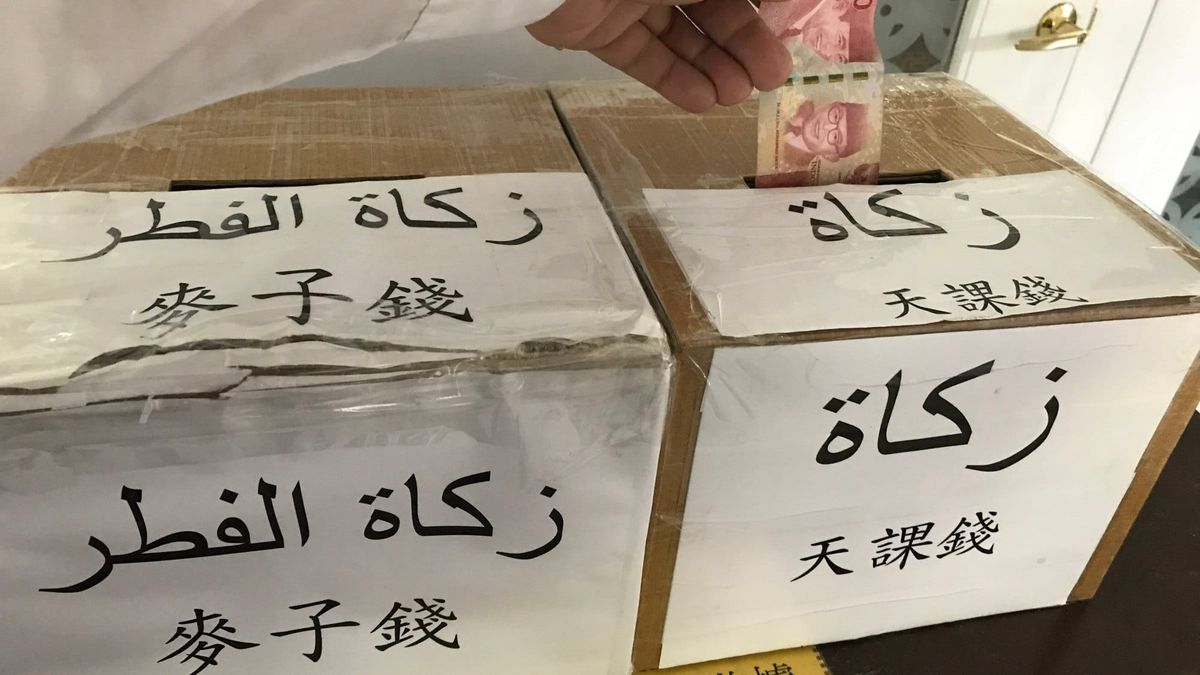
There is no government collection, no zakat authority with legal standing, and no requirement to use any particular body. Zakat can be given directly to people who qualify, through a mosque, or through a charity.
The National Zakat Foundation Australia
The main dedicated body is the National Zakat Foundation Australia (NZF), which describes itself as focused on "local Zakat collection & distribution" and says it has been operating since 2013.62 ANIC lists it among its services and describes it as an initiative to use zakat collected in Australia "for the benefit of local, deserving recipients".63 Its argument for giving locally goes back to Muʿādh's instruction in section 1: taken from the wealthy among them, given to the poor among them.18 Its home page publishes running totals of cases and amounts distributed, which I have not tried to verify and so do not repeat here.
Many Australian Muslims give zakat to international relief charities instead, or split it. Both are established practice; the preference for local distribution is exactly that, and the jurists did discuss when zakat may be sent elsewhere. In Suhaib Webb's summary, the Sunni schools discourage moving it beyond the distance at which prayers are shortened, with some variation between them, while a Mālikī position going back to Ibn al-Qāsim, and relied on for fatwa, allows it where there is an emergency in the other place.71 If you do give overseas, ask the charity how it keeps zakat separate from general donations and how it confirms that recipients fall within the eight categories.
Tax deductibility: the facts
Zakat has no special status in Australian tax law. It is treated like any other gift. Under the ATO's rules, a gift is deductible only if it is made to an organisation with Deductible Gift Recipient (DGR) status, is truly a gift (you receive no material benefit in return), and you keep a record such as a receipt. The ATO also warns that "not all charities are DGRs" and tells you to check on ABN Lookup.12
I checked NZF on ABN Lookup on 29 September 2026. National Zakat Foundation Incorporated, ABN 39 521 979 908, is endorsed as a Deductible Gift Recipient from 31 October 2013 under Item 1, and registered with the ACNC as a Public Benevolent Institution from the same date.64 So zakat paid to NZF can be deductible under the ordinary rules. For any other body, the same check takes two minutes.
Three consequences follow. Zakat given directly to a relative or neighbour is not deductible, however valid it is as zakat. Zakat given to a mosque is deductible only if the mosque (or a fund it runs) has DGR status, and many religious bodies are charities without it. And anything you receive in return, such as a dinner ticket at a fundraising night, is not a pure gift.
One small point of fiqh sometimes comes up here: whether it is proper to claim a tax deduction for zakat at all. I have not found an Australian fatwa that forbids it, and the deduction is simply the tax system's treatment of a gift to a public benevolent institution. If it troubles you, some people add the tax saving to next year's ṣadaqa. That is a personal choice, not a rule.
13. A zakat calculator
This calculator is deliberately simple and runs entirely in your browser; nothing you type is sent anywhere. It does not fetch live prices. Enter today's gold and silver prices per gram yourself from a bullion dealer or the ANIC statement for the year. The default prices are examples only, taken from ANIC's statement for 21 February 2026, and will be out of date by the time you read this.5
How the calculation works (shown here if the calculator cannot run):
- Add up on your zakat date: cash and bank balances; gold and silver you hold (at today's value); shares held for trading at market value; the zakatable part of long-term shares; business stock; money owed to you that you expect back; super you can access now.
- Subtract debts and bills due now (not the whole mortgage).
- Work out the two thresholds: grams of gold × gold price, and grams of silver × silver price.
- If the net total is at or above the threshold you follow, zakat is 2.5% of the whole net total (2.577% if you use a solar year).
Worked example with ANIC's 21 February 2026 figures: net zakatable wealth of $10,000 is above the silver niṣāb ($2,338.56) and below the gold niṣāb ($17,242.25). On the silver standard zakat is $250. On the gold standard nothing is due.
Zakat calculator (AUD)
Two things the calculator cannot do. It cannot decide which standard you follow, which is why it shows both. And it cannot handle the harder cases: a business with its own balance sheet, a large loan to someone who may not repay, an inheritance still being administered, a self-managed super fund. For those, sit down with a scholar and your figures.
Glossary
- Zakat (zakāh)
- The obligatory annual alms on wealth above the niṣāb; literally purification or growth.
- Ṣadaqa
- Charity in general, voluntary and in any amount. The Qur'an also uses the plural for zakat itself.
- Niṣāb
- The threshold of wealth below which no zakat is due.
- Ḥawl
- The full lunar year for which wealth must be held before zakat is due.
- Dīnār, dirham, mithqāl
- The gold coin, the silver coin, and the unit of weight (the gold dinar weighed one mithqāl) in which the hadith set the thresholds.
- Ūqiya
- A silver weight; five ūqiyas are two hundred dirhams.
- Wasq, ṣāʿ
- Measures of volume: the wasq for the crop threshold, the ṣāʿ for Zakāt al-Fiṭr.
- Zakāt al-Fiṭr
- The per-head alms paid at the end of Ramaḍān, before the ʿĪd prayer.
- Khums
- "One-fifth": in Twelver law, a fifth of the annual surplus of earnings, divided between needy sayyids and the Imam's share.
- Sayyid
- A descendant of the Prophet ﷺ through his clan of Hāshim; may not receive zakat from non-sayyids.
- Marjaʿ
- A senior Twelver jurist whose rulings a believer follows.
- Fī sabīl Allāh
- "In the way of God": the seventh category of recipients.
- Al-muʾallafa qulūbuhum
- "Those whose hearts are to be reconciled": the fourth category.
- DGR
- Deductible Gift Recipient: an organisation to which gifts are tax deductible in Australia.
Not a fatwa, and not financial advice. This is a research article. It reports what the texts say and what scholars and Australian bodies have said, with sources. It does not take account of your circumstances, and the calculator is an illustration, not an assessment. For a ruling on your own wealth, ask a qualified scholar you trust; for tax questions, check with the ATO or a registered tax agent.
Sources
These are the sources behind the numbered notes, in the order they are first cited. Qur'an references link to quran.com, and the English is Mustafa Khattab's The Clear Quran as shown there, with his dashes given as commas; words in ˹ ˺ are his own additions. Hadith references link to sunnah.com: reports in the Ṣaḥīḥ collections of al-Bukhārī and Muslim are accepted as authentic in Sunni scholarship and sunnah.com shows no separate grade for them; for other collections I give the grade sunnah.com shows and who gave it. Prices and thresholds are dated where the source dates them.
- Ṣaḥīḥ al-Bukhārī 1454 (Abū Bakr's letter to Anas: sheep from forty, one-fortieth on silver, nothing below two hundred dirhams): sunnah.com/bukhari:1454. In al-Bukhārī's Ṣaḥīḥ.
- Ṣaḥīḥ al-Bukhārī 1483 (a tenth on rain-fed land, a twentieth on land watered from wells): sunnah.com/bukhari:1483. In al-Bukhārī's Ṣaḥīḥ.
- Sunan Abī Dāwūd 1573 (two hundred dirhams and twenty dinars after a year): sunnah.com/abudawud:1573. Graded ṣaḥīḥ by al-Albānī, as shown on sunnah.com.
- National Zakat Foundation (UK), "Nisab" (87.48 g of gold and 612.36 g of silver, "85 grams of gold and 595 grams of silver according to another opinion"; recommends silver): nzf.org.uk/nisab
- Australian National Imams Council (Australian Fatwa Council), "Zakat Al-Maal and Zakat Al-Fitr 1447H | 2026", statement of 22 February 2026 (gold niṣāb 85 g of 21-carat gold at $202.85 a gram, $17,242.25; silver niṣāb 609 g of pure silver at $3.84 a gram, $2,338.56, both as at 21 February 2026; silver encouraged; Zakāt al-Fiṭr "around $20 per person"): anic.org.au; PDF: anic.org.au (PDF)
- Islamweb, Fatwa 470932, "Nisab of gold and silver differ in value: which one to opt for", 9 February 2023 (reports that al-Qaraḍāwī favoured gold only in Fiqh al-Zakāh; gives 85 g of gold and 595 g of silver; Islamweb itself usually adopts silver): islamweb.net
- Qur'an 9:60 (the eight categories of recipients). Translation: Mustafa Khattab, The Clear Quran, as shown on quran.com: quran.com/9/60
- Ṣaḥīḥ al-Bukhārī 1466 (Zaynab, wife of ʿAbdullāh ibn Masʿūd: "a double reward, one for helping relatives, the other for giving zakat"): sunnah.com/bukhari:1466. In al-Bukhārī's Ṣaḥīḥ.
- National Zakat Foundation (UK), "Zakat and your family" (Ḥanafī list of relatives who cannot receive; Shāfiʿī and Ḥanafī difference on a wife giving to her husband): nzf.org.uk
- Sayyid ʿAlī al-Sīstānī, Islamic Laws (English edition, sistani.org), ruling 1871: zakat is obligatory on ten things, the last of them "business goods, based on obligatory precaution": sistani.org/english/book/48/2314
- al-Sīstānī, Islamic Laws, ruling 1769 and following (khums: one-fifth of what is left of a year's earnings after the living expenses of oneself and one's family): sistani.org/english/book/48/2306
- Australian Taxation Office, "Gifts and donations" (a deduction requires a gift to an organisation with DGR status, a genuine gift with no material benefit, and a record such as a receipt; check DGR status on ABN Lookup), last updated 6 July 2026, checked 1 October 2026: ato.gov.au
- Qur'an 2:43 ("establish prayer, pay alms-tax"). Translation: Mustafa Khattab, The Clear Quran, as shown on quran.com: quran.com/2/43
- Qur'an 98:5. Translation: Mustafa Khattab, The Clear Quran, as shown on quran.com: quran.com/98/5
- Qur'an 9:103 ("take from their wealth charity to purify and bless them"). Translation: Mustafa Khattab, The Clear Quran, as shown on quran.com: quran.com/9/103
- Qur'an 9:34–35 (those who hoard gold and silver). Translation: Mustafa Khattab, The Clear Quran, as shown on quran.com: quran.com/9/34-35
- Ṣaḥīḥ al-Bukhārī 8 (Islam is built on five): sunnah.com/bukhari:8. In al-Bukhārī's Ṣaḥīḥ.
- Ṣaḥīḥ al-Bukhārī 1395 (Muʿādh sent to Yemen: taken from their rich, given to their poor): sunnah.com/bukhari:1395. In al-Bukhārī's Ṣaḥīḥ.
- Encyclopaedia Britannica, "Riddah" (tribes "eager to reassert their independence and stop payment of the zakāt" after 632): britannica.com/topic/riddah
- Ṣaḥīḥ al-Bukhārī 1399–1400 (Abū Bakr: "zakat is the compulsory right to be taken from the property"): sunnah.com/bukhari:1400. In al-Bukhārī's Ṣaḥīḥ.
- Encyclopaedia Britannica, "Zakat" (obligatory tax, one of the Five Pillars; state collection under the caliphates; Twelver scholars collecting on behalf of the Hidden Imam): britannica.com/money/zakat-Islamic-tax
- Qur'an 2:177 (giving to relatives, orphans, travellers, captives, alongside paying the alms-tax). Translation: Mustafa Khattab, The Clear Quran, as shown on quran.com: quran.com/2/177
- al-Sīstānī, Islamic Laws, rulings 1872–1878 (conditions: niṣāb, ownership, eleven months, legal and actual control): sistani.org/english/book/48/2315
- Muḥammad Jawād Mughniyya, Fasting and Zakat (Alms) according to the Five Schools of Islamic Law, chapter "Zakat", Al-Islam.org (comparative positions of the Ḥanafī, Mālikī, Shāfiʿī, Ḥanbalī and Imāmī schools on debts, minors, crops, trade goods and recipients): al-islam.org
- National Zakat Foundation Australia, "Zakat guide for individuals and families", Sh. Ahmed Mostafa (silver standard of 595 g; no deduction of home mortgages or HECS debts; each family member calculated separately): nzf.org.au
- Ṣaḥīḥ Muslim 979a (nothing due below five wasqs, five camels, five ūqiyas of silver): sunnah.com/muslim:979a. In Muslim's Ṣaḥīḥ.
- Islamic Relief Australia, "Nisab explained: gold vs silver", 29 January 2026 (87.48 g gold, 612.36 g silver; "a common and cautious approach is to use the silver nisab"): islamicrelief.org.au
- al-Sīstānī, Islamic Laws, ruling 1912 (niṣāb of gold: twenty legal mithqāls, stated as 69.12 grams): sistani.org/english/book/48/2317
- al-Sīstānī, Islamic Laws, rulings 1913–1918 (niṣāb of silver, 105 common mithqāls; zakat only on gold and silver that is minted and in current use as money; modern notes and coins "do not come under the rules of gold and silver"): sistani.org/english/book/48/2318
- Islam Question & Answer, no. 370380, "Is the nisab for paper money based on silver or gold?" (cites the Fiqh Council of the Muslim World League: "the lower of the minimum thresholds of gold or silver"; adopts 595 g of silver): islamqa.info/en/answers/370380
- SeekersGuidance, "Should one consider the gold or the silver nisab…", Mawlana Ilyas Patel, 14 January 2024 (Ḥanafī: use whichever standard most benefits the poor; caution in following silver): seekersguidance.org
- Ahmad Kutty, "The nisab of zakah on cash and gold", IslamOnline Fiqh ("The nisab for gold jewelry is 85 grams; it is the same for cash"): fiqh.islamonline.net
- AMJA, Fatwa 80593, "Zakat on silver and gold", Dr Main Khalid al-Qudah, 12 July 2009 (no zakat on jewellery for personal use; silver niṣāb 595 g): amjaonline.org
- Jāmiʿ al-Tirmidhī 631 ("no zakat on it until the ḥawl has passed", attributed to the Prophet): sunnah.com/tirmidhi:631. Graded ḍaʿīf by Darussalam, as shown on sunnah.com.
- Jāmiʿ al-Tirmidhī 632 (the same words as a statement of Ibn ʿUmar; al-Tirmidhī says this stopped (mawqūf) version is more correct): sunnah.com/tirmidhi:632. No separate grade shown on sunnah.com; al-Tirmidhī's own comment is given there.
- National Zakat Foundation (UK), "Can a solar year be used for Zakat calculation?" (2.577% on a solar year, per the AAOIFI Shari'a Standards; NZF advises the lunar calendar): nzf.org.uk
- Qur'an 2:267 (give from the best of what you have earned). Translation: Mustafa Khattab, The Clear Quran, as shown on quran.com: quran.com/2/267
- Islam Question & Answer, no. 59866, "Zakah on jewellery that has been prepared for use" (majority of Mālikīs, Shāfiʿīs and Ḥanbalīs: not obligatory; Ḥanafīs: obligatory; the answer prefers the Ḥanafī view, following Ibn Bāz): islamqa.info/en/answers/59866
- Sunan Abī Dāwūd 1563 (the girl with two gold bangles): sunnah.com/abudawud:1563. Graded ḥasan by al-Albānī, as shown on sunnah.com.
- Mālik, al-Muwaṭṭaʾ, Book 17 (Zakat), no. 10: ʿĀʾisha did not take zakat from the jewellery of her orphaned nieces; and no. 11, Mālik: zakat is paid only on jewellery kept for purposes other than wearing: sunnah.com/malik/17
- Sunan Abī Dāwūd 1562 (Samura: "used to order us to pay the ṣadaqa on what we prepared for trade"): sunnah.com/abudawud:1562. Graded ḍaʿīf by al-Albānī, as shown on sunnah.com.
- al-Sīstānī, Islamic Laws, "Zakat on business goods" (obligatory precaution, six conditions, one-fortieth): sistani.org/english/book/48/2323
- National Zakat Foundation Australia, "Zakat guide for retirees", Sh. Ahmed Mostafa (shares: market value if trading; zakatable-assets method or a 25% proxy if long-term; no zakat on the home you live in; zakat on net rental income): nzf.org.au
- Darul Ifta Australia, "Zakat on superannuation", Mufti Faizal Riza, 13 February 2013: fatwa.org.au
- National Zakat Foundation Australia, "Zakat on Superannuation" ("If you are not yet able to access your super, Zakat is not payable annually on the balance"): nzf.org.au
- Qur'an 6:141 ("pay the dues at harvest"). Translation: Mustafa Khattab, The Clear Quran, as shown on quran.com: quran.com/6/141
- Jāmiʿ al-Tirmidhī 623 (Muʿādh and the zakat of cattle: from every thirty, from every forty): sunnah.com/tirmidhi:623. Graded ḍaʿīf by Darussalam, as shown on sunnah.com; al-Tirmidhī calls it ḥasan and notes a sounder chain.
- Ṣaḥīḥ al-Bukhārī 1463 ("no zakat either on a horse or a slave belonging to a Muslim"): sunnah.com/bukhari:1463. In al-Bukhārī's Ṣaḥīḥ.
- SeekersGuidance, "Is there a specific way to distribute zakat?", Shaykh Dr Muhammad Fayez Awad, 22 December 2024 (Shāfiʿī: divide among the categories present, at least three people in each; Ḥanafīs, Mālikīs and most Ḥanbalīs: one category or one person suffices): seekersguidance.org
- Dar al-Ifta al-Misriyya, "Paying zakat-ul-fitr in cash instead of grains", 17 September 2008 (the Ḥanafī school permits the value; Dar al-Ifta adopts this): dar-alifta.org
- al-Sīstānī, Islamic Laws, rulings 2003–2007 (Zakāt al-Fiṭrah: about three kilograms of food per head, or its value; due at sunset on the eve of ʿĪd; dependants and guests): sistani.org/english/book/48/2328
- AMJA, "Zakat eligibility of Islamic organizations" (classical and modern readings of fī sabīl Allāh; the Mālikīs and Ḥanbalīs keep the category of those whose hearts are to be reconciled): amjaonline.org
- SeekersGuidance, "Is zakat for 'those whose hearts are attracted (to the faith)' still applicable?", Shaykh Anas al-Musa, 4 August 2024: seekersguidance.org
- Ṣaḥīḥ Muslim 1072a (ṣadaqa is not fitting for the family of Muhammad; the young men are given dowries from the khums): sunnah.com/muslim:1072a. In Muslim's Ṣaḥīḥ.
- al-Sīstānī, Islamic Laws, "Criteria for being entitled to receive zakat", rulings 1957, 1962, 1968, 1969 (the recipient must be a Twelver Shia; dependants; a wife may give to her poor husband; a sayyid may not take zakat from a non-sayyid except in necessity): sistani.org/english/book/48/2325
- Jāmiʿ al-Tirmidhī 658 ("charity to relatives is two: charity and upholding the ties of kinship"): sunnah.com/tirmidhi:658. Graded ṣaḥīḥ by Darussalam, as shown on sunnah.com; al-Tirmidhī calls it ḥasan.
- Ṣaḥīḥ al-Bukhārī 1503 (Zakāt al-Fiṭr: a ṣāʿ of dates or barley on every Muslim, paid before the ʿĪd prayer): sunnah.com/bukhari:1503. In al-Bukhārī's Ṣaḥīḥ.
- Sunan Abī Dāwūd 1609 (Zakāt al-Fiṭr as "a purification of the fasting person from empty and obscene talk and as food for the poor"): sunnah.com/abudawud:1609. Graded ḥasan by al-Albānī, as shown on sunnah.com.
- al-Sīstānī, Simplified Islamic Laws for Youth and Young Adults, "Zakat", issues 385–390, Al-Islam.org: al-islam.org
- Qur'an 8:41 (the one-fifth (khums)). Translation: Mustafa Khattab, The Clear Quran, as shown on quran.com: quran.com/8/41
- al-Sīstānī, Islamic Laws, ruling 1851 (khums divided into the sayyids' share and the Imam's share; the latter given to, or spent with the permission of, a qualified jurist): sistani.org/english/book/48/2312
- National Zakat Foundation Australia, home page (local collection and distribution since 2013; published running totals of cases and amounts): nzf.org.au
- Australian National Imams Council, "National Zakat Foundation" (an initiative to use zakat collected in Australia "for the benefit of local, deserving recipients"): anic.org.au
- Australian Business Register, ABN Lookup, National Zakat Foundation Incorporated, ABN 39 521 979 908 (endorsed as a Deductible Gift Recipient from 31 October 2013, Item 1; registered charity, Public Benevolent Institution, from 31 October 2013), checked 29 September 2026: abr.business.gov.au
- Yūsuf al-Qaraḍāwī, Fiqh al-Zakāh, tr. Monzer Kahf, Fiqh az-Zakah, vol. 1, chapter 9, "Zakah on earnings of labourers and professionals": monzer.kahf.com (PDF)
- Mohamed Miras MT, "Understanding Professional Zakat and the Debate Over Its Legality in Islamic Jurisprudence", Islamonweb, 29 May 2024 (al-Qaraḍāwī's view and its sources; its rejection by Wahba al-Zuḥaylī, Ibn Bāz and the Council of Senior Scholars): en.islamonweb.net
- Islamweb, fatwa 86852, "Giving Zakah to a non-Muslim", 4 January 2004 (unlawful in general; Mālikīs and Ḥanbalīs allow it to those whose hearts are to be reconciled, Ḥanafīs and Shāfiʿīs do not): islamweb.net
- IslamOnline, "Can I Give Zakah to Non-Muslims?" (Monzer Kahf: zakah is paid by rich Muslims to poor Muslims, except for a non-Muslim in a matter of life and death; Ahmad Kutty on those whose hearts are inclined to Islam; voluntary charity open to non-Muslims), updated September 2021: fiqh.islamonline.net
- Ṣaḥīḥ al-Bukhārī 1506: Abū Saʿīd al-Khudrī: a ṣāʿ of food, barley, dates, dried cheese or raisins as Zakāt al-Fiṭr. sunnah.com/bukhari:1506. In al-Bukhārī's Ṣaḥīḥ.
- Ṣaḥīḥ al-Bukhārī 1447 (Abū Saʿīd al-Khudrī: no zakat on less than five camels, five ūqiyas of silver or five wasqs): sunnah.com/bukhari:1447. In al-Bukhārī's Ṣaḥīḥ.
- Suhaib Webb, "Can I Send My Zakat al-Mal Overseas?", 1 April 2024 (the Sunni schools discourage transferring zakat beyond the distance for shortening prayers; the Mālikī exception from Ibn al-Qāsim for an emergency elsewhere, with Saḥnūn): blog.suhaibwebb.com