Prayer (ṣalāh): How and Why
What actually happens on the prayer mat, five times a day: the words, what they mean, the times in Sydney, and where the Ḥanafī, Mālikī, Shāfiʿī, Ḥanbalī and Jaʿfarī schools do it differently.
New to the Qur'an? Start with The Qur'an: What It Is, How It Came Down, and How It Was Kept, then read Muhammad ﷺ: A Life. All articles: Deen: Start Here.
Deen · Practice
Five times a day, wherever they are, practising Muslims stop what they are doing, wash, face Mecca and pray. The whole thing takes a few minutes. It is the most visible part of the religion and, for most Muslims, the part that shapes the day. This page is about how it is done and why, with the words that are said, what they mean, and the places where the schools of law do it differently.
I have written it for two kinds of reader. One is the non-Muslim colleague, neighbour or friend who has seen someone slip away to pray and wondered what actually happens on the prayer mat. The other is the Muslim who learned to pray as a child from one family's practice, then met someone at university or at work who does it differently and wondered who is right. For the first reader, the short answer is that the prayer is simple and very old. For the second, the short answer is that almost every difference you will see has a respectable source behind it, and the schools have argued about these details politely for twelve centuries. Arabic terms are explained as they come up, and there is a glossary at the end.
The short version
- The ritual prayer, ṣalāh (often spelt salat), is the second of the five pillars of Islam. The Qur'an calls it "a duty on the believers at the appointed times", and the Prophet ﷺ counted it among the five things Islam is built on.12
- There are five daily prayers: Fajr before sunrise, Ẓuhr after midday, ʿAṣr in the afternoon, Maghrib after sunset and ʿIshāʾ at night. Each has a window, not a single moment. In Sydney the windows move by more than an hour between winter and summer, and the printed timetables differ by a few minutes to a quarter of an hour depending on the calculation method used.
- Before praying you need ritual purity: the washing called wuḍūʾ, a full bath (ghusl) in some cases, or a dry substitute (tayammum) when water cannot be used.
- Each prayer is built from repeated units called rakʿas: standing and reciting, bowing, straightening, two prostrations. Fajr has two, Maghrib three, and the other three prayers four each.
- The four Sunni schools (Ḥanafī, Mālikī, Shāfiʿī, Ḥanbalī) and the Jaʿfarī (Twelver Shia) school agree on the shape of the prayer and differ on details: where the hands go, whether the basmala is said aloud, whether "āmīn" is said, what the forehead rests on, and whether two prayers may be joined outside travel. The step-through below lets you pick a school and see where it differs.
- There are concessions: travellers shorten and (in most schools) combine prayers, a sick person prays sitting or lying down, and women do not pray during menstruation and do not make those prayers up.
Contents
- Why Muslims pray
- Five prayers, five windows
- Getting ready: purity, dress and direction
- One rakʿa, step by step
- From one rakʿa to a whole prayer
- Why the schools differ
- Friday prayer
- Travelling: shortening and combining
- Missed prayers
- Women and prayer
- Praying at work in Australia
- Glossary
- Sources
Why Muslims pray
The plain answer a Muslim gives is that God commands it. The Qur'an returns to prayer more often than to any other act of worship, usually with the verb aqīmū, "establish" or "keep up", which suggests something built and maintained rather than something done once. "Observe the ˹five obligatory˺ prayers, especially the middle prayer, and stand in true devotion to Allah," says one verse.3 Another says prayer "is a duty on the believers at the appointed times".1 When God speaks to Moses at the burning bush, the command that follows the declaration of His oneness is "establish prayer for My remembrance".4
That last phrase gives the second answer, which is about what prayer does. It is remembrance, dhikr: a way of turning the attention back to God several times a day, so that the day is not lived entirely in forgetfulness. The Qur'an says that "˹genuine˺ prayer should deter ˹one˺ from indecency and wickedness", and adds at once that the remembrance of God is greater still.4 It praises "those who humble themselves in prayer" and, in one of its shortest chapters, warns against people who pray but are "unmindful of their prayers".5 The movements matter, but they are meant to carry something.
The hadith (reports of what the Prophet ﷺ said and did) say the same in more homely language. Abū Hurayra reported the Prophet ﷺ asking whether, if a man had a river at his door and bathed in it five times a day, any dirt would remain on him; the five prayers, he said, wash away sins in the same way.6 In the account of the Night Journey, prayer is the one duty given to the Prophet ﷺ directly in the heavens: fifty prayers a day at first, reduced to five on Moses' advice, with the reward of fifty.7 And the Prophet ﷺ put it bluntly: "between a man and polytheism and unbelief is the abandonment of prayer".8 Scholars have argued ever since about what exactly that means for someone who stops praying, but nobody reads it as a small matter. The Ḥanbalīs take it literally, so that someone who abandons prayer altogether has left Islam;81 Mālik, al-Shāfiʿī and Abū Ḥanīfa treated it as a grave sin in someone who still accepts the duty, not as unbelief, though they differed over the penalty. Ibn Rushd reports that Mālik and al-Shāfiʿī allowed a judge to impose death as a fixed punishment (ḥadd), a reasoning he himself thought weak, while Abū Ḥanīfa, his school and the Ẓāhirīs held that the person is detained and disciplined until he prays, and not executed. The Jaʿfarī school, in Mughniyya's summary, leaves such a person to the discipline of a judge.151491 Ibn Rushd traces the disagreement to how the reports are read: Burayda's hadith in al-Tirmidhī, "the covenant between us and them is prayer, so whoever abandons it has disbelieved", taken literally or as a stern warning. Those who allowed execution also pointed to Qur'an 9:5, where repentance, prayer and zakat are the conditions for letting people go.92149391
There is also a social answer, which non-Muslims sometimes see before they see anything else. Congregational prayer puts people shoulder to shoulder in rows, the manager next to the cleaner, with no reserved seats. Britannica's summary is fair: prayer in the mosque "has special merit", but a Muslim may pray almost anywhere clean.9
The duty falls on every Muslim who has reached puberty and is of sound mind. "There are three (persons) whose actions are not recorded: a sleeper till he awakes, a boy till he reaches puberty, and a lunatic till he comes to reason," the Prophet ﷺ said, in a report al-Albānī graded ṣaḥīḥ.108 Children are taught it well before then. In another report, which al-Albānī graded ḥasan ṣaḥīḥ, he told parents to command their children to pray at seven, with firmer discipline from ten.109
Five prayers, five windows
The Qur'an refers to the times of prayer rather than listing them: prayer "at both ends of the day and in the early part of the night", and "from the decline of the sun until the darkness of the night and the dawn prayer".10 The exact times come from the Prophet's ﷺ teaching and practice. Two reports carry most of the weight. In one, the angel Gabriel leads the Prophet ﷺ in each prayer twice, once at the start of its time and once at the end, and then says: "the time is anywhere between these two times".11 In the other, the Prophet ﷺ gives the end of each window: Fajr until the sun begins to rise, Ẓuhr until ʿAṣr comes, ʿAṣr until the sun turns yellow, Maghrib until the twilight has gone, and ʿIshāʾ until half the night has passed.12
| Prayer | Rakʿas | Begins | Ends | Recited |
|---|---|---|---|---|
| Fajr (dawn) | 2 | True dawn: the horizontal whiteness across the eastern sky | Sunrise | Aloud |
| Ẓuhr (midday) | 4 | Just after the sun passes its highest point | When ʿAṣr begins | Silently |
| ʿAṣr (afternoon) | 4 | When a shadow equals its object (plus the midday shadow); twice its object in the Ḥanafī reckoning | Sunset, though delaying until the sun yellows is disliked | Silently |
| Maghrib (sunset) | 3 | Sunset (Jaʿfarī: when the eastern redness has passed overhead) | When the twilight disappears | First two rakʿas aloud |
| ʿIshāʾ (night) | 4 | When the twilight disappears | Midnight by preference; dawn at the latest for most jurists | First two rakʿas aloud |
Two of those starting points are disputed among the Sunni schools. For ʿAṣr, the Mālikīs, Shāfiʿīs and Ḥanbalīs, and Abū Ḥanīfa's two leading students, start it when an object's shadow equals its length; Abū Ḥanīfa himself waited until the shadow was twice the length, the time at which Gabriel prayed ʿAṣr on the second day.1314 For ʿIshāʾ, the majority start it when the red afterglow has gone, while Abū Ḥanīfa waited for the white glow that follows it to go as well.13 Mosques that follow the Ḥanafī school generally print the later ʿAṣr, so two mosques in the same suburb can pray ʿAṣr forty minutes apart in winter and more than an hour apart in summer (see the table below).
The Jaʿfarī school counts differently again. It gives Ẓuhr and ʿAṣr a single window running from just after midday until sunset, with a short "specific" time at each end for one prayer only and a long "common" time in between; the same holds for Maghrib and ʿIshāʾ, which share the night until midnight.1516 The order still matters (Ẓuhr must come before ʿAṣr, Maghrib before ʿIshāʾ) but nothing requires a gap.16 This is the basis for the Shia practice of praying at three times a day, discussed under combining below. Sistani also rules that Maghrib should not be prayed until the redness in the eastern sky that appears after sunset has passed overhead, which by the 4° convention used in Shia timetables falls about seventeen or eighteen minutes after sunset in Sydney.16
Finding the times in Sydney
Nobody in Sydney measures shadows. The times are calculated from the sun's position, and almost every mosque, app and website uses the same astronomy. What differs is the convention used for the two twilight prayers, Fajr and ʿIshāʾ, because "true dawn" and "the disappearance of twilight" have to be turned into an angle of the sun below the horizon, and different bodies chose different angles.17
| Method | Fajr angle | ʿIshāʾ | Used by |
|---|---|---|---|
| Muslim World League (MWL) | 18° | 17° | Europe, Far East, parts of the US |
| ISNA | 15° | 15° | North America |
| Egyptian General Authority | 19.5° | 17.5° | Africa, Syria, Lebanon, Malaysia |
| Umm al-Qurā (Makkah) | 18.5° | 90 minutes after Maghrib (120 in Ramaḍān) | Arabian Peninsula |
| Karachi | 18° | 18° | South Asia |
| Jaʿfarī (Leva Institute, Qum) | 16° | 14°; Maghrib at 4° | Some Shia communities |
To show what this means in practice I ran the standard calculation for Sydney's CBD (33.87° S, 151.21° E) on the two solstices of 2026. These are my own figures, not any mosque's timetable, rounded to the minute.
| Fajr (MWL) | Fajr (ISNA) | Sunrise | Ẓuhr | ʿAṣr (shadow ×1) | ʿAṣr (Ḥanafī ×2) | Sunset | ʿIshāʾ (MWL) | |
|---|---|---|---|---|---|---|---|---|
| Sun 21 June 2026 (AEST) | 5:30 | 5:46 | 7:00 | 11:57 | 2:36 pm | 3:16 pm | 4:54 pm | 6:18 pm |
| Mon 21 Dec 2026 (AEDT) | 3:56 | 4:16 | 5:41 | 12:53 | 4:38 pm | 5:54 pm | 8:05 pm | 9:43 pm |
A few things fall out of this. In winter the whole prayer day fits inside office hours plus a little: ʿAṣr can come in before 2:45 pm and Maghrib before 5 pm, so a nine-to-five worker usually meets three prayers at work. In summer, daylight saving and the long evenings push ʿIshāʾ towards 10 pm and Fajr before 4 am. The choice of method moves Fajr by up to twenty minutes; by the Jaʿfarī angles, Maghrib in June falls at about 5:11 pm rather than at sunset. The practical advice is dull but right: use your own mosque's timetable, or set your app to the method your community follows, and do not argue with someone whose app says something slightly different.
Getting ready: purity, dress and direction
Prayer is not valid without ritual purity. The Prophet ﷺ said that the prayer of someone who has broken their ablution "is not accepted till he performs the ablution", and in a well-known report in Muslim's Ṣaḥīḥ, "purity is half of faith".18 Ritual purity is not the same as hygiene, though the two overlap: it is a state, lost by certain events (using the toilet, passing wind, deep sleep and, in some schools, other things) and restored by washing.
Wuḍūʾ, the ablution
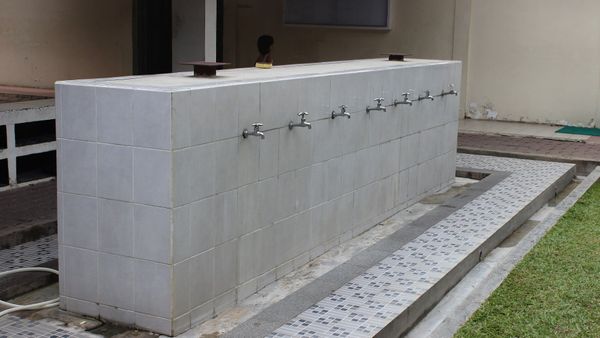
The basic instruction is a single verse: "When you rise up for prayer, wash your faces and your hands up to the elbows, wipe your heads, and wash your feet [arjulakum] to the ankles."19 In practice people also wash their hands first, rinse the mouth and nose, and repeat each washing three times, following the Prophet's ﷺ example. The order most people learn is: intention, the name of God, hands, mouth, nose, face, right arm then left arm to the elbow, a wipe over the head (and, for Sunnis, the ears), then the feet.
The schools disagree on three points worth knowing. First, how much of the head must be wiped. The verse says "wipe your heads" with a preposition that can mean "all of" or "some of"; Mālik and the Ḥanbalīs require the whole head, Abū Ḥanīfa a quarter, al-Shāfiʿī any part at all.1420 The Jaʿfarī school wipes the front quarter of the head with the moisture left on the hand, without taking fresh water.21
Second, the feet. The Arabic word for "feet" in 5:6 (Khattab's "wash" follows the first of the two readings below) is read in two ways among the recognised recitations: in one case ending it follows "faces and hands" and is washed, in the other it follows "heads" and is wiped. Ibn Rushd sets out both and notes that the majority settled on washing, supported by hadith warning against leaving the heels dry.14 Sunni Muslims wash the feet, and may wipe over leather socks (khuffs) put on in a state of purity, as the Prophet ﷺ did.22 Jaʿfarī Muslims wipe the top of each foot from the toes to the ankle with the remaining moisture, and do not accept wiping over socks or shoes except in rare necessity.21
Third, direction. Sistani requires the arms to be washed from the elbow down towards the fingertips; washing upwards invalidates the wuḍūʾ.21 It is one of several reasons two friends washing side by side can look quite different.
Ghusl, the full wash
Some states need more than wuḍūʾ: after sexual intercourse or ejaculation (the state called janāba), and at the end of menstruation or post-natal bleeding. The Qur'an tells believers not to approach prayer in major impurity "until you have bathed".23 The ghusl is a washing of the whole body with the intention of purification. Sistani lists seven obligatory ghusls in the Jaʿfarī school, including the washing of the dead and, distinctively, a ghusl for having touched a corpse.24 Many Muslims also bathe before Friday prayer; one hadith calls this bath "compulsory for every male who has attained puberty", and the schools debate whether that wording means strictly obligatory or strongly recommended.25
Tayammum, the dry ablution
When there is no water, or using it would cause harm, the same verse allows tayammum: "purify yourselves with clean earth by wiping your faces and hands."19 ʿAmmār ibn Yāsir once rolled in the dust to purify himself after janāba on a journey; the Prophet ﷺ showed him that it was enough to strike the ground lightly with the hands, blow off the excess, and wipe the face and hands.26 The Sunni schools differ on the details, such as one strike or two, and how far up the arm to wipe.14 Sistani describes striking the palms on earth or stone, wiping the forehead from the hairline to the eyebrows and the top of the nose, then the back of each hand, and recommends a second strike for the hands.27 In a Sydney office tayammum rarely comes up. In hospital, or with a plaster cast, it can.
Clothing, place and the qibla
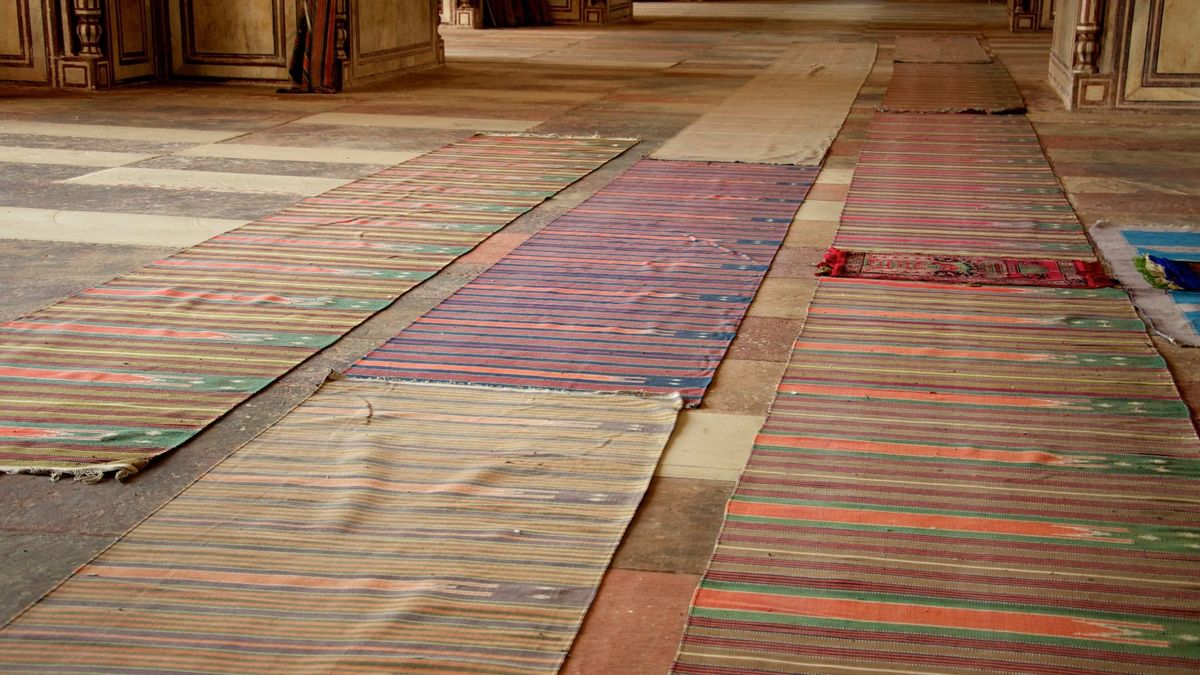
The body must be covered (for men at least from the navel to the knee, for women everything except the face and hands, with school differences over the hands and feet),15 and the clothes and place must be free of impurity such as urine or blood. A prayer mat is a convenience, not a requirement. Finally, the worshipper faces the Kaʿba in Mecca, the qibla: "turn your face towards the Sacred Mosque ˹in Mecca˺, wherever you are, turn your faces towards it."28 From Sydney the great-circle direction to Mecca works out at about 277.5° from true north, that is, a little north of due west, over a distance of roughly 13,200 kilometres. (That is my own calculation; a phone's compass app will say the same within a degree.) An honest effort to face the right way is what is required, and a small error does not spoil the prayer.
One rakʿa, step by step
The Prophet ﷺ told a group of young Companions who had stayed with him for twenty days: "Pray as you have seen me praying."29 Everything the schools say about the form of prayer is an attempt to reconstruct what the Companions saw. The fullest single description is the hadith of the man who prayed badly. He came into the mosque, prayed, and greeted the Prophet ﷺ, who sent him back three times with "Go back and pray, for you have not prayed", then taught him: say the takbīr, recite what you can, bow until you are at rest in the bow, rise until you stand straight, prostrate until you are at rest, sit until you are at rest.30 The phrase that keeps recurring, "until you are at rest", gave the jurists the concept of ṭumaʾnīna, stillness in each position. For the Mālikī, Shāfiʿī and Ḥanbalī schools it is a pillar of the prayer; Abū Ḥanīfa and his student Muḥammad held it obligatory but not a pillar.31
The tool below walks through one rakʿa, the unit every prayer is built from, followed by the sitting and the closing words that end a prayer. Each step gives the Arabic, a transliteration and a translation, with a note on each school. Choose a school to see only its note and to mark the steps where it departs from the most common practice. Without JavaScript, every step and every note is shown.
-
Intention (niyya)
Before beginning, the worshipper intends the particular prayer: this is Ẓuhr, for example, not ʿAṣr, and it is being prayed for God. Intention is an act of the heart. Every school lists it among the requirements of prayer, and none requires it to be spoken aloud.15
- Ḥanafī
- Required; in the heart.
- Mālikī
- Required; in the heart.
- Shāfiʿī
- Required, joined to the opening takbīr.
- Ḥanbalī
- Required; in the heart.
- Jaʿfarī
- Required; the prayer is performed to draw near to God.
-
The opening takbīr (takbīrat al-iḥrām)
اللّٰهُ أَكْبَرُ
Allāhu akbar
"God is greater."
Standing and facing the qibla, the worshipper raises the hands to about the shoulders or ears and says the takbīr. From this moment ordinary speech, eating and turning away are forbidden until the prayer ends, which is why it is called the takbīr of iḥrām, "making things forbidden". Ibn ʿUmar described the Prophet ﷺ raising his hands to the level of his shoulders when he opened the prayer.32
- Ḥanafī
- Hands raised with the takbīr.
- Mālikī
- Hands raised with the takbīr.
- Shāfiʿī
- Hands raised with the takbīr.
- Ḥanbalī
- Hands raised with the takbīr.
- Jaʿfarī
- The same words open the prayer.
-
Standing, and the hands (qiyām)
The worshipper stands still, looking at the place of prostration. This is where you most often see visible differences. Sahl ibn Saʿd said that "the people were ordered to place the right hand on the left forearm in the prayer", and three of the Sunni schools do so as a sunna.3334 Where they rest is less clear. ʿAlī's statement that the sunna is to place them below the navel is graded weak by al-Albānī;94 the report that the Prophet ﷺ held them on his chest comes from Ṭāwūs, a Successor who did not meet him, so it is mursal, though al-Albānī graded it ṣaḥīḥ;95 and the schools chose differently.34
- Ḥanafī
- Right hand over left, below the navel (for men).
- Mālikī
- The position the school's followers held to is sadl, arms hanging at the sides; some Mālikī jurists held folding the hands to be the sunna.34
- Shāfiʿī
- Right hand over left, above the navel and below the chest.
- Ḥanbalī
- Right hand over left, below the navel.
- Jaʿfarī
- Arms at the sides, hands resting on the thighs. Placing one hand on the other "with the intention of humility and respect" invalidates the prayer on obligatory precaution, unless done forgetfully or out of taqiyya (precautionary concealment).35
-
Opening supplication and seeking refuge (istiftāḥ, taʿawwudh)
سُبْحَانَكَ اللَّهُمَّ وَبِحَمْدِكَ، وَتَبَارَكَ اسْمُكَ، وَتَعَالَى جَدُّكَ، وَلَا إِلَهَ غَيْرُكَ
Subḥānaka llāhumma wa bi-ḥamdik, wa tabāraka smuk, wa taʿālā jadduk, wa lā ilāha ghayruk.
"Glory be to You, O God, and praise. Blessed is Your name, exalted Your majesty, and there is no god but You."
This short opening is reported by Abū Saʿīd al-Khudrī.36 Other authenticated openings exist, such as ʿAlī's longer "Wajjahtu wajhiya…" ("I have turned my face to the One who created the heavens and the earth").36 The opening that al-Bukhārī records is Abū Hurayra's report of what the Prophet ﷺ said in the short pause after the takbīr: Allāhumma bāʿid baynī wa bayna khaṭāyāya kamā bāʿadta bayna l-mashriqi wa l-maghrib, asking God to put as much distance between him and his sins as He put between east and west.96 Then, before reciting, the worshipper seeks refuge in God, following the Qur'anic instruction "when you recite the Quran, seek refuge with Allah from Satan, the accursed":37
أَعُوذُ بِاللَّهِ مِنَ الشَّيْطَانِ الرَّجِيمِ
Aʿūdhu bi-llāhi mina sh-shayṭāni r-rajīm.
"I seek refuge with God from Satan, the outcast."
- Ḥanafī
- Opening supplication recommended.38
- Mālikī
- Not recommended in the obligatory prayer: the worshipper goes straight from the takbīr to the Fātiḥa.38
- Shāfiʿī
- Opening supplication recommended.
- Ḥanbalī
- Opening supplication recommended.
- Jaʿfarī
- No particular opening supplication is obligatory; seeking refuge before the recitation is recommended.
-
The basmala
بِسْمِ اللَّهِ الرَّحْمَٰنِ الرَّحِيمِ
Bismi llāhi r-raḥmāni r-raḥīm.
"In the name of God, the Most Compassionate, the Most Merciful."
Whether this line is the first verse of the Fātiḥa, and whether it is said aloud, is one of the oldest arguments in the law of prayer. Anas said he prayed behind the Prophet ﷺ, Abū Bakr, ʿUmar and ʿUthmān and "never heard any one of them reciting Bismillāh… aloud"; others cite reports that it was heard.39
- Ḥanafī
- Said silently before the Fātiḥa; not counted as a verse of it.40
- Mālikī
- The dominant view is that it is disliked to recite it in the obligatory prayer; some Mālikīs recite it quietly to respect the other view.40
- Shāfiʿī
- A verse of the Fātiḥa, so obligatory, and said aloud wherever the Fātiḥa is said aloud.40
- Ḥanbalī
- Said silently; not counted as a verse of the Fātiḥa.40
- Jaʿfarī
- Part of every sūra and may not be left out.15
-
Al-Fātiḥa, and "āmīn"
الْحَمْدُ لِلَّهِ رَبِّ الْعَالَمِينَ الرَّحْمَٰنِ الرَّحِيمِ مَالِكِ يَوْمِ الدِّينِ إِيَّاكَ نَعْبُدُ وَإِيَّاكَ نَسْتَعِينُ اهْدِنَا الصِّرَاطَ الْمُسْتَقِيمَ صِرَاطَ الَّذِينَ أَنْعَمْتَ عَلَيْهِمْ غَيْرِ الْمَغْضُوبِ عَلَيْهِمْ وَلَا الضَّالِّينَ
Al-ḥamdu lillāhi rabbi l-ʿālamīn. Ar-raḥmāni r-raḥīm. Māliki yawmi d-dīn. Iyyāka naʿbudu wa iyyāka nastaʿīn. Ihdinā ṣ-ṣirāṭa l-mustaqīm. Ṣirāṭa lladhīna anʿamta ʿalayhim, ghayri l-maghḍūbi ʿalayhim wa lā ḍ-ḍāllīn.
"All praise is for Allah, Lord of all worlds, the Most Compassionate, Most Merciful, Master of the Day of Judgment. You ˹alone˺ we worship and You ˹alone˺ we ask for help. Guide us along the Straight Path, the Path of those You have blessed, not those You are displeased with, or those who are astray."41
The opening chapter of the Qur'an is recited in every rakʿa. "Whoever does not recite al-Fātiḥa in his prayer, his prayer is invalid," the Prophet ﷺ said.42 When the imam finishes it, Sunni worshippers say āmīn ("answer us"): "say āmīn when the imam says it".43
- Ḥanafī
- The pillar is to recite some of the Qur'an; the Fātiḥa itself is required (wājib) but "anything recited from the Qur'an may take its place" as the pillar.15 A follower stays silent behind the imam. Āmīn is said quietly.44
- Mālikī
- The Fātiḥa is a pillar in every rakʿa.44 In loud prayers the imam does not say āmīn aloud; the followers say it.44
- Shāfiʿī
- The Fātiḥa is obligatory in every rakʿa for everyone, including the follower behind an imam.44 Āmīn aloud in loud prayers.44
- Ḥanbalī
- The Fātiḥa is a pillar; the follower listens in loud prayers. Āmīn aloud in loud prayers.44
-
A further passage of the Qur'an
In the first two rakʿas of each prayer the worshipper adds something from the Qur'an after the Fātiḥa. For many people it is one of the short sūras learned in childhood, such as al-Ikhlāṣ:
قُلْ هُوَ اللَّهُ أَحَدٌ اللَّهُ الصَّمَدُ لَمْ يَلِدْ وَلَمْ يُولَدْ وَلَمْ يَكُن لَّهُ كُفُوًا أَحَدٌ
Qul huwa llāhu aḥad. Allāhu ṣ-ṣamad. Lam yalid wa lam yūlad. Wa lam yakun lahu kufuwan aḥad.
"Say, ˹O Prophet,˺ 'He is Allah, One ˹and Indivisible˺; Allah, the Sustainer ˹needed by all˺. He has never had offspring, nor was He born. And there is none comparable to Him.'"110
- Ḥanafī
- A further passage in the first two rakʿas.
- Mālikī
- A further passage in the first two rakʿas is sunna.
- Shāfiʿī
- A further passage in the first two rakʿas is sunna.
- Ḥanbalī
- A further passage in the first two rakʿas is sunna.
- Jaʿfarī
- A complete sūra must follow al-Ḥamd in the first two rakʿas, on obligatory precaution; a few verses are not enough.45
-
Qunūt, a standing supplication (in the second rakʿa)
Some worshippers raise their hands in supplication for a moment in the second rakʿa. Whether and when to do this depends on the school, and it is a small thing that often puzzles people praying behind an imam from another tradition. The evidence is divided too. Anas reports in al-Bukhārī's Ṣaḥīḥ that the Prophet ﷺ made qunūt in Fajr for a month, praying against the tribes that had killed his Companions.97 The Shāfiʿīs rely on a further report from Anas that he kept up qunūt in Fajr "until he left this world", which al-Nawawī accepted;106 those who do not make it cite Abū Mālik al-Ashjaʿī, whose father had prayed behind the Prophet ﷺ and the four caliphs and called qunūt in Fajr "a newly invented matter", a report Darussalam grades ṣaḥīḥ.98 The words most people say in qunūt, "O God, guide me among those You have guided…", are the ones the Prophet ﷺ taught his grandson al-Ḥasan for the witr, a report al-Albānī graded ṣaḥīḥ.99
- Ḥanafī
- No qunūt in the Fajr prayer.46
- Mālikī
- Qunūt in Fajr is preferred.46
- Shāfiʿī
- Qunūt in Fajr is a sunna, after rising from the bow of the second rakʿa.46
- Ḥanbalī
- No qunūt in the Fajr prayer.46
- Jaʿfarī
- Recommended in every prayer, obligatory or voluntary, before the bow of the second rakʿa; any words of remembrance suffice, even one subḥāna llāh.47
-
The bow (rukūʿ)
سُبْحَانَ رَبِّيَ الْعَظِيمِ
Subḥāna rabbiya l-ʿaẓīm (usually three times).
"Glory be to my Lord, the Most Great."
Saying Allāhu akbar, the worshipper bows with a straight back, hands on the knees, and stays still. Ḥudhayfa heard the Prophet ﷺ say these words in his bow.48 Raising the hands again at this point is the subject of the example in my post on following a madhhab, which gives the hadith on each side; Ibn ʿUmar's report of raising them is in al-Bukhārī.32
- Ḥanafī
- Hands not raised at the bow in the school's well-known position.49 Nothing specific has to be said in the bow.15
- Mālikī
- Hands not raised at the bow in the established view, though Ibn Wahb and Ashhab reported from Mālik that it is allowed.49 Nothing specific has to be said.15
- Shāfiʿī
- Hands raised going into the bow and coming up, as a sunna.49 Nothing specific has to be said.15
- Ḥanbalī
- Hands raised going into the bow and coming up, as a sunna.49 The glorification is not optional here, unlike in the other three Sunni schools.15
- Jaʿfarī
- The words are سُبْحَانَ رَبِّيَ الْعَظِيمِ وَبِحَمْدِهِ, subḥāna rabbiya l-ʿaẓīmi wa bi-ḥamdih ("and with His praise"), or subḥāna llāh three times; the takbīr before bowing is recommended.50
-
Rising from the bow (iʿtidāl)
سَمِعَ اللَّهُ لِمَنْ حَمِدَهُ رَبَّنَا وَلَكَ الْحَمْدُ
Samiʿa llāhu li-man ḥamidah. Rabbanā wa laka l-ḥamd.
"God hears whoever praises Him. Our Lord, and to You belongs all praise."
The worshipper straightens fully and stands still. "When the imam says samiʿa llāhu li-man ḥamidah, you should say allāhumma rabbanā laka l-ḥamd," the Prophet ﷺ said.51
- Ḥanafī
- Stand fully upright; the words as in the hadith above.
- Mālikī
- Stand fully upright; the words as in the hadith above.
- Shāfiʿī
- Stand fully upright; the words as in the hadith above.
- Ḥanbalī
- Stand fully upright; the words as in the hadith above.
- Jaʿfarī
- Saying samiʿa llāhu li-man ḥamidah after straightening up is recommended.50
-
The first prostration (sujūd)
سُبْحَانَ رَبِّيَ الْأَعْلَى
Subḥāna rabbiya l-aʿlā (usually three times).
"Glory be to my Lord, the Most High."
Saying Allāhu akbar, the worshipper goes down to the ground. "I have been ordered to prostrate on seven bones," the Prophet ﷺ said: the forehead with the nose, both hands, both knees and the toes of both feet.52 These are the words Ḥudhayfa heard in his prostration.48
- Ḥanafī
- Any clean surface, including a carpet.
- Mālikī
- Any clean surface.
- Shāfiʿī
- Any clean surface.
- Ḥanbalī
- Any clean surface.
- Jaʿfarī
- The forehead must rest on earth, or on something that grows from the earth and is neither eaten nor worn, such as wood, leaves or paper; the best is a turba, a tablet of the earth of Karbala.50 This is why Shia worshippers carry a small clay tablet. The words are subḥāna rabbiya l-aʿlā wa bi-ḥamdih.50
-
Sitting between the prostrations
اللَّهُمَّ اغْفِرْ لِي، وَارْحَمْنِي، وَعَافِنِي، وَاهْدِنِي، وَارْزُقْنِي
Allāhumma ghfir lī, wa rḥamnī, wa ʿāfinī, wa hdinī, wa rzuqnī.
"O God, forgive me, have mercy on me, keep me well, guide me and provide for me."
The worshipper sits up, still, then says this or a shorter "Rabbi ghfir lī" ("My Lord, forgive me"). The longer wording is reported by Ibn ʿAbbās.53
- Ḥanafī
- A brief, still sitting.
- Mālikī
- A brief, still sitting.
- Shāfiʿī
- A brief, still sitting.
- Ḥanbalī
- A brief, still sitting.
- Jaʿfarī
- Recommended here, once the body is still: astaghfiru llāha rabbī wa atūbu ilayh, "I ask forgiveness of God, my Lord, and turn to Him", with a takbīr after each prostration.50
-
The second prostration
Exactly as the first, with the same words. Two prostrations in every rakʿa is common ground among all five schools.
- Ḥanafī
- As the first.
- Mālikī
- As the first.
- Shāfiʿī
- As the first.
- Ḥanbalī
- As the first.
- Jaʿfarī
- As the first.
-
Rising for the next rakʿa
After the second prostration of the first rakʿa, the worshipper stands for the second with Allāhu akbar. Mālik ibn al-Ḥuwayrith saw the Prophet ﷺ, in the odd rakʿas, "sit for a moment before getting up".54 Scholars differ on whether this was a sunna for everyone or something he did in later life, when standing up had become harder.55
-
The sitting and the testimony (tashahhud)
التَّحِيَّاتُ لِلَّهِ وَالصَّلَوَاتُ وَالطَّيِّبَاتُ، السَّلَامُ عَلَيْكَ أَيُّهَا النَّبِيُّ وَرَحْمَةُ اللَّهِ وَبَرَكَاتُهُ، السَّلَامُ عَلَيْنَا وَعَلَى عِبَادِ اللَّهِ الصَّالِحِينَ، أَشْهَدُ أَنْ لَا إِلَهَ إِلَّا اللَّهُ، وَأَشْهَدُ أَنَّ مُحَمَّدًا عَبْدُهُ وَرَسُولُهُ
At-taḥiyyātu lillāhi wa ṣ-ṣalawātu wa ṭ-ṭayyibāt. As-salāmu ʿalayka ayyuha n-nabiyyu wa raḥmatu llāhi wa barakātuh. As-salāmu ʿalaynā wa ʿalā ʿibādi llāhi ṣ-ṣāliḥīn. Ashhadu an lā ilāha illa llāh, wa ashhadu anna Muḥammadan ʿabduhu wa rasūluh.
"All greetings, prayers and good things are for God. Peace be upon you, O Prophet, and the mercy of God and His blessings. Peace be upon us and upon God's righteous servants. I bear witness that there is no god but God, and I bear witness that Muhammad is His servant and messenger."
This is not part of every rakʿa: it comes after the second rakʿa and at the end of the prayer. The wording above is Ibn Masʿūd's, taught to him by the Prophet ﷺ; Ibn ʿAbbās transmitted a slightly different one, and the Sunni schools accept several.56 In the final sitting Sunni worshippers then send blessings on the Prophet ﷺ in the "Abrahamic" form: اللَّهُمَّ صَلِّ عَلَى مُحَمَّدٍ وَعَلَى آلِ مُحَمَّدٍ، كَمَا صَلَّيْتَ عَلَى إِبْرَاهِيمَ وَعَلَى آلِ إِبْرَاهِيمَ، إِنَّكَ حَمِيدٌ مَجِيدٌ, "O God, bless Muhammad and the family of Muhammad as You blessed Abraham and the family of Abraham; You are praiseworthy and glorious", continuing with a matching prayer for barakāt.57
- Ḥanafī
- The first sitting and its tashahhud are required (wājib), though not a pillar: forgetting them is repaired with the prostration of forgetfulness.82
- Mālikī
- First tashahhud recommended rather than required.15
- Jaʿfarī
- Obligatory in the second rakʿa and in the last, in its own wording: أَشْهَدُ أَنْ لَا إِلٰهَ إِلَّا اللهُ وَحْدَهُ لَا شَرِيكَ لَهُ، وَأَشْهَدُ أَنَّ مُحَمَّدًا عَبْدُهُ وَرَسُولُهُ، اللّٰهُمَّ صَلِّ عَلَىٰ مُحَمَّدٍ وَآلِ مُحَمَّدٍ, "I bear witness that there is no god but God, alone, without partner, and that Muhammad is His servant and messenger. O God, bless Muhammad and the family of Muhammad."47
-
The closing salām (taslīm)
السَّلَامُ عَلَيْكُمْ وَرَحْمَةُ اللَّهِ
As-salāmu ʿalaykum wa raḥmatu llāh.
"Peace be upon you, and the mercy of God."
The prayer ends as it began, with words that change the worshipper's state. Sunni worshippers turn the head to the right and then to the left. Saʿd ibn Abī Waqqāṣ saw the Prophet ﷺ do this "till I saw the whiteness of his cheek".59
- Ḥanafī
- Two salāms, right and left.
- Mālikī
- The first salām is a pillar; the second is recommended.60
- Shāfiʿī
- The first salām is a pillar; the second is recommended.60
- Ḥanbalī
- Both salāms are required in the obligatory prayer.60
- Jaʿfarī
- As-salāmu ʿalaykum is the obligatory formula; adding wa raḥmatu llāhi wa barakātuh is a recommended precaution, and it may be preceded by "Peace be upon us and upon God's righteous servants".47
What rests on what: the hands and qunūt in Fajr.
What the sound texts establish. In standing, the right hand goes on the left forearm: Sahl ibn Saʿd said the people were ordered to do this, and the narrator Abū Ḥāzim understood the order to come from the Prophet ﷺ.33 And the Prophet ﷺ made qunūt in Fajr for a month against Riʿl and Dhakwān.97 Neither report says where on the body the hands rest, or that qunūt in Fajr carried on after that month.
The disputed reports. ʿAlī's "below the navel" is graded weak by al-Albānī.94 Ṭāwūs's "on his chest" is graded ṣaḥīḥ by al-Albānī, but Ṭāwūs did not meet the Prophet ﷺ, so the report is mursal.95 Anas's "until he left this world", recorded by Aḥmad, ʿAbd al-Razzāq, al-Dāraquṭnī and al-Bayhaqī, was called sound by al-Nawawī and others,106 and weak by Ibn al-Jawzī, Ibn Taymiyya, Ibn al-Qayyim, Ibn Ḥajar and al-Albānī, mainly because of Abū Jaʿfar al-Rāzī in its chain.107 On the other side, Abū Mālik al-Ashjaʿī's father called qunūt in Fajr "a newly invented matter", a report Darussalam grades ṣaḥīḥ.98
What rests on the schools' reasoning. Below the navel, below the chest, on the chest, or (in the Mālikī school) arms at the sides, and whether qunūt belongs in every Fajr: each is a school's weighing of these reports, and for the Mālikīs of the practice their predecessors held to, rather than something one sound hadith settles by itself.3446
From one rakʿa to a whole prayer
A full prayer strings the rakʿas together. Fajr is two rakʿas with the tashahhud and salām after the second. Maghrib is three: the first tashahhud after the second rakʿa, then a third, then the final sitting. Ẓuhr, ʿAṣr and ʿIshāʾ are four each, with the first tashahhud after the second. Fajr, and the first two rakʿas of Maghrib and ʿIshāʾ, are recited aloud by men; the rest are recited silently.45 In the third and fourth rakʿas the Sunni schools recite the Fātiḥa (the Shāfiʿīs insist on it in every rakʿa), while the Jaʿfarī school allows either al-Ḥamd or the "four glorifications", سُبْحَانَ اللهِ وَالْحَمْدُ لِلّٰهِ وَلَا إِلٰهَ إِلَّا اللهُ وَاللهُ أَكْبَرُ, subḥāna llāh, wa l-ḥamdu lillāh, wa lā ilāha illa llāh, wa llāhu akbar, ideally said three times.4515
Around the obligatory prayers sit voluntary ones, the sunna or nāfila prayers: two rakʿas before Fajr, several around Ẓuhr, and the odd-numbered night prayer called witr. A person who cannot stand prays sitting, and one who cannot sit prays lying on their side: "Pray while standing, and if you can't, pray while sitting, and if you cannot do even that, then pray lying on your side."61 The prayer is never cancelled for illness, only simplified.
What happens after the salām causes friction in some mosques, so it helps to separate the layers. The sound reports are clear that the Prophet ﷺ remembered God after the obligatory prayer. Thawbān says he asked forgiveness three times and said, "O Allah! Thou art Peace, and peace comes from Thee";100 Abū Hurayra reports the thirty-three glorifications, praises and takbīrs, completed to a hundred;101 and Ibn ʿAbbās says that in the Prophet's ﷺ time the remembrance after the congregational prayer was loud enough to tell him the prayer had ended.102 A report naming the end of the obligatory prayers among the times a supplication is most likely to be heard is in al-Tirmidhī, graded ḍaʿīf by Darussalam.103 None of these describes the imam leading the whole congregation in a raised-hands supplication after every prayer. Saudi Arabia's Standing Committee holds that doing so as a regular practice is an innovation, because neither the Prophet ﷺ nor his Companions are reported to have done it.104 The Ḥanafī mufti Muhammad ibn Adam answers that supplicating after prayer, raising the hands and praying together are each established separately, so joining them is allowed, as long as nobody treats it as part of the prayer or looks down on those who leave it.105
Why the schools differ
It is tempting to think that if the Prophet ﷺ prayed in front of thousands of people for twenty years, there can be only one right way. The jurists who built the schools did not think so, and their reason was not carelessness. Ibn Rushd, the twelfth-century Andalusian judge (better known in Europe as the philosopher Averroes), wrote a whole book, Bidāyat al-mujtahid, explaining for each question why the schools reached different answers. Over and over the reasons are the same: two sound reports that seem to point different ways, a word in the Qur'an with two possible readings, a practice that may have been a sunna or may have been something the Prophet ﷺ did once for a reason, and a practice of the people of Medina that Mālik took as living evidence.14
Look at the list of differences in the step-through and most of them fit those categories. The hands: one report says people were ordered to fold them, the reports on where are disputed in their grading, and the schools filled the gap differently.3334 The basmala: Anas heard nobody say it aloud; other Companions reported it.39 The resting sitting: the Prophet ﷺ did it, but was it the sunna or old age?5455 Āmīn: Sunni hadith have the Prophet ﷺ instructing it, while Jaʿfarī jurists, who take their hadith through the Imams of the Prophet's family, do not accept it in the prayer.4335 None of this is a sign that the prayer is uncertain. The shape of the prayer, the number of rakʿas, the times, the bowing and prostrating, the Fātiḥa, are transmitted by whole communities in unbroken practice and are not in dispute at all.
Two practical conclusions. A Muslim who prays in the manner of any of these schools is praying a prayer that has been accepted by serious scholars for more than a thousand years; following a madhhab explains why most scholars advise sticking with one school's package rather than picking the easiest option at each step. And Muslims of different schools pray behind each other all the time. In an Australian mosque the imam might be a Lebanese Shāfiʿī, the man on your left Turkish Ḥanafī, the man on your right Somali Shāfiʿī and the student behind you Malaysian. They all pray together, and the prayer is valid.
Friday prayer
On Friday the midday prayer is replaced, for those it applies to, by the congregational jumuʿa: a sermon (khuṭba) in two parts followed by two rakʿas prayed aloud. The Qur'an says: "When the call to prayer is made on Friday, then proceed ˹diligently˺ to the remembrance of Allah and leave off ˹your˺ business. … Once the prayer is over, disperse throughout the land and seek the bounty of Allah."62 It is a duty on adult men who are resident and able; a report graded ṣaḥīḥ by al-Albānī names the exceptions as "a slave, a woman, a boy, and a sick person", and travellers are also excused.63 Women who attend pray it validly and it replaces their Ẓuhr.
The schools disagree about the conditions. Mughniyya summarises the minimum congregation as forty including the imam for the Shāfiʿīs and Ḥanbalīs, twelve besides the imam for the Mālikīs, and a much smaller number for the Ḥanafīs and Imāmīs; the Ḥanafīs historically also required the ruler's authority or his deputy.64 In the Jaʿfarī school the question is shaped by the absence of the Twelfth Imam. Sistani's ruling is that during the occultation Friday prayer is an "optional obligation" (al-wājib al-takhyīrī): a person may pray jumuʿa or Ẓuhr, and a valid jumuʿa, with at least five people including the imam and two sermons before the prayer, suffices in place of Ẓuhr.65 That is why some Shia centres in Sydney hold jumuʿa and others do not.
For most Australian Muslims the practical problem is not doctrine but the timetable: jumuʿa falls in the middle of a working Friday, and fitting a sermon, the prayer and travel into a lunch break takes some negotiation.
Travelling: shortening and combining
The Qur'an allows travellers to shorten the prayer: "When you travel through the land, it is permissible for you to shorten the prayer, ˹especially˺ if you fear an attack by the disbelievers."66 Yaʿlā ibn Umayya once asked ʿUmar why they still shortened now that people were safe. ʿUmar said he had asked the Prophet ﷺ the same thing, and was told: "It is an act of charity which God has done to you, so accept His charity."67 Shortening (qaṣr) means praying the four-rakʿa prayers (Ẓuhr, ʿAṣr, ʿIshāʾ) as two. Fajr and Maghrib are never shortened.
From there the schools differ on almost every detail, and this is the area where a Sydney Muslim flying to Melbourne for work is most likely to find that friends give different answers.
| Ḥanafī | Mālikī / Shāfiʿī / Ḥanbalī | Jaʿfarī | |
|---|---|---|---|
| Is shortening required? | Yes: an ʿazīma (binding rule), not a concession68 | A concession; shortening is the sunna or the better choice69 | Yes, obligatory70 |
| Minimum distance | About 78 km68 | Four burud, usually given as about 80–88 km69 | Eight farsakhs, about 44 km, which may be made up of going and returning70 |
| Stay that ends travel status | Intending 15 days | Intending 4 days (Ḥanbalī: more than 20 prayers)69 | Intending 10 days; or 30 days of uncertainty6470 |
| Combining two prayers on a journey | Only at ʿArafa and Muzdalifa during Hajj68 | Permitted, early or late69 | Permitted at any time, travelling or not71 |
The periods of stay go back to the Prophet's ﷺ own journeys, which the schools read differently. Ibn ʿAbbās reported that he once stayed nineteen days shortening, and Anas that on the pilgrimage he stayed ten days in Mecca praying two rakʿas.72 Some scholars, notably Ibn Taymiyya, rejected a fixed distance altogether and let custom decide what counts as travel.69 Sistani adds a ruling that matters to Australians who commute long distances: a person whose occupation is travel, such as a driver or pilot, prays in full.70
Combining (jamʿ) means praying Ẓuhr and ʿAṣr together in the time of one of them, or Maghrib and ʿIshāʾ together. The key text is a report of Ibn ʿAbbās in Muslim's Ṣaḥīḥ: the Prophet ﷺ combined these prayers in Medina "without being in a state of fear or in a state of journey", and when asked why, Ibn ʿAbbās said it was "so that his community should not be put to hardship".73 Sunni scholars have generally read this narrowly, as a one-off for some need such as rain or illness, and in Ḥanafī law the only combining is the formal kind, praying the first prayer at the very end of its time and the second at the very start of its own.68 The Jaʿfarī school reads the same report, and its own hadith from the Imams, as a standing permission.71 This, together with the shared windows described earlier, is why many Shia Muslims pray at three times a day rather than five, while still praying five prayers.
Missed prayers
A prayer missed through sleep or forgetfulness is made up as soon as it is remembered: "If anyone forgets a prayer he should pray that prayer when he remembers it. There is no expiation except to pray the same."74 All four Sunni schools extend this to prayers left deliberately: they remain a debt that must be paid. A minority, including Ibn Ḥazm and Ibn Taymiyya, held that a prayer deliberately abandoned cannot be made up at all, and that the remedy is sincere repentance and plenty of voluntary prayer.75 The Jaʿfarī position is close to the majority: missed daily prayers must be made up, not necessarily at once but without negligence, and not necessarily in the order they were missed; someone who does not know how many they missed may make up the number they are sure of, though doing more until certain is better.76
This matters more than it might seem. Many people come back to regular prayer in their twenties or thirties after years of not praying. The majority view gives them a long but finite list; the minority view gives them a clean start and a lot of voluntary prayer. Both views are held by serious people, and this is exactly the kind of question to take to a scholar you trust rather than settle from a web page.
Women and prayer
Women pray the same five prayers in the same way, with small differences of posture in some schools and different rules of covering. During menstruation and the bleeding after childbirth a woman does not pray, and those prayers are not made up afterwards. When a woman asked ʿĀʾisha whether menstruating women should make up missed prayers, she replied that in the Prophet's ﷺ time "she was not required to complete them".77 Sistani's ruling is the same: prayers not performed during menstruation or post-natal bleeding need not be made up.76 The Qur'an's own verse on menstruation concerns marital relations rather than prayer; the exemption from prayer comes from the Sunna.78 When the bleeding ends, a ghusl restores purity.24
Women may pray in the mosque. "Do not stop God's female servants from going to God's mosques," the Prophet ﷺ said. When one of ʿUmar's wives was asked why she went to the dawn and night prayers in congregation, knowing he disliked it, the answer was that this saying stopped him from forbidding her.79 Friday prayer is not a duty for women, but they may attend. The wider questions about women and the mosque are taken up in the post on women in Islam.
Who may lead is a separate question. The four Sunni schools and the Jaʿfarī school agree that a woman does not lead men in the obligatory prayer; Sistani's rulings put it simply: if the follower is a man, the imam must be a man.1485 A woman leading other women is permitted by the Shāfiʿīs and Ḥanbalīs and permitted but disliked by the Ḥanafīs, on the strength of reports that ʿĀʾisha and Umm Salama led women, standing among them rather than in front; the Mālikī school does not allow it.8384 Ibn Rushd records that Abū Thawr and al-Ṭabarī went further and allowed a woman to lead men, a view the schools did not adopt.14 Both sides argue from the Sunna. Those who allowed it pointed to Umm Waraqa, whom the Prophet ﷺ told to lead the people of her household in prayer, a report al-Albānī graded ḥasan.8914 The majority answered that no woman is known to have led men in the first generation, that women's place in the congregation is behind the men, and that Umm Waraqa's permission, in al-Dāraquṭnī's version of the report, was to lead the women of her household.1488 They also cite a report in Ibn Mājah, "no woman should lead a man in prayer", though its chain is weak: Darussalam grades it ḍaʿīf.9088 The question came back into the news when the American scholar Amina Wadud led a mixed congregation in Friday prayer in New York on 18 March 2005. Its organisers presented it as a matter of gender justice; it drew protesters outside and criticism from religious leaders abroad.8687
Praying at work in Australia
For most Muslims in Sydney the working day contains Ẓuhr, often ʿAṣr and, in winter, Maghrib. Each prayer takes five to ten minutes including wuḍūʾ. What people actually do is fairly consistent: they find a quiet corner, a meeting room, a stairwell or a multi-faith room; they keep a small mat or a clean jacket in a drawer; they make wuḍūʾ at a basin (a small spray bottle or wiping over leather socks, for those whose school allows it, makes this less of a performance in an office bathroom); and they pray early in the window, before a meeting swallows the afternoon. Shia colleagues often combine Ẓuhr and ʿAṣr in one ten-minute break, which the Jaʿfarī school permits.71
On the legal side, the Fair Work Act lists religion among the attributes an employer may not take adverse action over, which covers things like firing someone, changing their job to their disadvantage or treating them differently from others because of their religion, subject to exceptions for the inherent requirements of a job and for religious institutions.80 There is, as of the Australian Human Rights Commission's guide, no general federal law against religious discrimination, and state protection varies: its 2019 factsheet lists full religious discrimination protection in Victoria, Queensland, Tasmania, Western Australia, the ACT and the Northern Territory, and describes New South Wales law as protecting "ethno-religious origin" rather than religion as such.80 Neither framework gives a statutory right to a prayer break. In practice most employers are accommodating when asked, a short conversation about using part of a lunch break works better than a formal request, and a dedicated quiet room helps everyone who needs one, not only Muslims.
Two small things help. First, Ẓuhr has a long window in winter (roughly noon to 2:30 pm in June), and a longer one in summer (roughly 1 pm to 4:30 pm with daylight saving), so a fixed lunch break usually works. Second, a Sunni worker who genuinely cannot pray within a prayer's time on a particular day, because of a surgery list, a flight or a court appearance, should ask a scholar of their own school about their options before the day comes, rather than simply letting the prayer lapse.
Glossary
- ʿAṣr
- The afternoon prayer, four rakʿas.
- basmala
- The phrase "In the name of God, the Most Compassionate, the Most Merciful".
- Fajr
- The dawn prayer, two rakʿas, prayed between true dawn and sunrise.
- Fātiḥa
- "The Opening", the first chapter of the Qur'an, recited in every rakʿa. The Shia usually call it al-Ḥamd.
- ghusl
- The full ritual bath.
- ʿIshāʾ
- The night prayer, four rakʿas.
- iʿtidāl
- Standing straight again after the bow.
- jamʿ
- Combining two prayers in the time of one of them.
- janāba
- The state of major impurity after intercourse or ejaculation, removed by ghusl.
- jumuʿa
- The Friday congregational prayer, with a sermon, replacing Ẓuhr.
- khuff
- A leather sock or boot that Sunni schools allow to be wiped over in wuḍūʾ.
- madhhab
- A school of law: Ḥanafī, Mālikī, Shāfiʿī and Ḥanbalī among Sunnis, Jaʿfarī among Twelver Shia.
- Maghrib
- The sunset prayer, three rakʿas.
- niyya
- Intention.
- qaḍāʾ
- Making up a missed prayer.
- qaṣr
- Shortening four-rakʿa prayers to two when travelling.
- qibla
- The direction of the Kaʿba in Mecca; from Sydney, about 277.5° from true north.
- qiyām
- The standing position.
- qunūt
- A supplication made standing with raised hands at a set point in some prayers.
- rakʿa
- One unit of prayer: standing, bowing, rising, two prostrations.
- rukūʿ
- The bow.
- sadl
- Praying with the arms at the sides, the best-known Mālikī practice.
- ṣalāh
- The ritual prayer.
- sujūd
- Prostration.
- takbīr
- Saying "Allāhu akbar", God is greater.
- tashahhud
- The testimony recited in the sitting position.
- taslīm
- The closing "peace be upon you" that ends the prayer.
- tayammum
- Dry ablution with clean earth when water cannot be used.
- ṭumaʾnīna
- Stillness in each position of the prayer.
- turba
- A tablet of earth, often from Karbala, on which Shia worshippers place the forehead.
- witr
- The odd-numbered night prayer.
- wuḍūʾ
- The ablution before prayer.
- Ẓuhr
- The midday prayer, four rakʿas.
This is a research article, not a fatwa. It reports what the schools and their scholars have said and where they said it. For how you yourself should pray, especially in unusual situations such as travel, illness or a long list of missed prayers, please ask a qualified scholar you trust, ideally one from your own school.
Sources
Qur'an references link to quran.com. Qur'an quotations are Mustafa Khattab's The Clear Quran exactly as shown there, with his dashes given as commas and shortenings marked with an ellipsis; words in ˹ ˺ are his own additions, and Arabic in square brackets is mine, added where the post discusses the word. Hadith references link to sunnah.com: reports in al-Bukhārī's and Muslim's Ṣaḥīḥ are accepted as authentic by Sunni scholarship and sunnah.com gives no separate grade for them; for other collections I give the grade shown on sunnah.com and who made it. Jaʿfarī rulings are cited from the English edition of Sistani's Islamic Laws on sistani.org. Sunni school positions are cited to the Dorar al-Saniyya fiqh encyclopaedia, which refers each position to the standard manuals of the school, and to the other works listed. The prayer times in the Sydney table are my own calculation.
- Qur'an 4:103 ("a duty on the believers at the appointed times"): quran.com/4/103. Translation checked against Mustafa Khattab, The Clear Quran, as shown on quran.com.
- Ṣaḥīḥ al-Bukhārī 8: Ibn ʿUmar, "Islam is built on five". sunnah.com/bukhari:8. In al-Bukhārī's Ṣaḥīḥ.
- Qur'an 2:238 ("Observe the prayers, especially the middle prayer"): quran.com/2/238. Translation checked against Mustafa Khattab, The Clear Quran, as shown on quran.com.
- Qur'an 20:14 ("establish prayer for My remembrance"): quran.com/20/14. Translation checked against Mustafa Khattab, The Clear Quran, as shown on quran.com. Qur'an 29:45 (prayer deters from indecency): quran.com/29/45. Translation checked against Mustafa Khattab, The Clear Quran, as shown on quran.com.
- Qur'an 23:1–2 ("those who humble themselves in prayer"): quran.com/23/1-2. Translation checked against Mustafa Khattab, The Clear Quran, as shown on quran.com. Qur'an 107:4–5 ("woe to those who pray, yet are unmindful of their prayers"): quran.com/107/4-5. Translation checked against Mustafa Khattab, The Clear Quran, as shown on quran.com.
- Ṣaḥīḥ al-Bukhārī 528: Abū Hurayra, the river at the door. sunnah.com/bukhari:528. In al-Bukhārī's Ṣaḥīḥ.
- Ṣaḥīḥ al-Bukhārī 349: Abū Dharr via Anas, the Night Journey and the fifty prayers reduced to five. sunnah.com/bukhari:349. In al-Bukhārī's Ṣaḥīḥ.
- Ṣaḥīḥ Muslim 82a: Jābir, "between a man and polytheism and unbelief is the abandonment of prayer". sunnah.com/muslim:82a. In Muslim's Ṣaḥīḥ.
- Editors of Encyclopaedia Britannica, "Salat", Encyclopaedia Britannica: britannica.com/topic/salat
- Qur'an 11:114 (both ends of the day and the early night): quran.com/11/114. Translation checked against Mustafa Khattab, The Clear Quran, as shown on quran.com. Qur'an 17:78 (from the decline of the sun to the darkness of the night, and the dawn recitation): quran.com/17/78. Translation checked against Mustafa Khattab, The Clear Quran, as shown on quran.com.
- Sunan Abī Dāwūd 393: Ibn ʿAbbās, Gabriel leads the prayer twice at the House. sunnah.com/abudawud:393. Graded ḥasan ṣaḥīḥ by al-Albānī, as shown on sunnah.com.
- Ṣaḥīḥ Muslim 612a: ʿAbd Allāh ibn ʿAmr on the end of each prayer's time. sunnah.com/muslim:612a. In Muslim's Ṣaḥīḥ.
- al-Mawsūʿa al-fiqhiyya (Dorar al-Saniyya fiqh encyclopaedia), "Waqt ṣalāt al-ʿaṣr", on the start of ʿaṣr (Mālikī, Shāfiʿī and Ḥanbalī positions, and Abū Yūsuf and Muḥammad al-Shaybānī): dorar.net/feqhia/842 (Arabic; school positions cited there to the standard manuals). al-Mawsūʿa al-fiqhiyya (Dorar al-Saniyya fiqh encyclopaedia), "Waqt ṣalāt al-ʿishāʾ", on red and white twilight: dorar.net/feqhia/846 (Arabic; school positions cited there to the standard manuals).
- Ibn Rushd (Averroes), Bidāyat al-mujtahid wa-nihāyat al-muqtaṣid, tr. Imran Ahsan Khan Nyazee as The Distinguished Jurist's Primer, 2 vols (Reading: Garnet, 1994–96), vol. 1, Book of Purification and Book of Prayer. Online copy of vol. 1: archive.org/details/BidayatAl-mujtahidTheDistinguishedJuristsPrimer. Passages cited here: on a woman leading the prayer, Arabic text (Cairo: Dār al-Ḥadīth, 2004), vol. 1, p. 155 (shamela.ws/book/21739/147), Nyazee vol. 1, p. 161; on the one who abandons prayer, Arabic vol. 1, pp. 97–98 (shamela.ws/book/21739/89), Nyazee vol. 1, p. 98 (the translation compresses this passage; the Arabic is followed here)
- Muḥammad Jawād Mughniyya, The Five Schools of Islamic Law (al-Fiqh ʿalā al-madhāhib al-khamsa), "The Essentials (Arkan) of Salat", al-Islam.org: al-islam.org/prayer-salat-according-five-islamic-schools-law-muhammad-jawad-mughniyya/essentials-arkan-salat, on the Fātiḥa, the basmala, āmīn, folding the arms, qunūt, the first tashahhud and the two salāms. Muḥammad Jawād Mughniyya, The Five Schools of Islamic Law (al-Fiqh ʿalā al-madhāhib al-khamsa), "Salat", al-Islam.org: al-islam.org/prayer-salat-according-five-islamic-schools-law-muhammad-jawad-mughniyya/salat, on the "specific" and "common" times in the Imāmī school. Muḥammad Jawād Mughniyya, The Five Schools of Islamic Law (al-Fiqh ʿalā al-madhāhib al-khamsa), "Wajib Covering During Salat", al-Islam.org: al-islam.org/prayer-salat-according-five-islamic-schools-law-muhammad-jawad-mughniyya/wajib-covering-during-salat.
- Al-Sayyid ʿAlī al-Sīstānī, Islamic Laws (English edition), "The time for the midday and afternoon prayers", ruling 717: sistani.org/english/book/48/2209; "The time for maghrib and ʿishāʾ", rulings 722–726: sistani.org/english/book/48/2212; "The time for the morning prayer", ruling 728: sistani.org/english/book/48/2213. Al-Sayyid ʿAlī al-Sīstānī, Islamic Laws (English edition), "Prayers that must be performed in order", ruling 742: sistani.org/english/book/48/2214.
- Hamid Zarrabi-Zadeh, "Prayer Times Calculation Methods", PrayTimes.org: praytimes.org/wiki/Calculation_Methods (angles for MWL, ISNA, Egypt, Makkah, Karachi, Tehran and Jafari; note on the Umm al-Qurā change of December 2008).
- Ṣaḥīḥ al-Bukhārī 135: Abū Hurayra, prayer not accepted from one who has broken wuḍūʾ until he performs it. sunnah.com/bukhari:135. In al-Bukhārī's Ṣaḥīḥ. Ṣaḥīḥ Muslim 223: Abū Mālik al-Ashʿarī, "al-ṭuhūr is half of faith". sunnah.com/muslim:223. In Muslim's Ṣaḥīḥ.
- Qur'an 5:6 (the verse of ablution and dry ablution): quran.com/5/6. Translation checked against Mustafa Khattab, The Clear Quran, as shown on quran.com.
- al-Mawsūʿa al-fiqhiyya (Dorar al-Saniyya fiqh encyclopaedia), "Ḥukm masḥ jamīʿ al-raʾs", on wiping the whole head (Mālikī and Ḥanbalī) or part of it (Ḥanafī and Shāfiʿī): dorar.net/feqhia/265 (Arabic; school positions cited there to the standard manuals).
- Al-Sayyid ʿAlī al-Sīstānī, Islamic Laws (English edition), "Ablution (wuḍūʾ)", rulings 236, 242, 244, 248–249, 251 and 258: sistani.org/english/book/48/2154
- Ṣaḥīḥ Muslim 274a: al-Mughīra ibn Shuʿba, the Prophet wipes over his khuffs. sunnah.com/muslim:274a. In Muslim's Ṣaḥīḥ.
- Qur'an 4:43 (prayer in a state of major impurity; dry ablution): quran.com/4/43. Translation checked against Mustafa Khattab, The Clear Quran, as shown on quran.com.
- Al-Sayyid ʿAlī al-Sīstānī, Islamic Laws (English edition), "Ritual bathing (ghusl)", the list of obligatory ghusls: sistani.org/english/book/48/2161
- Ṣaḥīḥ al-Bukhārī 879: Abū Saʿīd al-Khudrī, the Friday bath. sunnah.com/bukhari:879. In al-Bukhārī's Ṣaḥīḥ.
- Ṣaḥīḥ al-Bukhārī 338: ʿAmmār ibn Yāsir on how the Prophet showed him tayammum. sunnah.com/bukhari:338. In al-Bukhārī's Ṣaḥīḥ.
- Al-Sayyid ʿAlī al-Sīstānī, Islamic Laws (English edition), "Method of performing tayammum", rulings 689–690: sistani.org/english/book/48/2204
- Qur'an 2:144 (the qibla turned to the Sacred Mosque): quran.com/2/144. Translation checked against Mustafa Khattab, The Clear Quran, as shown on quran.com.
- Ṣaḥīḥ al-Bukhārī 631: Mālik ibn al-Ḥuwayrith, "Pray as you have seen me praying". sunnah.com/bukhari:631. In al-Bukhārī's Ṣaḥīḥ.
- Ṣaḥīḥ al-Bukhārī 757: Abū Hurayra, the man who prayed badly: "Go back and pray, for you have not prayed". sunnah.com/bukhari:757. In al-Bukhārī's Ṣaḥīḥ.
- al-Mawsūʿa al-fiqhiyya (Dorar al-Saniyya fiqh encyclopaedia), "al-Ṭumaʾnīna fī al-ṣalāt", a pillar for the majority, obligatory but not a pillar for Abū Ḥanīfa and Muḥammad: dorar.net/feqhia/1029 (Arabic; school positions cited there to the standard manuals).
- Ṣaḥīḥ al-Bukhārī 735: Ibn ʿUmar on raising the hands at the opening, at the bow and on rising from it. sunnah.com/bukhari:735. In al-Bukhārī's Ṣaḥīḥ.
- Ṣaḥīḥ al-Bukhārī 740: Sahl ibn Saʿd, people were ordered to place the right hand on the left forearm. sunnah.com/bukhari:740. In al-Bukhārī's Ṣaḥīḥ.
- al-Mawsūʿa al-fiqhiyya (Dorar al-Saniyya fiqh encyclopaedia), "Waḍʿ al-yumnā ʿalā al-yusrā ḥāl al-qiyām", citing al-ʿAynī, al-Bināya 2/180; al-Nawawī, al-Majmūʿ 3/311; al-Buhūtī, Kashshāf al-qināʿ 1/333; and Ibn Rushd al-Jadd, al-Bayān wa-l-taḥṣīl 18/72 on sadl in the Mālikī school: dorar.net/feqhia/912 (Arabic; school positions cited there to the standard manuals). al-Mawsūʿa al-fiqhiyya (Dorar al-Saniyya fiqh encyclopaedia), "Mawḍiʿ al-yadayn ḥāl al-qiyām", below the navel (Ḥanafī, Ḥanbalī), below the chest (Shāfiʿī), on the chest: dorar.net/feqhia/914 (Arabic; school positions cited there to the standard manuals).
- Al-Sayyid ʿAlī al-Sīstānī, Islamic Laws (English edition), "Things that invalidate prayers", rulings 1115 (placing the hands one on the other) and 1116 (saying āmīn): sistani.org/english/book/48/2247
- Sunan Abī Dāwūd 775: Abū Saʿīd al-Khudrī, "Subḥānaka llāhumma wa bi-ḥamdik". sunnah.com/abudawud:775. Graded ṣaḥīḥ by al-Albānī, as shown on sunnah.com; Abū Dāwūd notes that some transmit it mursal. Ṣaḥīḥ Muslim 771a: ʿAlī ibn Abī Ṭālib, "Wajjahtu wajhiya…". sunnah.com/muslim:771a. In Muslim's Ṣaḥīḥ.
- Qur'an 16:98 (seeking refuge before reciting): quran.com/16/98. Translation checked against Mustafa Khattab, The Clear Quran, as shown on quran.com.
- al-Mawsūʿa al-fiqhiyya (Dorar al-Saniyya fiqh encyclopaedia), "Ḥukm duʿāʾ al-istiftāḥ", recommended for Ḥanafīs, Shāfiʿīs and Ḥanbalīs; not in the Mālikī school: dorar.net/feqhia/917 (Arabic; school positions cited there to the standard manuals).
- Ṣaḥīḥ Muslim 399a: Anas, "I never heard any one of them reciting Bismillāh… aloud". sunnah.com/muslim:399a. In Muslim's Ṣaḥīḥ.
- al-Mawsūʿa al-fiqhiyya (Dorar al-Saniyya fiqh encyclopaedia), "ʿAdad āyāt al-Fātiḥa wa-ḥukm al-basmala fīhā", citing al-Zaylaʿī, Tabyīn al-ḥaqāʾiq 1/112, and al-Buhūtī, Kashshāf al-qināʿ 1/335: dorar.net/feqhia/925 (Arabic; school positions cited there to the standard manuals). Suhaib Webb, "A Question on Prayer and the Principle of 'Shepherding Differences' in the Maliki School", Virtual Mosque, 23 November 2008, citing al-Nafrāwī, al-Fawākih al-dawānī: virtualmosque.com. Islamweb English fatwa 86155, "Basmalah before al-Faatihah or before the Soorah after it in prayer", 8 September 2003: islamweb.net/en/fatwa/86155. Jamir Meah, "Can I Recite the Basmalah Quietly When Leading the Prayer to Avoid Discord? [Shafi'i]", SeekersGuidance, 14 December 2016: seekersguidance.org.
- Qur'an 1:1–7 (al-Fātiḥa): quran.com/1. Translation checked against Mustafa Khattab, The Clear Quran, as shown on quran.com.
- Ṣaḥīḥ al-Bukhārī 756: ʿUbāda ibn al-Ṣāmit, "Whoever does not recite al-Fātiḥa in his prayer, his prayer is invalid". sunnah.com/bukhari:756. In al-Bukhārī's Ṣaḥīḥ.
- Ṣaḥīḥ al-Bukhārī 780: Abū Hurayra, "Say āmīn when the imam says it". sunnah.com/bukhari:780. In al-Bukhārī's Ṣaḥīḥ.
- al-Mawsūʿa al-fiqhiyya (Dorar al-Saniyya fiqh encyclopaedia), "Ḥukm qirāʾat al-Fātiḥa fī al-ṣalāt", including the follower behind the imam in loud and silent prayers: dorar.net/feqhia/923 (Arabic; school positions cited there to the standard manuals). al-Mawsūʿa al-fiqhiyya (Dorar al-Saniyya fiqh encyclopaedia), "al-Taʾmīn fī al-ṣalāt", Shāfiʿī and Ḥanbalī aloud; Ḥanafī silently; Mālikī imam not aloud: dorar.net/feqhia/933 (Arabic; school positions cited there to the standard manuals).
- Al-Sayyid ʿAlī al-Sīstānī, Islamic Laws (English edition), "Recitation (qirāʾah)", rulings 964, 978, 991 and 994: sistani.org/english/book/48/2233
- Dar al-Ifta al-Misriyyah, "What is the ruling on making qunut during the morning prayer?", fatwa 7895, 26 February 2015: dar-alifta.org/en/fatwa/details/7895
- Al-Sayyid ʿAlī al-Sīstānī, Islamic Laws (English edition), "Testifying (tashahhud)", ruling 1086: sistani.org/english/book/48/2239. Al-Sayyid ʿAlī al-Sīstānī, Islamic Laws (English edition), "Salutation (salām)", ruling 1091: sistani.org/english/book/48/2240. Al-Sayyid ʿAlī al-Sīstānī, Islamic Laws (English edition), "Qunūt", rulings 1103 and 1105: sistani.org/english/book/48/2243.
- Ṣaḥīḥ Muslim 772: Ḥudhayfa, "Subḥāna rabbiya l-ʿaẓīm" in bowing and "Subḥāna rabbiya l-aʿlā" in prostration. sunnah.com/muslim:772. In Muslim's Ṣaḥīḥ.
- al-Mawsūʿa al-fiqhiyya (Dorar al-Saniyya fiqh encyclopaedia), "Mawāḍiʿ rafʿ al-yadayn", raising the hands at the bow: sunna for Shāfiʿīs and Ḥanbalīs; not in the well-known Ḥanafī and Mālikī positions, with Ibn Wahb and Ashhab reporting permission from Mālik: dorar.net/feqhia/907 (Arabic; school positions cited there to the standard manuals).
- Al-Sayyid ʿAlī al-Sīstānī, Islamic Laws (English edition), "Bowing (rukūʿ)", rulings 1008, 1014 and 1029: sistani.org/english/book/48/2234. Al-Sayyid ʿAlī al-Sīstānī, Islamic Laws (English edition), "Prostrating (sujūd)", rulings 1031 and 1035: sistani.org/english/book/48/2235. Al-Sayyid ʿAlī al-Sīstānī, Islamic Laws (English edition), "Things on which sajdah is permitted", rulings 1062, 1068 and 1069: sistani.org/english/book/48/2236. Al-Sayyid ʿAlī al-Sīstānī, Islamic Laws (English edition), "Recommended (mustaḥabb) and disapproved (makrūh) acts of sajdah", ruling 1077, points 7, 8 and 10: sistani.org/english/book/48/2237.
- Ṣaḥīḥ al-Bukhārī 796: Abū Hurayra, "When the imam says samiʿa llāhu li-man ḥamidah, say allāhumma rabbanā laka l-ḥamd". sunnah.com/bukhari:796. In al-Bukhārī's Ṣaḥīḥ.
- Ṣaḥīḥ al-Bukhārī 812: Ibn ʿAbbās, "I have been ordered to prostrate on seven bones". sunnah.com/bukhari:812. In al-Bukhārī's Ṣaḥīḥ.
- Sunan Abī Dāwūd 850: Ibn ʿAbbās, the supplication between the two prostrations. sunnah.com/abudawud:850. Graded ḥasan by al-Albānī, as shown on sunnah.com.
- Ṣaḥīḥ al-Bukhārī 823: Mālik ibn al-Ḥuwayrith, he sat for a moment before rising in the odd rakʿas. sunnah.com/bukhari:823. In al-Bukhārī's Ṣaḥīḥ.
- al-Mawsūʿa al-fiqhiyya (Dorar al-Saniyya fiqh encyclopaedia), "Jalsat al-istirāḥa", recommended in the Shāfiʿī school; not recommended without need by the other three: dorar.net/feqhia/989 (Arabic; school positions cited there to the standard manuals).
- Ṣaḥīḥ al-Bukhārī 831: Ibn Masʿūd's tashahhud. sunnah.com/bukhari:831. In al-Bukhārī's Ṣaḥīḥ. Ṣaḥīḥ Muslim 403a: Ibn ʿAbbās's tashahhud. sunnah.com/muslim:403a. In Muslim's Ṣaḥīḥ.
- Ṣaḥīḥ al-Bukhārī 3370: Kaʿb ibn ʿUjra, the blessing on Muhammad and his family "as You blessed Abraham". sunnah.com/bukhari:3370. In al-Bukhārī's Ṣaḥīḥ.
- al-Mawsūʿa al-fiqhiyya (Dorar al-Saniyya fiqh encyclopaedia), "Ḥukm al-tashahhud al-akhīr", a pillar for Shāfiʿīs and Ḥanbalīs: dorar.net/feqhia/1000 (Arabic; school positions cited there to the standard manuals).
- Ṣaḥīḥ Muslim 582: Saʿd ibn Abī Waqqāṣ, salām to the right and the left. sunnah.com/muslim:582. In Muslim's Ṣaḥīḥ.
- al-Mawsūʿa al-fiqhiyya (Dorar al-Saniyya fiqh encyclopaedia), "Ḥukm al-taslīma al-ūlā", a pillar for Mālikīs, Shāfiʿīs and Ḥanbalīs: dorar.net/feqhia/1022 (Arabic; school positions cited there to the standard manuals). al-Mawsūʿa al-fiqhiyya (Dorar al-Saniyya fiqh encyclopaedia), "Ḥukm al-taslīma al-thāniya", recommended for the majority, obligatory in the Ḥanbalī school: dorar.net/feqhia/1024 (Arabic; school positions cited there to the standard manuals).
- Ṣaḥīḥ al-Bukhārī 1117: ʿImrān ibn Ḥuṣayn, pray standing, else sitting, else on your side. sunnah.com/bukhari:1117. In al-Bukhārī's Ṣaḥīḥ.
- Qur'an 62:9–10 (the call to prayer on Friday): quran.com/62/9-10. Translation checked against Mustafa Khattab, The Clear Quran, as shown on quran.com.
- Sunan Abī Dāwūd 1067: Ṭāriq ibn Shihāb, Friday prayer a duty on every Muslim except four. sunnah.com/abudawud:1067. Graded ṣaḥīḥ by al-Albānī, as shown on sunnah.com; Abū Dāwūd notes Ṭāriq saw the Prophet but did not hear from him.
- Muḥammad Jawād Mughniyya, The Five Schools of Islamic Law (al-Fiqh ʿalā al-madhāhib al-khamsa), "The Friday Prayer", al-Islam.org: al-islam.org/prayer-salat-according-five-islamic-schools-law-muhammad-jawad-mughniyya/friday-prayer, on the minimum numbers and the condition of a ruler. Muḥammad Jawād Mughniyya, The Five Schools of Islamic Law (al-Fiqh ʿalā al-madhāhib al-khamsa), "Salat During Travel (Salat al-Musafir)", al-Islam.org: al-islam.org/prayer-salat-according-five-islamic-schools-law-muhammad-jawad-mughniyya/salat-during-travel-salat, on the periods of stay (15, 10 and 4 days, or more than 20 prayers) and the Imāmī eight farsakhs.
- Al-Sayyid ʿAlī al-Sīstānī, Islamic Laws (English edition), "The Friday prayer and its laws", ruling 719: sistani.org/english/book/48/2210
- Qur'an 4:101 (shortening the prayer when travelling): quran.com/4/101. Translation checked against Mustafa Khattab, The Clear Quran, as shown on quran.com.
- Ṣaḥīḥ Muslim 686a: Yaʿlā ibn Umayya and ʿUmar, "a charity which God has bestowed on you". sunnah.com/muslim:686a. In Muslim's Ṣaḥīḥ.
- Faraz Rabbani, "Do I Shorten Prayers During Frequent Work Travel?" [Ḥanafī], SeekersGuidance, 14 May 2026: seekersguidance.org (about 78 km; shortening an ʿazīma, not a concession, citing al-Shurunbulālī). Abdul-Rahim Reasat, "Is Combining Prayers in the Hanafi School Possible?", SeekersGuidance, 3 March 2018: seekersguidance.org.
- al-Mawsūʿa al-fiqhiyya (Dorar al-Saniyya fiqh encyclopaedia), "Ḥukm qaṣr al-ṣalāt", a sunna and concession for the Mālikī, Shāfiʿī and Ḥanbalī schools: dorar.net/feqhia/1450 (Arabic; school positions cited there to the standard manuals). al-Mawsūʿa al-fiqhiyya (Dorar al-Saniyya fiqh encyclopaedia), "An yakūn al-safar masāfat qaṣr", four burud, about 88 km, for the Mālikī, Shāfiʿī and Ḥanbalī schools; Ibn Taymiyya and Ibn al-Qayyim: no fixed distance: dorar.net/feqhia/1453 (Arabic; school positions cited there to the standard manuals). al-Mawsūʿa al-fiqhiyya (Dorar al-Saniyya fiqh encyclopaedia), "ʿAdam niyyat al-iqāma fī al-safar", the four-day intention for Mālikīs and Shāfiʿīs: dorar.net/feqhia/1455 (Arabic; school positions cited there to the standard manuals). al-Mawsūʿa al-fiqhiyya (Dorar al-Saniyya fiqh encyclopaedia), "al-Jamʿ fī al-safar", permitted by the Mālikī, Shāfiʿī and Ḥanbalī schools: dorar.net/feqhia/1495 (Arabic; school positions cited there to the standard manuals).
- Al-Sayyid ʿAlī al-Sīstānī, Islamic Laws (English edition), "Prayers of a traveller", rulings 1258, 1292, 1320 and 1338: sistani.org/english/book/48/2264
- Ahlul Bayt Digital Islamic Library Project, "Laws and Practices: Why do the Shi'ah combine prayers?", al-Islam.org: al-islam.org/articles/laws-and-practices-why-do-shiah-combine-prayers
- Ṣaḥīḥ al-Bukhārī 1080: Ibn ʿAbbās, the Prophet stayed nineteen days shortening. sunnah.com/bukhari:1080. In al-Bukhārī's Ṣaḥīḥ. See also Ṣaḥīḥ al-Bukhārī 1081 (Anas, ten days in Mecca): sunnah.com/bukhari:1081.
- Ṣaḥīḥ Muslim 705a and 705d: Ibn ʿAbbās, the Prophet combined in Medina "without fear or journey" (705a) and "without danger or rain", so that his community "should not be put to hardship" (705d, sunnah.com/muslim:705d). sunnah.com/muslim:705a. In Muslim's Ṣaḥīḥ.
- Ṣaḥīḥ al-Bukhārī 597: Anas, "If anyone forgets a prayer he should pray it when he remembers it". sunnah.com/bukhari:597. In al-Bukhārī's Ṣaḥīḥ.
- al-Mawsūʿa al-fiqhiyya (Dorar al-Saniyya fiqh encyclopaedia), "Qaḍāʾ al-ṣalāt idhā kharaja waqtuhā", the four schools require making up; Ibn Ḥazm and Ibn Taymiyya dissent for prayers left deliberately: dorar.net/feqhia/852 (Arabic; school positions cited there to the standard manuals).
- Al-Sayyid ʿAlī al-Sīstānī, Islamic Laws (English edition), "Lapsed (qaḍāʾ) prayers", rulings 1355, 1357, 1360 and 1363: sistani.org/english/book/48/2266
- Ṣaḥīḥ Muslim 335a: Muʿādha and ʿĀʾisha: prayers missed during menstruation are not made up. sunnah.com/muslim:335a. In Muslim's Ṣaḥīḥ.
- Qur'an 2:222 (menstruation): quran.com/2/222. Translation checked against Mustafa Khattab, The Clear Quran, as shown on quran.com.
- Ṣaḥīḥ al-Bukhārī 900: Ibn ʿUmar, "Do not stop God's female servants from going to God's mosques". sunnah.com/bukhari:900. In al-Bukhārī's Ṣaḥīḥ.
- Fair Work Ombudsman, "Protection from discrimination at work" (accessed 29 September 2026): fairwork.gov.au. Australian Human Rights Commission, "Factsheet: Guide to the protections for freedom of religion" (2019): humanrights.gov.au.
- al-Mawsūʿa al-fiqhiyya (Dorar al-Saniyya fiqh encyclopaedia), "Ḥukm tārik al-ṣalāt bi-l-kulliyya tahāwunan wa-kasalan", the Ḥanbalī position that it is unbelief, citing al-Mardāwī, al-Inṣāf 1/286: dorar.net/feqhia/682 (Arabic; school positions cited there to the standard manuals).
- al-Mawsūʿa al-fiqhiyya (Dorar al-Saniyya fiqh encyclopaedia), "Ḥukm al-tashahhud al-awwal wa-l-julūs lahu", required (wājib) for the Ḥanafīs, citing Ibn ʿĀbidīn, Radd al-muḥtār 1/466, and for the Ḥanbalīs, citing al-Mardāwī, al-Inṣāf 2/83: dorar.net/feqhia/993 (Arabic; school positions cited there to the standard manuals).
- al-Mawsūʿa al-fiqhiyya (Dorar al-Saniyya fiqh encyclopaedia), "Ḥukm imāmat al-marʾa li-l-nisāʾ", permitted for the Shāfiʿīs and Ḥanbalīs, permitted with dislike for the Ḥanafīs; the reports of ʿĀʾisha and Umm Salama: dorar.net/feqhia/1385 (Arabic; school positions cited there to the standard manuals).
- Islamweb, "Maʾkhadh al-Mālikiyya fī manʿ al-marʾa min imāmat al-nisāʾ" (the Mālikī basis for not allowing a woman to lead women), fatwa 136417, 7 June 2010: islamweb.net/ar/fatwa/136417 (Arabic).
- Al-Sayyid ʿAlī al-Sīstānī, Islamic Laws (English edition), "Conditions of the imam of congregational prayers", ruling 1433: sistani.org/english/book/48/2269
- Juliane Hammer, "Performing gender justice: the 2005 woman-led prayer in New York", Contemporary Islam 4 (2010), 91–116: doi.org/10.1007/s11562-009-0103-1
- Voice of America, "Woman Leads Muslim Prayers in New York, Sparking Worldwide Controversy", 19 March 2005: voanews.com
- Ibn Qudāma, al-Mughnī (Cairo: Maktabat al-Qāhira, 1968), vol. 2, pp. 146–147: a man may not follow a woman in prayer; the hadith "no woman should lead a man" cited as evidence; Umm Waraqa's permission read, with al-Dāraquṭnī's wording, as leading the women of her household: shamela.ws/book/8463/594 and /595 (Arabic).
- Sunan Abī Dāwūd 592: Umm Waraqa, told by the Prophet ﷺ to lead the people of her household in prayer, with a muʾadhdhin appointed for her. sunnah.com/abudawud:592. Graded ḥasan by al-Albānī, as shown on sunnah.com.
- Sunan Ibn Mājah 1081: Jābir ibn ʿAbd Allāh, "no woman should lead a man in prayer". sunnah.com/ibnmajah:1081. Graded ḍaʿīf by Darussalam, as shown on sunnah.com.
- Ibn Qudāma, al-Mughnī (Cairo: Maktabat al-Qāhira, 1968), vol. 2, p. 329, "Bāb al-ḥukm fī-man taraka al-ṣalāt": the Ḥanbalī case, citing Qur'an 9:5; al-Zuhrī and Abū Ḥanīfa: beaten and imprisoned, not executed: shamela.ws/book/8463/777 (Arabic).
- Jāmiʿ al-Tirmidhī 2621: Burayda, "the covenant between us and them is prayer, so whoever abandons it has disbelieved". sunnah.com/tirmidhi:2621. Al-Tirmidhī: ḥasan ṣaḥīḥ gharīb. Graded ṣaḥīḥ by Darussalam, as shown on sunnah.com.
- Qur'an 9:5 (if they repent, establish prayer and pay zakat, let them go their way): quran.com/9/5.
- Sunan Abī Dāwūd 756: ʿAlī: it is a sunna to place one hand on the other below the navel. sunnah.com/abudawud:756. Graded ḍaʿīf by al-Albānī, as shown on sunnah.com.
- Sunan Abī Dāwūd 759: Ṭāwūs (a Successor, so the report is mursal): the Prophet placed his right hand on his left and held them on his chest. sunnah.com/abudawud:759. Graded ṣaḥīḥ by al-Albānī, as shown on sunnah.com.
- Ṣaḥīḥ al-Bukhārī 744: Abū Hurayra, the opening supplication "Allāhumma bāʿid baynī wa bayna khaṭāyāya". sunnah.com/bukhari:744. In al-Bukhārī's Ṣaḥīḥ.
- Ṣaḥīḥ al-Bukhārī 1003: Anas, qunūt in Fajr for one month against the tribes of Riʿl and Dhakwān. sunnah.com/bukhari:1003. In al-Bukhārī's Ṣaḥīḥ.
- Jāmiʿ al-Tirmidhī 402: Abū Mālik al-Ashjaʿī: his father called qunūt in Fajr "a newly invented matter". sunnah.com/tirmidhi:402. Graded ṣaḥīḥ by Darussalam, as shown on sunnah.com.
- Sunan Abī Dāwūd 1425: al-Ḥasan ibn ʿAlī, the words the Prophet taught him for the witr. sunnah.com/abudawud:1425. Graded ṣaḥīḥ by al-Albānī, as shown on sunnah.com.
- Ṣaḥīḥ Muslim 591: Thawbān, asking forgiveness three times and "Thou art Peace" after the prayer. sunnah.com/muslim:591. In Muslim's Ṣaḥīḥ.
- Ṣaḥīḥ Muslim 597a: Abū Hurayra, thirty-three glorifications, praises and takbīrs after every prayer. sunnah.com/muslim:597a. In Muslim's Ṣaḥīḥ.
- Ṣaḥīḥ al-Bukhārī 841: Ibn ʿAbbās, remembrance aloud after the congregational prayer. sunnah.com/bukhari:841. In al-Bukhārī's Ṣaḥīḥ.
- Jāmiʿ al-Tirmidhī 3499: Abū Umāma, supplication in the last part of the night and at the end of the obligatory prayers. sunnah.com/tirmidhi:3499. Graded ḍaʿīf by Darussalam, as shown on sunnah.com.
- Islam Question & Answer, answer 21976, "Making Du’a After Obligatory Salah: Bid`ah?", 7 May 2007, quoting Fatāwā al-Lajna al-Dāʾima 7/103–104 and Fatāwā Islāmiyya 1/319 (raised-hands and collective supplication after the obligatory prayers as a regular practice an innovation): islamqa.info
- Shaykh Muhammad ibn Adam, "Collective Supplication (dua) after Fard Prayers", Darul Iftaa (Leicester), on IslamQA.org (Ḥanafī: permitted, recommended rather than required, not part of the prayer): islamqa.org
- Dar al-Ifta al-Misriyyah, "Ḥukm al-qunūt fī ṣalāt al-fajr wa-l-radd ʿalā man yaqūlu bi-bidʿiyyatih", fatwa 8100, 31 December 2005, quoting al-Nawawī that Anas's report is "a sound hadith, narrated and declared sound by a group of the ḥuffāẓ": dar-alifta.org/ar/fatwa/details/19816 (Arabic)
- Islam Question & Answer, answer 101015, "The ahadith of Anas about Qunut in Fajr", 4 September 2007: the collections that record the report, the criticism of Abū Jaʿfar al-Rāzī and ʿAmr ibn ʿUbayd in its chains, and the critics who graded it weak (Ibn al-Jawzī, Ibn al-Turkumānī, Ibn Taymiyya, Ibn al-Qayyim, Ibn Ḥajar, al-Albānī): islamqa.info/en/answers/101015
- Sunan Abī Dāwūd 4403: ʿAlī: the pen is lifted from three, the sleeper, the child until puberty and the insane until he recovers. sunnah.com/abudawud:4403. Graded ṣaḥīḥ by al-Albānī, as shown on sunnah.com.
- Sunan Abī Dāwūd 495: ʿAbd Allāh ibn ʿAmr: "Command your children to pray when they become seven years old". sunnah.com/abudawud:495. Graded ḥasan ṣaḥīḥ by al-Albānī, as shown on sunnah.com.
- Qur'an 112:1–4 (sūrat al-Ikhlāṣ): quran.com/112. Translation quoted: Mustafa Khattab, The Clear Quran, as shown on quran.com.